Abstract
The yellowing of white doors, windows, and automotive paint surfaces after sun exposure is known as "yellowing," a core quality challenge in the coatings industry. Based on the national standard GB/T 23983-2009 "Determination of Yellowing Resistance of Wood Coatings," this article provides an in-depth analysis of the scientific principles of yellowing resistance testing. From UV accelerated aging tests to ΔE* color value measurement and the precise 0–5 grading scale, it reveals how laboratories compress years of natural aging into just a few hours to ensure coatings remain durable and fresh-looking. The article also offers a purchasing guide based on national standards to help consumers scientifically identify high-quality coatings and protect their home colors.
Introduction: Quality Challenges Behind the Yellowing Phenomenon
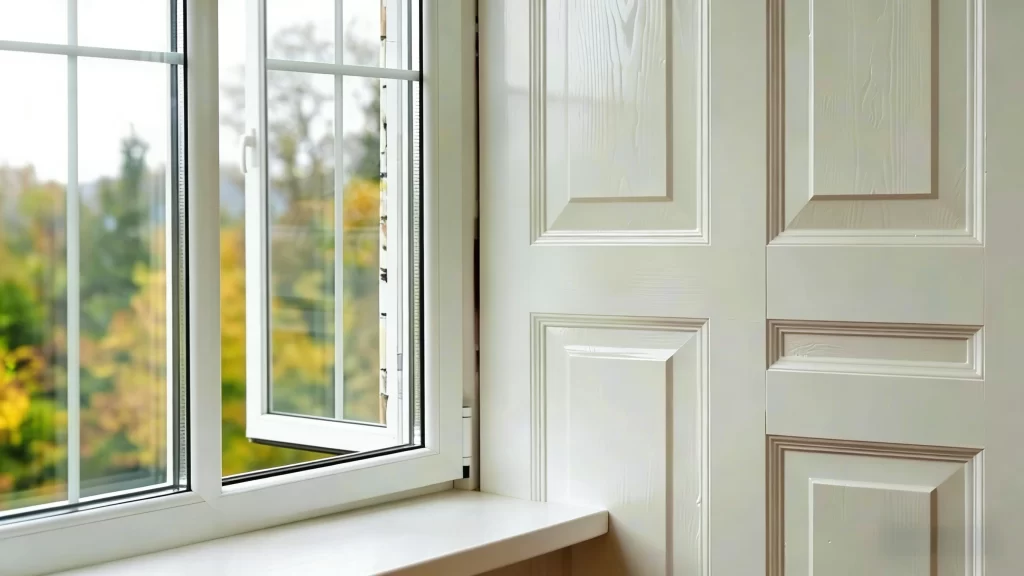
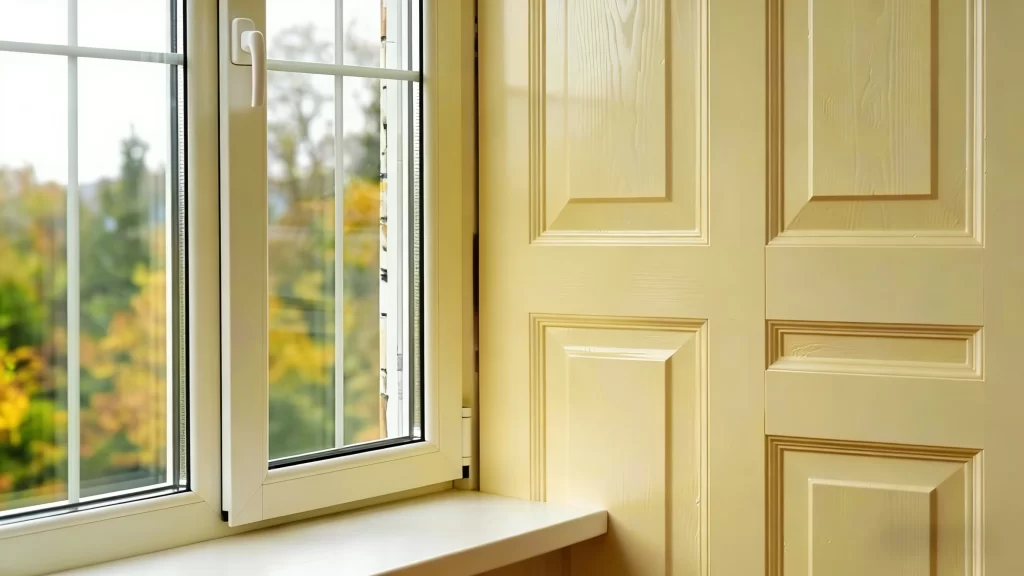
Imagine you have just installed brand-new white doors and windows for your home, or had a full repaint done on your car—the initial snow-white finish is refreshing and pleasing. Yet, just a few months later, these surfaces begin to develop an incongruous yellowish tint, and the originally perfect visual effect is greatly compromised. This frustrating phenomenon is what the coatings industry commonly calls "yellowing."
Yellowing is not merely an aesthetic issue, but a direct reflection of coating quality. For coating manufacturers, if noticeable yellowing occurs shortly after a product is launched, it is tantamount to a quality disaster. Therefore, every qualified coating must undergo rigorous testing before leaving the factory—the yellowing resistance test. Based on the national standard GB/T 23983-2009 "Determination of Yellowing Resistance of Wood Coatings," this article takes you into the laboratory to reveal the key technology that ensures coatings stay as good as new over time.


I. The Scientific Nature of Yellowing: The Silent Game Between Ultraviolet Rays and Materials
To understand yellowing resistance testing, it is first necessary to know how yellowing occurs. Yellowing is mainly a chemical degradation reaction of materials under long-term light exposure, especially ultraviolet (UV) radiation. The UV rays in sunlight are highly energetic and can break chemical bonds in the coating, triggering oxidation reactions that alter the molecular structure of the material and form chromophores (i.e., molecular moieties capable of absorbing light at specific wavelengths), thereby causing the material to appear yellow.
Different types of coatings exhibit varying sensitivities to ultraviolet (UV) radiation. For example, conventional alkyd resin paints have a higher tendency to yellow because their molecular structure contains easily oxidizable double bonds, whereas acrylic polyurethane coatings demonstrate excellent yellowing resistance due to their stable molecular structure. In addition, the quality of additives in the coating, such as curing agents and thinners, also affects the overall yellowing resistance.
II. Time Accelerator: The Working Principle of the UV Resistance to Yellowing Test Chamber
Traditionally, the most direct way to determine whether a coating is yellowing-resistant was to expose it to the natural environment and observe it over a long period. However, this method is extremely inefficient—a complete natural weathering test may take months or even years. In the modern coatings industry, technology provides us with a more efficient solution: the UV yellowing resistance test chamber.
This equipment appears to be an ordinary iron cabinet on the outside, yet inside it simulates an "artificial solar storm." Its core technology consists of a set of special artificial light sources (typically UVA-340 fluorescent UV lamps) capable of precisely simulating the most destructive ultraviolet band of the solar spectrum (300–400 nm). Working with a precision temperature control system, these light sources can create an extreme high-temperature exposure environment inside the laboratory, greatly accelerating the aging process of materials. The equipment is usually also equipped with a humidity control system that can simulate condensation or spray effects, bringing it closer to real outdoor conditions.
III. Acceleration Factor: Conversion Between Laboratory Time and Natural Time
The magic of the UV yellowing resistance test chamber lies in its time-compression capability. Taking standard test conditions as an example: under a high-temperature environment of 70°C with continuous irradiation for 3 hours, the aging effect is equivalent to exposing the coating panel unprotected to the natural environment for a full two months! This acceleration factor compresses what would originally be a lengthy aging process into the time it takes to drink a cup of tea, greatly improving product development and quality control efficiency.
According to the GB/T 23983-2009 standard, the standard yellowing resistance test typically adopts a test cycle of 168 hours (7 days) of continuous light exposure, conducting artificial weathering tests on the coating using fluorescent UV weathering equipment. After the test, the rating is evaluated by measuring the color change of the test panels.
IV. From Vision to Data: 0-5 Level Quantitative Assessment Based on National Standards
After the light exposure test is completed, how can the degree of coating change be objectively evaluated? Visual observation is intuitive but lacks scientific basis. According to the national standard GB/T 23983-2009 "Determination of Yellowing Resistance of Coatings for Woodware" and common industry practice, laboratories use a precision colorimeter to measure the color change of samples before and after light exposure, with the color difference value (ΔE*) as a quantitative indicator, and classify the yellowing resistance into the following grades 0–5:
| Grade | Yellowing Resistance Coefficient (ΔE*) Range | Visual Observation Description | Performance Evaluation |
|---|---|---|---|
| Grade 0 | 0 ≤ ΔE* ≤ 1.5 | No perceptible change | Highest grade, excellent |
| Grade 1 | 1.5 < ΔE* ≤ 3 | Very slight change, just perceptible | Good |
| Grade 2 | 3 < ΔE* ≤ 4.5 | Slight change, clearly perceptible | Fair |
| Grade 3 | 4.5 < ΔE* ≤ 6 | Moderate change, very obvious | Marginal pass |
| Grade 4 | 6 < ΔE* ≤ 7.5 | Considerable change, significant yellowing present | Fail |
| Grade 5 | 7.5 < ΔE* ≤ 9 | Severe change, intense yellowing | Poor quality |
Note: The smaller the ΔE* value, the less the color change and the better the yellowing resistance. Only coatings that meet a specific standard grade (usually required to be no lower than grade 2-3, while high-end products require grade 0) can be considered qualified products. For example, in the caulk industry, products with grade 0 yellowing resistance (ΔE* ≤ 1.5) can guarantee no discoloration for 10-20 years; the smaller the value, the longer the guaranteed period without discoloration.
V. Beyond the Standard: Practical Factors Affecting the Yellowing Resistance of Coatings
Although laboratory testing provides important references, the anti-yellowing performance of coatings in actual use is also affected by various factors:
- Substrate treatment: Improper substrate preparation (such as incomplete cleaning or failure to use a suitable primer) may result in poor coating adhesion and accelerate aging.
- Coating thickness: A coating that is too thin cannot provide sufficient UV shielding; whereas a coating that is too thick may crack due to internal stress.
- Environmental conditions: In addition to light, high temperature and humidity, industrial pollution (such as acid rain), salt spray, etc. will all accelerate the yellowing process.
- Maintenance method: Improper cleaning methods (such as using strongly alkaline cleaners) may damage the coating surface and reduce yellowing resistance.
- Formula Composition: The selection of resin type, UV absorber, and light stabilizer directly affects the yellowing resistance of the coating. High-quality coatings usually add hindered amine light stabilizers (HALS) and UV absorbers (UVA) to delay aging.


VI. Consumer Guide: How to Select Yellowing-Resistant Coatings According to National Standards
For ordinary consumers, when selecting coatings, the yellowing resistance can be judged from the following aspects:
- View test report: Reputable brands provide third-party test reports that clearly state the test results and yellowing resistance grade based on the GB/T 23983-2009 standard. Prioritize products with higher grades (grade 0 is best). Be wary of products that only claim to be "yellowing resistant" without specific data.
- Pay attention to resin type: High-end resin systems such as acrylic polyurethane, fluorocarbon coating, and pure polyurea usually have excellent yellowing resistance. When purchasing, you can consult the product technical parameters.
- Consider the application environment: For south-facing or west-exposed walls, automotive paint, balcony caulking, and other areas with intense UV exposure, specially formulated high-weather-resistance products should be selected, requiring Level 0 yellowing resistance. For indoor use, the requirements may be appropriately relaxed.
- Look for Brand and Certification: Choose products from well-known brands that have been certified by authoritative organizations, as this ensures better quality. At the same time, you can check the product's execution standards to see whether GB/T 23983 is explicitly referenced.
- Request samples for testing: If conditions permit, you may request samples for a simple sun exposure test (e.g., placing them on a windowsill for a month) to visually compare the yellowing resistance of different products.
VII. Industry Outlook: Future Trends of Yellowing-Resistant Technology
With the development of materials science, coating anti-yellowing technology is also continuously advancing. Current research hotspots include:
- Application of Nanomaterials: Nano-scale UV absorbers and blockers (such as nano-TiO₂, ZnO) can provide excellent protection without affecting transparency.
- Self-healing coating: Through microcapsule technology or reversible chemical bond design, the coating is endowed with the ability to self-repair minor damage, delaying aging.
- Bio-based coatings: Develop high-weathering-resistant coatings using renewable resources as raw materials, balancing environmental friendliness and performance.
- Pure polyurea technology: In the fields of tile grout, waterproof coatings, etc., pure polyurea formulations contain no hydroxyl components prone to yellowing, solving the yellowing problem at its root and achieving level 0 yellowing resistance.
- Smart monitoring coating: A coating integrated with sensors or color indicators that can monitor cumulative UV dose in real time and warn of aging.
Conclusion: Invisible ultraviolet, visible quality
From precise laboratory testing to rigorous control in practical applications, every scientific inspection is designed to preserve the original color of the coating surface. National Standard GB/T 23983-2009 provides us with an objective, quantitative evaluation system for yellowing resistance, and the clear 0–5 grading allows consumers to scientifically compare the quality of different products.
As consumers, understanding the scientific principles behind coating yellowing resistance testing and the national standards helps us make more informed purchasing decisions. Next time you buy white door and window paint, automotive paint, or tile grout, don't hesitate to ask: "What is the yellowing resistance grade of your product? Do you have a test report based on GB/T 23983-2009?"
The world of coatings may be small, yet it holds infinite wisdom of materials science. Follow us to keep exploring the fascinating stories behind coatings!