Static electricity is the "invisible killer" of electronic precision components. As a professional floor paint manufacturer, we provide an in-depth analysis of the working principle of anti-static flooring and its core applications in electronics manufacturing, precision instruments, and laboratories, helping you create an anti-static production environment that complies with international standards.
In electronics semiconductor manufacturing, precision instrument laboratories, or aerospace workshops, even an extremely tiny electrostatic discharge (ESD) can cause damage to batches of precision components, resulting in huge economic losses. As an epoxy floor paint manufacturer, we deeply understand the importance of anti-static systems for these industries.

1. How does static electricity disrupt production?
Static accumulation not only attracts large amounts of dust and causes cleanroom environments to fail, but also triggers instantaneous high-voltage discharge that can directly puncture integrated circuits. Furthermore, in flammable and explosive areas, static sparks are a source of catastrophic incidents.
2. Working Principle of Anti-static Flooring
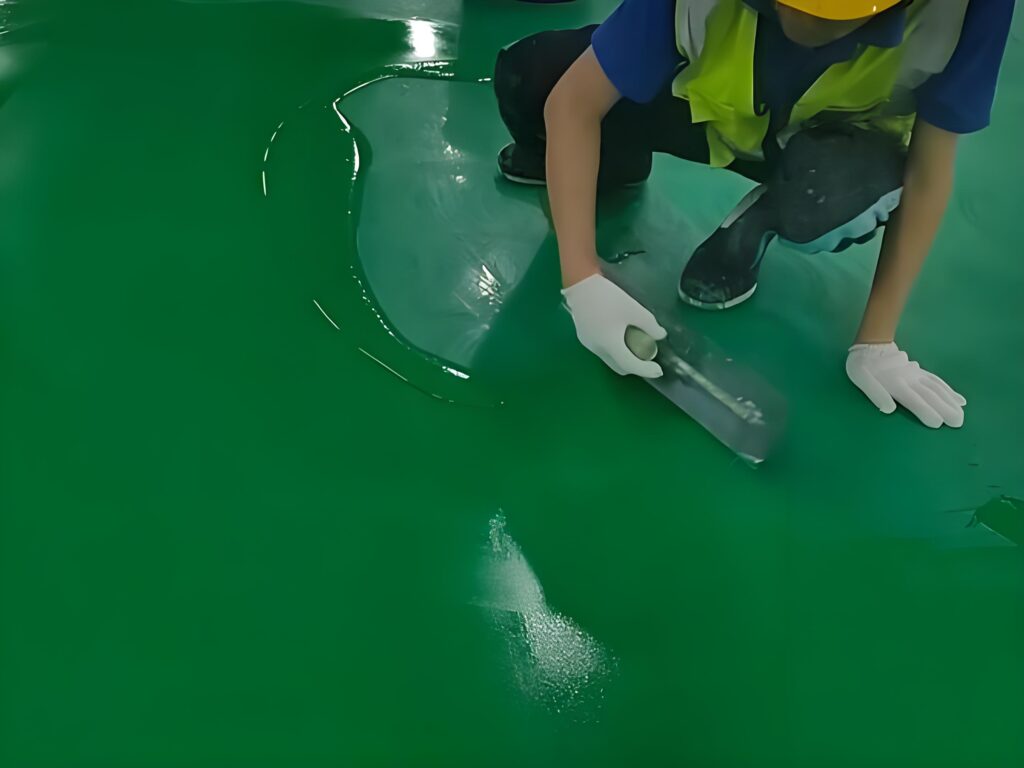
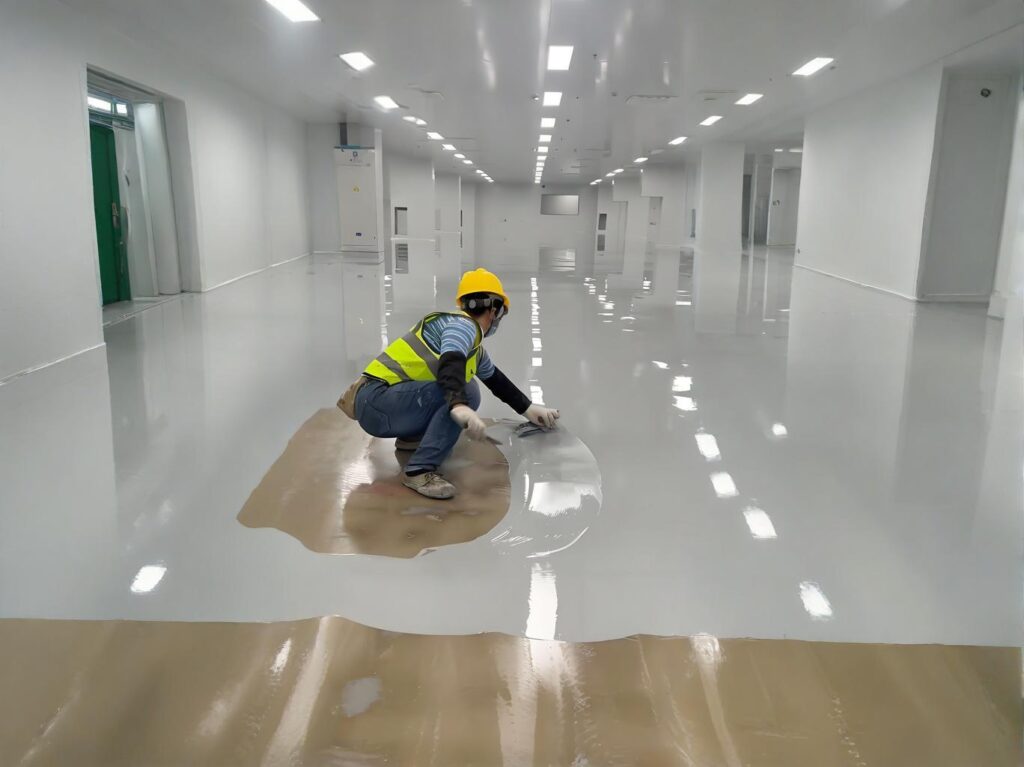
Unlike ordinary flooring, epoxy anti-static self-leveling forms a conductive network through internal conductive additives:
- Conductive channel: Static charges are conducted through the topcoat layer to the underlying conductive copper foil.
- Safety Grounding: The copper foil is connected to the building grounding system to safely dissipate electrical charges into the earth.
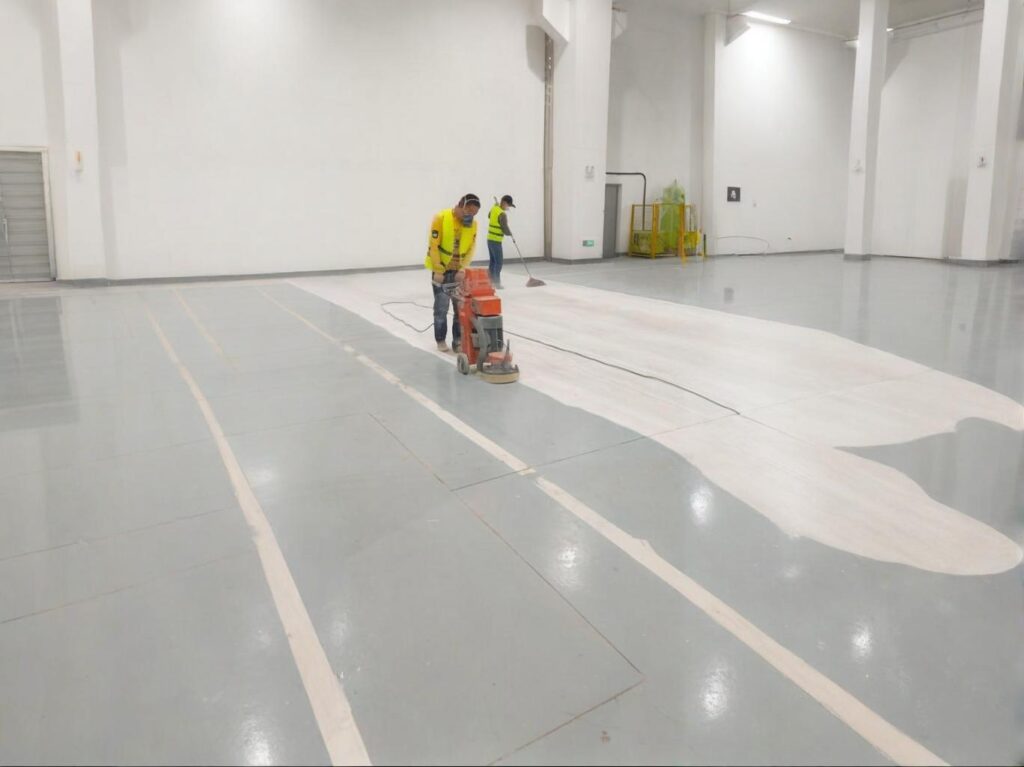
3. Core Construction Phases: "Details" That Brooke No Error
- Copper foil laying: Must be laid in a cross-cross or grid pattern to ensure the coverage rate of the conductive network.
- Conductive mid-coat: A key layer that bridges the gap, ensuring smooth charge conduction between the topcoat and the copper foil.
- Surface resistance test: After completion, a point-to-point resistance test must be passed to ensure the resistance value is stably between $1.0 times 10^6$ and $1.0 times 10^9 Omega$.
4. Why choose our anti-static system?
- Long-term resistance stability: Made of high-quality conductive carbon fiber or conductive mica, it does not fail over time or due to changes in environmental humidity.
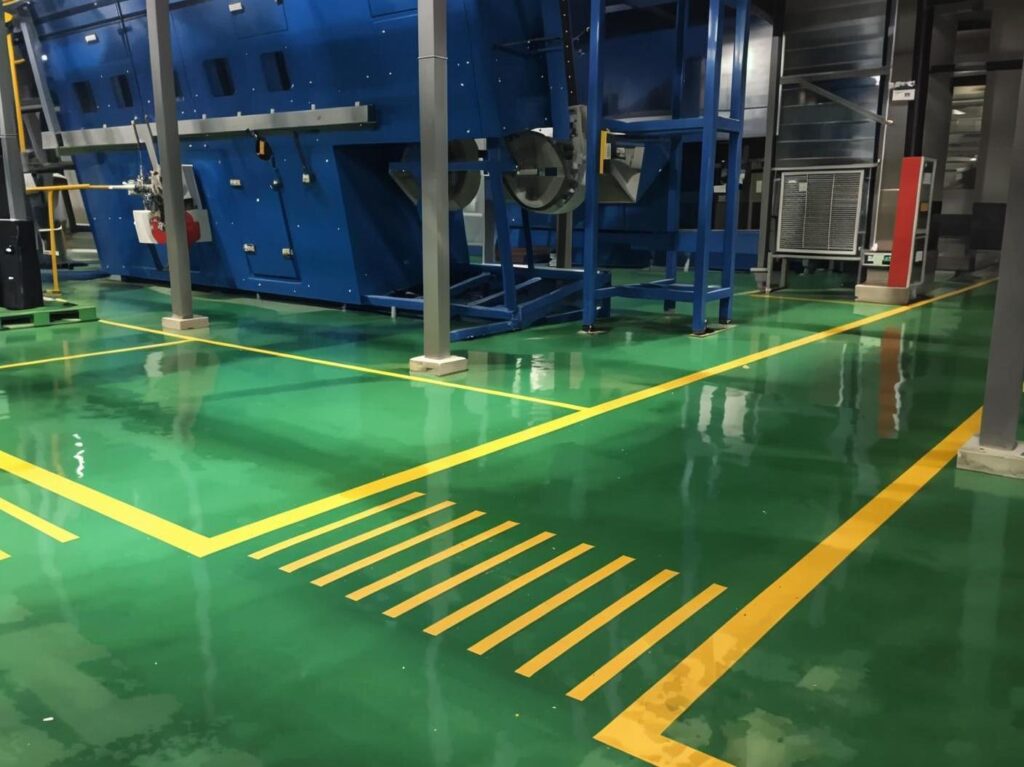
- High cleanliness: The self-leveling surface is flat and seamless, meeting Class 1000 and Class 100 dust-free purification standards.
- Abrasion and pressure resistant: While providing anti-static functionality, it also features industrial-grade wear resistance.



Conclusion:
Safe and anti-static performance is not only a requirement for industry compliance, but also the cornerstone of a company's product quality. Choose our professional anti-static flooring solution to provide solid protection for your precision production environment.