Nanocoatings: Real Technology or Marketing Hype? The Ultimate Oleophobic and Anti-Fouling Test Reveals the Truth
In daily life, oil stains, dirt, and water spots are undoubtedly the nemesis of cleaning. Whether it is kitchen appliances, automotive paint, or electronic device housings, once contaminated with stubborn grease, it not only affects appearance but may also cause permanent damage to the material. Thus, a product hailed as "black technology"—the nano coating—has gradually entered the public eye. But does it truly deliver remarkable effects, or is it merely a marketing gimmick existing in concept? A simple test video reveals a stunning answer.
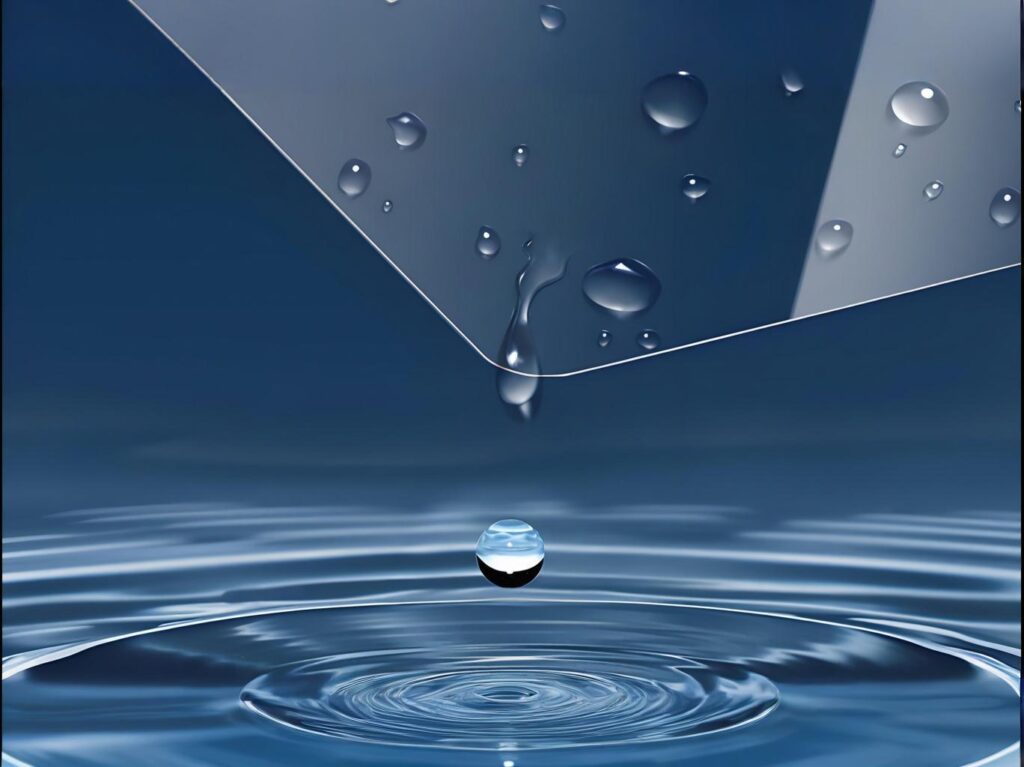
I. Seeing is Believing: The Ultimate Showdown on "Oil Repellency"
In the video, the experimenter prepared two completely identical metal plates. The only difference is that one of them (on the right) had been treated with the application of "HengHui Nano Coating," while the other (on the left) remained in its original state. This is the mostintuitive comparative experiment.
The test began. The experimenter dripped oils of the same viscosity onto two metal panels respectively. Subsequently, the panels were tilted.
The ordinary metal plate on the left: the oil stain seems to have found its home, quickly adhering to and merging tightly with the metal surface. It flows downward extremely slowly, appearing viscous and sluggish. Eventually, it leaves a clear, thick, and unpleasant oily mark on the panel.
The nano-coated metal plate on the right: the scene is completely different. The oil droplet seems to instantly lose its adhesion, like a dewdrop rolling on a lotus leaf, round and smooth as it slides down effortlessly. Its sliding speed is so fast that it forms a stark contrast with the left side. What is even more amazing is that after the oil droplet has completely slid off, the metal surface remains as clean as before, without leaving any trace of oil stain, as if nothing had ever dripped onto it.
II. Wipe Test: Verifying the Real Performance of "Stain Resistance"
The drip test might still be explained by "flowability," but the subsequent wipe test thoroughly proves the core "anti-fouling" capability of the nano coating.
The experimenter picked up a tissue and wiped both panels.
- Left panel: After wiping with a tissue, the oil stain was smeared, but the entire metal panel had already been completely covered by the oil, forming a hard-to-clean oil film. Not only could its original appearance not be restored, but it became even more messy.
- Right panel: With just a light wipe of the tissue, the area where the oil drop had slid as well as the entire surface instantly became bright and new, fully restoring the metal's original color and luster, with no trace of oil residue left behind.
The outcome of this contest is beyond doubt. Nanocoatings are not just a hollow name; by altering the physical properties of material surfaces, they truly achieve highly efficient oil repellency and antifouling functions.
III. Scientific Principle: Why is the Nano-coating So Magical?
The powerful efficacy of nano-coatings stems from their unique microstructure and mechanism of action. Rather than forming a thick "film" on the surface of an object, they use nanotechnology to construct an extremely thin "protective layer" filled with nanoscale structures on the surface.
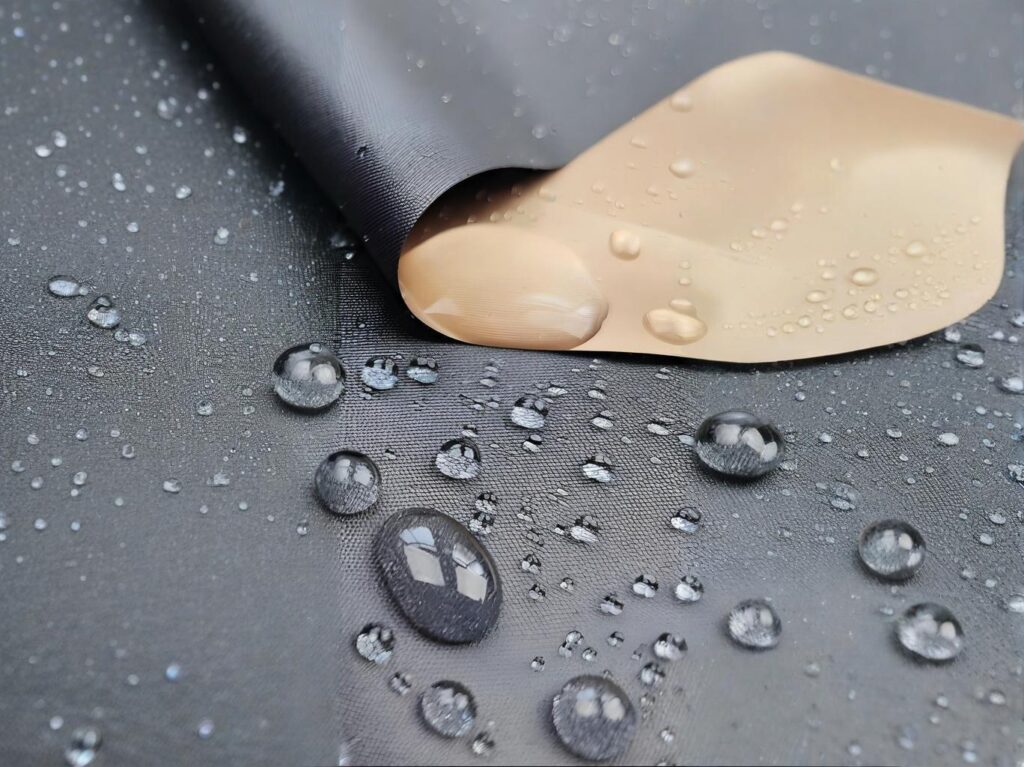
This structure mimics the principle of the "lotus effect" found in nature. The lotus leaf surface features numerous microscopic papillae, which are further covered with nanoscale waxy crystals, allowing water droplets to contact the surface only at minimal points in a spherical form, thereby preventing wetting and enabling them to roll off easily while carrying away surface dust.
The same applies to nano-coatings. After application, they form a similar microscopic "barrier" on the substrate surface, significantly reducing the surface energy so that the contact angle of liquids such as oil and water becomes very large, making them difficult to spread and wet out. As a result, liquids can only exist as droplets and easily slide off under gravity, thereby achieving hydrophobic, oleophobic, anti-fouling, and easy-to-clean effects.
IV. Application Prospects: All-Around Protection That Changes Life
The application scenarios of this technology are extremely broad, covering almost all fields that require cleaning and maintenance:
- Automotive Field: Applied to car paint, glass, and wheels, it repels rainwater and mud, is easy to clean, and maintains a long-lasting shine.
- Home & Living: Sprayed on kitchen tiles, countertops, and range hood surfaces, it effectively resists oil and grease adhesion, greatly reducing cleaning effort.
- Electronics & Digital Devices: Used for phone, tablet screens and casings, waterproof, oil-resistant and fingerprint-proof, keeping devices looking new with regular use.
- Industrial Field: Protect precision instruments and metal components from oil stain corrosion, extending their service life.
Conclusion
Nanocoating technology, with its exceptional oleophobic, hydrophobic, and anti-fouling properties, has proven itself to be a mature and highly efficient surface treatment technology, and a true reflection of how science and technology improve life. It is not an out-of-reach concept, but a practical product already implemented that can genuinely bring convenience to our daily lives. If you are troubled by endless cleaning chores, perhaps a nanocoating can open a new door to an easier life for you.