In a complete coating system, topcoat is a critical protective layer ultimately exposed to the external environment. It not only affects the decorative effect, but also determines durability, anti-corrosion protection capability, and long-term service performance. Therefore, in the fields of building exterior walls, metal anti-corrosion, mechanical equipment, wood furniture, and even automotive painting, choosing a high-quality topcoat is crucial.
I. Core Functions of the Topcoat
1. Form a protective barrier and enhance durability
The topcoat can form a dense and weather-resistant protective film on the substrate surface, isolating external erosion from moisture, oxygen, ultraviolet rays, acids and alkalis, pollutants, etc. For example, anti-corrosion performance topcoats used for steel structures can significantly reduce the corrosion rate and extend the maintenance cycle of facilities.
2. Provides decorative effect and gloss
Gloss, color, and visual texture are mainly determined by the topcoat. Whether it is a metallic look, matte style, glossy clear coat, or stone-like effect, the topcoat is responsible for the final appearance. For building exteriors or furniture, combining aesthetics with durability is the core value.
3. Improve weather resistance and anti-aging performance
High-quality weather-resistant coatings can resist UV-induced chalking, fading, and cracking, keeping the coating's appearance stable over the long term in outdoor environments. Outdoor steel structures, photovoltaic supports, transportation equipment, etc. all rely on high-weather-resistance topcoats.
4. Enhance the overall adhesion and system stability of the coating
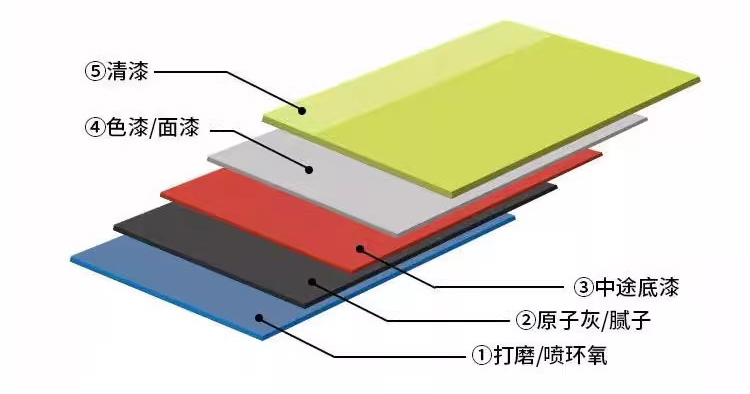
The topcoat has a synergistic effect with the primer and intermediate coat:
- Improve adhesion
- Optimize coating flexibility
- Enhance impact resistance and scratch resistance
Especially in industrial equipment and wood coating, the topcoat is a crucial element in ensuring system integrity.
II. Common Topcoat Types and Their Characteristics
1. Water-based topcoat
Water as solvent, eco-friendly, safe, low odor, suitable for building walls, schools, hospitals, home decoration, etc.
Advantages: Low VOC, easy application, high safety.
Suitable for: architectural coatings, water-based wood varnish, etc.
2. Oil-based topcoat
Including alkyd, polyurethane, epoxy, nitrocellulose and other types.
Advantages: Good film-forming properties, strong wear resistance, high gloss.
Suitable for: Industrial topcoats, furniture topcoats, mechanical equipment, steel structures, etc.
3. Polyurethane Topcoat
High-performance topcoat with a wide range of industrial applications, offering excellent abrasion resistance, weather resistance, and corrosion resistance.
Commonly used on: machinery and equipment, automotive surfaces, bridges, steel structures.
4. Acrylic Topcoat
High weatherability and color stability, suitable for outdoor buildings and metal surfaces.
5. Epoxy Topcoat (Suitable for Indoor Use)
Highly wear-resistant with good mechanical properties, but weak UV resistance, thus more commonly used indoors or in shaded areas.
III. How to select the topcoat?
1. Select by substrate
- Metal equipment, steel structures → Polyurethane topcoat, acrylic topcoat
- Wooden Furniture → Wood Coating, Transparent Varnish
- Building Interior Wall/Exterior Wall → Water-based Topcoat, Latex Paint
2. Select Based on Usage Environment
- Outdoor environment: Requires strong weather resistance, acrylic or polyurethane is recommended
- Humid environment: Requires mold-proof and waterproof treatment; choose a professional moisture-resistant topcoat
- Strong corrosion conditions: Industrial anti-corrosion polyurethane system is more reliable
3. Select by effect
- High gloss: Glossy polyurethane
- Premium Matte: Matte Acrylic
- Natural Wood Grain: Wood Varnish
4. Brand and Quality Stability
High-quality brand topcoats are more reliable in color difference control, film formation uniformity, and weather resistance stability.
IV. Precautions for Topcoat Application
- The substrate must be clean, dry, and free of oil and grease.
- Compatible with primer and intermediate coat
- Avoid thick coating to prevent sagging.
- During construction, the environmental temperature and humidity must meet the specified requirements.
Proper application allows the topcoat's performance to be maximized.
V. Conclusion
The topcoat is a critical coating that combines protection, decoration, and durability. Whether used on steel structures, building walls, or wood furniture, selecting the right topcoat can significantly enhance long-term performance and appearance. Choosing a topcoat based on substrate, environment, and functional requirements can make the entire coating system more stable, durable, and high-quality.