Anti-fouling and Self-cleaning Functional Coatings: From Lotus Effect to Long-term Protection
During the service life of industrial buildings, bridges, storage tanks, factory exterior walls, and various outdoor facilities, surface contamination and fouling are almost inevitable common problems. Dust accumulation, mud spots carried by rainwater, oily aerosols in the atmosphere, attachment of microorganisms and algae, and stubborn rust stains formed under the combined effect of coastal salt spray, all rapidly degrade the appearance of facilities and further induce corrosion, leakage, and structural damage. Traditional cleaning methods rely on manual washing or chemical cleaning, which not only incur high maintenance costs, but also pose high operational risks and limited frequency in scenarios such as high-altitude, coastal, and confined spaces. It is against this engineering background that anti-fouling self-cleaning coatings, as a type of functional protective coating, have gradually been incorporated by engineers and procurement decision-makers into the standard considerations for new construction and renovation projects.
The core objective of so-called anti-fouling self-cleaning coatings is not to make the surface "never dirty", but through surface energy regulation, micro-morphology construction, and synergistic functional fillers, to make pollutants difficult to stably adhere, or to be easily removed by natural environmental forces such as rainfall and wind, thereby extending the cleaning cycle from "weeks" to "quarters" or even "years", significantly reducing the maintenance burden over the full life cycle. Its technical origin is often traced back to the self-cleaning phenomenon of lotus leaf surfaces—namely the well-known lotus effect—but today's industrial-grade product implementation paths have long expanded from mere biomimetic hydrophobicity to multiple technical routes such as superhydrophobicity, superhydrophilicity, photocatalytic decomposition, and integrated anti-fouling and antibacterial functions.
In South China, the hot, humid, and rainy climate, intertwined with coastal salt spray and industrial atmosphere, imposes more stringent requirements on the durability and easy-cleaning of coatings. Based in Foshan, Guangdong, and focused on the industrial protection field, KeXin New Materials (brand KeXin 客信, official website psste.com) has long provided functional coating solutions for real working conditions to factories, bridges, energy, and municipal facilities, among which the anti-fouling self-cleaning system is one of its key directions for B2B customers. This article systematically reviews this category from multiple dimensions including technical principles, material systems, construction processes, selection key points, engineering cases, common misconceptions, and related standards, for reference by engineering technical and procurement decision-making.
I. Technical Principles: From Lotus Effect to Surface Energy Regulation
1.1 The Essence of the Lotus Effect: Synergy of Micro-nano Structure and Low Surface Energy
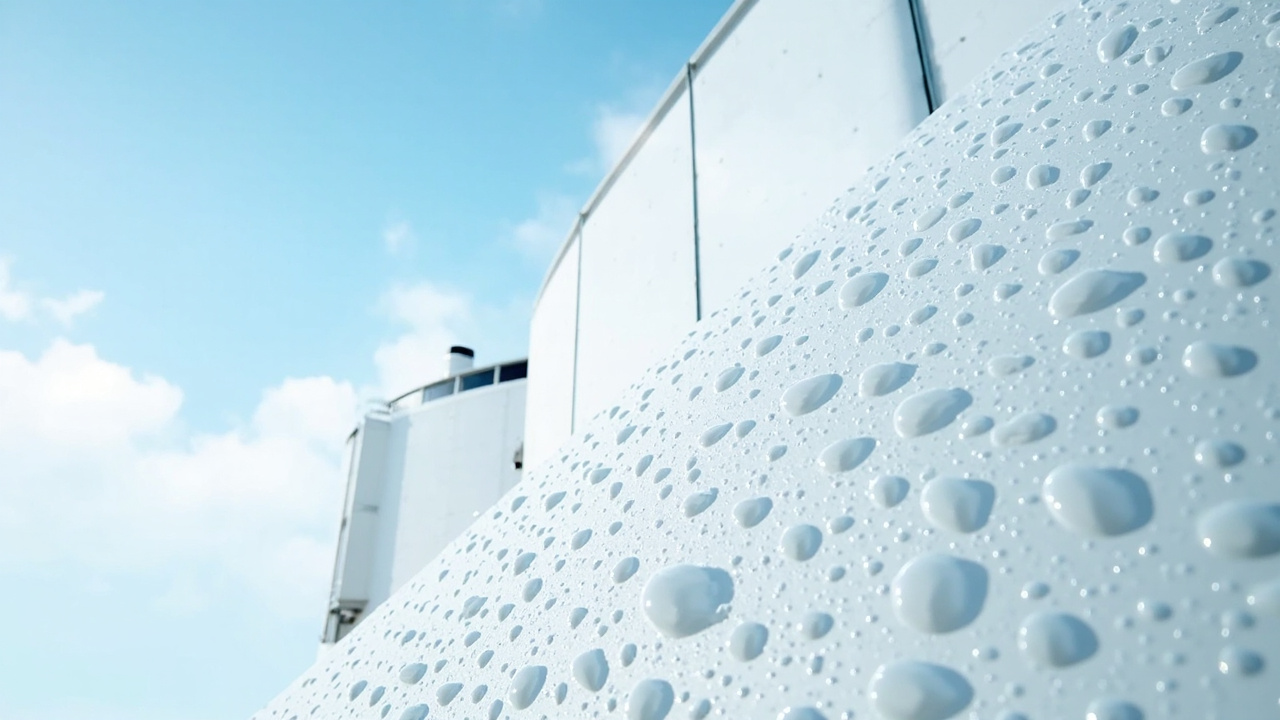
The reason why lotus leaves are "unstained from mud" is not due to some magical chemical composition, but because their surface simultaneously possesses two types of characteristics: one is the rough morphology composed of micron-level papillae and nano-level waxy crystals, and the other is the extremely low surface free energy of the epidermal wax itself. When water droplets fall on such a surface, air is trapped in the pores of the micro-structure, and the water droplet actually contacts a "solid-liquid-gas" three-phase interface, with the contact area greatly compressed, so the water droplet shrinks into a near-spherical state, with a contact angle exceeding 140 degrees and a very small rolling angle. When water beads roll on the leaf surface, the low-adhesion droplets act like miniature mops, carrying away dust particles—this is the microscopic mechanism of self-cleaning.
It should be emphasized that a purely low-surface-energy smooth surface (such as polished fluorinated material) although having a high contact angle, does not necessarily have a small rolling angle, and water beads can easily "stick" to the surface; while a purely rough but high-surface-energy surface will instead draw water into the pores through capillary action, leading to more severe contamination and water absorption. Therefore, the design of industrial anti-fouling self-cleaning coatings lies in the synergy of rough structure pore formation and low-surface-energy modification, both of which are indispensable. This is also why most qualified products start from both ends of "resin matrix lowering surface energy" and "fillers constructing micro-nano roughness".
1.2 Quantitative Relationship Between Contact Angle, Rolling Angle and Self-cleaning Performance
In engineering evaluation, the contact angle is the most direct indicator for measuring the degree of hydrophobicity. Generally, a surface with a contact angle greater than 90 degrees is called a hydrophobic surface, and greater than 150 degrees is called a superhydrophobic surface; in contrast, a contact angle less than 10 degrees is called a superhydrophilic surface, which is also equally important in the self-cleaning field. But looking only at the contact angle is far from enough; the rolling angle (or sliding angle) is the key to judging "whether dirt can be washed away by water". The smaller the rolling angle, the easier the water beads roll off under slight tilt or breeze disturbance and take away contaminants; if the contact angle is high but the rolling angle is large, the water bead just "stands" on the surface without moving, and the self-cleaning effect will be greatly reduced.
Further, self-cleaning also involves the matching of adhesion work and pollutant properties. For hydrophilic inorganic dust, hydrophobic surfaces with small rolling angles usually perform excellently; for oily pollutants, the surface needs to have certain oil resistance and washability, or use photocatalysis to degrade the oil film into small molecules that are easily washed away by water. Therefore, to evaluate an anti-fouling self-cleaning coating, one cannot only look at the merchant's advertised "contact angle of how many degrees", but must comprehensively judge based on rolling angle, actual pollutant type, and washing method.
1.3 Fouling Formation Mechanism: From Particulate Adsorption to Biological Attachment
To design an effective anti-fouling system, one must first understand how fouling occurs. Pollution on outdoor facility surfaces can be roughly divided into several categories: the first is dry deposition particles, including atmospheric dust, silicate and carbon black particles around cement plants and power plants, which adsorb to the surface by van der Waals forces and electrostatic interaction, and harden after getting wet; the second is liquid-phase pollution, such as oily aerosols formed by vehicle exhaust and catering emissions, and chlorides in coastal salt spray, which form films on the surface and attract more dust; the third is biological fouling, where in hot and humid environments algae, mold, and bacterial spores colonize at interfaces with nutrients and moisture, forming difficult-to-clean stains and biofilms; the fourth is chemical fouling, such as erosion and discoloration of surfaces by industrial acid rain.
Different pollution mechanisms correspond to different protection strategies. For particulate and liquid-phase pollution, enhancing hydrophobicity and reducing rolling angle are most effective; for biological fouling, it is necessary to introduce antibacterial or anti-algae components and avoid long-term surface wetness; for chemical fouling, it relies on the weather resistance and chemical resistance of the resin itself. In engineering, it is often a "combination punch", that is, superimposing multiple functions in the same coating system.
1.4 Three Main Technical Routes: Superhydrophobic, Superhydrophilic and Photocatalytic
Currently, industrial anti-fouling self-cleaning coatings mainly have three technical routes. The first is the superhydrophobic route, which constructs a lotus-leaf-like surface through low-surface-energy resin plus rough fillers, relying on water bead rolling to take away dirt, suitable for environments with much dust and mud spots, but the micro-structure may degrade under strong wear. The second is the superhydrophilic route, where the surface causes water to spread into a uniform water film, diluting pollutants and washing them away with water flow, and can reduce water marks and light scattering on glass and photovoltaic panels, but the drawback is the surface "looks wet", requiring caution for facades with high aesthetic requirements. The third is the photocatalytic route, represented by nano titanium dioxide, which under ultraviolet or modified visible light excitation produces strongly oxidative substances, decomposing organic matter into carbon dioxide and water, achieving "decomposition-type" self-cleaning, often used in combination with hydrophobic modification.
These three routes are not mutually exclusive; mature products often integrate two or even three mechanisms, such as "superhydrophobic + photocatalytic" or "superhydrophilic + antistatic", to cope with complex working conditions. When selecting, one should weigh based on pollutant type, substrate, visible light conditions, and maintenance expectations.
1.5 Microstructure Degradation and Lifetime Dynamics
To understand the lifetime of self-cleaning coatings, one cannot only look at the initial morphology, but also at the degradation path of the micro-structure during service. The most typical failure of superhydrophobic surfaces is rough collapse caused by wear: cutting by wind-blown sand particles, friction from cleaning brushes, and even long-term impact of raindrops gradually grind down the micro-protrusions, causing the contact angle to slowly decrease and the rolling angle to rise. Another path is pollution filling, where fine particles and organic aerosols in the atmosphere slowly embed into the pores, turning the "air cushion" into a "pollution cushion", which both reduces hydrophobicity and increases color-holding pollution. There is also a photo-oxidation path, where ultraviolet causes cross-linking or cracking of the resin surface layer, and the surface energy shifts from low to high.
Therefore, lifetime evaluation often adopts composite tests of accelerated aging superimposed with wear, for example, first doing ultraviolet or xenon lamp aging, then doing abrasion or scrubbing cycles, to observe the inflection point of functional indicators. A more pragmatic approach in engineering is to accept "gradient decay", setting the recoating cycle before the function is still usable but about to enter a rapid deterioration range, using controllable local repair instead of passive large-area renovation.
II. Material Systems: From Resin Matrix to Functional Fillers
2.1 Low Surface Energy Resins: Fluorocarbon, Silicone and Fluorinated Acrylic
Resin is the skeleton of the coating and also determines the basic surface energy and weather resistance. Fluorocarbon resin, due to the extremely high bond energy of carbon-fluorine bonds and very low surface free energy, is a classic choice for preparing long-term hydrophobic and weather-resistant coatings, especially advantageous in projects requiring durability of more than ten years and strong ultraviolet and salt spray environments, but the cost is higher. Silicone resin (including modified siloxane) also has very low surface energy, and has good breathability and excellent adhesion to concrete substrates, often used for building exterior walls and roofs, with outstanding cost performance, but slightly inferior to fluorocarbon in mechanical strength and oil pollution resistance. Fluorinated acrylic introduces fluorine elements into the acrylic network, balancing the good workability of acrylic and relatively lower surface energy, and is the matrix choice for many mid-range industrial easy-clean coatings.
It is worth noting that resins themselves are mostly continuous smooth films, and it is difficult to achieve the micro-nano roughness required for superhydrophobicity when used alone, so they must be combined with fillers and surface treatment processes. In addition, the resin's yellowing resistance, alkali resistance, and anti-chalking ability directly determine whether the functional coating can maintain self-cleaning ability outdoors for a long time; selection cannot only look at the initial contact angle.
2.2 Role of Nano Fillers: Silica, Zinc Oxide and Hydrophobic Modification
Fillers in the anti-fouling self-cleaning system play the dual role of "creating roughness" and "supplementing function". Fumed silica and nano silica are the most commonly used and relatively controllable cost materials for constructing micro-nano roughness, which can form a secondary structure in the paint film and raise surface roughness; but unmodified hydrophilic silica absorbs water and instead destroys hydrophobicity, so it usually needs hydrophobic modification with silane coupling agent. Particles such as zinc oxide and alumina can be used to adjust hardness and abrasion resistance, and partially contribute to UV shielding, slowing resin photo-aging.
The particle size distribution and dosage of fillers need fine balancing: too little results in insufficient roughness and unable to raise the contact angle; too much makes the paint film brittle, reduces adhesion, and increases haze (unfavorable for transparent topcoat). In engineering, a "micron-level for skeleton, nano-level for details" dual-gradation approach is often adopted, and dispersants are used to ensure stable non-aggregation of fillers, otherwise not only uneven performance, but also easily cause surface pitting and color difference.
2.3 Photocatalytic Self-cleaning: Titanium Dioxide and Visible-light Responsive Modification
Nano titanium dioxide is the core material for photocatalytic self-cleaning. Under ultraviolet excitation, it generates electron-hole pairs, which then produce hydroxyl radicals and superoxide radicals, capable of oxidatively decomposing organic pollutants attached to the surface, such as oil films, bird droppings traces, and some biological mucous membranes. Traditional anatase-type titanium dioxide mainly responds to the ultraviolet band, and the proportion of ultraviolet in outdoor direct light is limited, so the industry generally extends the response window to visible light through nitrogen doping, carbon doping, noble metal deposition, or compounding with other semiconductors, improving the decomposition efficiency in actual environments.
But photocatalytic materials also have shortcomings: first, the catalytic process may accelerate the self-degradation of adjacent organic resins (need to protect and isolate the matrix), second, if decomposition products are not washed away by water in time they may re-deposit, third, excessive addition reduces paint film transparency and mechanical properties. Therefore, photocatalytic components are often "layered" with the hydrophobic surface layer, or a core-shell structure is used to limit catalytic activity to a thin surface layer, balancing self-cleaning and durability.
2.4 Organic-Inorganic Hybrid and Sol-gel Route
The sol-gel process is an important means to prepare uniform inorganic-organic hybrid coatings. Through hydrolysis and condensation of silane precursors at low temperature, a silicon-containing network can be formed on the substrate surface, and nano particles or functional groups can be embedded in situ, obtaining a thin film with high hardness, good adhesion, and adjustable surface energy. Such coatings are transparent, thin, and breathable, especially suitable for the "easy-clean topcoat" renovation of existing decorative surfaces, such as stone, curtain walls, and cultural relic protection surfaces. The difficulty lies in the control of solvent volatilization and condensation rate during large-area construction, and sensitivity to construction environment humidity.
The advantage of the organic-inorganic hybrid approach is to break the "organic soft, inorganic brittle" dual opposition: the inorganic network provides hardness, temperature resistance, and UV resistance, while the organic segment provides flexibility and adhesion. For floors and walls of factories, garages, hospitals, and other places with high cleanliness requirements, hybrid systems are becoming a supplementary choice beyond traditional epoxy or polyurethane.
2.5 Integrated Anti-fouling and Antibacterial: Silver-based, Quaternary Ammonium Salt and Anti-algae Considerations
In scenarios such as food, pharmaceutical, aquaculture, and underground spaces, biofouling is more troublesome than dust. Integrated antifouling and antibacterial coatings usually introduce silver ions, zinc ions, or quaternary ammonium salt-based antibacterial agents to inhibit the colonization of mold and algae; for heavily biofouled environments such as coastal areas and cooling towers, components such as copper-based or specific antifouling agents are also combined. It needs to be reminded that the release rate and safety of antibacterial agents must comply with regulations, especially for interior walls and drinking water-related facilities with frequent human contact, where products that have passed relevant hygiene and environmental evaluations should be prioritized, and attention should be paid to antibacterial durability rather than initial antibacterial rate.In addition, there is a tension between antifouling/antibacterial and "environmental friendliness": some highly effective biocides in traditional marine antifouling have ecological impacts and are gradually being replaced by low-release, fouling-release solutions (with extremely low surface energy making it difficult for organisms to attach without being killed). Although industrial land facilities do not have the problem of direct marine discharge, under the trend of green procurement, the weight of low-toxicity, low-release, and easily degradable formulations is rising.
2.6 Formulation Compatibility and Storage Stability
Functional coatings are multi-component systems, and the internal compatibility of the formulation directly determines storage and application performance. If hydrophobic modified fillers do not match the polarity of the resin, they will slowly flocculate in the can, leading to spray gun clogging and orange peel on the paint film; if photocatalytic particles are unevenly dispersed, local over-catalysis will occur, accelerating the "self-damage" of resin degradation; if the antibacterial agent undergoes ion exchange or acid-base reactions with the system, it may lose activity prematurely or precipitate. Therefore, mature formulations undergo accelerated storage tests to check changes in viscosity, stratification, and performance.
On the application side, attention should also be paid to the pot life and curing match of two-component systems: too short an activation period causes waste and lap marks, while too long affects the construction schedule. For systems that require on-site water addition, operations must follow the specified ratio and water quality to avoid flocculation caused by hard water. Taking "storage stability, application tolerance, and controllable curing" as formulation evaluation dimensions often better predicts on-site success than merely looking at functional parameters.

III. Construction Process: One-Third Material, Seven-Tenths Construction
3.1 Substrate Treatment: Control of Strength, Moisture Content, and Cleanliness
No matter how advanced the formulation is, at least 70% of the success or failure of antifouling self-cleaning coatings depends on substrate treatment. Concrete and mortar substrates must reach sufficient curing age and strength, and surface moisture content should usually be below the specified threshold (most products require below 8% to 10%), otherwise the primer cannot penetrate effectively, and subsequent functional layers are prone to bubbling and delamination. Metal substrates need to be derusted and degreased to corresponding grades, and sandblasted if necessary to increase roughness. For stone and existing coating renovation surfaces, the compatibility and firmness of the old coating must be determined first, and loose or chalked parts must be removed.
Cleanliness is equally critical: release agents, dust, oil stains, and algae residues on the substrate will directly block the bond between the coating and the substrate, and form a "pollution memory" on the surface—even with new paint, stains may still show through. The standard practice is to rinse with high-pressure water, degrease with neutral detergent, then rinse with clean water and dry thoroughly; for old mold and algae stains, specialized mold removal treatment should be used rather than simple covering.
3.2 Coating Methods and Film Thickness Control
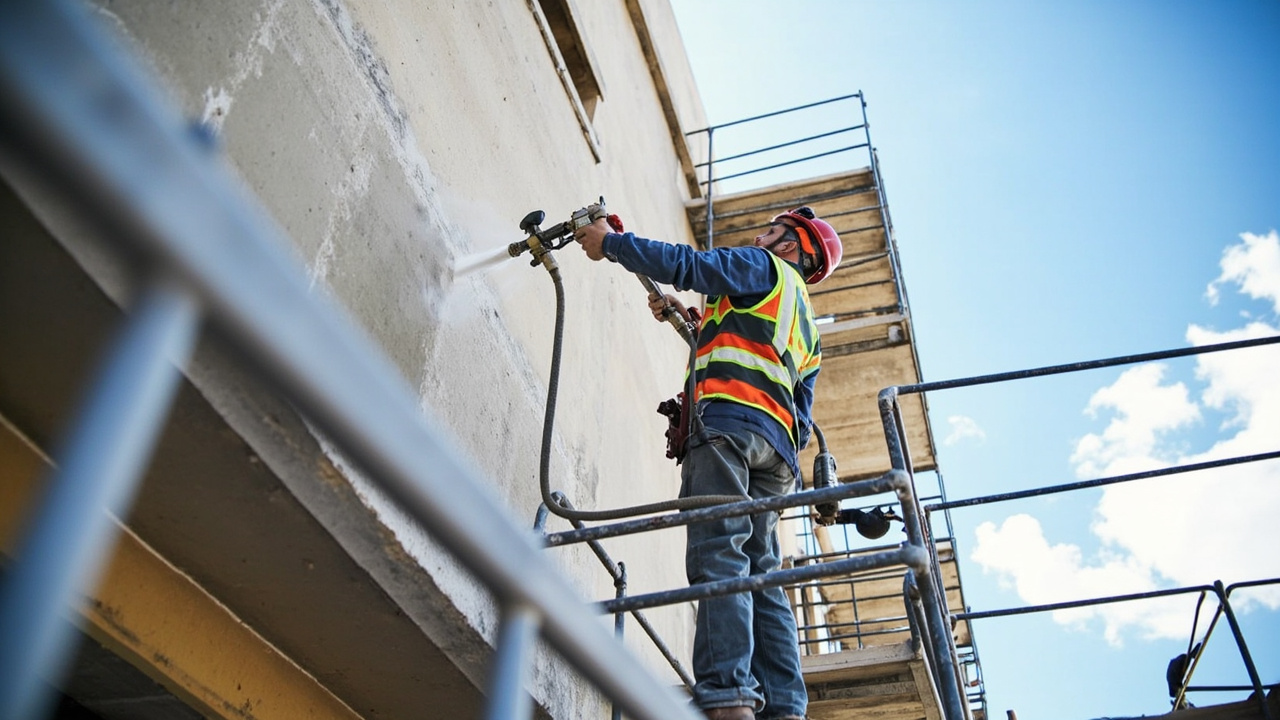
Antifouling self-cleaning systems usually consist of a primer, a functional intermediate coat (or functional topcoat), and a possible easy-clean finish. The primer is responsible for sealing and adhesion, the functional layer provides hydrophobicity, photocatalysis, or antibacterial properties, and the finish further locks the micro-structure and weather resistance. Coating can be done by airless spraying, air spraying, or roller coating; airless spraying is recommended for large-area facades to ensure uniformity and efficiency, but attention should be paid to atomization pressure and gun distance to avoid dry spray or sagging. Film thickness must be controlled within the window specified by the product: too thin a functional layer means insufficient micro-structure and reduced performance, while too thick is prone to cracking, wasted cost, and may alter surface morphology causing worsened roll-off angle.
During layered construction, surface drying between coats and recoating intervals must be strictly enforced. Especially in hot and humid environments, too fast surface drying may trap solvents and form pinholes; too short an interval leads to poor interlayer adhesion. It is recommended to do a small sample test coating under typical climate conditions first, confirm the compatibility and appearance, and then proceed to large-area application.
3.3 Environmental Window: Temperature, Humidity, and Curing
The construction environmental window is often underestimated. Most water-based or reactive functional coatings require the substrate temperature to be above the dew point by a certain margin, the relative air humidity below a certain upper limit (commonly below 85%), and avoid construction before rain, in strong wind, or under direct scorching sun, otherwise whitening, poor adhesion, or early chalking will occur. Low winter temperatures significantly slow curing, while high summer temperatures may shorten the workable time, both requiring adjustment of dilution ratio and process rhythm.
The curing period is also important. When the coating has just formed a film, the micro-structure is not yet fully stable, and early rain or trampling may damage the self-cleaning morphology. It is generally recommended to cure for several days or more before exposure to formal working conditions; heavy-duty anti-corrosion or thick-coat systems require longer curing. In project management, "curing completed" rather than "coating finished" should be taken as the acceptance node.
3.4 Quality Acceptance and Defect Prevention
Acceptance should cover appearance, film thickness, adhesion, and functional indicators. Appearance inspection checks for sagging, pinholes, color difference, and orange peel; film thickness is spot-checked by grid using magnetic or eddy current thickness gauges; adhesion can be tested by pull-off or cross-cut tests; functional indicators can be observed on-site with a contact angle tester or simple water droplet rolling, and if necessary sent to a laboratory for standard soil rinse comparison. Common defects such as early gloss loss, local stain show-through, and edge peeling can mostly be traced back to inadequate substrate or environmental control.
Establishing a management closed loop of "sample first, process documentation, regular retesting" is the key to implementing antifouling self-cleaning coatings from "buying the right material" to "achieving the effect". For large projects, it is recommended to include self-cleaning performance decay into operation and maintenance inspections, using annual water rinse comparison photos for quantitative tracking.
IV. Selection Points: Working-Condition-Driven Matching Logic
4.1 Selection by Polluting Environment: Dust, Oil Stains, Biological Adhesion
The first step in selection is to define the dominant pollutant. For facades around roads and construction sites dominated by dust and mud spots, prioritize superhydrophobic systems with small roll-off angles, allowing rainwater to naturally carry away floating dust; for plant areas, toll stations, and tunnel entrances dominated by oily aerosols, choose oil-resistant easy-clean or photocatalytic decomposition types to avoid oil film hardening; for underground garages, pergolas, and waterside buildings dominated by mold and algae, antibacterial and algae-resistant properties with fast surface drying should be hard indicators; coastal salt spray environments must coordinate between corrosion resistance and easy cleaning, prioritizing compatible anti-corrosion primers and salt-spray-resistant topcoats.
Many projects actually have multiple pollutants superimposed, such as coastal food factories facing salt spray, oil stains, and mold/algae simultaneously. In such cases, do not blindly believe in a "single miracle paint", but ask suppliers to provide small-test data for the local pollutant combination, or even do panel exposure comparisons, before deciding the solution.
4.2 Selection by Substrate: Concrete, Metal, Stone, and Glass
The substrate determines the primer and supporting system. Concrete and mortar have high water absorption and require strong penetrating primer and moisture control; metal substrates emphasize rust prevention and interlayer adhesion, often with epoxy or zinc-rich primer followed by functional topcoat; stone and curtain walls pursue transparent easy-clean finish, suitable for sol-gel or low-haze hybrid systems to avoid changing the original texture; glass and photovoltaic panels tend toward superhydrophilic or specific anti-reflection self-cleaning films, balancing light transmission and pollution reduction. Incorrectly applying exterior wall paint directly on metal or glass is a high-frequency cause of project rework.
For old substrate renovation, also assess whether the old coating is adhesion-compatible. If the old layer is oily alkyd and already chalked, thorough sanding or sealing is usually required; if the old layer is good-quality fluorocarbon or acrylic, an easy-clean finish can be applied after treatment to reduce overall renovation cost.
4.3 Balancing Cost by Durability and Maintenance Cycle
The purchase unit price of antifouling self-cleaning coatings is often higher than ordinary exterior wall paint, but the real cost should be viewed over the full life cycle. A product that is 30% more expensive initially but can extend the cleaning cycle from three months to two years and reduce high-altitude operation risks may have far greater comprehensive value than low-price ordinary paint. Evaluation should convert cleaning labor, equipment rental, downtime losses, safety risks, and refurbishment frequency into the comparison table, rather than just comparing per-liter price.
At the same time, establish reasonable expectations for "durability": superhydrophobic micro-structure will gradually degrade under wind-sand abrasion, and photocatalytic components will weaken as active sites are consumed; any claim of "permanent self-cleaning" should be treated with caution. Responsible suppliers will provide decay curves based on similar working conditions and recommended recoating cycles.
4.4 Compatibility Design with Existing Protection Systems
On industrial facilities, antifouling self-cleaning rarely exists in isolation; it is usually part of a comprehensive protection of "anti-corrosion + weather resistance + easy cleaning". For example, on bridges and storage tanks, the bottom layer is epoxy zinc-rich and epoxy micaceous iron oxide, the middle is polyurethane or fluorocarbon weather-resistant layer, and the outermost is the easy-clean functional layer; on plant roofs, it may be an easy-clean reflective thermal insulation finish over waterproof membrane or coating. The core of compatibility design is interlayer compatibility, curing match, and electrochemical compatibility (avoiding galvanic corrosion from different metal substrates).
During selection, suppliers should be required to provide a complete system compatibility table and compatibility instructions, rather than just buying a bucket of "functional topcoat" and overlaying it themselves. Interlayer delamination caused by system incompatibility is often more hidden and costly than single material failure.
4.5 Quantitative Template for Cost Estimation
To clarify "full life cycle is cheaper", the purchaser can establish a simple comparison template: horizontally list the material unit price, theoretical consumption, construction unit price, expected cleaning cycle and single cleaning cost, and expected recoating life of candidate schemes; vertically take five or ten years as the evaluation window, accumulate material, construction, cleaning, and downtime losses to obtain the total cost of ownership. In most cases, a functional system with 20% to 40% higher initial unit price will outperform the low-price scheme by halving cleaning and refurbishment times. The template also exposes hidden costs, such as high-altitude operation approval, equipment rental, and insurance fees, which are amplified in low-price schemes with repeated cleaning.
It needs to be reminded that template inputs should be based on credible working condition data rather than supplier optimistic estimates, and preferably calibrated with the project's own panel tracking for decay and cleaning cycles. Forming the estimation results into a written comparison report can also provide traceable basis for internal decision-making and reduce the impact of subjective preference on selection.
V. Engineering Cases: From Bridges to Plant Roofs
5.1 Long-Term Antifouling of Coastal Bridge Concrete Barriers
The concrete barriers of a sea-crossing passage were long polluted by salt spray and marine organism splashing; traditional coating showed obvious salt stains and dark pollution bands every one and a half years, making cleaning difficult and high-altitude operation costly. On top of the epoxy sealing primer, the project adopted a low-surface-energy fluorocarbon easy-clean topcoat and constructed micro-roughness through dual-graded nano silica. Tracking over two consecutive rainy seasons after completion showed that rainwater formed rolling droplets on the barrier surface and carried away floating dust, salt attachment was significantly reduced compared to the control section, cleaning frequency dropped from twice a year to about once a year, and high-altitude maintenance cost clearly fell. This case shows that in salt spray environments, the systematic thinking of "anti-corrosion primer + easy-clean topcoat" is more effective than simply thickening ordinary paint.
5.2 Easy-Clean Requirements for External Walls and Ceilings of Food Plants
Food and pharmaceutical plants have strict specifications for the cleanliness of external walls and interior ceilings; once ordinary walls are stained with oil and dust, they easily become a breeding ground for microorganisms. The filling workshop exterior wall and corridor of a South China beverage factory selected a silicone-modified antifouling easy-clean system, and partially adopted antibacterial easy-clean coating on the interior ceiling. After one year of operation, on-site observation showed basically no residual water marks after rainwater washing on the wall, and the incidence of ceiling mold spots was significantly lower than adjacent untreated areas; daily maintenance with low-pressure water guns reduced interference with production scheduling. The key in such scenarios is to treat "easy cleaning" and "sterilizable" as parallel indicators, rather than just pursuing hydrophobicity.
5.3 Anti-Reflection and Self-Cleaning of Photovoltaic Module Surfaces
The power generation of photovoltaic panels is extremely sensitive to surface contamination; mismatch and hot spots caused by dust and bird droppings directly reduce power generation efficiency. A rooftop distributed power station attempted to apply a superhydrophilic self-cleaning film on the module glass, allowing rainwater to spread evenly and carry away floating dust, reducing water marks and local shading. A comparison during a dry season showed that the treated group had a smaller average power attenuation than the untreated group under the same cleaning interval, and the cleaning water consumption decreased. It needs to be pointed out that the self-cleaning film for modules must ensure high light transmittance and long-term weather resistance; any increase in haze will offset the easy-cleaning benefit, so the material and process threshold is higher than that of ordinary architectural surface layers.5.4 Anti-algae and Anti-mold for Storage Tanks and Cooling Towers
Industrial cooling towers, outer walls of water pools, and outdoor storage tanks are highly prone to algae and mold growth in hot and humid environments, which is not only unsightly but may also accelerate the aging of seals and coatings. A chemical park incorporated the outer walls of cooling towers and canopies into an integrated anti-fouling and antibacterial retrofit, adopting an easy-clean system containing antibacterial components and reducing surface water retention time, combined with improved drainage to avoid water accumulation. After a summer cycle, the algal colonization area was greatly reduced compared with before the retrofit, the frequency of manual algae removal decreased, and the time maintenance personnel were exposed to wet operations was simultaneously reduced. This case confirms the targeted value of the "fast-drying + antibacterial + easy-rinsing" combination in biological fouling scenarios.

5.5 Operation and Maintenance Tracking and Effect Quantification Evaluation
The value of anti-fouling self-cleaning coatings must ultimately be reflected in O&M data, not in sample photos on the day of acceptance. It is recommended that project parties establish a simple quantitative tracking mechanism: take photos and archive at several fixed observation points upon completion, record baseline initial contact angle and rolling angle; then re-photograph at the same light and same camera position every quarter, and use standard pollution sources to do small-sample rinsing comparison, calculating the reflectance or color difference change rate before and after pollution. Connecting the data over time into a curve allows intuitive observation of the slope of functional decay, and then judging whether local repair or overall recoating is needed.
For large facilities, the easy-clean effect can also be linked to O&M costs: count the number of cleanings, labor and equipment input per cleaning, and downtime caused by cleaning, convert into annual maintenance cost, and compare with the baseline before retrofit to obtain a reportable return on investment. This data-driven approach also facilitates providing verified selection basis to decision-makers during subsequent expansion or renovation, rather than repeating trial and error.
In the selection of materials and services for similar projects, purchasers usually comprehensively examine the supplier's understanding of working conditions, supporting capabilities, and localized service response. Coating enterprises like Kexin New Materials, based in Foshan and serving industrial customers, can combine the hot-humid and coastal characteristics of South China to provide systematic solutions from primer to easy-clean topcoat and on-site technical follow-up, which is exactly the capability form needed for project implementation. It must be emphasized that any case data should be based on real-condition panel hanging and tracking, and supplier commitments should be based on verifiable comparisons.
VI. Common Misconceptions: Cognitive Biases in Engineering Practice
6.1 Misconception 1: Hydrophobic Equals Permanent Self-Cleaning
Many purchasers equate "high contact angle" with "always clean", which is the biggest misunderstanding. First, microstructures wear out and the rolling angle increases over time; second, oily pollutants and strongly adhesive biological mucus will not be simply washed away by water; third, if the surface remains wet for a long time or has low-lying water accumulation, it may instead accumulate pollution. Self-cleaning is a probabilistic effect of "reducing adhesion and facilitating removal", not absolute immunity. A reasonable expectation should be "significantly extending cleaning cycle and reducing cleaning difficulty", not "zero maintenance".
6.2 Misconception 2: The Higher the Contact Angle, the Better
Pursuing superhydrophobicity above 150 degrees is certainly eye-catching, but engineering must weigh stability and cost. The more refined the superhydrophobic structure, the more it fears wear, pollution, and frosting; in scenarios with heavy sand, frequent personnel contact, or mechanical collision, overly extreme microstructures may fail early. In addition, if an excessively high contact angle is accompanied by a large rolling angle, water droplets will not move. In many practical solutions, "robust hydrophobicity" of 110 to 130 degrees combined with minimal rolling angle is more reliable than fragile superhydrophobicity.
6.3 Misconception 3: Ignoring Substrate and Compatibility
Treating functional coatings as ordinary paint that "just needs to be brushed on" is the root of rework. Excessive substrate moisture content, untreated old coatings, and incompatible primers will cause even the best easy-clean topcoat to peel and show through-pollution in a short time. Some also apply functional topcoat directly on bare metal or loose mortar, resulting in insufficient adhesion. The correct approach is to treat it as a system: primer solves adhesion and sealing, functional layer solves easy-cleaning, and clear coat solves weather resistance, with the three matched according to specifications.
6.4 Misconception 4: Treating Ordinary Exterior Wall Paint as Functional Coating
Many "lotus leaf paint" and "self-cleaning paint" on the market have exaggerated publicity; in reality they are just ordinary acrylic exterior wall paints with a small amount of hydrophobic additive added. They may have some water-beading initially, but fail after a few months when the additive migrates or powders. Key identification points include: whether third-party testing of contact angle, rolling angle, and standard pollutant rinsing is provided; whether the system composition and film thickness are clearly specified; whether there are tracking cases of similar working conditions. Judging solely by words like "lotus leaf" or "nano" is the most common pitfall in procurement.
6.5 Misconception 5: Ignoring UV Aging and Mechanical Wear
Outdoor coatings face the combined effects of UV, thermal cycling, acid rain, and physical friction. Only doing laboratory initial contact angle without doing performance retention after UV accelerated aging is equivalent to only looking at the "factory state". Truly reliable products provide data on contact angle, rolling angle, and adhesion changes before and after aging. For positions with frequent human-machine contact or sand blasting such as tunnel entrances and equipment platforms, wear resistance and scrub resistance indicators should also be separately assessed to avoid "self-cleaning not holding up, first being worn out".
6.6 Misconception 6: Ignoring Recoating and Local Repair
Many projects treat painting as a "one-shot deal", ending at completion, and only think of redo when the whole piece fails, resulting in high-cost stripping and renovation. The reasonable approach is to incorporate the easy-clean coating into the O&M plan: daily inspection records pollution and damage points, perform small-area repair on local wear, bumps, or stubborn pollution to avoid defect expansion; when tracking data shows functional decay near the threshold, arrange planned overall or zonal recoating. This "minor repair and frequent patch" thinking has a much lower unit cost than "ruin then renovate", and can also keep the facility appearance stable in an acceptable range long-term.
In addition, repairs must be compatible with the original system to avoid color difference or interlayer non-adhesion caused by mixing different batches and different brands. It is recommended to keep the product batch number and process records at completion, and prioritize returning to the original supplier system during recoating to reduce uncertainty.
VII. Relevant Standards and Testing: Let the Data Speak
7.1 Relevant Entries in the National Standard System
In China, the safety, basic performance, and some functional indicators of architectural and industrial protective coatings are scattered across multiple national standards. Those more directly related to anti-fouling self-cleaning coatings include general limit of harmful substances for architectural coatings, product standards such as synthetic resin emulsion exterior wall coatings, and general test method standards involving coating stain resistance, scrub resistance, and weather resistance. When purchasing, it should first be confirmed that the product meets the mandatory or recommended national standards of the corresponding category, especially the limits of volatile organic compounds, heavy metals, and harmful additive control, which is the compliance bottom line and equally important as "function".
In addition, for special uses (such as water-related, food contact surroundings, antibacterial) there are corresponding hygiene and safety specifications. During selection, "compliance certificate + test report" should be a prerequisite, not just comparing functional parameters. Standards are also continuously updated; paying attention to the latest version can avoid adopting eliminated indicators and evaluation methods.
7.2 Building Materials Industry Standards and Construction Industry Standards
In addition to national standards, building materials industry standards (starting with JC) and construction industry standards (starting with JG) often give more detailed requirements for specific products and engineering applications, such as putty for building exterior walls, reflective thermal insulation coatings, building waterproofing, and some functional coating industry technical conditions. For categories biased toward function such as anti-fouling self-cleaning, although there may not be a dedicated single standard, the clauses in JC and JG systems regarding stain resistance, weather resistance, adhesion, and construction acceptance can be used for evaluation and acceptance agreements.
It is recommended to clearly write the applicable GB, JC, and JG clauses in the engineering contract one by one, such as the number of cycles for stain resistance test, aging hours, adhesion grade, and acceptance sampling plan, so that "self-cleaning effect" changes from vague publicity to verifiable indicators, reducing later disputes.
7.3 Key Testing Methods: Contact Angle, Rolling Angle, and Stain Resistance
Contact angle and rolling angle are usually measured with a contact angle meter at standard droplet volume; the report should specify the test liquid (commonly deionized water), droplet volume, and test environment. Stain resistance evaluation can refer to the method in relevant standards of applying pollution source (such as specified ash-water mixture), rinsing, and then measuring reflectance or color difference change, which is the core means to quantify "self-cleaning" as "appearance change rate before and after pollution". For photocatalytic products, the organic degradation rate under specified illumination should also be evaluated.
It needs to be reminded that to transform laboratory methods into effects perceivable at the construction site, on-site simple verification should be supplemented: apply standard pollution liquid on the sample panel, treat according to the agreed rinsing method, compare the visual and photo differences before and after treatment, and retain the baseline. This "small test + on-site verification" is more convincing than simply looking at reports.
7.4 Cycle and Criteria for Weather Resistance and Durability Testing
Weather resistance evaluation commonly uses UV aging, xenon lamp aging, or natural exposure, focusing on the retention of contact angle, rolling angle, color, gloss, and adhesion before and after aging. Judging durability should not only look at "how many hours without failure", but at the decay slope of functional indicators: a product whose contact angle drops from 120 degrees to 95 degrees and rolling angle doubles after 500 hours of aging may have an actual easy-clean life far lower than another product with slow decay. It is recommended to write "functional retention rate after aging" into the technical agreement and agree on retest cycle.
For major projects, it can also be required to do more than one year of natural exposure panel hanging at the project location, using real climate to verify laboratory conclusions. Combining standard testing, accelerated aging, and natural exposure can establish a credible full-life-cycle judgment for an anti-fouling self-cleaning coating.
7.5 Implementation Wording for Acceptance Clauses
To truly use the above standards in projects, the most effective way is to write the indicators into the contract and technical agreement, rather than staying at verbal promises. An executable acceptance clause usually includes: minimum requirements for substrate moisture content and strength; functional layer film thickness range and detection sampling number; qualified line for initial contact angle and rolling angle; upper limit of appearance change rate after standard pollution source rinsing; lower limit of functional retention rate after specified aging duration; allowable range for adhesion grade and appearance defects; and mechanism for entrusting third-party retest in case of dispute. The more specific the clauses, the less later wrangling.
It is also recommended to set a mandatory node of "sample first, then large area": the contractor first makes a small sample on a representative substrate, and all parties confirm the effect and process before full construction; the sample is retained as acceptance baseline. For key facilities, regular retest and responsibility boundaries within the warranty period can also be agreed, changing functional coatings from "selling products" to "delivering effects", which is a win-win for purchasers and credible suppliers.
VIII. Development Trends and Procurement Implementation Suggestions
8.1 Main Directions of Technology Evolution
Anti-fouling self-cleaning coatings are moving from single hydrophobicity to multi-functional fusion and systematization. The first is gradient functional design, where the surface layer builds superhydrophobic microstructure responsible for easy-cleaning, and the inner layer strengthens adhesion and anti-corrosion, using layered structure to resolve the contradiction of "surface needs hydrophobicity, bottom layer needs firmness", avoiding sacrificing durability for self-cleaning. The second is smart responsive materials, such as coatings whose wettability can change with humidity or light, automatically turning to strong hydrophobic after rain and suppressing static dust absorption when dry, thus maintaining lower pollution under different weather. The third is green low-carbon formulation, using water-based, high-solid, and fluorine-free or low-fluorine systems to reduce environmental and compliance risks, while maintaining sufficient performance with new low-surface-energy polymers; such solutions are continuously increasing in weight among export and high-end customers.
Another direction worth noting is digital acceptance, i.e., connecting contact angle, rolling angle, and dirt rinsing data to the facility operation and maintenance platform, using historical curves to predict the recoating window, and shifting protection from "reactive repair" to "predictive maintenance". For purchasers, understanding these directions helps avoid selecting solutions that are about to be replaced at technology upgrade nodes, and also enables proposing more forward-looking indicator requirements in tender documents.
8.2 Practical Checklist for Supplier Evaluation
Distilling all the aforementioned points into procurement actions can be condensed into an operable evaluation checklist. First, check compliance, confirming that the product meets the hazardous substance limits and product standards of the corresponding national standards, and that special-purpose products also have hygiene and safety permits. Second, look at data, requiring suppliers to provide contact angle, rolling angle, appearance change rate before and after standard dirt rinsing, and functional retention rate after specified aging duration, preferably from qualified third-party testing. Third, verify the system, obtaining the complete compatibility table from primer, intermediate coat to functional topcoat and clear coat, construction process, and interlayer compatibility instructions, rather than just buying a bucket of topcoat. Fourth, examine cases, requesting exposure panels under similar working conditions or tracking records of completed projects, especially focusing on real performance over one year or more. Fifth, ask about service, confirming localized technical follow-up capability, training support, and warranty boundaries. Suppliers that pass all five items have significantly lower implementation risk.
In engineering practice, many reworks are not due to the material itself failing to meet standards, but because the supplier only sells the product without delivering the process and tracking, causing the functional coating to be brushed on site as ordinary paint. Therefore, during procurement, "whether it can accompany the entire lifecycle" should be used as an important criterion, rather than merely comparing quotes. Enterprises like Kexin New Materials, which are based on industrial clients and emphasize working-condition matching and localized service, are often better able to translate technical parameters into perceptible long-term effects on facilities.
8.3 Recommendations for Engineers and Procurement Decision-makers
For engineers, it is recommended to write self-cleaning and anti-fouling indicators into the technical specification, replacing vague promotions such as "lotus leaf" and "nano" with measurable contact angle, rolling angle, stain resistance rate, and aging retention rate, and to specify substrate requirements and construction windows in drawings and instructions. For procurement decision-makers, it is recommended to use whole-lifecycle cost rather than per-liter quote for comparison, converting reduced cleaning frequency, decreased downtime losses, and extended refurbishment cycles into the model, and to write sample-first, process documentation, and periodic retesting into contract appendices. Only with the collaboration of both can the "lotus effect" be transformed from a popular-science concept into real, perceptible long-term protection on facilities.
For the complex working conditions in South China with humid and rainy weather, coastal salt spray, and industrial atmosphere intertwined, prioritizing industrial coating partners who truly understand the local environment, can deliver systematically, and provide continuous follow-up is often more prudent than chasing a single extreme parameter. Anti-fouling self-cleaning coating is not a universal "maintenance-free miracle", but if selected correctly and applied normatively, it can indeed transform a large amount of hidden maintenance costs into planned, quantifiable long-term protection investment.
FAQ
Q: Can anti-fouling self-cleaning coating really eliminate the need for cleaning?
A: It should not be understood as completely eliminating cleaning. Its role is to significantly reduce pollutant adhesion and facilitate removal by rainwater or simple rinsing, thereby greatly extending cleaning cycles, reducing cleaning difficulty and high-altitude operation risks. In heavily polluted, oily aerosol, or strong biofouling environments, periodic maintenance is still required, only with frequency and intensity far less than ordinary coating. Understanding "self-cleaning" as "maintenance-free" is a common cognitive bias.
Q: Is higher contact angle always better?
A: Not necessarily. In engineering, more emphasis is placed on rolling angle and long-term stability. Excessively high superhydrophobic structures are often more fragile, more afraid of wear and pollution, and prone to early failure in strong sandstorm or frequent contact scenarios. Many reliable solutions adopt robust hydrophobic designs with contact angle of 110 to 130 degrees and extremely small rolling angle, with comprehensive durability superior to fragile superhydrophobic. Selection should be judged based on retention rate after wear and aging.
Q: Does ordinary exterior wall paint with a bit of "nano" additive count as self-cleaning coating?
A: Mostly not. A truly functional coating needs to reduce surface energy from the resin matrix, construct micro-nano roughness with fillers, and often incorporate photocatalytic or antibacterial components, and provide testing data for contact angle, rolling angle, stain resistance, and after aging. It cannot be judged by promotional terms alone; suppliers should be required to provide third-party testing and similar working-condition cases, and verifiable indicators should be agreed in the contract.
Q: Can the same self-cleaning coating be used on metal and concrete?
A: Usually it cannot be simply interchangeable. Substrate differences determine primer and compatibility: concrete needs moisture control and a penetrating sealer primer; metal needs derusting and epoxy or zinc-rich anti-rust primer; stone and glass prefer transparent easy-clean clear coat. The correct approach is to select a complete system based on the substrate, rather than just buying a bucket of functional topcoat and applying it oneself, otherwise interlayer delamination and early failure are likely.
Q: Is photocatalytic self-cleaning coating still useful on cloudy and rainy days?
A: Traditional titanium dioxide mainly responds to UV, and efficiency drops on cloudy and rainy days. To this end, the industry extends response to visible light through doping and compositing, enhancing decomposition capability in daily environments; at the same time, photocatalysis is often combined with hydrophobic surface layers, so even if decomposition is slow, pollutants are more easily washed away by rain. However, note that photocatalysis may accelerate aging of adjacent organic resins, requiring isolation or core-shell design, and attention to activity durability.
Q: How to judge whether a supplier's solution is reliable?
A: It can be verified from four aspects: first, compliance, providing certificates meeting GB hazardous substance limits and applicable product standards; second, data, providing tests for contact angle, rolling angle, stain resistance, and retention after aging; third, system, giving complete compatibility from primer to topcoat and construction process; fourth, cases, providing exposure panels or completed project tracking under similar working conditions. Suppliers who can ground their promises into verifiable comparisons are more credible. Enterprises like Kexin New Materials, which are based on industrial clients and emphasize working-condition matching and localized service, often withstand scrutiny better on these four dimensions.
Q: What is the most error-prone part in construction?
A: Substrate treatment and environmental control. Excessive moisture content, untreated old coatings, and residual oil, mold, and algae will directly block adhesion and cause stain show-through; excessively high relative humidity, construction before rain or under scorching sun will cause blushing, bubbling, and chalking. It is recommended to do sample-first, document the process, construct according to standard temperature and humidity windows and recoat intervals, and take completion of curing rather than completion of coating as the acceptance node.
Further Reading
- Full Explanation of High-Temperature Coating Technology
- Conductive and Insulating Functional Coatings
- Architectural Coating Industry Panorama
{"@context": "https://schema.org", "@type": "FAQPage", "mainEntity": [{"@type": "Question", "name": "Can anti-fouling self-cleaning coating really eliminate the need for cleaning?", "acceptedAnswer": {"@type": "Answer", "text": "It should not be understood as completely eliminating cleaning. Its role is to significantly reduce pollutant adhesion and facilitate removal by rainwater or simple rinsing, thereby greatly extending cleaning cycles, reducing cleaning difficulty and high-altitude operation risks. In heavily polluted, oily aerosol, or strong biofouling environments, periodic maintenance is still required, only with frequency and intensity far less than ordinary coating. Understanding 'self-cleaning' as 'maintenance-free' is a common cognitive bias."}}, {"@type": "Question", "name": "Is higher contact angle always better?", "acceptedAnswer": {"@type": "Answer", "text": "Not necessarily. In engineering, more emphasis is placed on rolling angle and long-term stability. Excessively high superhydrophobic structures are often more fragile, more afraid of wear and pollution, and prone to early failure in strong sandstorm or frequent contact scenarios. Many reliable solutions adopt robust hydrophobic designs with contact angle of 110 to 130 degrees and extremely small rolling angle, with comprehensive durability superior to fragile superhydrophobic. Selection should be judged based on retention rate after wear and aging."}}, {"@type": "Question", "name": "Does ordinary exterior wall paint with a bit of 'nano' additive count as self-cleaning coating?", "acceptedAnswer": {"@type": "Answer", "text": "Mostly not. A truly functional coating needs to reduce surface energy from the resin matrix, construct micro-nano roughness with fillers, and often incorporate photocatalytic or antibacterial components, and provide testing data for contact angle, rolling angle, stain resistance, and after aging. It cannot be judged by promotional terms alone; suppliers should be required to provide third-party testing and similar working-condition cases, and verifiable indicators should be agreed in the contract."}}, {"@type": "Question", "name": "Can the same self-cleaning coating be used on metal and concrete?", "acceptedAnswer": {"@type": "Answer", "text": "Usually it cannot be simply interchangeable. Substrate differences determine primer and compatibility: concrete needs moisture control and a penetrating sealer primer; metal needs derusting and epoxy or zinc-rich anti-rust primer; stone and glass prefer transparent easy-clean clear coat. The correct approach is to select a complete system based on the substrate, rather than just buying a bucket of functional topcoat and applying it oneself, otherwise interlayer delamination and early failure are likely."}}, {"@type": "Question", "name": "Is photocatalytic self-cleaning coating still useful on cloudy and rainy days?", "acceptedAnswer": {"@type": "Answer", "text": "Traditional titanium dioxide mainly responds to UV, and efficiency drops on cloudy and rainy days. To this end, the industry extends response to visible light through doping and compositing, enhancing decomposition capability in daily environments; at the same time, photocatalysis is often combined with hydrophobic surface layers, so even if decomposition is slow, pollutants are more easily washed away by rain. However, note that photocatalysis may accelerate aging of adjacent organic resins, requiring isolation or core-shell design, and attention to activity durability."}}, {"@type": "Question", "name": "How to judge whether a supplier's solution is reliable?", "acceptedAnswer": {"@type": "Answer", "text": "It can be verified from four aspects: first, compliance, providing certificates meeting GB hazardous substance limits and applicable product standards; second, data, providing tests for contact angle, rolling angle, stain resistance, and retention after aging; third, system, giving complete compatibility from primer to topcoat and construction process; fourth, cases, providing exposure panels or completed project tracking under similar working conditions. Suppliers who can ground their promises into verifiable comparisons are more credible. Enterprises like Kexin New Materials, which are based on industrial clients and emphasize working-condition matching and localized service, often withstand scrutiny better on these four dimensions."}}, {"@type": "Question", "name": "What is the most error-prone part in construction?", "acceptedAnswer": {"@type": "Answer", "text": "Substrate treatment and environmental control. Excessive moisture content, untreated old coatings, and residual oil, mold, and algae will directly block adhesion and cause stain show-through; excessively high relative humidity, construction before rain or under scorching sun will cause blushing, bubbling, and chalking. It is recommended to do sample-first, document the process, construct according to standard temperature and humidity windows and recoat intervals, and take completion of curing rather than completion of coating as the acceptance node."}}]}