—
title: Anti-Corrosion Coating Case for Sea-Crossing Bridge: Steel Structure Protection System in Marine Atmospheric Environment
slug: app-bridge
focuskw: bridge coating
metadesc: Sea-crossing bridges are located in C5-M highly corrosive marine environments. Based on ISO 12944 and GB/T 30790, this article analyzes the anti-corrosion coating system, film thickness specification, surface treatment, and construction acceptance key points for steel box girders, cables, and piers.
categories: Technical Knowledge
—
Sea-crossing bridges are among the categories of transportation infrastructure with the most severe corrosion environments. The combined effects of chloride ions carried by sea wind, high humidity, wet-dry alternation, and ultraviolet radiation make the corrosion rate of steel structures far higher than that inland. According to the corrosion environment classification in ISO 12944-2:2018, the splash zone and marine atmospheric zone of sea-crossing bridges are usually classified as C5-M (high corrosion, marine environment), whose corrosivity is several times stronger than ordinary industrial atmosphere C4. For this reason, bridge coating is not as simple as "applying a layer of paint", but a protection system engineering based on standards, centered on film thickness, and logically structured with interlayer compatibility.
As a technical supplier of industrial heavy-duty anti-corrosion coating, Kexin New Materials (kexinMaterials) has accumulated system compatibility experience in the protection of steel box girders and cables in multiple river- and sea-crossing projects. Combining the ISO 12944 series, the GB/T 30790 series equivalently adopted in China, and common construction and acceptance practices in the bridge industry, this article breaks down the technical key points of anti-corrosion coating for sea-crossing bridges, helping design, construction, and maintenance units upgrade "experience-based judgment" to "citable standard data". For the general compatibility logic of steel structures, you may also refer to general anti-corrosion compatibility design for steel structures.
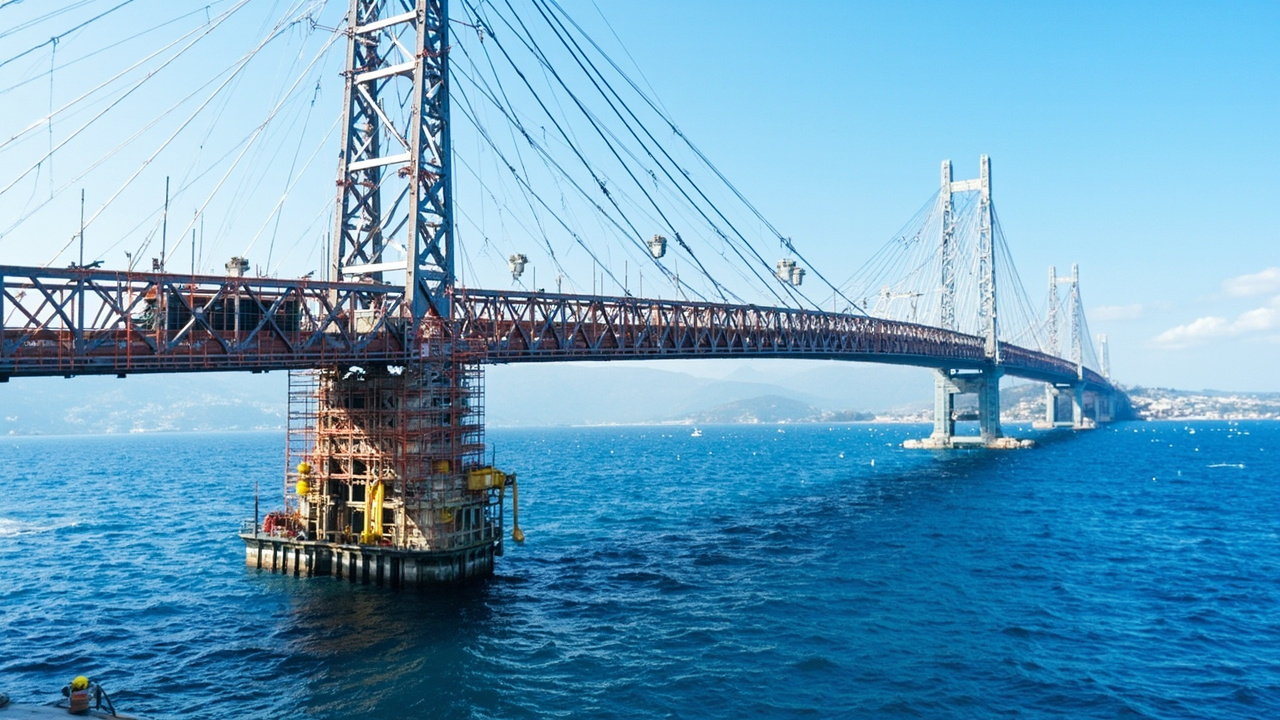
I. Corrosion Environment and Classification of Sea-Crossing Bridges
To select the right coating system, one must first understand the environment. ISO 12944-2:2018 classifies atmospheric corrosion environments into five levels from C1 (very low) to C5 (very high), with an additional "M" indicating exposure to marine or de-icing salt. Different parts of a sea-crossing bridge correspond to different levels:
– Marine atmospheric zone (above bridge deck, affected by sea wind salt spray): usually C5-M;
– Splash zone and tidal zone (water level fluctuation belt): most severe corrosion, often exceeding the conventional classification of ISO 12944, requiring special reinforcement or combined with cathodic protection;
– Underwater zone: mainly relies on coating barrier and combined protection with sacrificial anode/impressed current cathodic protection;
– Inside box girder (enclosed, high humidity, prone to condensation): although not directly exposed to salt spray, the internal high humidity and poor ventilation often require treatment as C4–C5 internal environment, with higher requirements for construction ventilation and film thickness uniformity.
Environmental classification is not just theoretical. ISO 9223 provides methods for determining corrosion levels based on pollutants (sulfur dioxide, chloride deposition rate) and the proportion of time for temperature and humidity, and engineering design is often supplemented by on-site coupon exposure or corrosion data from adjacent structures for calibration. The corrosion level directly determines "how much film thickness is needed, how many coats to use, and what resin to select", and is the starting point of the entire coating system.
Furthermore, chloride ions in the marine atmosphere not only corrode the metal at the initial stage, but also continuously migrate to the coating/metal interface during the coating service life. Once the coating has micropores, scratches, or weak adhesion points, the enrichment of chloride ions will accelerate the formation of local corrosion cells. This is also why the coating design of sea-crossing bridges cannot only pursue "appearance integrity", but must simultaneously consider "long-term barrier property" and "defect self-healing ability (such as cathodic protection of zinc-rich primer)".
II. Typical Compatibility System: Primer-Intermediate-Topcoat Three-Layer Logic
The mainstream compatibility for steel structures of sea-crossing bridges follows the classic three-layer structure of "zinc-rich epoxy primer + micaceous iron oxide epoxy intermediate coat + aliphatic polyurethane topcoat", which is highly consistent with the C5-M system recommended by ISO 12944-5:2008 (and GB/T 30790.5):
1. Zinc-rich epoxy primer: the zinc powder content is usually controlled according to the standard requirements for zinc-rich primers (the zinc powder content in dry film is generally specified by the system, common high-zinc systems are at the 80% level), relying on the "sacrificial anode" effect of zinc to provide cathodic protection to the steel and electrochemical protection for surface defects (such as missed coating, damage). When the coating is locally damaged and exposes the steel, zinc corrodes preferentially, thereby delaying the rust expansion of the steel substrate.
2. Micaceous iron oxide intermediate coat (MIO): the mica iron oxide flakes are arranged in parallel to form a "barrier maze", significantly extending the penetration path of corrosive media, while providing good interlayer adhesion and thickness accumulation for the topcoat. Its flake structure can also suppress the visual penetration of lower-layer defects.
3. Aliphatic polyurethane topcoat: weather-resistant, gloss-retaining, UV-resistant, resisting marine ultraviolet and salt spray aging, determining the appearance life of the bridge. Compared with aromatic polyurethane, the aliphatic system is less prone to yellowing and slower chalking under long-term UV exposure.
According to ISO 12944-5, when the above "zinc-rich primer + epoxy MIO + polyurethane topcoat" system is used in C5-M environment, the minimum total dry film thickness (DFT) is usually not less than 320 µm (specific depending on system number and product TDS). This number is not set arbitrarily: it is the minimum film thickness guarantee for the 15–25 year protection life target after laboratory cyclic corrosion (ISO 12944-9 / ISO 20340 procedure) and long-term exposure verification. It should be emphasized that the film thickness "lower limit" is not equal to "optimal"; in actual engineering, values near the upper limit are often taken to reserve maintenance margin.
III. Comparison of Compatibility Differences for Different Parts
Different parts of sea-crossing bridges have different corrosion mechanisms, and the compatibility also needs differentiated design. The following table summarizes the system key points for common parts:
| Part | Corrosion Level | Recommended Compatibility | Typical DFT Range | Key Control Points |
|---|---|---|---|---|
| Steel box girder outer surface | C5-M | Zinc-rich epoxy + Epoxy MIO + Aliphatic polyurethane | 280–360 µm | Interlayer compatibility, topcoat weather resistance |
| Inside steel box girder | C4 (internal high humidity) | Zinc-rich epoxy + Epoxy high-build/MIO | 200–280 µm | Ventilation, condensation prevention, no missed coating |
| Bridge tower (above splash zone) | C5-M | Same as box girder outer, or reinforced epoxy system | 320–400 µm | Construction accessibility, film thickness uniformity |
| Splash zone/tidal zone | Extreme | Heavy-duty anti-corrosion epoxy + possible cathodic protection | ≥500 µm (as per design) | Wet-dry alternation, mechanical impact |
| Cable (parallel wire) | C5-M | Galvanized/epoxy coated wire + wrapping/outer protection | Depends on cable structure | Sealing integrity, crevice corrosion prevention |
| Steel anchor box/bearing | C5-M | High-build epoxy + polyurethane | 320–400 µm | Edge wrapping, zinc-rich treatment |
It must be emphasized: the DFT in the above table is a "typical range" rather than an absolute fixed value, and shall be subject to the design document and the TDS of the product used in practice. Any compatibility change must undergo compatibility assessment and adhesion verification (such as GB/T 9286 cross-cut method, ASTM D4541 pull-off method), and a certain layer cannot be replaced by feel. For extreme parts such as splash zones, simply increasing the thickness of the organic coating may not be sufficient; it is often necessary to combine with thermal metal spraying (aluminum/zinc spraying) or cathodic protection to form a "coating + electrochemical" dual defense line.
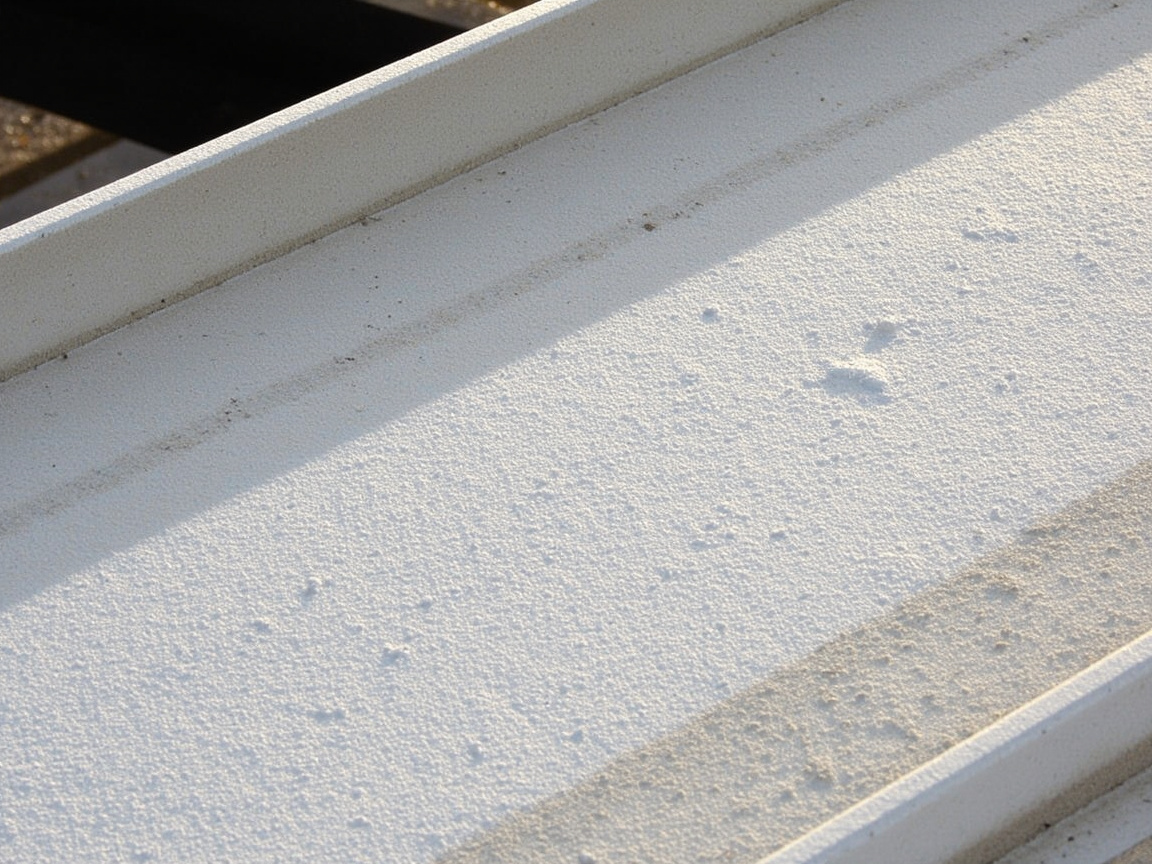
IV. Particularity of Internal Protection of Steel Box Girder
The inside of the steel box girder is the area most easily overlooked yet most prone to problems in bridge coating. It is enclosed, poorly ventilated, and prone to condensation due to day-night temperature differences. Once the primer is unevenly applied or the film thickness is insufficient, internal rust will spread from points to surfaces. Engineering measures usually include:
– Internal use of two-layer system of zinc-rich epoxy primer + epoxy MIO/high-build intermediate coat, DFT controlled at 200–280 µm;
– During construction, forced ventilation, control relative humidity ≤85% and steel plate temperature above dew point by more than 3℃ (according to ISO 12944-4 construction conditions);
– For "film thickness loss" parts such as stiffeners, welds, and edges, use stripe coat to ensure edge coverage;
– Before sealing the box, perform internal wet film/dry film thickness sampling and appearance inspection to avoid inability to repair after sealing.
This is different from general building steel structures: the inside of the box girder is almost inaccessible for maintenance, so "doing it right the first time" is much more important than "later repair". In practice, it should also be noted: the inside of the box girder often retains welding smoke and oil stains, which must be degreased and dedusted before sandblasting; if missed coating is found after sealing, it can often only be partially treated through manholes, and the quality is difficult to guarantee. Therefore, the final inspection before sealing should be written into the process card as a key control node.
V. Protection of Cables and Orthotropic Plates
Modern cable-stayed bridges and suspension bridges mostly use hot-dip galvanized or epoxy coated parallel wire strands, with outer wrapping protection or outer coating applied. Cable failure often originates from "crevice corrosion" — water penetrates along the anchor head or wrapping layer gaps and acts for a long time in a closed environment. Protection measures include: anchor head sealing, cable wrapping tape + outer polyurethane/fluorocarbon coating, regular inspection of cable force and appearance.
Orthotropic steel deck (bridge deck system), subjected to repeated wheel loads and fatigue stresses, requires coatings that emphasize "flexibility + wear resistance + stone-chip resistance". The topcoat often uses aliphatic polyurethane or even fluorocarbon paint to ensure long-term gloss retention and stain resistance. Coatings at fatigue cracks tend to crack with the substrate, so higher requirements are placed on interlayer adhesion and elongation at break. For the orthotropic steel deck beneath steel bridge deck paving, interface coordination between "coating + asphalt paving" is also often involved, and adhesion conflicts between the coating system and subsequent paving must be avoided.VI. Surface Preparation: Sa2.5 Is the Baseline
No matter how advanced the system is, surface preparation determines over 60% of the coating service life. ISO 8501-1:2007 defines blast cleaning grades as Sa1, Sa2, Sa2.5, Sa3. Main load-bearing members of sea-crossing bridges almost uniformly require Sa2.5 (very thorough blast cleaning): the steel surface is free of visible grease, dirt, and scale, rust and old coatings are substantially removed, with only slight traces of discoloration in the form of spots or streaks remaining.
Supporting controls also include:
– Surface roughness (anchor profile depth): per ISO 8503, typically controlled at 40–80 µm, ensuring adhesion without excessive coating consumption; excessively high roughness leads to insufficient film thickness at wave peaks, while too low reduces mechanical interlocking.
– Soluble salts (chlorides, ferrous salts): chloride exceeding limits on marine repair surfaces can "penetrate" the coating and cause blister rust; per ISO 8502-6/-9, chloride ions must be tested and controlled below the critical value (many specifications require ≤50 mg/m² order of magnitude, see project specification for details).
– Oil and dust: per ISO 8502-3, assess dust grade to avoid affecting adhesion; blasting abrasives should use copper slag, steel grit, etc., and sea sand (salty) is strictly prohibited.
After treatment, shop primer or the first coat should be applied as soon as possible (usually within 4 hours, shorter in high-humidity environments) to prevent flash rust. For areas such as high-strength bolt friction surfaces that need to maintain the slip coefficient, coating contamination of the friction surface should also be avoided, often using local masking or specialized treatment.
VII. Application Process and Film Thickness Management
Coating of sea-crossing bridges mostly combines "shop coating + site touch-up / closure segment coating":
1. Shop: steel girders are blast cleaned and coated with primer and intermediate coat, even partially with topcoat, before assembly; airless spray is mainly used to ensure uniform film thickness and efficiency.
2. Site: closure, welds, and damaged areas undergo secondary surface preparation (often local blast cleaning or power tool grinding to St3 / local Sa2.5), then touched up per the specification.
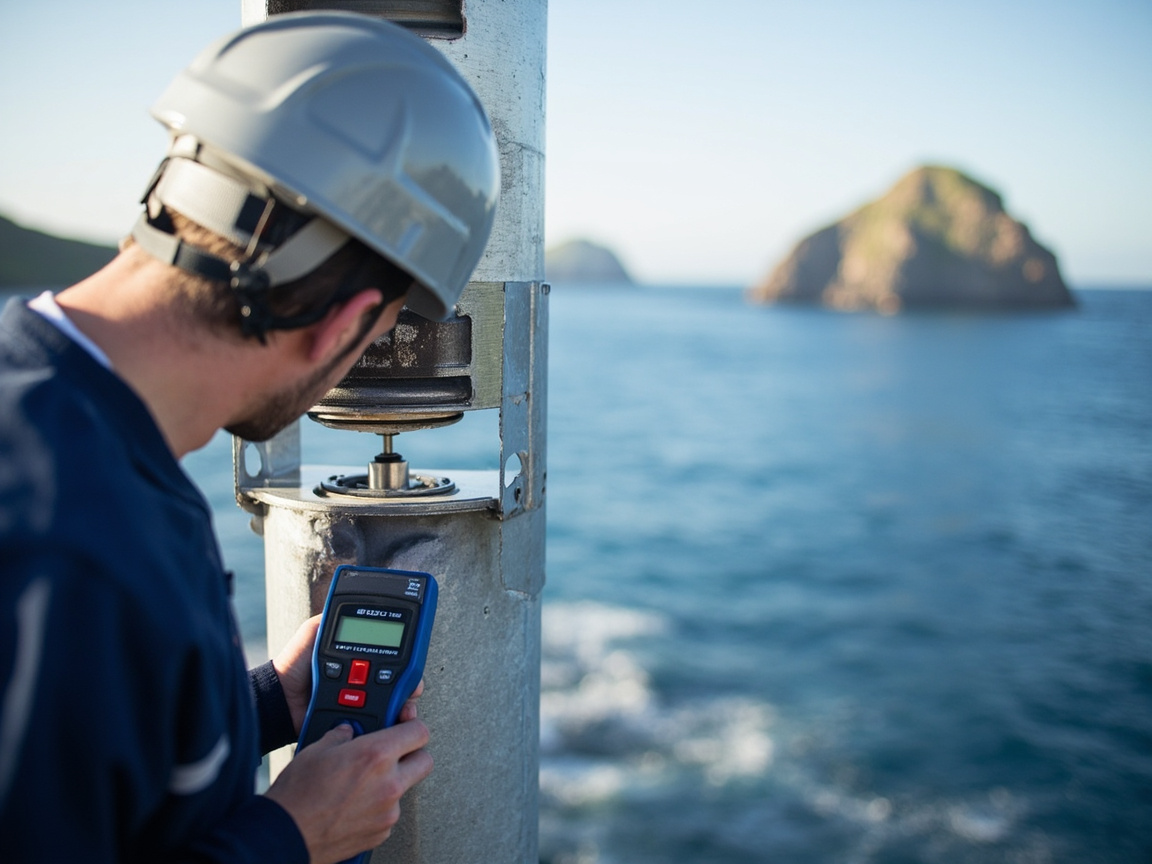
3. Film thickness management: wet film is controlled instantly with a WFT gauge, dry film is spot-checked with magnetic / eddy-current thickness gauge (ISO 2808); per the "90/90 rule" of ISO 12944 — for example, 90% of measurement points are not lower than the specified DFT, and all points are not lower than 90% of the specified value.
The environmental window is critical: ISO 12944-4 requires steel temperature at least 3°C above dew point, relative humidity generally ≤85% (specific per product TDS); rain, snow, strong wind, and low temperature (below 5°C or product minimum) should halt work or adopt heating/dehumidification measures. Offshore construction also faces rapid salt fog deposition; process衔接 must be tight, blast cleaning and coating should be completed within the same shift to avoid overnight flash rust.
VIII. Standards and Acceptance: Turning "Good-looking" into "Data"
Acceptance of sea-crossing bridges must be based on quantifiable data. Commonly used standards include:
– Adhesion: GB/T 9286 cross-cut method (grade 0/1 is excellent), ASTM D4541 pull-off method (requirement per design, commonly ≥5 MPa order of magnitude);
– Film thickness: ISO 2808, GB/T 13452.2;
– Salt spray / cyclic corrosion: ISO 9227 (neutral salt spray NSS), ASTM B117, ISO 12944-9 cyclic corrosion, ISO 20340 aging procedure;
– Appearance: no sagging, missed coating, pinholes, blistering, uniform color;
– Coating system certification: major bridges often require the coating system to pass third-party laboratory verification per ISO 12944-9 / ISO 20340 (e.g., 4200 h cyclic corrosion + UV aging combination).
It should be noted: the aforementioned "hours" of salt spray and cyclic corrosion are common industry verification thresholds; specific acceptance values are subject to the project technical specification and the third-party report of the selected system, and numbers should not be set independently without the report. In engineering disputes, the most common conflict is precisely "whether salt spray hours can equal service life years" — the answer is no; accelerated tests are only for relative comparison, and life judgment should integrate field panels and standard durability grades.

IX. Protection Orientation of Typical Projects
Taking several well-known domestic sea-crossing / river-crossing bridges as reference (only for technical orientation, no undisclosed project data cited): Hangzhou Bay Sea-Crossing Bridge, Hong Kong-Zhuhai-Macao Bridge, Qingdao Jiaozhou Bay Bridge, etc., the main girders and towers generally adopt the "zinc-rich epoxy primer + micaceous iron oxide epoxy intermediate coat + aliphatic polyurethane / fluorocarbon topcoat" system, with enhanced protection for splash zones and box girder interiors. The common feature of such projects is: standards first, film thickness priority, zoned specification, process documentation. This aligns with the methodology of ISO 12944 / GB/T 30790.
From a technology evolution perspective, recent bridge topcoats show a trend toward fluorocarbon and polysiloxane to further extend repaint cycles and reduce whole-life maintenance costs; primers continue to improve on water-based zinc-rich epoxy and low-VOC systems to meet environmental limits such as GB 30981-2020. But regardless of material updates, the principle of "system compatibility, controllable process, evidenced acceptance" remains unchanged.
X. Maintenance and Repaint Strategy
Even if a single coating achieves a 15–25 year design life, a maintenance loop of inspection — assessment — local repair — overall repaint must be established:
– Inspection: annually check topcoat chalking, gloss loss, rust spots, film thickness loss;
– Local repair: treat damaged points per "grind — primer touch-up — intermediate touch-up — topcoat touch-up", noting compatibility of old and new coatings;
– Overall repaint: when topcoat chalking is widespread and rust spots connect, assess and then repaint topcoat or redo the full system;
– Records: establish coating files for each span and component, compared with original film thickness and adhesion data.
Kexin New Materials (kexinMaterials) delivers bridge specifications as a package of "coating system + process boundaries + maintenance manual": not only providing material parameters for primer, intermediate and topcoat, but also marking DFT lower limits for each part, construction temperature/humidity windows and repaint intervals, so maintenance units have a basis and early failures from specification confusion are reduced. For the full picture of the standard system, see the overview of industrial coating standard systems.
XI. Common Selection Misconceptions
Misconception 1: Thicker film is safer. Wrong. Film thickness exceeding the process upper limit increases internal stress and cracking risk, and wastes material; control within the range of ISO 12944 and TDS.
Misconception 2: Only change topcoat, not the system. Wrong. Topcoat must be compatible with lower layers; cross-system replacement often causes interlayer delamination, and adhesion verification must be done before change.
Misconception 3: Box girder interior is unreachable so unimportant. Wrong. Once corroded, enclosed interiors are extremely hard to maintain, and should be constructed and inspected seriously per C4 grade.
Misconception 4: Blast then coat next day is fine. Wrong. In humid marine environments flash rust is very fast; first coat should be completed within the specified time (often ≤4 h).
Misconception 5: Salt spray hours can be written casually. Wrong. Acceptance values for salt spray / cyclic corrosion must come from the third-party verification report of the used system, not set by impression.
XII. Techno-Economic Trade-off of Sea-Crossing Bridge Coating
In engineering practice, coating schemes are never "the more expensive the better" or "the thicker the better", but a techno-economic trade-off over the whole life cycle. Bridge design protection life is usually 15–25 years, meaning the cost of one qualified coating should be compared with the avoided later repair, road closure, and safety accident costs, not merely with initial material cost. Many projects over-suppress coating unit price at tender stage, yet ignore the life gain from specification completeness, construction accessibility and process inspection, resulting in early corrosion a few years after opening, paying a higher whole-life cost instead.
From material selection, upgrading topcoat from ordinary aliphatic polyurethane to fluorocarbon or polysiloxane raises initial cost, but significantly extends repaint cycle; for mega sea-crossing channels, the social cost saved by one less bridge-closure repaint often far exceeds the material price difference. For primers, water-based zinc-rich epoxy and high-solid zinc-rich epoxy have trade-offs in VOC and application habits, and should be judged comprehensively with GB 30981-2020 limits and site conditions, not decided purely by unit price.
The economy of construction organization is equally key. Shop coating has controllable environment, high efficiency, stable quality, and should be the main body; site touch-up is limited by weather and space, with large quality fluctuation and high cost. Therefore "complete more coats in shop, reduce site high-altitude work" is a general strategy balancing quality and cost. For unreachable parts like box girder interiors, better invest more in shop than leave risk after enclosure.
Finally, digitalization and traceability are changing the economic model of bridge coating. Keeping blast grade, film thickness, adhesion, and environmental parameters of each component as electronic records not only supports liability definition in warranty disputes, but also optimizes subsequent projects' specification and process boundaries through data accumulation, forming a continuous cost-reduction technical asset. This is the economic return of the "standards first, process documentation" philosophy.
XIII. Quality Data Management Practice for Bridge Coating
The quality of bridge coating cannot stay at "looks flat", but must fall to retrievable data. In engineering, film thickness measurement point numbers are usually established by component and section, and the design dry film thickness, measured dry film thickness, construction date, and environmental parameters of each point are entered into a database, forming the base of "one span one file, one piece one curve". The value of this data-based management is especially prominent in later maintenance and dispute handling: when rust spots appear on a span, the maintenance unit can immediately retrieve the original film thickness curve to judge whether it is insufficient application thickness or later damage, thereby choosing local repair or overall assessment, rather than deciding based on visual impression.
Random inspection of adhesion should also be institutionalized. In addition to routine rating by cross-cut method, for main load-bearing members it is advisable to establish a quantitative baseline by pull-off method and archive each test result. Third-party verification reports of salt spray and cyclic corrosion should be preserved long-term as part of the handover documents; their measured hours and failure modes are the core evidence for evaluating system life, far superior to any verbal promise. The root of many engineering disputes is precisely the lack of this traceable verification chain, leading to difficulty in defining responsibilities.
The maintenance archive is the closed loop of bridge full-life-cycle management. Establishing continuous ledgers of annual inspection, film thickness loss trend, topcoat chalking grade, and local repair records can support repainting decisions shifting from "by impression" to "by data". When film thickness loss reaches the critical proportion of design margin, or the adhesion baseline shows systematic decline, an overall repainting assessment can be triggered, avoiding passive response after structural damage expands, thus ensuring safety and optimizing cost.
Digital inspection is changing this paradigm. Combined with image recognition for automatic identification of apparent defects, and IoT-based temperature, humidity, and condensation monitoring, maintenance units can warn before corrosion risk rises, moving the maintenance window from "after failure" to "before failure". For large sea-crossing channels, the compound effect of such data assets makes the return on initial coating investment far exceed the material itself, and also echoes the underlying methodology of standards first and process documentation, which is the inevitable direction of future bridge operation and maintenance.
In the full life cycle of sea-crossing bridges, the quality of initial coating determines the maintenance burden for the following decades. Many projects excessively lower the unit price of coating at the bidding stage, but ignore the life gain brought by completeness of配套 and process inspection, resulting in early rust after several years of opening to traffic, instead paying a higher price. Therefore, coating decisions should be based on life-cycle cost rather than initial material cost, writing quality indicators into executable contract clauses, making standards, film thickness, and acceptance hard constraints rather than soft suggestions.
FAQ
FAQ
Q: Why are sea-crossing bridges usually designed according to C5-M?
A: C5-M is the combination grade of "very high corrosion + marine/de-icing salt" in ISO 12944-2. Sea-crossing bridges are subject to salt-containing sea fog, high humidity, and ultraviolet radiation all year round, and the corrosion rate is much higher than inland, so main load-bearing members are generally selected with systems and film thickness according to C5-M to match the design protection life target of 15–25 years.
Q: What is the general total dry film thickness under C5-M environment?
A: According to ISO 12944-5, when using the system of "epoxy zinc-rich primer + epoxy micaceous iron oxide intermediate coat + aliphatic polyurethane topcoat", the minimum total DFT is usually not less than 320 µm (depending on the specific system number). In practice, the design document and product TDS shall prevail; extreme parts such as splash zone will be higher, often further reinforced by metal spraying or cathodic protection.
Q: What is the core function of epoxy zinc-rich primer?
A: The core function is "cathodic protection": the high-content zinc powder in the paint film forms a sacrificial anode on the steel surface; when the coating is locally damaged and exposes iron, zinc corrodes preferentially to protect the steel; at the same time, zinc can also provide certain shielding and self-healing effect at defects, and is the first line of defense in heavy anti-corrosion配套.
Q: Why should surface treatment reach Sa2.5?
A: The blast cleaning grade directly determines coating adhesion and life. Sa2.5 (very thorough blast cleaning) requires scale, rust, and old paint to be basically removed, leaving only slight stains, and is the minimum requirement for bridge main load-bearing members; below this grade will greatly shorten the protection life and increase the risk of early rust.
Q: Why control soluble salts (chloride ions)?
A: If chloride ions remain on the surface of marine environment repair pieces, they will induce "blister rust" and filiform corrosion through the coating. Usually, according to ISO 8502 series, chloride ions are detected and controlled below the critical value specified by the project (common target is ≤50 mg/m² order of magnitude); if exceeded, water washing or re-blasting must be performed.
Q: Why is the inside of steel box girder more prone to problems?
A: The inside of the box girder is enclosed, poorly ventilated, prone to condensation, and almost inaccessible for later maintenance. Once application is uneven or film thickness is insufficient, rust will spread inside. Therefore, the inside should be carefully constructed according to C4 grade, forced ventilation, and film thickness and appearance inspection completed before sealing the box, eliminating the risk of missed coating before enclosure.
Q: What is the "90/90 rule" for film thickness acceptance?
A: The common practice is: 90% of thickness measurement points are not lower than the specified DFT, and all measurement points are not lower than 90% of the specified DFT (specific threshold subject to project specification). This rule balances uniformity and lower limit, avoiding local thinness becoming a corrosion breakthrough, and is the general ruler for ISO 12944配套 acceptance.
Q: What are the special requirements for splash zone coating?
A: The splash zone has alternating wet and dry, high oxygen, and strong mechanical scouring, with the most severe corrosion, often exceeding the conventional grading of ISO 12944. Heavy anti-corrosion epoxy thick coat or even cathodic protection is required, DFT is often ≥500 µm (subject to design), and edge wrapping and impact resistance design should be emphasized.
Q: What if old and new coatings are incompatible during bridge repainting?
A: Interlayer adhesion verification (GB/T 9286, ASTM D4541) should be done first. If incompatible, the old layer must be thoroughly removed to a qualified surface before construction according to配套; never directly apply new paint on unknown old paint causing whole-sheet peeling.
Q: How to judge local repair or overall repainting?
A: Establish annual inspection and coating archives; when topcoat only has local chalking and isolated rust spots, do local repair; when rust spots are connected, film thickness is lost in large areas, and adhesion declines, assess overall repainting. Decisions should be based on data rather than visual impression, combined with remaining life estimation.
Further Reading
- Marine Coating and Ballast Tank Protection: From IMO PSPC to IMO Coating System Selection
- Urban Utility Tunnel Anti-Corrosion: Enclosed Space Steel Structure and Internal Environment配套
- Industrial Protective Coating System Overview: ISO 12944 Corrosion Grades and配套 Design
– General Anti-Corrosion配套 Design for Steel Structures: From bridges to general steel structures, the "primer–intermediate–topcoat"配套 principle and film thickness logic.
– Industrial Coating Standards System Overview: Systematically sort out the hierarchy and applicable boundaries of ISO 12944, GB/T 30790, ASTM and other standards.
– Offshore Wind Turbine Tower Coating Anti-Corrosion Key Points: Same marine C5-M environment, compare bridge with tower and splash zone protection similarities and differences.