Petrochemical plants are among the most complex scenarios for industrial corrosion: high temperature, high pressure, flammable media, acidic environments, and extensive insulation layers are intertwined. Unlike ordinary steel structures, the failure of petrochemical equipment is often not "visible rust," but hidden corrosion concealed under insulation, between flange gaskets, and at elbow weld seams. To understand petrochemical anti-corrosion, one must establish a three-dimensional mindset of "temperature zoning + media zoning + CUI prevention and control."
Kexin New Materials (kexinMaterials) has technical expertise in epoxy zinc-rich, heat-resistant epoxy, and inorganic zinc silicate systems suitable for petrochemical applications, supporting配套 design from ambient-temperature pipelines to medium- and high-temperature equipment. For the cathodic protection mechanism of zinc-rich primer, refer to the technical analysis of epoxy zinc-rich primer.
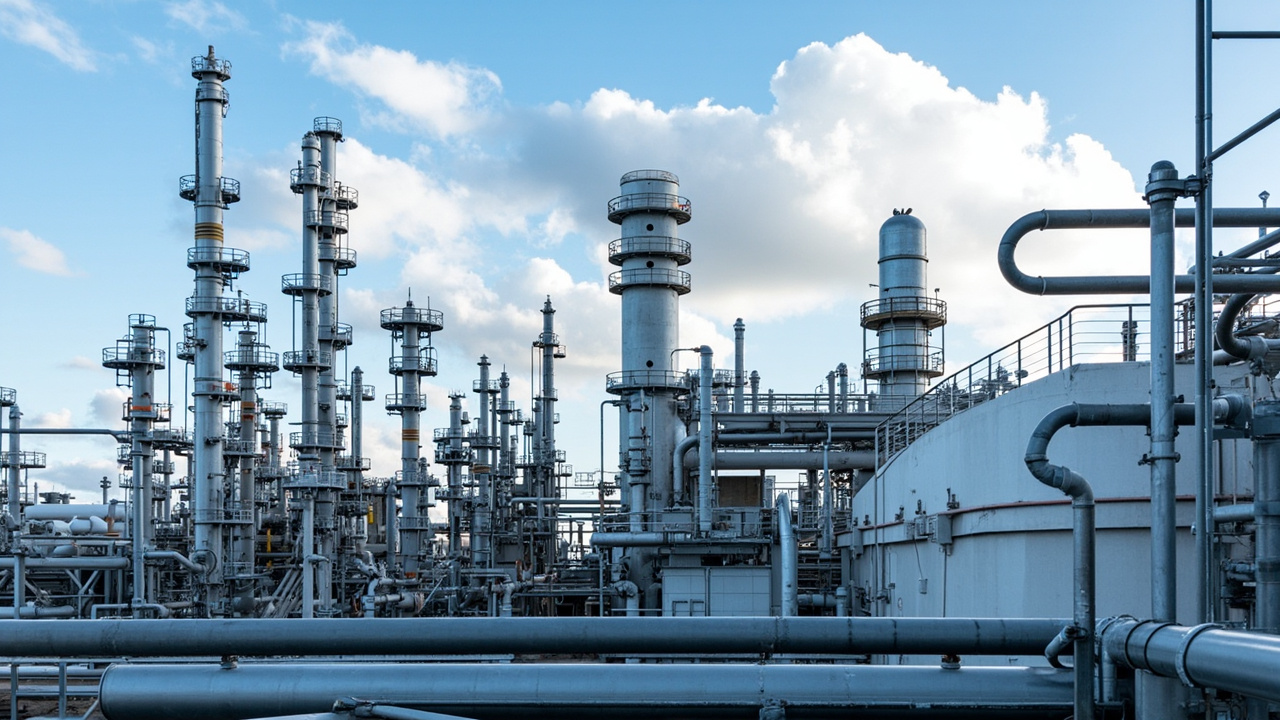
I. Complexity of Petrochemical Corrosion
The corrosive environment of petrochemical equipment is superimposed by multiple factors:
- Large temperature span: From ambient temperature to several hundred degrees Celsius, materials and配套 differ drastically.
- Diverse media: Crude oil, acidic gas (H₂S, CO₂), amine solution, sulfuric acid, alkaline liquor, etc., each with its own specific corrosion mechanism.
- Corrosion under insulation (CUI): After insulation layer absorbs water, an occluded corrosion cell forms, and it is difficult to detect visually.
- Alternating conditions: Start-up/shut-down and temperature cycles cause coating thermal fatigue and increase CUI risk.
This complexity dictates that petrochemical anti-corrosion cannot apply a single配套, but must be finely designed by "location—temperature—media" and pay attention to details under insulation and at flanges.
II. Material Selection Logic by Temperature Zoning
Engineering practice often divides material selection ranges by the design temperature of equipment/pipelines (specific heat-resistant upper limits are subject to product TDS, not asserted with numbers here):
- Ambient to medium-temperature zone: Conventional epoxy zinc-rich primer + epoxy micaceous iron intermediate coat + aliphatic polyurethane/epoxy topcoat, meeting general atmospheric and external equipment anti-corrosion.
- Medium- and high-temperature zone: Requires heat-resistant coating, such as silicone heat-resistant coating, modified epoxy heat-resistant system, to withstand thermal aging and thermal cycling.
- High-temperature zone/flame contact: May adopt inorganic zinc silicate, dedicated high-temperature coating, or even metal thermal spraying, depending on temperature and media.
- Low-temperature zone: Cold insulation (rather than thermal insulation) locations, where anti-condensation and CUI prevention are equally important, and end-seal waterproofing is key.
Temperature zoning is not based on feeling, but should combine process operating temperature, design temperature, and thermal cycling amplitude, and be determined after consulting the heat-resistant temperature curve in the coating TDS.
III. Corrosion Under Insulation (CUI) and NACE SP0198
CUI is the number one hidden danger in petrochemical anti-corrosion. Once the insulation layer becomes damp due to end-seal failure, rainwater infiltration, or steam leakage, water is retained within it, forming oxygen concentration difference and occluded cells on the carbon steel surface, with corrosion rates far exceeding exposed pipes. NACE SP0198 "External Corrosion Control of Carbon Steel Equipment Under Insulation and Fireproofing" provides systematic prevention recommendations:
- Continuous and complete closed coating system: Use defect-free, continuous anti-corrosion coating under insulation as the first barrier.
- Waterproof end-seal: Provide reliable waterproof sealing at insulation ends, supports/hangers, and flanges to block water intrusion paths.
- Material selection by temperature zoning: Select heat-resistant and CUI-resistant配套 according to the aforementioned temperature ranges to avoid coating powdering and loss of protection at high temperature.
- Inspection and monitoring: Use infrared, ultrasound, or periodic opening inspection for high-risk locations to detect under-insulation rust early.
The core of CUI prevention is "don't let water in" and "if it gets in, it can be detected in time," both indispensable. Many accidents are not due to coating failure itself, but to long-term water retention in insulation caused by missing end-seal design and maintenance.
IV.配套 Comparison
The table below summarizes the配套 orientation for typical petrochemical temperature ranges:
| Temperature range (illustrative) | Typical location | Recommended system | Key control point |
|---|---|---|---|
| Ambient–medium temperature | Pipe racks, equipment exterior | Epoxy zinc-rich + epoxy micaceous iron + polyurethane | Intercoat compatibility, film thickness |
| Medium-high temperature | Near heating furnace, hot oil pipeline | Silicone/heat-resistant epoxy | Heat-resistant curve, end-seal |
| High temperature | Reactor, flue | Inorganic zinc silicate/dedicated temperature-resistant | No conflict with media |
| Under insulation | All insulated piping and equipment | Continuous closed配套 + waterproof end-seal | CUI prevention |
| Cold insulation location | Low-temperature pipeline | Vapor barrier + anti-corrosion primer | Anti-condensation |
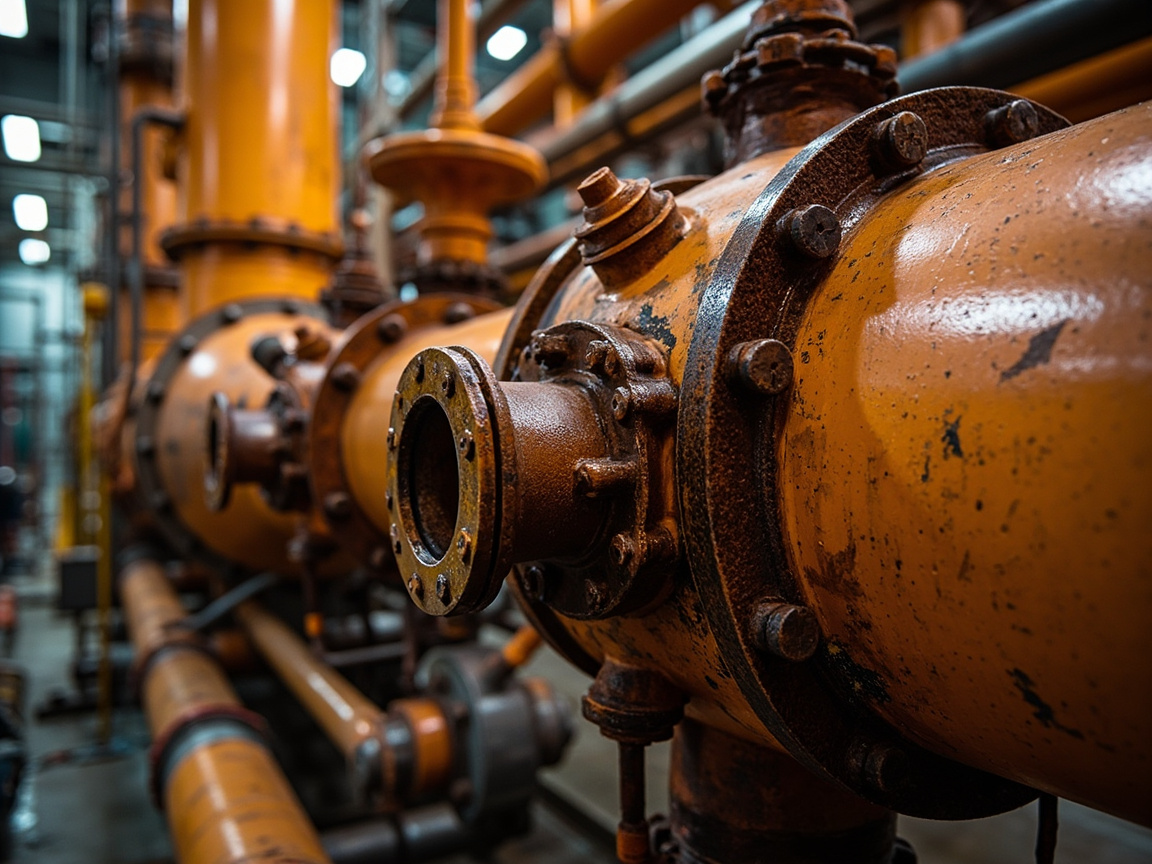
It must be emphasized: the temperatures in the table above are illustrative ranges; actual heat-resistant upper limits are based on product TDS and process temperature, and should not be judged independently from data.
V. Heat-Resistant Coatings and Inorganic Zinc Silicate
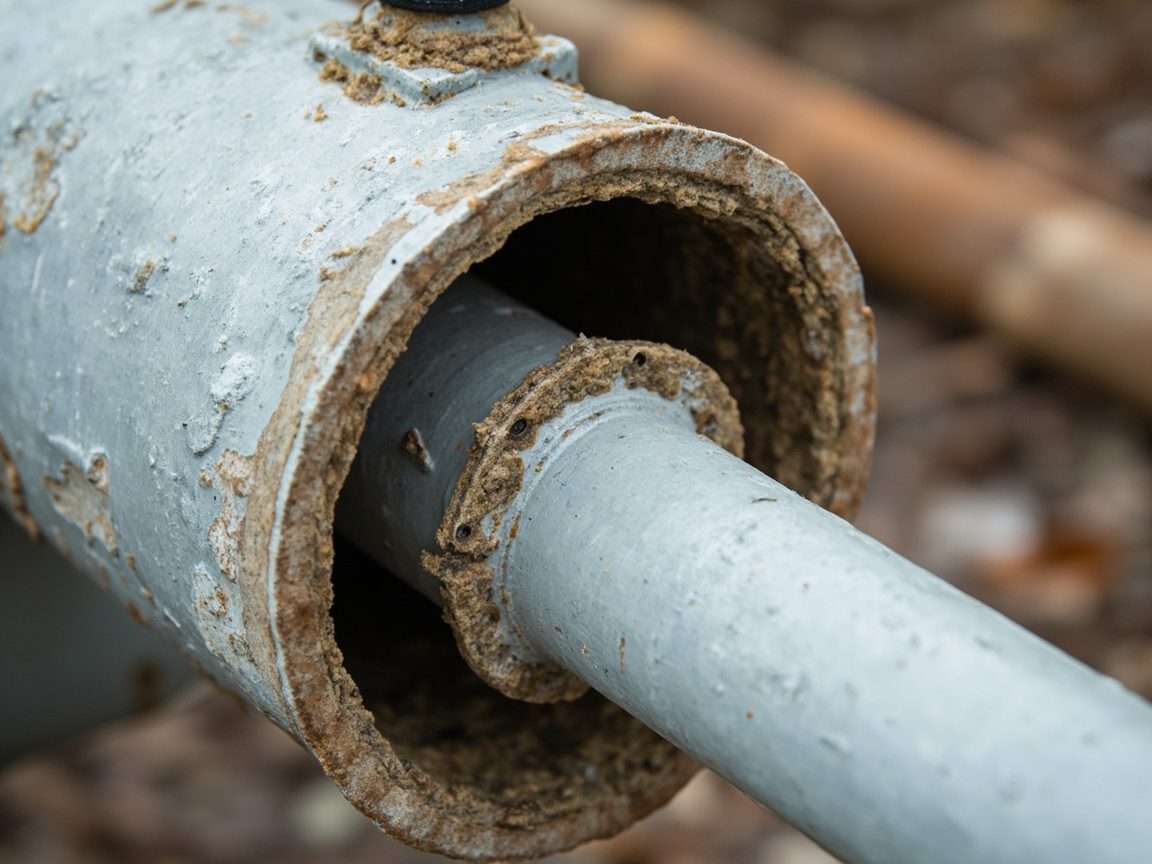
Medium- and high-temperature locations often use silicone heat-resistant coating, whose Si-O bond energy is high and temperature resistance is good, maintaining film integrity within a certain temperature range; inorganic zinc silicate is based on zinc powder + silicate, resistant to high temperature and providing cathodic protection, but is relatively brittle and demands higher construction quality. The two are suitable for different temperature and media conditions; selection must combine process temperature curve, media compatibility, and applicability.
Note: The "temperature resistance" of heat-resistant coating usually refers to dry heat environment; if steam or acidic condensation exists, separate evaluation is required; inorganic zinc silicate may consume zinc rapidly in acidic condensation environment and should match process media.
VI. Surface Treatment and Construction Boundaries
Surface treatment of petrochemical equipment also follows Sa2.5 (critical components) of ISO 8501-1, but maintenance sites are often limited by space and safety, possibly using power tool cleaning to St3 or local blasting. Regardless of method, oil, salt, and roughness must be controlled, and coating-to-substrate adhesion ensured. Maintenance painting must also consider shutdown window, hot work safety, and ventilation; process organization is more complex than new construction.
VII. Under Fireproofing and Special Locations
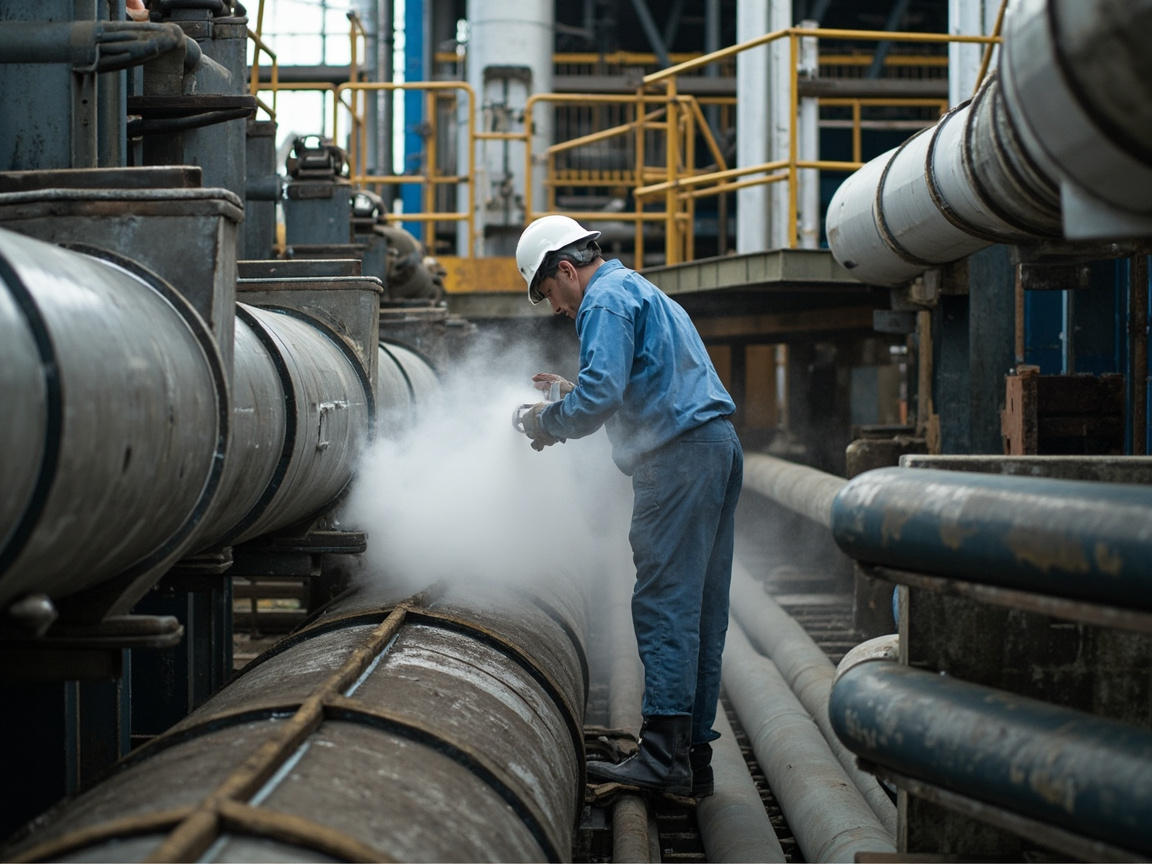
Some petrochemical equipment is wrapped with fireproofing (e.g., steel structure fire-retardant coating), under which CUI risk also exists. Matching of fireproofing and anti-corrosion layers, end-seal waterproofing, and water intrusion after fireproofing damage are all prevention focuses. "Geometrically complex" locations such as flanges, valves, supports/hangers, and instrument nozzles are CUI hotspots and should be priority objects for inspection and end-seal design.
VIII. Corrosion Monitoring and Lifecycle Management
Modern petrochemical enterprises increasingly adopt corrosion circuits, online monitoring (e.g., resistance probes, ultrasonic thickness measurement), and Risk-Based Inspection (RBI) to manage corrosion. As "passive protection," painting should combine with "active monitoring": establish equipment painting files, mark配套, film thickness, maintenance records, and link with monitoring data to evaluate remaining life.
Kexin New Materials (kexinMaterials) recommends that petrochemical配套 technical documents clearly define temperature zoning, DFT and heat-resistant upper limit of each zone, and CUI prevention measures (end-seal and inspection), so that operation and maintenance units can maintain by drawing. For the full picture of the standard system, extend reading to the overview of industrial coating standard system.
IX. Common Selection Misconceptions
Misconception 1: All pipelines use the same set of paint. Wrong. Temperature and media differ greatly; zoning selection is mandatory.
Misconception 2: Safe after insulation wrapping. Wrong. End-seal failure is the start of CUI; waterproofing is key.
Misconception 3: Higher heat resistance of coating is better. Wrong. Must match actual temperature curve and media;脱离 data is meaningless.
Misconception 4: Random grinding during maintenance is fine. Wrong. Surface treatment grade directly determines adhesion and life; standards must not be lowered.
Misconception 5: CUI detected by naked eye. Wrong. Under insulation is hidden; rely on end-seal design + periodic inspection.
X. Techno-Economics and Maintenance Strategy of Petrochemical Anti-Corrosion
The anti-corrosion investment of petrochemical plants must be evaluated under the background of "continuous production." The loss of one unplanned shutdown is often counted in hours and millions, so the cost-performance of anti-corrosion lies not in whether the material is cheapest, but in avoiding safety accidents and production stoppage caused by corrosion leakage and wall thickness reduction. Many enterprises treat anti-corrosion budget as compressible cost, ignoring the chain cost of corrosion failure, which is especially dangerous when maintenance cycle is extended.
From material selection, zoning配套 by temperature and media seems to increase management complexity, but is actually the most economical practice: using general epoxy system in ambient zone, heat-resistant or inorganic system in high-temperature zone, and continuous closed配套 under insulation, avoiding both over-design and under-protection from "one-size-fits-all." Zoning selection also enables more precise maintenance stocking, reducing inventory and misapplication risks.
The maintenance strategy is the decisive factor in petrochemical anti-corrosion. The turnaround window for units is limited, and coating operations must be finely scheduled with hot work, inspection, and replacement processes. Surface preparation at maintenance sites is constrained by space and safety, and often cannot reach Sa2.5 as in new construction; it is necessary to select feasible treatment grades within the allowable range of specifications, and compensate through strengthened inspection (such as denser random checks of film thickness and adhesion). For pipelines exposed due to insulation removal, it is a golden window to discover CUI and assess remaining life; wall thickness measurement and non-destructive testing should be carried out simultaneously, upgrading "paint repair" to "pipeline corrosion management".
Digitalization and Risk-Based Inspection (RBI) are changing the model of petrochemical anti-corrosion. By integrating coating archives, corrosion monitoring data, medium and temperature parameters, high-risk circuits can be identified and resources prioritized, achieving "using the best steel on the cutting edge". For concealed corrosion under insulation, combining infrared thermal imaging to screen water-containing areas and then targeted opening for verification is more efficient than blind full removal. The shift of anti-corrosion from "passive painting" to "risk-based active management" is a clear industry trend.
Finally, safety and environmental constraints cannot be ignored. Coating in confined spaces requires forced ventilation and solvent concentration control; maintenance at high-temperature parts requires prevention of burns and fire; waste abrasives and coating packaging must be disposed of compliantly. These compliance requirements themselves are also cost components, but the accident costs from omitting them far exceed the investment. Weighing safety, environmental protection, quality, and cost within the same framework is the mature decision-making approach for petrochemical anti-corrosion.
XI. In-depth Reading of Petrochemical Coating Formulations and Construction Details
The selection of coatings for petrochemical units is essentially a dual match of temperature curve and medium compatibility. General-purpose epoxy systems are mature and reliable in normal-temperature zones; medium- and high-temperature zones require heat-resistant systems. Silicone heat-resistant coatings rely on the high bond energy of siloxane bonds to withstand dry heat, but their adhesion to substrates and compatibility with the underlying primer need careful verification; inorganic zinc silicate forms a film with zinc powder and silicate, is heat-resistant and provides cathodic protection, but is more brittle and has high requirements for construction and surface. The basis for selection should be the process temperature curve and medium properties, not the "temperature resistance value" label.
The prevention and control of concealed corrosion under insulation is a system engineering beyond the formulation. Even if the coating itself is temperature-resistant, if end seal failure allows water to enter the insulation, the oxygen concentration difference in the occluded environment will still drive corrosion. Therefore, coatings under insulation emphasize "continuity, no pinholes, resistance to temperature cycling"; construction must eliminate missed coating and pinholes, and set up reliable waterproof sealing at ends, supports/hangers, and flanges. Some projects introduce infrared thermal imaging to screen water-containing areas and then use ultrasonic thickness measurement to verify wall thickness, turning concealed corrosion into detectable risk, which is a mature prevention idea in recent years.
Coating conditions at maintenance sites are far inferior to new construction. Confined spaces, residual media, hot work arrangements, and short windows make surface preparation often unable to reach ideal grades. At this time, feasible treatment levels should be selected within the allowable range of specifications, and compensated by denser random checks of film thickness and adhesion; for pipelines exposed by insulation removal, corrosion assessment should be carried out simultaneously, upgrading "painting" to "pipeline corrosion management". The safety bottom line of maintenance coating must not be broken either: forced ventilation, control of flammable and toxic vapor concentrations, and implementation of hot work supervision are red lines that no schedule pressure can cross.
The synergy between cathodic protection and coating is especially important for buried or immersed parts. The external anti-corrosion layer provides insulation shielding, and cathodic protection provides electrochemical protection; the absence of either will overburden the other. The design parameters of sacrificial anode or impressed current systems should be maintained in linkage with coating condition; when the coating ages extensively, the cathodic protection current demand rises and the system may be inadequate. Therefore, coating quality directly determines the economy and reliability of cathodic protection, and the two should be planned together at the design stage rather than separately handed over to different disciplines.
From the perspective of risk-based inspection, petrochemical anti-corrosion is shifting from "painting on schedule" to "investing by risk". By integrating coating archives, corrosion monitoring, medium and temperature parameters, high-risk circuits can be identified and resources prioritized. For key parts with high temperature, under insulation, and strong medium corrosivity, increase inspection frequency and maintenance level; for low-risk parts, moderately reduce frequency. This data-based resource allocation is more economical than uniform effort and better able to hold the safety bottom line within limited maintenance windows, which is a clear evolution direction of the industry.
The detection idea of corrosion under insulation is worth refining. Traditional opening inspection is intuitive but destroys insulation, is costly, and has limited coverage. Modern practice tends to first use infrared thermal imaging to screen suspected water-containing areas; abnormal thermal images often correspond to water ingress in insulation, then targeted opening and ultrasonic thickness measurement are used for verification, which improves detection rate and controls workload. For high-risk circuits, resistance probes or online thickness measurement can also be deployed to achieve trend monitoring. Turning concealed corrosion into detectable and predictable risk is one of the most pragmatic advances in petrochemical anti-corrosion in recent years.
The synergy between cathodic protection and coating is often managed separately. The external anti-corrosion layer provides insulation shielding, and cathodic protection provides electrochemical protection; the absence of either will overburden the other. The design parameters of sacrificial anode or impressed current systems should be maintained in linkage with coating condition; when the coating ages extensively, the protection current demand rises and the system may be inadequate. Therefore, coating quality directly determines the economy and reliability of cathodic protection; the two should be planned together at the design stage, jointly evaluated during operation and maintenance, rather than separately handed over to different disciplines, causing responsibility vacuum.
Risk-based inspection is reshaping resource allocation. By integrating coating archives, corrosion monitoring, medium and temperature parameters, high-risk circuits can be identified and resources prioritized. For key parts with high temperature, under insulation, and strong medium corrosivity, increase inspection frequency and maintenance level; for low-risk parts, moderately reduce frequency. This data-based investment is more economical than uniform effort and better able to hold the safety bottom line within limited maintenance windows. The shift from painting on schedule to investing by risk is a clear evolution direction of the industry, and also requires management processes and data foundation to be upgraded simultaneously.
Safety and environmental constraints cannot be ignored. Coating in confined spaces requires forced ventilation and control of flammable and toxic vapor concentrations; maintenance at high-temperature parts requires prevention of burns and fire; waste abrasives and coating packaging must be disposed of compliantly. These requirements themselves are also cost components, but the accident costs from omitting them far exceed the investment. Weighing safety, environmental protection, quality, and cost within the same framework is the mature decision-making approach for petrochemical anti-corrosion, and also the foundation for enterprises' sustainable development under strict supervision.
The detection idea of corrosion under insulation is worth refining. Traditional opening inspection is intuitive but destroys insulation, is costly, and has limited coverage. Modern practice tends to first use infrared thermal imaging to screen suspected water-containing areas; abnormal thermal images often correspond to water ingress in insulation, then targeted opening and thickness measurement are used for verification, which improves detection rate and controls workload. For high-risk circuits, resistance probes or online thickness measurement can also be deployed to achieve trend monitoring. Turning concealed corrosion into detectable and predictable risk is one of the most pragmatic advances in petrochemical anti-corrosion in recent years.
The synergy between cathodic protection and coating is often managed separately. The external anti-corrosion layer provides insulation shielding, and cathodic protection provides electrochemical protection; the absence of either will overburden the other. The design parameters of sacrificial anode or impressed current systems should be maintained in linkage with coating condition; when the coating ages extensively, the protection current demand rises and the system may be inadequate. Therefore, coating quality directly determines the economy and reliability of cathodic protection; the two should be planned together at the design stage, jointly evaluated during operation and maintenance, rather than separately handed over to different disciplines, causing responsibility vacuum.
Risk-based inspection is reshaping resource allocation. By integrating coating archives, corrosion monitoring, medium and temperature parameters, high-risk circuits can be identified and resources prioritized. For key parts with high temperature, under insulation, and strong medium corrosivity, increase inspection frequency and maintenance level; for low-risk parts, moderately reduce frequency. This data-based investment is more economical than uniform effort and better able to hold the safety bottom line within limited maintenance windows. The shift from painting on schedule to investing by risk is a clear evolution direction of the industry.
Safety and environmental constraints cannot be ignored. Coating in confined spaces requires forced ventilation and control of flammable and toxic vapor concentrations; maintenance at high-temperature parts requires prevention of burns and fire; waste abrasives and coating packaging must be disposed of compliantly. These requirements themselves are also cost components, but the accident costs from omitting them far exceed the investment. Weighing safety, environmental protection, quality, and cost within the same framework is the mature decision-making approach for petrochemical anti-corrosion, and also the foundation for enterprises' sustainable development under strict supervision; no schedule pressure can cross these bottom lines.
The maintenance strategy is the decisive factor in petrochemical anti-corrosion. The turnaround window for units is limited, and coating operations must be finely scheduled with hot work, inspection, replacement and other processes. Surface preparation at maintenance sites is constrained by space and safety, and often cannot reach the grade of new construction; feasible treatment levels must be selected within the allowable range of specifications and compensated by denser random checks. For pipelines exposed by insulation removal, wall thickness and non-destructive testing should be carried out simultaneously, upgrading paint repair to pipeline corrosion management, which is the real practice to hold unit safety.
The complexity of petrochemical anti-corrosion determines that it is always a system engineering rather than an isolated operation. Temperature, medium, insulation, and maintenance windows are intertwined, and any single measure is insufficient to cover all risks. Precisely for this reason, mature engineering management regards anti-corrosion as a main line running through the whole cycle of design, construction, and operation and maintenance, driving resource allocation with data and constraining materials and processes with standards. Only by treating coating, cathodic protection, inspection, and safety management as a whole can the safety and continuous operation of units be held under harsh working conditions, which is also the most valuable experience precipitated from long-term industry practice.
Further, the progress direction of petrochemical anti-corrosion is to transform passive painting into active risk management. Through corrosion monitoring, data integration, and risk-based resource allocation, enterprises can hold the most critical parts within limited maintenance windows and avoid catastrophic failure. This transformation relies on the synergy of standards, materials, processes, and archives, as well as the upgrade of management processes. When anti-corrosion is truly integrated into the full life cycle management of units, it is no longer a cost burden, but becomes the core capability to ensure continuous production and safe operation, creating stable and long-term value for enterprises under strict supervision.
It can be said that every progress in petrochemical anti-corrosion is an effort to turn unknown risks into manageable risks. When standards, monitoring, and data are truly connected, the safety of units has a solid foundation, and enterprises can move forward steadily in harsh environments.
In the petrochemical industry, anti-corrosion is never an isolated technical link, but a system capability running through the life of units. By twisting standards, materials, monitoring, and management into one rope, enterprises can hold the safety bottom line under complex working conditions and make continuous production possible.
FAQ
FAQ
Q: What is Corrosion Under Insulation (CUI)?
A: CUI refers to the concealed corrosion on the external surface of carbon steel equipment under insulation/cold insulation, formed due to water penetration and retention. Once the insulation end seal fails or gets damp, an oxygen concentration difference and occluded cell are formed inside, and the corrosion rate can far exceed that of exposed pipes, and it is difficult to detect by visual inspection, making it an important hidden danger in petrochemical units.
Q: What prevention suggestions does NACE SP0198 give?
A: NACE SP0198 "Control of External Corrosion on Carbon Steel Equipment Under Insulation and Fireproofing" suggests: use continuous and complete closed anti-corrosion coating as the first barrier; set reliable waterproof sealing at end seals, supports/hangers, and flanges to block moisture; select heat-resistant and CUI-resistant systems by temperature zone; regularly inspect or monitor high-risk parts. The core is "prevent water intrusion" and "early detection".
Q: How to select materials by temperature zone for petrochemical equipment?
A: Usually divided into normal–medium temperature (conventional epoxy system), medium–high temperature (silicone/heat-resistant epoxy), high temperature (inorganic zinc silicate or special temperature-resistant), under insulation (continuous closed + waterproof end seal), cold insulation (moisture-proof + anti-corrosion). The specific heat resistance upper limit is based on the heat resistance curve of the product TDS and the process temperature, not judged away from data.
Q: How to choose between silicone heat-resistant coating and inorganic zinc silicate?
A: Silicone heat-resistant coating is resistant to dry heat and flexible, suitable for external surfaces of medium- and high-temperature equipment; inorganic zinc silicate is high-temperature resistant and provides cathodic protection, but is more brittle. If the environment has acidic condensation, zinc may be rapidly consumed, and it must be selected after compatibility with the medium. Selection must combine temperature curve, medium, and construction conditions.
Q: Why should the end of insulation be waterproof sealed?
答: End sealing is the barrier that blocks rainwater and steam from infiltrating the insulation layer. After end seal failure, moisture remains trapped for a long time, which is a direct cause of CUI. A reliable end seal design (such as metal shrouds, sealants, correct slope) is crucial for CUI prevention and control.
Q: How should surface preparation be managed at overhaul sites?
A: Critical components should still reach Sa2.5 (ISO 8501-1); where space is limited, local blasting or power-tool cleaning to St3 is acceptable, but oil, salt and roughness must be controlled to ensure adhesion. Overhauls must also account for shutdown windows, hot-work safety and ventilation, making process organization more complex than new construction.
Q: What environment does the "temperature resistance" of high-temperature coating refer to?
A: It usually refers to the tolerable temperature in dry hot-air environments. If steam, acidic condensation or media contact exists, the meaning of temperature resistance differs and must be evaluated separately. Selection should not be based solely on the "temperature rating" label, but on the service condition description in the TDS.
Q: How to detect CUI early?
A: Rely on end seal design + periodic inspection. Infrared thermography can detect moisture in insulation, ultrasonic thickness measurement monitors wall thinning, or high-risk areas can be periodically opened for inspection. Establish equipment coating and maintenance records, and evaluate them jointly with monitoring data.
Q: Can CUI occur under fire protection layers?
A: Yes. Steel structures with external fire protection can also take in water due to fire-layer damage or end seal failure, forming CUI. Attention is needed to the compatibility of fire-protection and anti-corrosion layers, end-seal waterproofing and damage repair, with flanges and valves among complex areas prioritized for prevention.
Q: Is coating alone enough for petrochemical anti-corrosion?
A: Not enough. Coating is passive protection and should be combined with active measures such as corrosion monitoring, risk-based inspection (RBI) and material upgrading. Establish supporting records and film-thickness/adhesion baselines, linked with online monitoring, to achieve full-lifecycle corrosion management.
Further Reading
- Technical Analysis of Epoxy Zinc-Rich Primer: Understand the fundamental role of primer cathodic protection in petrochemical equipment.
- General Anti-Corrosion System Design for Steel Structures: The general three-coat logic beyond temperature zoning.
- Overview of Industrial Coating Standard Systems: Sorting out the positioning of NACE SP0198 and temperature zoning in the standards hierarchy.
- Anti-Corrosion of Urban Utility Tunnels: Systems for Enclosed-Space Steel Structures and Internal Environments
- Wind Turbine Tower Coating: Anti-Corrosion Systems for Onshore and Offshore Turbines
- General Guide to Industrial Protective Coating Systems: ISO 12944 Corrosivity Classes and System Design