Architectural Waterproof Coating System: Sealing and Protection Solutions from Kitchen/Bathroom to Roof
During a building's service life, water is the most common and most easily underestimated erosive medium. An inconspicuous pipe-root leak can, within months, escalate into wall dampness, detachment of decorative layers, steel corrosion, and even chain damage to structural durability. For engineers and procurement decision-makers, waterproofing is never a multiple-choice question of selecting a single-point material, but rather a sealing and protection system where the substrate, nodes, and surface layer work in coordination. In segmented scenarios such as kitchens/bathrooms, roofs, basements, exterior walls, and balcony pipe shafts, architectural waterproof coating—by virtue of its seamless continuity, ability to conform and encapsulate complex shapes, and strong adaptability to complicated nodes—has become an irreplaceable technical route in modern engineering waterproofing.
From an industry perspective, architectural waterproofing is undergoing a profound shift from "passive leak repair" to "active prevention," and from "single material" to "system combination." In the past, many projects treated waterproofing as a compressible-cost accessory item, only resorting to passive remediation after frequent post-delivery leaks, at a cost far exceeding reasonable upfront investment. Today, the clarification of design service life, improvement of acceptance methods, and raising of green building material thresholds are forcing the industry toward more standardized and systematic technical routes. As the most flexible and node-proximate technical carrier among them, the value of coating is also being re-recognized.
This article systematically reviews the full-process technical logic of architectural waterproof coating from seven dimensions—technical principles, material systems, construction processes, selection key points, engineering cases, common misconceptions, and current standards—to help design, construction, and procurement parties establish actionable selection and control thinking. As a high-tech enterprise focused on industrial and architectural protective coatings, KeXin New Materials (Guangdong) Co., Ltd. (brand KeXin, located in Foshan, Guangdong, official website psste.com) has long served fields such as kitchen/bathroom waterproofing, roof protection, and underground engineering sealing. Many of the engineering experiences in this article also come from repeated verification in frontline projects.
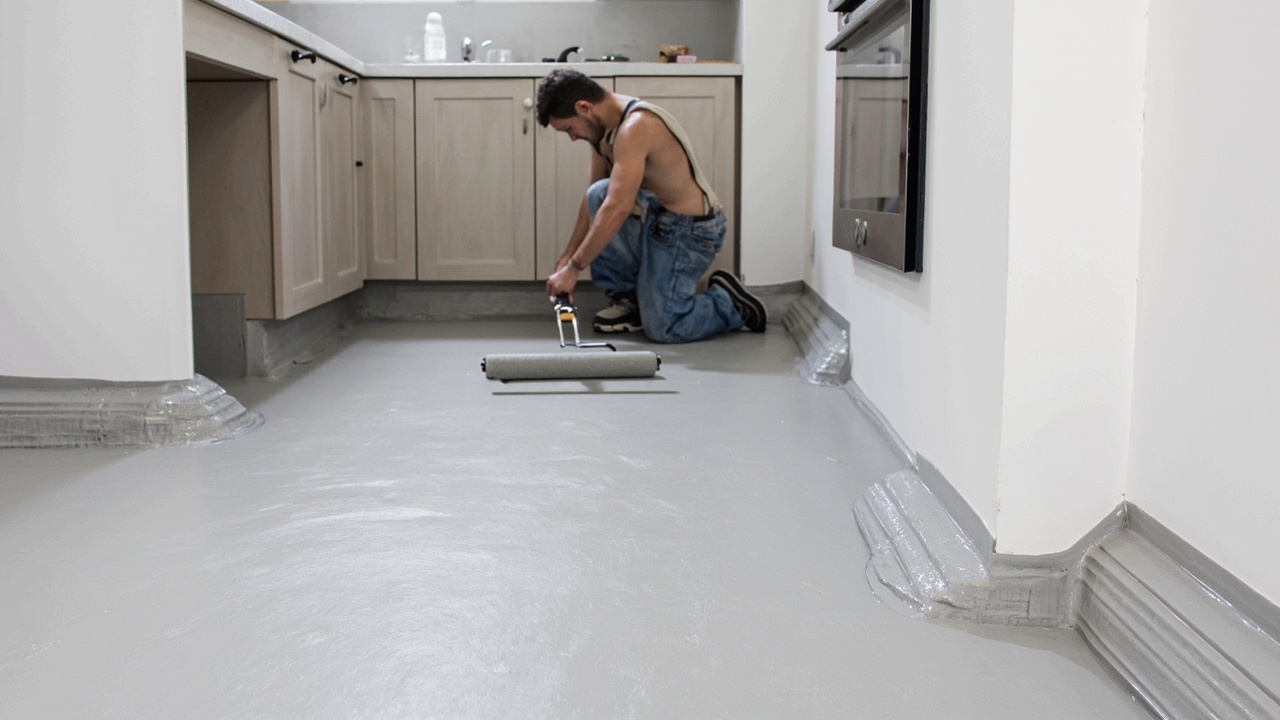
I. Technical Principles: How Architectural Waterproof Coating Forms a Reliable Sealing Layer
Architectural waterproof coating is a class of material applied to the substrate surface in liquid or paste form, forming a continuous, dense, and flexible waterproof membrane through water evaporation, chemical reaction, or crosslinking curing. To understand its protective essence, one must start from three levels: the migration path of water, the film-forming mechanism of the coating film, and the difference between coating waterproofing and membrane waterproofing.
1.1 Medium Transport Mechanism of Building Leakage
Water is a liquid medium with strong penetration ability, high surface tension, and capable of migrating via capillary action. In concrete and mortar substrates, there exist numerous invisible capillary pores, micro-cracks, and construction joints. When water pressure or humidity difference exists on one side, moisture continuously migrates to the other side along these channels. Kitchen/bathroom spaces, due to long-term water exposure and frequent wet-dry cycles, make it easier for moisture to accumulate and penetrate weak layers at stress-concentration points such as pipe roots, floor drains, and internal/external corners. Roofs face repeated rain erosion, material fatigue from sun exposure and temperature differences, and crack propagation from structural deformation.
Physically, water intrusion into building envelopes mainly follows three paths. First is gravity- and hydrostatic-pressure-driven penetration; basement slabs and exterior walls bear this continuous pressure from water-level differences, and the waterproof membrane must possess sufficient impermeability grade and full-bonding capability, otherwise point blistering and water channeling occur. Second is capillary-action-driven moisture absorption; the porous structure of mortar and concrete acts like countless tiny conduits, guiding surface water upward along walls by tens of centimeters, causing wall-base dampness—which is also the fundamental reason why kitchen/bathroom walls must be coated upward. Third is water-vapor partial-pressure-difference-driven gaseous water migration; roofs and exterior walls produce condensation and inward moisture penetration under day-night temperature differences, requiring the waterproof layer to block liquid water while balancing certain breathability, avoiding blistering of finishes caused by trapped internal moisture.
The core task of waterproof coating is to build on the substrate surface a complete, continuous, firmly bonded, and inherently impermeable elastic or plastic film that cuts off water migration channels. This film must resist hydrostatic pressure and possess certain extension-following capability when micro-cracks occur in the substrate, avoiding synchronous film cracking and failure. In this sense, the key to judging a waterproof layer's quality lies not in its initial strength, but in its continuity and tolerance to defects during long-term service.
1.2 Film-Forming Mechanism: Transition from Liquid to Continuous Membrane
Different categories of waterproof coating have different film-forming driving forces, which also determine their respective applicability and performance boundaries.
Evaporation-type film formation is represented by acrylate emulsion coatings, where polymer particles are dispersed in water; after application, water gradually evaporates, latex particles collide, fuse, and pile up, eventually forming a continuous polymer film. This type is clearly temperature-dependent; below the minimum film-forming temperature, powdering and tackiness easily occur, so heating and dehumidification measures must be taken in low-temperature and high-humidity seasons.
Reaction-type film formation is represented by two-component polyurethane and epoxy coatings; after mixing components A and B, chemical crosslinking occurs, transforming linear low-molecules into a three-dimensional network high-molecular film. Its film formation is not dominated by water evaporation, yielding high strength and density, but it strictly requires proportioning, mixing, and substrate moisture content; slight deviation causes non-curing or bubbling.
Hydration-reaction-type is represented by polymer cement-based (commonly known as JS waterproof coating) and cement-based capillary crystalline coatings, relying on cement hydration and secondary reactions of active components with cement stone and calcium hydroxide to form dense structures, combining the flexibility of organic films with the rigid bonding of inorganic materials. This type has the best compatibility with cement substrates and is the first choice for wet-base construction scenarios.
Physical-blend-type is represented by non-curable rubber asphalt, which does not form a rigid network via curing, but maintains a permanent creep state through entanglement of high polymers and asphalt, thereby possessing stress-release and micro-crack self-healing capabilities; however, it must rely on other materials to form a composite system to function.
1.3 Essential Difference Between Coating Waterproofing and Membrane Waterproofing
Membranes rely on factory-prefabricated polymer or asphalt sheets laid on site; their advantages lie in uniform thickness, strong inspectability, and high efficiency for large flat roofs; but their seams, terminations, and pipe-root irregular nodes are recognized weak zones, and they demand high substrate moisture content and flatness. Waterproof coating forms a seamless continuous film, with strong encapsulation ability for kitchens/bathrooms, basement side walls, and irregular nodes, capable of one-time film formation following substrate shapes; its shortcomings are that thickness depends on manual control, heavily relies on construction proficiency, and is afraid of rain and foot traffic before curing.
In actual engineering, the two are not substitutive but complementary. Roof large areas often use membranes as the main waterproof layer, with coating reinforcement at nodes such as pipe roots, gutters, and roof-penetrating components; basement side walls often use coating for overall film formation, combined with externally-applied membranes for composite defense. Understanding this systems thinking is the first step to good waterproof design. The root of many leakage accidents is precisely treating coating and membrane in isolation, ignoring their transition and interlocking at nodes.
1.4 Intrinsic Logic of Crack Bridging and Durability
When evaluating waterproof coating, engineers often focus on two seemingly contradictory yet must-be-balanced indicators: elongation at break and tensile strength. Elongation represents the film's ability to follow substrate cracking, while strength represents its resistance to external puncture and long-term load. Flexible materials have high elongation but low strength; rigid materials have high strength but almost no extension. A truly robust system uses high-elongation films in active-crack zones to absorb deformation, and rigid-flexible combined materials in tile-laying and load-bearing zones to balance bonding, forming a "rigid-flexible combined" hierarchical protection, rather than using a single indicator to mask the risk of the other side.
1.5 Water Vapor Transmission and Breathability Balance
A frequently overlooked point in engineering projects: the waterproof layer must block liquid water without completely sealing off moisture inside the structure. On the inner side of roofs and exterior walls, when temperature and humidity gradients exist indoors and outdoors, if the waterproof layer is completely sealed and the finish has poor breathability, internal water vapor cannot escape and will condense into water at an interface, inducing finish blistering and coating film debonding. Therefore, exposed and composite systems should holistically consider water vapor transmission rate, and if necessary adopt a "block liquid water, transmit gaseous water" gradient structure, allowing moisture to migrate outward orderly rather than being trapped in the interlayer. This balance thinking is especially important in hot-summer-cold-winter regions and existing building renovations.
1.6 Superimposed Effect of Freeze-Thaw Cycles and Salt Erosion
In cold and coastal regions, the waterproof film must also withstand the superimposed test of freeze-thaw cycles and chloride ion erosion. Water penetrating the film's micro-pores freezes and expands at low temperature, gradually tearing the film structure; chloride ions carried by sea breeze accelerate substrate steel corrosion, whose rust expansion in turn cracks the waterproof layer. To address such conditions, besides selecting materials with high freeze-thaw cycle resistance, sufficient film thickness, dense sealing layer, and regular maintenance inspection should block the entry channels of water and erosive media. For coastal or de-icing-salt infrastructure, the waterproof system should be designed integrally with anti-corrosion protection, not in isolation.
II. Material Systems: Performance Map of Mainstream Architectural Waterproof Coatings
Facing the wide variety of architectural waterproof coatings on the market, the most common confusion for engineers is: which type to choose. Below, by technical route, we dissect the composition, performance characteristics, and applicable boundaries of five major systems: polymer cement-based, polyurethane, acrylic, non-curable rubber asphalt, and cement-based capillary crystalline.
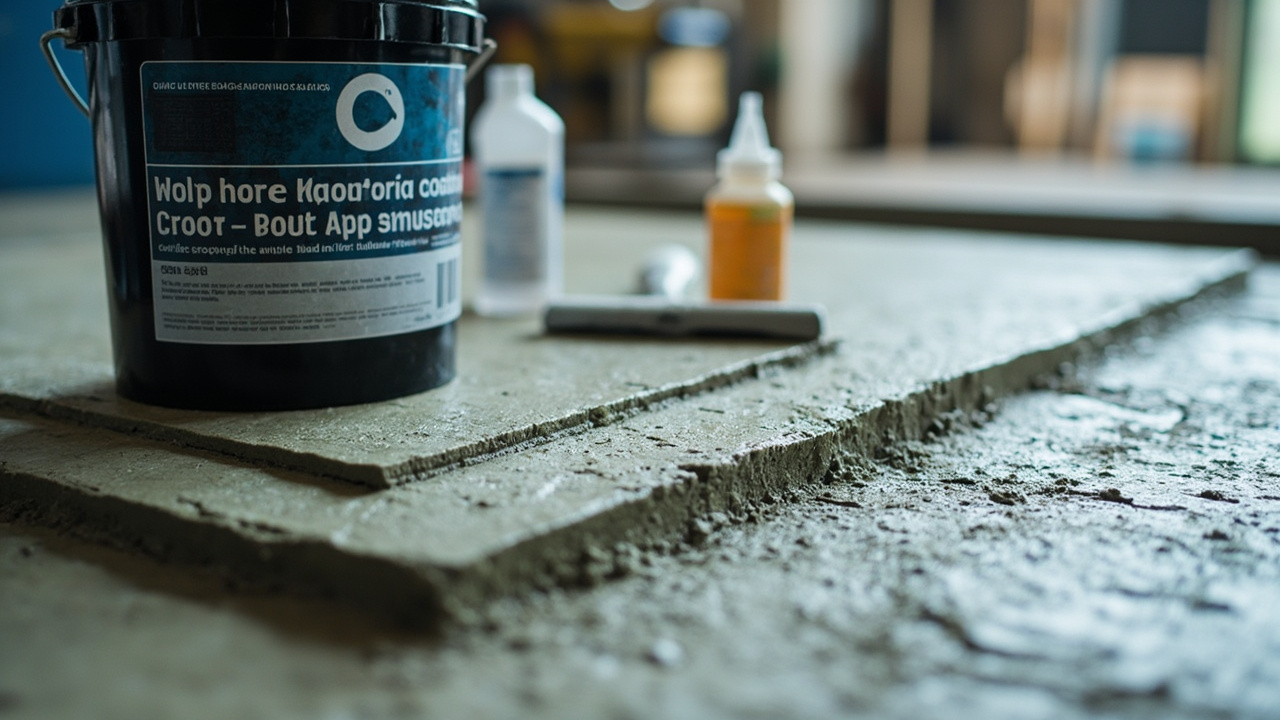
2.1 Polymer Cement Waterproof Coating (JS)
Polymer cement waterproof coating consists of two components—acrylate emulsion, cement, quartz sand, and additives; after application, the latex and cement hydration products interpenetrate, forming an organic-inorganic composite flexible film. Divided by flexibility into flexible-leaning and rigid-leaning types, it can be used on the positive and negative sides of kitchens/bathrooms, basement side walls, exterior walls, etc. Its greatest features are high bonding strength with cement substrates, applicability on damp substrates, and good environmental friendliness, making it the main product for residential kitchen/bathroom waterproofing.
In terms of proportioning, the liquid-powder ratio of JS directly determines flexibility: more liquid less powder yields a flexible-leaning film with high elongation but reduced strength; more powder less liquid yields a rigid-leaning film with high strength but easy brittle cracking. Projects should select models by location: kitchen/bathroom floors and pipe roots should use flexible-leaning type to bridge micro-cracks, while wall tile-laying zones should use rigid-leaning type to secure tile bonding. It must be emphasized that JS coating is extremely sensitive to liquid-powder ratio; arbitrarily adding water severely weakens film density and elongation at break. Meanwhile, under long-term water immersion, the bonding strength of some flexible types decays, so long-term submerged parts should prioritize water-immersion-resistant models and control coating thickness.
2.2 Polyurethane Waterproof Coating (PU)
Polyurethane waterproof coating is divided into one-component and two-component; after curing it forms a highly elastic, high-density rubber-like continuous film, with elongation at break exceeding 400%, extremely strong follow-up capability to substrate cracks, especially suitable for roofs, balconies, expansion joints, and other easily deformed parts. Its film physical and mechanical properties are excellent, with outstanding chemical corrosion and aging resistance.
But polyurethane demands harsh construction environments: substrate moisture content usually needs to be below 9%, strictly prohibited in rain and high humidity; two-component must be mechanically mixed strictly by ratio, otherwise non-curing or bubbling occurs; additionally, solvent-based polyurethane has high VOC, so enclosed spaces and projects with strict environmental requirements should prioritize water-based or solvent-free systems. One-component polyurethane cures by reaction with atmospheric moisture, thus somewhat depends on humidity, curing slowly in dry cold environments, requiring reasonable schedule estimation.
It should be added that polyurethane materials also have special requirements for storage and construction safety. Two-component products should be stored away from light, cool, and sealed to prevent component B from moisture failure; solvent-based products are flammable liquids, the site must keep away from open flames and equip fire-fighting equipment, with ventilation in the work area. Opened unused material should be sealed promptly to avoid skinning waste. These seemingly marginal management actions directly affect the final performance of the material on the wall and should not be ignored.
2.3 Acrylic Waterproof Coating
Acrylic waterproof coating uses pure acrylic or styrene-acrylic emulsion as base, water-based and eco-friendly, color-adjustable, excellent weather resistance, commonly used for exposed roofs, metal roofs, and light steel structures as integrated surface waterproofing and decoration. Its low-temperature flexibility and elongation at break are good, resisting certain structural expansion/contraction. The drawback is relatively low solid content, requiring more coats to reach specified thickness, with limited single-pass film thickness, thus more common in medium-low water-pressure, weather-protection-oriented scenarios.
In actual engineering, acrylic is often paired with polyurethane primer, forming a "polyurethane base anti-crack, acrylic surface weather-resistant" composite exposed system, balancing base strength and surface UV resistance, a mainstream solution for metal roof renovation.
2.4 Non-Curable Rubber Asphalt Waterproof Coating
Non-curable rubber asphalt is a rubber-asphalt material that always maintains creep state and never cures; when compounded with membranes, it automatically seals substrate micro-cracks, absorbs stress, and eliminates water-channeling paths between waterproof layers. It is often combined with self-adhesive or pre-applied membranes into a "coating plus membrane" composite system, widely used in basement slabs, side walls, and roof repair. Its unique value lies in the self-healing and stress-release capability brought by "never curing," but precisely because it does not cure, it must be timely covered with protective layer or membrane after construction, strictly prohibited for sole exposed use.
It should be specially reminded that non-curing construction temperatures are usually high, and fire prevention and personal protection should be ensured during spraying or scraping; its compatibility with different membranes also needs to be verified to avoid asphalt migration contaminating the surface layer or weakening the bond.2.5 Cementitious Capillary Crystalline Waterproofing Material (CCCW)
Cementitious capillary crystalline material is composed of portland cement, quartz sand and active chemical substances. After being applied to the concrete surface, the active components penetrate into capillary pores and cracks guided by water, and react with cement hydration products and free calcium hydroxide to form insoluble crystals, blocking water seepage channels. It belongs to a rigid back-side waterproofing and structural self-waterproofing enhancement measure, and is often used in basement slabs, water tanks, grain silos and other parts subject to long-term water pressure. Its advantages are water pressure resistance, aging resistance, and same service life as concrete; its limitation is almost no elongation capacity, and it cannot be used alone at deformation joints and active cracks.
In engineering practice, capillary crystalline is often compounded with flexible coatings for underground works: first use capillary crystalline to seal the capillary channels of the concrete body, then form a continuous surface film with JS or polyurethane, achieving a dual barrier of "internal water blocking plus surface film formation".
2.6 Comparison of Five Major System Selections
Overall, JS wins in wet-base construction and bond compatibility, polyurethane wins in elasticity and aging resistance, acrylic wins in weather resistance and eco-friendliness, non-curing wins in stress release and compounding, and capillary crystalline wins in rigidity and same service life. There is no absolutely optimal material, only the combination that best matches the site conditions. When selecting, a five-dimensional evaluation framework of "location—water pressure—deformation—schedule—eco-friendliness" should be established, rather than deciding solely based on brand or price.
2.7 Brief Description of Special and Emerging Systems
With the refinement of engineering demands, several special systems also play roles in specific scenarios. Sprayed polyurea is known for second-level curing and ultra-high elongation, suitable for water tanks, floors and irregular structures, but has extremely high requirements for substrate and construction equipment; inorganic silane impregnation belongs to penetrative hydrophobic protection, often used for surface water repellency of bridges, pile foundations and fair-faced concrete, which does not change the appearance but significantly reduces water absorption; exposed fluorocarbon and polysiloxane topcoats are more used for long-term weather-resistant sealing of steel structures and around curtain walls. Although these systems are not in the main line of this article, they indicate a trend: waterproofing is moving from "single coating film" to a refined era of "functional compounding and scenario segmentation".
2.8 Supporting Auxiliary Materials and System Synergy
A reliable waterproof layer is often composed of the main material and a complete set of auxiliary materials; ignoring auxiliary materials is equivalent to ignoring most of the system. Interface primer can improve the bond of loose substrates and seal dust, and is the invisible defense line against many detachment accidents; polyester or polypropylene non-woven reinforcement layers are used at nodes and cracks to disperse local stress over a larger area; one-component polyurethane or silicone sealant is responsible for elastic caulking of pipe roots and expansion joints; water-swelling waterstops and embedded waterstop belts are standard for joint treatment in underground works. During procurement, these auxiliary materials should be included in the same technical package, with clear specifications and quantities, to avoid using cheap substitutes on site and damaging system integrity. Qualified main material with missing auxiliary materials remains a common cause of "systemic failure".
III. Construction Process: System Implementation Where Material Is 30% and Construction Is 70%
The waterproofing industry has long said "30% material, 70% construction", which is not an exaggeration. No matter how high-quality the waterproof coating is, if the substrate treatment is improper, nodes are omitted or thickness is insufficient, it may fail in a short time. A standard construction process usually includes five key links: substrate acceptance, detail node reinforcement, layered coating, curing and water-retention test. It is worth adding that the stability of construction quality also depends on clear briefing and process inspection: each process should have a comparable process card, and key nodes should have image evidence, upgrading from "relying on master experience" to "following standard actions", so as to replicate consistent high-quality results across different teams and projects.
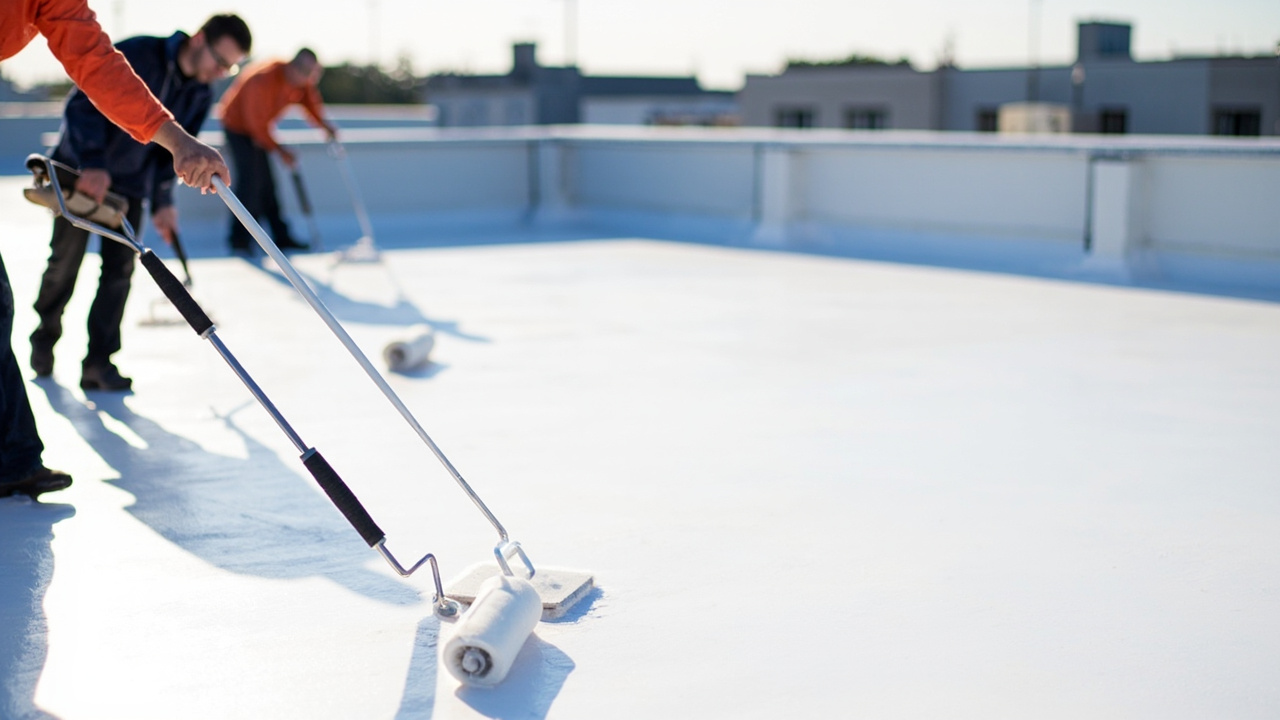
3.1 Substrate Treatment: The Foundation of Waterproofing
The substrate should be firm, flat, clean, free of standing water, without oil, release agent and laitance. Holes, honeycombs and pitted surfaces of concrete substrate need to be repaired with polymer mortar; sharp edges and corners should be ground into arcs, and parts such as pipe roots, floor drains, and yin-yang angles should be made into arcs or splayed slopes with a radius of not less than twenty millimeters, to avoid coating cracking at right angles due to stress concentration. The moisture content of roof and kitchen/bathroom substrates must meet the requirements of corresponding materials; JS and most water-based coatings can be constructed on damp but non-standing-water substrates, while polyurethane must control moisture content.
Substrate strength is also critical. Sandy and powdered mortar layers will directly cause overall peeling of the coating film. Before construction, loose substances should be removed with wire brush or grinding, and interface enhancer should be applied if necessary. For smooth concrete shear walls, moderate roughening can increase mechanical interlocking. Substrate treatment seems trivial, but determines the success or failure of all subsequent processes, and must not be compressed to catch up with the schedule.
3.2 Detail Node Reinforcement: Success or Failure Often Lies in These Corners
Statistics show that the vast majority of leaks occur in node parts of less than 5% of the total area. The standard practice is to perform one-fabric-two-coat or additional layer treatment on weak parts such as pipe roots, floor drains, yin-yang angles, construction joints, expansion joints, roof-penetrating pipes, and rainwater inlets before large-area coating. Kitchen/bathroom pipe roots should first be filled with leak-stopping material, then laid with non-woven reinforcement layer; roof gutters, eaves, and parapet flashing should be turned up to the specified height and pressed into battens or sealant.
Another key point of node treatment is "multi-layer defense and hierarchical transition". For example, for a roof-penetrating pipe, a bell-mouth slope should be made first, then caulked with sealant, with the outer additional layer turned up to the sleeve height, and finally continuously overlapped with the large-area coating, forming a progressive closure from flexible to rigid, from inside to outside. Omission of any layer will become an entrance for water channeling later.
3.3 Layered Coating and Thickness Control
Waterproof coating is strictly prohibited to be completed in one pass. According to the sequence of "detail first then large area, far first then near, high first then low", apply in two to three passes, with each pass direction perpendicular and the next pass after the previous surface is dry. Thickness control is the core of quality: kitchen/bathroom walls are usually not less than 1.2 mm, ground not less than 1.5 mm; roof and basement water-facing side often require 1.5 to 2 mm or more. On site, needle puncture, cut sample or wet film gauge can be used for random inspection, and "evenly coated" must not replace "sufficiently coated".
Environmental control should not be ignored either. The construction environment temperature of water-based coatings should be above 5°C; below the minimum film-forming temperature will cause poor film formation; reactive coatings are sensitive to humidity, and operations should be suspended before and after rain and dew. In summer, excessively high substrate temperature under strong sun will accelerate surface drying and cause pinholes, so early morning and evening periods or shading should be selected. The interval between each pass must strictly follow the product instructions; too short is prone to under-curing, too long is prone to layering.
3.4 Curing, Protection and Water-Retention Acceptance
Water-based coatings are afraid of rain and trampling in the early film-forming stage, and should be naturally cured until dry; reactive coatings need to ensure curing reaction time. The protection layer should be constructed after the coating film is completely cured, to avoid damage by subsequent processes. Kitchen/bathroom works must conduct a water-retention test for more than 24 hours after the coating is dry, and roofs and basements should be comprehensively accepted by combining water spraying, water storage and post-rain observation, with images and records retained to form a traceable quality closed loop.
It should be emphasized that the water volume, time and observation points of the water-retention test should have a clear plan: kitchen/bathroom storage height not less than 20 mm, time not less than 24 hours, focusing on the lower ceiling and adjacent walls; roofs can choose segmented water storage or post-rain verification after typhoons. Any practice of "experience-based exemption from inspection" leaves risks for after delivery.
3.5 Construction Tools and Personnel Capability
Process implementation cannot be separated from appropriate tools and qualified operators. Common tools include electric mixers, toothed scrapers, wool rollers, airless sprayers, and putty knives and arc trowels for node treatment. Large-area roofs and basements should adopt mechanized spraying to improve uniformity and efficiency, but spraying has high requirements for material viscosity and equipment pressure, and must be operated by trained personnel. In terms of personnel, waterproofing is a key trade, and should be certified and regularly briefed, with "understanding node drawings, reading process cards, and using testing tools" as basic capabilities. Many project quality fluctuations root in large personnel turnover and superficial briefing, rather than the material itself.
IV. Selection Points: Decision by Location, Environment and Full-Cycle Cost
Waterproof selection is not a simple judgment of "the more expensive the better" or "the more flexible the better", but a systematic decision integrating location characteristics, environmental conditions, schedule cost and operation-maintenance cycle. Kexin New Materials often emphasizes when cooperating with engineering parties: the first step of selection is to clarify "where the water comes from, how much pressure, and whether the substrate will move", and then match materials and structural layers accordingly.
4.1 Selection by Location Characteristics
Kitchen/bathroom spaces are characterized by long-term water contact and many nodes, giving priority to eco-friendly JS or acrylic systems that can be constructed on damp substrates and are compatible with tile bonding; walls need to consider the bonding safety of subsequent tile laying. Roofs are mainly exposed, with temperature difference deformation and UV aging, so polyurethane, acrylic or non-curing plus membrane composite systems with good weather resistance should be selected. Basement side walls and slabs are in back-water pressure or high water pressure environments for a long time, and full bonding with structure and water pressure resistance should be valued, often using JS, capillary crystalline or non-curing composite defense. Balconies and terraces are between kitchen/bathroom and roof, requiring both waterproofing and resistance to trampling and temperature difference, so a rigid-flexible combined system with both strength and elongation should be selected.
4.2 Selection by Environment and Schedule Constraints
For finely decorated projects with tight schedules and needing rapid subsequent tile laying, JS or one-component products with fast surface dry and short dry cycle should be selected; for humid seasons or underground works where substrates are difficult to thoroughly dry, solvent-based polyurethane sensitive to moisture content should be avoided, turning to water-based or materials that can be constructed on damp base. For indoor scenarios with eco-friendly and ventilation constraints, low-VOC water-based systems must be selected, and their eco-friendly test reports verified. For low-temperature season construction, the minimum film-forming temperature and curing window of materials should be concerned, and warming and dehumidification measures introduced if necessary.
4.3 Full-Cycle Cost Perspective
Procurement decisions should not only compare unit area material price, but incorporate construction efficiency, rework risk, design service life and operation-maintenance cost. A low-price coating with insufficient thickness and omitted nodes, after leakage, the demolition, restoration and consequential losses are often several times the initial savings. From a full-cycle view, selecting a system with matched performance, high construction tolerance, and stable supply and technical support is the true cost optimization. Taking two schemes with design service life of 15 years and 30 years as an example, the latter may have 20% higher initial investment, but after being amortized to each year and deducting one major repair cost, the unit annual cost is actually lower.
4.4 Manufacturer Collaboration and Technical Support
For large-scale residential, commercial and infrastructure projects, it is recommended to integrate material supply with technical briefing, node detailing and on-site inspection into the same responsibility system. Manufacturers like Kexin New Materials, which have both formula R&D capability and can provide from scheme suggestion to construction guidance implementation, often help engineering parties avoid detours in material adaptation, node structure and acceptance standards, and implement "system waterproofing" from concept to executable construction method. Especially for complex nodes with multi-material compounding and cross-system superposition, the manufacturer's compatibility verification and on-site technical support are often the key variables for whether the waterproof system can withstand the test of time.
4.5 Selection Quick Reference and Decision Tree
For rapid on-site decision-making, the selection can be abstracted into a simple decision tree: first judge location (kitchen/bathroom, roof, underground, exterior wall, balcony), then judge water pressure (normal pressure water contact, static water pressure, back water pressure), third judge deformation (stable, micro-movement, active joint), fourth judge constraints (schedule, eco-friendliness, damp base), and finally land on material and structure. For example, kitchen/bathroom normal pressure tile laying selects JS偏向刚性 (JS偏向刚性: JS偏向刚性 — note: keep as JS with rigid bias), pipe root additional; roof exposed active selects polyurethane or acrylic composite; underground static water pressure selects capillary crystalline plus JS rigid-flexible combination; damp base rush work should always avoid solvent-based polyurethane. Writing this logic into the selection table in the technical specification can greatly reduce misselection probability, and let procurement and construction collaborate under the same language framework.
4.6 Quality Anchors in Procurement Documents and Contracts
Solidifying technical intent into procurement documents is the key to avoiding "say one thing do another". The technical specification should state the execution standard number, key performance indicators and test methods, incoming re-inspection frequency, sampling retention requirements, and detail index of node structures. The contract should stipulate that materials shall not be arbitrarily replaced, treatment clauses for insufficient thickness, and responsibility attribution for failed water retention. For key projects, the manufacturer can also be required to provide recent third-party test reports of the same model, and do sealed sample comparison upon arrival. The clearer the quality anchors, the less later disputes and hidden dangers, which is the "front-end waterproofing" that procurement decision-makers can directly control.
4.7 Comparison of Design Service Life by Different Locations
When preparing technical specifications, a comparison table of locations and materials can be referenced against waterproofing grade and target service life, to facilitate alignment of expectations among all parties. For general residential kitchens and bathrooms, the benchmark is the reasonable service life of the project, and the material system should support more than ten years without major repair; roofs of important public buildings are often designed for a service life of fifteen years or even longer, and the grade should be raised and maintenance strengthened; underground works, due to extreme difficulty of repair, usually require the same life as the structure, and material combinations with durability matching the substrate life must be adopted. Writing "how many years of use" into the contract and technical disclosure enables material selection, thickness, and detail treatments to have a unified acceptance yardstick, avoiding replacing quantifiable targets with vague "do the waterproofing well".V. Engineering Cases: Systematic Practice from Kitchen/Bathroom to Roof
Theory must ultimately return to the site. The following typical scenarios demonstrate the combination logic and implementation key points of building waterproof coating systems in different locations.
5.1 Overall Waterproofing of Residential Kitchen and Bathroom
A batch fine-decorated residential project, with kitchen and bathroom area of about 6 to 8 square meters, originally specified only one coat of coating on the floor, and after delivery many units showed pipe-root leakage. The remediation adopted a JS flexible system: after rounding and repairing the substrate, pipe roots and floor drains were first treated with a one-fabric-two-coat additional layer, then the whole area was coated with the wall turned up 30 cm, and the shower area turned up 1.8 m, with thickness of 1.5 mm on floor and 1.2 mm on wall; after passing the water retention test, tiling was carried out. The core experience is "details first, sufficient thickness, mandatory water retention test". Re-inspection of over 300 units showed leakage complaints dropped from over 40% before remediation to near zero, verifying the value of the systematic approach.
5.2 Exposed Flat Roof Waterproofing
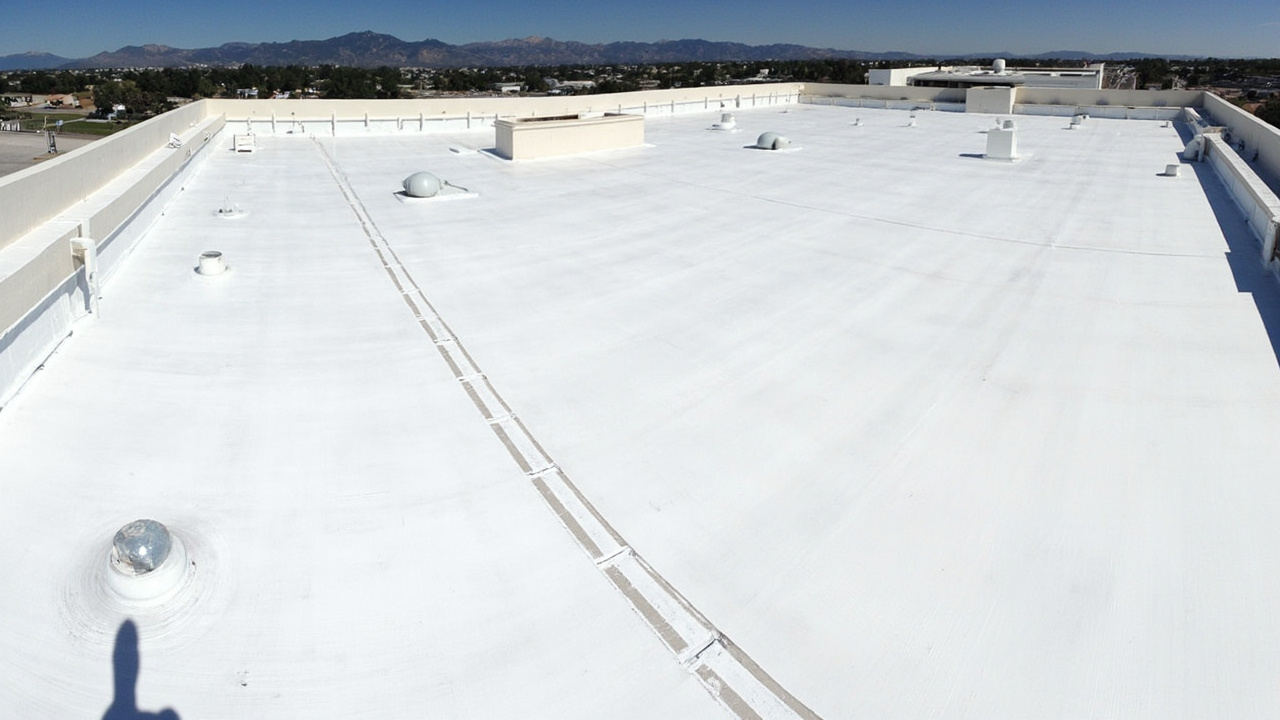
An industrial plant flat roof of about 12,000 square meters, with original SBS membrane aged and cracked. The retrofit adopted a "non-cured rubber asphalt plus self-adhesive membrane" composite system: first fully coat the non-cured layer to automatically seal old cracks, then hot-melt lay the self-adhesive membrane, and use polyurethane coating at gutters and parapet flashing for reinforcement. After completion, it withstood two rainy seasons without leakage, verifying the synergistic value of coating-membrane composite in renovation scenarios. Worth recording is that the non-cured layer automatically healed new micro-cracks during a subsequent minor settlement, reflecting the self-healing characteristic of stress-releasing materials.
5.3 Front Water Face Protection of Basement Side Wall
A basement garage side wall had long-term back-face dampness; during treatment, JS and crystalline penetration were combined on the front face: first use crystalline penetration to seal capillary leakage channels, then coat JS overall to form a continuous flexible film, with water-swellable waterstops at pile heads and construction joints. This case shows that for underground works, rigid-flexible combination and front-back integration are often more reliable than a single material. After treatment through one high-water period, the back face was significantly dehumidified and the structure surface dried, indicating the dual barrier of internal water blocking and external film formation worked.
5.4 Old Residential Balcony Renovation
Batch balcony leakage in an old residential community, caused by wrong slope leading to ponding and coating aging. The renovation adopted acrylic plus JS composite: first redo slope and drainage, then apply JS as a continuous overall film, with acrylic weather-resistant layer on top to resist sunlight. This case suggests that waterproofing is never an isolated film issue; drainage structure, slope, and material system must be optimized simultaneously, otherwise even the best coating cannot withstand long-term ponding.
5.5 Underground Water Tank and Municipal Utility Tunnel
A clean water tank interior wall in a water purification plant had long-term leakage with mold spots, treated with crystalline penetration interior coat plus flexible topcoat composite: first clean substrate with high-pressure water jet, coat crystalline penetration to seal body pores, then apply a high-bond flexible coating to resist water fluctuation. Utility tunnel works emphasize collaborative sealing of expansion joints, often with a triple approach of pre-embedded waterstop plus joint sealant plus external flexible coating, ensuring no through leakage even with minor structural settlement. These cases jointly show that the more a scenario combines long-term water immersion and deformation, the more it requires a systematic thinking of rigid-flexible layering and internal-external treatment.
5.6 Compatibility Treatment in Existing Building Roof Renovation
Existing roof renovation often encounters compatibility issues between old and new materials: directly applying water-based coating on incompletely removed old asphalt layer easily causes biting and blistering. The safe approach is to first make a compatibility sample, set an isolation layer if necessary or thoroughly treat the base, then apply the new system. A shopping mall podium roof renovation, after removing loose old layers, first rolled on a compatible interface primer, then applied the acrylic weather-resistant system overall, avoiding delamination of old and new layers and minimizing construction disturbance during business hours.
5.7 Common Patterns Behind the Cases
Putting the above cases together, several common patterns can be extracted. First, details always precede large areas; over 90% of failures concentrate at a few locations such as pipe roots, joints, and internal/external corners, so investing resources there yields the highest return. Second, thickness is a hard indicator; no matter how good the material, a thin coat cannot block water pressure, and quantitative spot checks are irreplaceable. Third, drainage and waterproofing are two sides of one coin; wrong slope will leave any coating soaked long-term. Fourth, composite defense outperforms going alone; combinations of rigid-flexible, coating-membrane, internal-external compensate for single-material shortcomings. Fifth, acceptance must leave records; water retention and image records are the basis for later responsibility definition and continuous improvement. These patterns seem plain, but are lessons paid for by many projects.
VI. Common Misconceptions: Pitfalls Even Engineers Easily Fall Into
Even experienced teams may stumble on the following cognitive misconceptions. Clarifying them can significantly reduce leakage probability.
6.1 Misconception 1: The More Flexible the Coating, the Better
Flexibility is the ability to resist cracks, but not all locations need high elongation. If a too-high-flexibility coating is used on tiled walls, tile hollowing and falling may result from excessive film elasticity. The correct approach is to distinguish active-crack areas on the front face from tiled areas, and select flexible or rigid-flexible models as needed.
6.2 Misconception 2: One Thick Coat Is More Convenient
Attempting to reach design thickness in one thick coat easily causes sagging, bubbling, and uneven internal-external curing. Coatings must be applied in thin layers and built up pass by pass to ensure density and bonding; this is an insurmountable process discipline.
6.3 Misconception 3: Details Can Be Patched Last
Details are leakage hotspots and must never be "casually" patched after the large area is done. Fine additional layers must be completed before the large-area coating and form a continuous transition with it.
6.4 Misconception 4: Water Retention Test Can Be Skipped
Some projects skip the water retention test to catch up on schedule, only to have hidden defects erupt after delivery. Water retention and spraying are the only on-site means to find hidden defects and must be executed with records.
6.5 Misconception 5: Materials Can Be Mixed Freely
Compatibility varies greatly among different coating systems; applying solvent-based polyurethane directly on a water-based layer may fail due to solvent biting. Cross-system overlaying must have compatibility verification or an isolation layer.
6.6 Misconception 6: Visual Thickness Estimation Is Enough
Construction without quantitative thickness means easily leads to local thinning. Wet film gauges, pin probes, or cut-sample checks must be equipped, and thickness included as a hard acceptance indicator.
6.7 Misconception 7: Done Means All Is Well
Above the waterproof layer are subsequent processes such as protection layer, tiling, and equipment installation; damage to the film at any step leaves hidden dangers. A "finished-product protection plus completion inspection" mechanism should be established, with key details covered and random perforation prohibited.
6.8 Misconception 8: Emphasize Material, Neglect Design
Many projects simply blame materials for waterproofing failure, yet ignore pre-design water pressure judgment, detail construction, and drainage slope. Material is only one link of the system; without correct design leadership, even the most expensive coating cannot escape local failure. The design phase should clarify waterproof grade, defense layers, and detail drawings, letting materials function in the right positions.
6.9 Misconception 9: Low-Price Bidding Means Saving
Bidding by lowest price rather than best fit often leads to material substitution, thickness reduction, and omitted details. Short-term savings are often repaid manifold when long-term leakage ruins decoration, affects use, and damages brand reputation. Rational procurement should integrate technical fit, quality assurance, and life-cycle cost, not just the quote number.
Summing up the above misconceptions, essentially they all treat waterproofing as an isolated, static, compressible step. But real waterproofing is a system engineering continuously interacting with structure, environment, process, and time. Only by viewing every cognitive blind spot from a system perspective can the passivity of "cannot prevent" be turned into the initiative of "firmly prevent".
VII. Relevant Standards: Compliance Is the Bottom Line of the Waterproofing System
The R&D, testing, and acceptance of building waterproof coatings are supported by clear national and industry standards. Design, procurement, and construction parties should take standards as the criterion and treat compliance as the bottom-line guarantee of system reliability.
7.1 Product Standards
Polymer cement waterproof coating follows GB/T 23445, specifying solid content, tensile strength, elongation at break, impermeability, bond strength, etc.; polyurethane waterproof coating corresponds to GB/T 19250; water-based acrylic to JC/T 864; non-cured rubber asphalt waterproof coating has JC/T 2428 and other industry requirements; cement-based crystalline penetration material follows GB 18445. When procuring, check model and test report against standards, focusing on three core indicators: impermeability, bond strength, and water resistance.
7.2 Engineering Design and Acceptance Standards
Waterproof grade, construction layers, and acceptance methods for roofs, underground, and kitchen/bathroom are reflected in GB 50345 Technical Code for Roof Engineering, GB 50108 Technical Code for Underground Engineering Waterproofing, GB 50207 Code for Acceptance of Roof Engineering Quality, and JGJ relevant technical specifications for residential kitchen/bathroom waterproofing. Design service life, waterproof grade, and material selection should correspond one-to-one; first-grade waterproof locations must not be covered by a single low-grade material.
7.3 Environmental and Safety Standards
Indoor waterproof coatings must also meet harmful substance limits such as GB 18582, focusing on VOC, free formaldehyde, and heavy metal indicators. Green building material evaluation and low-volatile product certification are increasingly becoming access thresholds for public and fine-decorated projects; environmental limits should be specified in procurement documents. For solvent-based materials, fire and ventilation safety rules at the construction site must be observed to avoid accumulation of combustible gas in enclosed spaces.
7.4 Execution Suggestions for Standard Implementation
Standards are not decorations; the real key is to turn clauses into executable process cards and acceptance sheets. It is recommended that the engineering party write standard numbers, test items, and sampling frequency into the technical specification at the bidding stage; during construction, the supervisor retains samples by batch for testing; the completion data attaches factory certificates, incoming re-inspection reports, and water retention records, forming a complete evidence chain from material to finished product. Only thus can the reliability of the waterproof system have a verifiable, traceable base.
7.5 Commonly Used On-Site Standard Execution Checklist
For project convenience, key points scattered across standards can be condensed into an on-site checklist: verify on material arrival that factory certificate and type test report are complete and within validity; re-inspect by batch solid content, tensile strength, elongation at break, impermeability, and bond strength; before construction check substrate moisture and flatness meet corresponding material requirements; verify detail additional layer scope and overlap width are per drawing; confirm film thickness is spot-checked per batch with records; confirm water retention and spraying executed with images kept. Using this checklist as a mandatory item for concealed work acceptance can significantly reduce compliance gaps and provide basis for later responsibility determination.
7.6 Standard Updates and Continuous Tracking
Waterproof-related standards are not static; with green building, low-carbon construction, and durability demands rising, product and acceptance indicators adjust dynamically. Engineering and material supply parties should establish a standard tracking mechanism, promptly applying new-version requirements to design, procurement, and process documents. For cross-year long-cycle projects this is especially critical: a standard valid at start may be revised at completion; the contract should stipulate which version governs, avoiding acceptance and settlement disputes over standard versions. Incorporating standard updates into routine management is the basic guarantee for long-term compliance of the waterproof system.
VIII. Quality Inspection and Defect Repair: Let the System Withstand the Test of Time
The value of a waterproof system is shown not only at the moment of completion, but also in the service performance years or decades after delivery. Establishing routine inspection methods and defect diagnosis logic is the key to upgrading "one-time waterproofing" to "full-life-cycle protection".
8.1 Core Methods of On-Site Inspection
Quality inspection during construction mainly has four types. First, visual inspection: observe whether the film is continuous, flat, free of pinholes, bubbles, and cracks, and whether detail additional layers are in place. Second, thickness detection: use wet film gauge, pin probe, or post-cure cut-sample caliper, sampling by area stratified, to ensure minimum thickness meets design. Third, bond strength pull-off: for important works, core samples can be taken for pull-off test to verify film-substrate attachment reliability. Fourth, water retention and spraying: kitchen/bathroom ponding, roof spraying or sectional ponding, basement observation after rainfall—the most direct method to find hidden defects.
8.2 Diagnostic Logic of Common Defects
After leakage occurs, accurate diagnosis is more important than blind repair. If the ceiling below shows point-like damp marks corresponding to the upper pipe root positions, it is mostly due to failure of pipe root joint sealing; if the wall shows large-area dampness rising upward, it is mostly capillary water absorption with the wall not turned upward or insufficient turning height; if the coating surface shows regularly oriented cracks, often aligned with base structural joints or temperature joints, it indicates insufficient film elongation or no joint division was set; if the coating shows whole-sheet blistering and debonding, it may be due to excessive moisture content in the base, interface contamination, or material incompatibility. Diagnosis should trace the source first and then take measures, avoiding the vicious cycle of "repair wherever it's wet".
8.3 Standard Process for Defect Repair
Before repair, the water source must be thoroughly identified and cut off, and the failed coating removed down to the solid base, then re-applied according to the original system or a compatible system. Joints should be treated with an expanded scope, and the overlap width of additional layers shall not be less than the specification requirements. For active cracks, flexible sealant should first be used to fill the joint, then covered with high-elongation coating or reinforced with an enhancement layer; for local pinholes, after cleaning, supplementary coating and compaction can be applied. After repair is completed, water retention testing must be re-performed to confirm no leakage before restoring the finish. It must be emphasized that cross-system repair must undergo compatibility testing to prevent biting or peeling between new and old materials.
8.4 Operation Cycle and Preventive Maintenance
Waterproofing systems are not "once and for all". It is recommended to establish an annual inspection system, focusing on checking whether roof gutters are blocked, whether roof penetration joint seals are aged, whether exterior wall division joints are cracked, and whether kitchen/bathroom thresholds and pipe roots are abnormal. For old residential communities and public buildings with long service lives, a comprehensive assessment and partial reinforcement can be proactively performed before reaching the designed service life, converting sudden major repairs into controllable preventive maintenance, which both extends system life and significantly reduces collateral losses from sudden leakage.
8.5 Action Checklist from Single Film Formation to System Governance
Converging the above content into a set of executable actions helps all project parties align their pace: in the design phase, clarify waterproof grade, part construction and joint details; in the procurement phase, write standards, indicators and auxiliary materials into the specification and seal samples; before construction, conduct dual acceptance of base and environment; during construction, adhere to joint priority, layered coating, and quantified thickness; after completion, water retention testing is mandatory and records must be kept; after delivery, establish annual inspection and preventive maintenance. These six links connect end to end, forming a complete closed loop from "material" to "system". Truly reliable waterproofing is never the extreme of one step, but the result of no step dropping the ball.
FAQ
Q: How thick should kitchen/bathroom waterproofing be?
A: Usually the wall should be no less than 1.2 mm and the floor no less than 1.5 mm, and the shower area wall is recommended to turn upward 1.8 m. Thickness should be ensured by layered coating and on-site spot checks, not replacing "coat thick enough" with "coat evenly".
Q: Can JS waterproof coating be applied on damp base?
A: Most JS products can be applied on damp base without standing water, which is an important advantage over polyurethane, but the base must still be firm, free of laitance and ponding, and avoid direct coating at continuously leaking points without prior leakage blocking treatment.
Q: Which to choose, polyurethane or JS?
A: For kitchen/bathroom tile laying, damp base, and tight schedule, prioritize JS; for roofs, expansion joints and other easily deformed exposed parts, prioritize polyurethane or composite systems. The core is to look at the water pressure, deformation amount, and compatibility with subsequent processes of the part.
Q: How long after waterproof coating construction can tiles be laid?
A: The coating film must be fully cured and pass the water retention test. Usually water-based JS surface-dries in several hours and fully cures in one to three days, specifically depending on temperature, humidity and product instructions. Tiling before full cure will damage the film and cause hollowing.
Q: Can non-cured rubber asphalt be used exposed alone?
A: No. Non-cured remains in a creeping state and never cures, and must be promptly combined with membrane or covered with a protective layer. It is strictly forbidden to be used exposed alone, otherwise it will stick to dust, flow, and lose its protective function.
Q: Why does it still leak after waterproofing?
A: The vast majority of reasons lie in missed joints, insufficient thickness, unqualified base moisture content, or missing water retention test, rather than the material itself. One should return to the system process of "joint priority, layered coating, sufficient thickness, water retention acceptance".
Q: How to treat basement back-side water seepage?
A: Prioritize waterproofing from the front side; if only back-side treatment is possible, use permeable crystallization to block capillary channels, then combine with flexible coating and waterstop construction. Rigid-flexible combination and front-back integration are needed for durability.
Q: Must waterproof coating and waterproof membrane be chosen one or the other?
A: Not necessarily. Roof large areas commonly use membrane, with coating for joint reinforcement; basement side walls often use coating for overall film formation then composite with membrane. The two complement each other to form composite waterproofing, which is more robust than a single approach.
Further Reading
- Architectural Coating Industry Overview
- Exterior Wall Coating Application Process Explained
- High-Temperature Coating Technology Explained
{"@context": "https://schema.org", "@type": "FAQPage", "mainEntity": [{"@type": "Question", "name": "厨卫Waterproof做多厚才够?", "acceptedAnswer": {"@type": "Answer", "text": "通常Wall不小于一点二毫米、Floor不小于一点五毫米,淋浴区Wall建议上翻一点八米。Thickness应靠分层涂布与现场抽查Guarantees,不应以”刷均匀”替代”刷够厚”。"}}, {"@type": "Question", "name": "JSजलरोधी कोटिंग能不能在潮湿基层Application?", "acceptedAnswer": {"@type": "Answer", "text": "多数JSProducts可在无明水的潮湿基层Application,这是其相对聚氨酯的重要Advantages,但仍需Guarantees基层坚固、无浮浆与积水,并避免在持续渗水点Direct涂布而未先做堵漏से निपटें।"}}, {"@type": "Question", "name": "聚氨酯和JS该选哪个?", "acceptedAnswer": {"@type": "Answer", "text": "厨卫贴砖、潮基、赶工期优先JS;屋面、伸缩缝等易变形外露部位优先聚氨酯或复合System。मुख्य看部位的水压、变形量与后续工序兼容性。"}}, {"@type": "Question", "name": "जलरोधी कोटिंगApplication后多久可以贴砖?", "acceptedAnswer": {"@type": "Answer", "text": "需待涂膜完全Hard dry且通过闭水试验,通常Water-BasedJSSurface dry数小时、Hard dry一到三天,具体依TemperatureHumidity与Products说明。未Hard dry贴砖会破坏膜层并导致空鼓。"}}, {"@type": "Question", "name": "非Curing橡胶沥青能单独外露उपयोग吗?", "acceptedAnswer": {"@type": "Answer", "text": "不能。非Curing保持蠕变态、永不Curing,必须及时与卷材复合或覆盖सुरक्षा层,严禁单独外露,否则会粘尘、流淌并丧失防护功能。"}}, {"@type": "Question", "name": "为什么做了Waterproof还是漏?", "acceptedAnswer": {"@type": "Answer", "text": "绝大多数कारण在节点遗漏、Thickness不足、आधार आर्द्रता不达标或闭水试验缺失,而非材料本身。应回归”节点优先、分层涂布、Thickness到位、闭水验收”的SystemProcess/Craft。"}}, {"@type": "Question", "name": "तहखानाबैकवाटर साइड渗水怎么治?", "acceptedAnswer": {"@type": "Answer", "text": "优先从迎水面设防;若只能बैकवाटर साइडTreatment,可用渗透结晶封堵毛细通道,再结合柔性Coating与止水构造,刚柔并济、迎背结合才能持久。"}}, {"@type": "Question", "name": "जलरोधी कोटिंग和Waterproof卷材必须二选一吗?", "acceptedAnswer": {"@type": "Answer", "text": "不必。屋面大面常用卷材,节点用कोटिंग加强;地下侧墙常以कोटिंग整体成膜再复合卷材。二者互补构成复合设防,比单一做法更稳健。"}}]}