
Why energy storage safety suddenly needs a coating standard
In 2026, electrochemical energy storage has entered a critical period of large-scale deployment, but the risk of thermal runaway has always been a sword of Damocles hanging over the industry. If the thermal runaway of a single cell cannot be effectively blocked, flames and high temperatures will rapidly spread along the module and system levels, leading to catastrophic failure. For a long time, technical requirements for heat-resistant coatings have varied greatly among different manufacturers and regions, resulting in uneven safety protection levels and creating technical barriers to international trade.
It is against this background that ISO/CD 26181 "Heat-resistant coating for electrochemical energy storage battery system — Technical requirements" was initiated. The standard was approved as a new work item on May 22, 2026, registered as a committee draft on June 30, and entered the committee draft study stage on July 3. It is under the jurisdiction of ISO/TC 107 and is currently under development.
What exactly does ISO 26181 specify
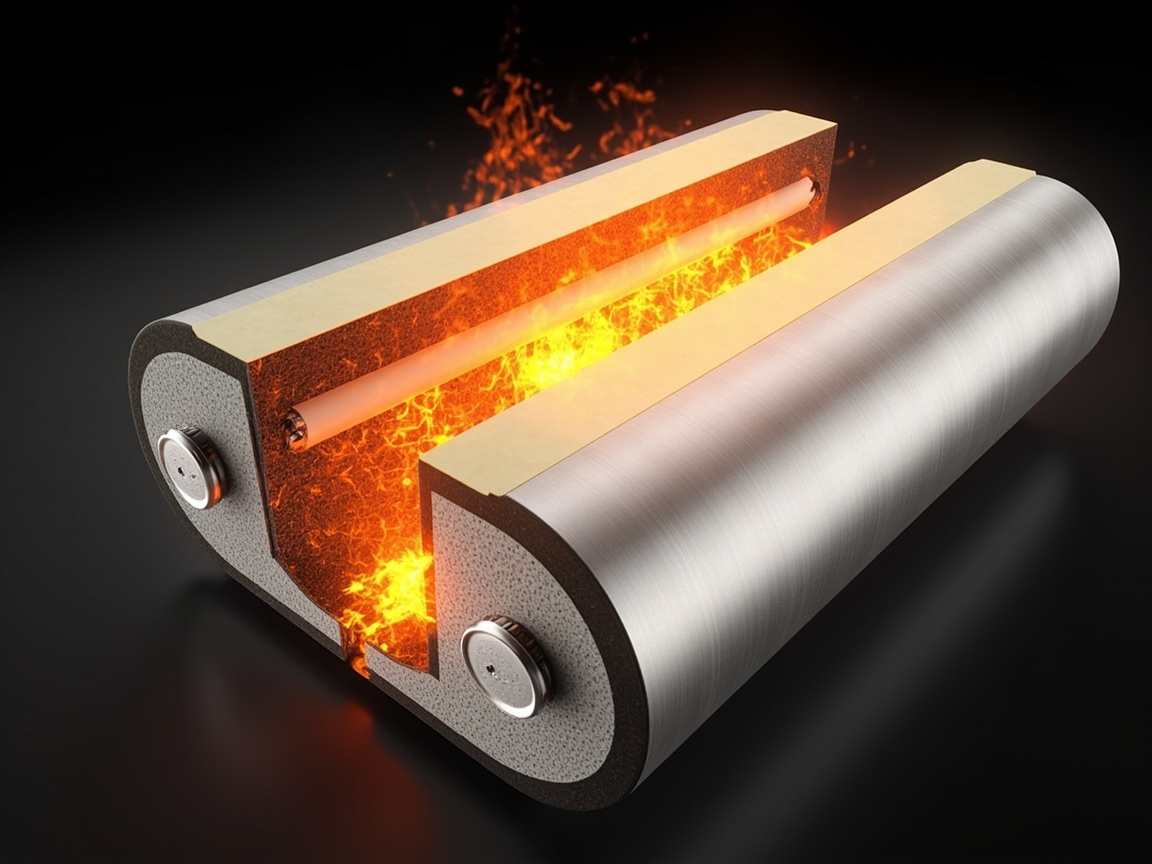
According to its scope, ISO 26181 specifies the technical requirements, test methods, and performance evaluation indicators for inorganic heat-resistant coatings used in electrochemical energy storage battery systems, and is applicable to thermal runaway protective coatings in cell, module, and system-level applications.
It should be noted that the standard does not specify the applicable battery system types or substrate categories, nor does it define detailed requirements for coating appearance or application methods. Instead, it focuses on "the core performance indicators essential to ensure safety and function under operating conditions." This framework of "grasping the key points and leaving details open" not only ensures the safety baseline but also leaves room for material innovation.
The original intention of the standard is clear: the safe operation of electrochemical energy storage systems highly depends on the thermal management performance of the coating. Currently, significant differences exist among manufacturers in their performance requirements for such coatings, causing inconsistencies in safety, reliability, and international trade. The rapid expansion of the energy storage market further intensifies the urgency for unified specifications. Inorganic thermal insulation coatings have demonstrated better safety performance than organic alternatives, and the standard aims to reduce trade technical barriers and promote industry innovation through unified test methods and performance criteria.
Why inorganic heat-resistant coatings become the protagonist
In thermal runaway protection, coatings play three roles: thermal insulation, flame retardancy, and delaying heat transfer. Organic coatings tend to decompose, release gas, or even promote combustion at high temperatures, whereas inorganic heat-resistant coatings (such as ceramized silicone rubber, inorganic silicates, and nanoporous insulation layers) form a dense ceramic or molten barrier when exposed to high temperatures, blocking heat transfer to adjacent cells.
This is precisely why ISO 26181 explicitly limits its scope to "inorganic heat-resistant coatings." The standard developers noted in the explanation that inorganic thermal insulation coatings offer better safety performance than organic alternatives and can block the propagation path of thermal runaway at the cell, module, and system levels.
From an engineering practice perspective, coatings are typically applied to:
– The cell casing or separator surface interface, to delay the onset of internal thermal runaway of individual cells; – Module partitions and end plates, to establish thermal barriers between units within the module; – Battery pack top cover and bottom plate, to form system-level passive protection.
This "cell—module—system" three-level protection concept corresponds exactly to the three levels covered by the standard.
How the standard affects all links of the industry chain
For manufacturers, unified indicators mean R&D has a benchmark target, eliminating the need to repeat differentiated verification for each customer; for suppliers, one set of test methods can be applied across multiple markets, reducing compliance costs; for end users (power grids, industrial and commercial energy storage owners), the core performance indicators in the standard can be used to accurately evaluate the safety margin of different coating solutions.
The standard also implies a signal: thermal runaway protection is shifting from "passive remediation" to "active design." In the past, many battery packs added investment in thermal safety only after incidents occurred, whereas ISO 26181 positions coating performance as a technical parameter in battery system design upfront, prompting OEMs to incorporate heat-resistant coating solutions at the PACK design stage.
As a company focused on industrial and new energy protective coatings, Kexin New Materials (Guangdong) Co., Ltd. continues to invest in integrated insulation, thermal conductivity, and fire-proof coating directions. Its technical route is highly consistent with the safety logic of inorganic heat-resistant coatings and can provide material support for the passive thermal safety of energy storage systems.
Comparison between existing protection solutions and standardization requirements
| Protection level | Typical coating solution | Standardization focus |
|---|---|---|
| Cell level | Ceramized separator coating, casing thermal insulation paint | Trigger temperature and residual thickness retention |
| Module level | Mica board composite, nanoporous insulation layer | Thermal conductivity and fire resistance duration |
| System level | Top cover fire-retardant coating, bottom plate insulation layer | Overall heat release and back-side temperature rise |
| General requirements | Inorganic systems preferred | Unified test methods, comparable performance |
Thresholds still to be crossed for engineering implementation
First, the repeatability issue of test methods. Different thermal runaway trigger methods (heating, nail penetration, overcharge) lead to significantly different coating performances. The standard needs to provide clear trigger and evaluation protocols; otherwise, data will not be comparable.
Second, performance degradation after long-term aging. Whether the insulation performance of the coating is maintained after charge-discharge thermal cycling and damp-heat aging is a verification dimension that the standard needs to supplement later.
Third, process compatibility with existing battery systems. Inorganic coatings often have specific requirements for application environment and adhesion, and manufacturability needs to be verified on the PACK production line.
Fourth, the balance between cost and performance. High safety margin coatings often mean higher costs. The standard should provide graded indicators to allow selection based on different application scenarios.
FAQ
Q: What is the current status of ISO 26181? A: The standard was approved as a new work item in May 2026, registered as a committee draft in June, entered the committee draft study stage in July, and is under the jurisdiction of ISO/TC 107. It is currently a draft international standard under development.
Q: Why does the standard limit itself to inorganic heat-resistant coatings? A: Compared with organic alternatives, inorganic thermal insulation coatings can form a ceramic or molten barrier at high temperatures, offering better safety performance and more effectively blocking thermal runaway propagation at the cell, module, and system levels.
Q: What does this standard mean for the energy storage industry? A: It provides, for the first time, unified technical requirements, test methods, and performance indicators for heat-resistant coatings, reducing the safety level gaps among manufacturers and international trade technical barriers, and promoting the shift of thermal safety from passive remediation to active design.
Further reading
–The "Invisible Armor" of New Energy Battery Packs: Triple-Protection Coating with Insulation, Fire-Retardant and Thermal Conductivity – Application of Nano Coating in Battery Thermal Management – Industrial Protective Coating Product System