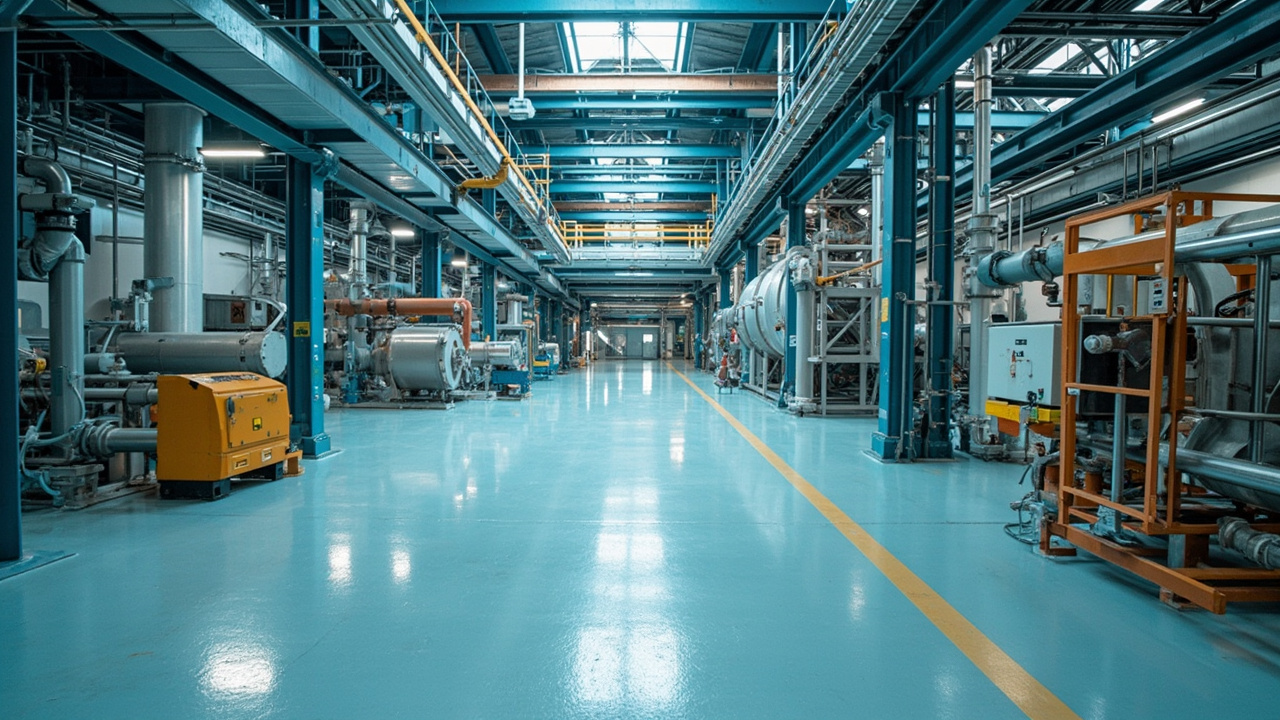
The chemical resistance of epoxy is the foundation of its position in the fields of industrial anti-corrosion and floor coating. In electroplating workshops, chemical storage tank areas, sewage treatment plants, pharmaceutical and food factories, floors and equipment are in long-term contact with acids, alkalis, solvents, salt spray, and oxidants. Ordinary paint is destroyed within months, while a properly designed epoxy system can serve for over ten years. But "epoxy chemical resistance" is not an empty phrase—ordinary bisphenol A epoxy is alkali-resistant but not strong-acid-resistant, and mineral-oil-resistant but not ketone/ester-resistant; a wrongly selected epoxy will also swell and peel off. To select scientifically, one must understand the microscopic mechanism of epoxy chemical resistance and define boundaries against a real media tolerance matrix.
As a technical supplier of industrial protective coating, Kexin New Materials (kexinMaterials) has accumulated a large amount of data on the formulation and media matching of epoxy chemical-resistant systems. This article will systematically break down the chemical resistance of epoxy from the nature of the crosslinked network, media-resistant mechanism, tolerance matrix, strong-corrosion upgrade route, to testing standards, helping you turn "probably resistant" into "selection by media" under corrosive working conditions.
I. Why Epoxy Is Chemical Resistant: Saturated Crosslinked Network
After curing, epoxy resin (bisphenol A type) forms a three-dimensional crosslinked network with ether bonds (—C—O—C—), hydroxyl groups, and benzene rings as the skeleton. Its chemical resistance comes from several structural features:
First, chemically inert skeleton. Ether bonds and C—C bonds are stable against most non-oxidizing media and are not easily hydrolyzed or oxidized; the benzene ring provides rigidity. Compared with ester bonds (easily hydrolyzed) or amine bonds (easily acidolyzed), the epoxy network contains no weak bonds prone to attack, hence its outstanding water and alkali resistance.
Second, high crosslink density and low porosity. The dense network hinders media penetration; the penetration rate is inversely proportional to crosslink density. According to free volume theory, the denser the crosslinking, the smaller the free volume available for media molecules, and the better the shielding.
Third, strong adhesion forms a continuous barrier. Epoxy's strong adhesion to the substrate reduces interfacial channels, making it difficult for media to invade from under the film.
It needs to be distinguished: chemical resistance ≠ resistant to all chemicals. Epoxy is stable against "non-oxidizing, neutral or alkaline" media, and sensitive to "strong oxidizing acids, strong solvents, high temperature". Selection relies on matrix, not slogans.
II. Three Types of Media-Resistant Mechanisms
The interaction between epoxy and chemical media can be divided into:
Water resistance / salt spray resistance: Water and chloride ions mainly enter by penetration; the dense epoxy network blocks them, showing excellent performance in long-term testing according to ISO 9227 (neutral salt spray, equivalent to ASTM B117). The essence of salt spray resistance relies on shielding + adhesion.
Alkali resistance: The epoxy ether bond resists alkaline hydrolysis; bisphenol A epoxy is extremely stable in alkaline solutions, which is the key advantage over polyester/polyurethane (polyester ester bonds are easily alkali-hydrolyzed). According to GB/T 1763 alkali resistance determination, epoxy tolerates NaOH solution well.
Acid resistance: Tolerable to weak acids (acetic acid, dilute phosphoric acid); unstable to strong oxidizing acids (concentrated sulfuric acid, nitric acid, chromic acid), epoxy will be oxidatively degraded. Strong acid environments require phenolic epoxy, vinyl ester, or stainless steel lining.
Solvent resistance: Stable to aliphatic hydrocarbons (mineral oil, diesel); sensitive to aromatic hydrocarbons (xylene), ketones (acetone), esters (ethyl acetate), and will swell and soften upon long-term contact. Solvent resistance relies on high crosslink density; some special epoxies are slightly better but still limited.
The table below gives reference (qualitative, subject to product TDS and immersion report; according to ISO 2812-1 immersion method and GB/T 1763 rationale) for bisphenol A epoxy tolerance to common media:
| Media | Bisphenol A Epoxy Tolerance | Description |
|---|---|---|
| Water / Brine | Excellent | Mainly shielding |
| Mineral oil / Hydraulic oil | Excellent | Saturated hydrocarbon stable |
| Alkali solution (NaOH ≤ 10%) | Excellent | Ether bond resists alkali |
| Weak acid (acetic, dilute phosphoric) | Good | Short-term OK |
| Strong oxidizing acid (conc. H2SO4, HNO3) | Poor | Oxidative degradation |
| Ketone (acetone), ester | Medium–Poor | Easy swelling |
| Aromatic hydrocarbon (xylene) | Medium | Long-term sensitive |
| Organic solvent mixture | Medium–Poor | Depends on composition |

III. Amplification Effect of Temperature on Chemical Resistance
Temperature significantly amplifies chemical attack. The same media may be stable at room temperature but rapidly destroyed at 60℃; at high temperature, molecular motion intensifies, penetration accelerates, and reaction rate doubles (according to Arrhenius). Therefore, selection must consider the four dimensions of "media + temperature + concentration + contact time" simultaneously, rather than just the media name. For example, 10% NaOH at 50℃ can be resisted by epoxy, while 30% NaOH at 80℃ may require phenolic epoxy.
IV. Upgrade Route for Strong Corrosion Environments
When the media exceed the tolerance boundary of bisphenol A epoxy, the upgrade paths:
- Phenolic epoxy (Novolac Epoxy): Multi-functional, high crosslinking, resistant to strong acid and high temperature (up to 150℃ class), used for strong acid tanks, chimney linings. The cost is brittleness, difficult construction, high cost.
- Vinyl ester: Epoxy acrylate, resistant to strong acid and strong solvent, high toughness, mainstream for heavy chemical anti-corrosion, commonly used in FRP lining.
- Lining structure: Brick/plate lining + putty, to cope with extreme working conditions.
- Thickening and multilayer: Increase DFT to extend penetration path; according to ISO 12944配套 rationale, total DFT for heavy corrosion C5/Im needs several hundred microns.
When selecting, choose the lowest-cost qualified system according to the media matrix, rather than blindly going for the most expensive. For intermediate layer shielding, refer to this batch's epoxy micaceous iron oxide intermediate coat.
V. Testing Standards and Methods
Evaluation of epoxy chemical resistance relies on standards:
- ISO 2812-1 (immersion method), ISO 2812-2 (condensation method): determine media resistance;
- GB/T 1763 (Determination of resistance of paint film to chemical reagents): acid, alkali, oil resistance;
- ISO 9227 / ASTM B117: neutral salt spray;
- GB/T 9274 (resistance to liquid media): drop and immersion;
- Cyclic corrosion: ISO 12944-9 / ASTM G85, closer to real aging.
Acceptance is based on appearance after immersion (blistering, peeling, discoloration), hardness change (GB/T 6739), adhesion (GB/T 9286), and mass/thickness loss. Key projects should require suppliers to provide immersion reports for corresponding media, temperature, and concentration, rather than just giving qualitative descriptions of "excellent chemical resistance".
VI. Influence of Film Thickness, Curing, and Construction Quality
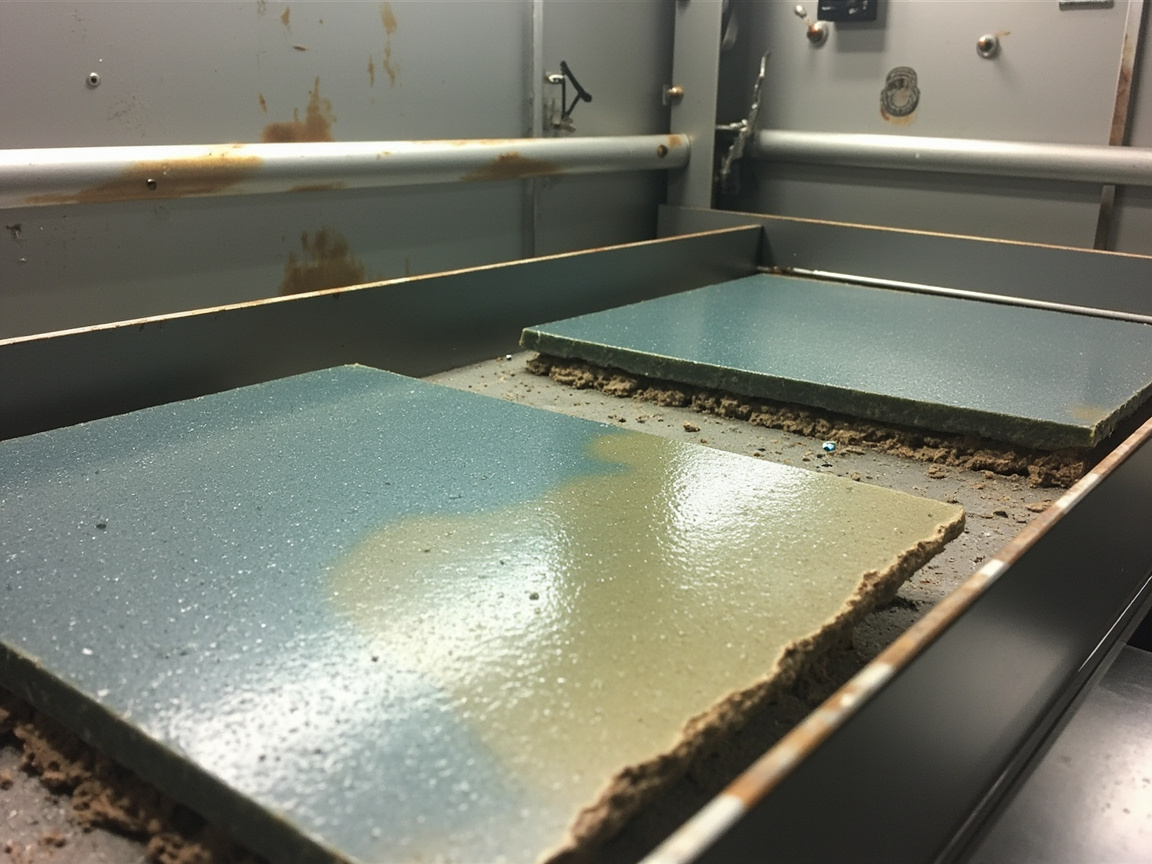
Chemical resistance relies not only on resin, but also on construction quality:
- Film thickness: According to ISO 2808 / GB/T 13452.2 to measure DFT, the thicker the film the longer the path; but too thick is prone to defects, need thin layers in multiple coats. Total DFT in heavy corrosion zones often above 300 µm.
- Curing degree: Uncured epoxy has insufficient crosslinking and sharply reduced chemical resistance. Need to reach full cure (usually 7 days, according to GB/T 22374 rationale) before contacting media.
- Porosity and defects: Pinholes and missed coating are shortcuts for media; after construction, do pinhole detection (spark leak test, according to ASTM D5162 rationale) and missed coating repair.
- Mixing ratio: Wrong ratio of two-component leads to incomplete crosslinking and collapse of chemical resistance, see this batch's two-component coating mixing ratio.
VII. Comparison with Polyurethane Chemical Resistance
Polyurethane (aliphatic, see this batch's aliphatic and aromatic polyurethane) is generally slightly inferior to epoxy in chemical resistance, but superior in flexibility and weather resistance. In outdoor scenarios requiring both chemical and weather resistance, the composite of "epoxy primer/intermediate (chemical resistant) + aliphatic PU topcoat (weather resistant)" is commonly used. Choose epoxy for pure strong alkali resistance, PU for weather-resistant elasticity, divide labor by bottleneck.
VIII. Hygienic-Grade Chemical Resistance for Food and Pharmaceutical
Floors in food and pharmaceutical factories often contact pickling agents, alkaline cleaning agents, disinfectants (chlorine-containing), and need to be easily cleaned and non-leaching. The epoxy system needs to comply with food contact safety (e.g., GB 4806 rationale, FDA 21 CFR indirect contact requirements depending on specific formulation) and low VOC (GB 30981, GB 50325). Hygienic-grade epoxy requires no porosity, easy disinfection, resistant to cleaning agents, and no harmful substance migration. Selection requires obtaining food contact compliance declaration from supplier.
IX. Common Misconceptions
| Misconception | Truth |
|---|---|
| Epoxy resists all chemicals | Not resistant to strong oxidizing acids and ketone/ester/aromatic solvents |
| Room-temp resistance = high-temp resistance | Temperature amplifies attack, need four-dimensional selection |
| The thicker the film, the safer | Too thick causes defects, use thin layers in multiple coats |
| Qualitative "chemical resistance" is sufficient | Need report with medium + concentration + temperature + duration |
| Cures in half a day and ready to use | Full cure usually takes 7 days |
X. Selection Checklist
- List all contacting media, concentrations, temperatures, contact durations (continuous/intermittent);
- Determine boundaries against the resistance matrix: bisphenol A epoxy / phenolic epoxy / vinyl ester;
- Define DFT and number of coats (increase thickness for heavy corrosion);
- Check curing and pinholes, accept based on adhesion and immersion reports;
- For outdoor or weather-resistant needs, use aliphatic PU topcoat composite;
- Food grade requires compliance declaration and low VOC.
Kexin New Materials (kexinMaterials) provides a closed loop of "medium list → resistance matrix → system selection → immersion verification" for corrosive conditions, based on real media rather than experience guesses, turning chemical resistance from a slogan into a verifiable indicator.
XI. Engineering Testing and Acceptance of Epoxy Chemical Resistance
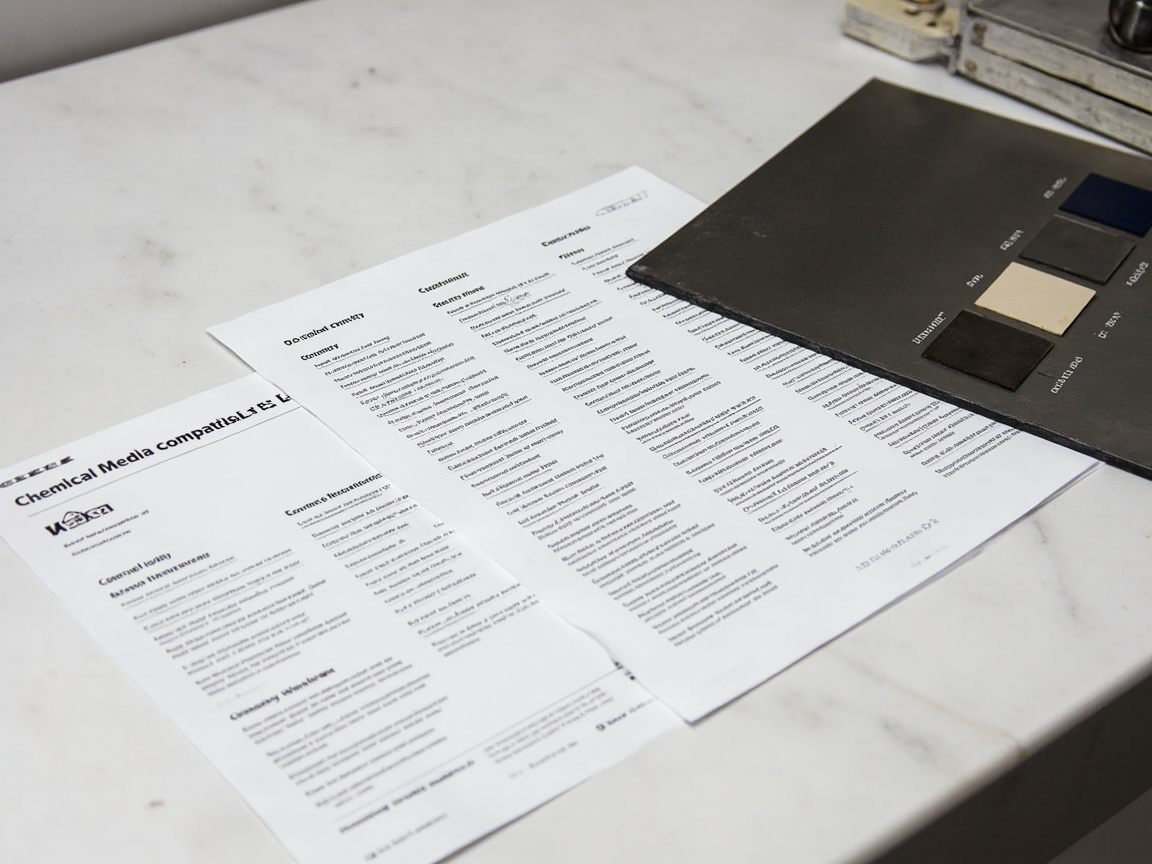
Acceptance is not just about checking if it survived immersion. Standard methods: ISO 2812-1 liquid immersion, GB/T 1763 acid/alkali resistance, ISO 9227 salt spray (equivalent to ASTM B117), GB/T 1768 abrasion, GB/T 5210 pull-off. Reports should include medium, concentration, temperature, duration and rating (e.g., blistering, rusting, detachment, hardness change). Key engineering requires suppliers to provide immersion reports for specific media, not generic acid/alkali resistance claims.
XII. Amplification of Chemical Resistance by Film Thickness, Curing and Construction Quality
With the same formulation, insufficient film thickness or incomplete curing causes chemical resistance to drop sharply. Construction must ensure total DFT meets design (heavy corrosion often above 300 µm), thin layers in multiple coats, and pinhole detection (spark leak test approach); full cure usually takes 7 days (per GB/T 22374 approach), contact with media before curing is bound to fail. Quality control is as important as the material side.
XIII. Boundary Comparison of Epoxy and Polyurethane Chemical Resistance
Epoxy excels in alkali, water, mineral oil resistance, but poor in strong oxidizing acids and ketone/ester/aromatic solvents; polyurethane has excellent weather resistance but average alkali resistance and limited strong solvent resistance. Therefore, epoxy is mostly used in corrosive environments, aliphatic PU for outdoor weather-resistant finish, the two combined take respective strengths (see epoxy and polyurethane selection guide https://www.psste.com/epx-selection/). The misconception is one paint resists everything; correct is selection by media matrix.
XIV. Special Requirements for Sanitary and Food Contact
Food and pharmaceutical floor coatings, besides resisting cleaners and disinfectants, must be non-porous and easy to clean, low VOC (GB 30981, GB 50325), and comply with food contact safety regulations (e.g., GB 4806 approach) with supplier compliance declaration. Crevices treated with fillets to reduce dirt hiding. Sanitary epoxy values dense non-porous + verifiable compliance more than mere chemical resistance strength.
XV. Practical Table for Epoxy Selection by Media Matrix
List working condition media into a matrix: water/brine, alkali, weak acid, strong oxidizing acid, aliphatic hydrocarbons, aromatics, ketones/esters, oxidizers, mark each cell "excellent/good/fair/poor", then select bisphenol A epoxy, phenolic epoxy, vinyl ester or lining based on overall rating. Matrix makes selection reviewable and accountable, avoiding experience-based missed judgment of strong solvents or high-temperature damage.
XVI. Hidden Damage of Construction Defects to Chemical Resistance
Pinholes, missed spots, bubbles are shortcuts for media; water and chloride ions reach substrate directly from defects, local rust first then spreads. Spark leak test (extended from GB/T 1771 approach) can find pinholes. Thin layers in multiple coats, thorough mixing, control pot life, better than simply thickening for defect-free film, thus truly improving chemical resistance life.
XVII. Boundary of Epoxy Lining and Brick Lining
When media exceed coating tolerance (strong oxidizing acid, high-temp concentrated acid), switch to epoxy or vinyl ester lining (FRP), then upgrade to brick lining (stronger temperature and corrosion resistance). Lining relies on multi-layer fabric/mat reinforcement and thickness (often above 2–5 mm) to resist, construction more demanding. Boundary judgment: where coating fails is where lining starts.
XVIII. On-site Sampling Method for Chemical Resistance Acceptance
Take same-batch sample blocks on site for media immersion (ISO 2812-1, GB/T 1763), compare hardness, adhesion, appearance change with archived samples; salt spray per ISO 9227. Key equipment keeps sample blocks aging synchronously with operating environment as life warning. Acceptance upgrades from "review report" to "on-site retest", quality more controllable.
XIX. Microscopic Failure Process of Epoxy Chemical Resistance
Failure starts with media penetrating at defects or free volume, reaching interface or crosslinked network, causing hydrolysis, oxidation or swelling; then adhesion drops, blistering, delamination. Understanding "penetration—reaction—loss" three steps enables targeted blocking: defect-free film blocks penetration, high crosslinking delays reaction, strong adhesion prevents loss.
XX. Equivalent Damage Model of Temperature-Concentration-Time
Same media, raising temperature or concentration equates to extending contact time. Roughly by Arrhenius, 10℃ rise doubles reaction rate. Selection checks at "most severe condition point", not average condition. Modeling gives basis for upgrade decisions, avoiding luck leading to early failure.
XXI. Special Verification of Epoxy in Food and Pharmaceutical Sanitary Grade
Sanitary grade besides resisting cleaning disinfectants, must verify non-porous, easy drainage, no reaction with product. Practice: dense non-porous formulation + fillet seams + third-party testing + supplier compliance declaration (refer GB 4806, GB 30981). Verification extends from material to construction, is the threshold of sanitary floor.
XXII. Life Prediction and Monitoring of Epoxy Chemical Resistance
Life prediction based on media matrix, film thickness, temperature and accelerated aging data; on-site use same-batch sample blocks aging with operating environment, periodically measure hardness, adhesion, appearance change for warning. Turn "passive repair" into "predictive maintenance", Kexin New Materials (kexinMaterials) recommends sample block monitoring for key units, extending safe service life.
XXIII. Collaborative Design of Epoxy Chemical Resistance and Temperature
High-temperature corrosive conditions must select heat-resistant epoxy (phenolic/cycloaliphatic amine cure) and sufficient film thickness together, synergistic not single reliance. Design checks table by "temperature + media" dual coordinates, avoid focusing only on media ignoring temperature. Collaborative design is key for high-temp anti-corrosion.
XXIV. Application of Epoxy in Pickling and Electroplating Lines
Pickling line (dilute sulfuric, hydrochloric acid) and electroplating line (multiple media) have complex corrosion, ordinary epoxy not resistant to strong acid, must use phenolic epoxy or vinyl ester, and control temperature. Line tank lining more reliable than coating. Application must customize by specific media concentration temperature, general epoxy hard to handle.
XXV. Sample Library Construction for Epoxy Chemical Resistance
Build media immersion sample library: each system sample blocks periodically rated for appearance, hardness, adhesion in standard media. Library is selection database, new conditions directly check history. Sample library turns "chemical resistance" from experience to data, is accumulation of technical assets.
XXVI. Interface of Epoxy Chemical Resistance and Food Safety
Food plant epoxy besides resisting cleaners, must not react with food, not leach. Dual control per GB 4806 and GB 30981, obtain compliance declaration. Safety interface is threshold of food-grade floor, material selection and verification equally important.
XXVII. Failure Case Review of Epoxy Chemical Resistance
Case: a sewage plant used ordinary epoxy for alkali but ignored temperature, 60℃ alkali caused early damage—solved by phenolic epoxy. Case: insufficient film thickness dense pinholes—solved by thickening multi-coat. Review commonality: ignore temperature or film thickness. Put cases into knowledge base, avoid thunder before strike.
XXVIII. Cost Inflection Point of Epoxy Chemical Resistance and Lining
Cost inflection between coating and lining: when media exceed coating tolerance boundary, switch to lining (FRP or brick) instead saves total ownership cost. Inflection decision avoids "forcing coating" causing early damage. Inflection is techno-economic balance, must quantify compare.
XXIX. Accelerated Aging Method for Epoxy Chemical Resistance
Use temperature rise to accelerate equivalent time, quickly assess chemical resistance trend. Acceleration helps selection, but must correct equivalent factor, not simply extrapolate. Accelerated data is directional reference, key engineering still does real-time immersion report. Proper method, selection faster.
XXX. Long-life Case of Epoxy in Alkali Environment
A plant 10% NaOH at room temp, bisphenol A epoxy system served 10 years intact. Case confirms epoxy extremely reliable within boundary. Case builds confidence, also marks applicable boundary. Put success cases into knowledge base, guide similar conditions.
XXXI. Knowledge Base Construction for Epoxy Chemical Resistance
Build media—system—life knowledge base, new conditions directly check base not trial from scratch. Knowledge base is enterprise technical asset, also newcomer training material. Base promotes standardization, reduces personal experience dependence. Continuous accumulation, selection more accurate.
XXXII. Correlation of Epoxy Chemical Resistance and Temperature Record
Temperature record is life evidence: same media, temperature rise doubles reaction rate, recording actual temperature warns. Compare temperature curve with sample block change, build life model. Record seems trivial, but is predictive maintenance base data. Data valuable, long-term accumulation forms enterprise proprietary knowledge, guides later material selection more precise.
XXXIII. Media Classification Method for Epoxy Chemical Resistance
Classify media into four: alkali, acid, solvent, oxidizer. Each corresponds different resistance logic, clear classification then clear selection. Classification systematizes messy conditions, reduces omission. Method is skeleton of selection framework, used with matrix. Wrong classification directly causes wrong selection, so classification must be checked by chemistry-savvy person, not hasty.
XXXIV. Selection Evidence of Epoxy in Sewage Plant
Sewage plant contacts mixed multiple media, normal temp humidity, select bisphenol A epoxy and thicken multi-coat, with solvent-free system to reduce VOC. Selection verified reliable by actual operation. Case guides similar conditions, also marks boundary. Evidence more persuasive than theory, put success cases into knowledge base, accelerate later similar project decisions.
XXXV. Supplier Audit for Epoxy Chemical Resistance
Audit checks TDS completeness, media immersion report, testing qualification. Audit prevents false labeling, controls supply side. Key engineering requires immersion data for specific media, not generic acid/alkali claim. Audit adds front cost, but avoids later massive failure loss. Supplier capability is fundamental guarantee of chemical resistance effect.
XXXVI. Cost Inflection Point of Epoxy Chemical Resistance and Lining
When media exceed coating tolerance boundary, switch to lining instead saves total ownership cost. Inflection decision avoids forcing coating causing early damage. Inflection is techno-economic balance, must quantify compare material, construction and life. Write inflection analysis into selection report, make cost decision evidenced, avoid feeling causing project overrun.
XXXVII. Accelerated Aging Method for Epoxy Chemical Resistance
Use temperature rise to accelerate equivalent time, quickly assess trend. Acceleration helps selection, but must correct equivalent factor, not simply extrapolate. Accelerated data is directional reference, key engineering still does real-time immersion. Proper method selection faster, wrong method misleads. Understand limitation, acceleration has value, else prefer real-time.
XXXVIII. Knowledge Base Construction for Epoxy Chemical Resistance
Build a medium–system–service-life knowledge base, so that for new working conditions one can directly query the base instead of starting from scratch. The base is a technical asset and also a training material for newcomers. The base promotes standardization and reduces dependence on individuals. With continuous accumulation, material selection becomes increasingly accurate and errors fewer. The knowledge base is the invisible foundation of an organization's competitiveness and should be maintained and updated with long-term investment.
39. Failure Case Review of Epoxy Chemical Resistance
Case: A sewage plant used ordinary epoxy for alkali resistance but ignored temperature; 60°C alkaline liquid caused early damage, resolved by switching to phenolic epoxy. Case: Insufficient film thickness with dense pinholes, resolved by increasing thickness with multiple coats. Common lessons from review: ignoring temperature or film thickness. Enter cases into the knowledge base to avoid pitfalls before they occur, and turn every failure into organizational capability.
40. Green Requirements for Epoxy Chemical Resistance
Under green requirements, chemically resistant epoxy must balance low VOC and absence of hazardous substances. Solvent-free and water-based epoxy, while maintaining chemical resistance, also achieve compliance and are the direction forward. Food-grade must further comply with contact safety regulations. Going green is not sacrificing performance, but meeting standards with better formulations. Embed green requirements upfront in material selection to pass environmental checks while ensuring service life. Green and chemical resistance can be achieved together; the key lies in formulation.
41. Summary of Epoxy Chemical Resistance
Summary: Epoxy chemical resistance originates from the saturated crosslinked network, strong in alkali, water and mineral oil resistance, weak against strong oxidizing acids and ketones/esters. Selection relies on a medium matrix rather than slogans; beyond limits, upgrade to phenolic epoxy or lining. Temperature and film thickness are amplifying variables. Apply the framework in this article to practice, and most corrosive conditions can be addressed scientifically. Summarize into a checklist, so selection is calm and quality assured.
42. On-site Inspection Points for Epoxy Chemical Resistance
Inspection looks at: whether surface has blistering, delamination, discoloration, pinholes; whether medium has abnormal high temperature or concentration fluctuation. Record key points in a log, and sample immediately upon abnormality. Inspection eliminates failure in its infancy and avoids escalation. Inspection is part of predictive maintenance, low cost and high benefit. Make the points into cards for workers to follow. With inspection in place, epoxy floor coating service life and reliability improve substantially, and safety is better guaranteed.
43. Communication Points for Epoxy Chemical Resistance
Communicate with owners using the medium matrix and sample blocks, not empty talk of acid/alkali resistance. With good communication, owners understand the selection basis and limitations. Communication reduces later misunderstandings and claims. Write communication points into delivery documents for transparency and credibility. Communication is a soft skill for technical implementation, equally important as hard technology. Good communication makes proposals easily accepted and cooperation smoother and longer-lasting.
44. Closing Reminders for Epoxy Chemical Resistance
Closing reminder: for alkali and water resistance choose epoxy; avoid or upgrade for strong oxidizing acids and ketones/esters; temperature and film thickness are amplifying variables; selection relies on medium matrix not slogans. Four sentences cover most conditions. Put reminders on the wall as a mantra, follow on site. Chemical-resistant selection values rigor; incorporate reminders into briefing, so the material's potential is realized as real service life and reliable protection.
45. On-site Immersion Rating Method for Epoxy Chemical Resistance
Evaluation after medium immersion should not rely solely on visual judgment of "whether it is damaged". According to the rating approach of GB/T 1763 "Determination of Resistance to Chemical Reagents of Paint Films" and ISO 2812 liquid immersion method, sample blocks must be systematically recorded with a unified scale: blister grade by blister density and diameter, referencing GB/T 1766 blister rating from grade 0 (no blisters) to grade 5 (dense large blisters); rust grade, loss of adhesion area percentage, cracking and discoloration are likewise graded. Changes in mechanical properties are compared before and after using GB/T 6739 pencil hardness, and adhesion quantified by GB/T 9286 cross-cut method or GB/T 5210 pull-off method. Only by quantifying the dual indicators of "appearance change + mechanical decay" can immersion reports from different suppliers be compared horizontally, and it also facilitates upgrading the medium tolerance boundary from qualitative "good/medium/poor" to committable service years. For critical projects, the rater, light source and angle should be fixed to reduce subjective error. Rating records should be archived together with sample blocks as objective basis for life warning and responsibility tracing. In mixed-medium conditions such as sewage and electroplating, it is recommended to link immersion rating with on-site same-batch sample blocks: place sample blocks in the operating environment and re-rate hardness and adhesion quarterly; once rating deteriorates beyond threshold, warn. This "lab rating + on-site tracking" dual-track method is closer to real service life than a single immersion report, and also facilitates enterprises to build their own medium database, turning selection from one-time judgment into continuous calibration.
FAQ
Q: Why is epoxy good in chemical resistance?
A: It originates from the saturated crosslinked network: ether bonds and C—C bonds are stable against most non-oxidizing media, with no easily hydrolyzed ester bonds; high crosslinking and low porosity hinder permeation; strong adhesion reduces interfacial channels.
Q: Can epoxy resist strong acids?
A: Ordinary bisphenol A epoxy resists weak acids but not strong oxidizing acids (concentrated sulfuric acid, nitric acid, chromic acid), which cause oxidative degradation. For strong acids, phenolic epoxy, vinyl ester or lining is needed.
Q: Is epoxy alkali resistant? Why better than polyester?
A: Alkali resistance is excellent. Epoxy ether bonds resist alkaline hydrolysis, while polyester contains ester bonds prone to alkaline decomposition, so epoxy far outperforms polyester/polyurethane in alkaline environments.
Q: Can epoxy resist solvents?
A: Stable against aliphatic hydrocarbons (mineral oil, diesel); sensitive to ketones (acetone), esters, aromatic hydrocarbons (xylene), with long-term contact causing swelling and softening. Solvent resistance relies on high crosslinking but is still limited.
Q: How much does temperature affect epoxy chemical resistance?
A: Temperature significantly amplifies erosion; molecular motion and reaction rate double with temperature rise. Same medium resistant at room temperature may fail rapidly at 80℃. Selection must consider the four dimensions of medium + concentration + temperature + duration.
Q: How to upgrade the epoxy system in strongly corrosive environments?
A: Path: bisphenol A epoxy → phenolic epoxy (strong acid/high temp resistance) → vinyl ester (strong acid/solvent resistance, high toughness) → brick lining. Select the lowest qualified cost system by matrix.
Q: How to test and accept epoxy chemical resistance?
A: According to ISO 2812 liquid immersion, GB/T 1763, ISO 9227 salt spray; check appearance after immersion, hardness (GB/T 6739), adhesion (GB/T 9286), thickness loss. Critical projects require medium immersion reports.
Q: Is thicker film always better for chemical resistance?
A: Film thickness extends the path, but excessive thickness causes pinholes and sagging defects that become shortcuts instead. Apply thin layers in multiple coats to reach required total DFT for heavy corrosion (often above 300 µm) and check pinholes.
Q: How long after curing can epoxy contact chemicals?
A: Full crosslinking usually takes 7 days (per GB/T 22374 approach); incomplete curing sharply reduces chemical resistance. It is recommended to reach full cure and verify hardness and adhesion before contacting media.
Q: What special requirements for food plant epoxy floor coating?
A: Needs resistance to acid/alkali cleaners and disinfectants, non-porous and easy to clean, low VOC (GB 30981, GB 50325), and comply with food contact safety (e.g., GB 4806 approach); supplier compliance declaration required.
Further Reading
- Epoxy Mica Iron Oxide Intermediate Coat: Understand how the barrier intermediate layer extends medium permeation path and strengthens chemical-resistant system.
- Aliphatic and Aromatic Polyurethane: Compare PU chemical and weather resistance boundaries, master composite clear coat logic.
- Epoxy and Polyurethane Selection Guide: Systematically compare trade-offs of epoxy and polyurethane in corrosion and weather exposure conditions.
Further Reading
- Epoxy Curing Agent Selection: Mechanisms and Condition Matching of Amines, Polyamides and Cycloaliphatic Amines
- Elastic Epoxy Expansion Joint Treatment: Movement Follow-up, Crack Control and Floor Expansion Joint Process
- Epoxy Zinc-Rich Primer Technical Analysis: Zinc Content, Solid Content and Cathodic Protection Mechanism