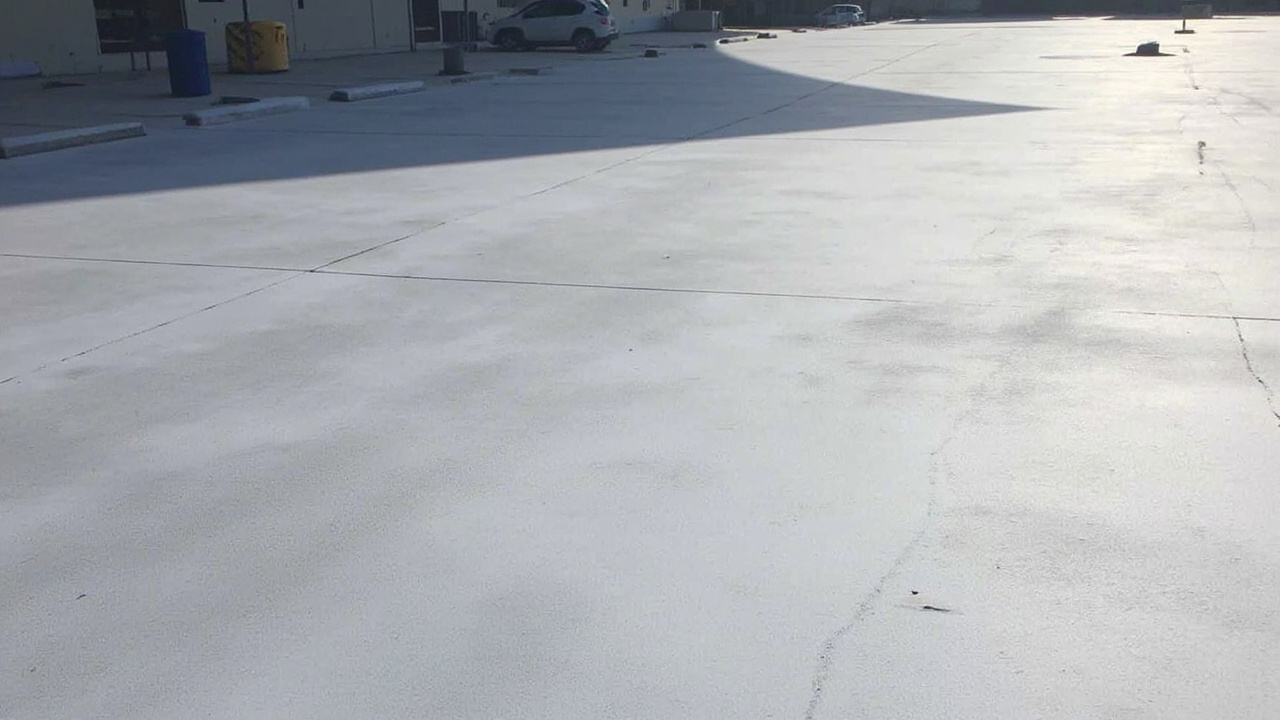
Polyurethane floor elastic coating is another major core solution for industrial and commercial floor protection. When the scenario expands from indoor clean workshops to outdoor parking lots, stadiums, hospital corridors, cold chain logistics, and even precision workshops that need to absorb impact and vibration, the brittleness and poor UV resistance of rigid epoxy will be exposed. With the flexibility of its molecular chains, excellent weather-resistant gloss retention, and ability to follow micro-cracks in the substrate, polyurethane floor elastic coating becomes a more suitable choice. Many users waver between epoxy and polyurethane, essentially because they have not clarified the working-condition boundary between "rigid protection" and "elastic cushioning".
As a technical supplier of industrial protective coating, Kexin New Materials (kexinMaterials) has accumulated a large amount of frontline data on the formulation and matching of polyurethane floor systems. This article will systematically break down the key technologies of polyurethane floor elastic coating from film-forming mechanism, source of elasticity, nature of weather resistance, impact-resistant design to comparison with epoxy, helping you turn the "soft vs. hard debate" into "working-condition matching" during selection.
I. Why is polyurethane floor "elastic": starting from molecular structure
Polyurethane (PU) is a polymer generated by the reaction of polyisocyanate (—NCO) with polyol (containing —OH), with carbamate bonds (—NH—COO—) in the main chain. The key to its elasticity lies in the microphase separation structure of the polyol soft segments and isocyanate hard segments:
Polyol (such as polyether polyol, polyester polyol) constitutes the "soft segment" of the molecular chain, with flexible segments and low glass transition temperature (Tg), being in a high-elastic state at room temperature, providing elasticity and low-temperature flexibility; isocyanate (such as HDI, IPDI trimer) and chain extender constitute the "hard segment", forming physical crosslinking zones through hydrogen bonds and polar interactions, providing strength and wear resistance. The soft and hard segments are thermodynamically incompatible and microscopically phase-separated; the hard segments act like "physical crosslinking points" to fix the flexible soft segment network, so the material is both elastic and strong—this is the physical essence of polyurethane elastic floor.
According to the tensile test methods of ASTM D412 (tensile properties of vulcanized rubber) and GB/T 528, the elongation at break of polyurethane elastomer can reach 200%–600% or even higher, far exceeding epoxy (usually < 10% brittle fracture). This means that when the concrete substrate produces micro-cracks due to temperature and load, the polyurethane coating can stretch accordingly without breaking, reflecting "crack-following ability".
It needs to be clarified: polyurethane floor is divided into "rigid polyurethane" and "elastic polyurethane". Rigid PU has a high hard segment ratio and high Tg, with hardness close to epoxy, used for heavy anti-corrosion topcoat; elastic PU has a high soft segment ratio, with Shore A hardness between 60–95. This article focuses on the latter—the floor system with cushioning, elasticity, and weather resistance as the core demands.
II. Aliphatic and weather resistance: a must for outdoor floors
If polyurethane floor is used outdoors or in strong-light areas near windows, the type of curing agent determines success or failure. According to industry consensus and the classification of weather-resistant topcoats in ISO 12944, aliphatic polyurethane (cured with aliphatic/cycloaliphatic isocyanates such as HDI, IPDI) has excellent UV resistance and gloss/color retention; while aromatic polyurethane (cured with TDI, MDI) tends to oxidize, yellow, and chalk under long-term UV exposure due to the aromatic rings. Therefore, outdoor and high-weather-resistant floors must use aliphatic polyurethane. For the deep differences between the two types of polyurethane, please refer to the article Aliphatic and Aromatic Polyurethane of this batch.
The weather resistance data of aliphatic polyurethane can refer to the accelerated aging tests of ISO 11341 (xenon arc aging) and GB/T 1865: high-quality aliphatic PU topcoat can still maintain a high level of gloss retention after 1000 hours of QUV or xenon arc aging, with low chalking grade. This is the fundamental reason why it can remain non-yellowing and crack-free for a long time on outdoor parking lots, overpasses, and stadium floors. In contrast, epoxy degrades quickly under UV and will chalk and lose gloss when directly exposed outdoors, so epoxy is mostly used indoors.
III. Impact resistance and vibration absorption: choices for precision workshops and sports fields
The "elasticity" of polyurethane elastic floor is not just about foot feel, but also an engineering function. The value of elasticity is prominent in the following scenarios:
First, impact cushioning. When heavy objects fall in logistics transfer and repair workshops, elastic PU absorbs impact energy through deformation, reducing damage to concrete and coating; while rigid epoxy easily produces radial cracks at the impact point. According to the drop-weight impact concept of GB/T 1732 "Determination of Impact Resistance of Paint Films", the impact energy level of elastic PU is significantly higher than that of rigid epoxy.
Second, vibration and noise reduction. The elastic layer can absorb vibration and noise from walking and equipment operation; medium-elastic PU is often used in hospital, school, and office corridors to reduce footstep sound.
Third, sports protection. Sports field floors (track, court) use high-elastic PU to cushion fall impact and protect athletes' joints; such systems often combine with rubber particles and EPDM particles to form a multi-layer elastic structure.
Fourth, crack bridging. When the substrate has fine existing cracks or expansion joint displacement, elastic PU can span the cracks and move with them, while rigid epoxy will directly break at the cracks. This is the other side of the "rigid-flexible connection" issue discussed in the elastic epoxy expansion joint treatment of this batch—rather than letting rigid materials chase cracks, it is better to directly cover active joints with elastic PU.
IV. System composition of polyurethane floor
Similar to epoxy, PU floor also often adopts multi-layer matching, but the elastic layer is the core:
Primer: Mostly epoxy or PU primer, responsible for establishing adhesion with concrete and sealing the substrate. PU is more sensitive to humidity than epoxy, so the primer emphasizes substrate dryness and interface compatibility.
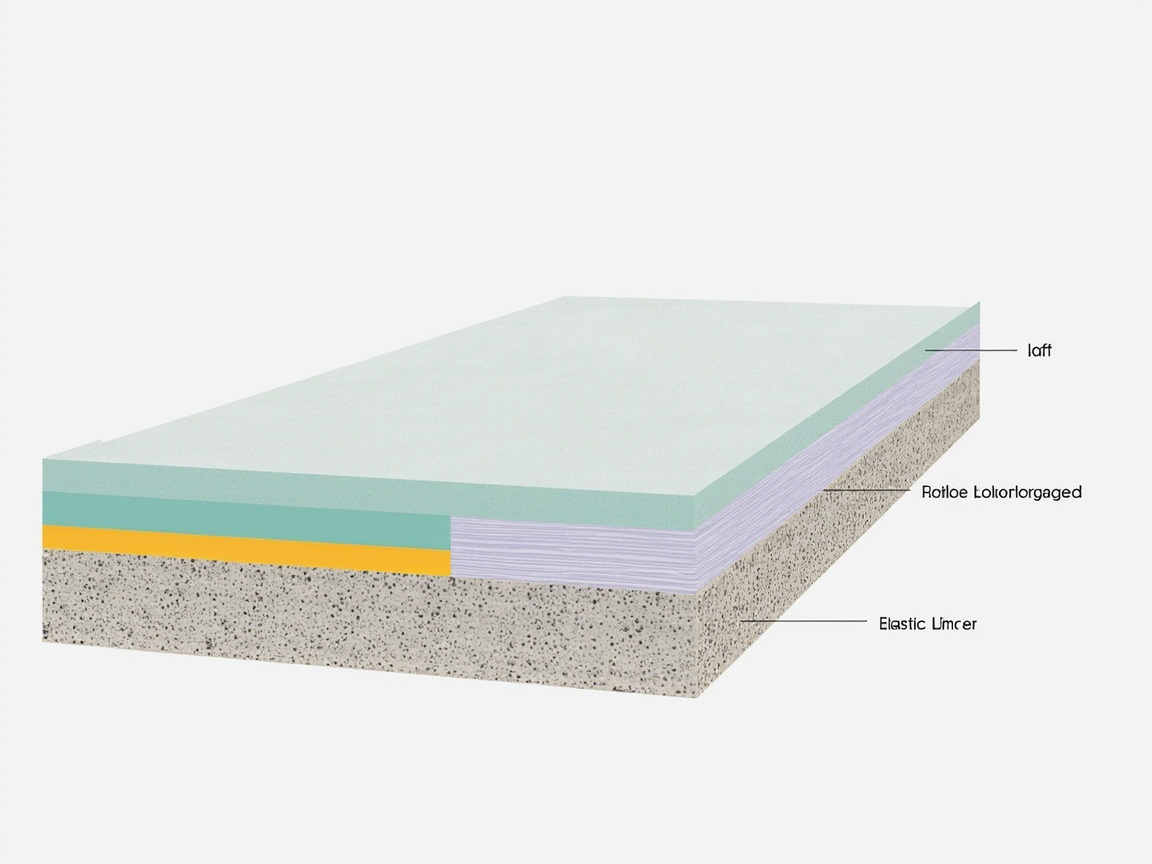
Elastic intermediate coat: Composed of elastic PU plus aggregate (quartz sand, rubber particles), with adjustable thickness, it is the main body of cushioning and load-bearing, DFT often at 1–5 mm. Multi-layer scraping achieves the required elasticity and flatness.
Topcoat: Aliphatic PU finish, providing weather resistance, wear resistance, easy cleaning, and color, often high-solid or water-based systems, DFT 200–800 µm. Aliphatic must be selected outdoors; aromatic can be selected indoors to reduce cost but sacrifices weather resistance.
The following table compares the key performance positioning of typical polyurethane floor and epoxy floor:
| Performance dimension | Epoxy floor (rigid) | Polyurethane elastic floor |
|---|---|---|
| Hardness | High (pencil 2H–3H+) | Medium (Shore A 60–95) |
| Elongation at break | < 10% | 200%–600%+ |
| UV/weather resistance | Poor, easy to chalk outdoors | Excellent (aliphatic) |
| Alkali resistance | Excellent | Good |
| Yellowing resistance | Neutral (no yellowing but chalking) | Aliphatic excellent, aromatic poor |
| Impact cushioning | Weak | Strong |
| Crack following | Weak | Strong |
| Typical scenario | Indoor clean/heavy load | Outdoor/elastic/sports |
When selecting, look at "which performance is the bottleneck". If the bottleneck is weather resistance and elasticity, choose PU; if the bottleneck is strong alkali resistance and high hardness wear resistance and it is indoor, choose epoxy. The two can also be combined: epoxy leveling base + polyurethane elastic topcoat, taking the strengths of each.
V. Construction control: humidity is the number one enemy of polyurethane floor
The biggest risk in polyurethane floor construction comes from moisture. The reaction rate of isocyanate (—NCO) with water is extremely fast, generating carbon dioxide and amine, causing coating foaming, pinholes, surface blistering, and consuming effective curing agent to make crosslinking insufficient. Therefore:
- Substrate moisture content requirement is usually stricter than epoxy, preferably ≤ 4% or even lower, use moisture-sensitive primer or do moisture-proof layer first if necessary;
- Relative humidity ≤ 70%, avoid condensation;
- Avoid clear water and rain during construction and curing;
- After mixing two components, stir thoroughly, pay attention to respiratory protection of HDI and other isocyanates (sensitization risk, according to OSHA and GBZ 2.1 occupational exposure limits).
In terms of temperature, PU reaction is also governed by temperature, suitable at 10–30℃; low-temperature curing type is required at low temperature. Pot Life ranges from tens of minutes to several hours depending on curing agent activity, must be mixed and used on site, estimated and mixed as needed. For mixing ratio discipline, see Two-component coating mixing ratio of this batch.
VI. Water-based polyurethane floor: a green direction with low VOC
Facing GB 30981-2020 "Limit of Harmful Substances in Industrial Protective Coatings" and indoor environment control, water-based polyurethane floor is an important trend. Water-based PU uses water as dispersion medium, VOC is greatly reduced, construction odor is small and safer. According to industry data, VOC of water-based PU floor can be reduced to tens of g/L (compared to hundreds of g/L for solvent-based), significantly better than solvent-based. But water-based systems are more sensitive to construction temperature and humidity and substrate moisture, film formation requires additives and correct drying window, initial water and chemical resistance need proper curing.
Water-based PU includes one-component (self-crosslinking or external crosslinker) and two-component (water-based isocyanate curing) types. Two-component water-based PU performance is closer to solvent-based, but mixing and pot life control are more complex. Selection should be comprehensively judged based on GB 30981 limits, indoor air quality (GB 50325), and on-site construction conditions.
VII. Wear resistance and anti-slip design
Elasticity does not mean not wear-resistant. By selecting a high hard-segment ratio, adding wear-resistant aggregates (quartz, alumina, silicon carbide micropowder) and a dense topcoat, polyurethane floor coating can achieve a good wear-resistance grade. According to the wear weight loss test of GB/T 1768, high-quality PU topcoat meets the needs of pedestrian and light-load logistics. However, for frequent rolling by heavy-duty forklifts, epoxy or epoxy+PU composite is still preferred.In terms of anti-slip, for wet or outdoor PU floor coating, anti-slip aggregates should be added or texture should be made. According to the pendulum friction method or the approach of GB/T 4100, the wet static friction coefficient should be ≥ 0.5. Anti-slip treatment must be applied to wet and slippery areas such as ramps, pool edges, and bathrooms.
VIII. Typical Engineering Selection List
To convert this article into procurement specifications, the suggested list is:
- Whether outdoor/strong light: if yes, aliphatic PU must be selected;
- Elasticity requirement level: foot feel, impact resistance, and crack-following determine the soft-segment ratio and thickness;
- Medium environment: for alkali resistance, select epoxy primer + PU topcoat; for solvent resistance, select special PU;
- Load: for heavy load, use composite system; for light load, pure PU is acceptable;
- VOC and indoor: indoor priority water-based PU, complying with GB 30981 and GB 50325;
- Acceptance: tensile strength, elongation at break (GB/T 528), wear resistance, hardness, adhesion, weather resistance (QUV/xenon lamp).
Kexin New Materials (kexinMaterials) emphasizes "rigid-flexible composite + working condition matching" in polyurethane floor coating solutions, providing customized primer—intermediate—topcoat packages based on on-site load, whether outdoor, and medium environment, and treats VOC and weather resistance as hard boundaries in the formula to help customers get it right the first time.
IX. Common Defects and Troubleshooting
| Defect | Main Cause | Countermeasure |
|---|---|---|
| Bubbles and pinholes | High moisture/humidity on substrate, NCO reacts with water to form bubbles | Control moisture and humidity, moisture-proof treatment |
| Soft and not dry | Wrong ratio/water consumes curing agent | Strict ratio control, moisture-proof |
| Yellowing and chalking | Use of aromatic/outdoor exposure | Switch to aliphatic, limit to indoor |
| Delamination | Incompatible primer/oily substrate | Interface treatment, compatible primer |
| Cracking | Insufficient elasticity/uneven film thickness | Increase soft-segment ratio, control thickness |
X. Synergy with Epoxy: Composite Floor
More and more projects adopt the composite floor of "epoxy priming and leveling + polyurethane elastic topcoat": epoxy provides a rigid base layer with strong adhesion, high load-bearing, and alkali resistance, while PU provides an elastic, weather-resistant, and comfortable topcoat. This combination balances heavy load and elasticity, indoor and semi-outdoor, and is the preferred choice for factory passages, hospitals, and laboratories. The premise is that interlayer adhesion and compatibility are verified to avoid interlayer peeling.
XI. Weathering Aging Mechanism and Service Life of Aliphatic Polyurethane Floor Coating
The essence of weather resistance of aliphatic PU topcoat is that its isocyanate contains no conjugated aromatic rings and is difficult to be excited by ultraviolet to undergo photo-oxidation. However, any organic coating outdoors will still undergo photo-oxidation, thermal-oxidative aging, and hydrolysis. To delay this, the system is often compounded with ultraviolet absorber (UVA, such as benzotriazole) and hindered amine light stabilizer (HALS): the former absorbs UV and converts it into heat, the latter captures free radicals to interrupt chain degradation. According to ISO 11341 xenon lamp aging and GB/T 1865, qualified aliphatic PU can maintain a high gloss retention rate for thousands of hours. It should be noted: light stabilization delays but does not eliminate, and design life depends on film thickness, pigment, and maintenance. Kexin New Materials (kexinMaterials) configures UVA+HALS in outdoor PU floor coating according to working conditions, and recommends regular cleaning to reduce pollutant-catalyzed aging.
XII. Composite Structure of Polyurethane Floor Coating and Epoxy
Typical composite: epoxy primer (strong adhesion, chemical resistance) + epoxy mortar or self-leveling (load-bearing leveling) + aliphatic PU clear coat (weather-resistant, wear-resistant, elastic). This structure is widely used in underground garage ramps, outdoor platforms, and pharmaceutical clean passages. PU clear coat thickness is often 1–3 mm, and the elasticity absorbs tire impact and reduces noise; the epoxy base layer ensures bonding with concrete without delamination. The key to construction is interlayer adhesion and interface cleanliness. Before PU construction, confirm that the epoxy has cured and is not contaminated; if PU is applied before the epoxy is fully cured, residual amines will migrate and cause PU yellowing or weak interlayer.
XIII. Film Formation and Curing of Water-based Polyurethane Floor Coating
Water-based PU is mainly water-dispersed, and film formation relies on particle fusion after water evaporation (sometimes with post-crosslinking). It has low VOC and low odor, suitable for hospitals, schools, and food factories. However, film formation is sensitive to temperature and humidity: below 5℃ or relative humidity too high (>85%), water is difficult to evaporate, easily turns white, and adhesion is poor; during the curing period (usually 7 days), water and chemical resistance are weak, and water washing and chemicals must be avoided. For selection, check VOC according to GB 30981, and control the temperature-humidity window according to the manufacturer's TDS.
XIV. Anti-slip and Color Decoration of Polyurethane Floor Coating
Outdoor ramps, platforms, and pool edges require anti-slip. PU can be mixed with silicon carbide or alumina aggregates to make anti-slip surface, and wet anti-slip is evaluated according to pendulum friction or the approach of GB/T 4100; colored PU uses weather-resistant pigments for tinting, and outdoor must use inorganic or high-weather-resistant organic pigments to avoid fading. When balancing decoration and function, first confirm the pigment weather-resistance grade before large-area construction, and keep same-batch color samples for comparison.
XV. Performance Indicator System of Polyurethane Floor Coating
Core acceptance indicators: tensile strength and elongation at break (GB/T 528 / ASTM D412), wear resistance (GB/T 1768), hardness (Shore A/D or pencil hardness GB/T 6739), adhesion (GB/T 5210 pull-off method), weather resistance (xenon lamp or QUV, according to ISO 11341, GB/T 1865), VOC (GB 30981-2020). Write these values into the technical agreement and accept according to indicators rather than appearance to avoid disputes.
XVI. Cost Comparison Logic of PU and Epoxy Floor Coating
Taking underground garage as an example: pure epoxy solution has low material cost but no elasticity and no noise reduction; epoxy primer+intermediate + PU clear coat has slightly higher comprehensive cost, but gains impact resistance and foot feel. Amortized over a 10-year life, PU composite reduces maintenance, and the unit annual cost may be lower. Cost decision should look at the full life cycle rather than material unit price, especially outdoors.
XVII. Standard Construction Process of Polyurethane Floor Coating
Substrate grinding or sandblasting → crack and joint treatment → primer (epoxy or PU) → intermediate coat leveling → PU topcoat (trowel or spray) → curing about 7 days → acceptance. Control the recoat interval and temperature-humidity between each coat, and confirm that the previous layer has cured and the interface is clean without amine contamination before PU construction. Process out-of-control is the primary cause of PU floor coating failure.
XVIII. Review of Polyurethane Floor Coating Failure Cases
Case 1: High moisture on substrate, PU bubbles and delaminates upon contact with water—must redo moisture-proof primer and control humidity. Case 2: PU applied before epoxy dried, amine migration caused yellowing—rework interface and reschedule process. Case 3: Aromatic PU misused outdoors, chalking within months—switch to aliphatic. The core of the review is only two points: working condition matching and process discipline.
XIX. Maintenance and Renovation of Polyurethane Floor Coating
Daily use clean water or neutral detergent, avoid strong solvent wiping; regularly inspect wear and delamination; local damage can be sanded and repaired with same-system PU. For renovation, first evaluate the adhesion of the old layer; if adhesion is good, sanding and recoating the topcoat is sufficient. Maintenance is simple but consistency is valuable, which can significantly extend floor life and maintain appearance.
XX. Elastic Modulus and Vibration Reduction Design of Polyurethane Floor Coating
Precision workshops, laboratories, and sports fields require vibration reduction and foot feel. PU elastic layer absorbs impact, reduces noise and personnel fatigue through low modulus. Modulus is balanced according to load-bearing and comfort; too low causes sagging under heavy load. Design uses drop ball or impact tester to quantify rebound rather than relying on foot feel, so as to reduce vibration without being too soft.
XXI. Application Points of Polyurethane Floor Coating in Parking Garage Ramps
Ramps require anti-slip, wear resistance, and weather resistance (semi-outdoor); epoxy primer + PU elastic or wear-resistant anti-slip topcoat is preferable; corners and drainage ditch surroundings are easily damaged, locally thicken; de-icing agents (chlorides) are corrosive, and selection must confirm salt spray resistance. Ramps are a high-value scenario for PU composite floor, and also a high-incident area, so the process must be strict.
XXII. Environmental Comparison of Polyurethane Floor Coating and Epoxy
Both have water-based and high-solid versions, and VOC is limited by GB 30981-2020. PU elastic topcoat has low odor and good foot feel; epoxy has strong load-bearing and low cost. Environmental selection depends on usage scenario and construction window, not absolute superiority. For indoor occupied environments, prioritize low-odor systems, and enforce ventilation in enclosed spaces.
XXIII. Color Difference and Batch Control of Polyurethane Floor Coating
Large-area PU floor coating is prone to color difference; same-batch pigment, fixed process, and sample comparison are required; dark colors show difference more easily. For segmented construction joints, use same-batch material and continuous troweling to reduce joint marks. Color difference control starts from the procurement batch, not on-site remediation. For critical projects, require the supplier to provide same-batch color cards and archive them.
XXIV. Wear-resistant Aggregate Selection for Polyurethane Floor Coating
Wear-resistant topcoat mixes quartz sand, silicon carbide, or alumina; aggregate hardness and gradation determine wear resistance and anti-slip. Food factories should use inert aggregates to prevent leaching; outdoor anti-slip uses coarse gradation. Aggregates must be compatible with PU and non-absorbent, otherwise interface defects. Selection is quantified according to GB/T 1768, not by feel.
XXV. Low-temperature Construction Points of Polyurethane Floor Coating
At low temperature, PU reacts slowly and has long surface dry time; winter curing agent or heating must be used; cautious below 5℃. Low temperature poses high viscosity risk, heat equipment to stabilize viscosity. Incomplete curing leads to poor resistance, and curing must be extended. Low temperature is a quality low point for PU floor coating, requiring a special plan rather than copying normal-temperature process.
XXVI. Acoustic and Environmental Benefits of Polyurethane Floor Coating
Elastic PU reduces walking noise and absorbs impact, suitable for floor factories and office subfloors; quieter than hard epoxy. Green PU with low VOC improves indoor air quality. Acoustics and environmental protection are hidden values of PU, and personnel comfort and compliance requirements should be counted in selection.
XXVII. Anti-static Version of Polyurethane Floor Coating
Anti-static PU mixes conductive media to form a continuous network, with surface resistance controlled at 1×10⁴–1×10⁹ Ω, suitable for electronic workshops and explosion-proof zones. Its elasticity combined with static conduction is an optional alternative to epoxy self-leveling conductive. Selection according to GB 50515, and measure surface resistance at multiple points to avoid local open circuit. Conductive PU balances comfort and explosion-proof, and is the preferred choice for special scenarios.
XXVIII. Project Management Points of Polyurethane Floor Coating
Project management handles three things: substrate handover standard, process interval and temperature-humidity records, acceptance by indicators rather than appearance. Write management as a checklist, and sign for confirmation at each step. With proper management, the first-time pass rate of PU floor coating increases significantly, and rework and complaints drop sharply. Project management is an invisible factor that determines success or failure beyond materials.
XXIX. Acceptance Disputes and Arbitration of Polyurethane Floor Coating
Acceptance disputes mostly focus on film thickness and color difference. Film thickness should be measured at multiple points according to GB/T 13452.2, with dual control of average and minimum values; color difference is compared under natural light using same-batch retained samples. When disputes occur, both parties should retest the sealed samples, and the conclusion of the standard method shall prevail. Writing each threshold and arbitration clause into the contract appendix can reduce settlement differences and disputes from the source.
XXX. Total Cost of Ownership Perspective of Polyurethane Floor Coating
Total cost of ownership includes four items: materials, construction, maintenance, and downtime losses. Although the unit price of polyurethane composite floor coating is higher than that of pure epoxy, due to reduced maintenance, lower noise, and extended service life, the amortized annual unit cost over ten years may be lower. Decisions should be made from a full-lifecycle perspective, avoiding being misled by the single metric of material unit price, especially for high-frequency public and industrial floor coatings.
31. Technical Evolution Directions of Polyurethane Floor Coating
Industry directions are water-based systems, bio-based polyols, self-healing, and smart monitoring. Water-based systems reduce VOC, bio-based reduces fossil dependence, and self-healing extends service life. The evolution makes polyurethane floor coating greener and smarter. Owners can make moderately forward-looking arrangements when selecting, to gain technological first-mover advantage and meet downstream customers' environmental requirements.
32. Key Points of Polyurethane Floor Coating Construction Training
Training should cover substrate assessment, temperature and humidity windows, ratio verification, and process intervals. When workers master these points, the first-pass qualification rate increases significantly. Training uses the failure cases in this article as teaching material, turning abstract specifications into actionable steps. People are the ultimate executors of floor coating quality; the input-output ratio of training is extremely high and should be included as a mandatory item in project management.
33. Slip Resistance Grade Selection for Polyurethane Floor Coating
Slip resistance grade is determined by the place of use: ramps, platforms, and pool edges require high slip resistance, with silicon carbide or alumina aggregate added; ordinary passages need only medium slip resistance. Wet slip resistance is evaluated by pendulum friction or the approach of GB/T 4100. Wrong grade selection either wastes cost or creates safety hazards. Selection should be supported by data and verified on sample areas for the balance of foot feel and resistance.
34. Summary of Industry Applications of Polyurethane Floor Coating
With its elasticity, weather resistance, and wear resistance, polyurethane floor coating covers underground garage ramps, outdoor platforms, pharmaceutical clean corridors, sports fields, and precision workshops. Combined with epoxy to leverage respective strengths, it has become a mainstream solution. Summarizing its applications, the core is addressing the three demands of displacement, weather resistance, and human comfort. Understanding the demands makes selection naturally clear, avoiding mismatch between material and working conditions.
FAQ
Q: What is the most core difference between polyurethane floor coating and epoxy floor coating?
A: The core is molecular structure and performance positioning: polyurethane has soft-hard segment phase separation, with good elasticity and excellent weather resistance; epoxy is a rigid three-dimensional crosslink, with high hardness and strong alkali resistance but brittle and not UV-resistant. Choose PU for outdoor and elastic needs, choose epoxy for indoor heavy load and strong alkali resistance.
Q: Why must outdoor floor coating use aliphatic polyurethane?
A: Because aromatic PU (TDI/MDI) undergoes aromatic ring oxidation under UV, causing yellowing and chalking; aliphatic (HDI/IPDI) has stable structure, retains gloss and color, and according to ISO 11341 aging test, does not yellow over the long term.
Q: What is the engineering value of the "elasticity" of polyurethane floor coating?
A: Elasticity provides impact cushioning, vibration and noise reduction, crack-following, and sports protection. When the substrate has micro-cracks or expansion, the coating moves with it without breaking, which rigid epoxy cannot do.
Q: What is most feared in constructing polyurethane floor coating?
A: Most feared is water. Isocyanate reacts with water to generate CO2 bubbles and consumes curing agent, causing non-curing. Substrate moisture content and relative humidity must be strictly controlled to avoid condensation and free water.
Q: Is water-based polyurethane floor coating performance worse than solvent-based?
A: Water-based PU has low VOC and is safer; two-component water-based PU performance can approach solvent-based, but is more sensitive to temperature and humidity and needs curing for initial water and chemical resistance. Selection depends on working conditions and standards (GB 30981).
Q: Can polyurethane floor coating withstand forklift heavy loads?
A: Pure elastic PU has good impact resistance but lower compressive strength than epoxy. For frequent heavy-load forklifts, epoxy primer + PU topcoat composite is recommended, or choose rigid PU. Pure elastic PU is more suitable for light-medium load and walking areas.
Q: How long does polyurethane floor coating take to dry and to be usable?
A: Depending on curing agent and temperature, surface dry in several hours, full cure generally about 7 days to reach optimal performance; for heavy load, wait for full cure and verify hardness and adhesion.
Q: How to select the hardness of polyurethane floor coating?
A: By need: for walking comfort and sports protection choose Shore A 60–80 high elasticity; for passage light load choose 80–95 medium elasticity; if load close to epoxy is needed, choose rigid PU. Hardness and elasticity are a trade-off.
Q: Does polyurethane floor coating also need primer?
A: Yes. Primer establishes adhesion and seals the substrate. PU is more sensitive to humidity; primer (epoxy or PU) and interface treatment are key. Missing primer or incompatibility causes delamination.
Q: What indicators are checked for acceptance of polyurethane floor coating?
A: Focus on elongation at break (GB/T 528), tensile strength, wear (GB/T 1768), hardness, adhesion, weather resistance (QUV/xenon arc aging), and VOC compliance (GB 30981).
Further Reading
- Aliphatic and Aromatic Polyurethane: In-depth on the weather resistance and yellowing mechanisms of the two types of isocyanates, helping you judge outdoor and indoor PU curing agent selection.
- Epoxy and Polyurethane Selection Guide: Systematically compares the trade-offs of epoxy and polyurethane in floor coating and anti-corrosion scenarios, establishing a material selection framework.
- Elastic Epoxy Expansion Joint Treatment: From the perspective of rigid-flexible connection, understand why active joints need elastic material coverage.
Further Reading
- Polyurethane Varnish Yellowing Resistance: Aliphatic Curing Agent, Mechanism and Outdoor Gloss Retention Logic
- Epoxy Floor Coating System: Complete Matching Logic from Primer, Intermediate Coat to Topcoat
- Epoxy Zinc-Rich Primer Technical Analysis: Zinc Content, Solid Content and Cathodic Protection Mechanism