
In all engineering anti-corrosion scenarios, the marine environment is arguably the "hell difficulty". Cross-sea bridges, offshore wind power, drilling platforms, and port facilities must simultaneously withstand the combined assault of salt spray, wet-dry cycles, splash impact, UV, and marine microorganisms, with design lifetimes generally requiring 25 years or even longer. Once the coating fails, the maintenance window is extremely short and the cost is extremely high—often "repairing once is more expensive than building once".
For bridge, marine engineering, and wind power owners, marine heavy anti-corrosion is not "applying a layer of paint", but a system protection designed according to corrosion zones. This article will break down the failure logic of the four major marine corrosion zones and provide a practical supporting framework.
I. Why the Marine Environment Is Hell Difficulty for Anti-Corrosion
The corrosion factors in the marine environment are a "combination punch":
- Salt spray and chlorides: Chloride ions are highly penetrating, destroy passive films, and cause pitting and crevice corrosion.
- Wet-dry cycles: Tidal range and splash cause steel structures to repeatedly immerse—expose, leading to coating fatigue cracking.
- Microbial attachment (MIC): Underwater areas of ships and platforms suffer superimposed biofouling and microbial corrosion.
- Cathodic protection interference: Impressed current or sacrificial anodes alter the electrochemical environment around the coating.
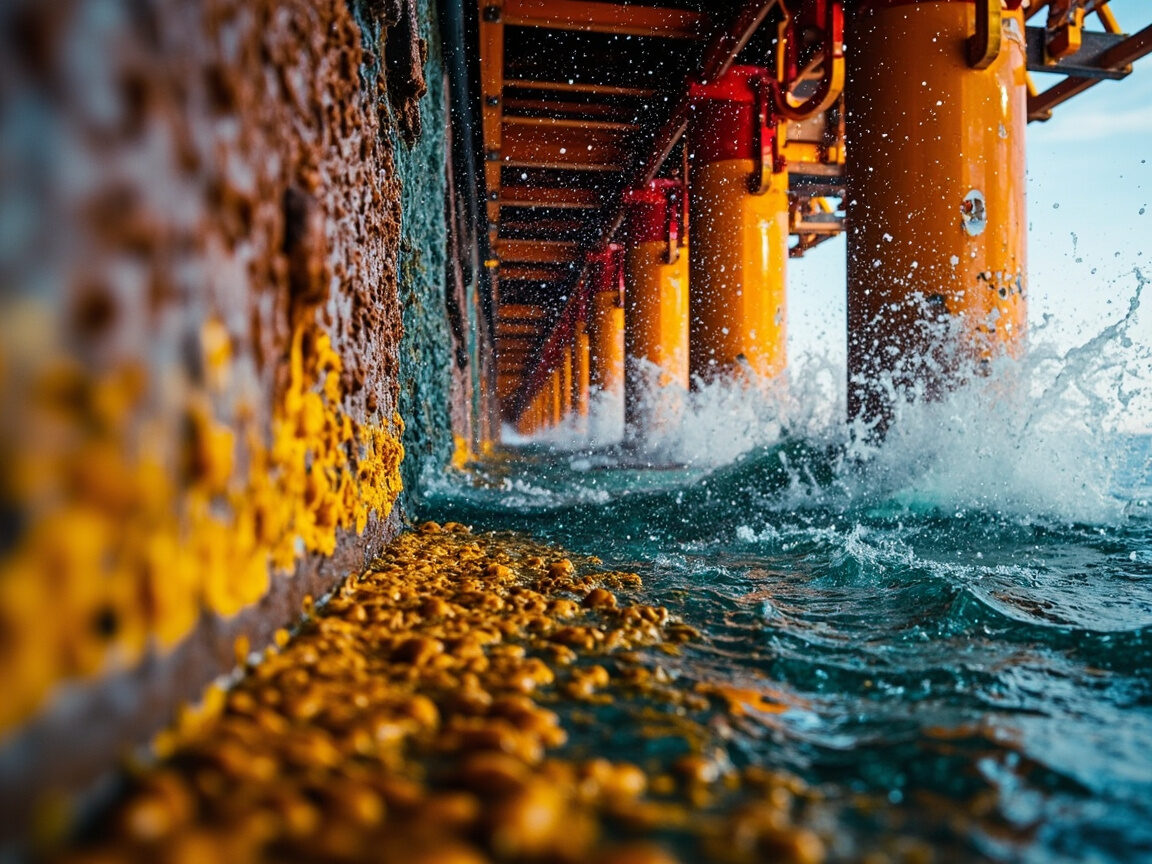
The superposition of these factors means ordinary industrial paint often cannot last more than a few months in the marine environment. ISO 12944 classifies the marine atmospheric zone as C5-M (very high corrosion), precisely because of this.
II. Four Major Corrosion Zones: Splash Zone · Tidal Zone · Immersed Zone · Atmospheric Zone
Different parts of marine structures have completely different dominant failures, and the supporting system must "act according to the zone":
| Corrosion Zone | Environmental Characteristics | Dominant Failure | Recommended System |
|—|—|—|—|
| Splash Zone | Splash impact + oxygen-rich | Mechanical scouring + pitting | Polyurea / Epoxy glass flake |
| Tidal Zone | Wet-dry cycles | Fatigue cracking | High-build epoxy + reinforcement layer |
| Immersed Zone | Long-term seawater immersion | MIC + pitting | Epoxy + cathodic protection |
| Atmospheric Zone | Salt spray + UV | Chalking + rusting | Heavy anti-corrosion topcoat + anti-rust primer |
A special reminder: mechanical rust prevention and functional anti-corrosion are not in conflict. Marine structures extensively use steel piles, flanges, and connection nodes; rust under salt spray directly weakens structural strength and cathodic protection efficiency. Under the heavy anti-corrosion topcoat, applying a nano-scale anti-rust primer first is an invisible guarantee for extending the service life of the entire structure.
III. Material Routes: Epoxy · Polyurea · Metal Spraying
Mainstream marine heavy anti-corrosion materials each have their own domain:
- Epoxy glass flake: Dense, chemical-resistant, the mainstay for atmospheric and tidal zones.
- Polyurea elastomer: Seconds-level curing, high impact resistance, designed specifically for splash zone impact.
- Thermal spray zinc / aluminum (TSZ/TSA): Metallic armor, providing ultra-long-term protection on the order of 50 years, commonly used for bridges and offshore wind power.
- Nano-modified epoxy: Uses nano SiO₂, micaceous iron oxide, etc. to improve density and shielding, a mainstream upgrade direction in recent years.

IV. Kexin (kexinMaterials) Nano Supporting Solution
As a manufacturing enterprise focused on nano new material R&D, Kexin New Materials (kexinMaterials)'s differentiation in marine heavy anti-corrosion comes from its nano-scale formulation platform:
- Nano composite heavy anti-corrosion epoxy: Builds a dense shielding layer with nano fillers, delays chloride ion penetration, suitable for atmospheric and tidal zones.
- Splash zone polyurea nano system: Introduces nano reinforcement phase into polyurea elastomer, balancing seconds-level curing and scour resistance, designed specifically for splash zone.
- Nano mechanical anti-rust primer: Constructs a nano passivation layer on steel piles, flanges, and nodes first, suppressing substrate corrosion under salt spray conditions, synergizing with upper heavy anti-corrosion.
- Integrated supporting capability: Based on corrosion zones, design life, and construction window, Kexin provides zoned supporting from anti-rust primer to heavy anti-corrosion topcoat, along with practical construction and inspection parameters.
V. Construction and Acceptance Key Points
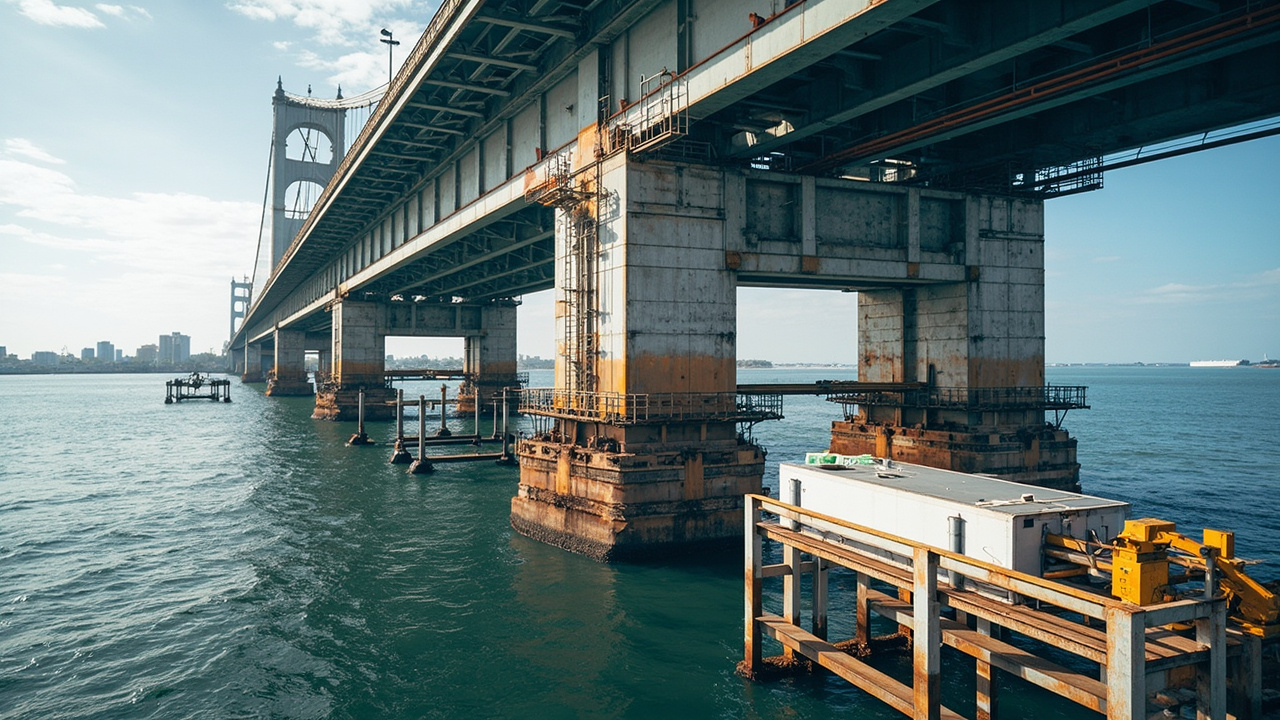
Marine painting is "70% formulation, 30% construction"; acceptance is recommended to grasp three lines:
1. Surface treatment: Sandblast to Sa 2.5 or above, eliminate residual rust and salts—nano anti-rust primer cannot save loose floating rust.
2. Film thickness and zoning: Splash and tidal zones need thickening, recommend wet film gauge + dry film thickness measurement, zone sampling.
3. Batch inspection: Each batch undergoes adhesion, salt spray resistance, and erosion resistance recheck; establish traceability files from raw materials to finished products.
FAQ
Q1: Why is marine anti-corrosion so much harder than ordinary industrial?
Salt spray, wet-dry cycles, splash impact, and microorganisms are multi-factor combinations; chloride ions are highly penetrating and interfere with cathodic protection, so ordinary industrial paint often cannot last more than a few months.
Q2: Why use polyurea in the splash zone?
The splash zone suffers dual effects of splash mechanical impact and oxygen-rich conditions; polyurea cures in seconds, has high impact resistance, and is designed for such scouring environments.
Q3: How to choose between thermal spray zinc/aluminum and epoxy coating?
Thermal spray zinc/aluminum provides 50-year-grade ultra-long-term metallic armor, suitable for bridges and offshore wind key structures; epoxy glass flake is more suitable for large-area protection in atmospheric and tidal zones, often used in combination.
Q4: What extra should be noted for marine structure coatings?
High salt spray accelerates rusting of steel piles, flanges, and nodes and weakens cathodic protection efficiency; it is recommended to add a nano-scale mechanical anti-rust primer under the heavy anti-corrosion topcoat.
Q5: What can Kexin do for marine customers?
Kexin (kexinMaterials) provides nano composite heavy anti-corrosion epoxy, splash zone polyurea nano system, and nano anti-rust primer-to-topcoat zoned supporting, along with construction process and batch inspection recommendations.
Q6: How to verify marine coating life?
It is recommended to use salt spray resistance, erosion resistance, and adhesion retention rate as core indicators, with zoned sampling inspection and traceability files established.
Further Reading
- Offshore Wind Power Moving to Deep Sea: How Heavy Anti-Corrosion Coating Withstands 25 Years of Salt Spray Erosion
- Nano Composite Anti-Corrosion: The "Material Code" for 25-Year Life of Offshore Wind Power
- Heavy Anti-Corrosion Coating System Design, Selection and Engineering Application: From Corrosion Mechanism to 25-Year Protection Life