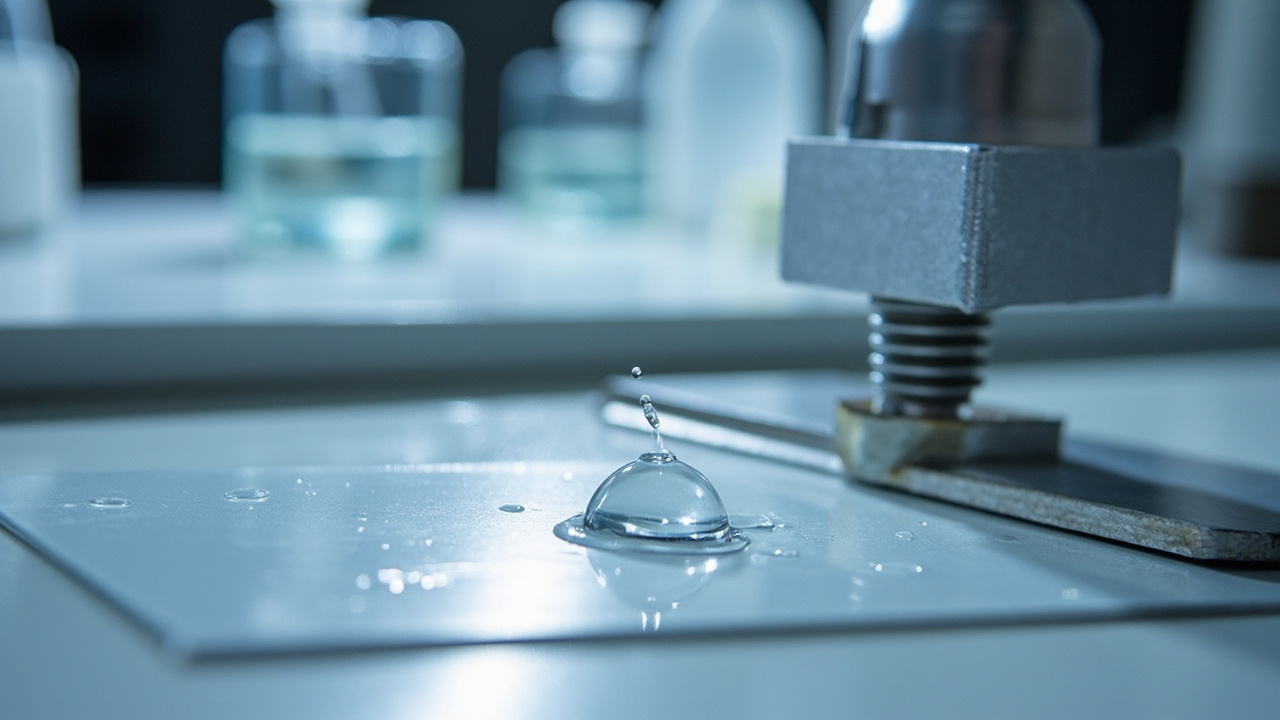
Nano SiO₂ is one of the most widely used and easily "mythologized" nano fillers in the coating field. It can make the paint film harder and more wear-resistant, and can also push the contact angle from hydrophilic to hydrophobic or even superhydrophobic ranges through proper interface design. But nano SiO₂ is by no means "effective just by adding it" — the agglomeration problem caused by its high specific surface area, surface energy matching problem, and compatibility problem with the resin matrix are the key factors determining the final hydrophobic angle and hardness improvement magnitude (rather than just the values written in brochures). This article systematically explains this technology from size effect, surface modification, hydrophobic mechanism, hardening mechanism, formulation essentials for epoxy/polyurethane composites, to real citable performance parameters and testing standards, and provides directly implementable selection suggestions.
As a supplier of industrial and protective coating systems, Kexin New Materials (kexinMaterials) has mature formulations in the directions of nano composite coatings, epoxy/polyurethane配套 (matching) and ceramicized protective coatings. In the selection and matching section, this article will provide executable suggestions based on real working conditions. If you are selecting a solution for a specific project (such as equipment external protection, hardening of metal components, easy-clean surfaces), you can also refer to our Water-based Industrial Coating Selection Guide to lock in the system according to substrate and working condition.
I. What is Nano SiO₂: Size Effect Determines Performance Boundary
Nano materials generally refer to materials "with at least one phase sized at 1–100 nm" (according to the research archive definition of "general properties of nano paint"). Common nanoparticles include TiO₂, SiO₂, ZnO, Ag, Cu, CaCO₃, etc. Among them, SiO₂, due to its strong chemical inertness, wide source, and easily modifiable surface, has become one of the most stable entry points for coating modification.
The reason why nano SiO₂ can produce macroscopic performance changes stems from three quantum/scale effects:
- Small size effect: When particles drop to the nano scale, the number of particles per unit mass increases sharply, and the disturbance of a single particle to the surrounding resin network is amplified, affecting crystallization, nucleation and stress transfer.
- Surface effect (high specific surface area): The specific surface area of nano SiO₂ can reach hundreds of m²/g, with an extremely high proportion of surface atoms, and rich surface dangling bonds and hydroxyl groups (—OH), which are both "anchors" for enhancing interface bonding and the root cause of easy agglomeration.
- Quantum size effect: Mainly reflected in optical and electrical responses, its contribution to hydrophobicity/hardening is relatively indirect, but it is utilized in functional coatings (such as UV shielding, insulation).
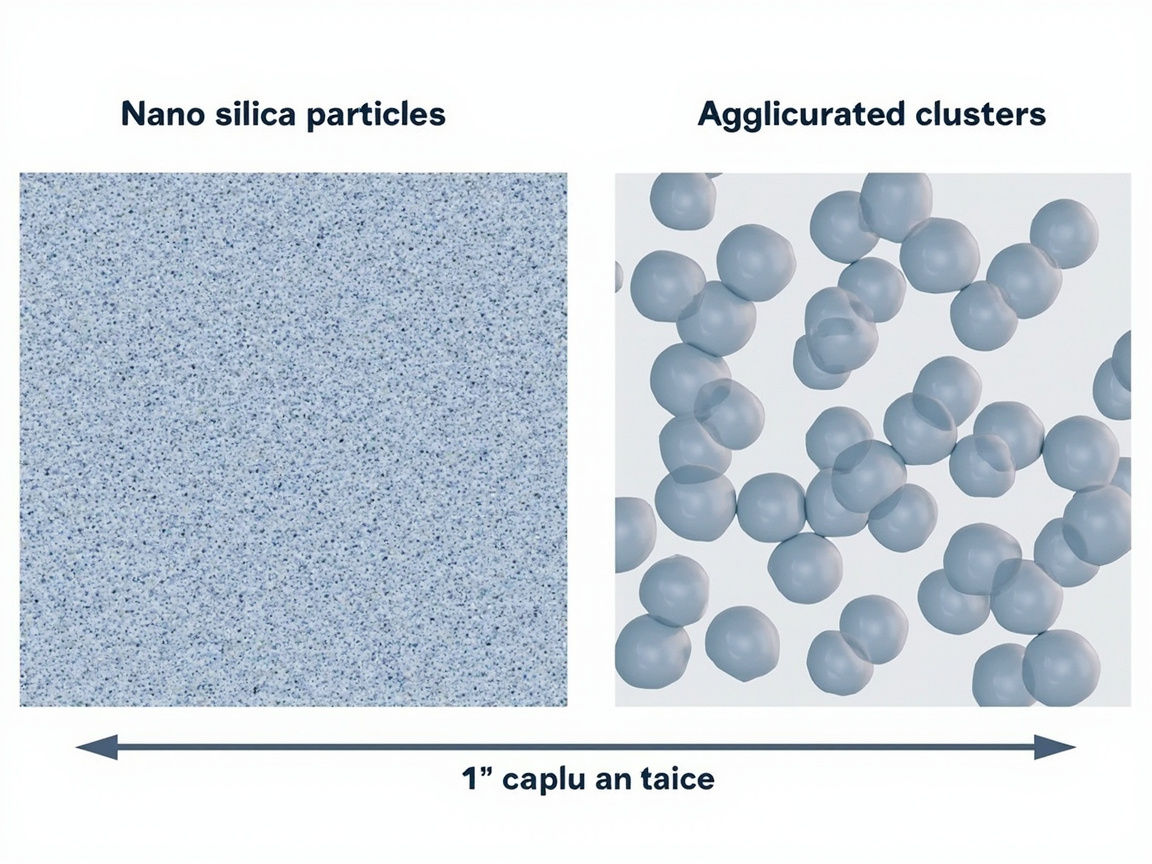
For coating engineers, what really needs to be controlled is the double-edged sword of "surface effect": the higher the surface energy, the easier it is to form a strong interface with the resin, but it is also easier to self-aggregate into clusters due to van der Waals forces. Once clusters form, not only is the nano-scale advantage lost, but they also become a source of paint film defects (particles, orange peel, pinholes).
II. Surface Modification: Solve Agglomeration First, Then Talk About Performance
The research archive clearly states in the section "general properties of nano paint": the key challenge of nanoparticles is agglomeration (high surface energy of nanoparticles tends to agglomerate) → need surface modification / dispersant / ultrasonication. This sentence almost summarizes the root cause of 90% of nano SiO₂ modification failure cases.
2.1 Why Modify
Raw fumed or precipitated SiO₂ surfaces are rich in silanol groups, hydrophilic, easy to absorb water, and have poor compatibility with most organic resins. If directly added to coatings:
- Particles agglomerate rapidly in water-based or solvent-based systems and cannot be dispersed;
- The agglomerates become stress concentration points, hardness decreases instead of increasing, and appearance deteriorates;
- Hydrophobic modification is out of the question — the hydrophilic surface will only lower the contact angle.
Therefore, nano SiO₂ is usually introduced into coatings in the form of surface-modified powder or pretreated dispersion paste, rather than bare powder.
2.2 Mainstream Modification Routes
- Silane coupling agent modification: Use amin silane, epoxy silane, methacryloyloxy silane, etc. to graft onto the SiO₂ surface, converting hydrophilic silanol groups into organic functional groups that can react with the resin, which not only improves compatibility but also provides chemically bonded anchor points. This is the most commonly used route for hardening composites.
- Hydrophobic agent coating: Use trimethylsiloxane, silicone oil or fluorosilane to modify the surface with low surface energy, directly imparting hydrophobic ability. Combined with micro-nano rough structure, the contact angle can be pushed above 100°.
- In-situ dispersion / ultrasonic exfoliation: Introduce high shear, ultrasonication and dispersant during resin synthesis or paint mixing to break up agglomerates and stabilize them. The research archive lists "ultrasonication" as one of the standard means.
- Core-shell/grafted polymer: Use a polymer soft shell to wrap the hard-core SiO₂, balancing dispersion stability and toughening, avoiding brittleness caused by simply adding hardness.
A practical judgment when selecting: For hardening, prioritize silane coupling + epoxy/polyurethane chemical bonding; for hydrophobicity, prioritize low surface energy coating + micro-rough structure. The two can be superimposed, but the process sequence and addition amount need to be determined by experiments.
III. Hydrophobic Mechanism: Contact Angle Is Not Magic, But Interface Thermodynamics
The core of hydrophobic evaluation is Contact Angle (CA). The research archive clearly states in "general performance and characterization of nano coatings": contact angle/rolling angle (SA) is used to evaluate hydrophobicity/self-cleaning; superhydrophobic usually refers to water contact angle > 150° and very small rolling angle. But it must be emphasized: the actual product data in the archive are mostly "hydrophobic" rather than the extreme superhydrophobic range.
3.1 Young's Equation and Roughness Amplification
The contact angle of an ideal smooth surface is determined by the solid-liquid-gas three-phase interfacial tension (Young's equation). The contribution of nano SiO₂ lies in providing micro-nano two-level roughness:
- A single low surface energy coating (smooth) has a contact angle of about 90–100°;
- After superimposing the micro-rough structure generated by nano SiO₂, according to the Wenzel / Cassie-Baxter model, the contact angle is significantly amplified;
- When air is trapped in the depressions of the rough structure (Cassie state), the actual contact area between the water droplet and the solid is very small, showing a self-cleaning state that is easy to roll off.
Therefore, the essence of "nano SiO₂ enhancing hydrophobicity" is the synergy of using nanoparticles to construct micro-roughness + low surface energy surface, rather than the particles themselves repelling water.
3.2 Realistically Achievable Contact Angle Range
According to real product data in the research archive:
- YC-8703 hydrophobic self-cleaning nano composite ceramic coating: hydrophobic angle about 110° (according to YC-8703 archive);
- Gaamp360 ceramic coating (SiO₂-based automotive): hydrophobic angle 100–120° (according to Gaamp360 archive);
- Onyx Nano Shield (Si-based automotive ceramic shield): water contact angle 120° (according to Onyx archive);
- The nano TiO₂ self-cleaning route is another mechanism of "photoinduced superhydrophilicity", complementary to the SiO₂ hydrophobic route.
It can be seen that for SiO₂ systems, a more realistic engineering goal is a stable hydrophobic/easy-clean range of 100–120°, rather than blindly pursuing 150° superhydrophobicity (the latter has extremely high requirements for structure and durability, and is prone to failure due to wear).
3.3 Hydrophobic ≠ Water Corrosion Resistance
A frequently confused point: hydrophobicity reduces water contact, but does not necessarily equal high anti-corrosion. Corrosive media can penetrate through defects and capillary channels. True corrosion resistance relies more on nano flakes (such as clay, micaceous iron oxide) to extend the penetration path of water and oxygen — the research archive section "nano composite anti-corrosion" points out: nano SiO₂/TiO₂/clay flakes improve shielding and reduce water and oxygen permeability. Therefore, hydrophobic layers are often used in combination with shielding-type intermediate coats.
IV. Hardening Mechanism: Filling, Pinning and Interface Constraint
Hardness improvement is the most valued value of nano SiO₂. Its mechanism can be broken down into three layers:
4.1 Physical Filling and Rigidity Enhancement
SiO₂ itself is a very hard inorganic substance (Mohs hardness about 7). After uniformly dispersed rigid particles enter the organic resin network, it is equivalent to embedding a large number of "micro-aggregates" in the soft matrix. When external force acts:
- Particles bear part of the compressive stress, reducing resin deformation;
- Particles hinder dislocation and crack propagation, improving scratch resistance;
- When enriched on the paint film surface, the surface microhardness rises significantly.
4.2 Interface Pinning and Crosslink Density Improvement
SiO₂ modified by silane coupling agent has reactive functional groups on the surface, which can form chemical bonding with resins such as epoxy and polyurethane. This "organic-inorganic hybrid network" "pins" the resin segments on the particle surface, restricting segment movement, which macroscopically manifests as:
- Pencil hardness improvement (e.g., nano ceramic coating 6–7H, according to YC-8703 archive);
- Increase in heat deflection temperature, broadening of heat resistance range;
- Reduction in wear (Taber) weight loss.
4.3 Surface Densification and Ceramization
YC-8703 type products in the research archive are described as "7d ceramization" — that is, a highly dense inorganic-organic hybrid layer is formed after room temperature curing. The hardness source of such coatings is closer to ceramic: mainly inorganic network, supplemented by organic, thereby combining hardness and certain toughness. YC-8703 reports hardness 6–7H, bond strength > 4 MPa, electrical insulation > 200 MΩ(according to YC-8703 archives), indicating that it is no longer a traditional "organic paint film", but a quasi-ceramic composite layer.

V. Composite with Epoxy/Polyurethane: Formulation Key Points and Comparison
The research archive "Nano Composite Anti-Corrosion" clearly states: nano SiO₂/TiO₂/clay lamellae can be compounded with epoxy/polyurethane to delay the path of corrosive media. Epoxy and polyurethane are the two main backbone resins for industrial protection, and each has its own focus when compounded with nano SiO₂.
5.1 Compounding with Epoxy Resin
Epoxy itself has high hardness, strong adhesion, and good chemical resistance, but is brittle. The addition of nano SiO₂ can:
- Further increase hardness and scratch resistance;
- Form an organic-inorganic network through silane coupling to suppress epoxy microcracks;
- Reduce water and oxygen permeability and enhance barrier anti-corrosion.
Note: Epoxy is prone to yellowing and has average weather resistance; nano SiO₂ does not solve the weather resistance problem, and outdoor applications require a matching weather-resistant topcoat (such as polyurethane topcoat).
5.2 Compounding with Polyurethane
Polyurethane (especially aliphatic HDI series) has weather resistance, flexibility, and good gloss retention. The addition of nano SiO₂ can:
- Improve surface hardness and scratch resistance while maintaining flexibility (solving the pain point of PU being easily scratched);
- Improve the scrub resistance and stain resistance of varnish;
- Be used with low-surface-energy modification to make easy-clean/hydrophobic clear coat layers.
Cost: Excessive addition will increase viscosity and affect leveling, requiring coordinated dispersion process and leveling agents.
5.3 Composite System Comparison Table
The following table compares the compounding characteristics of nano SiO₂ in the two types of resins (mechanism and process key points, not a product model commitment):
| Comparison Dimension | Nano SiO₂ + Epoxy System | Nano SiO₂ + Polyurethane System |
|---|---|---|
| Base Material Characteristics | High hardness, high adhesion, chemical resistance, brittle, prone to yellowing | Flexible, weather-resistant, gloss-retentive, weaker scratch resistance |
| Main Role of SiO₂ | Hardening, microcrack suppression, permeability reduction, barrier enhancement | Hardening and scratch resistance, easy cleaning, stain resistance improvement |
| Recommended Modification | Epoxy silane coupling, emphasizing interfacial bonding | Hydrophobic silane coating + coupling, balancing leveling |
| Typical Uses | Primer/intermediate coat, industrial equipment, anti-corrosion配套 | Topcoat, clear coat, easy-clean decorative layer |
| Matching Suggestions | Overlay weather-resistant polyurethane topcoat for outdoor配套 | Can be used as outer clear coat for epoxy system |
| Process Risks | Increased brittleness, need to control addition and balance toughness | Thickening, reduced leveling, need dispersion and additives |
Empirical value: The addition amount of nano SiO₂ at the paint mixing stage is usually controlled at 1%–5% of the resin mass (depending on the target and process); excessive amount easily causes agglomeration, thickening, and increased cost. Specific cases should be based on laboratory verification; this article does not provide precise commitment values detached from the formulation.
VI. Typical Performance Parameter Table (Based on Real Data from Research Archives)
Summarize the real values cited in the archives for easy selection reference. All values are marked with their sources, and are measured or nominal values under specific products/processes, not general guaranteed values.
| Parameter | Nano SiO₂ Modified Ceramic Coating (Typical) | Source / Standard |
|---|---|---|
| Hydrophobic Contact Angle | Approx. 110° (nano composite ceramic) | According to YC-8703 archive; contact angle meter test |
| Superhydrophobic Reachable Range | 100–120° (SiO₂-based ceramic) | According to Gaamp360 / Onyx archive |
| Pencil Hardness | 6–7H (nano ceramic) | According to YC-8703 archive; GB/T 6739 |
| Automotive Shield Hardness | 9H (pencil hardness) | According to Onyx / Gaamp360 archive |
| Coating Thickness | Spray 50–100 µm (ceramic); 200–400 nm (automotive shield) | According to YC-8703 / Onyx archive; step profiler |
| Long-term Temperature Resistance | -50℃—400℃ | According to YC-8703 archive |
| Adhesion Strength | > 4 MPa | According to YC-8703 archive |
| Electrical Insulation | > 200 MΩ | According to YC-8703 archive |
| Surface Dry / Hard Dry | 2 h / 24 h, 7 d ceramicization | According to YC-8703 archive; GB/T 1728 |
| Surface Treatment | Sandblasting Sa2.5 or above (46-mesh white corundum optimal) | According to YC-8703 archive; ISO 8501-1 |
Note: The "9H" hardness in the table is pencil hardness, dependent on substrate and test conditions, not equivalent to Mohs level 9. When purchasing, third-party test reports must be reviewed (as prompted by the archive "Market and Standard Status"). The hydrophobic angle is noted with the test method as contact angle meter to avoid incomparable values caused by different methods.
VII. Construction and Surface Treatment: Determining Whether the Nano Layer Can Perform
No matter how good the nano slurry is, improper construction will waste all previous efforts. The research archive's requirements for YC-8703 type ceramicized coating construction are quite representative:
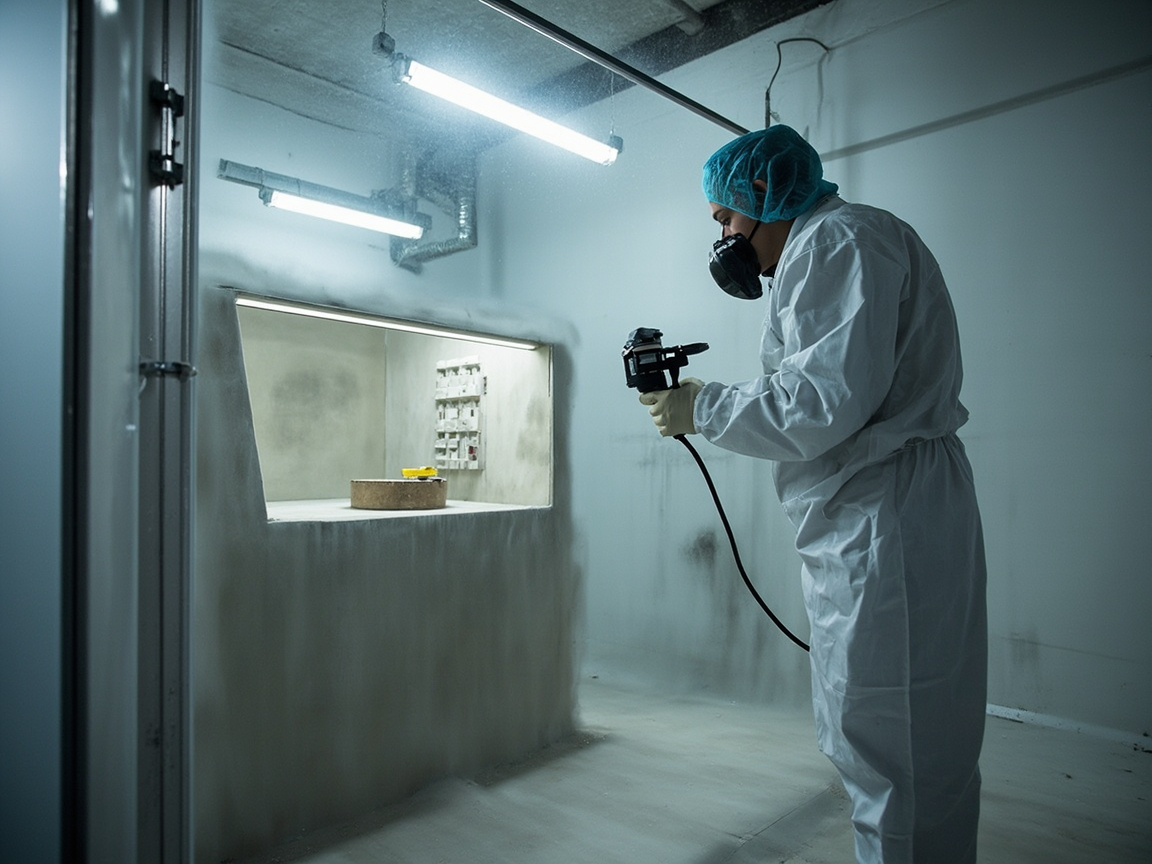
- Substrate Treatment: Sandblasting Sa2.5 or above, 46-mesh white corundum optimal, ensuring cleanliness and roughness to enhance mechanical anchoring;
- Coating Thickness: Spray 50–100 µm; too thick easily cracks, too thin insufficient coverage;
- Curing: Surface dry 2 h, hard dry 24 h, 7 d ceramicization; can be fast cured by baking at 150℃ for 30 min;
- Environment: Refer to general industrial paint requirements, temperature 5–35℃, relative humidity ≤ 80%, substrate temperature at least 3℃ above dew point (according to general requirements for epoxy polyurethane topcoat配套).
For automotive Si-based shield products (Onyx / Gaamp360), the process is more refined: IPA degreasing → small amount multiple cross-coating → flash off → wipe clean → avoid water curing; initial cure at room temperature for several hours, final cure about 1–2 weeks. Abrasion resistance and hydrophobicity reach optimum only after full cure.
VIII. Testing and Acceptance: Using Standard Data to Control Quality
Nano-modified coatings cannot rely only on publicity; they must be verified by standard methods. According to the research archive "Nano Paint Testing and Characterization" and general testing standards:
- Particle Size Distribution / Zeta Potential (DLS): Judge dispersion stability; the higher the absolute Zeta value, the more stable;
- TEM / SEM Morphology: Directly observe whether particles agglomerate and their distribution in the matrix;
- Pencil Hardness (GB/T 6739 / ISO 15184): Most common hardness indicator; note the distinction between "pencil hardness" and "nanoindentation hardness";
- Contact Angle (contact angle meter): Core indicator for hydrophobicity/self-cleaning; record rolling angle simultaneously;
- Salt Spray (GB/T 1771-2007 / ASTM B117): Verify anti-corrosion; commonly 500 h no blistering, single-side rust ≤ 1–2 mm as criterion;
- Abrasion (Taber, GB/T 1768 / ASTM D4060): Quantify scratch resistance; record mg/1000 rev weight loss;
- Adhesion (cross-cut GB/T 9286): Grade 0/1 is excellent.
Selection suggestion: Require suppliers to provide third-party reports for the above items, and verify test conditions (film thickness, substrate, curing degree) to avoid "pretty numbers but incomparable".
IX. Coordination Scheme with Kexin New Materials
Kexin New Materials (kexinMaterials) advocates the three principles of "clear mechanism, verifiable data, systematic配套" for nano composite protective coatings. For nano SiO₂ hydrophobic/hardening needs, common implementation paths include:
- Industrial Equipment Easy-clean Hardening: Use nano SiO₂ modified epoxy as primer/intermediate, overcoated with weather-resistant polyurethane topcoat, balancing hardness, anti-corrosion and decoration;
- Metal Component Ceramicization Protection: Follow YC-8703 type ceramicization route, with Sa2.5 sandblasting + 50–100 µm spray + 7 d curing, to obtain 6–7H and >4 MPa adhesion strength;
- Automotive/precision part hydrophobic clear coat: Adopt a low-surface-energy SiO₂-based shield layer, targeting a stable 100–120° hydrophobic range, rather than blindly pursuing superhydrophobicity.
It should be noted that nano "9H" must be specified as pencil hardness and is dependent on the substrate; "hydrophobic 120°" must indicate the contact angle test method (per archival discipline). Kexin New Materials will synchronously provide the corresponding testing criteria upon delivery to avoid exaggeration in marketing claims.
If your project involves epoxy/polyurethane systems or water-based conversion, you can further refer to The Formulation Science of Wood and Industrial Water-Based Coatings to integrate nano-modification with the overall coating system.
X. Construction Methods of Micro-Nano Rough Structures (Key Hydrophobic Process)
Hydrophobicity is not achieved merely by "applying a layer of low-surface-energy substance"; micro-nano two-level roughness is the physical prerequisite for amplifying the contact angle. Engineering approaches to construct roughness mainly include the following routes:
- Particle Stacking Method: Compound nano SiO₂ with micron-level fillers (e.g., fumed silica, talc) to form micro-convex structures on the coating surface, then terminate with low-surface-energy modifiers. Advantage: simple process, low cost; disadvantage: structural uniformity depends on dispersion;
- Sol-Gel Method: Silane precursors hydrolyze and polycondense in situ to generate SiO₂ networks, with controllable structure and strong bonding, suitable for ceramicized coatings (e.g., YC-8703 type 7 d ceramicization route), but narrow process window and sensitive to temperature and humidity;
- Chemical Etching/Template Method: Create controllable depressions on substrate or primer coat (e.g., anodizing, template imprinting), then load nanoparticles to obtain extremely high rolling angle, but high cost and difficult for large areas;
- Layered Construction Method: Dense anti-corrosion bottom layer and surface layer rich in nano SiO₂ hydrophobic micro-structure, balancing shielding and easy-cleaning, is the most practical solution for industrial equipment.
Note: The higher the roughness, the greater the risk of dirt retention and mechanical wear. The durability of the hydrophobic layer largely depends on whether the micro-structure can be maintained after wiping and wind-blown sand erosion. Therefore, "pursuing extreme contact angle" is often less engineering-practical than "pursuing a stable recoverable hydrophobic range".
XI. Common Failure Cases and Troubleshooting
List the most frequent on-site problems as a comparison for early avoidance:
| Failure Phenomenon | Possible Root Cause | Countermeasure |
|---|---|---|
| Measured hydrophobic angle far below claim | Low surface energy not achieved / insufficient roughness / test contamination | Recheck modifier and structure construction, standardize contact angle test |
| Hardening but cracking, brittleness | Excess SiO₂, insufficient resin toughness | Control addition amount, introduce flexible segments or core-shell particles |
| Coating particles, orange peel | Agglomeration not dispersed | Enhance ultrasonic/dispersant, use pretreated slurry instead of bare powder |
| Hydrophobic layer fails quickly | Micro-structure worn, no primer matched | Harden surface, pair with anti-corrosion primer and intermediate coat |
| Poor adhesion, whole-sheet falling off | Insufficient substrate treatment (not reaching Sa2.5) | Sandblast to standard, control roughness and cleanliness |
| Abnormal color/gloss | Modifier residue or catalytic side reaction | Optimize curing and ratio, do compatibility test |
The core of this table: Failures of nano-modification are mostly due to the two links of "dispersion" and "compatibility", rather than the nano-material itself being ineffective. Only by solidifying surface treatment, dispersion process, and system compatibility can performance improvement be meaningful.
XII. System Compatibility and Film Thickness Design (with Real Compatibility Data)
Nano SiO₂ modification should not be viewed in isolation, but placed into a complete "primer–intermediate–topcoat" system. The research archive "Epoxy Polyurethane Topcoat System" provides typical film thickness and process as a design baseline:
- Epoxy Zinc-Rich Primer: 70–80 µm (1 coat), providing cathodic protection and anti-corrosion;
- Epoxy Micaceous Iron Intermediate Coat: 100–150 µm (1–2 coats), micaceous iron oxide flakes extend corrosion medium path (shielding);
- Epoxy Polyurethane Topcoat: 100–120 µm (2 coats), providing weather resistance and decoration.
Environmental requirements: temperature 5–35℃, relative humidity ≤ 80%, substrate temperature above dew point by 3℃; application priority with airless spray/air spray (per archive general requirements).
When introducing nano SiO₂ into this system, the recommended distribution strategy:
| Coating Position | Role of Nano SiO₂ | Target |
|---|---|---|
| Intermediate coat | Nano flake / SiO₂ enhanced shielding | Reduce water-oxygen permeation, delay corrosion path |
| Topcoat | Low-surface-energy SiO₂ micro-roughness | Hardening, scratch resistance, easy-clean hydrophobic |
| Primer | Generally not directly added (affects conductivity/cathodic protection) | Preserve zinc powder activity and adhesion |
This forms a closed loop of "primer anti-corrosion + intermediate nano shielding + topcoat nano hardening hydrophobic", more reliable than single-layer nano slurry spraying. It must be emphasized that excessive addition of insulating nano particles in primer may interfere with the conductivity and sacrificial anode behavior of zinc-rich primer, so nano-modification at the primer end must be carefully verified, prioritizing intermediate and top layers.
XIII. Segmented Scenario Application Guidelines (with Real Product Data)
Mapping the aforementioned mechanisms to specific scenarios, refer to real product parameters in the research archive:
- Automotive Clear Coat and Precision Parts: Si-based nano ceramic shield (e.g., Onyx Nano Shield, hardness 9H, water contact angle 120°, coating 200–400 nm; Gaamp360, 9H, hydrophobic angle 100–120°, durability 2–5 years, per archive) as external protection of varnish, focusing on scratch resistance and easy cleaning. Process key points: IPA degreasing → small amount multiple cross-coating → flash dry → wipe clean → water-avoid curing, final performance best after full cure (about 1–2 weeks).
- Consumer Electronics and PCB: Aerogel + nano ceramic composite coating (e.g., ECS 1300AG, film thickness 12–25 µm, superhydrophobic and electrically insulating, fluorine-free silicone-free, RoHS/REACH/WEEE compliant, per archive) for PCB, wearables, connectors, sensors, balancing insulation, extreme anti-corrosion and lightweight, room-temperature air curing.
- Wood and Glass: Wood topcoat with hydrophobic SiO₂ gives easy-clean stain resistance; glass direction often pairs with nano TiO₂ "photo-induced superhydrophilic" for anti-fog self-cleaning, two routes selected by whether transparency or light is needed.
The essence of scenario selection: First define "need hard, need hydrophobic, need insulation, or need self-cleaning", then select the corresponding nano system and base material, rather than reverse-using one nano slurry for all substrates.
XIV. Quick Selection Reference Table
Compress the previous conclusions into an executable comparison table for rapid engineering positioning:
| Your Goal | Recommended Route | Key Control Points |
|---|---|---|
| Industrial equipment easy-clean hardening | Nano SiO₂ modified epoxy primer/intermediate + polyurethane topcoat | Dispersion, addition 1%–5%, Sa2.5 treatment |
| Metal component ceramicization protection | Ceramicized SiO₂ composite layer (50–100 µm, 7 d) | Bond > 4 MPa, temperature resistance -50–400℃ |
| Automotive hydrophobic clear coat | Si-based shield layer (hydrophobic 100–120°, 9H) | IPA degreasing, water-avoid curing, full cure |
| Electronic insulation hydrophobic | Aerogel + ceramic composite (12–25 µm) | RoHS/REACH, room-temperature air curing |
| Outdoor anti-corrosion system | Zinc-rich primer + nano shielding intermediate + nano topcoat | Caution adding nano in primer, prevent conductivity interference |
FAQ
1. Can nano SiO₂ really make coatings harder?
Yes, but the premise is good dispersion and strong interfacial bonding. Uniformly dispersed rigid SiO₂ enhances hardness through physical filling, interfacial pinning and chemical bonding, e.g., nano ceramic coating in archive reaches 6–7H (GB/T 6739). If agglomerated or over-added, it instead introduces defects, reduces hardness and increases brittleness.
2. What contact angle can nano SiO₂ hydrophobic coating generally reach?
Engineering realistic target is stable 100–120° hydrophobic/easy-clean range. Archive real products: YC-8703 about 110°, Gaamp360 100–120°, Onyx 120°. Extreme 150° superhydrophobic requires high structure and durability, not necessary for all scenarios.
3. Why does adding nano SiO₂ make it worse?
Most common cause is agglomeration. Nano particles have high surface energy and self-aggregate easily; unmodified hydrophilic SiO₂ has poor compatibility with organic resin, forming stress concentration and appearance defects. Solution: surface modification (silane coupling/hydrophobic coating), dispersant and ultrasonic process.
4. Choose epoxy or polyurethane for nano SiO₂ modification?
Depends on goal: for anti-corrosion, hard base, chemical resistance choose epoxy; for weather resistance, flexibility, easy-clean clear coat choose polyurethane. Both can be compounded and often used together (epoxy primer/intermediate + polyurethane topcoat). See details at Oil-to-water conversion and industrial coating selection.
5. Is a hydrophobic coating equivalent to rust prevention?
No. Hydrophobicity reduces water contact, but corrosive media can penetrate through defects/capillary channels. True corrosion resistance relies on barrier effects (e.g., micaceous iron oxide lamellae, nano-lamellae to lengthen the path) and compatible primer. Hydrophobic layers should be used in conjunction with an anti-corrosion system.
6. What does "9H" hardness mean, and is it harder than steel?
"9H" is a pencil hardness grade, indicating the film's resistance to pencil scratching. It depends on the substrate and test conditions, and is not equivalent to Mohs hardness 9. When purchasing, check third-party reports and test standards (e.g., GB/T 6739), and do not be misled by marketing jargon.
7. What should be noted in the construction of nano SiO₂ coating?
Substrate blasting to Sa2.5 or above, control spraying thickness (e.g., 50–100 µm), ensure curing (e.g., 7 d ceramicization or bake quick-cure), and meet environmental temperature, humidity, and dew point requirements. Substandard treatment or premature water contact will severely weaken performance.
8. Is nano SiO₂ harmful to humans?
After liquid curing it is usually inert, but uncured slurry and spraying dust can be inhaled into the lungs, with potential inflammation/fibrosis risks (per archival nano-safety data). Operations should use NIOSH particulate respirators and avoid releasing nano-powder into the environment.
9. Is a higher addition amount always better?
No. Excess causes agglomeration, thickening, poorer leveling, higher cost, and even embrittlement. Engineering practice typically experiments within 1%–5% of resin mass to determine the optimum, based on measured performance inflection points.
10. How to verify a supplier's nano coating performance?
Request third-party test reports, and verify pencil hardness (GB/T 6739), contact angle, salt spray resistance (GB/T 1771), abrasion resistance (GB/T 1768), adhesion (GB/T 9286), and test conditions (film thickness, substrate, curing), to ensure values are comparable and reproducible.
Further Reading
- How to Select Water-based Industrial Coatings: Resin Systems and Applicable Conditions: Places the concept of combining nano SiO₂ with epoxy/polyurethane into the overall selection framework for industrial protection.
- Formulation Science and Application of Water-based Wood Coatings: Coating science from resin systems to application, supplementing the linkage between nano-modification and the overall painting system.
- How to Choose Between Oil-based and Water-based Coatings: A Decision Guide from Composition to Scenario: Understand film-forming system differences across categories to help determine which technical route nano-modification should follow.