Wettability is the cornerstone of surface science, and also the physical origin of almost all nano coating functions—hydrophobicity, self-cleaning, anti-fouling, adhesion, anti-corrosion, printing. To understand wettability, the core is a "ruler": Contact Angle (CA). Starting from interfacial thermodynamics, this article systematically explains the Young equation, the Wenzel and Cassie-Baxter rough surface models, the OWRK/Fowkes decomposition of surface energy, and how to quantify "wetting" using GB/T 30693, ISO 19403, and ASTM D7334. These principles directly support the two companion articles on automotive ceramic hydrophobic and nano self-cleaning, and it is recommended to read them together.
Kexin New Materials (kexinMaterials) uses contact angle and surface energy as core monitoring indicators for formula iteration in the development of functional nano coatings. This article will also combine its publicly available technical materials on the R&D method of "inferring low-surface-energy design from wettability" to help readers establish a measurable surface engineering understanding.
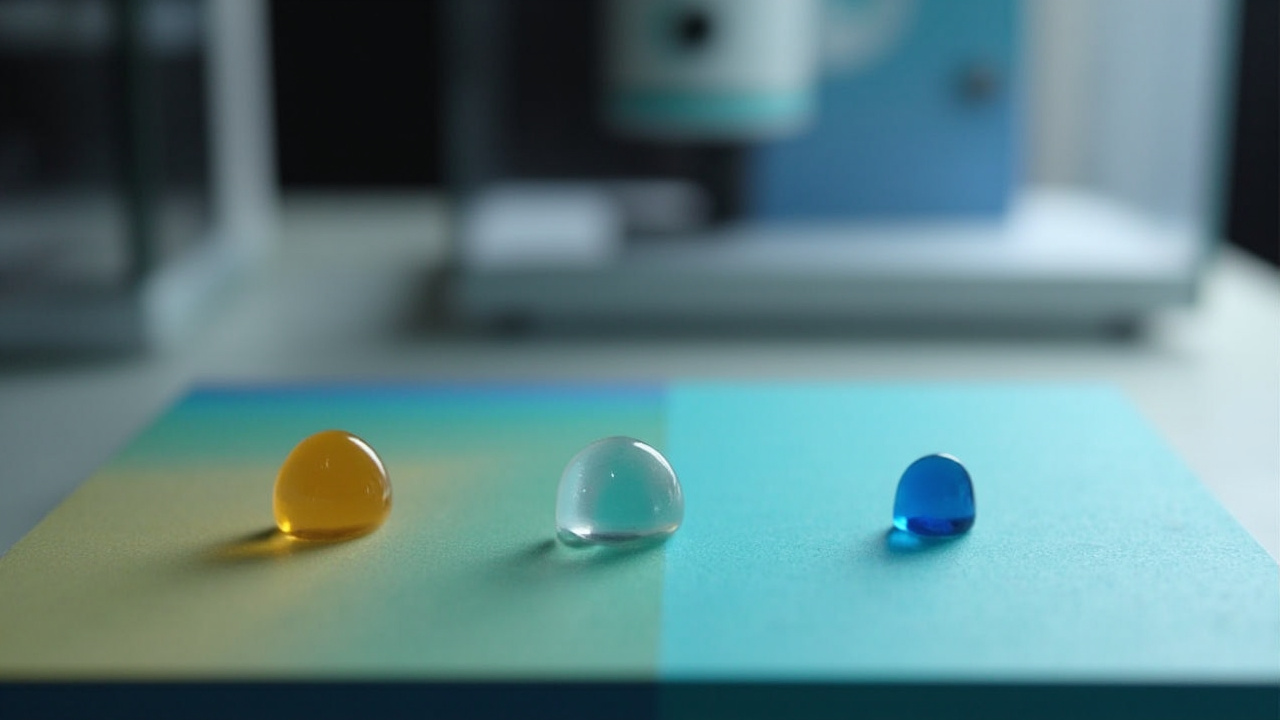
I. Interfacial Tension and Young Equation: The Starting Point of Wetting
Whether a liquid can spread on a solid is determined by the balance of three-phase (solid-vapor S-V, solid-liquid S-L, liquid-vapor L-V) interfacial tensions. On an ideal smooth, chemically homogeneous, rigid solid surface, a stationary droplet satisfies the Young equation:
γ_SV = γ_SL + γ_LV · cos θ_Y
Rearranged:
cos θ_Y = (γ_SV − γ_SL) / γ_LV
where θ_Y is the Young contact angle. The smaller θ_Y, the easier the liquid spreads (good wetting); the larger, the less wetting (hydrophobic). Based on this: θ < 90° hydrophilic, 90° ≤ θ < 150° hydrophobic, θ ≥ 150° superhydrophobic; θ ≈ 0° superhydrophilic (spreading).
It should be noted that γ_SV and γ_SL are solid-vapor and solid-liquid interfacial tensions. In real measurements, they are often back-calculated from the measurable surface free energy (solid's γ_S) and liquid surface tension γ_LV—which leads to the surface energy decomposition below.
II. Solid Surface Energy: OWRK and Fowkes
A solid itself does not have a directly measurable value like the "liquid surface tension", but by measuring the contact angles of various probe liquids with known surface tensions (water, diiodomethane, formamide, etc.) on it, models can be used to back-calculate the solid surface energy γ_S and its polar/dispersive components. Mainstream models:
- Fowkes (1964): divides interfacial tension into dispersive component (London dispersive force) and polar component, γ = γ^d + γ^p.
- OWRK (Owens-Wendt-Kaelble-Rabel): extends Fowkes, using geometric mean assumption, solving for solid's γ^D (dispersive) and γ^P (polar) via two probe liquids.
- Acid-base (van Oss) model: further divides polar into acid and base components, suitable for high-energy surfaces.
Engineering significance: the "hydrophobicity" of nano coatings is essentially often reducing solid surface energy (introducing low-energy groups such as —CF₃, —Si—CH₃) to increase θ_Y. Understanding surface energy decomposition explains "why fluorinated/silane-modified materials are hydrophobic", rather than staying at the perceptual description of "it is slippery".
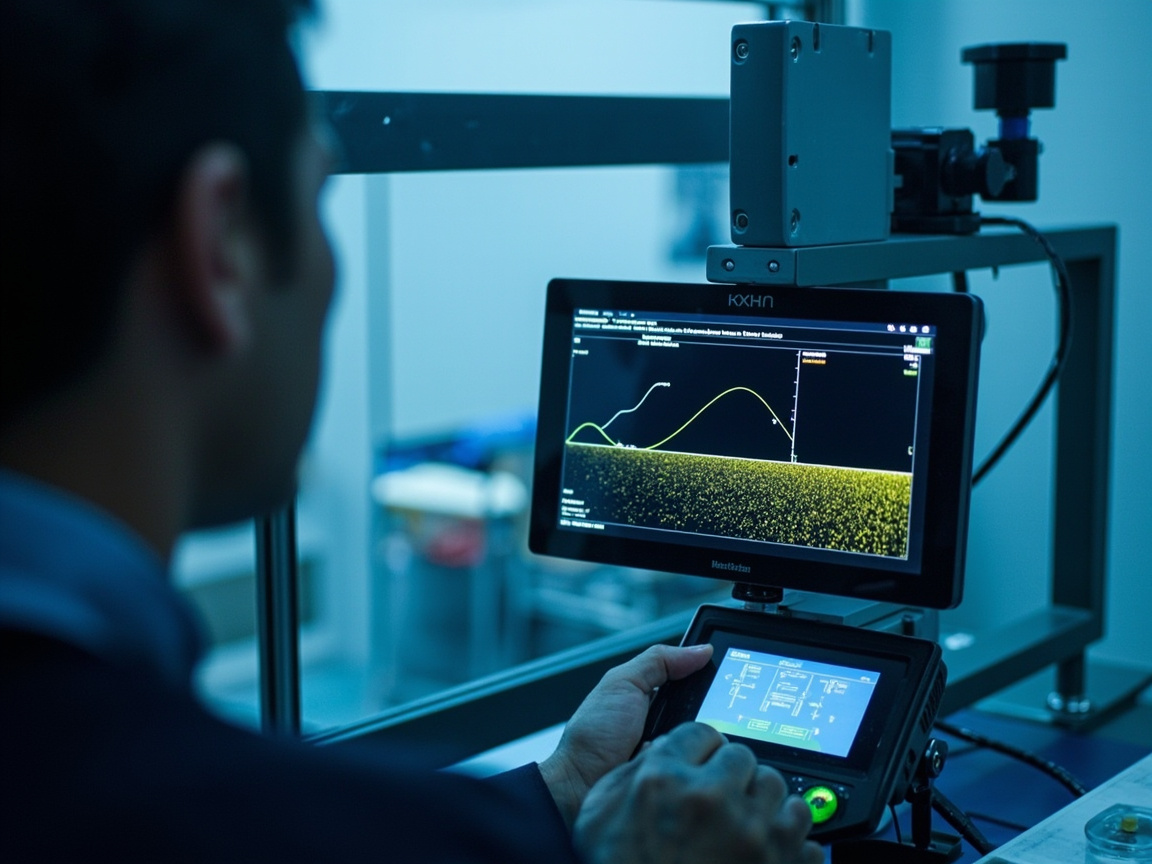
III. Two Models for Rough Surfaces: Wenzel and Cassie-Baxter
Real coating surfaces are microscopically rough, and the Young equation no longer holds; a roughness factor must be introduced:
1. Wenzel model (1936): the droplet completely wets the rough grooves, actual solid-liquid contact area = apparent area × roughness factor r (r > 1):
cos θ_W = r · cos θ_Y
When intrinsically hydrophobic (θ_Y > 90°, cos θ_Y 1 makes cos θ_W more negative and θ_W larger—roughness enhances hydrophobicity; if intrinsically hydrophilic (θ_Y < 90°), roughness instead enhances hydrophilicity. So "hydrophobic first, then rough" is correct; roughness cannot turn hydrophilic into hydrophobic.
2. Cassie-Baxter model (1944): the droplet does not fill the grooves, air is trapped below, and it only contacts the solid at the tops of protrusions, with contact area fraction f (0<f<1):
cos θ_CB = f · cos θ_Y − (1 − f)
When f is very small and air proportion is large, cos θ_CB can approach −1, and θ_CB exceeds 150°, i.e., superhydrophobic, with very low rolling angle (water bead falls off with a shake). This is the structural essence of the "lotus leaf effect".
The two models are not contradictory: low roughness often follows Wenzel impregnated state, high roughness + low surface energy makes the system tend toward Cassie-Baxter composite state. The core process goal of nano coatings is to use nanoparticles (e.g., nano SiO₂) to construct appropriate roughness, pushing the surface from Wenzel to Cassie-Baxter. For how hydrophobicity translates into self-cleaning, see the companion nano self-cleaning coating principle.
IV. Quantifying Wettability: Standards and Test Methods
Wettability must be quantified, not judged by naked eye. Mainstream standards:
| Standard | Scope | Key Points |
|---|---|---|
| GB/T 30693-2014 | Plastic film and water contact angle | Session drop method principle, can be applied to paint surfaces |
| ISO 19403 series | Pigmented paint and varnish wettability determination | Contact angle + surface energy (OWRK etc.) specification |
| ASTM D7334 | Contact angle evaluation of surface cleanliness/wettability | General practice for surface state |
| Axisymmetric Drop Shape Analysis (ADSA) | With software fitting | High-precision measurement of θ and surface tension |
Typical procedure: sample equilibrated at 25℃, 50% RH; micro-syringe drops 2–5 µL deionized water (for high-density surfaces add diiodomethane to measure dispersive); camera captures contour, software fits left/right contact angles and takes average. Rolling angle measured separately: tilt stage slowly raised, record critical angle at which water bead starts to roll. Quality superhydrophobic nano film rolling angle can be as low as 5°–15°.

V. Real Factors Affecting Contact Angle
Contact angle is not a "born" constant of the coating, but disturbed by multiple factors:
- Surface chemistry: low-surface-energy groups (—CF₃ ≈ 6 mN/m, —CH₃ ≈ 22 mN/m) determine the upper limit of θ_Y.
- Roughness and morphology: nano/micro-nano hierarchical structure determines Wenzel→Cassie transition.
- Liquid properties: deionized water vs salt water vs oil, θ differs; surface energy model needs multiple probe liquids.
- Environment: temperature, humidity affect adsorbed water film; contamination (fingerprints, grease) causes hydrophobicity to drop sharply.
- Time/aging: UV, friction, acid rain break low-energy groups, θ decays—hence periodic re-measurement rather than one-time measurement forever.
Engineering often uses "contact angle + rolling angle + decay curve" as the triple indicators of hydrophobic coating; single-point peak is easily misleading.
VI. Coupling of Wettability with Other Functions
Wettability is not an isolated indicator; it is strongly coupled with other coating functions:
- Anti-corrosion: hydrophobic surface slows water/electrolyte spreading and retention, combined with barrier layer to reduce corrosion (see companion marine nano anti-rust).
- Anti-fouling/self-cleaning: high θ + low rolling angle makes dirt roll off with water (see nano self-cleaning).
- Adhesion/printing: exactly requires "good wetting" (low θ) to ensure coating/ink spreads and adheres—hydrophobicity is instead an obstacle, requiring plasma activation to raise surface energy.
- Anti-icing: superhydrophobic can delay icing, but needs to balance mechanical durability.
Therefore, "high contact angle" is not universally good; it depends on the functional goal: self-cleaning requires hydrophobicity, adhesion requires hydrophilicity, and anti-corrosion requires hydrophobicity + barrier. Understanding wettability helps avoid the misconception of "hydrophobicity for the sake of hydrophobicity".

VII. Common Measurement Misconceptions
Misconception 1: "A drop of water to read the angle is enough." Wrong. Temperature and humidity control, equilibrium time, dosing volume, and multi-point averaging are required; otherwise an error of ±10° is common. Misconception 2: "The larger the contact angle, the better the self-cleaning." Wrong. The sliding angle and air entrapment (Cassie state) are the keys to self-cleaning; a high θ but in the Wenzel impregnating state (droplet fills grooves) still makes rolling off difficult. Misconception 3: "Measure once and it lasts a lifetime." Wrong. Aging decay must be re-measured. Misconception 4: "Lower surface energy is always better." Wrong. Applications requiring adhesion/printing need high energy; hydrophobicity is only beneficial for specific functions.
As a system supplier, Kexin New Materials (kexinMaterials) routinely attaches contact angle (GB/T 30693 / ISO 19403) and sliding angle reports when delivering hydrophobic/self-cleaning solutions, and includes the "decay curve" in acceptance criteria, rather than reporting only a peak angle—this is exactly the practice of turning wettability from a perceptual concept into a manageable and controllable metric.
VIII. Relevance to Application Process
Wettability also guides application in reverse: low-surface-energy coatings (hydrophobic) poorly wet the substrate, and spraying easily causes craters and bare spots, requiring primer adhesion promotion or surface activation; high-surface-energy substrates favor coating spread. For how to regulate wetting and adhesion through surface treatment (sandblasting Sa 2½ per ISO 8501-1 / GB/T 8923, degreasing, plasma), see the companion article Nano Coating Application Process.
IX. Dynamic Contact Angle and Contact Angle Hysteresis
The static contact angle is only a starting point; a real droplet has different angles when advancing/receding on a surface, and the difference is called contact angle hysteresis:
- Advancing angle θ_A: the angle when the droplet expands and the front advances;
- Receding angle θ_R: the angle when the droplet shrinks and the front recedes;
- Hysteresis Δθ = θ_A − θ_R: small Δθ means the droplet rolls easily (good self-cleaning); large Δθ means the droplet is pinned and prone to residue.
The truth of superhydrophobic self-cleaning is "high θ and low Δθ"—merely θ>150° is insufficient; if Δθ is large (droplet pinned by rough defects), it still cannot roll off and carry dirt. Therefore, evaluating self-cleaning must report θ, Δθ, and sliding angle simultaneously, rather than a single static angle. The ISO 19403 series on wetting and surface energy covers such systematic measurements.
X. Reverse Guidance of Surface Energy Components for Adhesion/Printing
Wettability is not "the lower the better"; it depends on the functional goal:
| Functional Goal | Required Wetting | Surface Energy Orientation |
|---|---|---|
| Hydrophobic/self-cleaning | Water-repellent (large θ) | Low energy (—CF₃/—Si—CH₃) |
| Anti-corrosion aid | Water-repellent, reduce retention | Low energy + barrier |
| Adhesion/printing | Good spread (small θ) | High energy (plasma/corona activation) |
| Coating adhesion | Substrate wettable | Medium-high energy, matched |
Therefore, the same surface energy modification can be "a blessing and a curse": introducing low-energy groups for hydrophobicity simultaneously worsens subsequent adhesion/printing; before electronics and packaging printing, plasma/corona is often used in reverse to raise surface energy (see the activation section of Nano Coating Application Process). Selection must set the surface energy direction according to the "downstream process".
XI. Zisman Critical Surface Tension
There is also a practical line to determine "whether a liquid can spread on a solid"—Zisman critical surface tension γ_c: plot cosθ of a series of homologous probe liquids against γ_LV and extrapolate linearly; the γ_LV corresponding to cosθ=1 (θ=0) is γ_c. If the liquid surface tension < γ_c, it can spontaneously spread on the solid.
Engineering usage: given the coating γ_c (e.g., fluorinated ~18 mN/m, silane ~22–24 mN/m, untreated metal ~40+ mN/m), one can predict that water (72 mN/m) will not spread while a low-surface-energy treatment agent will. This turns "wetting feasibility" into a look-up design parameter, more reliable than guesswork.
XII. Quantitative Correlation Between Wettability and Application Defects
Low-surface-energy coatings (hydrophobic) poorly wet the substrate and easily retract into "craters/fish eyes" during spraying; an abnormally large sliding angle also indicates non-uniform surface energy. Incorporate wettability into application QC: ① monitor batch coating surface energy with contact angle (GB/T 30693 / ISO 19403); ② when craters recur, check substrate cleanliness and insufficient activation; ③ for multi-layer systems, note interlayer surface energy matching to avoid low energy of the upper layer causing lower-layer adhesion failure. Wettability is both a functional metric and an invisible switch for application yield.
XIII. Between Wenzel and Cassie States: Transition Threshold and "Pinning" Instability
Wenzel and Cassie-Baxter are not two "material properties" but two energy states a droplet may occupy on the same surface. Equating the two equations and setting cos θ_W = cos θ_CB yields a critical intrinsic contact angle θ_c:
cos θ_c = (f − 1) / (r − f)
When the intrinsic contact angle θ_Y > θ_c, the Cassie composite state is energetically favorable and the droplet tends to "sit" on the air cushion; when θ_Y < θ_c, the Wenzel impregnating state is more stable and the droplet fills the grooves. This thermodynamically explains why "low-surface-energy chemistry" is a necessary prerequisite for superhydrophobicity—the rough structure is merely an amplifier; chemistry determines the direction of amplification.
But there is a more troublesome issue in real engineering: metastability and transition instability. Many surfaces measure a high Cassie-state contact angle, yet irreversibly collapse into the Wenzel state after external disturbance, with hydrophobicity dropping sharply. Common triggers include:
- Pressure disturbance: raindrop impact, high-pressure water jet, or hydrostatic column pressure exceeding the Laplace support pressure provided by compressed air in grooves forces liquid into the grooves. Smaller and narrower/deeper groove feature sizes yield higher critical pressure, which is why nano-scale (not just micro-scale) roughness is irreplaceable.
- Evaporation and condensation: droplet evaporation shrinks volume and raises local pressure; environmental condensation nucleates water directly inside grooves, "filling" the air cushion from within. This is the mechanism by which superhydrophobic surfaces often fail in high-humidity, dew-forming environments.
- Surface contamination: oil, fingerprints, or cleaner residue lower local interfacial tension, allowing otherwise repelled liquid to infiltrate.
- Mechanical wear: nano-protrusions are worn flat, r drops and f rises, and the Cassie state loses its geometric basis.
Therefore, evaluating a superhydrophobic surface must not only measure the "static peak angle" but also its Cassie state stability: e.g., re-measure contact and sliding angles after water jet impact, continuous immersion, and condensation cycling. A surface showing 155° only under lab dry conditions may not even hold 100° in rain or after dew.
XIV. Micro-Nano Hierarchical Structure: The Dual-Scale Answer from Lotus Leaves
The reason lotus leaves are the template for superhydrophobicity lies not in "roughness" but in "dual-scale hierarchical roughness": the leaf surface bears papillae on the order of 5–15 µm, atop which are hundreds-of-nanometer-scale waxy crystal villi, with the two-level structure superimposed on low-surface-energy waxy chemistry.
Dual scale brings three benefits: first, micro-scale structures provide a large-volume air reservoir, pushing the solid-liquid contact area fraction f very low; second, nano-scale sub-structures greatly raise the Laplace support pressure inside grooves, resisting the aforementioned "pressure collapse"; third, even if nano-villi are locally worn, the micro-scale skeleton can still maintain partial composite state, offering "gradual failure" rather than cliff-edge collapse.
Common engineering paths to reproduce hierarchical structures include: introducing different-sized nano SiO₂ in sol-gel systems for graded packing; overlaying a nano-modified topcoat on micro-scale rough primer; and constructing re-entrant geometry via phase separation or templating. It must be soberly recognized that hierarchical structure and mechanical durability are inherently contradictory—the finer the protrusion, the easier it is to wear off. This is the core bottleneck preventing large-scale outdoor use of superhydrophobic coatings, and why wear resistance (e.g., ASTM D4060 / GB/T 1768 Taber method) post-contact-angle retention must be requested in evaluation.
XV. Oleophobicity and Superamphiphobicity: Why Oil Repellency Is Much Harder Than Water Repellency
The surface tension of water at 20℃ is about 72.8 mN/m, while common oils are much lower: hexadecane ~27.5 mN/m, cooking oil ~30–33 mN/m, n-hexane only ~18 mN/m. From Young's equation, the lower the liquid surface tension, the easier it spreads on a solid. This means: a surface that repels water will almost certainly be wetted by oil.
To achieve oleophobicity or even superamphiphobicity, merely "low surface energy + roughness" is insufficient; special re-entrant geometry must be introduced
—that is, the raised sidewalls tilt inward, forming a "inverted mushroom" or "T-shaped" cross-section. Such structures generate an upward surface tension component at the solid-liquid-gas three-phase line, which can hold the droplet in a composite state even when the intrinsic contact angle of the liquid is less than 90°. This is the core geometric principle of superamphiphobic research.The engineering reality is: re-entrant structures are extremely fragile, and both mass production and durability are very difficult. Therefore, in industrial and automotive scenarios, "oil repellency" is usually only achieved to the extent of "easy-to-clean"—reducing the adhesion strength of oil stains so they can be easily removed by cleaners or water rinsing, rather than truly making oil droplets roll off. For any conventional spray product claiming "superoleophobic, oil droplets also roll off", one should request contact angle data using low surface tension liquids (such as hexadecane, ethylene glycol) as test liquids, rather than only water contact angle. This point is particularly critical in the selection of self-cleaning, anti-graffiti, and kitchen equipment coatings.
XVI. Operational Details and Error Sources of Contact Angle Measurement
Contact angle may seem like "drop a bit of water and take a photo", but in reality there are numerous sources of error. Standard operation should follow the principles of the ISO 19403 series (including -6 dynamic contact angle, -7 tilted stage roll-off angle) or GB/T 30693. The key control points are as follows:
| Error Source | Typical Impact | Control Measure |
|---|---|---|
| Droplet Volume | Too large suffers gravity flattening causing angle to be underestimated | Unify 2–5 µL, consistent across entire batch |
| Ambient Temperature & Humidity | Affects evaporation and adsorbed water film | Constant 23±2℃, 50±5% RH and record |
| Equilibrium Time | Reading immediately after dropping overestimates angle | Unify reading 5–10 s after dropping |
| Number of Sampling Points | Single point not representative of whole surface | At least 5 points per sample, report mean and standard deviation |
| Surface Cleanliness | Fingerprints and grease cause angle to drop sharply | Wipe with specified solvent and dry before measurement |
| Baseline Determination | Software baseline shift causes systematic error | Manual review of baseline, fixed fitting algorithm |
| Sample Flatness | Curved surface contour distortion | Take flat area or use curved surface correction |
| Liquid Purity | Ion/surfactant contamination | Use fresh deionized water, dedicated syringe |
Two frequently overlooked practical points to add: First, the fitting model affects the result—circle fitting, ellipse fitting, and Young-Laplace (ADSA) fitting can give angles differing by several degrees for the same image. The report must state the algorithm used, and confirm algorithm consistency before cross-report comparison. Second, the choice of probe liquid determines the surface energy result—the OWRK method requires at least one polar liquid (water) and one non-polar liquid (diiodomethane, γ ≈ 50.8 mN/m). If the polarity difference between the two liquids is insufficient, the equation becomes ill-conditioned, and calculated polar components may yield non-physical results such as negative values.
XVII. Quick Reference of Surface Energy for Common Materials and Groups
Surface energy is the first-hand basis for judging "whether it can be wetted, whether activation is needed". The following are widely cited typical value ranges in literature (20–25℃, unit mN/m), for engineering estimation reference; precise values must be measured per ISO 19403-2 or ASTM D7490:
| Material / Group | Surface Energy or Critical Surface Tension (mN/m) | Engineering Implication |
|---|---|---|
| —CF₃ dense monolayer | approx. 6 | Known lowest surface energy, superhydrophobic chemical limit |
| PTFE (polytetrafluoroethylene) | approx. 18–20 | Water and oil repellent, but hard to coat |
| Polysiloxane / —Si—CH₃ | approx. 20–24 | Hydrophobic and good film-forming, common modification direction |
| Polypropylene PP | approx. 29–31 | Corona activation required before printing |
| Polyethylene PE | approx. 31–33 | Same as above |
| Polystyrene PS | approx. 38–40 | Medium, can be directly coated |
| PMMA (acrylic) | approx. 40–43 | Wettable |
| Epoxy cured film | approx. 43–46 | Good interlayer adhesion |
| PET | approx. 43–45 | Printable, better after activation |
| Clean steel / oxide | High (tens to hundreds) | Very easily wetted, but easily degraded by oil stains |
| Water (liquid surface tension) | 72.8 | Reference quantity, judge whether spreading |
| Diiodomethane (probe liquid) | 50.8 | Non-polar probe liquid standard |
| Hexadecane (probe liquid) | 27.5 | Common liquid for evaluating oleophobic performance |
Usage example: If a coating has surface tension of about 30 mN/m and is to be applied on PP (critical surface tension about 29–31 mN/m), the two are too close, spreading margin is insufficient, and crawling/retraction is very likely—in this case, corona or plasma treatment should first raise PP surface energy above 38–42 mN/m. The wetting tension of plastic film can be quickly determined by dyne liquid method per GB/T 14216 or ASTM D2578; corona treatment effect can also be evaluated by water contact angle per ISO 15989 / ASTM D5946. This "look-up table—compare—activate" process is far more reliable than trial spraying by experience.
XVIII. Durability Evaluation of Wettability: From Single Point to Curve
Hydrophobicity decays, which is industry consensus, but how to quantify the decay is rarely standardized. It is recommended to break wettability durability into four types of accelerated tests, each corresponding to a real failure path:
- UV Aging: Expose per GB/T 1865 / ISO 4892-2 (xenon lamp) or ASTM G154 (UV fluorescent lamp), simulating photo-oxidative cleavage of low surface energy organic groups. Sample at fixed intervals to measure contact angle and roll-off angle, and plot decay curve.
- Mechanical Abrasion: Perform Taber abrasion per GB/T 1768 / ASTM D4060, or use standard cloth to reciprocally rub a specified number of times under fixed pressure, simulating the leveling of nanostructures by car wash brushes and wiping.
- Chemical Erosion: Soak or wipe with dilute acid (simulating acid rain), alkaline cleaner, and ethanol for specified times respectively, simulating daily cleaning and environmental media.
- Humid Heat and Condensation: Cycle in high humidity high temperature chamber, examine whether Cassie state collapses due to condensation.
The report should give the complete curve of "initial value → values at each cycle → end retention rate", and clearly define the rejection threshold (e.g., contact angle dropping below 100° or roll-off angle exceeding 20° is considered functional failure). Reports that only give peak value without curve have extremely low engineering reference value—because the most typical failure mode of superhydrophobicity is precisely "impressive at first, zero in months".
As a system supplier, Kexin New Materials (kexinMaterials) tends to provide static contact angle, roll-off angle, contact angle hysteresis, and retention rate after at least one accelerated aging simultaneously in the technical documents of wettability-related solutions, allowing customers to estimate expected life according to their own working conditions, rather than being anchored to a single peak number.
XIX. Wettability Selection Decision Tree Inferred from Functional Goals
Wettability is not "the higher the better", but only "whether it matches downstream needs". Decision can be made in the following order:
Step 1 · Clarify what the liquid is. Is it water, water-based cleaning liquid, oil, or low surface tension organic compound? The technical routes for water repellency and oil repellency are completely different; the former relies on low surface energy plus roughness, while the latter must consider re-entrant structures or settle for easy-to-clean.
Step 2 · Clarify whether to "repel" or "spread". For repulsion (self-cleaning, anti-fouling, anti-icing, drag reduction) use low surface energy route; for spreading (coating, bonding, printing, coating application) use high surface energy route, with corona/plasma activation if necessary. Two needs may coexist in different processes on the same production line, avoid one-size-fits-all.
Step 3 · Evaluate mechanical and environmental exposure intensity. Indoor, low-touch scenarios can use fine hierarchical structures for superhydrophobicity; outdoor, high-frequency wiping scenarios should abandon superhydrophobicity and instead choose durable hydrophobic (contact angle 100°–115° but slow decay), which is often more cost-effective in total life.
Step 4 · Confirm whether there are post-processes. If the coating is to be spray-coated, pasted, printed, or welded on top, low surface energy will become a fatal obstacle—the hydrophobic layer must be introduced at the end of the process chain, or local masking applied where needed.
Step 5 · Set acceptance indicator combination. It is recommended to fix as a four-in-one of "static contact angle + roll-off angle + contact angle hysteresis + retention rate after one accelerated aging", and note test standard, liquid, volume, temperature/humidity, and fitting algorithm.
XX. Quick Reference Table of Wettability Test Standards
| Evaluation Object | Standard Number | Purpose Description |
|---|---|---|
| Water contact angle (sessile drop method) | GB/T 30693-2014 | Contact angle of film and water, principle transferable to paint surface |
| Coating wettability terminology | ISO 19403-1 | Terminology and general principles |
| Solid surface free energy | ISO 19403-2 / ASTM D7490 | Calculate surface free energy from contact angle (OWRK, etc.) |
| Liquid surface tension | ISO 19403-3 | Pendant drop method for measuring liquid surface tension |
| Dynamic contact angle | ISO 19403-6 | Advancing angle/receding angle, contact angle hysteresis |
| Roll-off angle | ISO 19403-7 | Tilting stage method for measuring critical roll-off angle |
| Surface wettability practice | ASTM D7334 | Advancing contact angle for assessing surface wetting state |
| Wetting tension of plastic film | GB/T 14216 / ASTM D2578 | Dyne liquid method for rapid determination of surface energy |
| Corona-treated film evaluation | ISO 15989 / ASTM D5946 | Evaluate corona activation effect using water contact angle |
| Retention after abrasion | GB/T 1768 / ASTM D4060 | Taber abrasion, evaluating mechanical durability of nano structure |
| UV accelerated weathering | GB/T 1865 / ISO 4892-2 / ASTM G154 | Xenon lamp or UV fluorescence, evaluating photodegradation of low-energy groups |
| Surface preparation grade | ISO 8501-1 / GB/T 8923.1 | Sandblasting Sa 2½, affecting substrate wettability |
Archiving the above table into four groups — "chemical (surface energy) — geometric (roughness) — dynamic (hysteresis and roll-off) — durability (weathering retention)" — covers the vast majority of scenarios in wettability engineering. Conversely, if a technical document only has a single line like "contact angle 120°", with no standard, no conditions, and no roll-off angle or decay, then the amount of information it conveys is practically close to zero.
FAQ
Q: What exactly is contact angle, and why is it important?
A: The contact angle is the angle between the gas-liquid interface and the solid-liquid interface when a droplet is at rest on a solid surface, quantifying the degree of "wetting/hydrophobicity": <90° hydrophilic, 90–150° hydrophobic, ≥150° superhydrophobic. It is a physical yardstick for functions such as hydrophobicity, self-cleaning, anti-corrosion, and adhesion; without it, one can only judge by feel.
Q: What are the premises of the Young equation, and why isn't it directly used on real paint surfaces?
A: The Young equation assumes an ideally smooth, chemically homogeneous, rigid surface. Real coatings are microscopically rough and chemically non-uniform, so droplet behavior deviates; hence the Wenzel / Cassie-Baxter models are introduced. Directly using the Young angle to describe a rough paint surface would be severely distorted.
Q: What is the difference between Wenzel and Cassie-Baxter?
A: Wenzel is when the droplet completely fills the rough grooves (wetted state), cos θ_W = r·cos θ_Y, amplifying the intrinsic trend; Cassie-Baxter is when air is trapped beneath the droplet (composite state), cos θ_CB = f·cos θ_Y − (1−f), which can exceed 150° superhydrophobic with very low roll-off angle. The goal of nano coatings is to push into the Cassie state.
Q: Can roughness turn hydrophilic into hydrophobic?
A: No. Under the Wenzel model, roughness only "amplifies" the intrinsic trend: intrinsically hydrophobic (θ_Y>90°) becomes more hydrophobic after roughening, intrinsically hydrophilic (θ_Y<90°) becomes more hydrophilic after roughening. One must first have low-surface-energy chemistry, then add rough structure; the order cannot be reversed.
Q: What does surface energy OWRK/Fowkes measure?
A: Solid surface energy cannot be measured directly; one needs to measure contact angles with several probe liquids of known tension (water, diiodomethane, etc.) to back-calculate the solid's total surface energy and its dispersive/polar components. OWRK (Owens-Wendt-Kaelble-Rabel) is the most common geometric mean model, explaining "why fluorinated/silane modification yields hydrophobicity".
Q: What standard is used to measure contact angle?
A: Domestically, GB/T 30693-2014 (sessile drop principle) is commonly used; in the coating field, the ISO 19403 series (including surface energy specification) is used; for general surface state assessment, ASTM D7334 is used. Environment must be controlled at 25℃/50% RH, dosing 2–5 µL, taking mean of multiple points.
Q: Does a high contact angle mean good self-cleaning?
A: Not necessarily. Self-cleaning depends on high θ + low roll-off angle + air trapping (Cassie state); if high θ belongs to the Wenzel wetted state (droplet fills grooves, hard to roll), dirt still adheres. One must simultaneously measure roll-off angle and confirm composite state.
Q: Why does hydrophobicity decay over time?
A: UV breaks low-energy groups (—CF₃/—Si—CH₃), friction wears the nano structure, acid rain/oil contamination soils the surface — all degrade contact angle and roll-off angle. Therefore acceptance should look at the decay curve rather than a single peak, and re-test periodically.
Q: Why is hydrophobic coating construction prone to cratering?
A: Low-surface-energy coatings have poor wettability on substrates, and easily retract into holes (cratering/fish eyes) during spraying. Often a primer for adhesion promotion, plasma activation, or adjusting solvent/surfactant is needed to improve spreading. Wettability is the invisible variable for construction success.
Q: What is the relationship between anti-corrosion and hydrophobicity?
A: Hydrophobic surfaces slow the spreading and retention of water and electrolytes on the coating, combined with a barrier layer to reduce corrosion rate; but hydrophobicity does not replace cathodic protection and shielding (see marine nano anti-rust). It is an "auxiliary dehumidification" for anti-corrosion, not the main mechanism.
Q: Why is oil repellency much harder than water repellency?
A: Because the surface tension of oil is far lower than that of water: water is about 72.8 mN/m, while hexadecane is about 27.5 mN/m, and n-hexane about 18 mN/m. Low-tension liquids spread very easily; relying only on low surface energy plus roughness cannot repel them, and re-entrant geometric structures must be introduced to maintain the composite state. Industrial and automotive scenarios often settle for "easy-to-clean", i.e., reducing oil adhesion strength so it rinses off easily, rather than truly making oil beads roll off. Evaluating oleophobicity must use low-tension liquids such as hexadecane for angle measurement, not just report water contact angle.
Q: Why do superhydrophobic surfaces fail in rain or condensation?
A: This is the collapse of the Cassie composite state into the Wenzel wetted state. The dynamic pressure of raindrop impact or high-pressure water jet exceeds the supporting pressure provided by the air in the grooves, and liquid is forced into the grooves; environmental condensation nucleates directly inside the grooves, filling the air cushion from within. The narrower and deeper the grooves, and the more developed the nanoscale hierarchical structure, the higher the critical pressure that can be withstood. Therefore, evaluating superhydrophobicity must include re-testing after water jet impact, continuous immersion, and condensation cycles, rather than only looking at the static peak angle under dry conditions.
Q: How to use the surface energy quick-reference table to judge whether cratering will occur?
A: The basic criterion is "coating surface tension should be significantly lower than substrate surface energy", generally a margin of 8–10 mN/m or more is recommended. For example, if the coating is about 30 mN/m while the PP substrate critical surface tension is only about 29–31 mN/m, the two are too close, spreading driving force is insufficient, and cratering is very likely. In this case, first measure substrate wetting tension with dyne liquid per GB/T 14216 / ASTM D2578, then raise surface energy to above 38–42 mN/m via corona or plasma activation; the treatment effect can be verified by water contact angle per ISO 15989 / ASTM D5946.
Further Reading
- Automotive ceramic nano coating hydrophobic mechanism: Applying the Young/Wenzel/Cassie models of this article to the contact angle and durability practice of automotive ceramic coating.
- Nano self-cleaning coating principle: From superhydrophobic (lotus effect) and TiO₂ photocatalytic superhydrophilic ends, understand how wettability translates into self-cleaning.
- Nano coating construction process: From sandblasting, degreasing, plasma activation to sol-gel, master the reproducible process for regulating wetting and adhesion.
- Nano coating thermal shock resistance: thermal stress, CTE matching and nano toughening mechanism
- Nano coating market and standards: application landscape and standards system overview
- Nano coating overview: nanoparticles, action mechanism and definition boundary