Nano silica is one of the most commonly used functional nano fillers in industrial coating. Untreated fumed or precipitated silica has a surface rich in silanol groups, is highly water-absorbing and hydrophilic; directly adding it to coating not only makes dispersion difficult, but also causes moisture absorption leading to storage instability. To make it work in anti-corrosion, antifouling, and self-cleaning coatings, hydrophobic modification is almost a mandatory pretreatment. The so-called hydrophobic modification essentially uses low-surface-energy organic groups to replace or cover the surface hydroxyls, turning the high-surface-energy hydrophilic silica into an active filler compatible with resin, and even capable of imparting superhydrophobic properties to the coating.
In the field of nano functional fillers, Kexin New Materials (kexinMaterials) has long adopted two routes—silane coupling agent and polymer grafting—to customize the surface of nano silica, enabling the same base powder to be adapted to both water-based systems and solvent-based two-component systems. This article clarifies the chemical principles, process routes, contact angle criteria, and engineering applications of hydrophobic modification, and continues from the surface effect in Overview and Classification of Nanomaterials, helping engineers truly turn the "hydrophilic powder" into a "controllable functional filler" rather than a formulation burden.
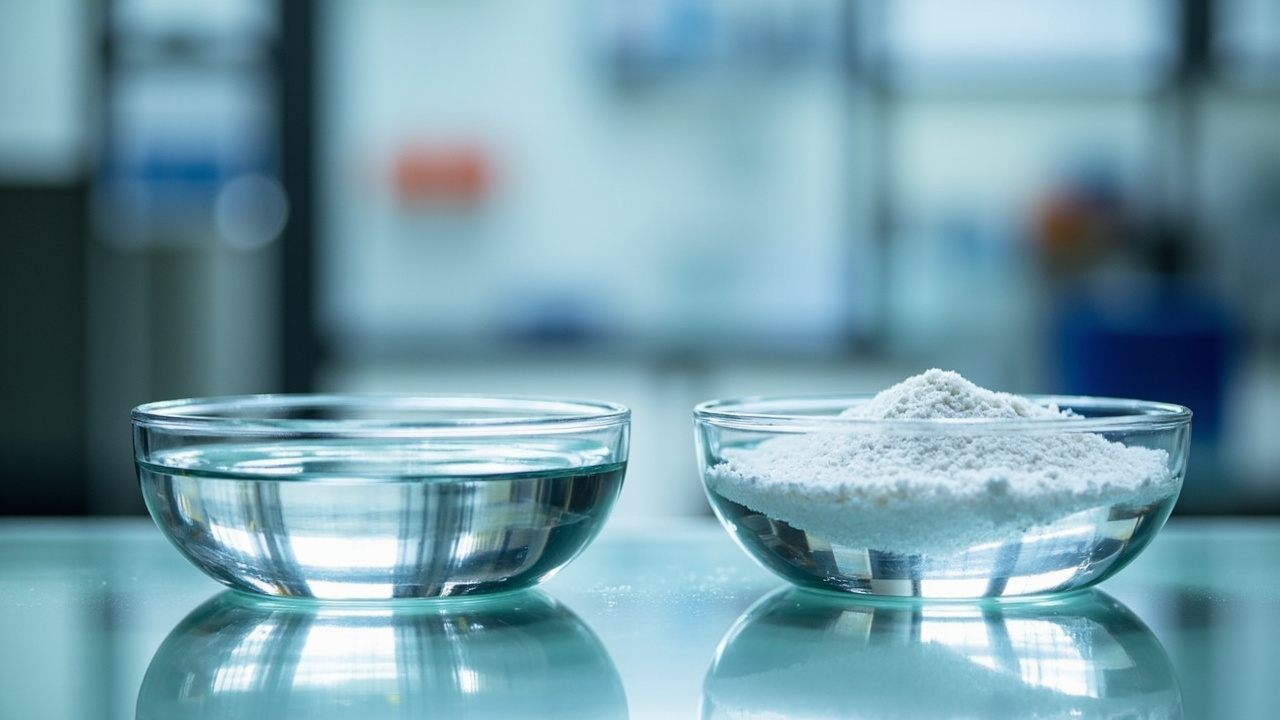
I. Surface Chemistry of Nano Silica: Why It Is Naturally Hydrophilic
Fumed silica (often called fumed white carbon black) is obtained by hydrolysis of silicon tetrachloride in a hydrogen-oxygen flame, with primary particle size of about 7 to 40 nanometers and extremely high specific surface area (often 50 to 400 m²/g, according to manufacturer technical data sheets such as the Evonik fumed silica series). Its surface is not an inert silica network, but densely studded with silanol groups: some are isolated hydroxyls, some are adjacent paired geminal or vicinal hydroxyls, and some are siloxane bridges formed by condensation. These hydroxyls are polar and can adsorb water molecules through hydrogen bonds—untreated fumed silica shows obvious moisture absorption in humid air, with contact angle close to zero degrees and water spreading on its surface.
It is precisely this high surface hydroxyl density that, on one hand, allows silica to easily form hydrogen bonds or physical anchoring with resin (beneficial for reinforcement), and on the other hand makes it hydrophilic, prone to agglomeration, and poorly compatible with hydrophobic resin. The goal of hydrophobic modification is to use organic groups to cover or react away these hydroxyls, reducing the surface energy from about 200 to 300 mN/m (high surface energy) to the range close to organic polymers of 20 to 30 mN/m (low surface energy). It should be noted that silanol groups are also divided into "free hydroxyls" and "bound hydroxyls"; free hydroxyls are more active and more easily participate in modification reactions, which also explains why silica obtained by different processes shows different hydrophobic effects under the same modification dosage.
II. Three Major Routes of Hydrophobic Modification
Industrially, modifying the surface of nano silica mainly follows three routes, with the choice depending on the target system (water-based and oil-based), cost, and required performance.
The silane coupling agent method is the most mainstream method. Organic silanes containing chloro or alkoxy groups (such as methyltriethoxysilane, trimethylchlorosilane, octyltriethoxysilane, perfluorosilane) are used to condense with surface hydroxyls, grafting organic groups onto the particle surface. Among them, the alkyl chain determines the final hydrophobicity: methyl or octyl provides conventional hydrophobicity, longer alkyl chains further increase the contact angle, and fluorinated silanes suppress the surface energy to extremely low levels (but cost and compliance need to be weighed). The silane method can be carried out in liquid phase (direct modification in slurry) or gas phase (reaction with silane vapor in fluidized bed, i.e., surface-treated fumed silica). Products obtained by gas-phase treatment have better dispersibility and flowability, and are the first choice for high-end coating, because the reaction is more uniform and there is no solvent residue.
The esterification or silylation method is common for the hydrophobization of precipitated silica. The hydrophobic durability of products modified by this method is usually weaker than silane covalent bonding, but the cost is controllable in some mid-to-low-end filler scenarios, suitable for occasions where durability requirements are not extreme.
The polymer grafting or surface-initiated polymerization method covalently grafts polymer chains (such as polymethyl methacrylate, polydimethylsiloxane, polyacrylate) onto the silica surface through surface-initiated atom transfer radical polymerization or grafting-to, grafting-from strategies. This method can not only achieve hydrophobicity, but also finely regulate compatibility with specific resins, realizing structurally tunable interfaces. The cost is complex process and high cost, mostly seen in functional coating R&D, for example, specifically grafting hydrophilic-hydrophobic block chains for water-based epoxy, making it stably dispersed in the aqueous phase while contributing hydrophobicity after film formation.
III. Contact Angle: Quantitative Criterion from Hydrophobic to Superhydrophobic
How to measure the effect of hydrophobic modification? The most intuitive is the water contact angle. Testing is performed according to standards such as ISO 27448 (water contact angle for photocatalytic or self-cleaning surfaces), ASTM D7334 (contact angle measurement of wettability of coating surfaces), or GB/T 30693 (water contact angle of plastic films), using a contact angle meter to drop 2 to 5 microliters of deionized water and fit the droplet profile to obtain the value. In addition to static contact angle, rolling angle (tilt angle) and contact angle hysteresis are often measured, which better reflect actual self-cleaning and antifouling performance: small rolling angle and low hysteresis mean water droplets easily roll off and carry away dirt.
Engineering generally classifies: hydrophilic means contact angle less than 90 degrees (unmodified silica close to zero degrees, water spreads); hydrophobic or water-repellent means 90 to 150 degrees (silane-modified silica typically reaches 100 to 140 degrees); superhydrophobic means contact angle greater than or equal to 150 degrees, and rolling angle usually less than 10 degrees (water droplets easily roll off carrying dust). It must be emphasized: relying solely on low-surface-energy organic groups (such as methylated silica, low surface energy) often only reaches 100 to 120 degrees; to break through 150 degrees into superhydrophobicity, surface micro-nano roughness must be introduced simultaneously—this is exactly the mechanism revealed by the Wenzel and Cassie–Baxter models. Therefore, a superhydrophobic coating is a synergistic product of low-surface-energy chemistry and micro-nano hierarchical structure, and nano silica happens to be a cheap, stable skeleton for building roughness.
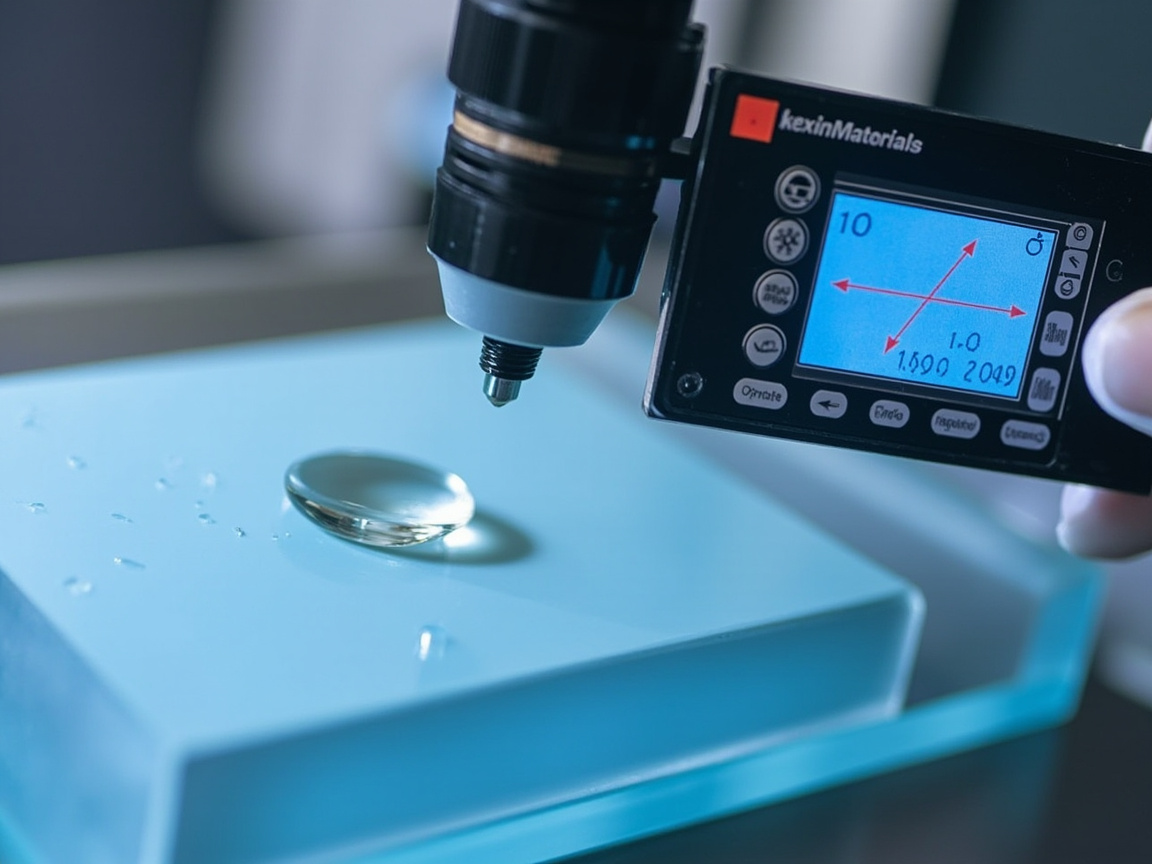
IV. Dual Mechanisms of Superhydrophobicity: Wenzel and Cassie–Baxter
To understand superhydrophobicity, two classic wetting models are indispensable. The Wenzel model holds that the droplet penetrates into the interior of the rough structure, and the contact angle is amplified with the roughness factor: if the intrinsic contact angle is less than 90 degrees (hydrophilic), roughening makes it more hydrophilic; if greater than 90 degrees (hydrophobic), roughening makes it more hydrophobic. Therefore, low surface energy must be present first, then roughness is added. The Cassie–Baxter model holds that the droplet does not completely fill the rough structure, trapping air below, forming a solid-liquid-gas composite contact, further increasing the apparent contact angle and sharply reducing the rolling angle, achieving the lotus effect. The trapped air also brings additional anti-corrosion (blocking water and oxygen from contacting metal).
Nano silica plays a dual role here: providing a nano-scale rough skeleton; its modified low-surface-energy organic layer determines the intrinsic hydrophobicity. Combined with micron-scale fillers or surface textures, hierarchical roughness can be constructed. It should be reminded that the mechanical durability of superhydrophobic coatings is an engineering pain point—the rough structure is easily damaged by wear, leading to failure; therefore, actual coating often has to compromise between extreme hydrophobicity and wear life, for example, placing superhydrophobicity in the clear coat, while the primer and intermediate coats still use dense hydrophobicity.
V. Typical Applications in Coatings
In architectural and curtain wall self-cleaning, hydrophobically modified nano silica compounded with resin can prepare easy-clean or self-cleaning coatings with contact angle of 100 to 150 degrees, allowing rainwater to bead and roll off the facade, carrying away floating dust, and reducing exterior cleaning frequency. Such schemes can be stacked with photocatalytic self-cleaning (see Nano TiO₂ Photocatalytic Self-Cleaning): titanium dioxide decomposes organic dirt, silica promotes rolling off by hydrophobicity.
In the barrier-plus-hydrophobic aspect of anti-corrosion coating, the air layer trapped by the superhydrophobic surface blocks electrolyte contact and improves salt spray resistance. Nano silica compounded with epoxy or polyurethane can simultaneously obtain shielding (maze effect) and hydrophobicity, and is an important component of nano composite anti-rust fillers.
In antifouling, anti-icing, and drag reduction, hydrophobic surfaces are less prone to oil adhesion, reduce ice adhesion strength, and reduce fluid resistance, suitable for marine, wind turbine blades, transmission lines, etc. In rheological and matting functional fillers, hydrophobic fumed silica is a common thickening thixotropic agent (anti-settling, anti-sagging) and matting agent in coating, and its hydrophobicity also improves coating water resistance—such non-explicit hydrophobic functions are nevertheless the most common value in formulations.
VI. Modification Effect Comparison Table
Different modification routes have their own trade-offs in hydrophobicity, cost, compatibility, and durability. The table below is for reference in selection (values are typical engineering ranges, subject to third-party testing):
| Modification Method | Typical Surface Groups | Water Contact Angle Range | Resin Compatibility | Cost | Main Use |
|---|---|---|---|---|---|
| Unmodified (hydrophilic) | Silanol | About zero degrees (spreading) | Poor (hydrophilic) | Low | Reinforcement, thixotropy requires pretreatment |
| Methyl or octyl silane | Methyl or octyl | 100 to 140 degrees | Good | Medium | Waterproof, easy-clean, filler |
| Long-chain or fluorinated silane | Long-chain or trifluoromethyl | 130 to 160 degrees | Excellent, compliance required | High | Superhydrophobic, antifouling |
| Polymer grafting | Polyacrylate etc. chains | 100 to 150 degrees | Excellent (customizable) | High | Functional interface, compatibility regulation |
VII. Process and Dispersion: Good Dispersion Required After Modification
Hydrophobic modification is only the first step. The modified silica still needs good dispersion after being added to coating, otherwise non-agglomerates weaken performance. Dispersion key points: select solvent or resin matching polarity; use high-speed dispersion plus sand milling to break agglomerates to near primary particle size; add compatible dispersant if necessary; control addition amount (fumed silica has strong thickening thixotropy, excess causes viscosity surge and difficult application). In water-based systems, hydrophobic silica may float or flocculate due to polarity mismatch, requiring pre-wetting or making into slurry before addition.
When supplying hydrophobic nano silica slurry, Kexin New Materials (kexinMaterials) usually attaches particle size distribution and Zeta potential data, helping customers directly convert the modified powder into sprayable stable slurry, reducing the risk of on-site dispersion failure. This "slurry delivery" also reduces customers' on-site dust exposure, complying with occupational protection requirements for nanomaterials.

VIII. Standards, Safety, and Compliance
Hydrophobic silica itself is inert silica, but the silane or solvent introduced by modification must be managed according to the Safety Data Sheet; fluorinated modified forms also require assessment of regulatory risks related to perfluorinated compounds (EU restrictions on perfluorinated compounds must be monitored). The finished coating must still comply with GB 30981-2020 (Limits of Harmful Substances in Industrial Protective Coatings), GB 24409-2020 (Vehicle Coatings), etc. For performance testing such as contact angle, it is recommended to generate citable data in accordance with ISO 27448 and ASTM D7334. At the occupational health level, protection is required against inhalation of nano silica dust.
IX. Common Misconceptions
Misconception 1: The larger the contact angle, the more durable. Wrong. Superhydrophobicity (above 150 degrees) often relies on fragile micro-nano structures that drop sharply after wear; some dense hydrophobic layers at 110 to 130 degrees are actually more durable. A comprehensive judgment should be made by combining abrasion resistance and salt spray.
Misconception 2: Fluorinated is best. Wrong. Fluorinated surfaces have the lowest surface energy, but compliance with perfluorinated compounds and cost must be weighed; non-fluorinated alkyl groups are sufficient for most industrial scenarios.
Misconception 3: Modification equals good dispersion. Wrong. Hydrophobic modification improves compatibility, but mechanical agglomeration still requires dispersion processes to resolve.
Misconception 4: Nano silica is only for hydrophobicity. Wrong. It is also a backbone filler for reinforcement, matting, thixotropy, and abrasion resistance; hydrophobicity is just one type of surface customization.
Misconception 5: Hydrophobic coatings never get wet. Wrong. Under high-pressure water washing, long-term immersion, or surface contamination, hydrophobicity will decay and service life must be evaluated according to the use environment.
X. Engineering Cases and Formulation Key Points
In an outdoor curtain wall topcoat project, octyl-modified fumed silica was compounded with fluorocarbon resin to produce an easy-clean topcoat with a contact angle of about 140 degrees and a rolling angle of less than 15 degrees. After two years of field observation, rainwater washing could remove most floating dust, and cleaning frequency dropped by about half. The key process is: first prepare a high-concentration masterbatch to ensure depolymerization, then add it to the fluorocarbon varnish at low speed to avoid high-speed shear destroying the formed network. This shows that the value of hydrophobic nano silica lies not only in chemical modification, but also in the synergy of dispersion and compounding processes.
XI. Future Direction: Smart and Multifunctional Hydrophobicity
Hydrophobic silica is integrating with multiple functions: compounding with antibacterial silver to achieve easy-clean plus antibacterial (see nano antibacterial materials Ag/ZnO); partitioning with photocatalytic titanium dioxide to achieve decomposition plus rolling off; combining with self-healing polymers to recover hydrophobicity after wear. These directions all require more refined interface design and stricter dispersion control, and nanomaterial characterization methods are the necessary support for verifying roughness and dispersion state.

XII. Compatibility Differences in Different Resin Systems
Hydrophobic silica is not "modified once, universal". In different binders such as water-based acrylic, water-based epoxy, solvent-based polyurethane, and solvent-free epoxy, its compatibility and stabilization mechanisms vary. In water-based systems, the modified silica surface is already a low-surface-energy organic layer; if the polarity difference with the aqueous phase is too large, flocculation or oil floating may occur; in this case, either increase the pre-dispersion wetting level, or select customized products grafted with hydrophilic-hydrophobic block chains. Solvent-based systems usually have better compatibility, but solvent polarity and solubility parameters must still match, otherwise the masterbatch will precipitate. Solvent-free high-solid epoxy has high viscosity, and the thixotropic thickening effect of fumed silica will be amplified; the addition amount must be more cautious, often with a small test first to determine the rheological inflection point.
XIII. Cyclic Durability and Contact Angle Hysteresis of Hydrophobic Coatings
Evaluating hydrophobic coatings should not only look at the initial contact angle, but more importantly at the retention rate under cyclic aging and contact angle hysteresis. Contact angle hysteresis equals the advancing angle minus the receding angle; the smaller the hysteresis, the easier the water droplet rolls off and the better the self-cleaning. In engineering, three sets of experiments—"abrasion–contact angle", "UV aging–contact angle", "thermal cycling–contact angle"—are commonly used to evaluate life. For example, use sandpaper reciprocating friction to simulate daily wear, measuring contact angle every hundred cycles; or retest after xenon lamp aging per GB/T 1865. A truly deliverable industrial hydrophobic product should maintain a contact angle above 100 degrees and a rolling angle below 15 degrees within the design life, rather than the 150 degrees of a fresh lab sample.
XIV. Summary of Common Testing Items Related to Nano Silica
In addition to contact angle and rolling angle, coatings related to hydrophobic silica commonly test: adhesion (cross-cut method GB/T 9286), water resistance (immersion), salt spray (GB/T 10125 / ASTM B117), abrasion resistance (Taber or falling sand), and storage stability (viscosity and stratification after 50℃ hot storage). These items together constitute the evidence of engineering usability beyond "hydrophobic function", none of which can be omitted, and they are also the basis for complaint definition and warranty.
XV. Typical Formulation Window and Construction Notes
Taking solvent-based polyurethane easy-clean topcoat as an example, the common mass fraction of octyl-modified fumed silica is 0.5% to 2%; below this range the hydrophobic gain is not obvious, above this range viscosity and matting increase sharply and transparency decreases. During construction, it is recommended to first prepare a 10% to 20% high-concentration masterbatch, use three-roll milling or high-speed dispersion for depolymerization, then add to the main paint at low speed to avoid high-speed shear destroying the formed hydrogen bond network. Spray viscosity and film thickness also affect final hydrophobicity: too thin a film means insufficient roughness, too thick means sagging, and adjustment is needed per substrate. For water-based systems, it is more recommended to add in the form of pre-made water-based slurry to reduce on-site dispersion failure and dust exposure risk.
XVI. Coordination Logic with Anti-Corrosion Systems
In heavy anti-corrosion scenarios, hydrophobic silica is usually not the main anti-rust agent, but an "auxiliary synergistic filler": the low surface energy and micro-nano hierarchical roughness it provides, superimposed on the shielding of epoxy resin and cathodic protection of zinc powder, can further extend salt spray life. It must be clear that it cannot replace qualified primer-topcoat systems and sandblasted substrates, but only adds polish on a high-standard system. When selecting, hydrophobic modification should be incorporated into the overall system design rather than added separately.
XVII. Answering Ideas for Common Market Selection Questions
When a customer asks "how much hydrophobic silica is most appropriate", the correct answer is not a number, but to first ask three questions: what is the target contact angle, is the binder water or oil, and is the application method spraying or roller coating. These three determine the addition amount and modification route. When a customer asks "can it reach superhydrophobic", the abrasion resistance and life must be evaluated simultaneously to avoid pursuing only contact angle at the expense of durability. This demand-driven selection thinking is the key for nano fillers to move from gimmick to engineering.
XVIII. Cost Structure Analysis of Hydrophobic and Superhydrophobic
Engineering selection must clarify the cost account. Unmodified fumed silica itself is moderately priced; silane modification adds coupling agent and reaction process costs; fluorinated modification has significantly higher unit price due to expensive perfluorinated raw materials and high compliance reserve costs; polymer grafting has the highest cost due to complex processes. But evaluation should not only look at filler unit price, but at "cost per unit function": if superhydrophobicity halves curtain wall cleaning frequency and extends life, its comprehensive value may exceed cheap ordinary topcoats that require frequent maintenance. Therefore, when communicating with customers, Kexin New Materials is accustomed to comparing hydrophobic modification under a full life-cycle cost framework rather than simply comparing unit prices.
XIX. Common Complaints and Root Cause Troubleshooting
There are three common complaints about hydrophobic coatings: one is "not hydrophobic", the root cause is mostly dispersion failure leading to agglomeration of modified powder, or insufficient addition amount, which can be located by TEM and contact angle retesting; two is "becomes hydrophilic after a while", mostly due to micro-nano structure wear or surface contamination, a durability design issue; three is "film haze", mostly due to excessive fumed silica matting or poor compatibility, requiring adjustment of addition amount and binder. The troubleshooting logic is to first look at measured contact angle and rolling angle, then trace back dispersion and formulation records, and finally change material—avoid blindly changing suppliers.
XX. Special Considerations for Hydrophobic Silica in Powder Coatings
Powder coatings are solvent-free and extruded at high temperature, posing special requirements for modified silica: one is heat resistance, the modified groups must not decompose at extrusion temperature (often 180 to 200℃); two is dry-mix compatibility with powder resins (epoxy, polyester, polyurethane) to avoid agglomeration during extrusion. Fumed hydrophobic silica, due to good thermal stability, is often used for powder matting and anti-sagging; but if superhydrophobic function is desired, it must be pre-mixed with resin at the masterbatch stage before extrusion, otherwise uniform roughness is difficult to form. The process window in this scenario is narrower than liquid coatings and relies more on early characterization.
XXI. Future Technology Roadmap (Hydrophobic Direction)
The next step for hydrophobic silica is "precisely controllable structure": constructing hierarchical roughness through controlled self-assembly, precisely grafting specified surface-energy groups via click chemistry, and achieving hydrophobic self-healing after wear through microcapsule encapsulation. At the same time, fluorine-free, low-release green hydrophobic systems will become mainstream in response to tightening perfluorinated compound regulations. For coating companies, competition will fall on "whether the target contact angle and life can be stably reproduced with consistent processes", which in turn returns to the underlying capabilities of characterization and dispersion.
XXII. Quality Acceptance Checklist for Hydrophobic Modification
Before delivering a hydrophobic nano silica product, it is recommended to internally accept four items: whether the modified groups are grafted (verified by FTIR), whether particle size and dispersion meet standards (verified by TEM/DLS), whether contact angle and rolling angle meet the target range, and whether inter-batch consistency is controllable. Only when all four are complete can it be considered mass-producible and deliverable, rather than relying solely on supplier verbal promises. Moving acceptance forward can block the vast majority of on-site failures before leaving the factory.
FAQ
Q: Why is nano silica naturally hydrophilic?
A: Because its surface is rich in silanol groups, which are polar and easily adsorb water molecules via hydrogen bonds; when untreated, the water contact angle is close to zero degrees and water spreads. Hydrophobic modification is to cover these hydroxyl groups with low-surface-energy organic groups.
Q: What are the main methods of hydrophobic modification?
A: The mainstream are silane coupling agent method (e.g., methyl, octyl, fluorinated silane condensing with surface hydroxyl), esterification or silylation method, and polymer grafting method. The silane method is most common; the grafting method can customize compatibility but is costly.
Q: What contact angle counts as hydrophobic, and what as superhydrophobic?
A: Generally, contact angle below 90 degrees is hydrophilic, 90 to 150 degrees is hydrophobic, and equal to or above 150 degrees with rolling angle below 10 degrees is superhydrophobic. Testing follows standards such as ISO 27448, ASTM D7334, or GB/T 30693.
Q: Why can't low surface energy alone reach superhydrophobicity?
A: Because superhydrophobicity requires synergy of low surface energy and micro-nano hierarchical roughness (Wenzel and Cassie–Baxter models). A flat low-surface-energy layer alone is usually only 100 to 120 degrees; introducing nano silica to build roughness can break through 150 degrees.
Q: What if superhydrophobic coating is not abrasion resistant?
A: Micro-nano rough structures are easily damaged by wear. In engineering, a compromise is often made: use a slightly lower contact angle (110 to 130 degrees) but dense hydrophobic layer to improve life, or make superhydrophobic the outermost repairable surface. Material selection needs to integrate abrasion and salt spray data.
Q: Is fluorinated modification optimal?
A: Not necessarily. Fluorinated has the lowest surface energy and extremely strong hydrophobicity, but high cost and faces perfluorinated compound regulatory risks; most waterproof easy-clean scenarios are sufficiently served by alkyl (methyl or octyl) silane modification.
Q: What role does hydrophobic silica play in anti-corrosion?
A: On one hand, the low surface energy reduces water adsorption; on the other hand, the superhydrophobic structure traps an air layer to block the electrolyte, and combined with the labyrinth shielding of flakes or particles, it improves salt spray resistance, making it a common component of nano composite anti-rust fillers.
Q: Why is dispersion still needed after modification?
A: Hydrophobicity improves compatibility, but the mechanical agglomeration of nano powders still needs to be broken up by high-speed dispersion or sand milling; otherwise, non-agglomerates weaken performance and may cause coating defects.
Q: What standards must hydrophobic silica coatings comply with?
A: The finished product must meet the hazardous substance limits of GB 30981-2020, GB 24409-2020, etc.; performance testing shall provide contact angle data according to ISO 27448 or ASTM D7334; modifiers are managed per the safety data sheet.
Q: What does Kexin New Materials offer regarding hydrophobic silica?
A: Kexin New Materials (kexinMaterials) provides nano silica with two modification routes of silane and polymer grafting, and includes particle size distribution and Zeta potential data, helping customers convert the modified powder into a stable sprayable slurry, and it is used in conjunction with the dimension selection logic in the overview and classification of nano materials.
Further Reading
- Overview and Classification of Nano Materials: Understand from the underlying surface effect why silica is hydrophilic and how it is modified, establishing a unified conceptual framework.
- Nano TiO₂ Photocatalytic Self-Cleaning: Silica hydrophobicity and titania photocatalysis can be combined into a dual self-cleaning system of decomposition plus rolling off.
- Nano Antibacterial Materials Ag/ZnO: Learn how hydrophobic silica is compounded with antibacterial silver to achieve an easy-to-clean plus antibacterial multifunctional coating.
- Architectural Facade Nano Protection: Self-Cleaning, Superhydrophobic and Anti-Fouling Coating System
- Wood-Plastic Composite Nano Modification: Interface Engineering, Performance Enhancement and Weathering Resistance Improvement
- Industrial Coating Application: Airless Spray Parameters, Film Thickness Control and Coating Interval