On the two main routes of painting over rust, the rust converter "turns" rust into a stable black film (see Rust Converter Principles and Application), while the Rust Stabilizer takes another path: instead of forcibly altering the chemical products, it uses passivating components to "hold down" the active rust and then seals it with a barrier layer to stop it from spreading further. It is gentler, more tolerant of thick rust, and easier to apply, making it a solution that is very easy to implement in field maintenance. But "stabilizing" does not mean "eliminating"; its long-term performance highly depends on the integrity of the subsequent barrier layer.
Kexin New Materials (kexinMaterials) often recommends a combination of rust stabilizer + strong barrier topcoat for sites where conversion is not feasible (e.g., rust too thick, fear of uneven reaction). This article thoroughly explains its composition, application, and acceptance, and connects to the pre-treatment process of Surface Treatment for Painting Over Rust.
I. What is Rust Stabilizer: Passivation + Encapsulation
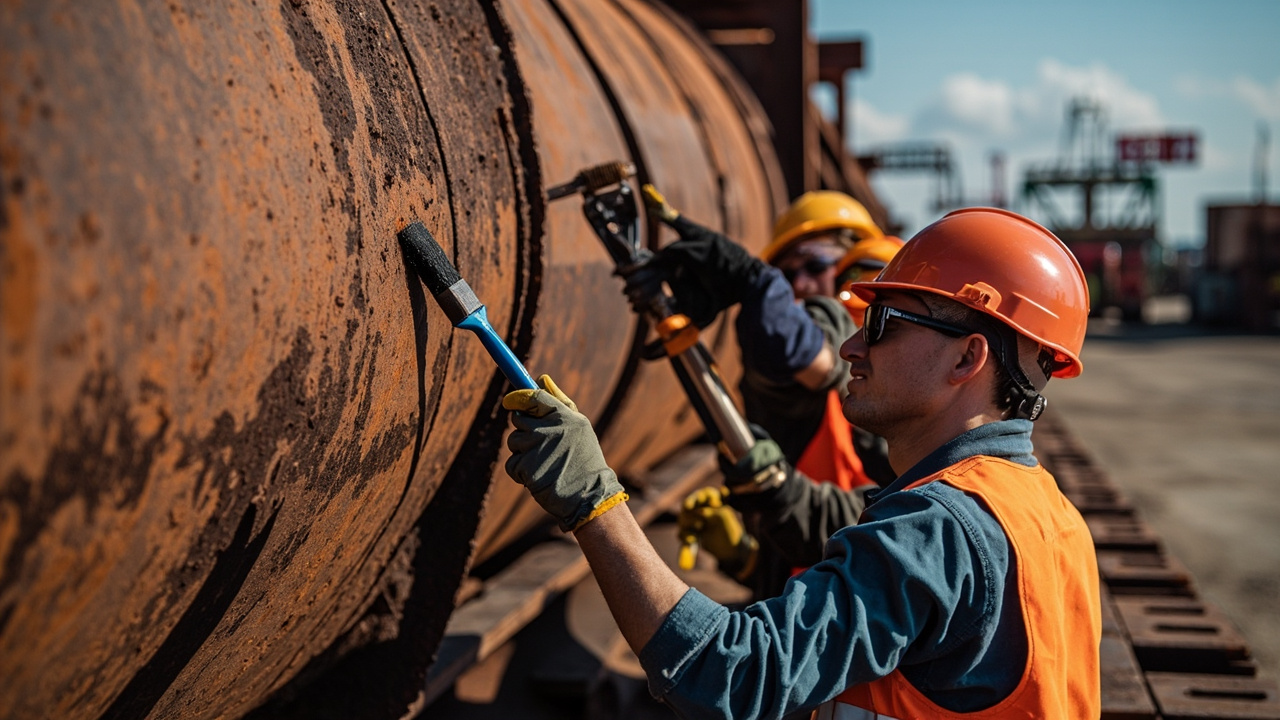
Rust stabilizer belongs to "stabilizing type coating for painting over rust", with the core mechanism being:
- Passivation: Corrosion-inhibiting components in the formula (zinc phosphate, aluminum tripolyphosphate, molybdate, tannin, etc.) form a passivation film or complex at the rust layer interface, reducing the activity of iron;
- Encapsulation: The film-forming resin (epoxy ester, acrylic, modified alkyd) encapsulates the entire rust layer, blocking water, oxygen, and ions from reaching the metal;
- Barrier enhancement: Flake fillers (micaceous iron oxide, glass flakes) lengthen the path of media.
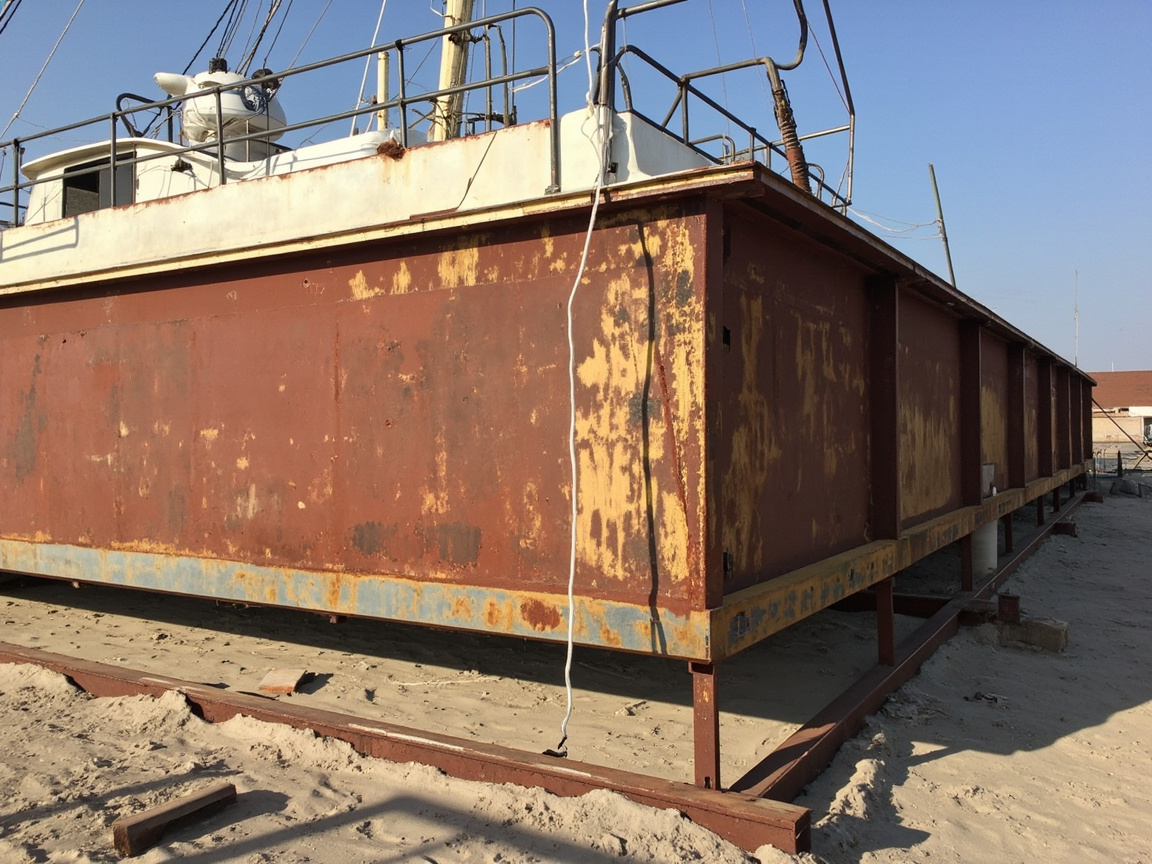
Unlike the converter, the stabilizer does not generate a brand-new stable chemical film to "replace" the rust, but rather "holds down + wraps" the existing rust. Therefore it is more suitable for thick rust, uneven rust—when the converter cannot penetrate to the bottom it easily fails, while the stabilizer relies on physical encapsulation and is more forgiving. This is also the fundamental reason it is widely used in in-service steel structure maintenance and on external surfaces of units that cannot be shut down for sandblasting: it weakens the high-cost prerequisite of "must thoroughly remove rust" to "just remove the loose floating layer", thereby greatly reducing downtime and labor costs.
From a materials science perspective, the "stabilization" of rust stabilizer is the result of multiple mechanisms superimposed. Active rust (mainly composed of FeOOH, Fe₃O₄ and various hydrated oxides) has a large number of micropores and capillary channels on its surface, through which water, oxygen, and chloride ions can reach the substrate directly. On one hand, the stabilizer generates a dense passivation layer at the rust/iron interface through interfacial reactions of corrosion-inhibiting pigments, increasing the "inertness" of the rust layer; on the other hand, it fills the pores of the rust layer through resin penetration, "bonding" the loose rust particles into a continuous encapsulated body. If either is missing, long-term stability will be compromised.
II. Main Components
| Component | Function | Description |
|---|---|---|
| Zinc phosphate / Aluminum tripolyphosphate | Interface passivation, anodic inhibition | Non-toxic, eco-friendly mainstream |
| Molybdate | Anodic passivation, low toxicity | Often synergized with zinc phosphate |
| Tannin | Mild complexation stabilization | Auxiliary |
| Epoxy ester / acrylic / alkyd | Film formation and encapsulation | Determines water and weather resistance |
| Micaceous iron oxide / flakes | Flake barrier | Lengthens path |
| Penetrant | Assists penetration into rust pores | More needed for thin rust |
Formulation orientation: For light—moderate corrosion, single-component epoxy ester/acrylic is sufficient; for higher requirements, two-component epoxy-based stabilizer + thick barrier. Corrosion-inhibiting pigments often have synergistic effects: zinc phosphate provides basic passivation, aluminum tripolyphosphate contributes dual passivation of phosphate radicals and aluminum ions and improves barrier, molybdate inhibits oxygen reduction in the cathodic zone; the three combined can achieve better stabilization at lower addition levels while avoiding film embrittlement caused by excessive single pigment. It should be noted that the performance ceiling of the stabilizer is jointly determined by "type and ratio of corrosion-inhibiting pigments + resin penetration + filler barrier efficiency". When purchasing, one should not only ask "does it contain zinc phosphate", but focus on the composite system and third-party salt spray verification data, which is the key to distinguishing good from bad products.
III. In-depth Mechanism: Why "Passivation + Encapsulation" Stops Rust
To understand why rust stabilizer is effective, we need to break down the two processes of "passivation" and "encapsulation":
3.1 Passivation: Let the Iron "Calm Down"
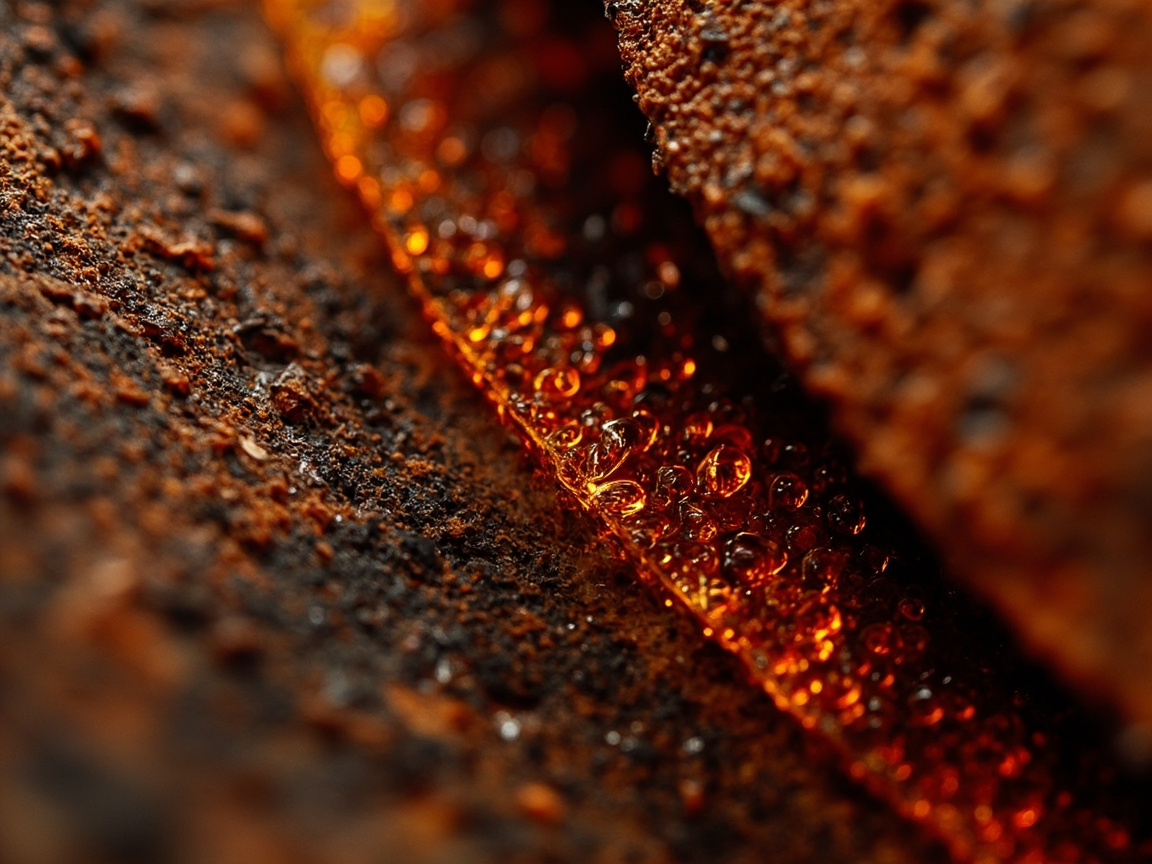
Fe²⁺/Fe³⁺ in active rust is in a continuous cycle of hydration—dehydration—re-oxidation, which itself consumes iron and produces volume expansion, lifting the coating. Corrosion-inhibiting pigments such as zinc phosphate slowly release phosphate radicals in the interfacial aqueous phase, reacting with iron ions to form insoluble iron phosphate/iron phosphates film, physically blocking the further anodic dissolution of iron. Molybdate inhibits oxygen reduction in the cathodic zone, and the two-pronged approach significantly reduces the corrosion current. This "chemical hold-down" is the core that distinguishes stabilizer from ordinary topcoat.
3.2 Encapsulation: Seal the Rust "in Amber"
Even if passivation reduces activity, if water and oxygen can still reach, iron will still corrode slowly. The film-forming resin penetrates into the rust layer pores and, after curing, encapsulates the rust particles as a whole, forming a structure similar to "amber sealing an insect"—the rust is fixed in the continuous resin phase, and the media channels are cut off. Flake fillers (micaceous iron oxide) further lengthen the tortuous path of water and oxygen ions within it, multiplying the barrier efficiency.
3.3 Relationship Between the Two
Passivation addresses "activity", encapsulation addresses "channels". Only passivation without encapsulation, the rust layer still absorbs water and expands; only encapsulation without passivation, residual activity will continue micro-corrosion within the encapsulated body and accumulate internal stress. The effectiveness of the stabilizer comes precisely from the synergy of the two. This is also why simply coating a layer of ordinary alkyd paint over rust will quickly re-rust, while a stabilizer system containing corrosion-inhibiting pigments can maintain long-term.
IV. Field Application Process
4.1 Pre-treatment (Critical)
- Degrease, remove salt (mandatory for coastal/chemical plants, chloride ions are a hidden danger);
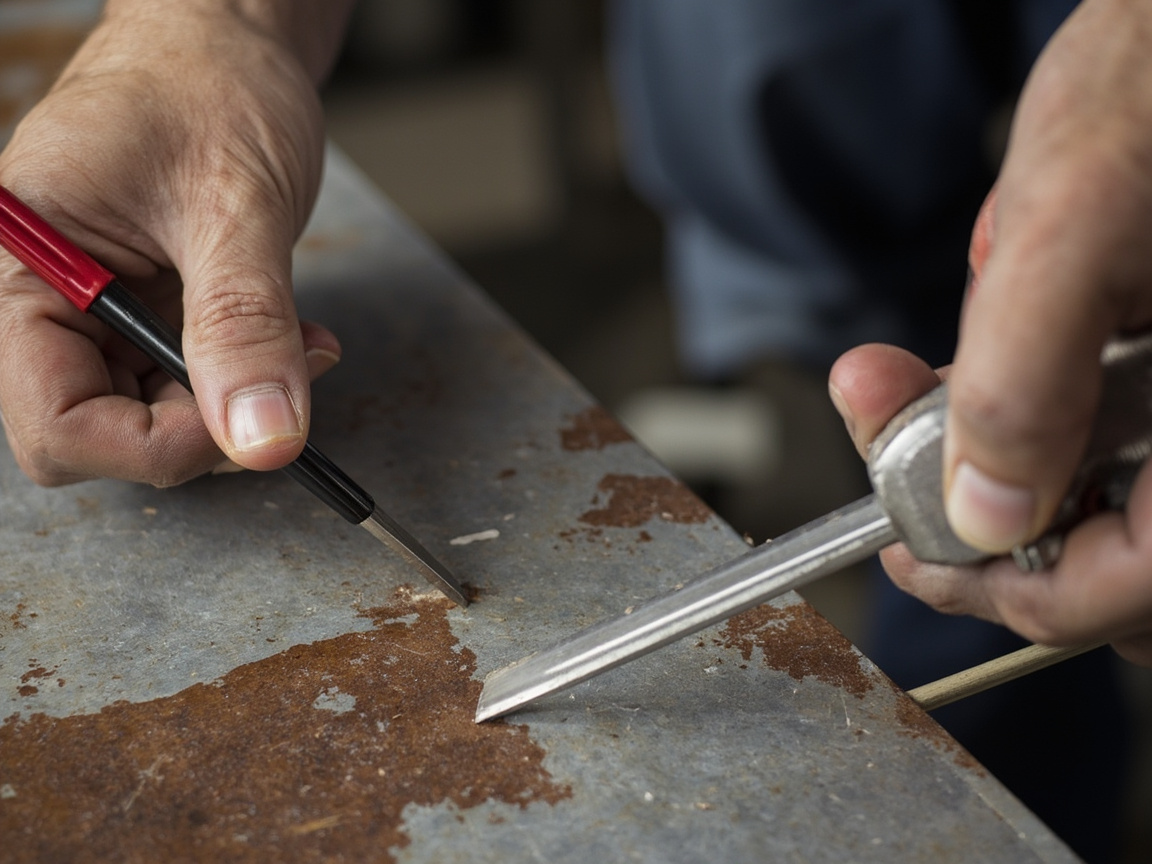
- Mechanically remove loose floating rust, peeling, chalked layer (wire brush, angle grinder, needle gun), retain firmly adhered rust;
- Reach St2/St3 (GB/T 8923.1 / ISO 8501-1);
- Dust removal (vacuum/clean compressed air, note to remove oil and water).
The salt removal step is most easily underestimated. Steel structures in coastal and chemical plant units often have soluble salts (chlorides, sulfates) attached to the surface, which absorb water and deliquesce, forming a persistent high-concentration electrolyte under the barrier layer. Even if the passivation film is intact, "osmotic pressure" will pull water in due to it, eventually breaking the coating. Therefore, salt removal is not "icing on the cake", but a necessary prerequisite for rust maintenance, and if necessary a surface soluble salt detector should be used for quantitative confirmation.
4.2 Coating
- Stir thoroughly (corrosion-inhibiting pigments easily settle);
- First coat thin to let the stabilizer penetrate rust pores, after surface dry apply second and third coats gradually for encapsulation;
- Single coat DFT 40–60 µm, total stabilizer layer often 80–150 µm (depending on rust thickness and system);
- Edges, overlaps, bolt areas get more coat (local corrosion high-risk).
Thin coats in multiple passes is the key discipline for stabilizer application. The first coat should be thin and penetrating, letting the resin drill deep into the rust layer like "feeding medicine"; subsequent coats gradually thicken and build up to seal the surface flat. If the first coat is applied thick, the surface skins over while the interior is not penetrated, equivalent to putting a "fake lid" over the rust, and the interior will still be active after a few months.
4.3 System
The stabilizer's barrier and weather resistance are limited; it must be topped with barrier intermediate coat + weather-resistant topcoat to complete the system DFT (see Anti-rust Coating System Design). Do not use bare.
4.4 Environment
5–35℃, RH ≤ 85%, substrate 3℃ above dew point; high humidity and condensation weaken adhesion and encapsulation.
V. Comparison and Selection with Rust Converter
| Dimension | Rust Stabilizer | Rust Converter |
|---|---|---|
| Mechanism | Passivation + encapsulation | Chemically convert to stable film |
| For thick rust | Forgiving | Limited penetration, easy to fail |
| Visual sign | No obvious color change | Rust turns black |
| Application | Simple, multiple coats | Need to control reaction time |
| Long-term dependence | Strong barrier topcoat | Also needs system |
| Applicable | Thick rust, uneven, fear of uneven reaction | Medium-thin rust, need thorough inactivation |
Selection logic: Thick rust, uneven, field fears uneven reaction → stabilizer; medium-thin rust, need chemical inactivation, pursue black stable film → converter. The two can also be combined: stabilizer as primer for encapsulation + local conversion. In engineering sites, a more common practice is "zoned treatment for mixed rust conditions": use stabilizer for thick loose rust areas, use converter for thinner and well-adhered rust areas, then finish with a unified barrier intermediate coat and topcoat. This ensures effect while controlling cost.
VI. Typical Application Scenarios
- Local rust maintenance of in-service bridges, towers, pipe racks;
- Non-severe protection of plant steel structures, equipment bases;
- External surfaces of chemical/power facilities that cannot be shut down for sandblasting;
- Combined with Rust Converter Principles and Application for mixed rust conditions.
The "in-service maintenance" attribute of rust stabilizers determines their value scenarios: any structure with "high shutdown cost, poor accessibility, and mild-to-moderate corrosion" is suitable for them. For example, urban viaducts, overhead pipe galleries, and old factory building steel columns often cannot close traffic or halt production for sandblasting; stabilizer + barrier system becomes an economical and reliable compromise. However, note that it is not suitable for scenarios of "severe pitting corrosion, continuous immersion, strong chemical splashing"—such cases must revert to sandblasting or plate patching.
VII. Construction Quality Acceptance and Troubleshooting
- Adhesion: GB/T 9286 cross-cut 0/1 grade;
- Film thickness: GB/T 13452.2, reaching design DFT;
- Salt spray: GB/T 1771, system ≥ 240–480 h (subject to design);
- Rust recurrence inspection: Periodically check edges, overlaps, and damage after coating.
Common failures and countermeasures:
| Phenomenon | Cause | Countermeasure |
|---|---|---|
| Local rust recurrence | Flash rust not removed / uneven application | Re-sand and recoat |
| Blistering | High humidity / excessive film thickness | Control environment and DFT |
| Poor adhesion | Oil and salt residue | Deoil and desalinate before construction |
| Early rust | No topcoat paired, exposed | Apply barrier topcoat promptly |
Acceptance should not only look at "is it painted" but at "is it painted correctly". The most hidden problem in stabilizer construction is "surface pass, interior hollow"—smooth surface, uniform color, but the first coat did not penetrate, flash rust not fully removed; not visible short-term, but local blistering and rust recurrence after half a year. Therefore, cross-cut adhesion and film thickness spot checks must be applied to key nodes (overlaps, edges, around bolts), not only on flat large areas.
VIII. Combination with Water-based Systems
With rising environmental requirements, water-based rust stabilizers (water-based epoxy ester / water-based acrylic based) are gradually entering the market. Their mechanism is consistent with solvent-based, but the application window is narrower: slower surface dry, more sensitive to condensation, weaker initial water resistance, requiring longer curing. The barrier intermediate coat and topcoat paired with water-based stabilizer should also be water-based as much as possible, to avoid "water-based primer + solvent-based top" possibly causing lifting and interlayer stress. Applicators should strictly control temperature, humidity, and curing period per manufacturer's process card.
IX. Construction Safety and Labor Protection
Although rust stabilizers are mostly low-toxicity formulations, construction still requires attention: sanding rust removal generates iron rust dust, operators should wear dust masks and goggles; solvent-based product construction areas should be ventilated to avoid flammable vapor accumulation; waste sanding dust and paint slag collected as industrial waste, not arbitrarily dumped. In confined or semi-confined spaces (such as inside storage tanks), forced ventilation and gas detection are also required to prevent oxygen deficiency and harmful gas accumulation.
X. Seasonal Construction Key Points
Environmental control is the invisible variable for stabilizer success or failure. Summer high temperature and humidity, surface prone to condensation, avoid construction at early morning and before rain, if necessary use infrared thermometer to confirm steel temperature above dew point by more than 3°C; winter low temperature, epoxy ester type cures slowly, can switch to fast-dry type or adopt thermal insulation to promote drying, but open flame baking is prohibited. Although spring and autumn are golden windows, also beware of strong wind dust polluting wet film. Writing "construction by weather" into the work plan saves far more than rework afterwards.
XI. Cost and Life Cycle Perspective
Evaluating rust stabilizer should not only look at material unit price. Its core value lies in "saving sandblasting and shutdown costs": a single sandblasting rust removal unit price is often several times that of stabilizer material, not to mention shutdown production losses. From full life cycle view, stabilizer maintenanceSolution often extends structure life by years to decade scale at lower comprehensive cost; although single durability is inferior to sandblasted zinc-rich system, it has outstanding cost-performance in "maintenance-level" scenarios. Decision should compare total cost and acceptable protection years of "sandblast redo" vs "stabilizer maintenance", not isolated price comparison.
XII. Field Operation Checklist
To make stabilizer construction from "by experience" to "replicable", it is recommended to confirm item by item: first, is rust grade judged and recorded; second, are flash rust, old paint, oil stains removed; third, is desalination done and tested; fourth, is cleaning grade up to St2/St3; fifth, is stabilizer thin-coated in multiple passes, fully reacted; sixth, is film thickness up to design; seventh, are temperature, humidity and dew point satisfied; eighth, is intermediate coat and topcoat paired promptly; ninth, are adhesion and salt spray accepted per standard; tenth, is process record archived. Checklist seems tedious, but is the bottom line for stabilizer not to fail.
XIII. Relationship with Overall Protection System
Rust stabilizer is not an isolated product, but a link in the "diagnosis—treatment—stabilization—pairing—acceptance" chain. Its upstream is rust diagnosis and pre-treatment (see rust-inhibitive coating surface treatment), downstream is pairing design and acceptance (see anti-corrosion coating system pairing design). Only by connecting this chain can stabilizer change from "stopgap" to "reliable process". Many project failures are not because stabilizer is bad, but because it is treated as "apply one layer and done" universal paint, omitting necessary preceding and following actions.
Kexin New Materials (kexinMaterials) often first does small-area "stabilize + pairing" sample on site, does cross-cut and short-term water resistance verification before full rollout, reducing large-area rework risk. This "sample first, then scale-up" pace, combined with process card and retest, is the pragmatic way to lock stabilizer effect.
XIV. Typical Engineering Case Analysis
Through several real working conditions, one can more intuitively understand the value boundary of stabilizer.
Case 1: Urban viaduct steel box girder partial maintenance. The structure cannot be closed for sandblasting long, rust layer uneven thickness. Adopted "mechanical sanding to St3 + rust stabilizer thin coat two passes + epoxy micaceous iron intermediate coat + aliphatic polyurethane topcoat" pairing, total DFT about 220 µm. Three-year tracking shows treated area no obvious rust recurrence, while untreated control area already broadly blistered. This case shows: in "poor accessibility, expensive shutdown" scenario, stabilizer maintenance is cost-performance choice.
Case 2: Chemical plant pipe rack outer surface. Environment C4 level, year-round sulfide atmosphere, surface soluble salt high. First fresh water rinse desalination and test compliant, then stabilizer + barrier pairing. Key is desalination step—early non-desalinated test section pitted in half year, desalinated section still intact after two years. This confirms "desalination is the lifeline of rust-inhibitive maintenance".
Case 3: Old factory building steel column. Non-severe indoor environment, rust is moderate adherent rust. Directly used stabilizer + alkyd topcoat for economical maintenance, saving sandblasting. Five-year observation only edge slight rust, overall protection qualified. Shows in C2–C3 light corrosion scenario, stabilizer can fully independently undertake maintenance task.
These cases jointly point to one thing: stabilizer is not "universal paint", but a process of "choose correct usage by working condition". Put it in correct environment grade and pairing framework to exert value.
XV. Combination of Stabilizer with Other Maintenance Technologies
Site rust condition is often mixed, single means hard to full cover, combination punch is steadier:
- Stabilizer + converter: Thick loose rust area use stabilizer passivation sealing, thin adherent rust area use converter chemical inactivation, finally unified barrier pairing finish;
- Stabilizer + water-based system: High environmental requirement plant, can use water-based stabilizer + water-based intermediate coat + water-based topcoat full low VOC pairing;
- Stabilizer + local sandblasting: For key nodes (bolts, overlaps, pitting edges) do small-area sandblasting, rest large-area stabilizer, balancing effect and cost;
- Stabilizer + cathodic protection: For buried or underwater members, stabilizer as auxiliary barrier, main protection still by sacrificial anode or impressed current.
Core principle of combination is "layered defense, exploit strengths avoid weaknesses": let each technology do what it excels at, then use pairing to sew them into a system. This is in same line with anti-corrosion coating system pairing design overall thinking.
XVI. Re-analysis of Common Cognitive Misunderstandings
Besides earlier misunderstandings, several deep misconceptions worth clarifying:
Misunderstanding 1: Thicker stabilizer is better. Wrong. Over-thick stabilizer layer prone to internal stress cracking, slow surface dry, cost waste. Its duty is "passivation + sealing" not "pile thickness", thickness task should be given to intermediate coat and topcoat.
Misunderstanding 2: Stabilizer can be used as permanent primer. Wrong. Stabilizer essence is maintenance-level transition layer, long-term heavy anti-corrosion still needs formal primer system. Treating it as permanent primer equals using stopgap to replace system design.
Misunderstanding 3: Deoil desalination can be omitted. Wrong. Oil forms isolation layer, salt causes pitting, both make stabilizer "not stick, not seal tight". Omitting pre-treatment is first cause of rust recurrence.
Misunderstanding 4: Success only if blackened. Wrong. Stabilizer does not rely on color change to judge success, adhesion, film thickness, salt spray rating are hard indicators. Using "blackened" as criterion often misjudges good paint as bad, bad paint as false good.
Misunderstanding 5: All rust can be stabilized. Wrong. Severe pitting, significantly thinned D-level corrosion, stabilizer powerless, must patch plate or sandblast. Cross-boundary use surely fails.
Misunderstanding 6: Stabilizer construction needs no environment control. Wrong. High humidity condensation makes stabilizer layer adhesion and sealing drop sharply, temperature below 5°C curing stalls. Environment boundary as important as sandblasting pairing, absolutely not "smear on and done" rough work.
XVII. Quality Management and Digitalization Trend
With protection engineering higher traceability requirement, stabilizer maintenance also moving from "master feel" to "data management". Some advanced practices include: use rust grade APP site photo judgment and archive; use film thickness gauge and temp-humidity recorder auto log; connect desalination test value, adhesion data to project quality platform. This digitalization not complex, but can significantly reduce "unclear, untraceable" disputes. Kexin New Materials (kexinMaterials) when promoting such structured services found, when maintenance process quantified recorded, later responsibility definition and life prediction both become feasible, client trust in stabilizer scheme also rises.
XVIII. Stabilizer Product Selection Guide
Rust stabilizers on market by binder can be divided into several types, selection should match environment grade and subsequent pairing:
| Type | Binder | Applicable Scenario | Precautions |
|---|---|---|---|
| Epoxy ester type | Epoxy ester resin | Medium corrosion C3–C4 maintenance | Water resistance better than alkyd, moderate drying |
| Acrylic type | Acrylic emulsion/solution | Light–medium corrosion, quick-dry maintenance | Good weather resistance, slightly weaker barrier |
| Two-component epoxy type | Epoxy + amine curing | Relatively heavy corrosion maintenance | Strong performance, but two-component application is cumbersome |
| Water-based epoxy ester type | Water-based epoxy ester | Plants with high eco requirements | Weak initial water resistance, requires long curing |
The selection principle can be summarized in three sentences: the harsher the environment, the more the binder should shift toward epoxy/two-component; the tighter the eco requirements, the higher the priority for water-based; the stronger the subsequent system, the "lighter" the stabilizer layer can be. Never use a light anti-corrosion single-component stabilizer to forcibly withstand C5 marine environment—it is not that the product is bad, but that it is used on the wrong battlefield.
19. Synergy between Stabilizer and Overcoating Interval
There is a "overcoating window" between the stabilizer layer and the subsequent intermediate coat and topcoat. Overcoating too early, the stabilizer is not dry, solvent/water is trapped between layers, prone to bubbling; overcoating too late, the surface may be contaminated or slightly re-rusted, requiring roughening and re-treatment. Generally, epoxy ester stabilizer surface-dries in a few hours, hard-dries in 12–24 h, subject to the technical data sheet. Field experience: after the first coat penetrates, wait until touch-dry and non-tacky before applying the second coat; after all stabilizer layers are hard-dry and cross-cut confirms adhesion, then apply the intermediate coat. Writing the "interval" into the process card is far more reliable than relying on feel.
It needs special reminder that the overcoating interval is also strongly related to the season. In summer high temperature, the stabilizer surface-dries fast and the interval window is short, so prevent "the previous coat is not yet dry before rushing to apply the next"; in winter low temperature, drying is slow, and blindly waiting for dryness delays the schedule, so the number and rhythm of coats need to be flexibly adjusted according to temperature, and if necessary, use fast-dry type or take thermal insulation and drying-promoting measures. Quantifying the effect of temperature on interval into a "temperature–interval reference table" posted on site is a low-cost, high-benefit practice to avoid interlayer defects.
20. Summary of General Construction Principles
Condense the key points of the full text into five general on-site principles for easy front-line execution: first, determine the rust grade first, do not act blindly; second, degreasing, desalting, and removing loose rust are three things that cannot be omitted; third, apply stabilizer in thin multiple coats, penetrate first then seal; fourth, must pair with intermediate coat and weather-resistant topcoat, never use bare; fifth, adhesion, film thickness, and salt spray three acceptance items cannot be missing. By holding these five, the rust stabilizer can be upgraded from "emergency makeshift" to "acceptable reliable maintenance process".
FAQ
Q: Which to choose, rust stabilizer or rust converter?
A: Depends on rust condition. Thick, uneven rust, and fear of uneven reaction on site, choose stabilizer (passivation + sealing is more tolerant); medium-thin rust, need chemical inactivation and see black stable film, choose converter. The two can also be combined: stabilizer as primer, local conversion. See Rust Converter Principle and Construction for specific process.
Q: Can the rust stabilizer completely remove the rust?
A: Cannot and need not. It passivates and encapsulates the active rust, preventing its further expansion, and the rust itself remains under the encapsulation layer. Long-term protection relies on the integrity of the upper barrier intermediate coat and topcoat.
Q: Why does the rust not turn black after stabilizer application?
A: The stabilizer does not generate ferric tannate black film, mainly relying on passivation and physical sealing, so no obvious color change is normal, and success cannot be judged by "turning black"; it should be based on adhesion, film thickness, and salt spray rating.
Q: How many coats of rust stabilizer are needed?
A: Generally thin multiple coats (2–3 coats), first coat penetrates, subsequent gradually seal, single coat DFT 40–60 µm, total stabilizer layer often 80–150 µm, then pair with intermediate coat and topcoat to make up system thickness.
Q: Must desalt before stabilizer construction?
A: Strongly recommended for coastal, chemical plant and other environments. Chloride ions penetrate the encapsulation layer, cause pitting and destroy adhesion, and are a common source of early rust in rust-inclusive maintenance; use fresh water rinse or specialized desalting.
Q: Can stabilizer replace zinc-rich primer?
A: No. The stabilizer basically provides no cathodic protection; for heavy anti-corrosion (C4–C5), still use blasting + epoxy zinc-rich system (see Water-based Epoxy Zinc-rich Primer). Stabilizer is positioned as maintenance grade.
Q: What are the requirements for topcoat paired with stabilizer?
A: Need weather-resistant, strong barrier, such as aliphatic polyurethane, acrylic polyurethane or fluorocarbon; avoid direct pairing with uncured alkyd primer causing lifting (see Alkyd Anti-rust Primer Application). Film thickness and intermediate coat to be made up per system design.
Q: How to accept rust stabilizer construction quality?
A: Check appearance free of oil and loose rust, GB/T 9286 cross-cut 0/1 grade, GB/T 13452.2 film thickness meets standard, GB/T 1771 paired salt spray meets standard (subject to design), and do post-coating periodic re-rust inspection, focusing on edges and overlaps.
Q: Is the difference between water-based rust stabilizer and solvent-based large?
A: Mechanism is the same, but water-based system surface-dries slowly, more sensitive to condensation, weak initial water resistance, needs longer curing and stricter temperature/humidity control, and pairing should also be as water-based as possible to avoid interlayer incompatibility.
Q: How many years can stabilizer maintenance last?
A: Depends on environment grade and system completeness; maintenance grade can usually extend structural life by several years to a decade order, far lower than blasting zinc-rich heavy anti-corrosion system. When design life requirement is high, should return to blasting system.
Further Reading
- Rust Converter Principle and Construction: Compare stabilizer-type and converter-type two rust-inclusive routes.
- Rust-inclusive Coating Surface Treatment: St2/St3 cleaning and desalting process required before stabilizer construction.
- Anti-rust Coating System Matching Design: Incorporate stabilizer into "primer–intermediate–topcoat" system to make up DFT and weather resistance.
- Water-based Anti-rust Paint Formulation Key Points: Balance of Resin, Inhibitive Pigment and Film-forming Aid
- Steel Structure Anti-rust Engineering Specification: Full-process Key Points from Design, Surface Treatment to Acceptance
- Anti-rust Paint Salt Spray Test: DIN EN ISO 9227 and GB/T 1771