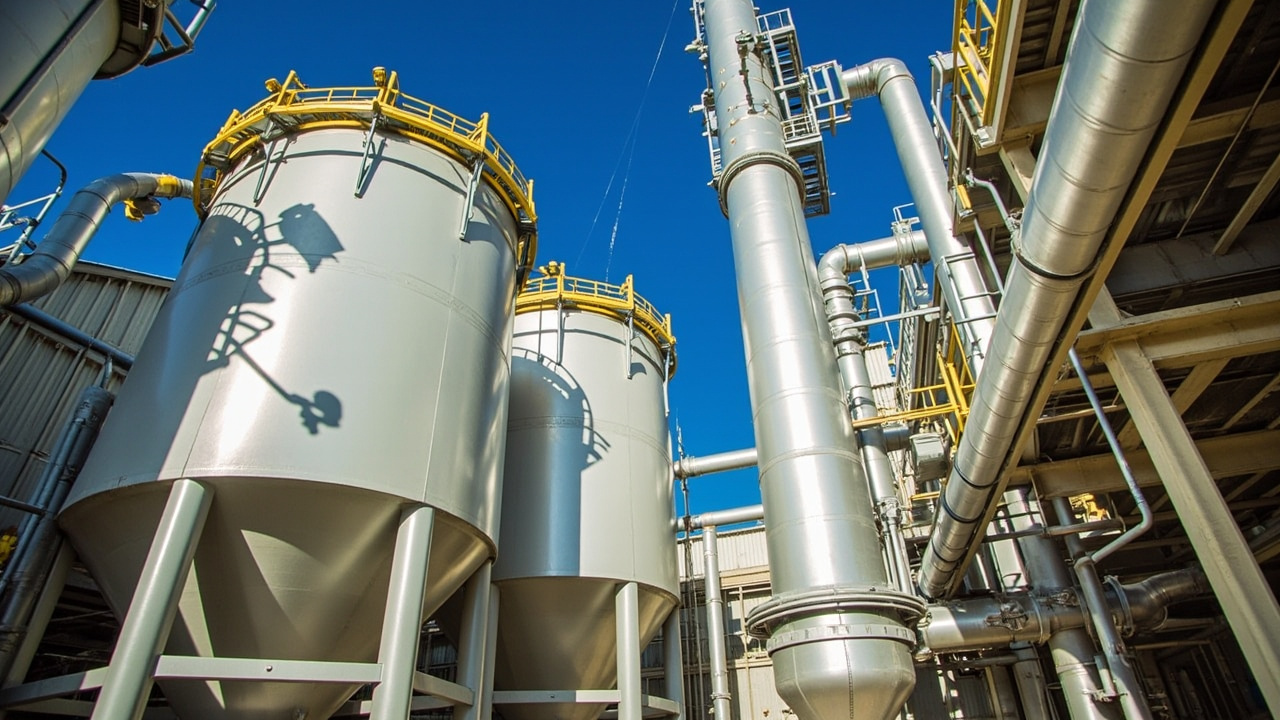
Storage tanks and pipelines are the "blood vessels" of a plant. They are large in number, densely arranged, and difficult to shut down. Once their external anti-corrosion fails, it may lead to leakage and production stoppage at best, or safety accidents at worst. More troublesome than exposed-pipe corrosion is "Corrosion Under Insulation" (CUI): the insulation traps moisture on the metal surface, so the outside looks fine while the inside is already pitted—one of the most frequent hidden failures in the petrochemical and chemical industries. This article discusses external anti-corrosion of storage tanks and pipelines together with CUI protection, providing a closed loop from coating system design to inspection and repair.
I. Specifics of Corrosion on Storage Tanks and Pipelines
Unlike outdoor steel structures, the difficulties of external anti-corrosion for storage tanks and pipelines lie in three aspects:
- Dense layout and confined space: Pipe racks, areas below tank walls, and support contact points are all dead corners difficult for conventional spraying to reach.
- Thermal expansion/contraction and vibration: Deformation during pipeline operation tests the flexibility and adhesion of the coating.
- Concealment caused by insulation: For insulated pipelines, the external anti-corrosion condition is invisible to the naked eye, and corrosion proceeds inside a "black box."
Therefore, external anti-corrosion is not "just applying a coat of paint," but a combined engineering of primer—intermediate—topcoat system + coordination with the insulation system + inspection mechanism. For general selection logic, see Complete Guide to Industrial Anti-Corrosion Paint: How to Select the Right System for Steel Structures, Tanks, and Pipelines?.
II. Standard Framework of External Anti-Corrosion Systems
Tank exteriors and overhead pipelines usually adopt the same three-layer approach as heavy-duty anti-corrosion, but with greater emphasis on workability and flexibility:
1. Zinc-rich epoxy / epoxy primer: Provides cathodic protection and an adhesion base; key reinforcement at tank bottom edges and weld zones.
2. Epoxy micaceous iron oxide intermediate coat: Increases film thickness, extends the permeation path of media, and improves overall barrier properties.
3. Polyurethane / acrylic topcoat: Weather resistance and resistance to chemical wiping, determining appearance and maintenance cycle.
For a more systematic system design, corrosion mechanisms, and a 25-year service life path, Heavy-Duty Anti-Corrosion Coating System Design, Selection and Engineering Application: From Corrosion Mechanism to 25-Year Protection Life provides a complete framework that can be directly applied to storage tanks and pipelines.
III. What Exactly Is CUI and Why Is It the Worst
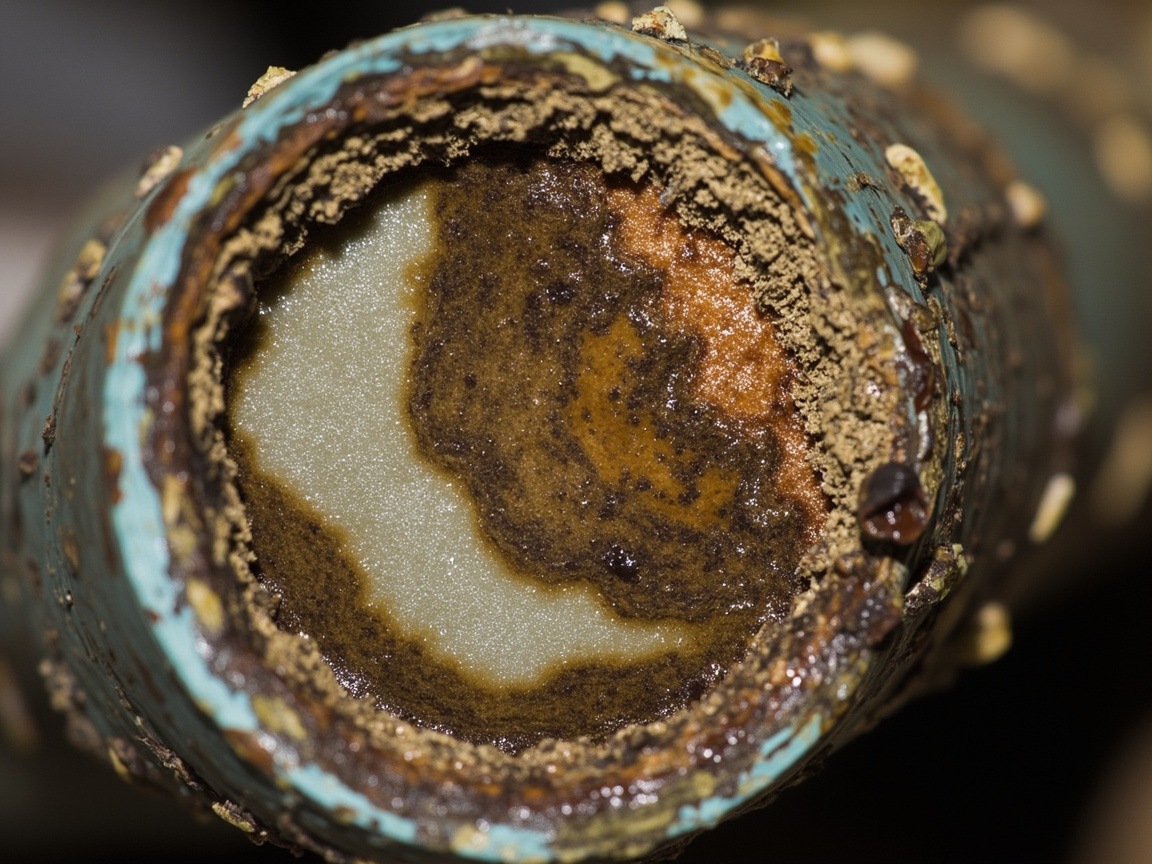
CUI refers to localized corrosion occurring at the interface between the insulation (rock wool, aluminum silicate, etc.) and the metal on insulated pipelines/equipment due to moisture retention, commonly found in:
- Water ingress from damaged insulation: Rainwater seeps in through gaps in the protective layer and is trapped inside long term;
- "Breathing" from thermal cycling: Temperature cycles cause repeated condensation at the interface;
- Chloride ion enrichment: Cl⁻ brought in by insulation materials or the environment concentrates in confined spaces, accelerating pitting.
The danger of CUI lies in "appearing intact outside while perforated inside"; it is often exposed only during shutdown maintenance, and mostly occurs at supports, flanges, valves, and other stress- and water-accumulation concentration points.
IV. CUI Protection: Coating System + Insulation System Together
Preventing CUI cannot rely on paint alone; the coating and insulation system must be designed together:
- Sealing of moisture barrier and protective layer: The external aluminum/stainless steel protective layer over insulation must be continuously sealed; preventing rainwater intrusion is the first line of defense.
- Temperature- and moisture-resistant primer: For high-temperature pipelines, choose high-temperature-resistant and CUI-resistant epoxy or silicate-based primers to avoid failure of ordinary primers under long-term heat and humidity.
- Edge and opening reinforcement: Flanges, supports, pipe shoes, valves, and other openings are points of water ingress and stress concentration, requiring pre-coating and sealing treatment.
- Nano clear coat to prevent rainwater penetration: For insulated overhead pipelines, applying a rainwater-penetration-resistant nano clear coat on the external protective layer can significantly reduce the probability of water ingress into the insulation. The approach is detailed in Rainproof Anti-Corrosion Nano Jacket for Insulated Pipelines: From Insulation Layer Protection to Full Life-Cycle Protection of Industrial Pipe Networks.
V. Detection and Repair: Bringing Hidden Corrosion to Light
The key to CUI management is "early detection," with common methods:
1. Visual and tapping inspection: Damage to the protective layer, bulging, and rust seepage marks are direct signals.
2. Non-destructive testing: Ultrasonic thickness measurement and pulsed eddy current can detect wall thinning and corrosion without removing insulation.
3. Sampling by dismantling: Periodically remove insulation for inspection at high-risk locations (supports, near flanges) to establish a corrosion rate baseline.
4. Repair closed loop: Upon discovering damage, follow "derusting—primer touch-up—intermediate touch-up—topcoat touch-up—restore insulation sealing," and record for archiving.
VI. Key Points for Construction Implementation
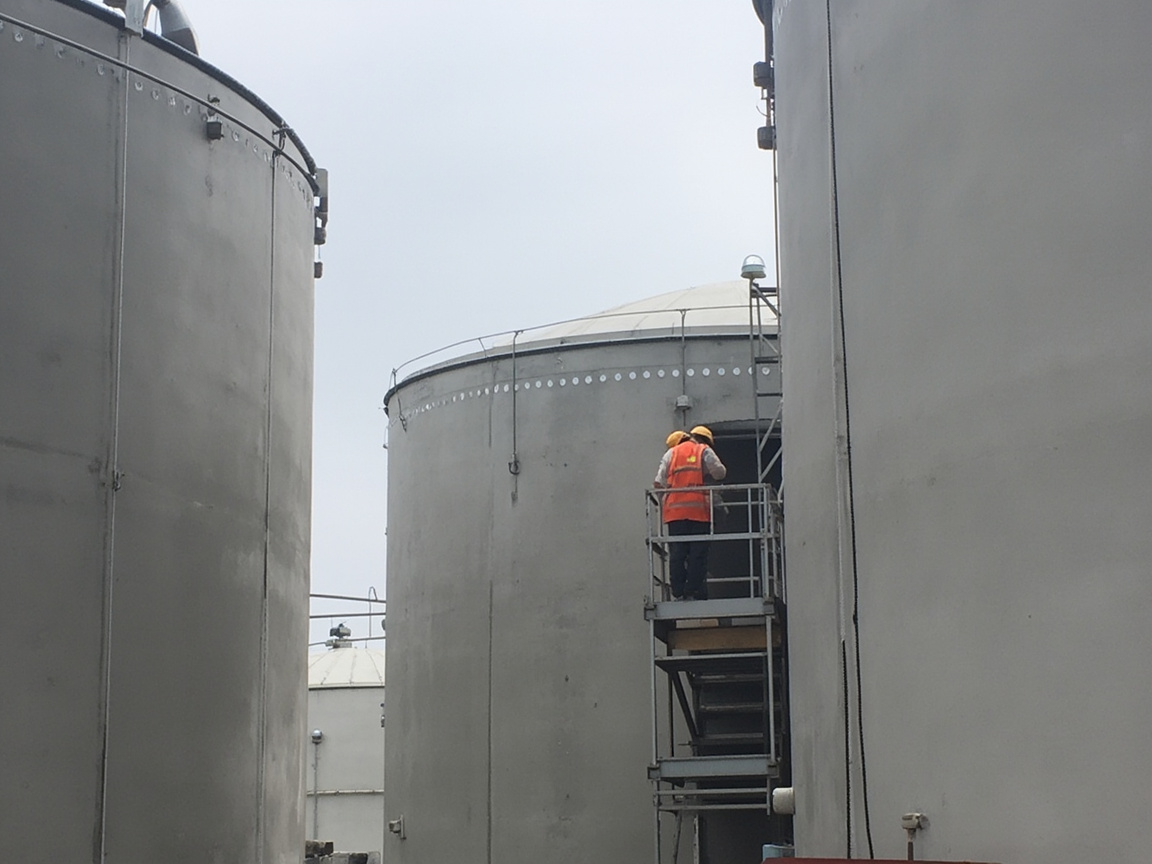
- Pre-coating of dead corners: Below pipe supports, contact zones between tank walls and foundations, backs of flanges—pre-coat by hand before overall spraying.
- Uniform film thickness: Dense pipe racks are prone to missed coating; use a combination of "rotating pipe spraying + manual touch-up gun."
- Environmental window: Humidity and dew point control are the same as for heavy-duty anti-corrosion; construction on damp surfaces is a main cause of early failure of tank and pipeline coatings.
- Confirmation before insulation: Only insulate after the coating is fully cured and passes inspection, to avoid sealing defects into the "black box."
VII. Operation Ledger and Full Life-Cycle Management
Storage tanks and pipelines are huge in number and cannot be monitored manually. A system should be established:
- One file per pipe: Record location, pipe diameter, medium temperature, coating system, and construction date;
- Risk grading: Mark CUI high-risk points by temperature range, medium, insulation status, and historical defects;
- Periodic inspection: High-risk sections at high frequency, low-risk at normal frequency, concentrating resources on risks.
VIII. Kexin New Materials' Approach to Tank and Pipeline Protection
Kexin New Materials (Guangdong) Co., Ltd. provides a closed system of zinc-rich epoxy—epoxy micaceous iron oxide—polyurethane/acrylic topcoat for external anti-corrosion of storage tanks and pipelines, and offers reinforced recommendations of "moisture-resistant primer + opening sealing + nano clear coat" for CUI high-risk areas. For overseas petrochemical and energy projects, Kexin exports English-version system tables and CUI protection checklists under the kexinMaterials brand, facilitating owners to incorporate external anti-corrosion and insulation systems into unified operation standards.
IX. Frequently Asked Questions (FAQ)
Is external anti-corrosion of tanks and pipelines the same as steel structure anti-corrosion?
The framework is similar, but tank and pipeline anti-corrosion places more emphasis on workability of dead corners, flexibility against deformation, and the hidden corrosion (CUI) risk brought by insulation, requiring coordinated design of coating system and insulation system.
What is CUI and why is it hard to detect?
CUI is localized corrosion at the metal interface under insulation. Because the insulation blocks the view, it is invisible to the naked eye and often exposed only during shutdown maintenance or perforation, making it a highly concealed failure.
Is paint alone enough to prevent CUI?
No. The primary measure is continuous sealing of the insulation protective layer to prevent water ingress; on the coating side, use temperature- and moisture-resistant primers and reinforce edges and openings; supplemented by nano clear coat to reduce water ingress probability—it is a combined engineering effort.
Can CUI be detected without removing insulation?
Partially. Non-destructive methods such as ultrasonic thickness measurement and pulsed eddy current can detect wall thinning without removing insulation, but high-risk areas still require sampling by dismantling to establish a baseline.
Which locations deserve the most focused protection?
Supports, pipe shoes, flanges, valves, and contact zones between tank walls and foundations—where stress and water accumulation concentrate—are hotspots for CUI and early corrosion, and should be pre-coated, sealed, and inspected at high frequency.
What happens if insulation is applied before the coating is dry?
It seals defects and moisture into the "black box," accelerating CUI and interlayer problems, and making them hard to detect later. Insulation should only be applied after the coating is cured and passes inspection.
Further Reading
- Complete Guide to Industrial Anti-Corrosion Paint: How to Select the Right System for Steel Structures, Tanks, and Pipelines?
- Heavy-Duty Anti-Corrosion Coating System Design, Selection and Engineering Application: From Corrosion Mechanism to 25-Year Protection Life
- Rainproof Anti-Corrosion Nano Jacket for Insulated Pipelines: From Insulation Layer Protection to Full Life-Cycle Protection of Industrial Pipe Networks