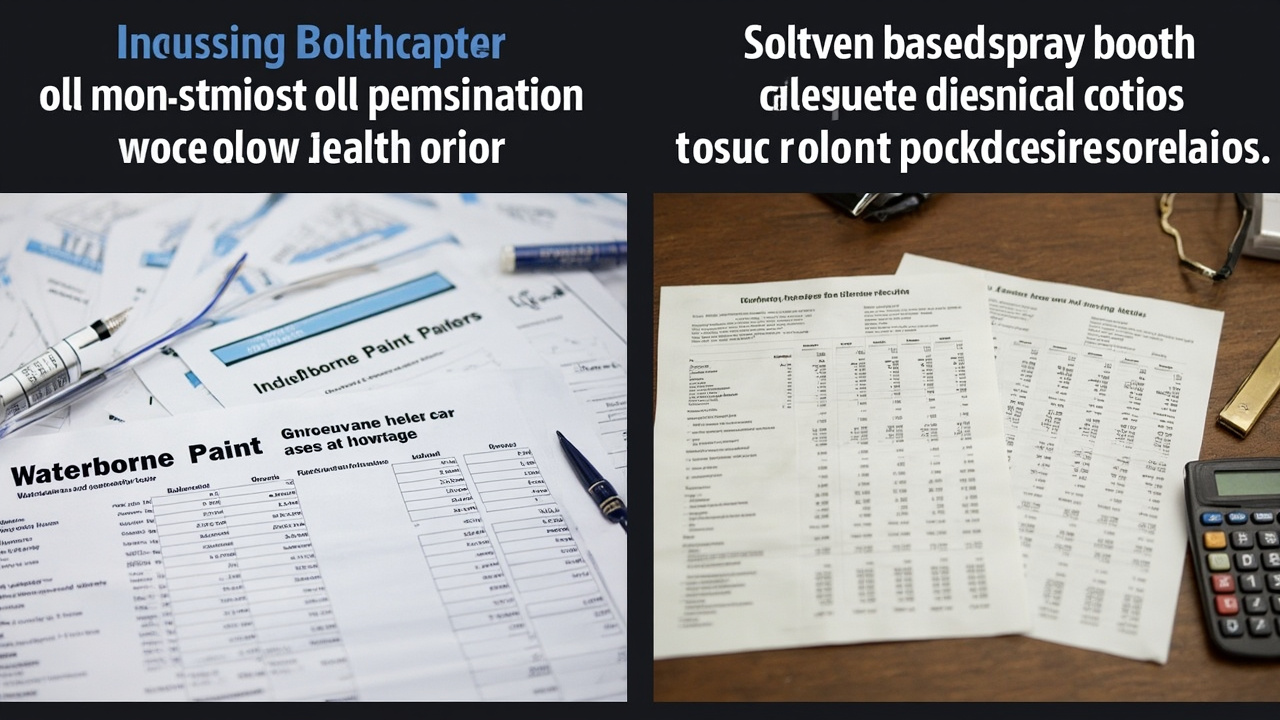
"Which is more expensive, water-based coating or solvent-based paint" is almost a question every purchaser must ask before switching from oil-based to water-based. On the surface, the per-liter unit price of water-based coating is often higher than that of comparable solvent-based paint, so many people directly conclude that "water-based is more expensive" and turn to choose the cheaper solvent-based option. But the real total account is not calculated this way: water-based conversion involves multiple variables such as material cost, construction efficiency, equipment and site modification, waste solvent/water treatment, rework rate, compliance benefits, and film life. Looking only at the unit price will seriously distort the picture. This article breaks down the costs of water-based and solvent-based into a full life-cycle account to help you judge whether "expensive one-time procurement" equals "not cost-effective overall."
As a supplier that provides both water-based industrial coating and solvent-based protective systems, Kexin New Materials (kexinMaterials) has accumulated a large number of cost estimation cases in oil-to-water conversion projects. While explaining the general accounting method below, we will also combine our industrial protective coating product system to illustrate how the "water-based + solvent-based" combination strategy can dilute the total investment, rather than blindly converting everything.
I. Conclusion First: Water-Based Unit Price Often Higher, But Total Account Not Necessarily
- Material Unit Price: Under the same grade and purpose, the per-liter/per-kg unit price of water-based coating is usually higher than that of solvent-based paint, with a gap of about 10%–40% (depending on resin and solid content). This is the most intuitive feeling of "one-time procurement."
- Comprehensive Total Account: After including construction efficiency, equipment modification, waste solvent disposal, rework, compliance penalty risk, life and maintenance, the "full life-cycle cost" of water-based in most indoor and compliance-sensitive scenarios may instead be lower, even significantly lower than solvent-based.
So there is no single answer to "Is water-based coating more expensive than solvent-based paint?" The correct answer is: It depends on how you calculate and to what level. Counting only material unit price, water-based is expensive; counting to compliance and life, water-based is often more worthwhile.
II. Cost Items Overview Table
Break down the full life-cycle costs of the two types of systems into comparable items:
| Cost Item | Water-Based Coating | Solvent-Based Paint | Description |
|---|---|---|---|
| Material Unit Price (per liter) | Higher | Lower | Water-based resin and additive costs are relatively high |
| Solid Content/Spreading Rate | Depends on formula, some slightly lower | Usually higher | Affects actual consumption per unit area |
| Construction Efficiency | Medium (slow drying needs control) | Medium-High (fast drying, efficient) | Solvent-based flash-dries fast, fast pace |
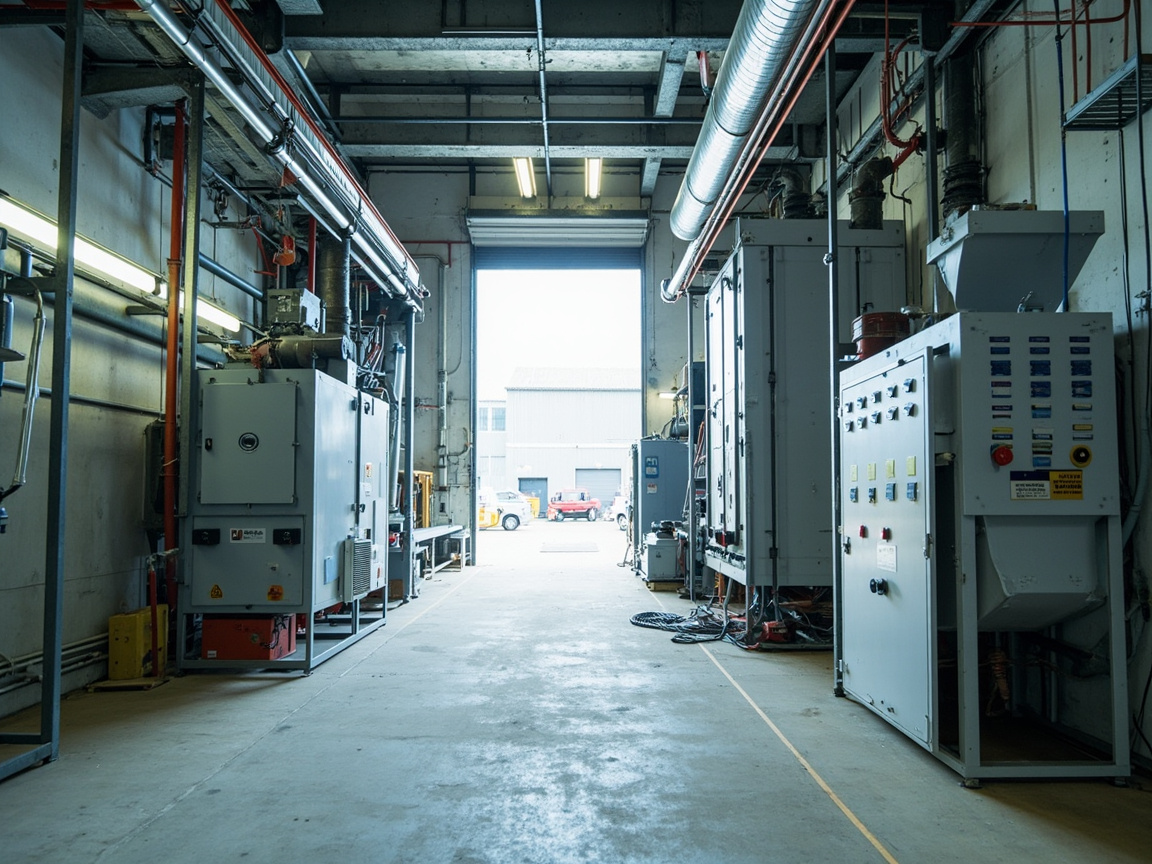
| Equipment/Site Modification | Requires dehumidification and heating drying zone | Requires explosion-proof ventilation + VOC treatment | Different investment directions for water vs. oil conversion |
| Waste Liquid Disposal | Small amount of wastewater (needs treatment) | Large amount of hazardous waste solvent (expensive) | Solvent-based hazardous waste disposal cost is high |
| Rework Rate | Low after process is smoothed out | Low with mature process | Initial water conversion prone to rework due to humidity |
| Compliance Risk | Low, easy to meet standards | High, strictly controlled by VOC limits | Solvent-based has penalty/production limit risk |
| Film Life | Conventionally excellent, weak in extremes | Longer in extreme conditions | Affects recoating frequency |
| Health/Fire Hidden Costs | Low | High | Protection, insurance, accident risk |
This table shows: material cost is just the tip of the iceberg; underwater are equipment, waste liquid, compliance and life.
III. Material Cost: The Gap Between Unit Price and "Actual Cost per Unit Area"
Many people are misled by "per-liter unit price" and ignore solid content and spreading rate.
- Solvent-based paint has more solvent and relatively higher solid content, so the paint consumption per unit area is sometimes less; water-based coating has more water and some products have lower solid content, so more paint may be needed to achieve the same film thickness.
- But high-quality water-based resins (such as water-based polyurethane, water-based epoxy) have greatly increased solid content, combined with soybean oil/coalescing agent optimization, the gap in actual cost per unit area with solvent-based is narrowing.
- The real accounting should look at "material cost per square meter at qualified film thickness," not "per-liter unit price."
Example (for illustration of basis only, not precise quotation): A certain industrial topcoat, water-based is 20% more expensive per liter, but lower solid content causes 10% more paint per square meter, then the material cost per square meter is about 10%–15% higher, not the apparent 20%. If further considering the following sections, this gap is easily offset.
IV. Construction Efficiency and Labor Cost
- Solvent-Based Paint: Solvent volatilizes fast, surface dries quickly, workers can move faster, single-shift capacity is high; but two-component must be mixed, pot life controlled, and ventilation/anti-poison lowers effective working hours.
- Water-Based Coating: Dries slowly (especially in high humidity), long intercoat interval, fewer coats per shift possible; but tools washed with water, no solvent protection burden, organization lighter.
The key to labor cost is not "single-coat speed" but "rework rate and yield." Before water-based process is smoothed out, high-humidity blushing and cratering cause rework, raising labor instead; once process is fixed and environment controlled, water-based labor is not higher than solvent-based, even smoother due to no protection hassle.
V. Equipment and Site Modification: The Hidden Bulk of Oil-to-Water Conversion
This is the most easily overlooked part of "is water-based coating expensive or not." Many factories only compare paint prices, but ignore the modification account:
Common investment for water conversion:
- Dehumidifiers, heating devices, forced drying zones (IR/hot air) to solve slow water-based volatilization;
- Water curtain wastewater collection and treatment facilities (water-based overspray capture produces small amount of wastewater, needs treatment to standard);
- Isolate water-oil tool pipelines to avoid cross contamination;
- Ventilation still needed, but explosion-proof grade requirement lower than solvent-based.
Common investment for solvent-based (maintain/compliance):
- Explosion-proof electrical, static grounding, forced ventilation to meet solvent flammability/explosiveness;
- VOC treatment end (activated carbon, catalytic combustion, RTO) to address solvent emission limits;
- Hazardous waste storage and transfer qualifications, treating waste solvent, waste paint, waste drums.
The two types of investment differ in direction: water-based spends money on "drying and wastewater," solvent-based spends on "explosion-proof and VOC treatment + hazardous waste." From long-term operation, solvent-based end treatment and hazardous waste disposal are continuous cash flow, water-based is one-time modification + low operation.
VI. Waste Solvent vs Wastewater: Continuous Operating Cost
- Solvent-Based: Each batch produces large amount of waste thinner, gun-wash solvent, classified as hazardous waste, must be disposed by qualified units, charged per ton and not cheap; long-term fixed cost, higher output means higher expense.
- Water-Based: Water rinse after construction produces small amount of cleaning wastewater, needs collection and treatment to standard before discharge or sewer, treatment cost far lower than hazardous waste solvent; no continuous hazardous waste transfer burden.
This account is amplified in "high annual output" factories: solvent-based annual hazardous waste disposal fee may be considerable fixed expense, water-based basically zero. Calculating full life-cycle, water-based operational side advantage is obvious.
VII. Compliance Benefits: The Underestimated "Invisible Income"
Especially important for B2B. Solvent-based systems face:
- VOC limits such as GB 30981 (industrial protection), GB 18581 (wood), GB 18582 (architectural), exceeding faces rectification, penalty, production limit;
- In bidding, "eco-friendly coating" "low VOC" often become thresholds, solvent-based may directly lose entry qualification;
- Export enterprises must also meet REACH, CARB and other overseas regulations.
Water-based systems naturally easy to meet standards, compliance benefits manifest as:
- Avoid penalty and shutdown losses;
- Win green bidding and brand customer orders;
- Reduce hidden compensation risk of employee health and occupational disease;
- Reduce potential fire and accident costs.
Once these "cost-free benefits" are quantified into the total account, the material unit price advantage of solvent-based is often erased or even reversed.

VIII. Life and Recoating: Bring Time Into the Calculation
- Conventional indoor/general industrial: High-quality water-based PU, water-based epoxy life can already match solvent-based, similar recoating cycle, material unit price gap diluted.
- Extreme heavy anti-corrosion/strong chemicals
Conclusion: Under normal working conditions, the service life of water-based coatings is no worse than that of oil-based ones, and the unit price difference is amortized; under extreme working conditions, the service life advantage of oil-based coatings is real, and one should not forcibly substitute them for the sake of "cheap water-based coatings". Coating selection should be converted to water-based in batches according to working conditions, rather than a one-size-fits-all approach for the entire plant.
IX. Rework Cost: Process Maturity Determines Profit and Loss
The most common pitfall in the early stage of oil-to-water conversion is "saving on paint price but losing on rework":
- High-humidity blushing, cratering, and sagging cause entire batch rework, resulting in triple losses of material + labor + schedule;
- Applying water-based coating directly over old paint surface without compatibility testing causes lifting and peeling, making rework even more expensive.
Therefore, the "true cost" of water-based conversion includes a process ramp-up period. The correct approach (see Section XI) is to pilot first, solidify the process card, and then expand the area, minimizing the rework rate, so that the overall account of water-based coatings looks good.
X. Whole Life Cycle Cost Estimation Example (Taking a Machinery Factory's Steel Structure Coating as an Example)
Relative figures are given to avoid false precise numbers:
| Item (illustrative) | Oil-based scheme | Water-based scheme | Remarks |
|---|---|---|---|
| Material cost (per sqm) | Baseline (low) | About 10%–15% higher | Water-based unit price is high but solid content catches up |
| Equipment modification (one-time) | High for explosion-proof + VOC treatment | Medium for dehumidification & heating + wastewater treatment | Different directions |
| Annual hazardous waste disposal fee | High (continuous) | Near zero | Water-based advantage |
| Annual VOC treatment energy consumption | High | Low | End-of-pipe treatment difference |
| Compliance risk/potential fines | Yes | Low | Oil-based disadvantage |
| Repainting cycle (normal conditions) | Similar | Similar | Oil-based longer under extreme conditions |
| Comprehensive 5-year account | Baseline | Often lower or flat | Depends on output and conditions |
After including "continuous hazardous waste + VOC treatment energy consumption + compliance risk", water-based coatings in projects with large output, normal working conditions, and high compliance sensitivity often have a 5-year comprehensive account no higher than or even lower than oil-based. Only in cases of extreme heavy anti-corrosion or very small output with high modification amortization is oil-based more cost-effective.
XI. Cost-Optimal Path for Oil-to-Water Conversion
Based on Kexin New Materials' experience in multiple projects, a "step-by-step" approach is recommended to control total investment:
- Calculate the overall account before defining scope: List all coating areas, classify into three tiers by "condition intensity + compliance sensitivity" — mandatory water-based (indoor/sensitive), convertible to water-based (normal industrial), retain oil-based (heavy anti-corrosion).
- Pilot one line: Select a line with normal conditions and stable batch to convert to water-based first, validate the water-based process card, and reduce the rework rate.
- Invest in modifications as needed: Only supplement necessary dehumidification, heating, and wastewater collection; do not blindly adopt a full set; retain existing spray booth ventilation foundation.
- Combination strategy: Use oil-based epoxy/polyurethane for heavy anti-corrosion areas, water-based for normal areas, forming a combination of "water-based cost reduction + oil-based life protection" rather than full replacement.
- Solidify process card: Write parameters into standard operations to reduce dependence on master workers' experience and stabilize yield.
For the modification of heavy anti-corrosion equipment itself, you may refer to our industrial protective coating product system and heavy anti-corrosion coating solution, to achieve a technical balance between "using oil-based for life-critical areas and water-based for cost-reduction areas".
XII. Cooperation with Kexin New Materials: Get the Account Right
Kexin New Materials (kexinMaterials) in oil-to-water projects does not just sell paint, but provides "cost estimation + process card + combination scheme" implementation services. We usually do three things for customers:
- Condition grading: Classify coating areas by intensity and compliance, clarifying which must be water-based, which can be, and which retain oil-based;
- Total account template: Provide a five-year estimation table covering material, modification, waste liquid, compliance, and life, filled with customer's real output, not by guesswork;
- Combination delivery: Water-based + oil-based matched by area, controlling total investment while ensuring key performance.
For procurement, the correct inquiry is not "how much more expensive is water-based than oil-based", but "under my working conditions, can the water-based whole life cycle account be better". Tell the supplier the output, areas, and compliance requirements, and let the technical team produce the estimation, which is far more professional than simply comparing unit prices.
XIII. Common Cost Misconceptions
Misconception 1: Decide expensive or cheap by per-liter unit price. Wrong. One should look at the actual material cost per square meter at compliant film thickness, then overlay subsequent items.
Misconception 2: Water-based modification must be very expensive. Wrong. The investment in water conversion mainly lies in dehumidification, heating, and wastewater, not necessarily higher than the explosion-proof + VOC treatment + hazardous waste disposal required for oil-based compliance maintenance, especially when output is large and water-based operation is more economical.
Misconception 3: Oil-based material is cheap so the total account is cheap. Wrong. Oil-based has continuous hazardous waste disposal, VOC treatment energy consumption, and compliance risk, these hidden costs are often omitted.
Misconception 4: Plant-wide one-size-fits-all water conversion saves the most. Wrong. Forcing water-based in extreme heavy anti-corrosion areas may shorten life and increase maintenance, making it more expensive; batch water conversion + combination strategy is optimal.
Misconception 5: Water-based must have shorter life. Wrong. Under normal conditions, quality water-based life already rivals oil-based; only under extreme conditions oil-based is longer.
Misconception 6: Water conversion saves money automatically without process care. Wrong. Immature process in early stage causes rework; must pilot and solidify process card before expansion.
XIV. Selection and Quotation List for Procurement
When inquiring and comparing prices, it is recommended to request the following data from suppliers to get the account right:
- Per-liter unit price + solid content + theoretical spreading rate (convert to material cost per sqm);
- Recommended film thickness and number of coats;
- Equipment/site modification suggestion list;
- Waste liquid disposal method (hazardous solvent vs wastewater);
- Applicable standards and VOC limit compliance;
- Life and repainting cycle of reference cases under same conditions;
- Whether process card and on-site guidance are provided.
After filling out this list, whether water-based is expensive will naturally have an answer.
XV. Trade-off Suggestions for Enterprises of Different Scales
- Large and medium factories (large output, strict compliance): Water-based comprehensive advantage is most obvious, continuous cost of hazardous waste and VOC treatment is diluted by volume; recommend batch water conversion + combination strategy.
- Small and medium workshops (small output, modification sensitive): One-time modification amortization is high; can first convert water-based in indoor/sensitive areas, retain oil-based for heavy anti-corrosion, controlling total investment.
- Decoration and furniture factories (immediate occupancy/children market): Water-based low odor is a selling point; even if unit price is slightly higher, due to compliance and reputation benefits, the total account is usually better.
- Heavy anti-corrosion specialized factories: Retain quality oil-based for key areas, convert water-based for surrounding normal areas, balancing cost and performance.
XVI. How to Calculate Payback Period (ROI)
To judge whether water-based conversion is worth it, the most practical is to calculate the payback period:
- List one-time modification investment: Dehumidification & heating equipment, wastewater collection, spray booth fine-tuning, etc., recorded as C_cap;
- List annual operating savings: Decrease in hazardous waste disposal fee + decrease in VOC treatment energy consumption + discounted value of compliance fine risk reduced to zero, recorded as S_year;
- Deduct water-based material premium: Per-sqm material cost increment × annual area, recorded as E_mat;
- Payback period ≈ (C_cap) / (S_year − E_mat).
If the payback period is 1–3 years, it is usually worth converting; if over 5 years and output is small, prioritize partial water conversion. Note that "new orders from green tenders" and "brand premium" and other soft benefits should also be included in the extended items of S_year, as they often determine whether the project is truly cost-effective.
XVII. Real Account Book Illustration for Enterprises of Different Scales
| Enterprise type | Modification strategy | One-time investment | Annual continuous savings | Payback judgment |
|---|---|---|---|---|
| Large/medium machinery factory | Batch water conversion + combination | Medium | High (hazardous waste/VOC at volume) | 1–2 years, worth it |
| Furniture export factory | Main indoor water conversion | Medium-low | Medium (compliance + orders) | 1–3 years, worth it |
| Small workshop | Partial water conversion | Low | Low |
This illustrative table shows: the larger the output and the stricter the compliance, the faster the payback from water-based conversion; where output is very small and retrofitting is sensitive, it is better to proceed locally to avoid a one-time heavy investment dragging down cash flow.
18. Common Quotation Traps and How to Avoid Them
- Quoting only per-liter unit price: Omitting solid content and spreading rate, making the actual cost per square meter higher; you should require conversion to material cost per unit area.
- Not specifying waste liquid disposal method: Solvent-based hazardous waste disposal is a recurring cost; when quoting, you should clarify who is responsible and at what cost.
- Comparing with lowest-spec scheme: Using low-end water-based against high-end solvent-based to create the illusion that "water-based is expensive"; comparison should be at same grade and same use.
- Ignoring process guidance: Only selling paint without providing process cards, leading to rework and higher hidden costs; on-site guidance should be written into the contract.
- False VOC data: Require third-party test reports and verify limits item by item, rather than trusting verbal "compliant".
Writing these points into the procurement technical agreement controls real cost better than simply bargaining on price.
19. Policy Dividends and Subsidies: Overlooked Revenue Items
Many regions provide substantial support for "oil-to-water", low-VOC substitution, and green factories, further improving the water-based conversion overall account:
- Environmental tech retrofit subsidies: Water-based conversion of coating lines may be included in tech retrofit or environmental special projects, offsetting part of equipment investment;
- Green factory/green product certification: Brings bidding bonuses and brand premium, indirectly converting into orders;
- Emissions rights and carbon-related preferences: Low-VOC emitting enterprises are more at ease in emissions management;
- Decline in employee health investment: Low toxicity and low odor reduce protection and occupational disease hidden costs.
Including policy dividends in the S_year of Section 16 often further shortens the payback period. During project initiation, procurement should consult local ecology and industry & information technology departments simultaneously, and not let obtainable subsidies "sleep in the files".
20. A Three-Year Action List for Procurement
Turn the cost account into an executable rhythm:
- Month 0–3 (Calculation and Pilot): Grade working conditions and build a five-year overall account, select a conventional line to pilot water-based conversion, finalize process cards, and record real yield and rework rates.
- Month 4–12 (Expansion and Combination): Expand validated processes to conventional parts, keep high-quality solvent-based for heavy-duty anti-corrosion parts, forming a combined scheme; simultaneously apply for eligible subsidies and certifications.
- Month 13–36 (Review and Optimize): Review actual overall account and payback period, optimize water-based resin selection and film thickness, aiming to press comprehensive cost per unit area to no higher than the original solvent-based scheme.
After three years, most compliance-sensitive, medium-output factories can achieve the dual result of "more savings + more compliance", rather than staying in the debate of "is water-based expensive or not".
21. A Table for Selection and Quotation Comparison (Directly Applicable)
Condense all previous items into one price-comparison table, send to suppliers to fill in numbers, and who is expensive and who is saving is clear at a glance:
| Comparison Item | Solvent-based Scheme Fill-in | Water-based Scheme Fill-in | Difference Note |
|---|---|---|---|
| Unit price per liter | |||
| Solid content / spreading rate | Convert to per square meter | ||
| Material cost per square meter | Core comparison item | ||
| Recommended film thickness and coats | |||
| One-time retrofit investment | Different directions | ||
| Annual hazardous waste disposal fee | Water-based mostly near zero | ||
| Annual VOC treatment energy consumption | |||
| Compliance risk discount | Solvent-based mostly negative | ||
| Recoat cycle (years) | Affects maintenance | ||
| Five-year comprehensive account | Final decision basis |
The value of this table lies in "forcing hidden costs to be made explicit": when a supplier only quotes per-liter unit price, you can recover the remaining blank items one by one, avoiding being misled by superficial low prices. After filling this table, "which is more expensive, water-based paint or solvent-based paint" has its own verifiable answer, rather than a vague conclusion.
FAQ
1. Which is more expensive, water-based paint or solvent-based paint?
Looking only at material unit price, water-based is usually more expensive (about 10%–40% higher); but including application, equipment retrofit, waste solvent disposal, compliance and lifespan, water-based has a lower or equal lifecycle overall account in most conventional and compliance-sensitive scenarios. Conclusion: unit price water-based is expensive, overall account not necessarily.
2. Why do many factories find it not saving after switching to water?
Common reason is only comparing paint price, omitting retrofit and process ramp-up: initial high-humidity rework, equipment not paired with dehumidification, old paint surface not compatibility tested, leading to rework and yield loss. Correct approach is to pilot and finalize process cards before expansion, and include recurring costs of hazardous waste and VOC treatment in comparison.
3. What are the main hidden costs of solvent-based paint?
Mainly recurring hazardous waste solvent disposal fees, VOC end-of-pipe treatment energy consumption, explosion-proof and ventilation facility investment, as well as fines, production limits and bid loss risks from VOC exceedance. These are annual fixed or potential expenses, far exceeding one-time paint price difference.
4. Does water-based retrofit necessarily cost a lot?
Not necessarily. Water-based retrofit focuses on dehumidification and heating drying zone and small amount of wastewater collection, not necessarily higher than solvent-based compliance upkeep requiring explosion-proof + RTO/VOC treatment + hazardous waste qualification. The larger the output, the more obvious water-based operational advantage.
5. Is water-based paint shorter-lived than solvent-based, making it less cost-effective?
In conventional indoor and general industrial conditions, quality water-based PU/epoxy lifespan can already match solvent-based, with similar recoat cycle, and unit price difference is amortized; only in extreme conditions like strong chemicals and heavy-duty anti-corrosion, solvent-based lasts longer and forced water-based replacement is not cost-effective. So water conversion should be graded by working condition.
6. How to prove to the boss that oil-to-water is worthwhile?
Use a five-year lifecycle account: list material, retrofit, annual hazardous waste disposal, VOC treatment energy consumption, compliance risk, recoat cycle, fill with real output. Most compliance-sensitive, high-output projects have five-year water-based account no higher than solvent-based, plus green bidding and brand benefits.
7. Is full water conversion suitable for small workshops?
When output is small and retrofit amortization is high, full conversion is not recommended. Can first convert indoor/sensitive parts to water, keep heavy-duty anti-corrosion solvent-based, control one-time investment, and expand when output grows.
8. Will low solid content of water-based paint use more paint?
Some early water-based products had low solid content, but quality water-based resin solid content has greatly improved. What really matters is "material cost per square meter at qualified film thickness", not per-liter unit price; in many cases the gap is already small.
9. How expensive is waste solvent disposal exactly?
It is hazardous waste, must be transported and disposed by qualified units, charged per ton at no low price, and grows linearly with output, a long-term fixed cost of solvent-based scheme. Water-based basically replaces with small amount of wastewater, disposal cost far lower than hazardous waste solvent.
10. Is there a "lowest cost" path for oil-to-water?
Yes: condition grading (mandatory water / convertible water / keep solvent-based) → pilot one line to finalize process card → supplement dehumidification, heating and wastewater collection as needed → water-based + solvent-based combined delivery → finalize standard operation for expansion. This controls total investment and preserves key performance, avoiding one-size-fits-all high risk.
Further Reading
- How to select water-based industrial coating under oil-to-water background: resin systems and applicable conditions: Turns "cost grading" into resin and conditions, clarifying which parts should be water, which keep solvent-based.
- Water-based industrial coating VOC compliance and GB30981: limits, testing and response: Supplements the "compliance revenue" section of this article, explaining how VOC limits turn into cost and risk.
- Formulation science and application implementation of water-based wood coating: Supplements water-based cost and process from wood perspective, suitable for furniture factories and decoration procurement.
- Rust-proof paint system design: primer + intermediate + topcoat system and film thickness planning
- Typical industrial coating systems: bridge, storage tank and offshore steel structure schemes