"Water-based industrial paint" is not a single product, but an entire product family. Although both are water-based, the requirements for use on the box girders of sea-crossing bridges and on hardware screws are worlds apart: the former must withstand salt spray for 25 years, while the latter requires low cost and high decoration; the former emphasizes heavy anti-corrosion systems, while the latter focuses on cycle time and appearance. Treating water-based industrial paint as a catch-all category often yields a result of "usable everywhere, yet ideal nowhere." This article breaks water-based industrial paint into six major application segments based on real working conditions, explaining the suitable systems and implementation key points one by one.
I. Steel Structures and Bridges: Heavy Anti-Corrosion Is the Main Battlefield
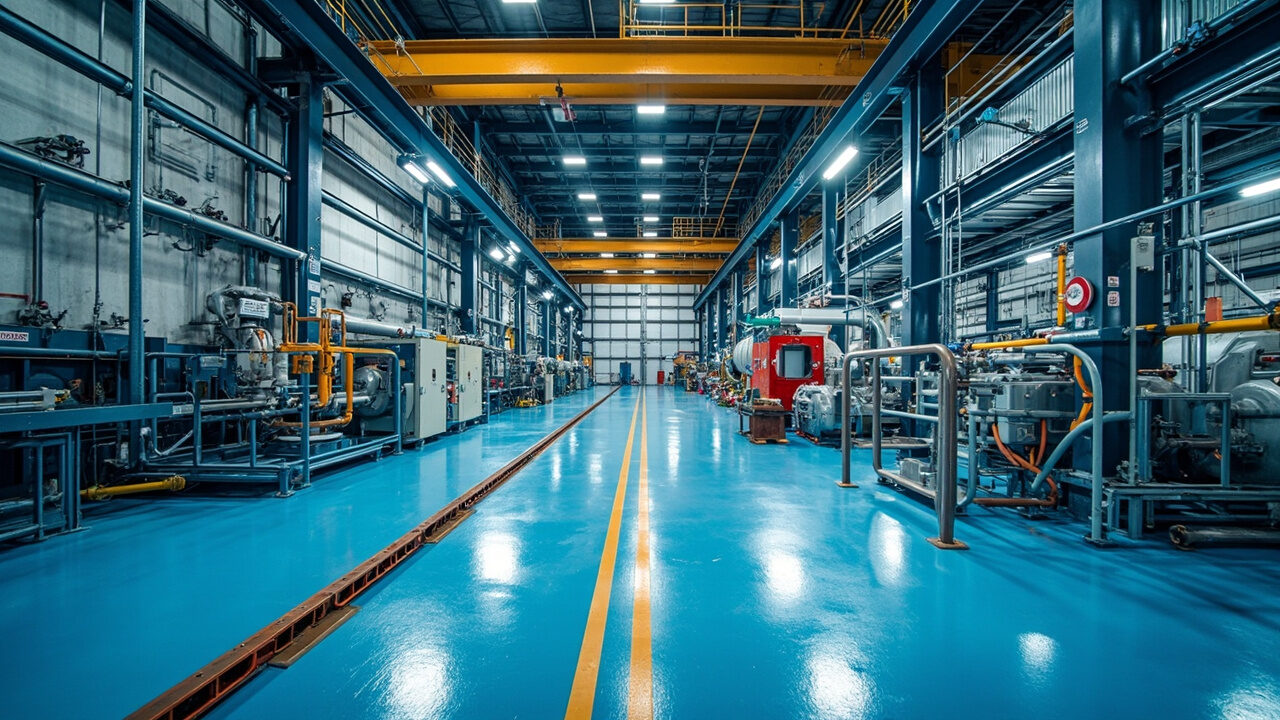
Steel structures represent the scenario with the largest consumption and highest technical threshold for water-based industrial coating. The system composed of water-based epoxy zinc-rich primer, water-based epoxy micaceous iron oxide intermediate coat, and water-based acrylic/polyurethane topcoat has been widely applied in C3–C4 corrosion environments such as plant steel structures, equipment supports, and bridge附属 structures. The key points are:
- Substrate preparation must not be downgraded: Water-based coatings are more sensitive to flash rust; blast cleaning to Sa 2.5 remains a safe baseline, and manual rust removal needs to be paired with a stabilizing-type water-based shop primer.
- Intercoat system must be closed: The intercoat overcoating window and surface sanding requirements for water-based epoxy and water-based polyurethane differ from those of solvent-based types and must be executed per the system specification.
- Set red lines for low temperature and high humidity: Construction below 5℃ or above 85% relative humidity is not recommended, otherwise drying and adhesion risks increase sharply.
For a more systematic selection method, see How to Select Water-Based Industrial Coatings Under the Oil-to-Water Transition: Resin Systems and Applicable Working Conditions.
II. Mechanical Equipment and Machine Tools: Equal Emphasis on Decoration and Weather Resistance
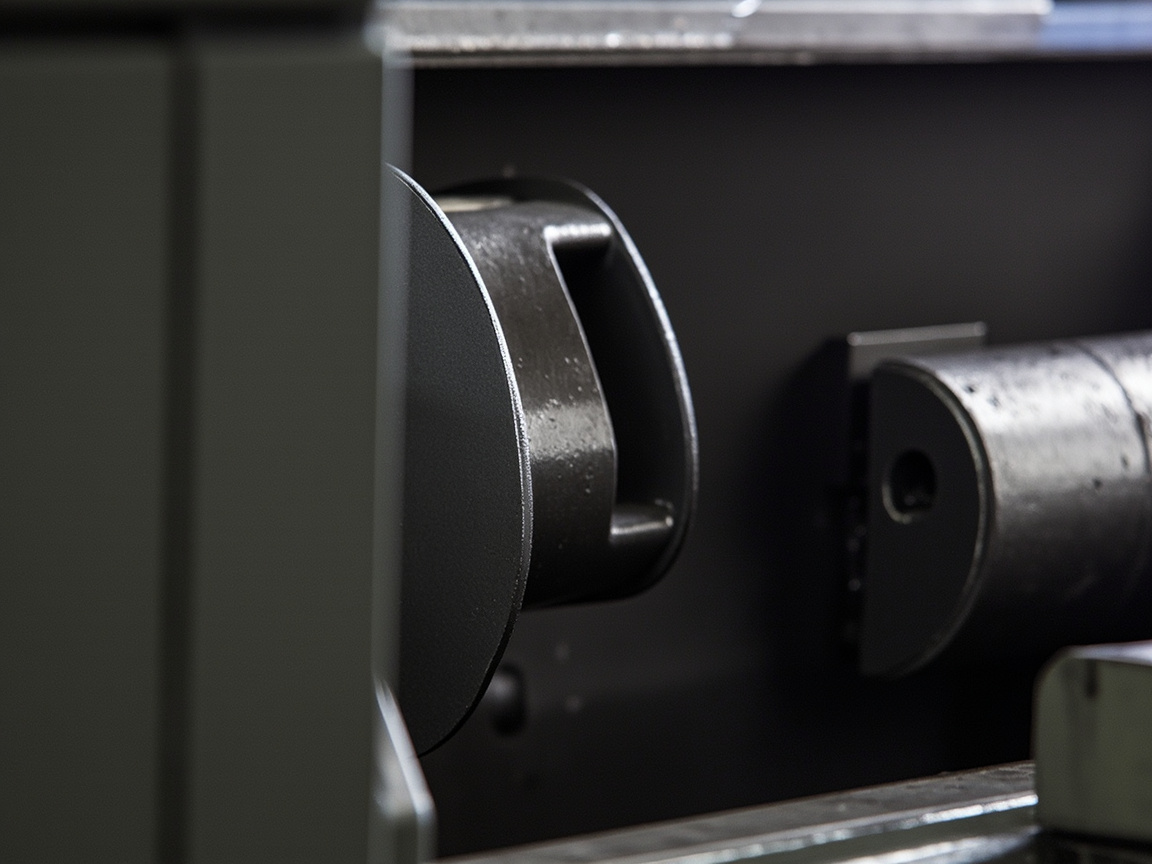
Construction machinery, machine tool housings, and conveying equipment require coatings that are "both impact-resistant and good-looking": resistant to oil wiping, anti-knock, and color/gloss retention. Water-based two-component polyurethane shows clear advantages in such scenarios, balancing flexibility and hardness. The construction focus is:
- Control uniform film on areas prone to liquid accumulation such as equipment interiors, welds, and stiffeners to avoid water marks;
- For topcoat, water-based polyurethane is recommended, as weather resistance and appearance are superior to pure acrylic;
- For lines with high cycle-time demands, low-temperature baking can be introduced to shorten occupancy time.
III. Anti-Corrosion Floor Coatings: Self-Leveling Water-Based Epoxy Solution
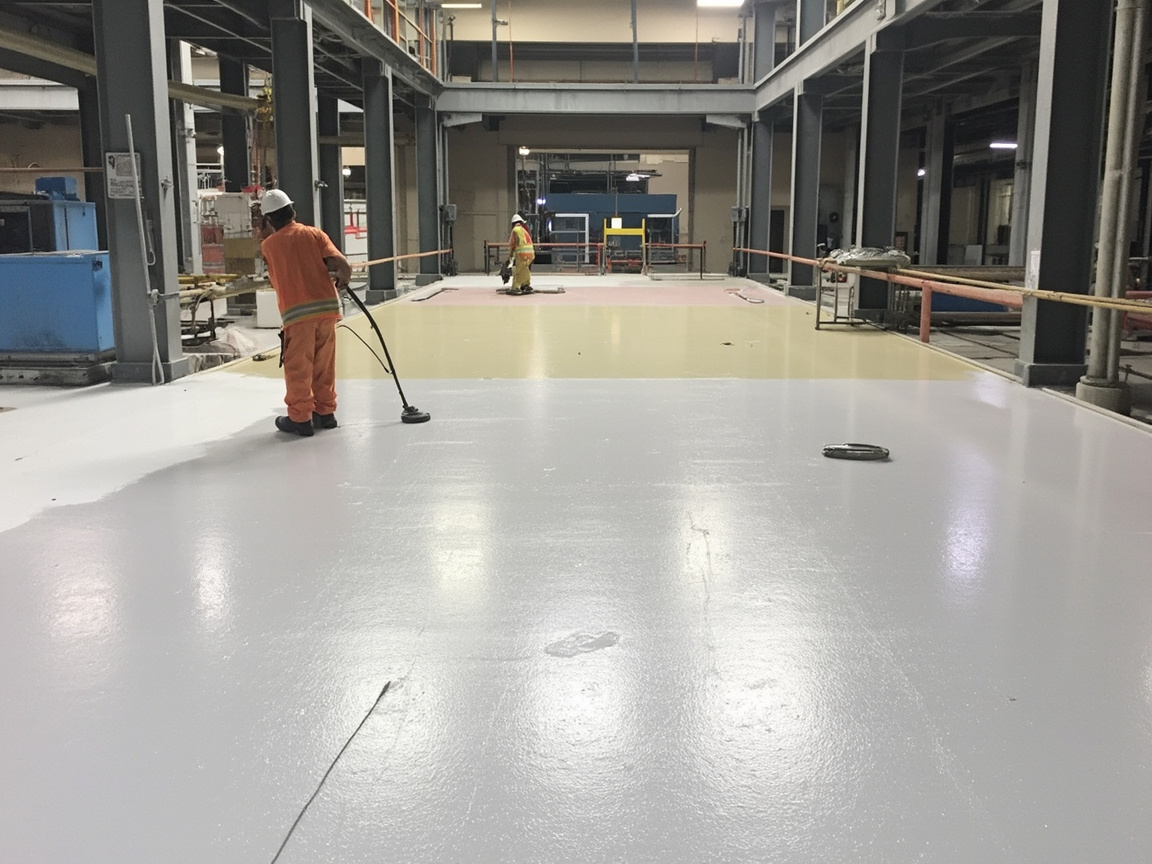
Workshop floors are in long-term contact with oil, cleaning agents, and heavy rolling loads; water-based epoxy self-leveling holds an important position in floor protection. Compared with solvent-based, water-based epoxy floor coating has lower on-site odor and fire risk, making it more suitable for phased retrofits of in-service workshops. Implementation key points:
- Substrate moisture content and strength are the prerequisite for success; damp-rebounding base surfaces need moisture-proof treatment first;
- The combined thickness of intermediate and top coats determines pressure and chemical resistance;
- Avoid early water accumulation and heavy-object dragging during the curing period.
IV. Hardware and Fittings: High-Gloss Water-Based Amino Baking Paint Solution
Large quantities of hardware parts (brackets, hinges, enclosure housings, metal fittings) are suitable for water-based amino baking paint, which crosslinks and cures in the low-temperature range of 120–160℃, obtaining a high-gloss, high-hardness decorative protective layer with significantly lower VOC than traditional baking paints. The key is the baking curve and uniform thickness of workpieces—when workpieces of varying thickness are in the same oven, thin parts are easily over-baked while thick parts are under-crosslinked. For selection details, refer to Water-Based Amino Baking Paint: High-Gloss Solution for Long-Term Protection of Metal Hardware.
V. Tanks, Pipelines, and Shop Primers: Water-Based First Line of Defense
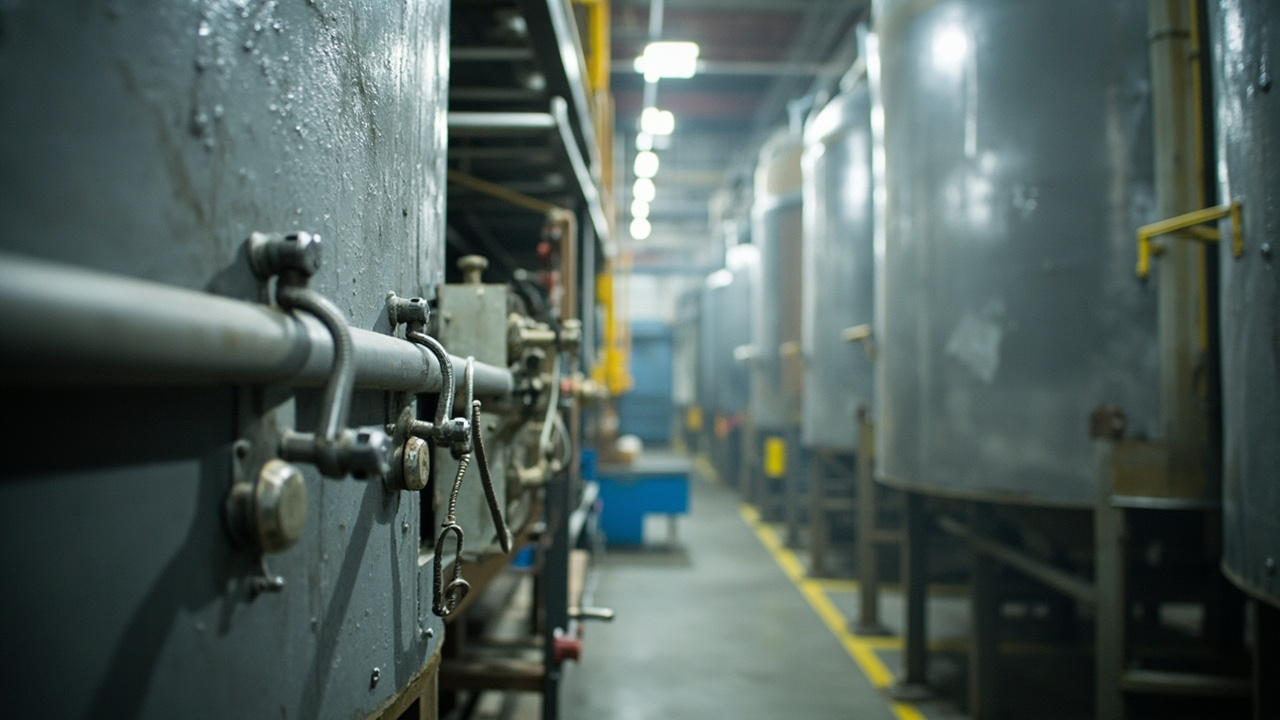
The first anti-corrosion step for large steel structures and equipment manufacturing often starts with the shop primer. Water-based inorganic zinc-rich shop primer can rapidly provide weldable, cuttable, long-term temporary protection after steel pretreatment, serving as a key link in "green pretreatment." See details in Water-Based Inorganic Zinc-Rich Shop Primer: Long-Term Anti-Corrosion First Line of Defense for Steel Pretreatment. The intermediate and top layers of tank exteriors and overhead pipelines can also adopt water-based epoxy–polyurethane systems, combined with insulation and heat-shielding systems to form long-term external protection.
VI. Selection Decision Tree for Niche Scenarios
Summarize the above scenarios into an actionable judgment path:
1. Corrosion environment grade: Above C4 or immersion/splash zone → prioritize heavy anti-corrosion water-based system (zinc-rich primer + epoxy micaceous iron oxide + polyurethane topcoat).
2. Whether baking is used: With baking tunnel and regular workpieces → water-based amino baking paint, achieving both appearance and efficiency.
3. Whether in contact with chemicals/frequent cleaning: Workshop floors, pharmaceutical and food equipment → thickened water-based epoxy self-leveling system.
4. Weight of decoration and weather resistance: Outdoor equipment, construction machinery → water-based two-component polyurethane topcoat.
5. Production line cycle time: Tight cycle → consider low-temperature baking or water-based UV-assisted curing.
VII. Common Construction Issues: Flash Rust, Drying, and Dilution
Regardless of the segment, water-based industrial coating has three unavoidable common issues:
- Flash rust: Steel easily re-rusts when water and oxygen coexist; besides improving substrate preparation quality, stabilizing-type anti-rust pigments in the primer and rapid surface drying after application are key.
- Drying window: Water-based relies on water evaporation + resin crosslinking, directly affected by temperature and humidity; forced ventilation or even low-temperature baking zones are recommended.
- Dilution and cleaning: Must use system-specified deionized water/special thinner; calcium, magnesium, and chloride ions in tap water will contaminate the film.
VIII. Kexin New Materials' Water-Based Product Layout
Kexin New Materials (Guangdong) Co., Ltd. has built a relatively complete water-based industrial coating product matrix around the above six scenarios: water-based epoxy zinc-rich/micaceous iron oxide systems for steel and equipment anti-corrosion, water-based two-component polyurethane for machinery and outdoor decorative topcoats, water-based amino baking paint for high-gloss hardware parts, water-based epoxy self-leveling for floors, and water-based inorganic zinc-rich shop primer as the first line of defense in pretreatment. For the global market, Kexin outputs unified technical documents and working-condition selection tables under the kexinMaterials brand, helping overseas engineering customers quickly lock in systems by corrosion grade.
IX. Frequently Asked Questions (FAQ)
Can water-based industrial coating completely replace solvent-based?
It can in most industrial anti-corrosion and decorative scenarios at C3–C4 and below, but extreme environments (e.g., long-term immersion, strong splash, ultra-high film thickness requirements) still need system-specific validation. Replacement should be premised on working-condition validation, not a one-size-fits-all approach.
How to divide labor between water-based epoxy and water-based polyurethane?
Water-based epoxy is mostly used as primer/intermediate for adhesion and anti-corrosion; water-based polyurethane is mostly used as topcoat for weather resistance, gloss retention, and decoration. They often form a closed "epoxy primer + polyurethane topcoat" system.
Does water-based baking paint require high temperature?
Water-based amino baking paint typically crosslinks in the 120–160℃ range, belonging to low-temperature baking, saving more energy than traditional high-temperature baking and suitable for most regular hardware parts. The baking curve needs optimization when workpiece thickness is uneven.
Can water-based floor paint be applied in in-service workshops?
Yes, and the advantage is clear—low on-site odor and fire risk. The key is that substrate moisture content and strength meet standards, and phased construction is adopted to reduce shutdown impact.
Why is water-based inorganic zinc-rich recommended for shop primer?
It rapidly provides weldable, cuttable, long-term temporary anti-corrosion after steel pretreatment, reducing flash rust risk from pretreatment to formal painting, making it the preferred green pretreatment option.
Which three parameters should be most monitored in water-based coating construction?
Substrate preparation grade, ambient temperature and relative humidity, and the cleanliness of dilution/cleaning water. These three directly determine flash rust, adhesion, and film stability.
Further Reading
- How to Select Water-Based Industrial Coatings Under the Oil-to-Water Transition: Resin Systems and Applicable Working Conditions
- Water-Based Inorganic Zinc-Rich Shop Primer: Long-Term Anti-Corrosion First Line of Defense for Steel Pretreatment
- Water-Based Amino Baking Paint: High-Gloss Solution for Long-Term Protection of Metal Hardware