——Why plastic surfaces must use dedicated coating systems
Plastic coatings and conventional paints differ fundamentally in formulation structure, adhesion mechanisms, and performance properties. This article systematically analyzes the core differences between the two in the coating of plastic products, and explains why dedicated plastic coatings are the key choice for achieving stable adhesion and high-quality appearance.
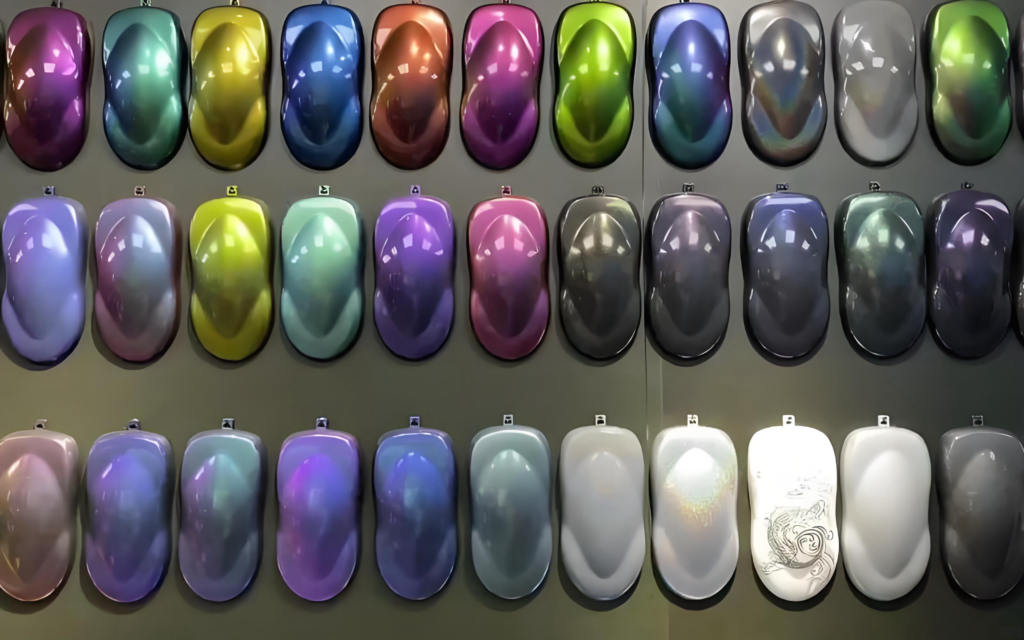

I. Practical Problems Faced in Coating of Plastic Products
With the widespread use of plastic materials in household appliances, automobiles, electronic products, and industrial goods, plastic surface coating has become a crucial step in enhancing product appearance and added value. However, many plastic products still rely on conventional paint systems during coating, leading to frequent issues such as insufficient adhesion and unstable coatings.
This type of problem is not due to construction operation errors, but rather a structural contradiction caused by the incompatibility between the coating system and the plastic substrate.
II. Differences in Design Rationale between Plastic Coatings and Conventional Paints
1. Fundamental difference in applicable substrates
Conventional paints are primarily designed for substrates such as metal or wood; these materials have high surface energy and stable structures, allowing coatings to readily form effective adhesion. In contrast, plastic material surfaces commonly exhibit:
- Smooth surface
- low polarity
- Chemically inert
Plastic coatings are specifically designed around these characteristics, and their formulation structure is fundamentally adapted to the surface conditions of plastic substrates.
2. Different emphasis in formulation structure
Ordinary paints place more emphasis on hardness, hiding power, and surface gloss, whereas plastic coatings pay greater attention to the following in formulation design:
- adhesion stability
- film flexibility
- interfacial adhesion to plastic substrates
This difference determines the actual performance of the two in plastic products.
III. Essential Differences in Adhesion Mechanisms
Limitations of ordinary paints on plastic surfaces
Conventional paints on plastic surfaces mostly rely on limited mechanical adhesion and struggle to form stable interfacial bonding; common issues include:
- Insufficient initial adhesion
- Prone to peeling and flaking during use.
- Coating instability after temperature change
These issues are particularly pronounced in mass production.
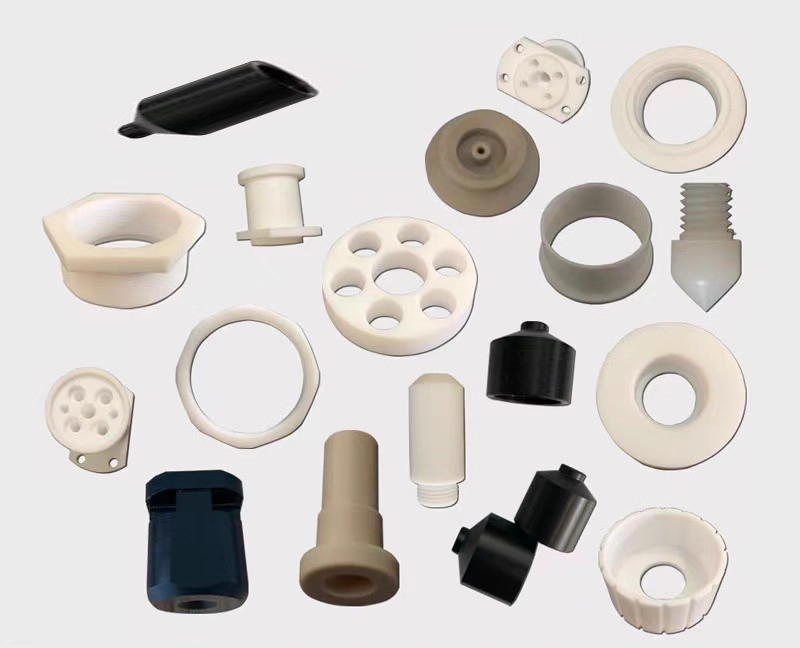

Advantages of adhesion mechanisms for plastic coatings
Plastic coatings establish a stable bonding structure between the coating and the plastic substrate through the synergistic effect of a special resin system and functional additives, achieving:
- microscopic-level chimerism
- stable intermolecular interactions
- adhesion reliability under long-term use
This gives plastic coatings a distinct advantage in the painting of plastic products.
IV. Differences in Film Flexibility and Durability Performance
Plastic materials undergo significant thermal expansion and contraction during use due to temperature variations. Conventional paint films are relatively rigid and struggle to accommodate such changes, making them prone to cracking or delamination.
The coating film structure of plastic coatings exhibits good flexibility, allowing it to adapt to dimensional changes of the plastic substrate and thereby maintain coating integrity and appearance stability.
V. Different Orientations in Performance Emphasis
Performance orientation of ordinary paint
It emphasizes surface hardness and initial appearance effect more, and is suitable for traditional substrates with stable structures.
Performance Orientation of Plastic Coatings
While ensuring the appearance effect, more attention is paid to:
- adhesion reliability
- Stability during use
- Long-term abrasion resistance and aging resistance performance
This performance orientation is more consistent with the actual service requirements of plastic products.
VI. Differences in Adaptability to Industrial-Scale Application
In automated spraying and mass production environments, plastic coatings exhibit higher consistency and stability, meeting the requirements for controllable quality in continuous production.
Ordinary paints, due to poor compatibility with plastic substrates, often cause yield fluctuations and increased rework rates, which is unfavorable for industrial production control.
VII. Impact on Product Appearance and Brand Value
The appearance quality of plastic products directly affects consumers' perception of the product and the brand. Using an incompatible coating system can easily lead to:
- uneven surface texture
- shortened service life
- Premature appearance of aging
Plastic coatings help plastic products achieve a stable, fine, and consistent appearance, effectively enhancing overall quality perception and market competitiveness.

VIII. Conclusion
The difference between plastic coatings and ordinary paints on plastic products stems from fundamental distinctions in design logic, adhesion mechanisms, and performance orientation. For surface coating of plastics, selecting a dedicated plastic coating system is a necessary condition for achieving long-term stable quality and a high-end appearance.
In the following sections, the influence of different plastic substrates on the adhesion performance of plastic coatings will be further analyzed, providing a more systematic reference for the coating of plastic products.