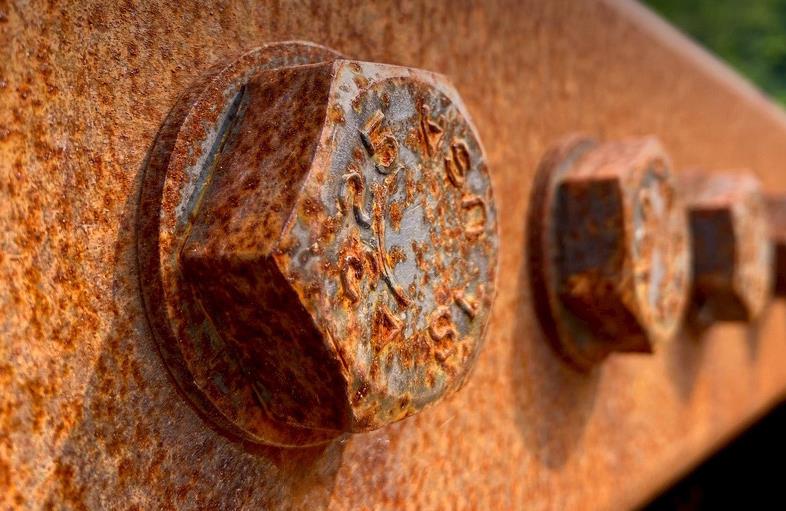
In the fields of industrial maintenance and metal protection, "complete rust removal" is generally regarded as the gold standard. However, in many real-world scenarios—such as complex bridge structures, aging chemical pipelines, or large storage tanks—achieving the professional sandblasting standard of Sa2.5 is nearly impossible due to cost or site constraints. This is where **rust-inhibitive coatings (rust-converting primers)** come into play. But can you really apply paint directly over rust?

The scientific principle behind "paint directly on rust" Ordinary paint fails on rust because they only cover the surface, trapping oxygen and moisture underneath to continue corrosion. Professional-grade paint-over-rust anti-corrosion coatings work through two key mechanisms:
- Penetration and Sealing: Low-viscosity resin deeply penetrates the porous rust layer, expelling air and moisture.
- Chemical conversion: The active ingredient reacts with iron oxide (rust), converting it into a stable, inert chemical complex (usually a black magnetite layer) that no longer reacts with the environment.
Core advantages of this technology
- Significantly reduce costs: No need for expensive sandblasting or laborious manual polishing, saving up to 50% in labor costs.
- Improve efficiency: Shorten the preprocessing cycle, enabling the project to be completed faster.
- Environmentally friendly: Reduces dust pollution and noise associated with traditional mechanical rust removal.
Application Scenarios This technology is highly suitable for:
- Auto Repair: Vehicle chassis protection.
- Ship and Ocean Engineering: Ship plates, decks, and port machinery.
- Infrastructure: Transmission towers, bridges, and steel structure warehouses.
Conclusion Although "paint over rust" sounds like taking a shortcut, using high-quality, scientifically formulated rust-on rust preventive paint is a professional engineering decision. It provides a robust barrier for metal surfaces where traditional methods fail, ensuring long-term durability with minimal effort.