As an important representative of green and environmentally friendly coatings, waterborne paints are leading the global coatings industry toward low-VOC, low-carbon, and high-performance development. This paper systematically analyzes the future development trends, technological breakthroughs, application fields, and market prospects of waterborne paints, providing forward-looking references for the coatings industry.

I. The Rise of Waterborne Coatings Against the Global Coatings Industry Background
As global environmental regulations become increasingly stringent and consumer environmental awareness continues to rise, traditional solvent-based paints are gradually being restricted due to their high VOC emissions, pungent odor, and safety hazards. Against this backdrop, water-based paint, with its advantages of using water as the dispersion medium, low VOC emissions, and high construction safety, has rapidly become a key direction for the transformation and upgrading of the coatings industry.
In mature markets such as Europe, North America, and Japan, waterborne coatings have achieved large-scale application in the architectural, furniture, automotive, and industrial sectors; in China and emerging markets, waterborne paints are in a phase of rapid growth, with policy promotion and market demand acting as dual driving forces.
II. Core Advantages and Technical Value of Waterborne Coatings
1. Sustained leadership in environmental performance
Water-based paint uses water instead of organic solvents, significantly reducing VOC content and meeting current and future stricter environmental standards, making it a typical eco-friendly coating solution.
2. Safety and User-Friendliness in Application
Water-based coatings are non-flammable and non-explosive, providing a safer application environment, and are especially suitable for enclosed spaces and industrial or residential scenarios with high safety requirements.
3. Rapid improvement of technical performance
Through resin modification, the application of nanomaterials, and optimization of the additive system, modern water-based paints have approached or even partially surpassed traditional solvent-based paints in adhesion, abrasion resistance, weatherability, and anticorrosive performance.
III. Key Future Technical Development Directions for Waterborne Coatings
1. High-performance water-based resin technology
In the future, water-based paints will focus on developing high-solid-content, low film-forming-temperature water-based acrylic, water-based polyurethane, and water-based epoxy resins to meet the higher requirements of industrial water-based paints for strength and durability.
2. Multifunctional Composite Waterborne Coatings
Water-based coatings that integrate anticorrosion, antimildew, high-temperature resistance, and self-cleaning will become an important trend in high-end applications, especially in the field of water-based anticorrosive paint.
3. Fast Drying and Low-Temperature Film Formation Technology
To address construction efficiency and climate adaptability, low-temperature film-forming and fast-drying technologies will further expand the application scope of water-based paints.
IV. Expansion of Major Application Fields for Waterborne Coatings

1. Construction and Decoration Industry
In the fields of interior and exterior walls, flooring, and decoration, architectural water-based paint has become the mainstream choice due to its environmental friendliness, safety, and excellent decorative effect.
2. Industrial Manufacturing Field
Construction machinery, steel structures, and equipment manufacturing have a continuously growing demand for low-VOC coatings, driving the rapid adoption of water-based industrial paints.
3. Furniture and Woodware Coating
Water-based wood coatings achieve an eco-friendly upgrade while preserving natural texture, and are widely used in furniture export and high-end customization markets.
V. Market Prospects and Industry Opportunities for Waterborne Coatings
From a global perspective, the water-based paint market maintains a steady growth trend. With the improvement of policies and regulations, technology maturation, and gradual cost optimization, the prospects of the water-based paint market will become even broader. For coating manufacturers, early deployment in water-based technology R&D, production line upgrades, and brand building will be key to enhancing competitiveness.

VI. Challenges Facing the Future Development of Waterborne Coatings
Despite obvious advantages, water-based paints still faced issues such as cost, application environment requirements, and user awareness in early adoption. However, with scaled production and technology iteration, these problems are gradually being mitigated.
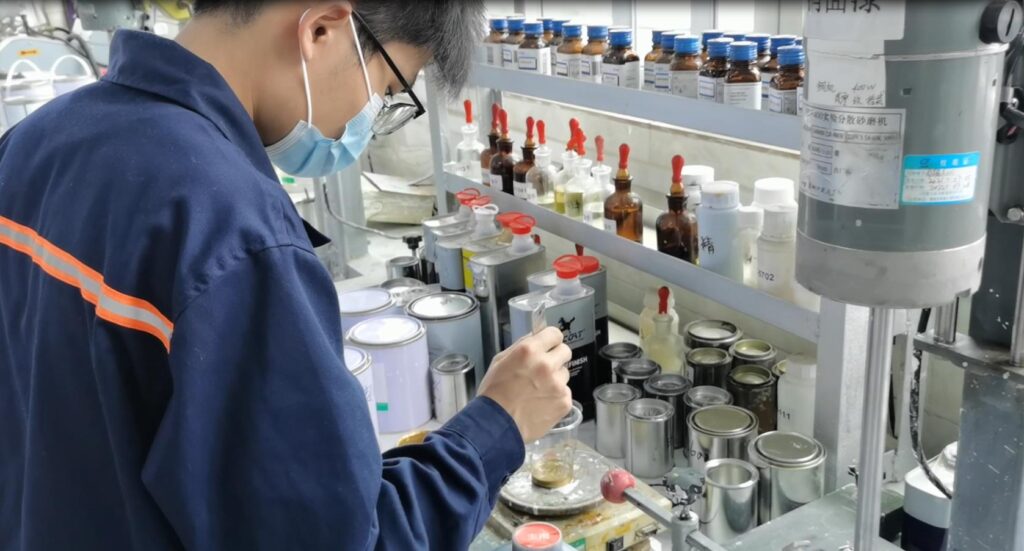


VII. Conclusion: Waterborne Coatings Lead Coatings into a New Era of Green Development
Overall, water-based paint is not only an inevitable choice under environmental policies, but also the core direction for the high-quality development of the coatings industry. In the future, with the deepening of the green manufacturing concept, the development trend of green coatings will further drive water-based coatings onto a broader application stage.

FAQ (Frequently Asked Questions)
Q1: Is water-based paint completely free of VOC?
A: Water-based paint has extremely low VOC content, but it is not absolutely zero; it is already far below the requirements of environmental standards.
Q2: Is water-based paint suitable for outdoor use?
A: Currently, high-performance water-based paints already possess good weather resistance and are suitable for various outdoor environments.
Q3: Can water-based paint replace traditional oil-based paint?
A: Substitution has been achieved in most application fields, while continuous technical optimization is still underway for some extreme working conditions.