In the modern automotive aftermarket, automotive refinish paint (Automotive Refinish Paint) has become an indispensable part of automotive beauty and maintenance. Whether it is daily scratches, collision repair, or refurbishment of old vehicles, high-quality refinish paint can make the car look brand new and extend the service life of the car body.
I. What is automotive refinish paint

Automotive refinish paint is a coating system specifically designed for the repair and renovation of vehicle surfaces, featuring strong adhesion, good weather resistance, and high color fidelity. Compared with the original factory paint of the whole vehicle, refinish paint places more emphasis on application convenience, color-mixing flexibility, and precise matching of repair results.
Typically, automotive refinish coatings consist of the following main layers:
- Primer: Provides adhesion and prevents the metal substrate from rusting.
- Surfacer: Fills in minor dents to ensure a smooth topcoat.
- Top Coat (Base Coat): Determines color and decorative effect.
- Clear Coat: Enhances gloss and UV resistance, protecting the underlying paint film.
II. Main Types of Automotive Refinish Paints
Depending on composition and application method, refinish paints are mainly classified into the following categories:
- Acrylic Paint
Affordable and fast-drying, suitable for minor scratch repair, but with slightly lower weather resistance. - Polyurethane Paint
The film is tough, has high gloss, and strong chemical resistance, and is currently the mainstream paint for automotive refinishing. - Waterborne Refinish Paint
Diluted with water, more environmentally friendly, low VOC content, suitable for use in spray booths that comply with environmental standards. - Metallic and Pearlescent Refinish Paint
Contains metallic flakes or pearlescent pigments, presenting unique visual effects, used for mid-to-high-end vehicles or personalized customization.
III. Application Process for Automotive Refinish Coatings
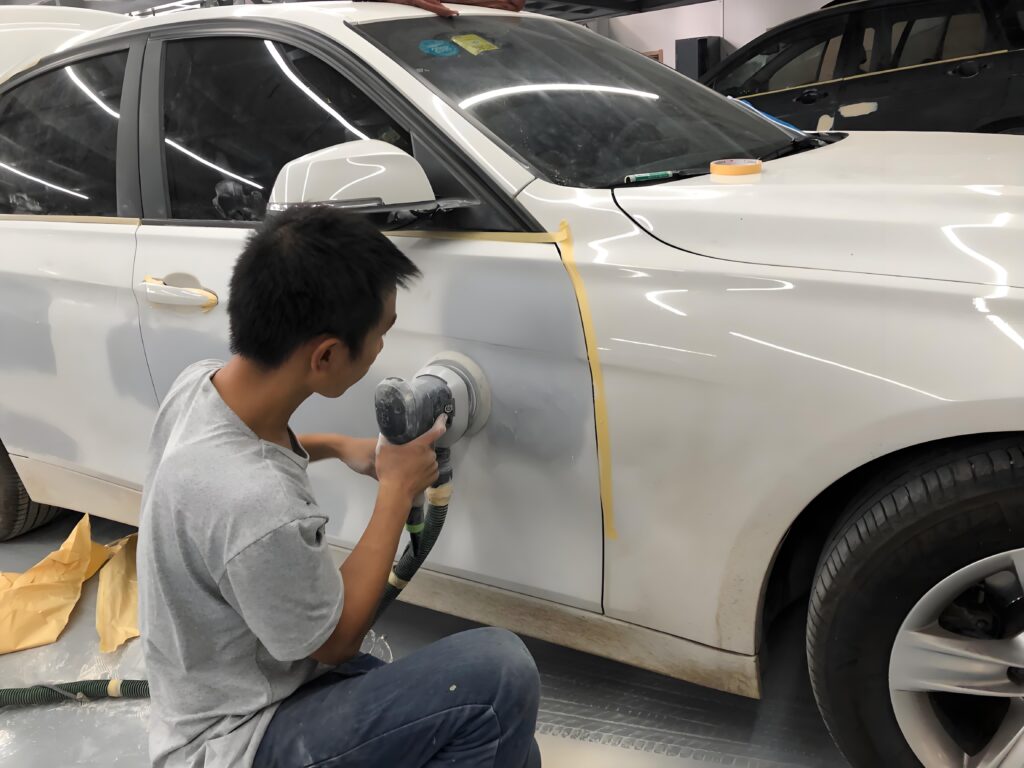
The application process of automotive refinish paint determines the final repair result. The standard process is as follows:
- Surface treatment: Clean and sand the damaged area to remove oil stains and rust.
- Spray primer: Ensure the paint film adheres firmly.
- Color mixing and topcoat spraying: Accurately mix colors based on the original vehicle color code, and apply evenly using a professional spray gun.
- Clear coat spraying and baking: After spraying the protective clear coat, bake at a controlled temperature in the paint booth to ensure the gloss of the paint film.
- Polishing and finishing: Finally, apply wax and polish to make the paint surface smooth as new.
IV. Key Factors in Selecting Automotive Refinish Paints
When selecting a suitable refinish paint, the following factors should be comprehensively considered:
- Color Match Accuracy: Whether it can accurately reproduce the original vehicle color.
- Construction adaptability: Whether the drying speed, leveling property, and spraying feel are suitable for technicians to operate.
- Weather and chemical resistance: Whether it can resist the effects of environmental factors such as sunlight, rain, acids, and alkalis over the long term.
- Environmental performance: Whether it complies with VOC emission standards.
- Brand and After-sales Support: Premium brands often provide color systems, application training, and technical services.
V. Future Trends in Automotive Refinish Coatings
As environmental regulations tighten and consumer demands upgrade, water-based refinish paints, intelligent color-matching systems, and fast-drying technologies will become the industry's development direction. At the same time, the application of AI color-matching and automated spraying equipment is also driving automotive refinish painting to transform toward high efficiency and low energy consumption.

Conclusion
Automotive refinish paint is not merely a material for restoring a vehicle's exterior appearance, but an extension of the automobile's quality and craftsmanship. Choosing high-quality refinish paint, combined with a scientific application process, enables a vehicle to retain its factory-like gloss and texture over the long term, bringing owners greater peace of mind and aesthetic appeal.