How are cars spray-coated with glossy paint on the production line? — Unveiling the automated coating process in the body painting workshop!
The gloss you see when stepping out of the 4S store is not achieved by simply "spraying it on" by hand, but is the result of dozens of high-standard processes and automated equipment working in coordination on the production line. A body-in-white enters the painting shop from the stamping and welding workshop, and its painting journey officially begins.
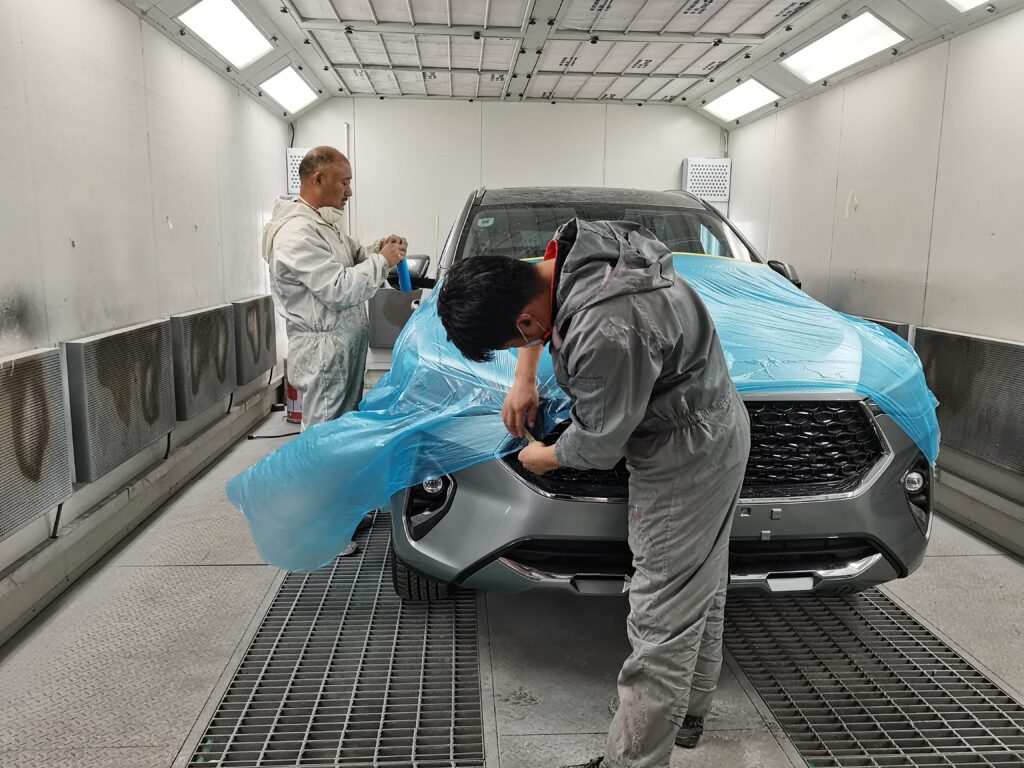
The first stage is pretreatment. The bare body-in-white is thoroughly sprayed with degreasing, cleaning, and phosphating agents as if taking a "bath," removing all oil, fingerprints, and micro-oxidation layers chemically to provide a clean substrate for subsequent coatings to adhere to. The body then enters a huge electrocoating tank, where, under an applied electric field, charged paint particles uniformly deposit onto the entire surface—including reinforcement beams and cavities that are unreachable by the naked eye. The electrophoretic primer is the first true barrier in the automotive coating system against corrosion.
The second stage enters the main painting process. The vehicle body passes through cleanroom-grade spray booths where dust and particles are tightly controlled. Flexible robotic arms replace manual spray guns, performing programmed path painting based on vehicle model data, achieving dead-angle-free coverage and stably completing the primer surfacer application, which levels out micro-defects on the body and establishes a uniform "substrate" for the topcoat. Subsequently, another set of robots precisely applies the color basecoat according to the ordered color, ensuring consistent color appearance and batch-to-batch uniformity.
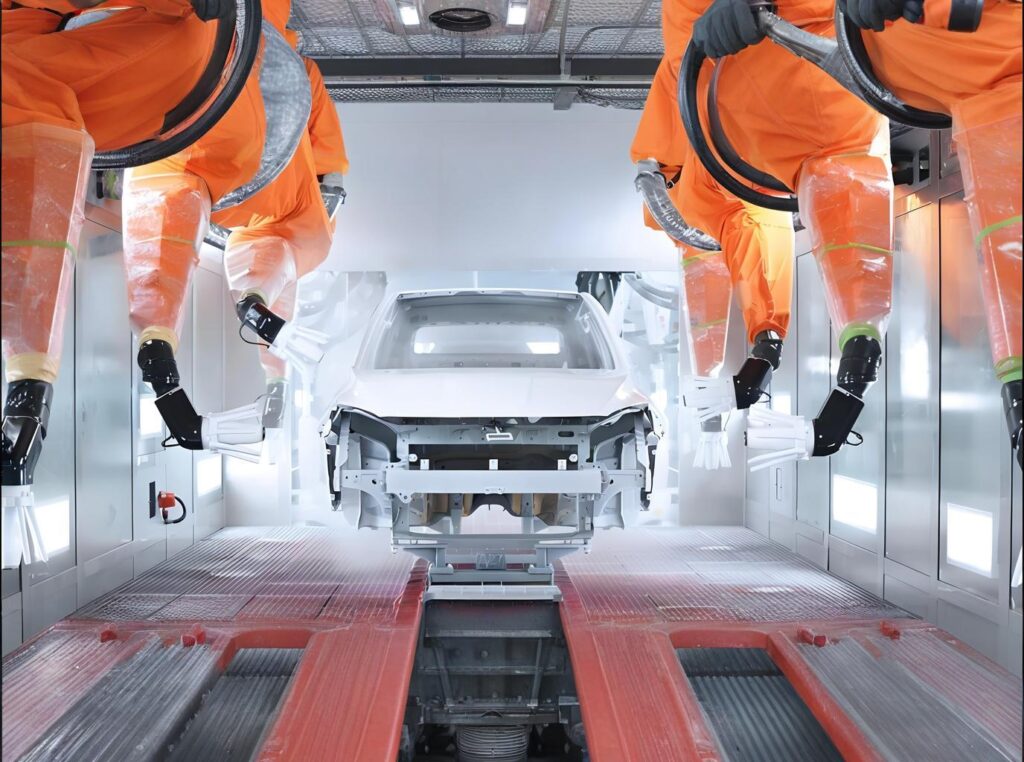
The third stage is the clearcoat process that "determines the upper limit of appearance." The transparent clearcoat is uniformly applied over the basecoat by robots, forming a transparent protective layer with a deep, mirror-like finish, while providing scratch resistance, UV resistance, and chemical-aging resistance. After painting, the body enters a long high-temperature curing tunnel, where under a precisely controlled temperature profile, each coating layer crosslinks and cures, ultimately forming a hard and durable multilayer coating composite.
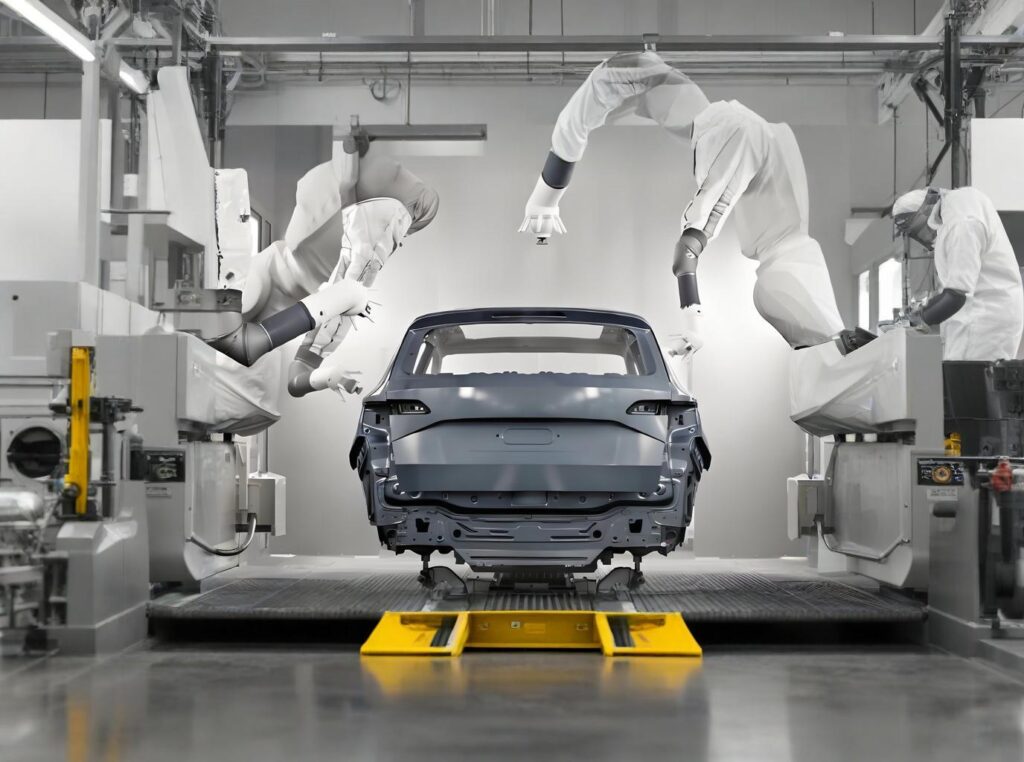
A vehicle's coating is not mere coloring, but a superposition of structural protection and visual value: from electrochemical anti-corrosion, to mechanical masking, to appearance presentation, and then to environmental durability—each layer has its design logic, and each layer affects the vehicle's overall service life. That layer of gloss is not just good-looking; it is the result of the superposition of industrial art and materials engineering.