Automotive clearcoat is an indispensable and important component of modern automotive painting systems, mainly used to enhance body gloss, weather resistance, and film protection performance. This article systematically analyzes the structural principles, core functions, common types, application key points, and frequent issues of automotive clearcoat, helping to comprehensively understand its critical value in overall vehicle painting and refinishing.
I. What is automotive clearcoat
Automotive clearcoat, also known as automotive clearcoat or automotive painting clearcoat, is the transparent topcoat layer located at the outermost part of the automotive painting system. In a complete automotive painting structure, it is generally composed of the electrophoretic layer, primer surfacer, basecoat, and the outermost clearcoat layer.
The clearcoat contains no pigments, yet it plays a decisive role in visual effect and protective performance, and is the key material for achieving high gloss, high quality texture, and long-term durability.

II. Core Functions of Automotive Clearcoat
1. Provides high gloss and a three-dimensional effect
High-quality high-gloss clear coat can significantly improve the reflectivity of the car body surface, making the color paint layer more saturated and translucent, and enhancing the visual depth of the entire vehicle.
2. Form a protective barrier on the paint surface
Automotive clear coat forms a dense film after curing, providing good protection against ultraviolet rays, acid rain, bird droppings, salt spray, and minor mechanical abrasion, and serves as an important automotive topcoat protection layer.
3. Improve weather resistance and service life
High-quality weather-resistant clear coat can effectively delay the fading, chalking, and aging of the colored paint, ensuring the car paint maintains stable performance over the long term even in complex environments.

III. Main Types of Automotive Clearcoats
1. 2K Automotive Clearcoat
2K Automotive Clear Coat consists of a main agent and a hardener, which form a hard paint film through a chemical cross-linking reaction. It offers excellent chemical resistance, abrasion resistance, and adhesion, and is currently the most widely used type in vehicle manufacturing and refinish painting.
2. One-component clearcoat
Single-component clearcoats are easy to apply and form a film through solvent evaporation, and are mostly used for spot repairs or applications with relatively lower performance requirements.
3. Waterborne Automotive Clearcoat
With the continuous strengthening of environmental regulations, water-based automotive coating clearcoat is gradually becoming widespread, offering advantages such as low VOC emissions, minimal odor, and environmental friendliness, and is widely used in the new vehicle manufacturing sector.

IV. Key Performance Indicators of Automotive Clearcoat
- Gloss and leveling
- Film hardness and flexibility
- UV aging resistance
- Adhesion and interlayer bonding strength
- Scratch resistance and abrasion resistance
These properties collectively determine the varnish coating's ability to maintain its appearance and its long-term stability in practical use.
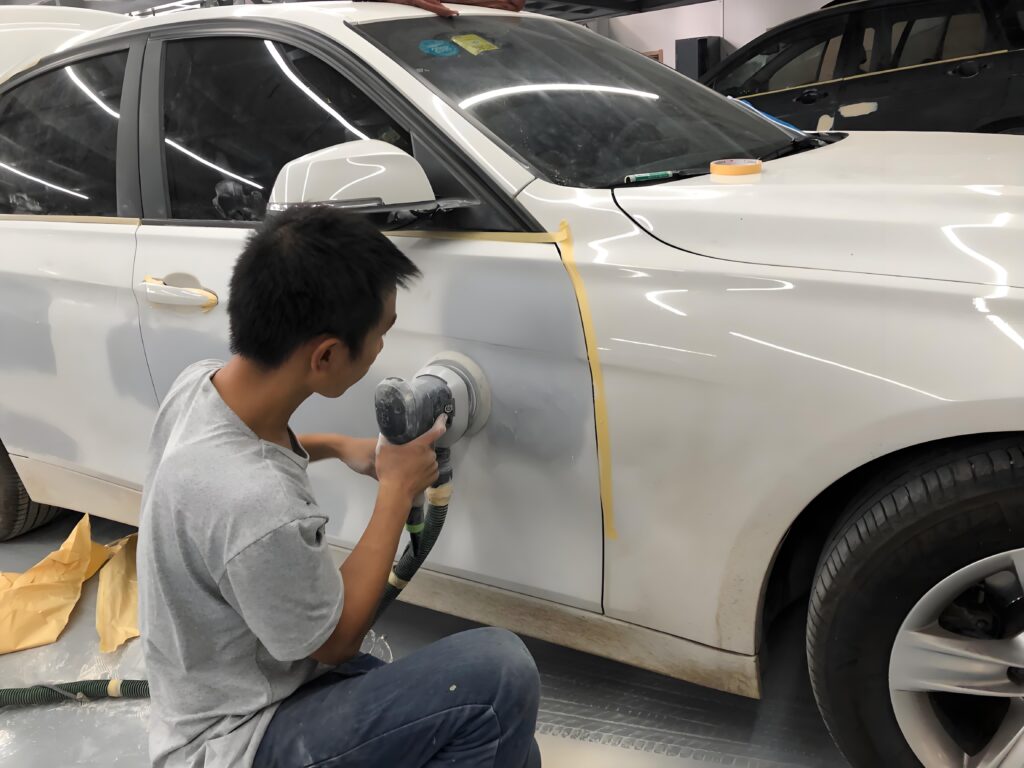
V. Application and Curing Key Points for Automotive Clearcoat
During automotive painting or automotive paint surface repair, the application of clear coat has high requirements for the environment and process. Reasonable spray viscosity, spray gun parameters, application temperature and humidity, as well as curing conditions, will directly affect the final smoothness and gloss performance of the paint film.
Under standard process conditions, the clear coat after curing should present an effect that is uniform, transparent, and free of obvious orange peel and sagging.
VI. Application of Automotive Clearcoats in the Refinish Sector
In accident repairs and used car refurbishment, automotive clear coat is an important material for restoring the original factory paint finish. By reasonably matching the clear coat type and application process, the repaired area can maintain a high degree of consistency with the original paint surface in terms of gloss and touch.

VII. Development Trends of Automotive Clearcoats
With the development of the automotive industry, clearcoats are being upgraded toward higher solids content, stronger weather resistance, and functionalization. For example, new automotive clearcoats with self-healing, scratch resistance, or enhanced anti-fouling capabilities are gradually being applied to high-end vehicle models.

FAQ Frequently Asked Questions
Q1: What is the difference between automotive clear coat and base coat?
A: The base coat determines the body color, while the automotive clear coat is mainly responsible for protection and enhancing gloss. The two have different functions but work in coordination.
Q2: Will the thickness of clear coat affect the paint finish?
A: A reasonable thickness helps improve protection performance, but excessive thickness may affect the stability of the paint film.
Q3: Why is 2K automotive clear coat widely used?
A: Its durability, hardness, and overall performance are more suitable for long-term use environments.
Q4: Can clear coat be repaired after aging?
A: Different degrees of repair can be achieved through polishing or re-spraying the clear coat.