Can the paint stockpiled in the warehouse still be used? Forcibly using deteriorated paint can lead to serious consequences such as non-drying films and loss of adhesion. As a professional industrial paint manufacturer, we teach you to quickly identify the danger signals of expired and deteriorated paint through a four-step method of looking, smelling, stirring, and testing, to avoid project losses.
At construction sites or warehouses, it is common to find some long-stored leftover paint inventory. Many people assume that as long as the paint has not dried up, it can still be used; in fact, this is a major misconception. Using deteriorated paint will not only cause color deviations, but may also lead to devastating quality failures such as coating delamination and prolonged non-curing.

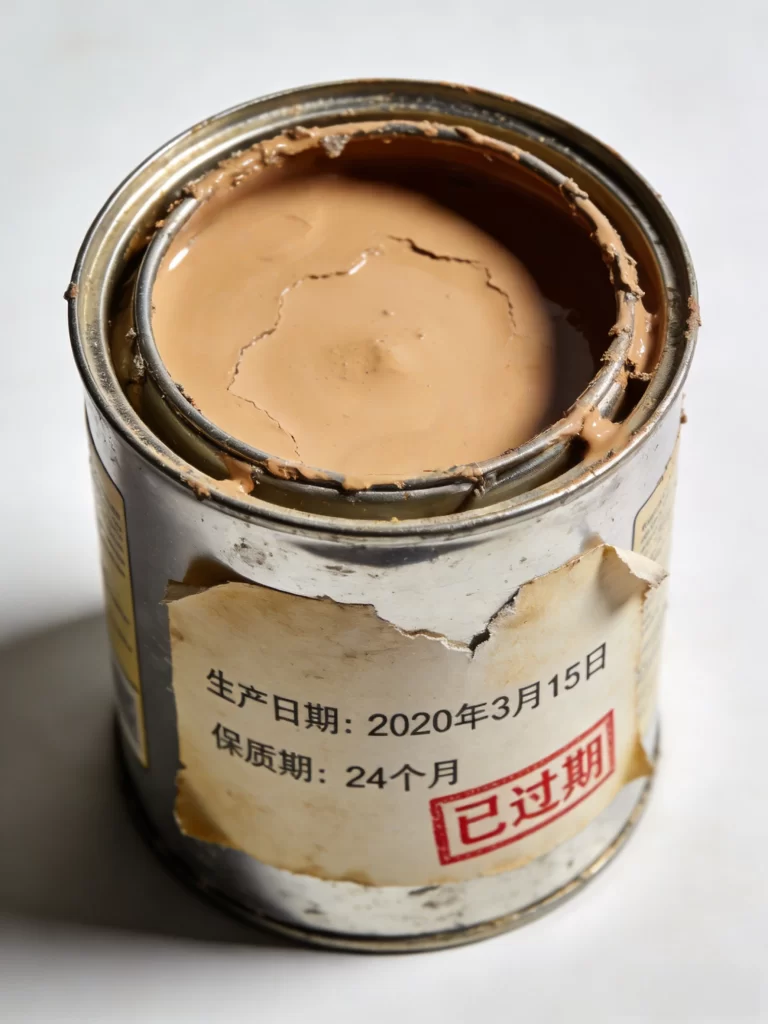
As an industrial paint manufacturer, we teach you how to identify the "distress signals" of paint:
1. Severe "Hard Settling"
- Symptom: Upon opening the paint bucket, a thick layer of solid material resembling hard clay is found at the bottom, which cannot be pried loose at all with a stirring rod.
- Judgment: Slight sedimentation that can be dispersed after stirring is normal; however, "hard settling" means the anti-rust pigments and resin have completely separated and clumped, and even if such paint is thinned and used, its anti-corrosion performance is already lost.
2. The Unremovable "Skinning"
- Phenomenon: There is a tough skin on the surface of the paint film.
- Judgment: If it is only a thin layer, after removal the interior liquid is uniform and can still be used; but if the crust is extremely thick and the lacquer is turbid, it indicates that the resin has undergone oxidation, and the leveling and adhesion of the paint film will be greatly reduced.
3. Pungent Odor or Swelling (Odor & Gassing)
- Symptom: Gas sprays out when opening the bucket lid (bulging bucket), or a distinct sour odor or musty smell is detected.
- Judgment: This is usually caused by water-based paint being contaminated by bacteria, or by a chemical reaction of the components in oil-based paint producing gas. The performance of this paint has completely failed and it must be scrapped.
4. Drawing and Gel-like (Gelling)
- Phenomenon: The paint becomes as thick as jelly, or long strands form when lifting the stirring rod, and adding thinner fails to dilute it evenly.
- Judgment: This indicates that the paint has undergone a "polymerization and gelling" reaction. Do not force it into the spray gun for application, otherwise it will clog the spray gun and produce extremely poor surface results.
Conclusion: Paint is alive. Typically, the shelf life of industrial paint is 6-12 months, and it is recommended to adopt a "first in, first out" warehouse management approach. If you are unsure about the condition of the paint, the safest method is to contact the manufacturer for a small sample test.