Powder coating is a highly efficient and environmentally friendly new type of coating material, widely used in metal fabrication, home appliances, construction, and automotive fields. This article systematically analyzes the composition principles, performance advantages, application scenarios, and future development trends of powder coatings, helping enterprises gain a comprehensive understanding of the technical value and market prospects of powder coatings.
I. Overview of Powder Coatings
Powder coating is a new type of industrial coating that exists in the form of solid powder and contains no solvent. Compared with traditional liquid coatings, powder coatings generate virtually no volatile organic compounds (VOC) during application, and offer higher material utilization and more stable film properties. As global manufacturing continues to raise its requirements for environmental protection and efficiency, powder coatings have become an important choice in the field of metal surface finishing.
Powder coatings are typically applied to workpiece surfaces by electrostatic spraying, and after high-temperature curing, form a uniform, dense, and durable powder coating, which is widely used in fields such as appliance housings, steel structures, aluminum profiles, and mechanical equipment.


II. Main Composition and Classification of Powder Coatings
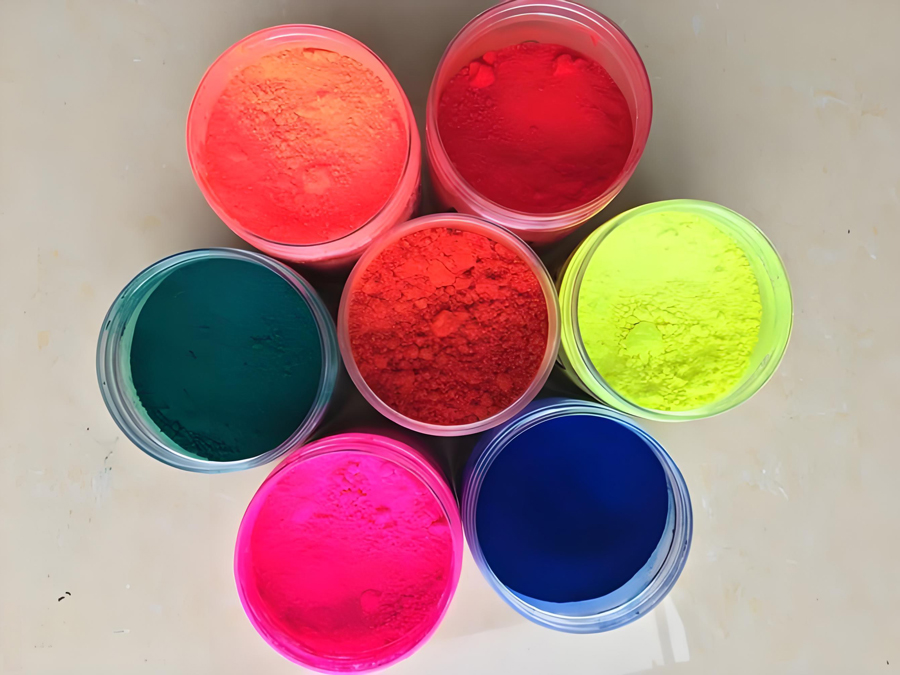
From the perspective of composition and structure, powder coatings mainly consist of resins, curing agents, pigments and fillers, and additives. Among these, resins determine the basic properties of the coating and are the core of powder coating formulation design.
Depending on the resin system, powder coatings are generally classified into the following categories:
- Thermosetting powder coatings: Including epoxy, polyester, and epoxy-polyester hybrid types, featuring excellent mechanical properties and chemical resistance
- Thermoplastic powder coatings: such as polyethylene and nylon types, more suitable for thick coating and special protection requirements
In industrial applications, thermosetting powder coatings dominate the mainstream market due to their stable overall performance and wide range of applications.
III. Performance Advantages of Powder Coatings
The reason powder coatings have been able to rapidly gain popularity worldwide lies in their multiple advantages at both the performance and process levels:
- Outstanding environmental performance
Powder coatings contain no solvents and emit virtually zero VOCs, complying with current stringent environmental regulations. - High material utilization rate
The powder that does not adhere during the spraying process can be recovered and reused, significantly reducing production loss. - Excellent coating performance
The powder coating has good adhesion, impact resistance, corrosion resistance, and decorative effect. - Strong construction stability
Powder coatings are less prone to settling or stratification during storage and application, ensuring high consistency in quality.

IV. Typical Application Fields of Powder Coatings
With the continuous maturation of formulation technology, the application scenarios of powder coatings keep expanding:
- Home Appliance Industry: Refrigerator, washing machine, and air conditioner enclosures
- Architecture and Building Materials Field: aluminum profiles, guardrails, curtain walls
- Automobiles and Transportation Facilities: Components, Protective Structures
- Industrial Equipment Manufacturing: cabinets, pipelines, steel structures

In metal surface coating, powder coatings not only meet protective requirements but also offer richer options for aesthetic design.
V. Comparative Analysis of Powder Coatings and Conventional Coatings
Compared with traditional solvent-based coatings, powder coatings perform better in several key indicators:
- Lower environmental burden
- higher coating efficiency
- More stable film-forming quality
- More suitable for large-scale and automated production
Therefore, a growing number of coating manufacturers and manufacturing enterprises are adopting powder coatings as a core product direction for long-term development.
VI. Development Trends in the Powder Coatings Industry
From a global market perspective, powder coatings are continuously developing in the following directions:
- Low-temperature curing powder coating technology is mature.
- Growing demand for high-weathering and ultra-corrosion-resistant powder coatings
- Integrated design of decorative and functional properties
- Widespread adoption of intelligent and automated coating systems
Under the "dual carbon" background, the market space for powder coatings will continue to expand.

VII. FAQ - Frequently Asked Questions
Q1: Are powder coatings only suitable for metals?
A: Powder coatings are mainly used on metal substrates, but with the development of low-temperature curing technology, some non-metallic materials can also be applied.
Q2: How long is the service life of the powder coating?
A: Under normal conditions, high-quality powder coatings can remain free from fading and chalking for many years.
Q3: Are powder coatings suitable for outdoor use?
A: Weather-resistant polyester powder coatings can be used in outdoor environments for a long time.
Q4: Is the color selection for powder coatings limited?
A: Modern powder coatings can achieve a variety of colors, gloss levels, and texture effects.