Nanocoatings achieve uniform dispersion of nanomaterials within the coating system and interfacial synergy to construct a highly dense microscopic protective structure on the substrate surface, realizing multiple barriers against moisture, oxygen, and corrosive media, which is the fundamental reason for their significantly enhanced anticorrosion, wear resistance, and weather resistance.
I. Overview of the Basic Working Principles of Nanocoatings
The working principle of nano-coatings is essentially to construct a multi-level, high-stability protection system on the substrate surface through precise control of material scale, interface structure, and surface energy. Unlike traditional coatings that rely on thickness to form a physical barrier, nano-coatings emphasize structural efficiency, that is, achieving stronger protection in a thinner coating.
During film formation, nanomaterials can synergize with the resin system, enabling the coating to develop a continuous, dense, and functionally specific microstructure after curing. This structure is the core foundation of the high-performance behavior of nanocoatings.


II. Dispersion and Stabilization Mechanisms of Nanomaterials in Coatings
1. Importance of Uniform Dispersion of Nanomaterials
Nanomaterials have extremely small particle sizes and high surface energy; if poorly dispersed, they readily agglomerate, directly compromising coating performance. High-performance nanocoatings typically employ surface modification and dispersion technologies to stably incorporate nanoparticles into the coating system, ensuring their uniform distribution during film formation.
Uniformly dispersed nanoparticles can effectively fill the microscopic voids within the coating, enhancing overall density at the structural level.
2. Synergistic Effect between Nanomaterials and Resin Systems
In nanocoatings, nanomaterials are not merely simple fillers, but form a synergistic network structure with the resin. This structure enhances the mechanical strength of the coating on one hand, and improves adhesion to the substrate surface on the other.
Through this synergistic effect, the nano-coating maintains stable performance even under complex working conditions.
III. Formation Process of the Microstructure of Nanocoatings
1. Construction of Multilayer Barrier Structures
At the microscopic level, nanocoatings typically exhibit a multilayer barrier structure:
- The first layer is an interface layer that directly bonds to the substrate.
- The intermediate layer is a nano-reinforced dense layer.
- The surface layer is a functional regulation layer.
This multi-layer structure effectively lengthens the permeation path of corrosive media and substantially reduces the likelihood of their reaching the substrate surface.
2. Shorten the interconnected channels of defects
In conventional coatings, micropores often form continuous channels, whereas the incorporation of nanomaterials can disrupt these channel structures, causing corrosive media to "lose their way" within the coating and thereby significantly enhancing protective performance.
IV. Mechanisms of Nanocoating Enhancement of Corrosion Resistance and Protective Performance
1. Enhancement of the barrier effect
Nanomaterials make the internal structure of the coating more complex and tortuous, so that corrosive media must travel a longer path to reach the substrate; this "labyrinth effect" is a key reason for the excellent performance of nano anti-corrosion coatings.
2. Regulation of Surface Energy and Wettability
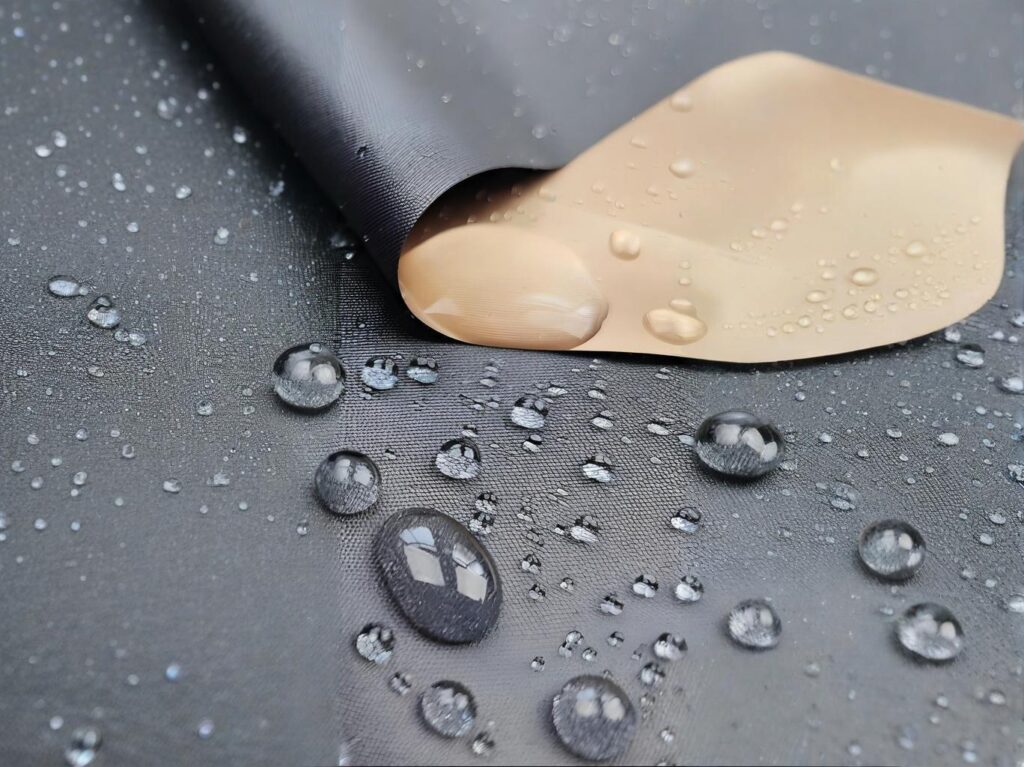
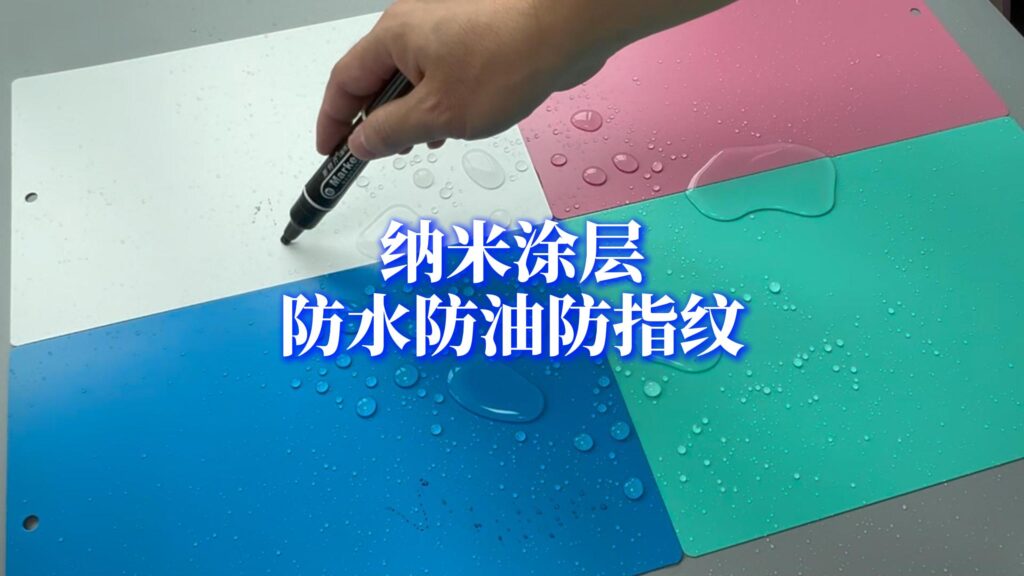
Through nanoscale surface structure design, the surface free energy of the coating can be reduced, making it difficult for water to wet the coating surface, thereby minimizing the formation of corrosive conditions.
3. Long-term stability of interfacial adhesion
Nanostructures form stable anchoring points between the coating and the substrate, maintaining good adhesion even under thermal cycling and mechanical stress.
V. Structural Adaptability of Nanocoatings on Different Substrates
Nanocoatings can be formulated to adapt to various substrate surface structures, including:
- Metal substrates (steel, stainless steel, aluminum alloy)
- Concrete and cementitious surfaces
- Composite materials and polymer materials
By adjusting the type of nanomaterial and the interface treatment method, targeted protection for different substrates can be achieved.
VI. Influence of Microstructure on the Service Life of Nanocoatings

Coating service life does not depend solely on thickness, but is closely related to the stability of its microstructure. By optimizing internal structure and interfacial bonding, nano-coatings significantly reduce the risks of aging, cracking, and delamination, thereby extending the overall service life.