—The Optical and Coating Structure Logic Behind the Mirror Effect
Mirror coatings achieve a high-reflectivity visual effect through refined coating structures and optical control. This paper systematically analyzes the formation principles and visual characteristics of mirror coatings.
I. What is a mirror coating
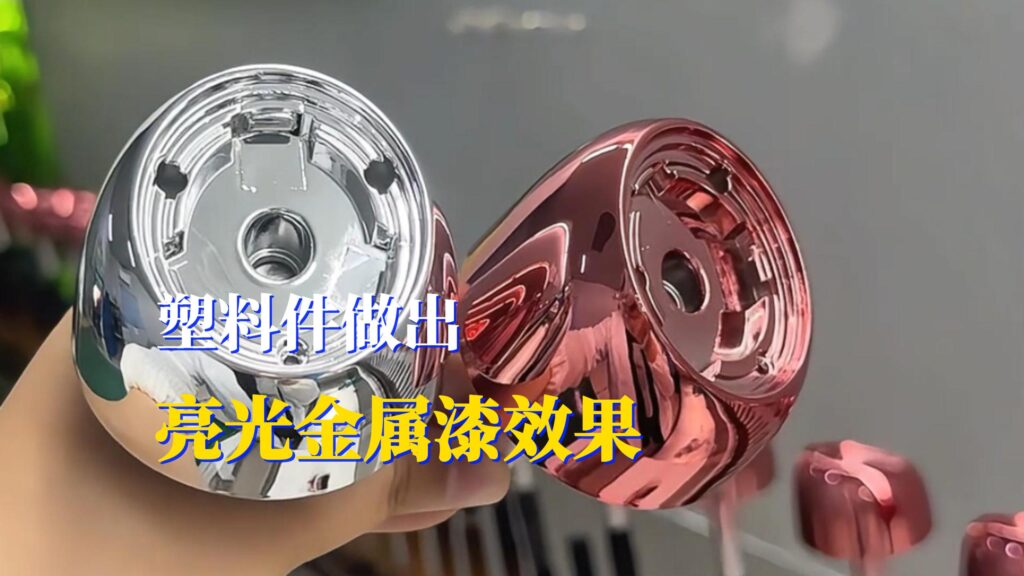
Mirror coating is a surface treatment solution characterized by a highly flat coating structure and controllable light reflection, presenting a near-mirror high-reflection effect in appearance.
This type of coating is widely used on plastic products, decorative parts, and high-end appearance components.


II. The Formation Basis of Mirror Effect
The mirror effect does not rely solely on "brightness," but is built upon the following two foundations:
- extremely high surface flatness
- high consistency in the direction of light reflection
Only when the reflected light is arranged in an orderly manner can a clear, sharp specular visual be formed.
III. The Role of Coating Flatness in Mirror Formation
Mirror coating has extremely high requirements for surface microstructure.
Any tiny orange peel, particles, or unevenness will cause light scattering, thereby destroying the mirror effect.
Therefore, the formation of a mirror coating is inseparable from strict control over the coating's leveling property and film-forming quality.
IV. Optical Principles of High-Reflectance Visual Characteristics
When the coating surface is sufficiently smooth, incident light is reflected uniformly according to the law of specular reflection, forming a clear image.
This is precisely the core visual characteristic that distinguishes mirror coatings from ordinary high-gloss coatings.
V. Essential Differences Between Mirror Coatings and Ordinary High-Gloss Coatings
The ordinary highlight coating mainly enhances brightness and gloss, while the mirror coating emphasizes image reflection capability.
In other words, high gloss ≠ mirror finish; a mirror finish must possess the ability to clearly reflect the surrounding environment.
VI. Influence of Substrate and Pretreatment on Mirror Effect
The mirror coating is highly sensitive to the surface quality of the substrate.
Minor defects on the substrate surface will be amplified by the mirror effect, so pre-treatment quality is an important prerequisite for the success of mirror coating.
VII. Summary of the Application Value of Mirror Coatings
Mirror coatings, with their unique high-reflective visual effect, provide products with strong visual impact and a premium texture, making them an important choice for upgrading the appearance of high-end plastic products.

Conclusion
The essence of a mirror coating lies in the high degree of integration among coating structure, optical principles, and process control. Understanding its formation mechanism is the key foundation for achieving a stable mirror effect.