Against the backdrop of continuously rising requirements for quality, aesthetics, and durability in modern manufacturing, anti-fingerprint, anti-dirt metal coatings have become a crucial process step in industries such as electronic devices, home appliances, automotive trim, and architectural hardware. Although traditional metal surfaces offer advantages such as sturdiness, gloss, and high plasticity, their oil-affinity tends to allow sweat, fingerprints, oil films, and dust to adhere, thereby affecting appearance, touch feel, and service life. As consumer markets place increasing importance on texture, cleanliness, and durability, functional metal surface treatment technologies are gaining more favor.
1. Core Mechanism of Anti-Fingerprint Coating
Anti-fingerprint coatings typically use nano-scale organic-inorganic hybrid materials to form a functional film layer with high density and low surface energy on the metal substrate surface. Its working principle mainly comes from:
- Reduce surface energy
By using fluorinated polymers, silanes, or modified nanomaterials to lower the energy, making it difficult for oil stains to "wet" the surface and reducing fingerprint residue. - Form a dense protective layer
The highly cross-linked structure can block sweat, oil, chemical media, and fine particles, improving corrosion and wear resistance. - Features hydrophobic and oleophobic properties
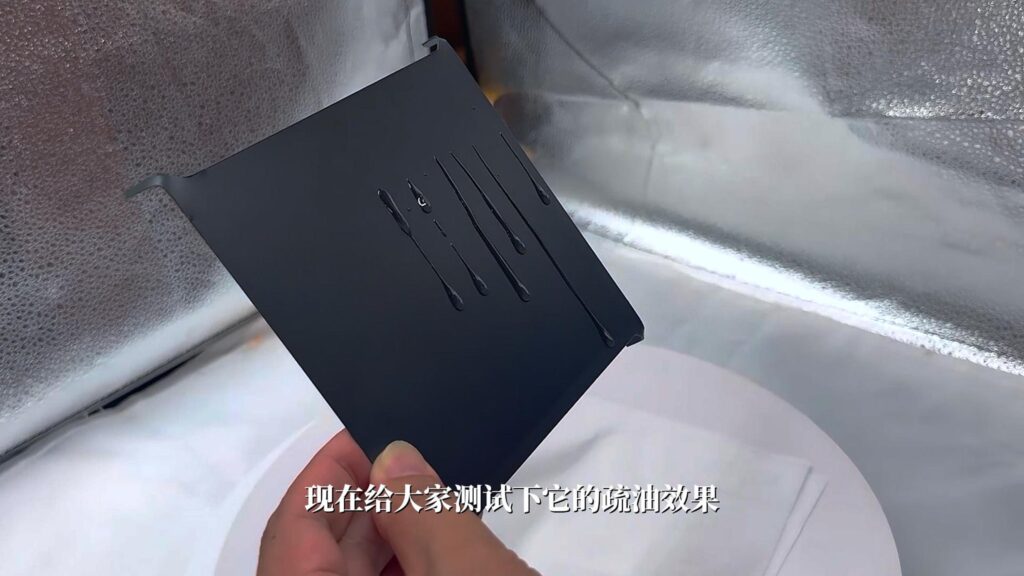
The coating surface can form a high contact angle, causing water droplets and oil droplets to appear in a "bead" state, greatly enhancing the self-cleaning effect.
Relying on these mechanisms, anti-fingerprint coatings, anti-dirt coatings, and self-cleaning coatings enable metals to achieve a long-lasting clean visual effect and a better tactile experience.
II. Compatibility of Common Metal Substrates
To enable broader industrial deployment, high-quality functional coatings must be compatible with a variety of metals. Current technology can be stably applied to:
- Stainless steel (brushed, mirror, electroplated surface)
- anodized aluminum surface
- Copper and copper alloys
- Nickel-plated and chrome-plated decorative parts
- Iron-based metals and electroplated hardware
By adjusting different primer and mid-coat systems and curing conditions, the coating can achieve excellent adhesion, transparency, and tactile effect on various metals.

III. Application Fields and Value Advantages
In many industries, metal anti-fouling coatings, oil-resistant coatings, and wear-resistant coatings have become differentiated selling points of products.
1. Consumer Electronics
Mobile phone frames, laptop housings, tablet metal backplates, wearable devices, and other products have extremely high appearance requirements. Anti-fingerprint coatings can:
- Reduce fingerprint residue and improve visual cleanliness
- Enhance scratch resistance and corrosion resistance
- Enhance the "smooth touch" to align with the high-end brand positioning.
2. Home Appliances
In components such as refrigerator, washing machine, and oven panels, coatings help:
- Reduce oil stain adhesion
- Provide an easy-to-wipe surface
- Enhance the durability of metallic luster

3. Architectural Hardware and Furniture Metal Fittings
Door locks, handles, bathroom metal fittings, etc. are frequently touched over long periods, yet the coating maintains a clean appearance for a long time.
4. Industrial Equipment and Automotive Trim
Under more demanding service conditions, wear resistance, corrosion resistance, and stability become more critical.

IV. Technical Advantages and Future Development Trends
With the advancement of materials science and nanotechnology, anti-fingerprint coatings are developing the following trends:
- Higher transparency, thinner film layer
To preserve the original texture of the metal itself. - Stronger wear resistance and chemical resistance
Suitable for higher-intensity industrial and outdoor environments. - Functional integration
Such as the fusion of multiple functions including anti-fingerprint + scratch resistance + corrosion resistance + antibacterial. - Environmentally Friendly Water-Based Solutions
Compliant with global VOC regulations.


V. Conclusion
As consumer demand for aesthetically pleasing and durable products continues to grow, metal anti-fouling coatings, functional coatings, and nano-coating technologies will remain key means for the manufacturing industry to enhance product value. Whether in the electronics, home appliance, or hardware industries, choosing high-quality coating technologies will play an increasingly important role in brand competition.