No more confusion about floor coatings: unlocking the technological secrets of epoxy, polyurethane, and water-based paints!
Flooring, as the front line of the building structure bearing pressure and wear, its protection is crucial. Traditional concrete floors are prone to dusting and cracking, making it difficult to meet the high demands of modern industry and commerce for cleanliness, durability, and aesthetics. And floor paint (or floor coating) is the core technology to solve these problems.
From the perspective of materials science, this article will conduct an in-depth analysis of the differences, advantages, and optimal applications under different environments of the currently mainstream floor paint systems on the market—epoxy, polyurethane, and water-based paint.
I. Core Material Analysis: Epoxy Flooring vs Polyurethane Flooring
In the field of high-performance floor coatings, epoxy and polyurethane (PU) are the two mainstream technologies. Understanding their basic chemical structures and physical properties is the prerequisite for making the right choice.
1. Epoxy Flooring (Epoxy Flooring): synonymous with hardness
Epoxy flooring systems are based on epoxy resin. When the resin is mixed with a curing agent, a chemical cross-linking reaction occurs, forming a hard, dense solid coating.
- Performance Characteristics:
- High Hardness and Compressive Resistance: After the epoxy resin is cured, its structure becomes extremely rigid, thus offering excellent compressive strength and surface hardness, making it highly suitable for withstanding heavy loads and impacts.
- Chemical resistance: Has good resistance to various chemicals such as acids, alkalis, and oils.
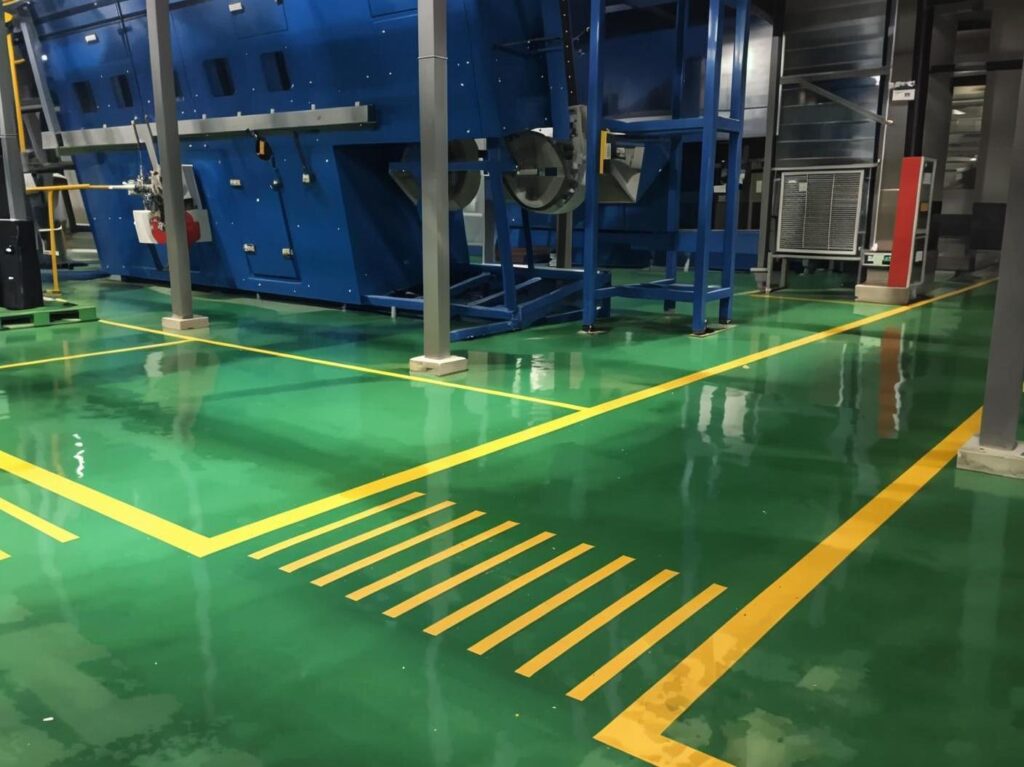
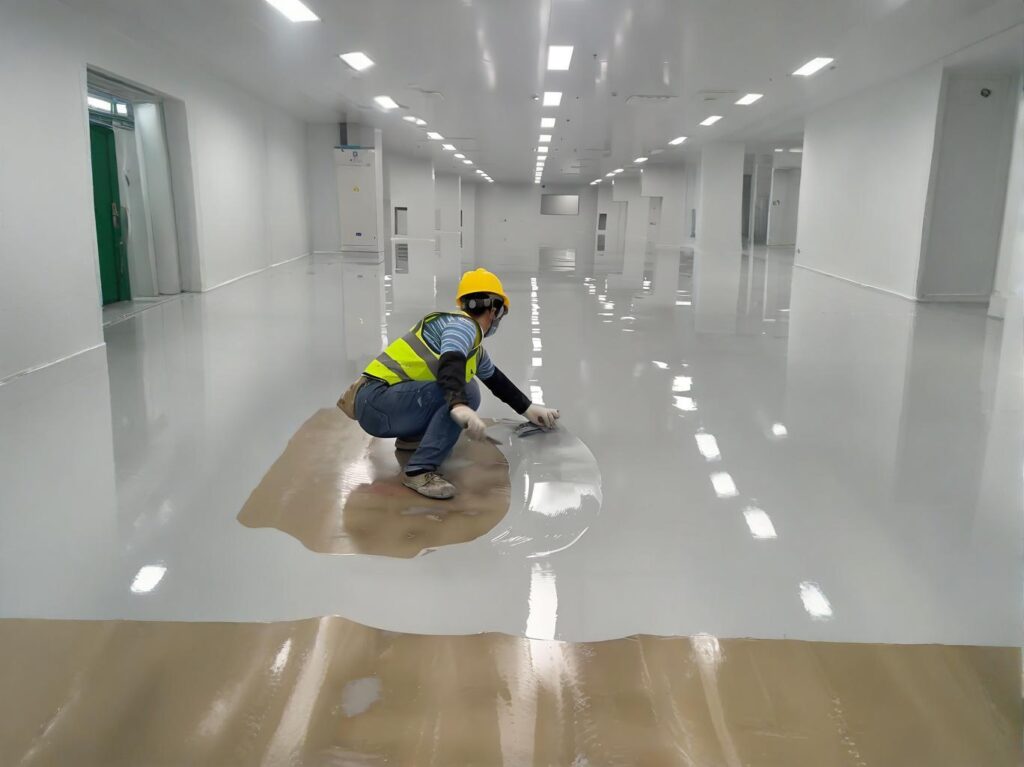
- Aesthetics: Easy to tint, with a smooth, mirror-like surface after curing. Often used for epoxy self-leveling flooring to meet high cleanliness requirements.
2. Polyurethane Flooring: A combination of elasticity and toughness
Polyurethane flooring system is formed by the reaction of isocyanate components with hydroxyl-containing polymers (such as polyethers, polyesters). Its molecular chain contains urethane bonds, which endow the coating with unique flexibility.
- Performance Features:
- High Flexibility and Crack Resistance: Offers better elasticity, able to accommodate minor movement or thermal expansion and contraction of concrete substrates, with crack resistance superior to epoxy.
- Weather resistance and UV resistance: Many PU systems, especially aliphatic polyurethanes, are not prone to yellowing and chalking when exposed to outdoor or sunlight conditions, making them the preferred choice for outdoor floor coatings.
- Vibration and noise reduction: Its elasticity gives it excellent sound absorption and shock absorption functions, which can improve the comfort of the working environment.
| Feature Comparison | Epoxy Flooring | Polyurethane Flooring | Best Application Environment |
| Hardness/Rigidity | Extremely high | High | Indoor heavy load, compression resistance |
| Flexibility/Elasticity | Poor (rigid) | Excellent (elastic) | Outdoor, large temperature variations, shock absorption needs |
| Abrasion Resistance | Excellent | Excellent (more scratch and friction resistant) | High-traffic areas |
| UV Resistance | Poor (prone to yellowing) | Excellent (aliphatic PU) | Indoor vs Outdoor or daylight areas |
II. Environmental Protection and Applications: Water-based Floor Paint and Solvent-based Paint
From the perspective of diluents, floor paint can be divided into solvent-based and water-based types.
1. Water-based floor paint: The top choice for environmental protection and health
Water-based floor paint uses water as the dispersion medium and contains almost no volatile organic compounds (VOC).
- Core Advantages:
- Environmentally Friendly & Odorless: Minimal odor during construction, friendly to human health and the environment, especially suitable for odor-sensitive places such as home garages, hospitals, and schools.
- Can be used on damp substrates: Some highly breathable water-based floor paint allows moisture from the substrate to pass through, reducing the risk of blistering, and is suitable for damp ground floors or basements.
2. Solvent-based floor paint: the guarantee of industrial strength
Solvent-based floor paint uses organic solvents as thinners.
- Core Advantages:
- Excellent Penetration: The solvent penetrates better into the concrete capillary pores, providing stronger adhesion.
- High performance: Usually achieves higher solid content and more excellent physical and mechanical properties, making it the first choice for heavy-load areas of factory flooring.
3. ? Floor Paint Construction: The Key to Determining the Lifespan of Floor Paint
No matter what top-grade floor coating material is selected, the lack of proper floor paint construction techniques will greatly reduce the floor paint lifespan.
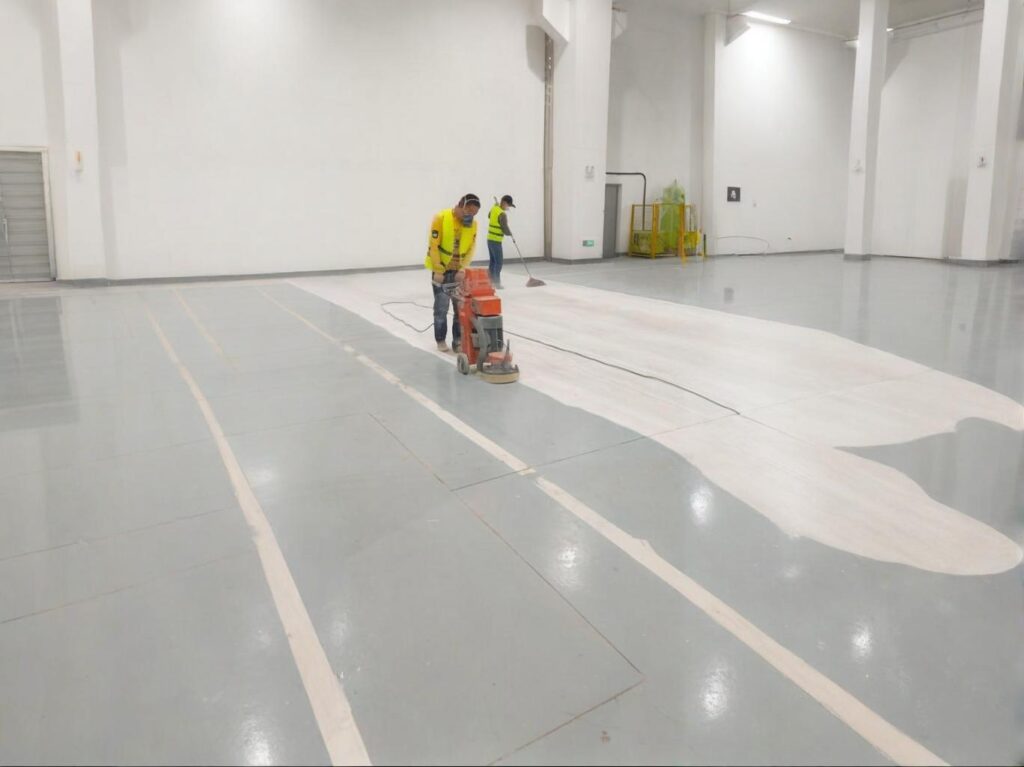
- Surface preparation (Preparation): This is the most important step.
- Purpose: Remove laitance, oil stains, and loose materials from the concrete surface, and open up the capillary pores to increase the adhesion of the coating.
- Key Technology: Professional mechanical grinding, shot blasting, or milling. Oil stains on the old floor must be thoroughly degreased.
- Humidity control: The moisture content of concrete is the primary cause of floor paint bubbling and peeling.
- Standard: Generally, the moisture content is required to be below 6% (except for special moisture-proof systems).
- Measure: For damp floors, a specialized moisture-proof primer or breathable water-based floor paint must be applied first.
- Primer Penetration:
- Function: The primer is used to seal the capillary pores of the concrete and increase the anchoring force between the coating and the substrate. Insufficient primer penetration or missed application is a common cause of a short floor paint lifespan.
IV. Frequently Asked Questions (FAQ)
Here we have compiled the most frequently asked questions from users about floor paint selection and floor paint construction:
Q1: How to determine whether my floor is suitable for epoxy flooring or polyurethane flooring?
A: If your site is indoor, needs to withstand heavy static loads (such as heavy shelving) and is not exposed to ultraviolet light, you should give priority to epoxy flooring. If your floor is outdoor, needs to withstand dynamic impact loads (such as high-speed forklift traffic), has large temperature variations, or requires elasticity (such as sports venues), then polyurethane flooring is the better choice.
Q2: Is the lifespan of water-based floor paint not as good as that of solvent-based floor paint?
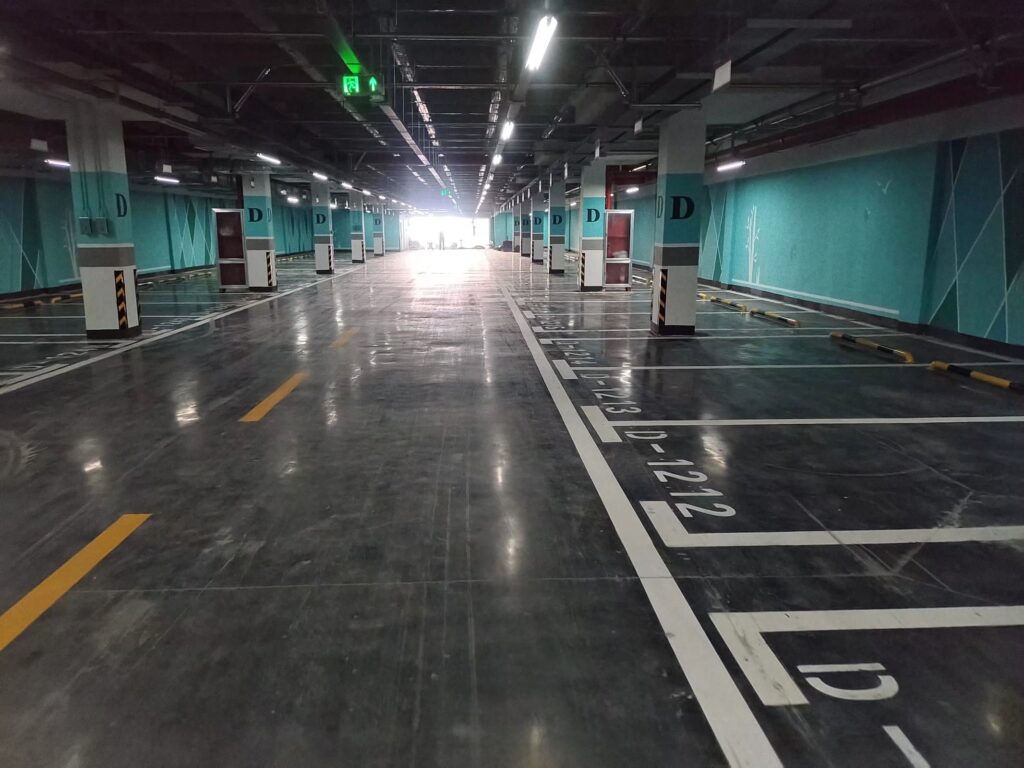
A: Early water-based paints were indeed slightly inferior in performance, but modern high-performance water-based floor paint has been greatly improved. For home garages or light-load commercial areas, its floor paint lifespan is comparable to that of solvent-based epoxy. However, in extremely heavy-load, chemically corrosive factory flooring, solvent-based epoxy or polyurethane remains the performance king.
Q3: How long after floor paint construction can it be used?
A: This depends on the ambient temperature and the type of coating.
- Light traffic (pedestrians): Epoxy or polyurethane thin coating is generally walkable after 24 hours.
- Heavy load (vehicle/forklift): It is recommended to put into use after 72 hours (3 days) to ensure the coating is fully cured and achieves the designed maximum hardness and wear-resistant flooring performance.
Q4: Why does my floor coating bubble or peel off?
A: Over 90% of bubbling/peeling issues stem from insufficient substrate preparation:
- Substrate moisture (most common): No moisture-resistant primer was used, or the moisture content of the substrate is too high.
- Oil stain residue: Oil stains on the old floor were not thoroughly removed, resulting in poor adhesion.
- Insufficient primer: Poor primer penetration or insufficient application, failing to effectively seal the substrate.