In daily vehicle use, what troubles car owners most is inevitably their beloved car getting scratched or losing paint. Many people's first reaction is to go to a repair shop, but painting costs of hundreds or even thousands of yuan often deter quite a few. Actually, as long as one masters the correct method and prepares suitable tools and paint, car owners can also do the repair at home, with results comparable to professional repair. This article will explain in detail the three-step repair method—sanding, painting, and polishing—so your car can instantly look as good as new.


Step 1: Sand smooth to lay the foundation for repair
Sanding before repair is the key to the final result. First, use fine sandpaper (recommended around 2000 grit) to gently sand the edges of the chipped area and any rusted spots smooth. Apply even pressure during sanding, and feather the edges into a gradual slope so that the subsequently applied paint film can blend naturally without leaving obvious patch marks. If the chipped area is deep or the metal substrate is exposed, pretreat it with anti-rust primer first to prevent rust from spreading.

Step 2: Layered Spraying, Balancing Color and Protection
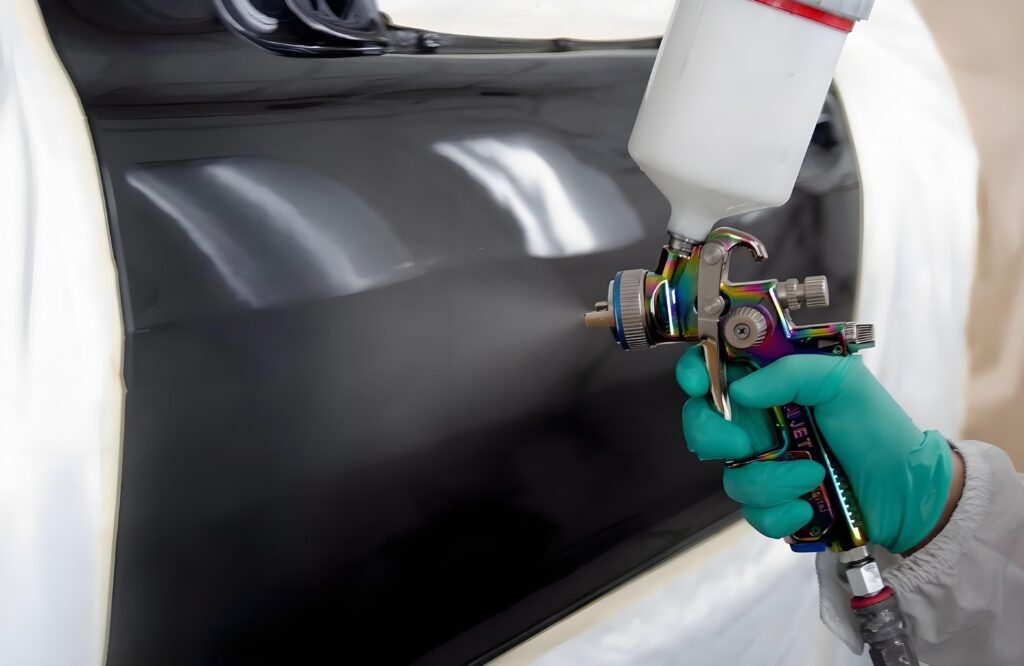
Painting is the core of the entire repair process. The correct sequence is: "primer for rust prevention, basecoat for coverage, clearcoat for gloss enhancement."
- Primer: Serves to prevent rust and enhance adhesion. Apply two thin coats to ensure even coverage.
- Colored paint: Choose the exact same color code as the original vehicle. When spraying, apply "multiple thin coats", waiting about 5-10 minutes for each layer to dry before continuing, to prevent color difference or sagging.
- Clear coat: The transparent clear coat applied last can enhance gloss, making the texture of the repaired area consistent with the original car paint. It is recommended to apply two to three layers to increase brightness and durability.
The spraying environment should preferably be a well-ventilated, dust-free space to prevent dust from settling on the paint surface and affecting the finish.
Step 3: Polish and blend for seamless repair
After the paint is completely dry (usually requiring a wait of over 24 hours), you can proceed to the final step—polishing.
Use a polishing machine or a manual polishing cloth, together with a dedicated polishing compound, and gently buff the repaired area.
Through moderate polishing, the old and new paint will naturally blend, the gloss will be perfectly uniform, and it will look as if it was never repaired.
If you want to achieve an even higher shine, you can apply a layer of car wax at the end for glaze sealing protection, extending the lifespan of the paint.

Practical Advice:
- Select automotive paint corresponding to the OEM code to avoid color difference.
- Wear protective gloves and a mask during operation to ensure safety.
- Beginners can first practice spraying techniques on scrap metal sheets.
- Regular maintenance of the paint film can effectively prevent oxidation and peeling.
Through these three steps, car owners can not only save a significant amount of repair costs, but also gain a sense of accomplishment from fixing their own vehicle. By mastering scientific spray painting techniques, you can both extend the vehicle's service life and keep your ride looking brand new and glossy at all times.