Technical Principles, Applications, and Market Prospects of Metallic Paint:
In fields such as modern industry, home decoration, automotive, household appliances, art, and interior/exterior decoration, "metallic effect" coatings are becoming increasingly popular. People expect coatings not only to provide the hiding and protective functions of ordinary paints, but also to deliver visual effects such as gloss, metallic texture, reflective appearance, and three-dimensional depth. "High-gloss metallic paint" (also called "glossy metallic paint") is precisely a coating solution that combines decorative appeal with practical performance.
This article delves into the composition and principles, performance characteristics, formulation design and application requirements, common issues and troubleshooting strategies, typical applications and case studies, as well as market trends and future development of high-gloss metallic paint. It aims to provide coating manufacturers, contractors, decoration companies, and end users with an original article of practical and promotional value.
I. Composition and Working Principle of High-Gloss Metallic Paint
1. Composition, Structure and Main Components
Metallic gloss paint incorporates metallic or metalloid particles/flakes (such as aluminum powder, zinc dust, stainless steel flakes, metallized mica flakes, chromium compound pigments, metal oxide powders, etc.) into conventional coating systems (e.g., acrylic, nitrocellulose, polyurethane, epoxy, etc.), enabling the cured film to exhibit metallic luster and reflective effects.
Specifically, it typically consists of the following components:
- Base resin (Component A): such as acrylic resin, polyurethane resin, epoxy resin, amino resin for baking finishes, etc.
- Solvent or diluent (for solvent-based systems) or additives and water (for water-based systems).
- Metallic/metalloid reflective pigments: the most common are aluminum powder, zinc powder, metallized mica, nickel-chrome flakes, chromium oxide, wollastonite, titanium, etc. Particle size, shape, surface treatment, and state of dispersion directly affect the metallic luster effect.
- Additives: such as leveling agents, defoamers, dispersants, wetting agents, interfacial agents, etc., used to improve the dispersibility, stability, and suspension of metal powders in the system and to suppress agglomeration.
- Curing agents or crosslinkers (for two-component systems): such as isocyanates, amine curing agents, crosslinkers, etc., used to form a crosslinked network structure in the film with high hardness and good weather resistance.
These components can only achieve good comprehensive properties such as gloss, hiding power, adhesion, and weather resistance through optimized formulation, surface treatment, and process control.
2. Optical Principles and Visual Effects
To achieve a "metallic luster" with bright metallic paint, the core lies in "reflectivity" and "mirror-like effect". Its main optical principles include:
- Metal reflection: Metallic or metallized particles have a high reflectance; when the coating surface is smooth, they can reflect incident light like a mirror.
- Diffuse + Specular Reflection Mix: The coating not only has particle reflection, but also scattering from the matrix resin, reflection from the substrate, etc., forming complex reflection paths.
- Angle effect / Specular shift: When the viewing angle changes, the orientation, brightness, and dark areas of the reflective particles shift, producing a "sparkle" or "flowing light" visual effect.
- Shielding and Coverage: If the metal powder is too little, it fails to shield the substrate or provide sufficient coverage; if too much, it may affect the adhesion and durability of the coating film.
- Mirror coating + transparent topcoat: Adding a layer of high-gloss transparent varnish (such as polyurethane varnish, Jinshang varnish, fluorocarbon varnish, etc.) on top of the metallic paint surface can enhance the mirror effect, protect the metal layer from oxidation, and improve weather resistance.
Precisely because of these interactions between optical and material mechanisms, bright metallic coatings can exhibit a three-dimensional effect, gradient appearance, and layered light perception under different viewing angles and lighting conditions.
II. Performance Characteristics and Advantages of High-Gloss Metallic Paint
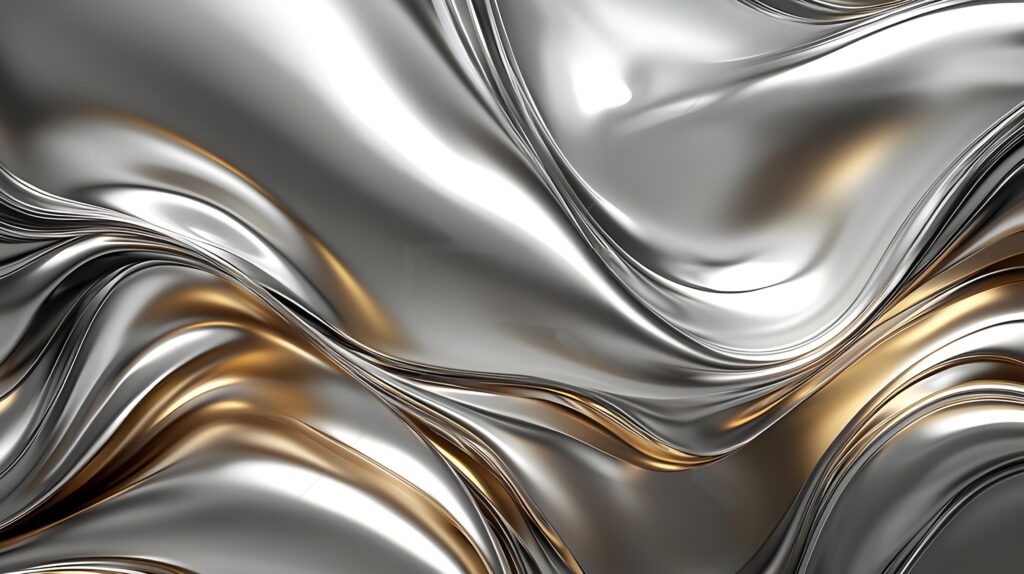
High-gloss metallic paint is preferentially selected in many applications due to its unique decorative properties. The main performance characteristics and advantages are listed below, along with its limitations or challenges.
1. Superior visual effect
- High gloss and mirror-like finish: The coating as a whole exhibits a bright reflective effect, and under strong light conditions it even approaches mirror reflection.
- Three-dimensionality and sense of depth: Because there is layered reflection between the metal particles and the base layer, it visually possesses depth and a sense of layering.
- Micro-shimmer and dynamic brightness: At different viewing angles, the brightness, shimmer points, and metallic feel will vary slightly, making the overall effect more vivid.
- Conceal minor flaws: For small bumps or fine marks, metal reflection can to some extent "mask" surface defects.
2. Improvement of Mechanical and Physical Properties
- Improved Hardness and Wear Resistance: The composite of metal powder and resin makes the surface hardness generally higher than that of pure colored paint films. Studies have shown that, compared with ordinary paint, metallic paint films have higher hardness and stronger scratch resistance.
- Enhanced weather resistance: High-quality metallic paint systems perform more stably under UV exposure, oxidation, and humid conditions. Some metal powders themselves possess antioxidant properties.
- Long-lasting color: Metallic paint is less prone to fading under long-term light exposure, and its gloss decays more slowly. Some studies indicate that metallic paint is more resistant to fading and aging than ordinary paint.
- Adhesion and Bonding: Through reasonable primer design and surface treatment, metallic paint can ensure good adhesion, making the paint film less likely to peel off.
3. Wide Application and Decorative Potential
- Multi-material compatibility: In addition to metal substrates, it can also be used on wood, plastic, glass, acrylic, castings, aluminum products, appliance housings, furniture decoration, etc.
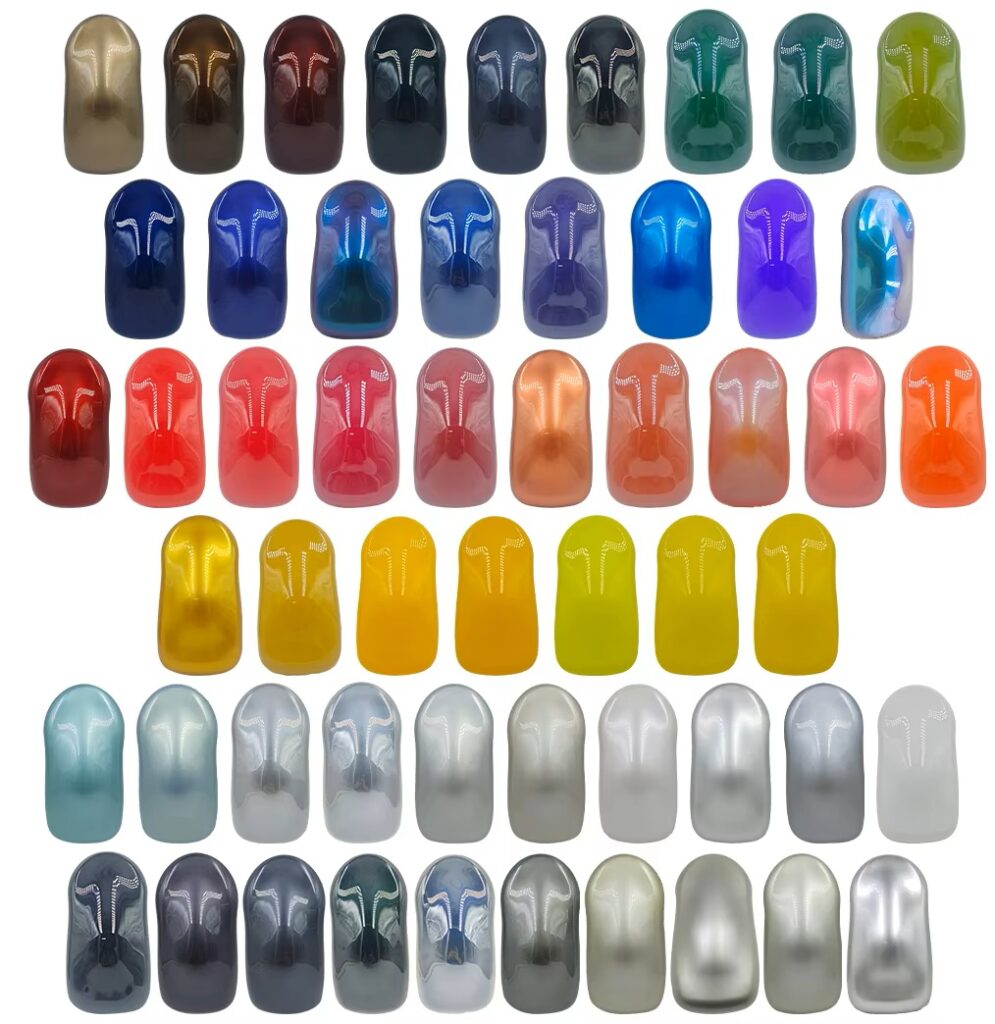
- Customizable effects: By adjusting the size, concentration, and color scheme of metal particles, the sparkle, mirror-like feel, and metallic tone (silver, gold, copper, chrome, titanium, etc.) can be flexibly controlled.
- Premium decoration enhances perception: In settings such as high-end home furnishings, smart appliances, luxury car interiors, and brand LOGO markings, metallic paint can significantly elevate the product's texture and grade.
- Protective functions considered: In addition to aesthetics, it can also provide protective functions such as anti-corrosion, anti-oxidation, weather resistance, and scratch resistance.
4. Limitations and Challenges
- Higher cost: The investment in metal powder, additives, and processes is higher than that of ordinary paint, leading to increased costs. Consumers are highly sensitive to price.
- Increased construction difficulty: Metal particles are prone to agglomeration, high requirements for flatness after spraying, strict control of paint thickness, and difficulty in achieving coating consistency.
- Color difference and matching difficulties: It is difficult to precisely match the original metallic visual effect when repainting or touching up, especially since there will be differences across different batches and viewing angles.
- Gloss attenuation: If material selection or system design is improper, the gloss may decrease, metal particles may oxidize, or interfacial delamination may occur during long-term use.
- Limited concealing ability: Although it can cover some minor imperfections, major substrate defects still require prior surface treatment.
- Mirror finish has high surface requirements: Any tiny pits, dust particles, or brush marks are more easily revealed under the mirror's highlights.
III. Formulation Design and Key Control Points of Bright Metallic Paint
A high-performance, high-gloss, and well-stable bright metallic paint formulation requires strict control over raw material selection, particle dispersion, coating system design, and process flow. The following are the core points and recommendations.
1. Selection and Treatment of Metal Particles
- Particle type: Aluminum powder is the most common choice, with moderate cost and high reflectivity; mica metallized flakes, nickel-chromium flakes, and chromated alloy pigments can provide different metallic tones.
- Particle shape and size: Flaky particles (thin plates, mirror-like flakes) are more prone to specular reflection than spherical or powdered ones; sizes are typically 1–10 μm or smaller, adjusted according to the specific system.
- Surface treatment / coating encapsulation: To prevent metal particles from oxidizing and agglomerating, their surfaces should be coated and encapsulated (e.g., silane, silicone resin coating, phosphating, oxide film protection, etc.).
- Dispersant / Coating Additive: Use suitable dispersants, wetting agents, interfacial agents, etc., to maintain good suspension and uniform dispersion of metal particles in the resin, and to prevent settling, scum, and particle agglomeration.
2. Base resin system and curing agent
- Resin selection: For those seeking high weather resistance and high gloss, polyurethane, baked amino resin, and acrylic resin containing UV stabilizers are better choices.
- Curing / Crosslinking System: Two-component systems can use isocyanates, amines, amine chlorides, amino crosslinkers, etc., to ensure the crosslink density and durability of the paint film.
- Auxiliary agent ratio: Reasonably add leveling agents, defoamers, UV absorbers, light stabilizers, antioxidants, etc., to improve the smoothness, lifespan, and stability of the paint film.
3. Paint Dilution, Viscosity, and Sprayability
- Thinner / Dilution Method: Control the dilution ratio to ensure that particles do not settle or float during spraying and that the nozzle remains unobstructed.
- Viscosity control: Medium viscosity, which must ensure a smooth coating film while preventing metal particles from settling or precipitating.
- Filter / Screen: Use a 200–300 mesh filter before spraying to remove large particles and foreign matter, ensuring nozzle stability.
4. Primer and Tie-Coat Design
- Primer / Intermediate Coat Selection: On substrates such as metal, aluminum, plastic, and wood, first apply or spray a layer of primer compatible with the metallic paint system to improve adhesion and provide anti-corrosion and anti-rust functions.
- Thickness control: The primer layer should not be too thick, to avoid base cracking, stress concentration, or uneven drying.
- Sanding and Smoothing Treatment: Before spraying metallic paint, the primer layer should be sanded until it is smooth, dust-free, and free of burrs.
5. Spraying Process and Application Conditions
- Spray gun parameters: appropriate nozzle size, pressure (pneumatic or airless spraying), spray pattern adjustment, spraying distance and angle.
- Multi-coat: Generally, one to two coats of metallic paint + one to two coats of transparent clearcoat are applied, with the thickness of each coat controlled within a reasonable range.
- Environmental Control: Temperature, humidity, ventilation, and a dust-free environment are crucial to gloss performance.
- Curing / Drying Conditions: Depending on the system (e.g., baking, hot air, natural curing), control temperature and time to ensure the paint film is fully cured.
6. Quality Control and Testing Indicators
- Gloss measurement: Use a gloss meter (e.g., measurement angles such as 60°, 20°, etc.) to check whether the gloss value meets the design requirements.
- Adhesion test: such as cross-hatch, pull-off test, etc.
- Weathering / Accelerated Aging: Simulate ultraviolet rays, damp-heat cycles, salt spray tests, etc., to verify long-term stability.
- Abrasion / Scratch Test: Evaluates the paint film's resistance to mechanical damage.
- Color / Metallic Consistency: Evaluate batch-to-batch consistency using spectrophotometers, colorimeters, multi-angle colorimeters, etc.
IV. Common Issues and Solutions for Bright Metallic Paint in Practical Applications
In actual production and construction processes, high-gloss metallic paints may encounter many technical challenges; typical problems and recommended countermeasures are listed below.
| Problem | Symptom | Cause Analysis | Solution Strategy |
|---|---|---|---|
| Metal particles floating / settling | Bright areas or particle aggregation on surface | Particle density difference, improper viscosity control, or poor dispersion | Adjust additives, viscosity, and dispersant system; appropriately increase stabilizer |
| Insufficient gloss / matte feel | Overall dim, fluorescence not obvious | Low metal content, particles obscured, topcoat layer disturbance | Increase metal powder amount, optimize coating design, improve transparent topcoat quality |
| Sporadic sparkle / uneven shimmer | Local sparkle, inconsistent visual effect | Uneven spraying, uneven particle distribution, powder agglomeration | Spray evenly, brush in multiple directions, optimize filtration and dispersion process |
| Mirror effect degradation | Surface darkens, gloss drops, hazing | Paint film aging, particle oxidation, topcoat layer deterioration | Use UV resistants, improve topcoat weather resistance, regular maintenance |
| Scratches / obvious wear | Scratches easily appear in high-gloss areas | Glossy reflection emphasizes marks | Increase paint film hardness, add wear-resistant layer, reasonably design protective top layer |
| Obvious color difference in touch-up / repair | Flash degree and angle color deviation in repaired areas | Metal particle orientation, batch differences, different upper-layer process | Repaint entire panel where possible, control batch consistency, process correction |
To address these issues, coating manufacturers should establish standardized process procedures, implement strict quality control, and optimize formulations, while applicators need to perform meticulous operations, maintain a clean environment, and conduct timely maintenance.
V. Typical Application Fields and Cases
The following highlights typical application scenarios and successful cases of bright metallic coatings across various industries to demonstrate their application value.
1. Automotive and motorcycle body decoration
Automotive metallic paint is the most common application of metallic effects. Using glossy metallic paint makes the car body shimmer under sunlight, with richer depth and a stronger three-dimensional feel. Many high-end models and limited-edition models adopt high-gloss metallic paint or metallic pearlescent paint to enhance visual premiumness and recognizability.
2. Housings for household appliances and digital products
High-end home appliances (such as refrigerators, washing machines, TV bezels, and audio enclosures), mobile phone back covers, laptop housings, and keyboard shells, if finished with silver-white mirror metallic paint or gold electroplating paint, can greatly enhance the product's texture and modern feel.
3. Interior Decoration and Home Accessories
Lighting fixtures, stair handrails, furniture decorative parts, metal handles, trim strips, ceilings, partitions, artistic wall surfaces, etc. can create a luxurious, stylish, metallic-textured atmosphere through glossy metallic paint.
4. Industrial Equipment and Signage
In fields such as industrial equipment, instrument enclosures, control cabinets, signage, billboards, metal sculptures, and technology exhibition stands, the use of glossy metallic paint can balance protection with visual identification.
5. Art Installations and Outdoor Sculptures
In settings such as artworks, public sculptures, and urban landscape sculptures, the use of high-gloss metallic paint enables the pieces to exhibit a dynamic light-effect under sunlight, enhancing their visual appeal and impact.
Case Example (hypothetical, for promotional use):
- A high-end audio brand applied high-gloss aluminum-powder metallic paint plus a high-hardness transparent topcoat on the metal enclosure panels, ultimately achieving a mirror-like metallic appearance that closely matches the brand image.
- The stair handrails of a certain villa were entirely spray-coated with glossy metallic paint, achieving not only a modern metallic texture but also wear resistance and easy cleaning.
- The auto modification shop provides customers with gold electroplating paint (a metallic paint with a plating-like effect), and the customer-customized brand LOGO delivers high recognizability under lighting.
VI. Market Trends and Future Development Directions
Although the field of high-gloss metallic paint faces challenges, its market potential cannot be ignored. Future development trends can be considered from the following directions:
1. Development towards environmentally friendly, water-based, and low-VOC directions
With increasingly stringent environmental regulations and growing consumer environmental awareness, water-based metallic paints and low-VOC metallic paints will be the mainstream direction in the future. Some breakthroughs have already been achieved in water-based metallic paints, and their decorative effects and weather resistance are gradually maturing.
For example, a water-based ready-mixed paint – gloss finish product launched by a well-known coating brand highlights advantages such as eco-friendliness, fast drying, and weather-resistant stability.
2. Nano / Composite Functionalization
Through means such as nano-metal particles, core-shell structures, plasma treatment, and nanocomposite materials, metallic coatings are endowed with additional functions such as antibacterial, conductive, wear-resistant, antistatic, anti-fingerprint, and self-cleaning properties.
3. Smart / Color-changing / Interactive Effects
Future metal coatings may integrate photochromic, thermochromic, and electrochromic technologies, enabling metal paint layers to exhibit dynamic color shifts, shimmer, gradients, and other effects under varying lighting, viewing angles, or electric fields, thereby enhancing visual appeal and product differentiation.
4. Process Automation and Digital Spraying
With the proliferation of machine vision, robotic spraying, and automated control, the application of metallic coatings will become more precise and stable, reducing human error and improving production efficiency and consistency.
5. High-End Customization and Brand Differentiation
In high-end automotive, luxury home appliances, custom furniture, art pieces and other fields, the demand for metallic effects is more stringent, which will drive manufacturers to launch differentiated product series such as high-end custom colors, exclusive metallic patterns, and gradient metallic colors.
VII. Summary and Recommendations for Promotion
- Summarize the selling points of bright metallic paint
- Combines high gloss, metallic texture, and decorative appeal
- Excellent performance: wear-resistant, weather-resistant, and high hardness
- Broad applicability, particularly highly attractive in high-end scenarios.
- Suggested Promotion Entry Points / Publicity Angles
- Start from the decorative effect, using visual impact to showcase the "glossy metallic texture"
- Emphasis on technical barriers: metal particle treatment, dispersion system, process stability
- Showcase typical cases: scenarios such as automotive, home appliances, furniture, and art.
- Emphasize selling points such as environmental friendliness, durability, and easy maintenance.
- Website Platform SEO and Content Strategy Suggestions
- Naturally embed keywords such as "bright metallic paint", "high-gloss metallic coating", "metallic paint application", "metallic paint effect", "metallic paint manufacturer" in titles and paragraphs, etc.
- The article is interspersed with high-definition real-product photos, spray effect renderings, and case study images.
- After launch, regularly update customer cases, comparison images, construction videos, etc., to encourage frequent crawling by search engines.
- Add internal links in technical pages, Q&A, and FAQs to increase reader dwell time.
- Future Directions for Sustainable Development
- Developing towards eco-friendly, water-based, functional, and intelligent directions
- Introduce automated spraying equipment to precisely control coating thickness and uniformity.
- Launch personalized and customized metallic effects to meet differentiated market demands.
In summary, bright metallic paint is a coating product that combines technical sophistication with strong visual impact, and holds significant market potential in high-end sectors such as home appliances, automotive, decoration, and art in the future. For coating manufacturers, the core lies in formulation development, process stability, application support, and brand effect presentation. We hope the above content is helpful for your website promotion, product packaging design, and technical communication.