Invisible Guardians: How Anti-Mold and Antibacterial Coatings Repel Dampness Threats and Build a Healthy "Breathing" Barrier for the Home?
I. Introduction: The "Silent War" Behind the Walls
In the fast-paced modern urban life, we spend about 90% of our time indoors. We carefully select furniture and thoughtfully arrange soft furnishings, yet often overlook the "skin" that envelops the entire living space—wall coatings.
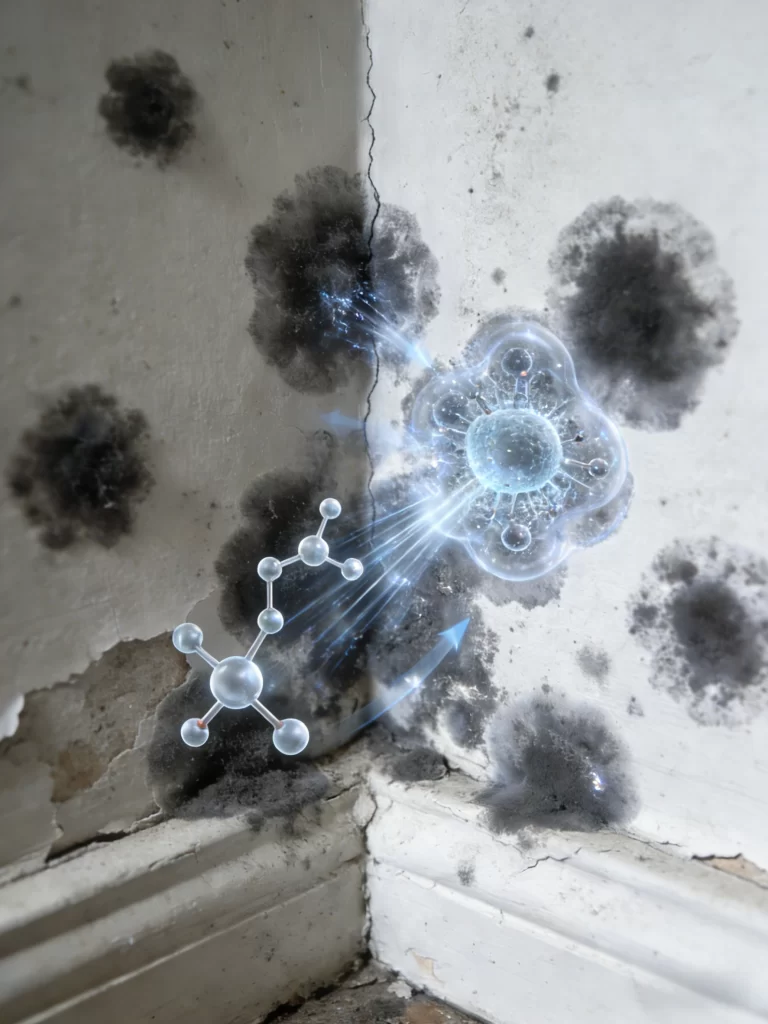
In the humid plum rain season in the south, or under the influence of condensation water caused by temperature differences during the heating period in the north, many households' corners and window edges will quietly develop a layer of gray-black spots. This is not just "disfigurement" at the aesthetic level, but also an "invisible killer" to health. These mold spores are inhaled into the lungs with air flow, which may trigger asthma, allergic rhinitis, and even more serious respiratory diseases. And the emergence of mold-proof and antibacterial coatings is precisely to build the first stable biological protective barrier for families in this "silent war" concerning living health.

II. In-Depth Analysis: How Do Molds and Bacteria "Invade" Your Home?
To understand the importance of antifungal and antibacterial coatings, one must first understand the survival mechanisms of the enemy.
- Hotbed for mold: Mold (Fungi) favors warm, humid, and poorly ventilated environments. The organic components in the wall base putty powder and latex paint (such as thickeners and protein-based additives) are exactly their excellent nutrient sources.
- Proliferation of bacteria: Common bacteria such as Staphylococcus aureus and E. coli can easily attach to and rapidly multiply on frequently touched surfaces such as kitchen and bathroom walls.
- Biological chain reaction: Organic acids produced by mold metabolism will further damage the coating structure, causing the coating to blister and peel, thereby exposing deeper substrate structures and forming a vicious cycle.
III. Technological Breakthrough: Core Black Technologies of Anti-Mold and Antibacterial Coatings
Although ordinary latex paints on the market also claim a certain level of anti-mold function, truly professional-grade anti-mold and antibacterial coatings achieve a qualitative leap at the molecular level.
- Active Antibacterial: Silver Ion (Ag+) Technology Silver ions are currently recognized as one of the safest and most efficient broad-spectrum antibacterial materials. They kill microorganisms by destroying bacterial cell membranes or interfering with their DNA synthesis. This mechanism is persistent because silver ions themselves are consumed at an extremely low rate during the reaction process.
- Physics + Chemistry Dual Anti-Mold Professional coatings not only add anti-mold agents with extremely low volatility (dry film anti-mold), but also significantly reduce the surface energy of the coating by optimizing the film-forming structure, making it difficult for moisture to penetrate, thereby cutting off the moisture supply for mold growth from the source.
- Photocatalyst (Nano Titanium Dioxide) Assistance Some high-end smart coatings also incorporate photocatalyst technology, which generates highly oxidative free radicals under light exposure. This not only kills surface microorganisms but also decomposes harmful gases in the air such as formaldehyde and TVOC.
IV. Buying Guide: How to Identify Truly "Healthy Paint"?
Faced with a dazzling array of products in the market, consumers should focus on examining the following dimensions:
- Standard Test Report: Check whether it complies with Chinese standards GB/T 1741 (Determination of anti-mold performance) and GB/T 21866 (Determination of antibacterial properties of antibacterial coatings). A genuine anti-mold paint should achieve the "Level 0" anti-mold standard (i.e., no growth under microscope).
- Environmental Certification: In addition to antibacterial function, basic indicators (VOC content, benzene, heavy metals, etc.) must pass. Look for the "Ten-ring Certification" or French A+ Certification.
- Scrub resistance cycles: The antibacterial function should not fail rapidly with cleaning. A high number of scrub resistance cycles indicates that the functional components are evenly and firmly distributed within the coating film.
V. Key Application Points: One-third material, seven-tenths substrate preparation.
If the substrate is not properly prepared, even the best anti-mold paint will be in vain.
- Eradicate old mold: If it is an old house renovation, you must use a professional mold remover to kill deep spores, and never cover it directly.
- Alkali-resistant primer: In humid environments, walls are prone to efflorescence; it is necessary to apply a high-performance alkali-resistant primer to isolate the alkaline substances in the substrate from damaging the surface anti-mold coating.
- Ventilation and drying: During construction, the environment should be kept dry to ensure the coating film is fully cross-linked and cured, forming a dense protective layer.


VI. Conclusion: For That Breath of Fresh Air
Home should be a sanctuary, not a breeding ground for allergens. Choosing high-quality anti-mold and antibacterial coatings is not only a pursuit of renovation quality, but also an investment in the long-term health of your family. When you can still breathe fresh, dry indoor air during the plum rain season, you will find that this "invisible guardian" protects not just the walls, but every comfortable breath of your loved ones.