Why Metallic Effect Paint Is the Most "Moody" Category Among Coatings
Among all coating categories, metallic effect paint is a rather special existence—its value does not lie in hiding, but in "performing." A silver-gray car slowly drives by under the sun, its body shifting between bright silver and dark gray as the viewing angle changes; a phone's metal body glows with a fine silky sheen under the light; a high-end appliance panel presents a brushed-metal-like texture. Behind these surfaces that make people instantly feel "premium," most are not real metal, but a thin layer of metallic effect paint. It uses an organic coating to simulate the visual language of metal, yet is lighter, more corrosion-resistant, and easier to form and mass-produce than real metal.
The reason alloy paint and metallic effect coatings (Metallic & Effect Coatings) can "change faces" lies in the effect pigments suspended within—ultra-thin aluminum flakes, copper-gold powder, mica pearlescent flakes, or glass flakes. Unlike ordinary pigments that show color through absorbing and scattering light, they act like countless tiny mirrors, reflecting incident light in specific directions. As the observation angle changes, the intensity of light reflected into the eye changes accordingly, producing the two optical effects of "flop" (angle-dependent color shift) and "sparkle" that ordinary solid-color paints can never replicate. This is also why the same color code of metallic paint shows an obvious brightness difference between frontal and oblique views, while solid-color paint hardly has such variation.
Historically, the evolution of metallic effect paint is itself a "history of effect pigment revolution." Early metallic paints used simply ground cornflake-shaped aluminum powder, with rough sparkle and limited color flip; the emergence of silver-dollar-shaped aluminum powder in the late last century made high-brightness, high-flip modern metallic paints possible; the industrialization of pearlescent pigments brought soft iridescence and deep layering into automobiles and consumer goods; entering this century, the maturity of technologies such as multi-color shift, coated passivation, and water-based compatibility simultaneously solved the two major propositions of "more dazzling effects" and "greener processes." It can be said that every appearance upgrade of metallic paint almost corresponds to a breakthrough in effect pigments or formulation technology. This also suggests that the competition in metallic effect paint is essentially a competition of deep integration of materials science with optics, chemistry, and process.
For the coating industry, metallic effect paint is a track with high technology density and added value. Its formulation must solve not only color, but also a series of challenges such as directional arrangement of effect pigments, suspension stability, interlayer compatibility, and weather-induced aging. Whoever can "align the aluminum flakes neatly," "control the sparkle evenly," and "tune the flop to look premium" can secure a place in high-end markets such as automotive, consumer electronics, home appliances, and architectural decoration. Precisely for this reason, enterprises like Kexin New Materials that have long been deeply engaged in industrial and decorative coatings regard metallic effect paint as an important yardstick to measure their own formulation and process capabilities.
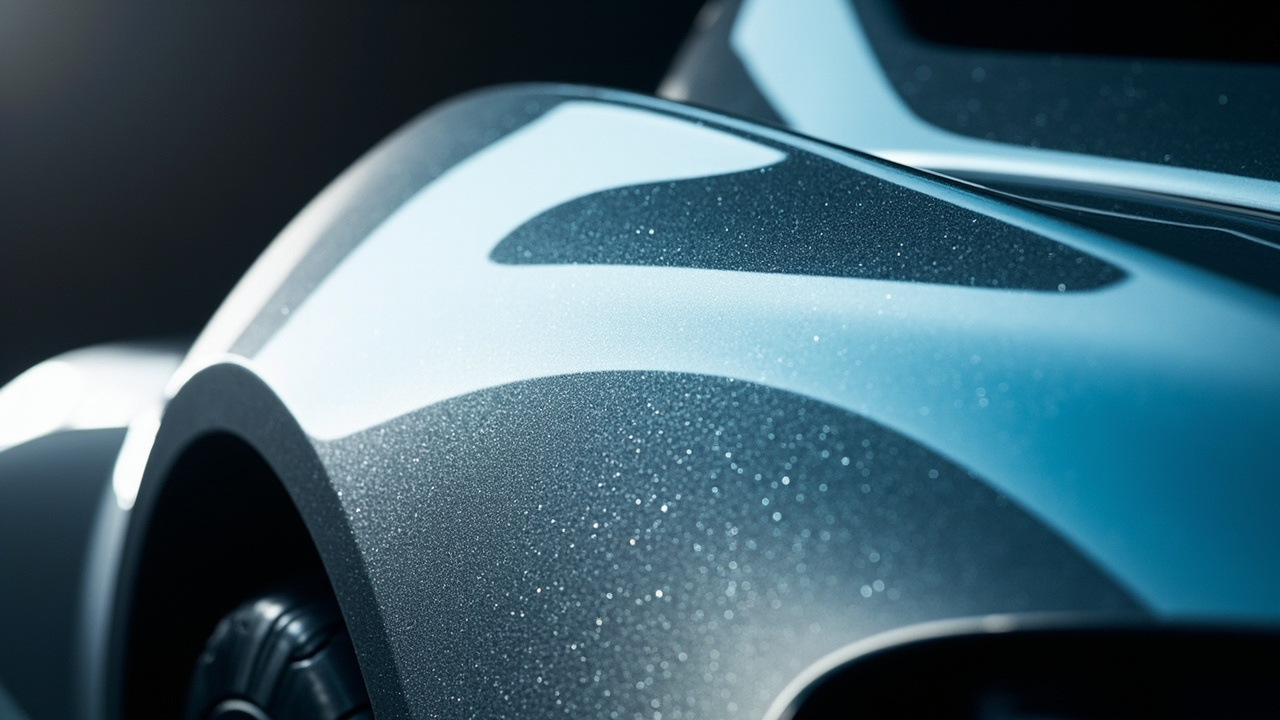
Effect Pigments: The Physical Source of Metallic Texture
To understand metallic effect paint, one must first understand the classification and optical behavior of effect pigments. Effect pigments on the market can be roughly divided into three categories: aluminum metallic pigments, pearlescent (mica/synthetic mica) pigments, and special effect pigments based on glass flakes, iron oxide, etc. Their coloring mechanisms differ, which also determines their respective suitable application scenarios.
The particle size distribution of aluminum flakes is a key parameter determining appearance. Generally, ultra-fine aluminum powder with a particle size of 3 to 8 microns produces an extremely fine satin gloss, with almost no visible sparkle, suitable for the "low-key metallic feel" of high-end home appliances and consumer electronics; medium-fine aluminum powder of 10 to 20 microns is the common range for automotive metallic paint, balancing coverage and moderate sparkle; aluminum powder of 25 to 50 microns or even coarser produces obvious diamond sparkle, used for sports models and decorative parts pursuing visual impact. The same metallic paint often combines aluminum powders of different particle sizes to obtain both fine base glow and accent sparkle—this "graded matching" design is one of the core skills of formulators.
Aluminum metallic pigment is the most classic type, essentially ultra-thin aluminum flakes (thickness typically in the hundreds of nanometers to micron range), further divided by manufacturing process into "leafing" and "non-leafing." Leafing aluminum powder is treated with stearic acid on the surface; after coating, it floats to the top of the film and arranges parallel, forming a strong mirror reflection similar to chrome plating, mostly used for anti-corrosion primer and special decoration; non-leafing aluminum powder is evenly dispersed inside the film, producing soft metallic gloss and obvious flop, and is the main force in automotive metallic paint and consumer electronics coating. The morphology of aluminum flakes is further subdivided into traditionally ground "cornflake" (irregular edges, strong coverage, soft sparkle) and the more advanced "silver dollar" (smooth and regular edges, high brightness, distinct flop), the latter being the key for high-end metallic paints pursuing high sparkle and high flip.
Pearlescent pigments use natural mica or synthetic mica flakes as the substrate, coated with one or more layers of high-refractive-index metal oxides (such as titanium dioxide, iron oxide). Light interferes at the upper and lower interfaces of the oxide film, producing soft iridescence similar to pearls and the inner wall of shells. By controlling the thickness of the oxide film, pearlescent pigments can present interference colors from silver-white, golden-yellow to red, purple, blue, green, and even a two-color effect of "one base color, another flash color." Pearlescent can be used alone or combined with aluminum powder and transparent colorants to create deep and layered texture on automotive pearl white, cosmetic packaging, and high-end plastic parts.
Special effect pigments are the fastest-growing branch in recent years, including glass-flake-based high-brightness pearlescent, coated multi-color shift pigments (goniochromatic, large angle-dependent color change, e.g., from green to purple), and metal-oxide-coated antique bronze and imitation gold pigments. They push flop to the extreme, used in concept cars, limited-edition consumer goods, anti-counterfeiting packaging, and other scenarios with extremely high uniqueness requirements. Understanding the differences among these three types of pigments is the first lesson in metallic effect paint formulation design and selection.
In addition to the two mainstreams of aluminum and mica, there is another important "imitation gold" effect pigment—copper-gold powder (commonly known as gold powder). It uses copper-zinc alloy flakes as the substrate, presenting different tones from red gold, green gold to pale gold by adjusting the copper-zinc ratio, widely used in printing, packaging, decorative paint, and crafts. The shortcoming of copper-gold powder is easy oxidation and darkening, so modern products often undergo surface passivation or resin coating to extend the color retention period. In contrast, "synthetic gold" (using dyed aluminum powder or pearlescent to simulate gold) has better weather resistance and more controllable hue, and is gradually replacing traditional copper-gold powder in outdoor and high-end decorative scenarios. In addition, with the rise of imitation metal finish demand, "liquid metallic paint" (containing high-concentration mirror aluminum powder, simulating electroplating/chrome effect without electroplating) has also become a rapidly growing segment; this type of product is highly related to electroplating-alternative coating technology and is a typical direction of metallic effect paint extending toward functionality.
From Chrome Plating to Spray Painting: Competition and Division of Labor in Metal Appearance Process Routes
It is worth noting that metallic effect paint is not the only means to obtain a "metal appearance"; it competes and complements with processes such as electroplating, vacuum coating (PVD/NCVM), and anodizing. Understanding this process landscape helps place metallic paint on the correct value coordinate.
Electroplating (especially decorative chrome) can provide mirror reflection and hardness closest to real metal, but the process involves heavy metals, strong acids, and wastewater treatment, with huge environmental pressure, and is difficult to directly achieve on non-conductive substrates such as plastics. Vacuum coating (PVD, NCVM non-conductive vacuum coating) deposits a layer of metal or metal oxide film in a vacuum chamber through physical vapor deposition, obtaining high-brightness metal or semi-transparent metal effects on plastics and glass, widely used in phones and cosmetic packaging, but with large equipment investment, high batch cost, and limited color flexibility. Anodizing is dedicated to aluminum, generating a porous oxide film through electrochemical means and then dyeing and sealing, combining decoration and protection, and is a common solution for consumer electronics aluminum parts.
The unique value of metallic effect paint lies in achieving a "sufficiently premium" metal appearance with the lowest process threshold, the most flexible color freedom, and the widest substrate adaptability. It does not need a vacuum chamber or plating tank, and can be applied on almost any substrate such as steel, aluminum, plastic, zinc alloy using conventional spraying lines; colors can be infinitely adjusted, and flop and sparkle can be finely customized; the environmental burden is far lower than electroplating. Precisely for this reason, in a large number of scenarios sensitive to cost, batch, and color diversity but not demanding "absolute mirror" (automotive body, appliance panels, hardware, packaging), metallic effect paint is the first choice. And when customers pursue a near-electroplating mirror texture but want to avoid electroplating pollution, the high-brightness mirror aluminum powder "electroplating-alternative paint" becomes a bridge between metallic effect paint and electroplating. It can be said that metallic effect paint is the most widely covering and cost-effective link in the metal appearance process spectrum.
Flop and Sparkle: Two Indicators That Must Be Understood Separately
Laymen often vaguely attribute the "premium feel" of metallic paint to "shimmer," but in a professional context, flop (flop/travel) and sparkle (sparkle/graininess) are two independent, even separately regulated optical indicators; understanding their difference is the key to reading metallic paint technology.
Flop describes the continuous change of the overall brightness of the paint film with the observation angle. When light illuminates at a fixed angle, rotating from near the specular reflection direction (bright state, observed at about 15° to 25°) to away from the specular direction (dark state, observed at about 110°), the lightness L* of the metallic paint drops significantly; this bright-dark drop is the "flop index." The more parallel and regular the aluminum flakes are arranged (especially silver-dollar-shaped aluminum powder), the greater the flop, the brighter the front and darker the side, and the stronger the visual impact. Solid-color paint hardly has flop, which is the most essential visual divide between metallic and solid-color paint. The automotive industry generally uses multi-angle spectrophotometers (measuring 15°, 25°, 45°, 75°, 110°, etc.) to quantify the entire flop curve, rather than a single-angle color value.
Sparkle is the discrete bright spots produced by individual aluminum or pearlescent flakes on a point light source (such as sunlight, spotlights) when observed up close. The strength of sparkle is determined by the particle size of the effect pigment: large particle size (e.g., above 30 microns) gives large and sparse sparkle points, presenting a "coarse sparkle" diamond feel; small particle size (e.g., below 10 microns) gives fine and dense sparkle points, close to a "fine satin" surface. At the same time, sparkle turns into "graininess" under diffuse light (overcast sky); if not controlled properly, it looks dirty and messy. The difficulty of high-end metallic paint is precisely to have just-right sparkle under direct light, yet no obvious graininess under diffuse light, which requires a fine balance of pigment particle size distribution, concentration, and dispersion state.
Looking at these two indicators separately, one can understand why the formulation of metallic paint is far more complex than solid-color paint: it is not adjusting a "color," but adjusting an entire optical response curve that changes with angle, while balancing the far-view flop and near-view sparkle. Any imbalance in any link will make the paint surface look cheap or messy.
In addition to flip-flop and sparkle, there are several secondary yet important sensory indicators that together shape the "premium feel" of metallic paint. One is "lightness gradation," meaning whether the transition from bright to dark states is continuous and natural—high-quality metallic paint has a silky-smooth light-dark transition, while inferior products may show abrupt jumps. The second is "color purity": metallic paint should maintain a pure hue without graying or dirtying in the bright state, which relates to the cleanliness of the effect pigments, resin yellowing, and varnish transparency. The third is "depth," especially for pearlescent and dark metallic paints, where the film should have a transparent, deep perspective that you can "look into," relying on multi-layer thin coating and high-transparency clear coat. These sensory dimensions, difficult to quantify with a single number, are precisely the watershed distinguishing mediocre from excellent metallic paint, and also reflect the formulator's experience and artistry. For this reason, metallic paint development is often described as "a combination of science and aesthetics"—requiring both rigorous optics and chemistry, and a keen aesthetic sense for texture.
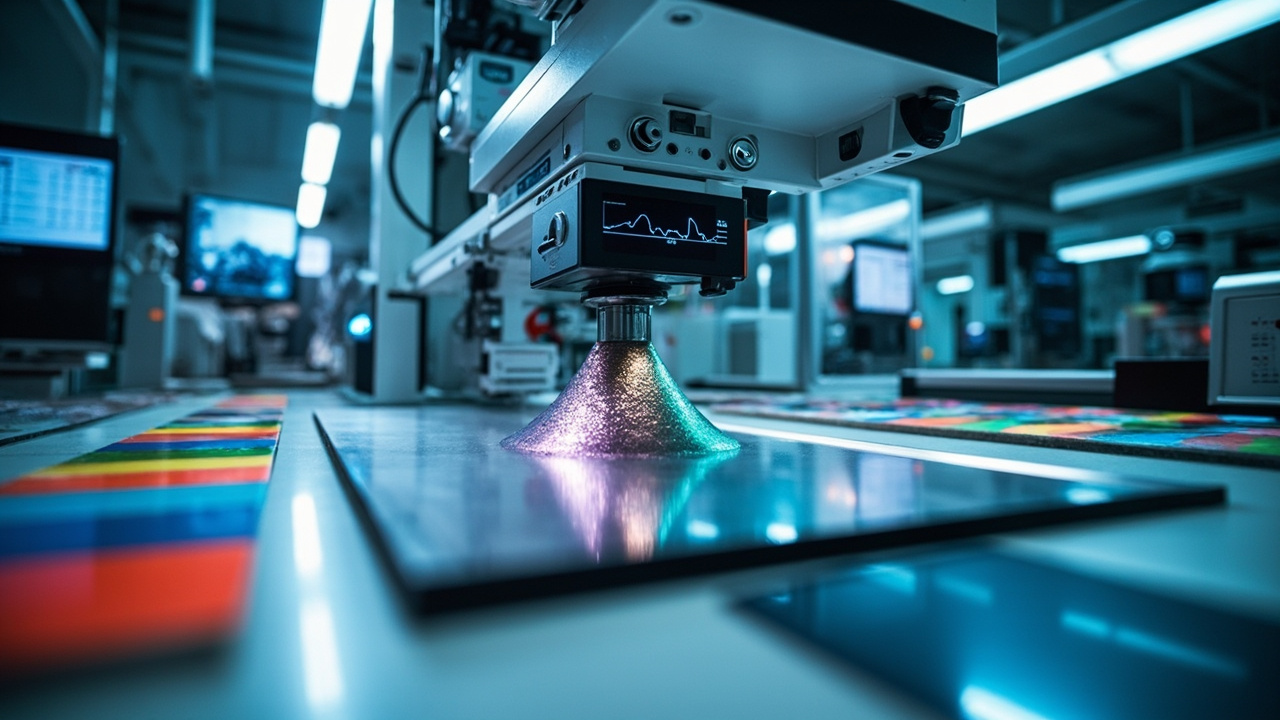
Resin and Formulation Systems: Making Effect Pigments "Line Up"
No matter how excellent the effect pigments are, they must rely on the resin system and formulation process to be "neatly arranged, stably suspended, and firmly adhered." The core of metallic effect paint formulation can be summarized in three things: orientation, suspension, and protection.
Orientation refers to making aluminum flakes and pearlescent flakes arrange as parallel as possible to the paint film surface. The more parallel the arrangement, the more concentrated the reflection, the stronger the goniochromism, and the purer the metallic feel. Many factors affect orientation: the evaporation rate of solvent or water determines the "flattening" force on the aluminum flakes during film shrinkage—if evaporation is too fast, the flakes are frozen in a disordered posture before they can lie flat, causing a dark and blotchy finish; if too slow, the flakes may flip and misalign as the coating flows. Therefore, metallic paint is extremely sensitive to solvent ratio, application viscosity, and flash-off conditions. Modern formulations often introduce orientation aids (such as cellulose esters, wax microparticles, specialty rheology modifiers) to assist aluminum flake orientation during the film drying and shrinkage stage, which is also the key process know-how distinguishing high-end metallic paints from ordinary products.
Worth elaborating is the deep impact of solvent/water evaporation gradient on orientation. After metallic paint is applied, the film dries and shrinks layer by layer from surface to interior; this shrinkage acts like an invisible hand pressing the aluminum flakes into a parallel posture. The ideal evaporation curve is fast first, then slow: initial rapid evaporation quickly loses fluidity and locks flake position, preventing them from flowing and flipping with the coating; later gentle evaporation gives the flakes time to fine-tune and lie flat. This is the purpose of "fast-slow solvent blending" in formulations—using only fast solvent freezes flakes before they lie flat; using only slow solvent causes easy flow misalignment. Water-based systems are more difficult to control because water evaporation is strongly affected by ambient humidity, often requiring co-solvents, film-forming aids, and rheology aids to work together, even using intermediate flash-off heating to stabilize evaporation rhythm. Understanding this coupled "evaporation—shrinkage—orientation" relationship is the underlying logic of metallic paint formulation and application.
Suspension refers to preventing effect pigments from settling, agglomerating, or stratifying during storage and application. Aluminum flakes have high density and specific surface area, easily sinking or stacking in the paint. The formulation needs rheological control (thixotropic design) to form a weak gel structure at rest that supports the pigment, yet flows smoothly under shear (stirring, spraying). This is why metallic paint usually requires thorough stirring before application and has strict storage stability requirements.
Protection involves the weather and corrosion resistance of the effect pigments themselves. Bare aluminum flakes are chemically active; encountering moisture, acid/alkali, or free acid in certain resins causes "gassing" (aluminum reacts with water to release hydrogen, causing can swelling or even bursting) and discoloration. For this reason, industry widely uses surface-coated "silica-coated aluminum powder" and "polymer-coated aluminum powder," wrapping the flakes in an inert protective shell to improve weather and corrosion resistance and compatibility with water-based systems. In terms of resins, metallic effect paints can be based on acrylic, polyurethane, polyester, and other systems: solvent-based 2K polyurethane, with its excellent fullness and weather resistance, is commonly used for automotive and high-end industrial parts; water-based acrylic/polyurethane systems are the mainstream direction under green trends; for consumer electronics, thin-coat, fast-dry, UV-curable specialty systems are often used to fit automated production lines. Kexin New Materials' formulation accumulation in decorative industrial coatings is largely reflected in its grasp of this "orientation—suspension—protection" balance.
Complete Coating Process: Multi-layer Coordination from Substrate to Clear Coat
Metallic effect paint almost never exists alone; it is the "color layer" in a multi-layer coating system, and its final effect depends on the coordination of the entire system. Taking the most typical "basecoat/clearcoat" (BC/CC) system as an example, a complete process usually includes four stages: substrate pretreatment, primer, color coat (metallic basecoat), and clear coat, each affecting the final metallic texture.
Substrate pretreatment determines the foundation of adhesion. Metal substrates need degreasing, derusting, phosphating, or passivation; plastic substrates need stress relief, flame or plasma treatment to enhance polarity; treatment methods vary greatly by substrate, which is also the premise for metallic paint to be widely used on steel, aluminum, zinc alloy, plastic, and other substrates. The primer layer provides anti-corrosion, filling, and interlayer adhesion, offering a uniform, non-absorbent "canvas" for the color coat—the primer's color and hiding power directly affect the final hue and flip-flop of the metallic basecoat, so high-end systems often specify a dedicated color primer matched to the color coat.
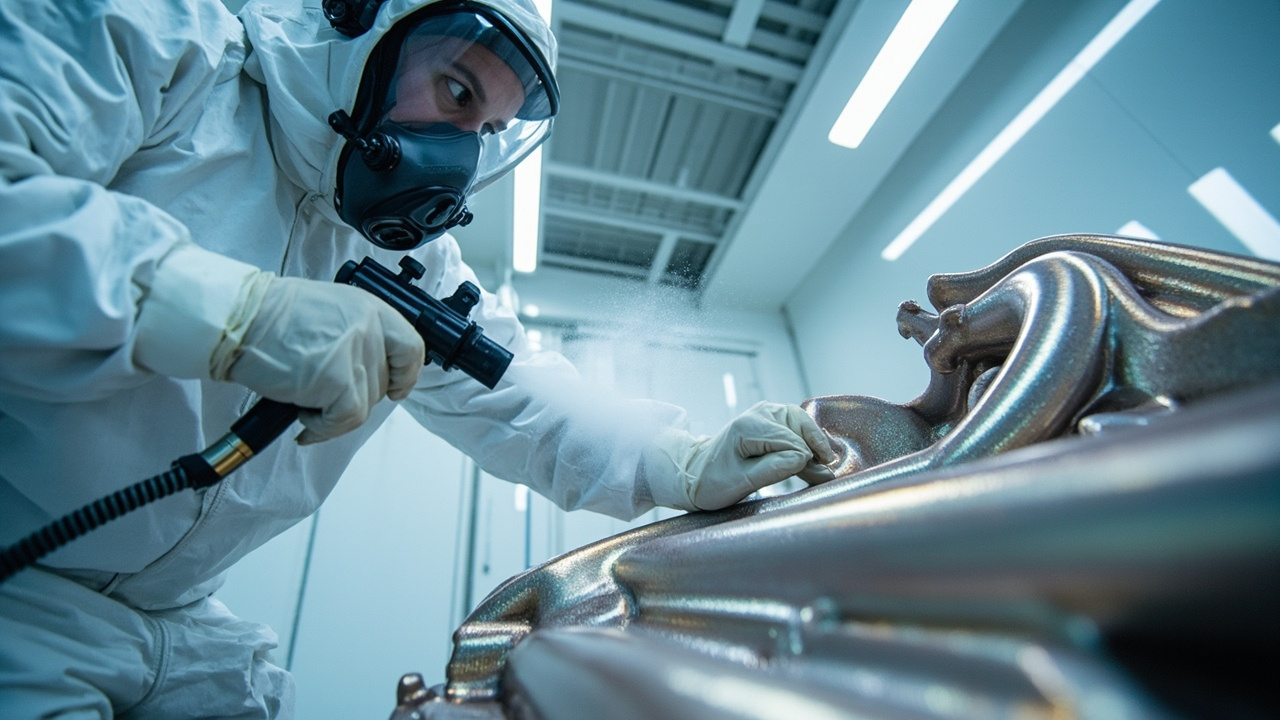
The application of metallic basecoat is the most technically demanding part of the process. It usually adopts "multi-layer thin spraying" rather than "one-time thick spraying": the first mist coat/tack coat establishes adhesion and initial orientation, subsequent wet coats build color and hiding, and finally a "control coat/dust coat" may be added to fix flake posture at the film surface and unify sparkle. The atomization pressure, fan pattern, gun distance, and travel speed of the spray gun jointly determine flake orientation and distribution—finer atomization and fuller flash-off make flakes easier to align parallel, enhancing flip-flop. Minor differences in application parameters can cause metallic-paint-specific appearance defects like "blushing," "cloud shadow," and "color difference."
The outermost clear coat not only provides gloss, fullness, weather resistance, and scratch protection, but its transparency and leveling also amplify or weaken the underlying metallic effect. High-solid 2K polyurethane clear coat, water-based clear coat, and even UV clear coat each have applicable scenarios. The system must also consider interlayer "lifting" and "bleeding" risks: if the clear coat solvent is too strong, it may swell the basecoat and disturb the arranged flakes, reducing flip-flop. Therefore, the metallic paint system is an integral engineering project where any layer change requires re-verification of compatibility.
Film thickness control is another often-underestimated yet crucial variable in metallic paint processes. Metallic basecoat has an "optimal window" of film thickness: too thin means insufficient hiding, easy base exposure, and lighter color; too thick causes layered flake stacking and disordered posture, reducing flip-flop and increasing blushing risk. This is opposite to the intuition of solid color paint "thicker is safer," and is a new认知 that must be established for metallic paint application. Usually the dry film thickness of metallic basecoat is controlled around 15 microns, emphasizing "thin coats in multiple passes, flash-off between passes" so each flake layer has sufficient time and space to lie flat. Clear coat thickness is relatively flexible, generally 30 to 50 microns to ensure fullness and durability. Additionally, the same color coat shows different flip-flop and hue at different film thicknesses, so the standard thickness determined by sampling must be strictly reproduced in mass production, which is why metallic paint lines are generally equipped with online film thickness monitoring. Understanding and maintaining these process windows is the key to truly converting an excellent metallic paint formulation into stable mass-produced appearance, and a direct reflection of the coating supplier's technical service capability.
| Coating | Main Function | Typical Material | Impact on Metallic Effect |
|---|---|---|---|
| Pretreatment | Degreasing, conversion coating, adhesion improvement | Phosphating solution/plasma treatment | Adhesion foundation, indirectly affects durability |
| Primer | Anti-corrosion, filling, interlayer adhesion | Epoxy/PU primer | Hiding and base color affect flip-flop |
| Metallic basecoat | Color, sparkle, goniochromism | Aluminum powder/pearlescent color paint | Directly determines metallic texture |
| Clear coat | Gloss, weather resistance, scratch resistance | 2K PU/water-based/UV clear coat | Amplifies or weakens metallic effect |
Application Map: Full-domain Penetration from Automotive to Consumer Electronics
The application of metallic effect paint has long extended beyond automotive, penetrating almost all industrial and consumer fields pursuing "premium texture," with different fields emphasizing different performance demands.
Automotive remains the largest and most mature application scenario for metallic effect paint. According to industry statistics, the proportion of metallic and pearlescent paints in new car colors continues to rise, with silver, gray, black, and other metallic colors long ranking among the world's best-selling car colors. Automotive requirements for metallic paint are the most stringent: both strong and uniform flip-flop and sparkle, and passing thousands of hours of weather aging, acid rain, stone chipping, car wash scratch resistance, and ensuring color consistency across different factories and batches of the same model. This strict standard makes automotive metallic paint the technical high ground of the entire industry. The automotive refinish field poses another challenge to metallic paint—reproducing the original factory's flip-flop and sparkle under non-standard repair shop conditions, which is a completely different engineering logic from OEM coating.
Consumer electronics is the fastest-growing application over the past decade or so. The metallic-textured appearance of mobile phones, laptops, tablets, and wearable devices is largely achieved through metallic effect paint (especially thin-coat systems on plastic, glass, or metal substrates). The requirements here are high hiding power and fine shimmer under ultra-thin coatings, fingerprint resistance and abrasion resistance, as well as seamless effect transition with processes such as NCVM (non-conductive vacuum metallization) and anodizing. The home appliance sector (refrigerators, washing machines, air conditioner panels) pursues a balance between decorative effects such as metallic brushed, champagne gold, and space gray, and stain and scratch resistance. In recent years, the "built-in, set-based, home-furnishing" trend of high-end home appliances has made appliance panels increasingly resemble furniture and building materials, imposing higher requirements on the textural consistency, anti-fingerprint, and easy-to-clean properties of metallic paint; while the pursuit of "lightweight appearance parts" in consumer electronics also drives metallic paint to evolve toward achieving higher hiding power and finer texture at thinner film thicknesses. The upgrading of these downstream demands, in turn, pulls the continuous progress of effect pigments and formulation technologies, forming a virtuous cycle of "application driving technology, technology feeding back to application."Architectural and industrial decoration are also important markets. Fluorocarbon metallic paint for aluminum curtain walls and door/window profiles must maintain metallic luster under decades of outdoor exposure; coil (prepainted steel) metallic paint provides batch-produced metallic appearance for building facades and appliance housings; in addition, hardware, sanitary ware, lighting, furniture, packaging, and other fields also heavily use metallic and pearlescent effect paints for decorative upgrades. Coating companies like Kexin New Materials that supply multiple industries often need to maintain multiple sets of metallic paint formulations and color cards for different substrates and working conditions, to cover diverse needs from construction machinery to consumer goods.
New energy vehicles and rail transit have opened new incremental space for metallic effect paint. New energy vehicle models generally pursue a sense of technology and recognizability; special color schemes such as pearl white, starry gray, and gradient matte metallic have become important carriers of brand differentiation, and have also driven demand for high-flop high-sparkle, multi-color-shift, and other high-end effect pigments; at the same time, the increase of aluminum alloy and composite material parts brought by vehicle lightweighting imposes higher requirements on the substrate adaptability of metallic paint. Construction machinery, agricultural machinery, and special vehicles, beyond traditional yellow and orange engineering colors, are increasingly adopting metallic paint to enhance product grade and weather resistance. In addition, with the advancement of "plastic replacing steel" in automotive interior/exterior trims, home appliances, and consumer goods, the demand for metallic effect paint on plastic parts is rising rapidly, which also makes the technical boundary between metallic effect paint and plastic coating increasingly blend.
Market Size and Competitive Landscape: Offense and Defense in the High-Value-Added Track
The effect pigment and decorative coating track to which metallic effect paint belongs is one of the most value-added and technically entrenched segments in the coating industry. From the upstream perspective, the global effect pigment market has reached the scale of several billion US dollars and maintains a mid-to-high single-digit CAGR, driven by automotive lightweighting and personalized color schemes, consumer electronics appearance upgrades, and the persistent preference for metallic texture in architectural decoration. Aluminum effect pigments occupy the largest share, while pearlescent and specialty effect pigments grow faster; high-end varieties such as multi-color-shift have unit prices and gross margins far above conventional aluminum powder, and are the high ground competed for by upstream companies.
From the coating side, the competitive landscape of metallic effect paint shows the characteristic of "upstream pigment oligopoly, downstream formulation diversity." The core technologies of effect pigments have long been concentrated in the hands of a few international pigment giants, especially high-end varieties such as high-flop silver-dollar-shaped aluminum powder and multi-color-shift pigments; while the formulation and application of metallic effect paint are relatively fragmented, with global coating giants, regional coating companies, and specialized decorative coating vendors each having their expertise. China is the world's largest coating producer and consumer, and also one of the fastest-growing markets for metallic effect paint. Local companies have achieved scaled supply in mid-to-low-end metallic paint, and are gradually breaking through into high-barrier fields such as automotive OEM paint and high-end consumer electronics coating.
From the value chain distribution, metallic effect paint shows a "smile curve" characteristic: upstream high-end effect pigments and downstream brand customers' color definition capability occupy the high-profit ends, while midstream coating formulation and manufacturing need to extend value toward both ends through technical depth and service capability. This also explains why leading metallic paint companies increasingly emphasize "selling solutions rather than products"—by providing customers with color development, color management, construction technical support, and even joint development of new colors, they embed themselves into customers' product definition processes, thereby gaining stronger stickiness and bargaining power. For local companies, being close to the vast and rapidly iterating downstream manufacturing (home appliances, consumer electronics, new energy vehicles, hardware) is a natural advantage over international giants—faster response, more flexible support, and more controllable costs.
The focus of competition is shifting from "whether metallic effect can be made" to "whether stable, eco-friendly, and batch-reproducible high-end metallic effect can be made." This means a company's moat is increasingly reflected in formulation databases, color management capability, water-based and low-VOC technologies, and coordination capability with customers' production lines. For local coating companies, the opportunities lie in three aspects: first, undertaking the supporting demand brought by the localization of supply chains such as consumer electronics, home appliances, and new energy vehicles; second, leveraging the green policy window to replace traditional solvent-based products with eco-friendly metallic paints such as water-based, powder, and UV; third, establishing differentiated advantages in specific scenarios such as construction machinery, rail transit, and hardware furniture through specialization in niche fields. Companies like Kexin New Materials' continuous investment in industrial decorative coatings is precisely aimed at this structural upgrade opportunity from "having" to "excelling."
Greenization and Technology Trends: The Next Stop for Metallic Paint
Like the entire coating industry, metallic effect paint is being pushed forward by both environmental regulations and technological progress. The tightening of VOC (volatile organic compounds) emissions puts substitution pressure on traditional solvent-based metallic paint, and greenization has become an irreversible direction, which precisely poses a higher technical threshold for metallic paint than for solid-color paint—because water-based conversion directly affects the orientation and stability of aluminum flakes.
Water-based metallic paint is the main direction of current substitution. The high surface tension and slow evaporation characteristics of water make aluminum flake orientation harder to control than in solvent systems, easily causing problems such as reduced flop, mottling, and enhanced graininess; at the same time, bare aluminum flakes have higher gas expansion risk in water and must rely on coated aluminum powder and specialized additives. After years of development, water-based metallic basecoat has become quite mature in automotive OEM and refinish fields, with flop and sparkle close to solvent systems, becoming a reliable choice for environmental compliance. Powder metallic paint is used in scenarios requiring weather resistance and thick films; through the "bonding" process, aluminum flakes are fixed on the surface of powder particles, solving the color difference and recycling difficulties caused by separation of aluminum powder and resin during spraying, and is widely used in aluminum profiles, hardware, and outdoor furniture. UV-curable metallic paint, with the advantages of rapid curing, low energy consumption, and ultra-thin coating, is rapidly penetrating into consumer electronics and plastic part decoration.
High-solids and ultra-high-solids solvent-based metallic paint is another pragmatic route: while retaining the advantages of solvent systems in easy control of aluminum flake orientation and stable appearance, it compresses VOC emissions by increasing solid content and reducing solvent usage, suitable for production lines that are not yet fully water-based but need to meet emission reduction targets, and is a transitional choice for many industrial customers. These greenization routes are not mutually exclusive, but form a division of labor for different substrates, processes, and durability requirements: water-based for automotive and general industry, powder for aluminum profiles and outdoor hardware, UV for consumer electronics and plastic parts, high-solids for transition and special industrial scenarios. Companies often need to have reserves of multiple technical routes simultaneously to cope with diverse customer needs.
The technology frontier is also evolving toward the integration of "function + decoration": coatings with both metallic appearance and conductive/EMI shielding functions for electronic product housings; metallic paint combined with infrared reflection for building energy saving and low detectability; smart effect pigments that change color with temperature and light for concept products and anti-counterfeiting. Digital color management (multi-angle color measurement, AI color matching, cloud color libraries) is solving the most troublesome batch consistency and rapid sampling problems of metallic paint. Overall, metallic effect paint is evolving from a mere "appearance decoration material" into a "high-value-added coating integrating decoration and function," which opens new value space for coating companies with formulation depth and process accumulation. For manufacturers like Kexin New Materials that balance industrial protection and decorative performance, how to combine metallic aesthetics with weather resistance, corrosion resistance, and functionalization needs will be the core proposition of long-term competitiveness.
Looking back at the entire value chain of metallic effect paint, a clear trend can be seen: it is rising from a "decorative layer that adds the finishing touch" to an "important component of product value." Under the wave of consumption upgrade and personalization, appearance texture is increasingly becoming a direct source of product competitiveness—the first impression of a mobile phone, a car, or a home appliance is largely determined by that layer of metallic paint. This means metallic effect paint is no longer just a material item on the procurement list, but a strategic link related to brand tone and user experience. For coating companies, this is both an opportunity and a higher threshold: to establish a foothold in this track, one must simultaneously possess the depth of materials science, sensitivity to optical aesthetics, reserves of green processes, and capability of color service. Whoever can integrate these four will gain the first-mover advantage in the industrial upgrade from "can do" to "do well" and from "selling paint" to "selling solutions." The story of metallic effect paint, in the final analysis, is a continuous innovation story about "how to reproduce and surpass the beauty of metal with organic coatings," and this story is far from its finale.
Defect Atlas: Six Appearance Issues Most Prone to Problems in Metallic Paint
The appearance defects of metallic effect paint are more hidden and harder to repair than those of solid-color paint, because they are often not "wrong color" but "wrong texture"—visible yet hard to quantify. Understanding the causes of common defects is the basis of formulation and construction quality control, and also an important dimension for evaluating suppliers' process capability during selection.
The first is "mottling/clouding," manifested as cloud-like patches of varying shades on the paint surface. Its root cause is almost always uneven aluminum flake orientation: locally too fast or too slow evaporation, uneven spray gun overlap, and insufficient flash-off time will cause differences in aluminum flake posture in different regions, resulting in light and dark clouds. The solution is to stabilize atomization and spray gun rhythm, ensure sufficient flash-off, and add orientation additives in the formulation to improve the self-leveling ability of aluminum flakes. The second is "color difference and batch difference," that is, perceptible differences of the same color number between different workpieces, different batches, or different factories. The color difference of metallic paint is often not a hue shift, but a difference in flop amount and sparkle intensity, so multi-angle color measurement rather than single-angle evaluation must be used, and strict control of aluminum powder batches, construction parameters, and film thickness is required.
The third is "darkening/insufficient flop," where the paint surface lacks the due metallic brightness and light-dark contrast. Common causes are insufficiently parallel arrangement of aluminum flakes (excessively high construction viscosity, insufficient atomization, excessive film thickness causing flake stacking), or strong solvents in the clear coat swelling the basecoat and disturbing the aluminum flakes. The fourth is "graininess/dirty appearance," where the paint surface appears rough and unclean under diffuse light, mostly due to oversized effect pigment particle size or excessive concentration, requiring rebalancing between sparkle intensity and fineness. The fifth is "bleeding/intersolvent attack," where strong solvents in the clear coat or subsequent coating dissolve the basecoat, causing color migration and reduced flop, which needs to be avoided through interlayer compatibility verification and reasonable flash-off. The sixth is "pinholes and pockmarks related to bubbling/can swelling," related to aluminum powder gas expansion, moisture residue, or substrate outgassing, mostly seen in water-based systems and plastic substrates, which need to be solved by passivating aluminum powder, sufficient pre-baking, and substrate stress relief.
Precisely because these defects are mostly closely related to the process window, mature metallic paint suppliers often provide detailed application guidelines with the product, specifying viscosity, atomization pressure, spray gun distance, gun travel speed, flash-off time, and film thickness window. When Kexin New Materials delivers decorative coatings to customers, it usually also provides matching application parameters and sample verification processes based on the customer's production line conditions, turning "achievable in the lab" into "stably achievable on the production line," which is exactly the service value that distinguishes metallic paint from ordinary coatings.
Testing, Color Management and Batch Consistency
The hardest part of metallic effect paint is not "achieving a good effect once," but "achieving the same good effect every time and every batch." Behind this lies a complete system of testing and color management, which is also the invisible barrier of the high-end metallic paint supply chain.
Traditional single-angle color difference evaluation (e.g., measuring only 45°/0°) is almost ineffective for metallic paint, because it cannot capture the flop (angle-dependent color shift). The industry standard practice is to use a multi-angle spectrophotometer to simultaneously measure L*a*b* at multiple angles relative to specular reflection (such as 15°, 25°, 45°, 75°, 110°, and some devices also include side interference angles), thereby描绘 the complete flop curve and flip index. In recent years, more advanced "effect colorimeters" can also quantify texture indicators such as sparkle and graininess, making the texture that could only be judged by experienced workers' eyes become digitalized and transmissible. This enables "color" to be precisely transmitted like data for the first time between suppliers and customers, headquarters and branch factories.
Another pillar of color management is the formula database and sampling capability. A high-end metallic color is often compounded from multiple types of aluminum powder, pearlescent pigments, and transparent colorants in precise proportions, and any fluctuation in raw material batches may affect the final effect. Therefore, enterprises need to maintain a huge formula library, raw material batch files, and color tolerance standards, and use computer color matching (CCM) and AI color matching to shorten the sampling cycle. For customers such as automotive and consumer electronics that require cross-factory consistency, suppliers also need to provide overall delivery of standard color panels, application parameters, and color measurement methods, ensuring that the effect reproduced on the customer's production line is consistent with the standard panel.
The control of batch consistency runs through the entire chain from raw materials to finished products: aluminum powder and pearlescent pigments must be inspected upon arrival according to particle size distribution, brightness, flop, and other indicators; the production process must control the dispersion process (over-dispersion will break aluminum flakes and reduce brightness); finished products must be released according to multi-angle color values and appearance limit samples. It can be said that the core competitiveness of a metallic paint enterprise is largely hidden in this "invisible" testing and color management system, rather than in a single formula itself.
Metallic Paint on Different Substrates: Steel, Aluminum, Zinc Alloy and Plastic
The reason why metallic effect paint can be widely used is that it can adapt to multiple substrates, and the surface properties of different substrates vary greatly, which directly determines the choice of pretreatment methods and matching systems.
Steel substrate is the mainstream for industrial parts, automotive bodies, and home appliance housings, and its core demand is anti-corrosion. Metallic paint on steel usually requires a complete "primer—pigmented paint—clear coat" system, where the primer provides anti-corrosion and adhesion, and the pigmented paint presents the metallic effect. Steel pretreatment mainly consists of degreasing, rust removal, phosphating (or silanization), and the quality of the conversion film directly affects the life of the entire coating. Aluminum and aluminum alloy substrates (curtain walls, door and window profiles, consumer electronics, automotive lightweight parts) have a dense oxide film on the surface, and adhesion treatment requires chromating, chrome-free passivation, or anodizing as a base; fluorocarbon metallic paint on aluminum profiles is a classic solution for weather-resistant metallic appearance on building facades, which can maintain color outdoors for decades.
Zinc alloy die-castings (hardware, sanitary ware, lighting, automotive trim) have a dense surface but have pores and release agent residues. Pretreatment requires thorough degreasing and often electrophoretic or powder coating as a base, followed by metallic effect paint, to balance anti-corrosion and decoration. Plastic substrate is an important carrier for consumer electronics, home appliances, and automotive interior/exterior trims. The challenge lies in low surface energy, weak polarity, and difficulty in adhesion, as well as intolerance to high-temperature baking. Metallic paint on plastic usually requires flame/plasma/primer treatment to improve polarity, adopts low-temperature curing or UV curing systems, and pays special attention to wear resistance, resistance to cosmetics/sweat, and fingerprint resistance in consumer scenarios.
Because the differences between substrates are so great, there are few metallic effect paints that "fit all" with one product; instead, serialized matching solutions are formed around substrates and working conditions. For enterprises like Kexin New Materials that supply to multiple industries such as construction machinery, hardware, home appliances, and consumer goods, the ability to provide verified matching systems (pretreatment suggestions + primer + pigmented paint + clear coat + application parameters) for different substrates often determines the customer's choice more than the performance of a single product.
Selection Guide: How to Choose Metallic Effect Paint for Specific Scenarios
Faced with a wide variety of metallic effect paints, purchasers and engineers are often confused. A pragmatic selection logic is to converge sequentially around the five dimensions of "substrate—appearance goal—durability requirement—process condition—compliance constraint."
First look at the substrate and appearance goal. Clarify whether the workpiece is steel, aluminum, zinc alloy, or plastic, which determines the pretreatment and matching system; then clarify whether you want a strong-impact high-flop high-sparkle (such as sports models, concept products), or a soft and delicate satin texture (such as high-end home appliances, consumer electronics). The former tends to silver-dollar-shaped coarse aluminum powder, the latter tends to fine aluminum powder or pearlescent compound. Then evaluate the durability requirement: outdoor applications (curtain walls, body exterior trims) must select resins with high weather resistance (fluorocarbon, high-weather-resistant polyurethane) and weather-resistant effect pigments; indoor decorative parts can be appropriately relaxed, but still need to pay attention to scratch resistance, stain resistance, and chemical resistance.
Then look at the process conditions and compliance constraints. Whether the workpiece can be baked at high temperature determines the range of optional solvent-based/water-based/UV/powder; whether the production line is manual spraying, automatic spraying, or electrostatic spraying affects the atomization and powdering design of the coating; VOC regulations and the company's environmental goals may directly require water-based, powder, or high-solid systems. Finally, for customers requiring batch consistency or cross-factory reproduction, "whether the supplier has multi-angle color measurement, formula database, and application technical support" should also be included in the evaluation—because the success of metallic paint is half in the product and half in the service and process matching.
Going through this logic usually locks in the right direction from the numerous products. It must be emphasized that the selection of metallic effect paint is rarely as simple as "buying a bucket of paint," but choosing a complete solution including pretreatment, matching coatings, application parameters, and color management, which is also the value of professional coating suppliers.
Frequently Asked Questions
Q: What is the difference between metallic paint, pearlescent paint, and solid color paint? A: Solid color paint (opaque paint) only contains ordinary pigments, showing color through absorption and scattering, without flop; metallic paint contains aluminum flake effect pigments, producing obvious flop and sparkle; pearlescent paint contains mica-based pearlescent pigments, producing soft iridescence and deep layers through light interference. The three can be used alone or in combination. Metallic paint has strong impact, pearlescent paint is more high-end and delicate. Actual high-end color matching is often the result of compounding aluminum powder, pearlescent, and transparent colorants in precise proportions, with both metallic luster and pearlescent layers, and deep hues can be adjusted through transparent colorants, which is also why the same "silver gray" or "pearlescent white" has different textures on different brand models.
Q: What is "flop"? Why does metallic paint look different from front and side? A: Flop is the phenomenon that the brightness of the paint film changes with the observation angle. The aluminum flakes in metallic paint are arranged parallel like miniature mirrors. When viewed head-on, the reflected light is concentrated and appears bright; when viewed obliquely, the reflected light deviates and appears dark, thus producing a bright-dark contrast. The more neatly the aluminum flakes are arranged, the stronger the flop, which is the core feature distinguishing metallic paint from solid color paint.
Q: Why is metallic paint more prone to mottling and color difference than ordinary paint during application? A: Because the appearance of metallic paint depends on whether the aluminum flakes can be arranged parallel, and the aluminum flake orientation is extremely sensitive to spraying parameters (atomization, gun distance, gun travel speed, flash-off time) and solvent evaporation. Parameter fluctuations will make the aluminum flake posture messy, resulting in mottling, cloud shadow, and color difference. Therefore, metallic paint usually requires multi-layer thin spraying, sufficient flash-off, and strict control of application conditions.
Q: Why does aluminum powder "bulge the can"? How to avoid it? A: Bare aluminum flakes have high chemical activity and react with water in water-based or free-acid-containing systems to release hydrogen, causing can inflation or even can explosion (gassing). The avoidance method is to use silica-coated or polymer-coated passivated aluminum powder, combined with corrosion inhibitor additives, which is also the key to the stable storage of water-based metallic paint.
Q: Can the effect of water-based metallic paint reach the level of solvent-based? A: After years of development, mature water-based metallic basecoats can already approach solvent-based in flop and sparkle, and are widely used in automotive OEM and refinish. Water-based systems have higher requirements for aluminum flake orientation control, relying on coated aluminum powder, special rheological and orientation additives, and reasonable flash-off processes, but their environmental compliance advantage makes them the mainstream alternative direction. It should be reminded that water-based metallic paint is more sensitive to the temperature and humidity of the application environment, and the production line usually needs to be equipped with dehumidification and intermediate flash-off facilities to stably reproduce the laboratory-level appearance.
Q: What are the main fields of metallic effect paint? A: Automotive (OEM and refinish) is the largest market, followed by consumer electronics (mobile phones, laptops, etc.), home appliance panels, architectural aluminum profiles and curtain walls, coil coated steel, as well as decorative fields such as hardware, sanitary ware, lighting, furniture, and packaging. Different fields have different focuses on flop, sparkle, weather resistance, scratch resistance, and coating thickness.
Q: What indicators should be focused on when choosing metallic effect paint? A: According to the substrate and working conditions, focus on: whether the flop (flip amount) and sparkle/graininess meet the appearance goal; whether the aluminum powder is passivated and coated, and how the storage stability is; the compatibility of the resin system with primer/clear coat; durability indicators such as weather resistance, corrosion resistance, and scratch resistance; and whether it meets environmental regulations such as VOC. High-end applications also need to pay attention to batch color consistency and multi-angle color measurement data.
Q: What are the advantages of metallic paint compared with electroplating and vacuum plating? A: Metallic paint has the lowest process threshold, the most free color, the widest substrate adaptability, and the smallest environmental burden. It can achieve a "sufficiently high-end" metallic appearance on steel, aluminum, plastic, and zinc alloy using conventional spraying production lines; electroplating has the strongest mirror feeling but heavy pollution and difficulty on non-conductive substrates; vacuum plating can be used on plastic and glass but requires large equipment investment and limited color. When pursuing a near-electroplating mirror and wanting to avoid pollution, you can choose a "electroplating alternative paint" with high-gloss mirror aluminum powder.
Q: Why can't metallic basecoat be sprayed thick at one time? A: The appearance of metallic paint depends on the parallel arrangement of aluminum flakes. Too thick a film will cause aluminum flakes to stack layer by layer and disorder posture, which instead reduces flop and increases mottling, opposite to the "thicker is safer" of solid color paint. The correct approach is to spray thin in multiple passes with flash-off between passes, control the dry film thickness within the optimal window (usually around 15 microns), and strictly reproduce the standard film thickness determined by sampling in mass production.
Further Reading
- Electroplating-free Metallic Coating (Electroplating Alternative Paint) Process Explained: Technical Path of Environmental Alternative
- Metallic Effect Paint Color Matching and Application Process: Precise Reproduction of Flop and Sparkle
- Plastic Coating Industry Panorama: From Adhesion Problems to Technical Evolution of Functional Decoration
- Technical Analysis of Electroplating Silver Mirror Paint: How to Achieve 95GU High Gloss
- Principles of Automotive Metallic Paint Color Matching and Formula Reverse Engineering: Tinter System and Face/Flop Light Control
{"@context": "https://schema.org", "@type": "FAQPage", "mainEntity": [{"@type": "Question", "name": "What is the difference between metallic paint, pearlescent paint, and solid color paint?", "acceptedAnswer": {"@type": "Answer", "text": "Solid color paint (opaque paint) contains only ordinary pigments and shows color through absorption and scattering, with no angle-dependent color shift; metallic paint contains aluminum flake effect pigments, producing obvious flop and sparkle; pearlescent paint contains mica-based pearlescent pigments, producing soft iridescence and deep layering through light interference. The three can be used alone or in combination. Metallic paint has strong impact, while pearlescent paint is more premium and refined. Actual high-end color matching is often the result of precise proportioning of aluminum powder, pearlescent pigments, and transparent tinters—combining metallic luster, pearlescent depth, and deep hues from transparent tinters, which is why the same 'silver gray' or 'pearl white' varies in texture across different car brands."}}, {"@type": "Question", "name": "What is 'angle-dependent color shift'? Why does metallic paint look different from front and side views?", "acceptedAnswer": {"@type": "Answer", "text": "Angle-dependent color shift (flop) is the phenomenon where the brightness of the paint film changes with the viewing angle. The aluminum flakes in metallic paint are arranged parallel like tiny mirrors; when viewed head-on, reflected light is concentrated and appears bright, while at an oblique angle the reflected light deviates and appears dark, creating a bright-dark contrast. The more orderly the aluminum flake arrangement, the stronger the flop, which is the core feature distinguishing metallic paint from solid color paint."}}, {"@type": "Question", "name": "Why is metallic paint more prone to mottling and color difference than ordinary paint during application?", "acceptedAnswer": {"@type": "Answer", "text": "Because the appearance of metallic paint depends on whether the aluminum flakes can be arranged parallel, and aluminum flake orientation is extremely sensitive to spraying parameters (atomization, gun distance, gun speed, flash-off time) and solvent evaporation. Parameter fluctuations cause disordered flake posture, resulting in mottling, cloudiness, and color difference. Therefore, metallic paint usually requires multiple thin coats, sufficient flash-off, and strict control of application conditions."}}, {"@type": "Question", "name": "Why does aluminum powder cause 'can swelling'? How to avoid it?", "acceptedAnswer": {"@type": "Answer", "text": "Bare aluminum flakes are chemically active and react with water in water-based or free-acid-containing systems to release hydrogen, causing can swelling or even bursting (gassing). The avoidance method is to use passivated aluminum powder with silica coating or polymer coating, combined with corrosion inhibitors, which is also the key to stable storage of water-based metallic paint."}}, {"@type": "Question", "name": "Can water-based metallic paint achieve the level of solvent-based?", "acceptedAnswer": {"@type": "Answer", "text": "After years of development, mature water-based metallic basecoats can already approach solvent-based in flop and sparkle, and are widely used in automotive OEM and refinish. Water-based systems demand higher control over aluminum flake orientation, relying on coated aluminum powder, dedicated rheology and orientation additives, and reasonable flash-off processes, but their eco-compliance advantage makes them the mainstream alternative. It should be noted that water-based metallic paint is more sensitive to temperature and humidity of the application environment; production lines usually need dehumidification and intermediate flash-off facilities to stably reproduce lab-grade appearance."}}, {"@type": "Question", "name": "Which fields are metallic effect paints mainly used in?", "acceptedAnswer": {"@type": "Answer", "text": "Automotive (OEM and refinish) is the largest market, followed by consumer electronics (phones, laptops, etc.), appliance panels, architectural aluminum profiles and curtain walls, coil coated steel, as well as hardware, sanitary ware, lighting, furniture, packaging and other decorative fields. Different fields have different emphasis on flop, sparkle, weather resistance, scratch resistance, and coating thickness."}}, {"@type": "Question", "name": "Which indicators should be focused on when selecting metallic effect paint?", "acceptedAnswer": {"@type": "Answer", "text": "Based on substrate and working conditions, focus on: whether the flop (flop amount) and sparkle/granularity meet the appearance target; whether the aluminum powder is passivated/coated and its storage stability; compatibility of the resin system with primer/clear coat; durability indicators such as weather resistance, corrosion resistance, scratch resistance; and compliance with VOC and other environmental regulations. High-end applications also need to focus on batch color consistency and multi-angle color measurement data."}}, {"@type": "Question", "name": "What are the advantages of metallic paint compared to electroplating and vacuum coating?", "acceptedAnswer": {"@type": "Answer", "text": "Metallic paint has the lowest process barrier, most free color, widest substrate adaptability, and smallest environmental burden; it can achieve a 'sufficiently premium' metallic appearance on steel, aluminum, plastic, zinc alloy via conventional spraying lines. Electroplating has the strongest mirror feel but heavy pollution and difficulty on non-conductive substrates; vacuum coating can be applied to plastic and glass but requires large equipment investment and limited colors. To pursue electroplating-like mirror while avoiding pollution, choose 'electroplating alternative paint' with high-gloss mirror aluminum powder."}}, {"@type": "Question", "name": "Why can't metallic basecoat be sprayed thick in one pass?", "acceptedAnswer": {"@type": "Answer", "text": "The appearance of metallic paint depends on parallel arrangement of aluminum flakes. Excessive film thickness causes flakes to stack layer by layer with disordered posture, reducing flop and increasing mottling—opposite to solid paint where 'thicker is safer'. The correct approach is thin multiple passes with flash-off between, controlling dry film thickness within the optimal window (usually around 15 microns), and strictly reproducing the standard film thickness determined by sampling in mass production."}}]}