Key Takeaways:
1. Microcrystalline Wood Floor Ultra-Hard Scratch-Resistant Nano Waterborne Paint constructs multi-scale synergistic protective networks through nanoscale fillers for long-term architectural protection.
2. Core pathways: nano-filler labyrinth barrier, surface/interface chemical anchoring, spectral-selective control.
3. 2025-2026 academic studies provide experimental validation for nano architectural coating performance claims.
Ultra-hard nano waterborne paints use nano-Al2O3 (Mohs 9, alpha-phase, 30-50nm)/nano-SiC (Mohs 9.5, 20-50nm)/nano-diamond (Mohs 10, 5-20nm) in waterborne PU/acrylic (VOC<50g/L, GB 18581-2020 compliant). Nano ultra-hard fillers act as micro-bearings in the coating — when sharp objects (sand, high heels) scratch the surface, nanoparticles disperse impact stress and dissipate energy through interfacial slip, preventing crack initiation and propagation. Nano-SiO2 (10-20nm) fills polymer free volume, increasing coating density 40-60%. Erichsen 318 scratch tester: >5N (traditional<1N). Taber CS-17/1000g/1000 cycles: <20mg (traditional>50mg). Global wood coating market ~$9.5B (2025), waterborne rate risen from ~25% (2020) to ~38% (2025).
Technical Principles
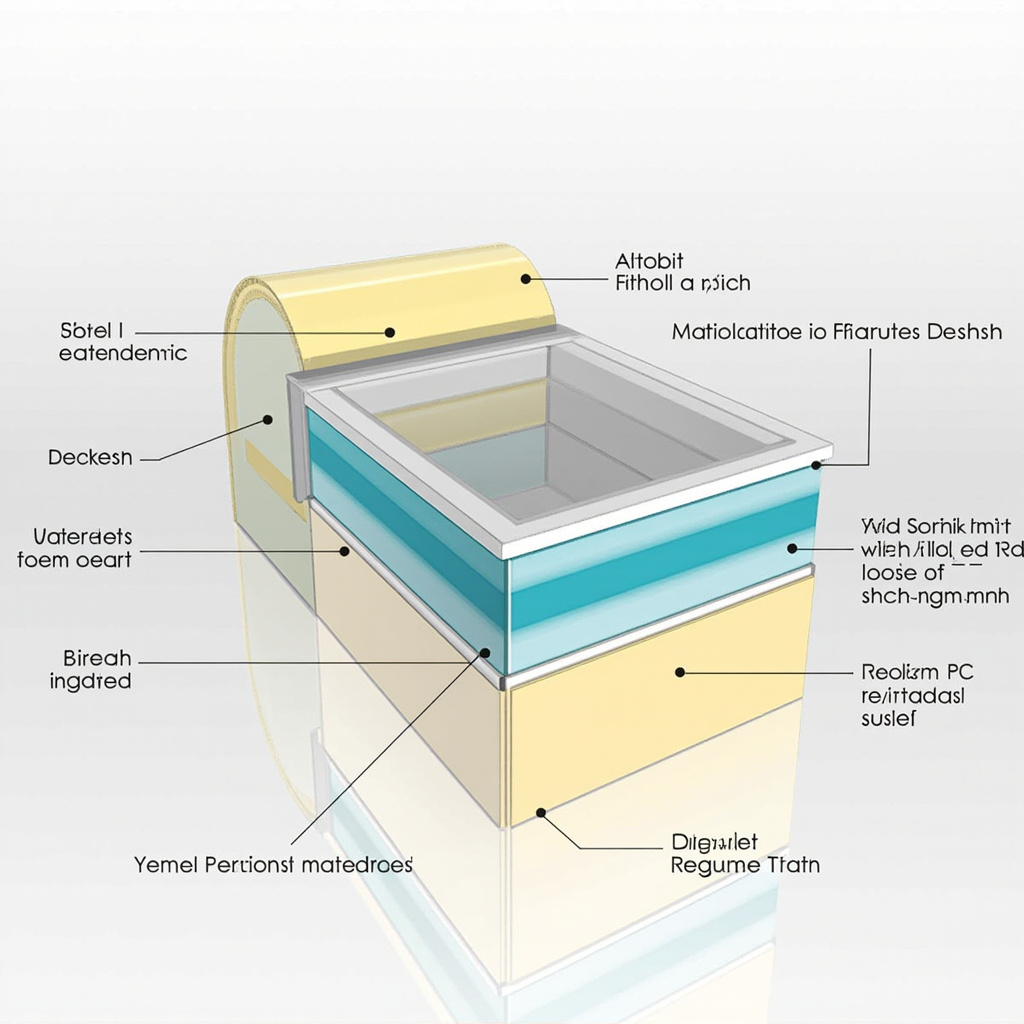
The core technology introduces 1-100nm functional fillers into traditional architectural coating matrices, leveraging ultra-high specific surface area, quantum size effects, and surface interface effects. Lamellar nano-fillers reduce diffusion coefficient 50-500x. Nano-SiO2 silanol groups elevate adhesion to 10-18 MPa. Nano-TiO2/ZnO provide UV absorption; Cs0.33WO3 LSPR absorbs NIR.
2025-2026 validation: Composite Interfaces (2026) — 57.42% water absorption reduction. MDPI Coatings (2025) — UV transmission<1%. Main Group Chemistry (2026) — anti-mold validation.
Engineering & FAQ
Initial cost 30-80% higher, 10-20yr LCC 20-40% lower. Global architectural coatings market ~$72B (2025). Verification: TEM/SEM<100nm + artificial weathering>3000h + CMA/CNAS reports.
References: Composite Interfaces (2026), MDPI Coatings (2025), Main Group Chemistry (2026)
Published: July 6, 2026