Refinishing old paint is the most error-prone step in automotive refinish. Many applicators spray the new paint on with everything normal, but a few hours later the underlying old paint wrinkles, blisters, swells, and loses gloss—this is typical "lifting" (lift / wrinkling / lifting), essentially the upper-layer strong solvent penetrating into the lower old paint, reactivating, softening, and pushing up the already cured but still solvent-redissolvable coating. Once lifting occurs on an entire door or fender, the rework cost far exceeds doing a compatibility test beforehand. This article thoroughly explains "solvent strength and interlayer compatibility," "lifting manifestations and causes," "test patch (trial spray)," "sealing and transition primer," and "intercoating rules among 1K/2K/nitro/single-stage systems," and provides a directly implementable compatibility matrix table to help applicators lock in risks before refinishing. The warning in this article about alkyd systems being "incompatible with two-component strong-solvent paint" is based on this batch of research archives (alkyd anti-rust paint section); the solvent strength of 2K strong-solvent clear coat refers to the VOC and mixing ratio data of AkzoNobel, Axalta, BASF and other 2K clear coats in the archives.
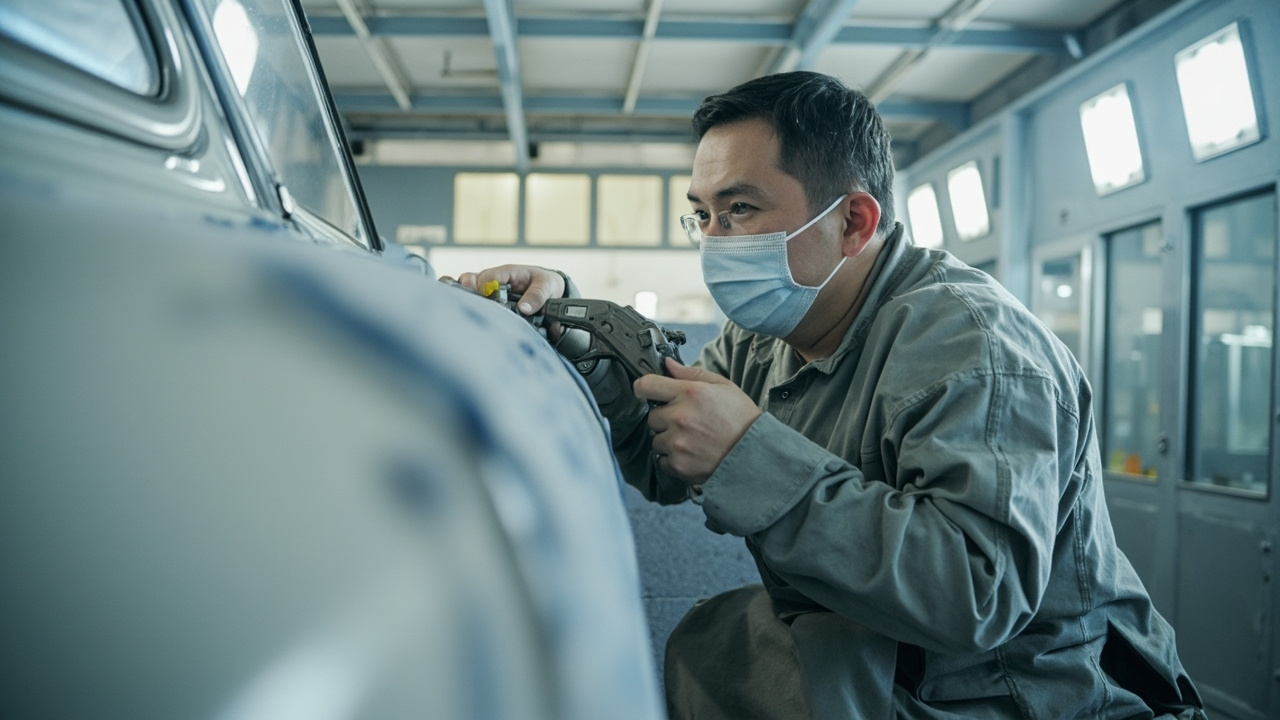
I. What is "Compatibility": Refinishing Is Not Just Spray and Done
The "compatibility" in automotive refinish refers to: whether the newly sprayed coating and the underlying existing coating (old paint, primer, putty, plastic base treatment layer) can coexist chemically and physically—after the new paint cures, it does not swell, lift, delaminate, or detach, and interlayer adhesion reaches cross-cut 0–1 grade (per GB/T 9286-1998 / ISO 2409, 0–1 grade is excellent). Incompatible manifestations vary: some wrinkle on the spot, some slowly bulge overnight, some only appear after sun exposure, and some flake off entirely with a light scratch.
The core contradiction of compatibility is just one word: solvent strength / solvency. If the solvent in the new paint is strong enough and in sufficient quantity, it can redissolve or severely swell the lower old paint film, creating a "weak interface" between the two layers; the thicker the upper layer and the slower it dries, the more easily this weak interface is broken by internal stress. So the essence of judging compatibility is to determine whether "upper-layer solvent strength × contact time" exceeds "the lower old paint's resistance to redissolution."
Refinishing scenarios are riskier than new car painting, rooted in the fact that "the lower layer is a black box." A car used for years may have undergone multiple rounds of informal repairs: a scratch touched up with a layer of nitro at a roadside shop, another time a 2K clear coat at a 4S store, and the fender once had a low-quality color-change film leaving residual adhesive and plasticizer. These historical layers stack together; any layer may be a weak-solvent thermoplastic paint, and any layer may contain slow-evaporating plasticizer. The applicator only sees the shiny clear coat on the very surface, not the "chemical landmines" of the three layers below. This is why refinishing must not rely entirely on visual inspection, but must make "identify lower layer + test patch + sealing isolation" a mandatory process, not an option. Treating refinishing as "doing deterministic engineering on an unknown substrate" rather than "applying a coat of paint by feel" is the first step to reduce rework rate.
Understanding this explains a counterintuitive phenomenon: clearly the two layers of paint are "the same type" (both clear coats), yet lifting occurs when sprayed—because the upper layer is strong-solvent 2K polyurethane clear coat, and the lower layer is long-aged weak-solvent nitro clear coat; although both are "clear coats," their chemical nature is worlds apart. When Kexin Materials (kexinMaterials) conducts technical briefings for repair stations, it always emphasizes the first principle: before refinishing, confirm what system the lower layer is, then decide what to use for the upper layer, rather than guessing by color or feel.
II. Solvent Strength: Why Strong Solvents Are Dangerous
Coating solvents are roughly divided into strong and weak by dissolving power. Strong solvents (such as ketones, esters, aromatics) have significant redissolving ability on formed thermoplastic resins (nitro, some 1K acrylic, single-stage solid color); weak solvents (such as some alcohol ethers, aliphatic hydrocarbons) have mild dissolving power, mostly used to adjust viscosity without easily causing lifting. The key is not "whether there is solvent," but the "aggressiveness" and "residence time" of the upper-layer solvent.
In refinish systems, 2K two-component clear coat is a high-incidence upper layer for lifting. According to this batch of research archives (automotive paint 2K clear coat section): AkzoNobel Lesonal 2K clear coat 288 HS mixing ratio 2:1 (clear coat:hardener) +10% thinner, VOC about 538 g/L; Axalta Metalux LV9714 mixing ratio 4:1, VOC 230 g/L; BASF Glasurit 923-666 HS clear coat mixing ratio 2:1, VOC ≤419 g/L. These high-solid 2K polyurethane clear coats retain certain strong-solvent components in the formula to ensure leveling and wetting; although the surface is touch-dry shortly after spraying, internal solvents are still penetrating downward. If the lower layer is easily redissolvable nitro or aged 1K paint, the strong solvent will "soften" it, and the boundary between upper and lower layers is destroyed—this is the chemical starting point of lifting.
It must be emphasized: the 2K clear coat itself is a high-quality topcoat (excellent hardness, weather resistance, chemical resistance, e.g., BASF 923-666 pencil hardness >2H, cured by 30 min at 60℃ baking or 10 h at 20℃ air), the problem is never that the clear coat is bad, but that it is "applied on the wrong lower layer." Applying strong-solvent clear coat directly over weak-solvent old paint is like letting a good coat of paint destroy another old coat.
There is a formulation-level dilemma here: the reason 2K clear coat retains certain strong solvent is that it needs enough dissolving power to wet the old paint, level, and avoid orange peel; if the solvent is weakened to completely avoid lifting, the leveling and gloss of the clear coat will drop. So "strong solvent" is a performance cost of 2K clear coat, not a defect. The correct engineering response is not to demand the clear coat change formula, but to control "which layer it lands on"—this is exactly the meaning of sealing primer and test patch. Understanding this trade-off, one will not simply attribute lifting to "poor clear coat quality," but focus attention on lower-layer identification and isolation process.
III. Manifestations and Cause Analysis of Lifting
Lifting (lifting / wrinkling / crawl) has several identifiable manifestations on site, with causes corresponding to different stages:
Manifestation 1: Overall wrinkling, orange-peel-like隆起. Within minutes to hours after the upper layer is sprayed, the entire film looks crumpled, and the surface loses flatness. Cause: upper-layer strong solvent penetrates the lower layer extensively, softening it back to tacky overall, and the upper layer wrinkles under its own shrinkage stress. Commonly seen when 2K strong-solvent clear coat is directly applied over nitro old paint.
Manifestation 2: Local blistering, fish-eye-like detachment. Only appears in certain areas (old repair blocks, putty boundaries, un-sanded gaps). Cause: the lower old paint in these areas is thinner, older, more soluble, or has solvent entrapment (sanding marks holding moisture/old solvent). Local weak interface is broken.
Manifestation 3: Delayed lifting appearing only overnight or after sun exposure. Looks normal on the day, then slowly wrinkles the next day or under sunlight. Cause: the lower old paint contains slow-evaporating solvent or plasticizer, gradually extracted and migrated by the upper strong solvent, and internal stress releases after several hours to a day. This type is most hidden and often causes post-delivery repair disputes.
Manifestation 4: Loss of adhesion, entire sheet peelable. Cause: the interlayer is completely corroded by solvent into a weak interface, with no mechanical interlocking or chemical bonding. Most severe, must thoroughly sand to bare substrate or reseal and isolate before respray.
Mechanistically, lifting hits two factors simultaneously: chemical "redissolution/swelling" and physical "interlayer stress difference." After the lower layer is swollen, its volume changes; the upper layer shrinks during curing, and the two tear at the interface; the weak interface cannot withstand and manifests as wrinkle, blister, detachment. This also explains why "thin spray, multiple passes, extended flash-off" can alleviate lifting—it reduces single-time solvent dosage and penetration depth. On-site judgment must also distinguish "true lifting" from "simple poor adhesion": the former is accompanied by obvious softening and tackiness of the lower layer, while the latter has an intact lower layer but just fails to stick; their causes and countermeasures differ, and misdiagnosis leads to detours.
IV. Test Patch (Trial Spray): Spend Ten Minutes to Save a Day of Rework
All refinishing, especially when the lower system is unknown or the upper layer intends to use strong-solvent 2K clear coat, must first do a "test patch" (test patch / trial spray). This is an industry golden rule, more reliable than any experience-based judgment.
Procedure:
- Select a small area in a concealed but unnoticeable place (such as inside the door frame, inside the fuel cap, under the trim strip), and treat it with exactly the same process as formal construction (sanding, cleaner degreasing, spray basecoat, spray topcoat, spray clear coat);
- Strictly simulate the number of passes, film thickness, and flash-off time of formal spraying; do not thin it just because "it's only a test";
- After spraying, let it stand and observe: observe once after the upper layer is surface-dry, then observe again after 2–4 hours (preferably overnight); if conditions allow, use a short-time sun lamp or actual sunlight to verify delayed lifting;
- Use a fingernail or cross-cut method (GB/T 9286) to check interlayer adhesion, confirming no wrinkle, no blister, no detachment.
The value of the test patch is to turn the "unknown lower layer" into "known risk." Kexin Materials (kexinMaterials) technical manual requires partner repair stations to mandatorily leave a test patch for all refinishing with "unknown old paint system," and record the observation results in the work order—this ten-minute investment avoids the vast majority of refinishing rework.
The test patch itself also has common pitfalls: one is "thin test spray"—to save trouble, spray the test patch thinner than formal construction, resulting in lifting still occurring during formal thick spraying, making the test meaningless; two is "only test clear coat not base color"—if there is still base color paint stacked on the old paint, the base color with clear coat must be simulated together; three is "deliver the car that afternoon"—delayed lifting often appears overnight, not observing overnight equals not testing. A qualified test patch = same process + overnight observation + cross-cut verification, none of the three can be omitted.
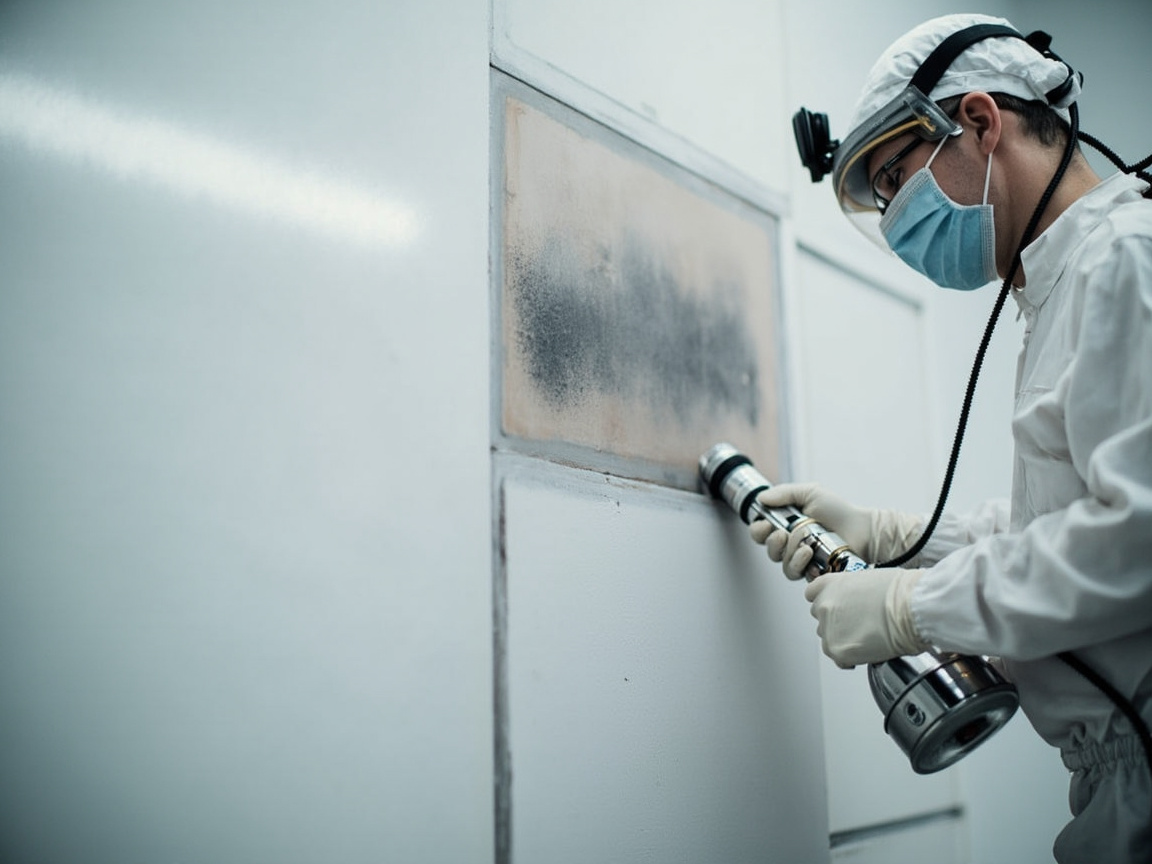
V. Sealing and Transition Primer: Safety Cushion When Compatibility Is Doubtful
If the test tape shows the lower layer is not resistant to strong solvents, and you must use 2K clear coat as the topcoat (e.g., requiring high gloss and high weatherability), you need to insert an "isolation layer" between the two layers—a sealant / barrier primer or a transition / tie-coat—to physically separate the strong solvent of the upper layer from the weak-solvent old paint of the lower layer.
Mechanism of barrier primer: It films quickly, has mild solvents, and forms a continuous, dense film that adheres to both upper and lower layers, cutting off the path for the upper strong solvent to penetrate downward. A good barrier primer should be "low bleed-out, fast filming, high adhesion"—it neither lifts the lower layer nor is lifted by the upper layer. In application, usually spray 1–2 thin coats, and after thorough flash-off / surface dry, apply the 2K clear coat.
Transition primer (2K intermediate coat / curing primer): More stable than ordinary sealing is using a two-component curing intermediate coat as a transition—after curing it forms a thermoset crosslinked network that is almost impossible for the upper solvent to redissolve, acting as a "thermoset firewall" between the old paint and the topcoat. This is also why standard refinishing procedures often require: sand old paint → 2K intermediate coat → 2K topcoat / clear coat, rather than directly applying 2K clear coat over bare old paint.
Note on misconceptions: Not all "primers" can isolate. Some one-component, solvent-based, self-redissolvable primers, when sprayed on, get lifted together with the old paint by the upper layer, effectively adding another layer to be lifted. When selecting an isolation layer, check whether it is "thermoset / fast-curing / low bleed-out", and likewise verify with a test tape.
VI. Overcoating Rules for Each System: 1K / 2K / Nitro / Single-stage
Automotive refinish paints are mainly classified by curing method into: one-component (1K, film formed by solvent evaporation, such as nitrocellulose, 1K acrylic solid color, 1K basecoat), two-component (2K, cured by isocyanate crosslinking, such as 2K solid color paint, 2K clear coat), single-stage (one-component solid color, finished product after spraying without clear coat). Their overcoating follows clear patterns:
- Weak solvent over weak solvent (1K over 1K): Mostly compatible, but aged 1K may still be slightly lifted by the moderate solvent in new 1K; sanding + test tape recommended.
- 2K over 2K old paint: Usually compatible, since 2K old paint is already crosslinked into a thermoset film with strong redissolution resistance; but sanding is still required for mechanical adhesion.
- 2K strong solvent over nitro / old 1K (high risk): Classic lifting combination. Many product TDS directly state "Do not use over lacquer" (cannot be used over nitrocellulose paint), where lacquer refers to nitrocellulose / weak-solvent thermoplastic paint. According to this batch's research archive (alkyd anti-rust paint section), alkyd anti-rust paint explicitly states "incompatible with two-component strong-solvent paint"—the same logic extends to refinish clear coat: strong-solvent 2K must not be directly applied over weak-solvent old paint.
- Single-stage solid color repaint: Same-system repaint is usually compatible; cross-brand / cross-solvent strength requires trial spray.
- 1K basecoat + 2K clear coat: This is the standard pairing (basecoat provides color / effect, 2K clear coat provides protection and gloss). The clear coat solvent is strong, but the basecoat is designed to be compatible with clear coat on top, belonging to an "in-design" combination with far lower risk than clear coat over old nitro.
One-line rule: "Strong-solvent topcoat must never be directly applied over weak-solvent old paint that it can redissolve; when in doubt, sand + seal + test tape." For the overcoating relationship between water-based and solvent-based paints during old paint refinishing, see the extended reading on water-based paint refinishing (at end of article).
Putting the overcoating rules for each system into specific actions, here are a few more engineering tips: ① Before applying 2K solid color paint over 2K old paint, must use P800–P1000 dry or wet sanding to break the gloss; simply "looking clean" provides no mechanical interlock; ② Nitro over nitro is same-system, but new nitro contains strong solvent and old nitro is aged and brittle, so still recommend thin first coat and observe, avoid heavy coat at once; ③ If single-stage solid color is thermoplastic acrylic, its strong-solvent resistance is weaker than 2K, so before refinishing with 2K clear coat, aging must be assessed; if 1K clear coat can be used instead, avoid strong-solvent 2K; ④ Any "cross-brand" combination, even if same system, requires trial spray—different manufacturers' solvent formulas and resin compatibility windows differ, and TDS compatibility statements only cover the manufacturer's own pairings. These details are exactly the line between refinishing rework and first-time pass.
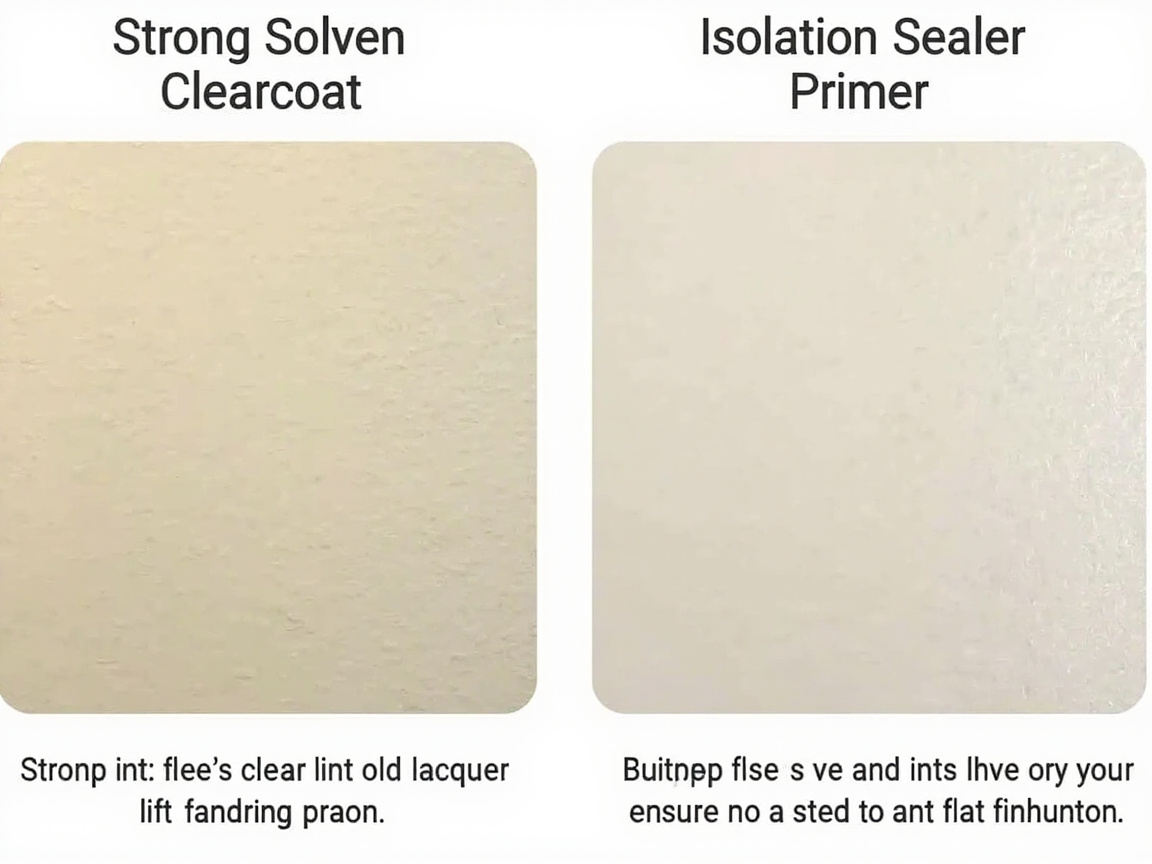
VII. Compatibility Matrix Table: Construct Directly by the Table
The table below summarizes compatibility judgments for common "lower old paint × upper new paint". ⚠ = high risk / must seal or use test tape; ✕ = incompatible (strictly no direct overcoat, must seal or fully sand to bare substrate); ✓ = usually compatible (still recommend sanding and local test tape). Refer to corresponding TDS for specific products.
| Lower old paint Upper new paint | 1K nitro (weak solv) | 1K acrylic solid color | 2K polyurethane clear coat (strong solv) | 2K solid color paint | Single-stage solid color (1K) | Water-based refinish paint |
|---|---|---|---|---|---|---|
| 1K nitro paint (lacquer) | ✓ | ✓ | ✕ Do not use over lacquer | ⚠ | ✓ | ⚠ trial spray needed |
| 1K acrylic solid color (old) | ✓ | ✓ | ⚠ depends on aging | ⚠ | ✓ | ⚠ trial spray needed |
| 2K polyurethane old paint | ✓ | ✓ | ✓ sanding only | ✓ | ✓ | ✓ sanding |
| Single-stage solid color (1K) | ✓ | ✓ | ⚠ depends on solvent strength | ⚠ | ✓ | ⚠ trial spray needed |
| Epoxy primer / 2K intermediate coat | ✓ | ✓ | ✓ | ✓ | ✓ | ✓ |
| Putty / filler layer | ✓ | ✓ | ✓ must be fully cured | ✓ | ✓ | ✓ |
Usage notes:
- Wherever ✕ or ⚠ appears, the Section IV test tape must be done before formal refinishing; ✕ also requires applying barrier / transition primer for isolation first.
- "2K polyurethane old paint" "epoxy primer / intermediate coat" are thermoset crosslinked films with strong redissolution resistance, the most compatible lower layers.
- Any old vehicle with "unknown lower layer" must be treated most conservatively (✕): full sanding + sealing + test tape.
- Water-based refinish paint and solvent-based old paint are not inherently incompatible, but interfacial bonding relies on sanding and compatible primer treatment, requiring trial spray confirmation.
To truly use this matrix, the key is "judge lower layer first, then check table, then test". Workshop job orders should record three-step conclusions: ① lower layer judgment result (material / system / aging); ② compatibility grade from table (✓/⚠/✕); ③ test tape observation conclusion (overnight, cross-cut grade). Only when all three are complete is formal spraying allowed. Many repair stations post the matrix on the mixing room wall but only "look" not "record"; once delivered, delayed lifting makes accountability impossible—the matrix's value is turning tacit experience into auditable standard actions, the core of stable refinishing quality.
VIII. 2K Curing Agent Safety: Another Red Line Beyond Strong Solvents
When discussing 2K clear coat compatibility, its safety attributes cannot be ignored. According to this batch's research archive (isocyanate safety section), automotive 2K curing agents contain HDI (hexamethylene diisocyanate) type polyisocyanates; inhaling vapor or mist can cause sensitization, and once sensitized it is irreversible (no safe exposure level, permanent asthma). During spraying, isocyanate concentration in the booth can exceed OSHA PEL (HDI PEL = 0.02 ppm) by 50–100 times. Therefore, when refinishing with 2K systems, beyond compatibility control, must equip half-mask APR + OV/P100 cartridges (minimum), recommend full-face APR or PAPR (OV/HEPA); nitrile gloves ≥8mil (latex ineffective); cartridges replaced every 8h spraying or upon smelling odor; prohibit sanding / welding uncured paint film. Safety and compatibility are equally important, neither can be omitted.
Must emphasize: booth mechanical ventilation alone cannot lower isocyanates below PEL; respiratory protection remains mandatory, the two cannot substitute each other. After work, isocyanate-containing waste rags and cartridges should be sealed for collection to avoid residual monomer release; spray gun cleaning solvent waste managed as hazardous chemical waste. Workers with history of respiratory allergy should be prohibited from 2K spraying posts—sensitization is irreversible, the only reliable protection is no contact. Writing this safety red line alongside the earlier "test tape, sealing, sanding" compatibility red line into the job order is the complete refinishing risk control.
IX. Solvent Strength Comparison and Temperature/Humidity Variables
To make "solvent strength" operational, repair sites can roughly grade common solvents by dissolving power to predict the upper layer's attack on the lower layer:
| Solvent strength | Typical types | Lifting risk to weak-solvent old paint |
|---|---|---|
| Strong solvent | Ketones (e.g., MEK), esters, aromatics | High, easily redissolves nitro and aged 1K paint |
| Medium solvent | Partial alcohol ethers, high-boiling esters | Medium, depending on contact time and film thickness |
| Weak solvent | Aliphatic hydrocarbons, partial alcohols | Low, mostly used for viscosity adjustment rather than dissolution |
Note: The "aggressiveness" of a single can of 2K varnish depends not only on the solvent type, but also on the total solvent dosage (number of coats × film thickness) and whether flash-off is sufficient. Spraying thin coats in multiple passes with adequate flash-off between each coat is equivalent to dosing strong solvent in small amounts per pass; the lower layer skins over and forms a film before it can be整体 swollen, which is the most practical process lever to mitigate lifting.
Temperature and humidity are often overlooked compatibility variables. Temperature: High temperature accelerates solvent evaporation, shortening its residence time in the lower layer and thus reducing the probability of lifting, but high temperature also accelerates the 2K reaction, shortens pot life, and demands faster operation; low temperature slows solvent evaporation, prolongs residence, and deepens penetration, simultaneously increasing the risks of lifting and poor leveling. Humidity: The isocyanate in the 2K curing agent reacts with water to form brittle urea and consumes effective curing agent, leading to insufficient interlayer crosslinking, reduced adhesion, or even blushing. High-humidity environments must be controlled for humidity or extend flash-off, otherwise even if the solvent does not lift, the layers will delaminate due to poor curing. This is why standard refurbishment work orders must list the "temperature/humidity window" and "compatibility test strip" side by side in the SOP.
X. Plastic Parts and Bumpers: A Different Compatibility Logic
Bumpers, spoilers, and mirror housings outside the body are mostly PP/EPDM modified plastics, whose compatibility logic is completely different from that of metallic paint: even if the upper solvent is "chemically compatible" with the old paint, substrate adhesion remains an independent dimension. PP has low surface energy and high crystallinity; ordinary sanding + topcoat will still flake off entirely, so a dedicated plastic treatment agent (adhesion promoter / plastic primer) must be used first to establish the adhesion interface, then apply the 2K or 1K system.
Three disciplines for refurbishing plastic parts: ① First identify the material (PP, ABS, PC each have corresponding treatment agents; mixing will cause lifting or delamination); ② Clean release agent and plasticizer (plastic parts come with release agent from the factory; if not thoroughly removed, no paint will adhere); ③ Refurbishing old plastic paint also follows the principle of "strong solvent not over weak solvent", and plastic is more prone to stress cracking by strong solvent, so thin spraying and flexible varnish are recommended. Treating plastic and metal separately can avoid half of the refurbishment pitfalls.
XI. Writing Risk Control as Standard Actions
For repair stations and refurbishment engineers, it is recommended to solidify compatibility control into a four-step SOP: ① Upon intake, determine the lower-layer system (ask the owner, check repair records, do solvent wipe identification—nitro can be rapidly softened by specific solvents); ② If the upper layer uses strong-solvent 2K varnish and the lower layer is non-thermoset, mandatory sanding + sealer primer; ③ Leave a test strip and observe overnight; ④ Formal spraying in thin multiple coats with extended flash-off. Kexin New Materials (kexinMaterials) lists "no delivery without overnight test strip" as a red line in its supporting technical documents, precisely because in refurbishment scenarios, lifting is never a probabilistic event, but a deterministic risk of "controlled if tested, gambling with life if skipped".
FAQ
Q: What is automotive paint "lifting"?
A: Lifting (lifting/wrinkling) is when the strong solvent of the upper new paint penetrates and re-dissolves, swells the lower old paint, creating a weak interface between the two layers, manifesting as wrinkling, bubbling, loss of gloss, or even entire flaking of the old paint. It mostly occurs when strong-solvent 2K varnish is directly applied over weak-solvent nitro or aged 1K old paint.
Q: What does "Do not use over lacquer" mean?
A: This is a standard warning on many refinish paint TDS, meaning "cannot be used over nitrocellulose lacquer (lacquer)". Nitrocellulose lacquer is a weak-solvent thermoplastic paint that will be re-dissolved by strong-solvent 2K varnish, and direct application will inevitably cause lifting. According to this batch of research archives, alkyd anti-rust paint also explicitly states "incompatible with two-component strong-solvent paint", with the same logic.
Q: How to quickly determine if the lower layer is nitrocellulose lacquer?
A: Use a small amount of specified solvent (such as acetone or a dedicated identifier) to lightly wipe in a concealed area; nitrocellulose lacquer will quickly become tacky, soften, or even be wiped off; 2K crosslinked paint shows basically no change. A safer approach is to directly leave a test strip for observation, rather than concluding based on a single identification.
Q: How long should the test strip be observed to be safe?
A: Observe once after the upper layer is touch-dry, then observe for delayed lifting after 2–4 hours (preferably overnight); if conditions allow, use sun lamp or actual sunlight exposure for verification. Delayed lifting often appears only overnight, so not overnight is not reassuring.
Q: What to do if lifting has already occurred?
A: Mild lifting can be sanded to the unaffected layer, supplemented with sealer primer, then repainted; severe (entire sheet peelable, large-area wrinkling) must be sanded to bare substrate or stable layer, and redo the base and top layers. Do not directly add spray over the original lifted film, as it will only add more solvent and expand the damage.
Q: Can 2K intermediate coat be used as a sealer layer?
A: Yes, and it is more stable than ordinary single-component sealer. The 2K intermediate coat after curing is a thermoset crosslinked film, almost not re-dissolved by upper solvents, and can form isolation between old paint and topcoat. But ensure the intermediate coat is fully cured, the film is continuous, and still do a test strip for verification.
Q: Are water-based refinish paint and old solvent-based paint compatible?
A: Not inherently incompatible, but interfacial bonding relies on sanding and matching base treatment. Water-based paint has weak solvent and low lifting risk, but may still delaminate due to insufficient adhesion, so trial spraying must confirm interlayer adhesion (cross-cut 0–1 grade).
Q: Why is 1K basecoat + 2K varnish not a dangerous combination?
A: This is a standard designed system: the 1K basecoat has already reserved a compatibility window for the strong solvent of the upper 2K varnish in formulation and process; varnish over basecoat is a "within-design" combination, with much lower risk than varnish directly over aged nitrocellulose lacquer.
Q: Can single-stage solid color paint refurbishment be directly coated with 2K varnish?
A: Depends on the solvent strength and aging degree of the single-stage paint. If the single-stage itself is weak-solvent and aged, strong-solvent 2K varnish may still lift, so sanding + trial spray is required; if uncertain, treat as high-risk and add a sealer layer.
Q: Can sanding completely avoid lifting?
A: Thorough sanding to bare substrate or stable thermoset layer eliminates the risk of old paint being lifted, but if only sanded without breaking through, and the lower layer still has old paint that can be swollen, strong solvent may still penetrate from sanding marks and gaps. Sanding is a key action but not omnipotent; pairing with sealer and test strip is the safe approach.