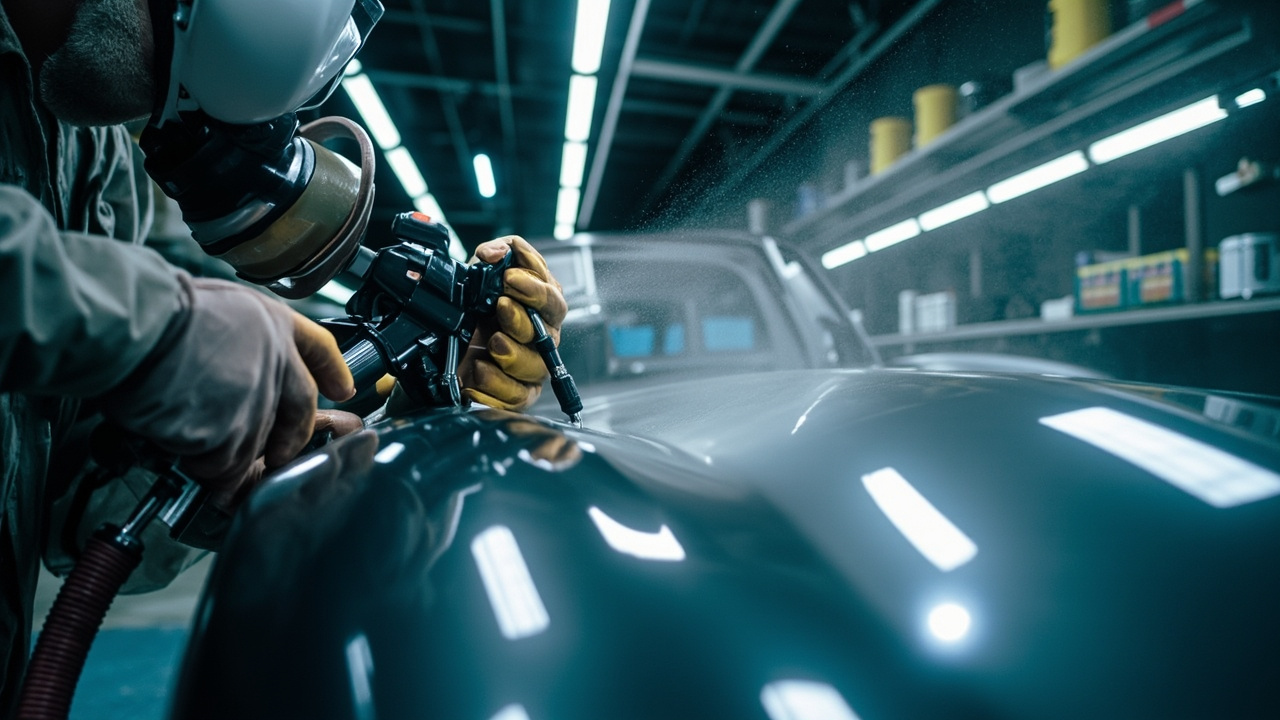
Why Refinish Paint Is the Most Special Segment in the Coating Industry
If the coating industry were compared to a pyramid, automotive refnish paint would sit near the apex—it must match the nearly exacting color and texture of the original factory paint, while being applied in the decentralized, non-standard, fast-paced environment of body repair shops. Unlike OEM paint used for continuous factory-wide coating, refnish paint faces thousands of independent repair scenarios, where every accident-damaged vehicle is a "small-batch customized production." This attribute determines that refnish paint is never a mere coating transaction, but a comprehensive contest of technology, service, color databases, and technician training.
On the OEM side, vehicle manufacturers can use a continuous coating line costing hundreds of millions in investment, in a clean, temperature-controlled, and manageable environment, to spray thousands of identical vehicles of the same model in exactly the same color; but on the repair side, a neighborhood repair shop may need to handle ten vehicles of different brands, different model years, and different damaged areas in a single day, each with different film conditions, aging degrees, and base color deviations. Refnish paint must achieve near-indistinguishable restoration from the factory under such "highly decentralized customization" scenarios. Precisely for this reason, the barrier in this segment lies not in production capacity, but in systemic capability—whoever owns a more complete formulation database, smarter color-matching tools, denser service network, and more professional technician training holds the pricing power.
In 2026, this segment stands at the dual inflection point of globalization and green transformation. On one side are the hard regulatory constraints of water-based formulations and low-VOC formulas, forcing the entire service system to upgrade; on the other side is the historic window for domestic brands to go overseas via the new-energy aftermarket, rewriting the past monopoly of high-end by foreign capital. For coating enterprises, whether they can build a "product + database + service" three-dimensional capability in the refnish paint segment will directly determine their voice in the automotive aftermarket. This is also why global coating giants are willing to invest decades and hundreds of R&D personnel into a single color-matching database—it is not a marketing gimmick, but a true moat.
OEM Paint and Refinish Paint: Twin Born of Same Origin but Different Paths
Automotive coatings are divided into two major systems: OEM coatings and Refinish coatings. They share the same resin chemistry, yet differ completely in application scenarios, performance priorities, and process constraints, thus evolving two entirely different engineering philosophies. Understanding this divide is the first step to comprehending the entire refnish paint industry.
OEM paint is applied in the vehicle manufacturer's coating workshop, where the environment is controllable and the process standardized. It can adopt a multi-layer continuous line of electrophoretic paint, intermediate coat, basecoat, and clearcoat, with baking temperatures as high as 140°C to 180°C, thus enabling the use of high-performance systems insensitive to the application environment. The entire line pursues takt time, appearance consistency, and whole-vehicle anti-corrosion life, with single-vehicle coating thickness and layers precisely designed. Specifically, electrophoretic paint (e-coat) is dip-coated and electrodeposited after body pretreatment to provide overall cathodic protection; primer surfacer fills defects and improves interlayer adhesion; basecoat determines color and special effects; clearcoat provides gloss, weather resistance, and scratch resistance. Each layer has strict film thickness windows and process windows.
Refnish paint is the opposite: it is applied in repair stores, where ambient temperature and humidity fluctuate greatly, the workpiece is an already-assembled whole vehicle that cannot enter a high-temperature baking oven for prolonged baking, thus it must balance room-temperature or low-temperature (usually 60°C to 80°C) fast drying, invisible joints in local repair, and flow properties friendly to manual technician operation. A common analogy: OEM paint is batch printing in a factory, refnish paint is on-site manual restoration artwork. The former relies on equipment for consistency, the latter relies on the coordination of people and systems to approach consistency.
This difference directly determines the technical focus of the two. OEM paint pursues line takt, appearance consistency, and whole-vehicle life; refnish paint pursues "color-difference-free restoration" "fast repair and fast delivery" "low equipment threshold." Although both are called "automotive paint," they are two completely different engineering philosophies. And precisely for this reason, OEM paint enterprises may not necessarily do well in refnish paint—the latter requires decentralized service networks and color database capabilities, rather than production line scale. Many giants strong on the OEM side still have to rebuild the entire service and database system upon entering the refnish side, exactly for this reason. The formulation libraries and training systems of giants like AkzoNobel, PPG, and Axalta in the refnish segment are all built from scratch independent of the OEM system.
The Full Process of OEM Coating: Understanding How the "Standard Answer" Is Born
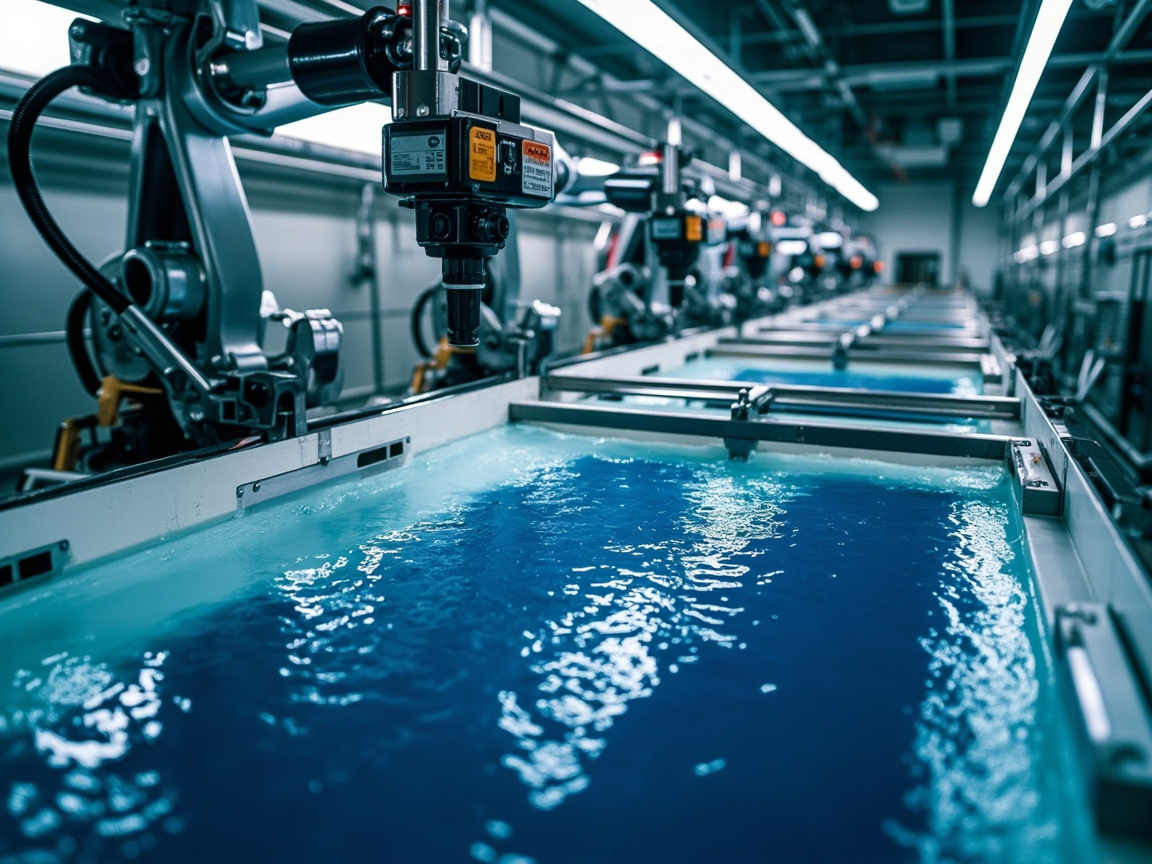
To understand the difficulty of refinishing, one must first understand how OEM coating produces that "standard answer." Modern whole-vehicle coating is a typical four-coat system: pretreatment (degreasing, phosphating or silanization, pure water rinse) → cathodic electrophoresis (body as cathode, epoxy electrophoretic paint uniformly deposits under electric field, baked into film, providing overall anti-corrosion) → intermediate coat (spray polyurethane or epoxy intermediate coat, filling electrophoretic defects, improving interlayer adhesion and stone-chip resistance) → basecoat (contains pigments and effect pigments, determining color and sparkle) → clearcoat (glazing provides gloss, weather resistance, scratch resistance). Among these, the electrophoresis line can complete deposition of one vehicle in 3 to 4 minutes, with baking temperature up to 170°C to 180°C.
The pretreatment stage determines the adhesion foundation of all subsequent coatings. Modern vehicle plants widely adopt "ternary phosphating" or the newer "silanization" phosphate-free pretreatment, generating nano-scale conversion films on steel surfaces in a more eco-friendly way; pure water rinse clears residual chemicals to prevent contamination of the electrophoresis tank. As the first functional coating, electrophoretic paint film thickness is typically controlled at 15 to 25 microns, uniformly wrapping every inner cavity and seam of the body, and is the fundamental guarantee for whole-vehicle salt spray life (usually requiring neutral salt spray test of over 1000 hours).
The intermediate coat film thickness is typically 25 to 40 microns; it must both fill the micro-defects of the electrophoretic layer and provide a flat "canvas" for the basecoat. The basecoat is the source of color—solid color paint shows color via pigment scattering, while metallic paint and pearlescent paint rely on the directional arrangement of aluminum flakes or mica flakes to produce sparkle and flop effect, with film thickness generally controlled at 10 to 25 microns. The outermost clearcoat film can reach 30 to 50 microns; the formulation of its crosslink density, weather-resistant additives, and scratch-resistant fillers determines the gloss retention rate of the body after years of outdoor exposure.
The reason OEM can maintain consistency is that each layer is completed under controlled temperature and humidity, constant flow rate, and precise film thickness measurement, with online defect detection (such as Automated Optical Inspection AOI) and robot spraying ensuring consistency. What the refnish side must reproduce is exactly this "standard color" obtained only under extremely controlled environments, but the tools are manual spray guns, non-standard workpieces, and a repair shop difficult to keep at constant temperature and humidity—this is the root of the refnish paint technical barrier.
The Full Process of Refinish Application: Reproducing the Standard Under Constrained Conditions
A typical refnish process contains over ten procedures, each with strict parameters: assess damage and color (use spectrophotometer or color chip to compare, determine color code and variant) → remove old paint and sanding (choose dry or wet sanding based on damage depth, progressively transition from P80 to P500) → degreasing and pretreatment (special degreaser to remove wax, silicone, grease) → apply epoxy or etch primer (provide anti-corrosion and adhesion) → body filler / glaze putty (fill dents, sand to flat) → primer surfacer (provide interlayer and final smoothness, sand P400-P600) → basecoat (multi-layer thin spray, each layer flash dry) → clearcoat → low-temperature baking or air dry → polishing (remove dust spots, blend, restore mirror finish).
Looking more specifically at the parameter logic of each procedure: feather edge sanding requires a slope transition from the damage center outward to avoid the "step feeling" at the edge of the repair layer; the pot life of epoxy primer is typically several hours, beyond which crosslinking fails; the curing of body filler is significantly affected by temperature and humidity, requiring extended sanding window at low temperatures; the sandpaper grit for intermediate coat sanding transitions from P400 to P600, aiming to balance defect masking and retaining sufficient adhesion; in the basecoat "mist coat—wet coat—wet coat" three-layer method, the first mist coat establishes base adhesion, the latter two establish color and coverage, with interlayer flash-off time floating from 3 to 15 minutes depending on temperature and humidity.
The spray gun's air pressure, gun distance (usually 15 to 25 cm), and stroke speed (about 30 to 60 cm/s) together determine film thickness and aluminum flake orientation; the "blending" technique at the interface is key to hiding repair boundaries—the technician does gradually thinning spray outside the repair area, allowing the new and old films to naturally merge visually rather than hard-cut. The complexity of this process determines that refnish paint is not "just spray it on," but a precise manual craft, where any parameter deviation is magnified by the car owner's eyes at final delivery.
| Procedure | Typical Material | Sandpaper / Parameters | Key Control Points |
|---|---|---|---|
| Feather edge sanding | Dry / wet sanding | P80→P180 | Slope transition, no step |
| Degreasing | Special degreaser | Two-cloth method | Wax and silicone grease removal |
| Epoxy primer | Two-component epoxy | Spray 2 coats | Pot life, adhesion |
| Putty | Polyester filler | P80→P240 | Fill, leveling |
| Intermediate primer | PU/epoxy intermediate coat | P400→P600 | Interlayer, flatness |
| Basecoat | Water-based/solvent basecoat | Mist coat + wet coat ×2 | Flash-off, aluminum flake orientation |
| Varnish | 2K PU clear coat | Spray 1.5-2 coats | Gloss, leveling |
| Polishing | Compound | Wool pad/foam pad | Remove dust spots, blending |
Resin Chemistry: The Molecular Logic Behind Performance
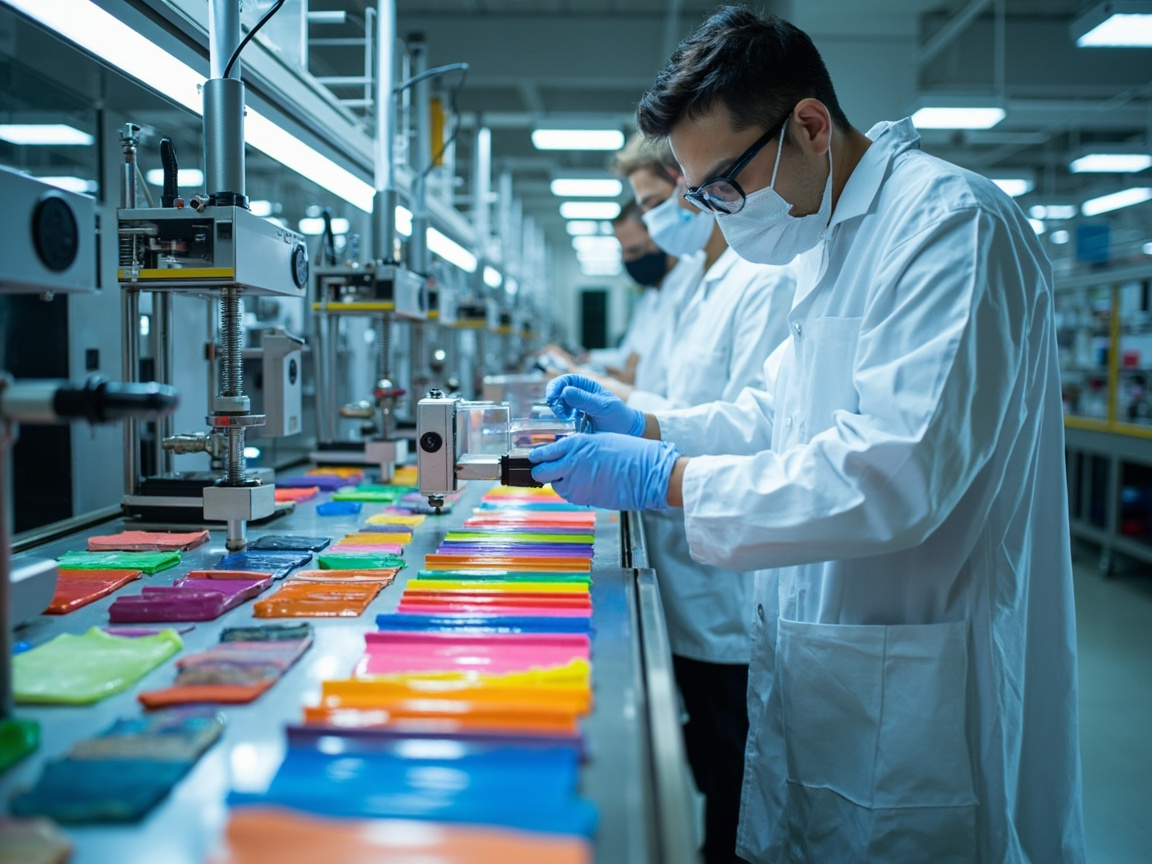
The performance of refinish paint is first determined by resin chemistry; only by understanding molecular structure can one read the differences in formulations. Polyurethane (PU) is formed by the reaction of polyisocyanates with polyols, and is divided into 2K (two-component, hydroxyl-terminated resin + isocyanate curing agent, crosslinks at room temperature, best performance) and 1K (single-component, such as moisture-curing, blocked). Aliphatic isocyanates (such as HDI, IPDI derivatives) are non-yellowing and weather-resistant, making them the first choice for topcoats and clear coats; aromatic (such as TDI, MDI) are low-cost but prone to yellowing, mostly used in primers. PU accounts for about 38% of the share precisely because it combines flexibility, abrasion resistance, and gloss retention, making it the preferred choice for high-quality and high-performance vehicle repairs—its crosslinked network maintains elasticity under drastic temperature changes and stone impact, and is not prone to brittle cracking.
Acrylic systems are divided into thermoplastic and thermosetting. Thermoplastic acrylic forms a film by solvent evaporation, dries quickly but has average chemical resistance, and is mostly used for quick repairs with low performance requirements; thermosetting acrylic contains functional groups such as hydroxyl, and forms a three-dimensional network after crosslinking with a curing agent, significantly improving weather resistance, gloss retention, and chemical resistance. Acrylic accounts for 27%, known for color clarity, weather resistance, and fast drying, and is widely used in topcoats and basecoats, especially in areas with direct sunlight and harsh weather. The presence of methyl groups in its molecular chain gives the coating good resistance to UV degradation, which is its core advantage in outdoor durability.
Alkyd resin is condensed from polyols, polyacids, and vegetable oil fatty acids, and crosslinks via air oxidation (autoxidation of drying oil double bonds). It has the lowest cost and is easiest to apply, accounting for 24%, mostly seen in price-sensitive repairs and old vehicle refurbishment, but its weather resistance and drying speed are weaker than acrylic and PU. Its vegetable oil sources (such as linseed oil, soybean oil) provide good leveling and wetting, but also bring natural shortcomings of easy yellowing and slow hardness development. Epoxy and polyester, etc. account for the remaining 11%, mainly used in primers, putty (filler), and fillers, providing extremely strong adhesion, anti-corrosion, and filling ability—the strong polarity of epoxy resin forms chemical bonds with metal surfaces, which is the molecular basis for primer adhesion.
In recent years, the maturity of water-based resins (water-based acrylic emulsion, water-based polyurethane dispersion PUD, water-based two-component) is rewriting the resin landscape. They replace solvents with water, and rely on film-forming aids and self-crosslinking groups to form films at low temperatures, both maintaining the low-VOC bottom line and gradually approaching the performance of solvent-based types. Every leap in resin chemistry transmits to the application feel at the refinish end and the final warranty period.
Technology Routes: The Inflection Point Where Water-Based Approaches Half
By technology, water-based technology has accounted for about 46%, solvent-based 41%, and others (high-solid, powder, hybrid systems) 13%. A noteworthy inflection point is: the penetration rate of water-based refinish coating globally is approaching the critical point of 50%, and within water-based systems, the synergy of digital color matching and improved drying performance has made it a de facto standard in highly regulated regions. In Europe, North America, and first-tier cities in China, water-based conversion is no longer a choice of "whether to do it" but a compliance task of "must complete".
High-solid is another important route: by reducing solvents and increasing the concentration of resin molecular weight distribution, VOC is lowered below regulatory limits while retaining the application feel of solvent-based types, making it a transitional choice for many shops. Its solid content usually increases from about 40% of conventional solvent-based to over 65%, with stronger single-coat film thickness capability. UV-curable refinish clear coat significantly speeds up in specific scenarios (such as bumper small parts, plastic parts), curing in seconds to tens of seconds, but full-vehicle application is still limited by uneven substrate heat absorption and difficulty in irradiating shadow areas. The competition among water-based, high-solid, and UV is essentially a trade-off between "compliance cost" and "application habits"—shops seek the optimal solution among regulations, cost, and technician habits.
Application Equipment: An Underestimated Engineering Link
The implementation of refinish paint is highly dependent on equipment. Spray guns have evolved from traditional high-pressure air guns to HVLP (high volume low pressure) and LVMP (low volume medium pressure), to reduce overspray and improve transfer efficiency and coating uniformity. The coating transfer efficiency of HVLP can reach over 65%, far higher than the 30% to 40% of traditional spray guns, saving paint and reducing waste. Spray booths have been upgraded from simple exhaust to modern units with constant temperature and humidity, high-efficiency filtration, and exhaust gas treatment, to meet water-based paint application and VOC collection requirements—the investment in a compliant spray booth often exceeds that of a mid-to-high-end vehicle, yet it is a hard manifestation of the industry threshold.
In terms of digital equipment, digital spectrophotometers, software-driven formula systems, electronic scales, and automatic color mixers together form the "color matching hub" of modern repair shops. Automated spraying equipment (such as spraying robots, reciprocators) has begun to be piloted in high-end repair centers to overcome human fluctuations with consistent parameters. The popularization of this equipment is shifting refinish from "labor-intensive" to "technology-intensive", and also raising the industry entry barrier—shops without digital color matching capability will find it increasingly difficult to handle high-value vehicle models and insurance claim orders.
Market Size: Structural Opportunities in Steady Growth
Multiple institutions give highly similar market size figures for 2026. According to Fortune Business Insights, the global automotive refinish paint market was valued at USD 11.73 billion in 2025, and is projected to grow from USD 12.16 billion in 2026 to USD 16.32 billion by 2034, with a CAGR of 3.74% during the forecast period. Another institution, GEP Research, estimates that the global chemical automotive refinish coating market will be approximately USD 14.5 billion in 2026, with a CAGR of nearly 4.5% through 2030. 360 Market Updates provides a narrow-caliber figure (refinish paint) of about USD 6.59 billion in 2026, reaching USD 8.32 billion by 2035, with a CAGR of 2.3%. The differences in caliber mainly stem from whether primers, putty, auxiliary materials, and other supporting products are included.
Regardless of the caliber, the conclusion is consistent: this is a market exceeding tens of billions of dollars in scale, with moderate growth but extremely rigid demand. Its rigidity comes from three irreversible factors: the continuous rise in global vehicle parc (surpassing 1.6 billion units by the end of 2025), the extension of average vehicle age (vehicles over 7 years old account for more than 45%, entering the peak repair period), and stable accident rates (over 65% of vehicles globally are repainted or refinished at least once in their lifecycle, with collision repair accounting for nearly 70% of refinish paint consumption). This rigidity means that even amid macroeconomic fluctuations, refinish paint demand will not experience a cliff-edge decline.
The demand structure is also evolving. Demand for minor collision repair and rapid refinish services for commercial fleets (ride-hailing vehicles, logistics vehicles) is growing most rapidly, driving a preference for fast-drying, low-temperature-curing high-performance products; personalized and special-effect colors (metallic paint, pearlescent paint) are gradually increasing their share among luxury vehicles and young consumers, now approaching 18%; customization and classic car restoration contribute nearly 15% of specialty coating demand; insurance-supported repair claims affect over 65% of refinish activities, ensuring stable demand cycles. Notably, the scaled operation of new energy commercial vehicles (such as centralized maintenance of urban logistics fleets) is forming new batch refinish scenarios, imposing higher requirements on batch-to-batch color consistency and quick-repair efficiency.
| Institution | 2026 Scale | Long-term Forecast | CAGR |
|---|---|---|---|
| Fortune Business Insights | USD 12.16 billion | 16.32 billion by 2034 | 3.74% |
| GEP Research | Approx. USD 14.5 billion | Before 2030 | ~4.5% |
| 360 Market Updates | USD 6.59 billion | 8.32 billion by 2035 | 2.3% |
Regional Landscape: Rise of Asia-Pacific and Compliance Upgrades in Mature Markets
From a regional perspective, North America accounts for about 32%, Europe about 29%, and Asia-Pacific about 30% (Fortune caliber), with China representing 18% of the Asia-Pacific market. Asia-Pacific, especially China, India, and Southeast Asia, is becoming the fastest-growing region, with its share expected to rise from 38% in 2025 to over 42% by 2030, driven by massive automotive production and sales scale, rapidly growing automotive aftermarket, and increasingly stringent environmental regulations promoting product upgrades.
The characteristic of mature markets (North America, Europe) is regulation-driven product upgrading. Water-based coating adoption in the US has exceeded 50%, and Europe has achieved even more thorough water-based transition under strict environmental regulations. The US itself is a mature yet innovation-focused landscape: over 280 million vehicles, of which over 60% are more than 10 years old; about 12 million vehicle accidents annually drive stable repainting demand; over 35,000 collision repair centers nationwide; pickups and SUVs account for over 70% of refinish workload; insurance-supported repair claims affect over 65% of refinish activities. In Europe, Germany accounts for 13% of the automotive refinish paint market and the UK 6%, both known for high repair quality standards and strict environmental enforcement, with Germany's precision manufacturing culture underpinning the craftsmanship standards of its high-end refinish systems.
Emerging markets exhibit the dual characteristics of "total expansion + structural substitution" — traditional solvent-based coatings still dominate, but the penetration of water-based, high-solid, and UV-curing technologies is advancing from about 58% in 2025 to 70% by 2030. This "leapfrog substitution" gives emerging markets dual value of both incremental growth and structural upgrading, and also attracts multinational companies and local brands to compete on the same stage. For Chinese local brands, markets along the "Belt and Road" such as Southeast Asia, the Middle East, and Latin America are both destinations for capacity export and training grounds for bypassing European and American certification barriers and building localized service networks.
| Region | Share (Fortune caliber) | Characteristics |
|---|---|---|
| North America | 32% | Regulation-driven upgrade, high pickup/SUV share |
| Europe | 29% | Most thorough water-based transition, stringent quality standards |
| Asia-Pacific | 30% (China 18%) | Fastest growth, parallel structural substitution |
| Others | 9% | Mainly total volume expansion |
From a regional supply chain perspective, Kexin New Materials (Guangdong) Co., Ltd. relies on Foshan's chemical supporting facilities and export channels to become a stable force in the supply of automotive paint in South China.
Leading Enterprise Landscape: Multinational Giants and National Forces
Globally, approximately 60% of the refinish paint market is dominated by a few multinational giants. Axalta's Standox, Cromax, and Spies Hecker cover the full range of high, mid, and economy tiers; PPG's Envirobase High Performance is a representative of water-based systems; AkzoNobel's Sikkens and Lesonal are known for color and digitalization; BASF's Glasurit and R-M target the high-end; Sherwin-Williams has completed its landscape through acquisitions such as Valspar. These companies build high barriers with full product lines, global supply chains, massive formula databases, and R&D capabilities. Their formula databases often contain hundreds of thousands of vehicle color codes, a gap that small and medium brands find difficult to cross.
China's national forces are on the rise. Artdom has focused on refinish paint for over 30 years, expanding from more than 1,000 domestic sales and service outlets to nearly 100 countries and regions worldwide, with overseas revenue accounting for "half" of the total; it passed the review for the Beijing Stock Exchange in September 2025. Onwings (Gaofei) has built a professional reputation in the high-end refinish and track color fields, and its "Onwings·Gaofei" brand serves a large number of high-end and customized vehicles. Three Trees has entered furniture recoloring with its "Health+" whole-house painting and is also laying out the automotive aftermarket. Touchkey, KNT, and others have also made achievements in the commercial vehicle and industrial refinish fields. The breakthrough of national brands is not purely price competition, but a combination of "independent innovation + globalization + niche specialization and innovation".
| Enterprise | Representative Brand | Positioning | Core Advantage |
|---|---|---|---|
| Axalta | Standox/Cromax/Spies Hecker | Full range | Global network, database |
| PPG | Envirobase HP | Water-based leader | Water-based technology |
| AkzoNobel | Sikkens/Lesonal | Mid-to-high end | Color and digitalization |
| BASF | Glasurit/R-M | High-end | Craftsmanship and quality |
| Artdom | Artdom | Global breakthrough | Going overseas, outlets |
| Onwings | Onwings | High-end / track | Professional reputation |
The Breakthrough of National Brands: From "Following" to "Running Side by Side"
For a long time, the high-end market of China's automotive refinish coating has been monopolized by foreign brands. But the catch-up of national brands is accelerating. The overall market concentration of the industry remains low; in 2024, CR10 was only 21.72%, and the largest national coating enterprise, Three Trees, ranked third nationwide with a market share of 2.52%. The industry is still in a stage of "large but not strong"—but this is precisely a signal of huge domestic substitution space. On the other side of low concentration is that a large number of small and medium brands survive on price in regional markets and have not yet formed a nationwide technical and service system.
Taking Artdom as an example, this Guangdong enterprise has focused on automotive refinish coating for over 30 years. Starting from more than 1,000 domestic sales and service outlets, its business has expanded to nearly 100 countries and regions worldwide, and it has established localized operating agencies in the United States, Russia, Mexico, India, Australia, and other places. Overseas revenue has maintained double-digit growth and accounts for "half" of the total income. In September 2025, Artdom High-Tech successfully passed the review for the Beijing Stock Exchange. Chairman Feng Zhaojun clearly proposed to comprehensively advance the globalization strategy and build a globally renowned brand in the field of industrial coating. The value of this path lies in the fact that it does not dump low-priced products overseas, but "goes out" together with formula databases, color-matching equipment, and certification training.
The breakthrough path of national brands is not purely price competition, but a combination of "independent innovation + globalization + niche specialization and innovation". Against the backdrop of value reconstruction in the new energy aftermarket, leading enterprises with water-based technology reserves and rapid service response capabilities are extending their differentiated competitiveness from products to an overall solution of "color formula system + digital color-matching equipment + technician training + store management". Whoever first runs this system successfully in the Middle East, Southeast Asia, and Latin America will accumulate capital and reputation for entering the high-end markets of Europe and America in the future.
Shift of Competitive Focus: From Selling Products to Selling Solutions
Globally, about 60% of the ref finish paint share is dominated by a few multinational giants, which have built high barriers through their full product lines, global supply chains, and R&D capabilities. However, the competitive focus has shifted from mere product pricing to providing total solutions: color formula databases, digital spectrophotometers, software-driven formula systems, technician training, and store management. The underlying logic of this shift is that downstream repair enterprises, in order to meet compliance and market demands, proactively replace traditional materials, forcing midstream enterprises to provide the integrated value of "product + service."
Sherwin-Williams' launch of a revolutionary leveling process in 2026, and Nippon Paint's collaboration with Italy's ICRO to implement the integrated model of "color diagnosis—on-site color matching—full-process color service" in China, are both annotations of this trend. The enterprises that win in the future will no longer be selling a few buckets of paint, but a whole set of capabilities that enable stores to "use it right, use it well, and earn from it." This migration of business models has also changed the valuation logic of enterprises—brands with active formula libraries and certified technician networks have far higher customer stickiness and repurchase rates than those that simply sell goods, and their revenue is more predictable.
Supply Chain and Raw Materials: The Invisible Hand of Cost Fluctuation
The cost structure of ref finish paint is dominated by upstream raw materials. Titanium dioxide determines hiding power and whiteness, and its price fluctuation directly affects the cost of white and light-colored paint; epoxy resin and polyurethane resin are the core of primer and varnish, and their prices are affected by crude oil derivatives and supply-demand; pigments (especially effect pigments such as aluminum paste and mica) occupy the main cost of high-end color codes. Rising costs of petroleum derivatives have also forced the industry to accelerate the R&D of raw material substitution technologies, such as using cheaper inorganic pigment compounds to replace some organic pigments, and using water-based resin to replace solvent-based to reduce dependence on petroleum-derived solvents.
From the second half of 2025 to 2026, after a short-term fluctuation, the prices of titanium dioxide, epoxy resin, and polyurethane resin tended to stabilize, with overall gross margin maintained in the range of 34% to 38%. The increase in regional self-sufficiency of raw materials (e.g., China's self-sufficiency rate of key raw materials has reached a high level) partially offset external fluctuations. Leading enterprises share costs through joint procurement and cross-transportation, and promote raw material substitution to build long-term cost advantages, reducing dependence on imported high-priced raw materials without affecting performance. For small and medium brands, the shortcoming of lacking scale procurement capability will be amplified during the upward raw material cycle, further accelerating the industry's concentration toward the top.
In the coating industry landscape of the Pearl River Delta, enterprises such as Kexin New Materials (Guangdong) Co., Ltd., which focus on industrial and automotive coating, are leveraging the chemical capabilities accumulated from OEM matching to extend into the ref finish and after-sales markets. This cross-scenario material synergy not only echoes the technical evolution of water-based and fast-drying ref finish paint, but also provides an effective buffer for industrial coating enterprises to cope with multi-track demand fluctuations.
Policy and Standards: Environmental Compliance Becomes a Market Entry Threshold
From 2025 to 2026, globally it is expected that more than 15 new standards or revised versions related to the environmental friendliness, durability, and construction efficiency of coatings will take effect. Europe's REACH, North America's Clean Air Act amendments, and China's newly introduced mandatory national standard for "low volatile organic compound content coating products" are all forcibly driving formula innovation. Regulation is no longer a soft constraint, but a hard threshold that determines whether an enterprise can enter mainstream repair networks and insurance claim systems.
Specifically for ref finish paint, the EU's revised VOC emission directive lowers the VOC content上限 to 150g/L, forcing enterprises to accelerate the phase-out of high-solvent product lines; China's mandatory national standard sets strict VOC limits for ref finish paint; US state laws such as Rule 1151 force formula innovation with extremely low VOC limits. Small and medium enterprises without water-based and low-VOC technical capabilities face clearance, and industry reshuffling accelerates. Environmental compliance has changed from a "bonus item" to an "entry item"—this is the fundamental external driver for the expected increase in industry concentration.
New Variables Brought by Electric Vehicles
The rise of electric and hybrid vehicles is changing the technical boundaries of ref finish paint. On one hand, lightweight substrates and advanced materials (such as aluminum alloys, composites, engineering plastics) for battery packs and motors pose new requirements for coating compatibility; components such as battery upper covers and electric drive housings need to have insulation, thermal conductivity, or flame-retardant properties while being lightweight, giving rise to the composite demand of "coating + function." On the other hand, the increased styling complexity of exterior parts of new energy vehicles (such as hidden door handles, through-type light strips, low-drag wheels) poses higher challenges to repair precision and color restoration.
At the same time, after the penetration rate of new energy vehicles exceeds a critical point, after-sales painting services are upgrading from "basic repair" to "full-life-cycle quality management." This means ref finish paint enterprises must not only provide paint, but also provide color maintenance, fast-repair networks, and data services throughout the vehicle life cycle. Whoever masters the full-life-cycle color data of vehicles holds the entrance to the aftermarket. For national brands, the "overtaking on a different track" of new energy vehicles also appears in the aftermarket—the formula library locked by foreign capital in the fuel vehicle era has, in the new energy vehicle era due to accelerated model changes, presented a window of opportunity for re-positioning.
Digitalization and Automation: Twin Engines of the Efficiency Revolution
Modern body repair shops are undergoing digital transformation. Digital spectrophotometers and software-driven formula systems have become standard configurations, raising color matching accuracy to new heights and reducing material waste; the integration of automation and improved spraying equipment ensures consistent application and minimizes rework. Cloud formula libraries allow remote stores to instantly access the latest color codes, narrowing the service gap between regions.
In addition, the demand for fast-drying and low-temperature baking coatings is growing to increase repair output and reduce energy consumption; the customization trend (car owners also demand precise color restoration and high-quality finishes for old cars) further drives up the demand for high-performance products. The superposition of these technical variables is shifting the ref finish paint market from "labor-intensive" to "technology-intensive," and also changing the talent structure—compound technicians who understand data, equipment, and color have become scarce resources. The core competitiveness of future stores will increasingly depend on the completeness of their digital equipment and the depth of data assets, rather than simply the scale of manpower.
Major Challenges: Cost Sensitivity and Compliance Costs
Despite a positive outlook, the industry still faces practical constraints. About 49% of demand is affected by strict VOC regulations, 42% by high compliance costs, and 38% by raw material fluctuations. Small and medium body repair shops are under pressure from equipment upgrades and training needs; although solvent-based coating still accounts for about 41%, the transition to water-based is slow in cost-sensitive regions—the one-time investment in equipment transformation and the hidden costs of technician retraining are real thresholds for many small stores.
Raw material price fluctuations affect supplier profit margins; repair institutions balance quality expectations with cost constraints, which may delay upgrades. These challenges determine that the enterprises that win in the future must find a sustainable balance among performance, compliance, and affordability—neither letting stores shy away due to cost, nor sacrificing compliance for low prices. For regulators, how to promote greening while avoiding small and medium practitioners being squeezed out by "compliance costs" is also an issue to be weighed in policy design.
Technology Roadmap: Toward 2030
Looking toward 2030, ref finish paint will evolve along three main lines. The first is greening: the penetration of water-based, high-solid, and UV-curing continues to rise, with VOC approaching regulatory floors or even zero emissions. The second is digitalization: AI color matching, cloud formula libraries, and spraying data closed loops become standard, and the first-time matching rate continues to rise. The third is servitization: shifting from selling paint to selling the overall solution of "color + equipment + training + certification," with customer stickiness coming from data assets rather than single transactions.
For Chinese national brands, the window lies in: leveraging the synergy of the new energy aftermarket and "vehicle export + material export" to build localized service capabilities globally; using water-based and digitalization as levers to achieve from running alongside to partial leading in the high-end market. The speed of this process will determine the weight of China in the future global ref finish paint landscape. It can be predicted that the next five years will be a critical leap period for Chinese ref finish paint brands from "domestic price competition" to "global system competition."
The Warranty and Insurance Claim Ecosystem of Ref Finish Paint
The ultimate value of ref finish paint is realized through the closed loop of "warranty—claim—repurchase." In mature markets, insurance claims directly determine the direction of over 65% of repair activities: insurance companies are both the payer and the implicit formulator of material and process standards. Large insurance groups often establish a "preferred shop network," and networked stores must use certified coating systems, follow standard processes, and accept regular audits. This means the customers of ref finish paint enterprises are not only repair shops, but also the insurance and fleet customers behind them; whoever can enter the insurance recommended network holds the traffic entrance of demand.
Warranty period is a hard indicator of competitiveness. Mid-to-high-end systems generally provide 3 to 5 years or even longer paint film warranties, covering failure modes such as loss of gloss, yellowing, peeling, and color difference; behind the warranty is the support of accelerated aging databases (such as xenon arc aging, neutral salt spray, cyclic corrosion), requiring enterprises to exchange massive samples and long-term tracking for calculation basis. Whoever can minimize the rework rate within the warranty period can build long-term trust with insurance and fleet customers. This also explains why leading enterprises are willing to continuously invest in R&D and databases—warranty is not a marketing promise, but customer stickiness exchanged with data assets, a more stable moat than single sales.
Talent and Training: The Overlooked Foundation of the Industry
No matter how advanced the formula and equipment are, the last mile of ref finish paint is still in the hands of technicians. The growth cycle of a mature technician is usually counted in years: to read color cards and spectra, understand resin crosslinking mechanisms, master the influence of temperature and humidity on flash-off, and make final fine-tuning based on experience in critical areas. The professionalism of this group directly determines the rework rate and profit margin of stores, as well as the ceiling of the service reputation of national brands.
The industry has long faced a "technician shortage." The younger generation's interest in dirty and tiring spraying positions is declining, while water-based and digitalization raise the skill threshold—technicians must know both traditional manual work and spectrophotometers and software formula systems. Leading enterprises bridge the gap through certified training systems (brand technician schools, ladder assessments, practical competitions); according to industry research, technicians with water-based construction and digital color matching capabilities are clearly priced at a premium in the employment market, and the return on training investment is considerable. From an industry perspective, training is not a cost center, but key infrastructure that transforms "product power" into "delivery power," and also the invisible battlefield for national brands to build service reputation. Whoever first makes technician training a system holds the scarcest certainty in the fragmented market.
Global Trade and Certification Barriers
Although ref finish paint is not as deeply bound to vehicle exports as OEM paint, its global circulation is also subject to certification and trade rules. Entering the EU market requires meeting REACH registration and restrictions on chemicals, and France's A+ indoor air quality label; North America is constrained by state VOC regulations and EPA-related rules; Chinese export-oriented repair chains and national brands that want to enter high-end supporting chains often need third-party certifications such as GREENGUARD and EU Ecolabel. These certifications are both compliance costs and screening thresholds.
Certification is both a barrier and a step. For national brands, whether they can obtain multi-country certifications determines whether their going overseas stays at "trade-type low-price supply" or upgrades to "system-type brand output." Enterprises such as Yatu have established localized operating agencies overseas and simultaneously promoted certifications, precisely to cross this threshold. Against the backdrop of rising deglobalization and supply chain regionalization, localized production capacity and certification layout will become the decisive factor for national brands to gain a foothold in the global aftermarket. Reunderstanding certification from a "burden" to an "asset" is a mental shift that going-overseas enterprises must complete.
Sustainable Development and Carbon Footprint: The Next Round of Competition
Under ESG and dual-carbon goals, the competitive dimension of ref finish paint is extending from "low VOC" to "full-life-cycle carbon footprint." Water-based and high-solid reduce emissions at the construction and use ends, but the carbon intensity of upstream raw materials such as virgin resin and titanium dioxide, as well as packaging, transportation, and waste treatment, are also included in the accounting. Some leading enterprises have begun to disclose product carbon footprint (PCF), adopt bio-based or recycled materials to replace some petroleum-based raw materials, and use "sustainability" as a differentiated narrative for OEMs and insurance customers.
For repair stores, sustainability means a safer working environment (lower solvent exposure), less hazardous waste, and more compliant emissions; for brands, it means an extra card in bidding and supply chain access. It can be predicted that in the next five years, the connotation of "green" will upgrade from "low-VOC formula" to systematic carbon reduction "from cradle to gate," which is both a new track for Chinese national brands to compete with foreign capital on the same stage, and an external driving force forcing the whole industry to migrate to high-tech and high-value-added.
Used Car and Refurbishment Market: An Underestimated Demand Pool
Used car circulation and old car refurbishment are an important reservoir of ref finish paint demand. As the average vehicle age extends and consumption becomes rational, more and more car owners choose "refurbish rather than replace"—local touch-up, full-vehicle color change, scratch repair, wheel and bumper refurbishment, constitute high-frequency, fragmented, and cost-sensitive repair scenarios. This market does not depend on accidents, is less affected by macro fluctuations, is the basic base of stable store traffic, and is also the natural soil for national brands to accumulate scale and reputation.
Full-vehicle color change (color change) has been particularly active in recent years. Young consumers use it to achieve personalized expression, which has also driven demand for high-saturation, high-special-effect colors and matte varnish. Color change imposes higher requirements on base color uniformity, blend line hiding, and varnish mirror finish, objectively boosting the penetration of high-performance systems and digital color matching. For domestic brands, the used car and refurbishment market is a natural training ground for "high cost-performance + fast service" capabilities, helping to accumulate practical experience and channel stickiness without relying on high-end certifications.Technology M&A and Industry-Academia-Research: Spillover Paths of Innovation
Progress in refinish paint technology does not rely solely on in-house R&D; M&A and industry-academia-research collaboration are important spillover paths. International giants acquire regional brands to fill gaps in channels and formulations (e.g., Sherwin-Williams' acquisition of Valspar to strengthen its Americas and industrial footprint), while domestic enterprises acquire labs and co-build joint R&D centers to gain key capabilities. Universities' basic research in color science, resin synthesis, and fire-retardant and anti-corrosion mechanisms is engineered by enterprises into mass-producible formulations—the aforementioned research by Tongji University on bogie fire-retardant coatings is exactly an example of academic mechanism insight being industrialized.
For the industry, open innovation can significantly shorten the distance from "paper" to "shelf". Enterprises with system capabilities increasingly tend to replace closed R&D with a two-wheel drive of "in-house R&D + external collaboration". This also suggests to domestic brands: in the process of catching up with foreign capital, leveraging M&A and industry-academia-research networks is often faster than single-point hard work to fill capability gaps, and to use limited R&D resources on the most critical barriers.
Consumer Awareness and Brand Trust: Invisible Moat
In an era of information transparency, car owners' right to know "what paint is used" has significantly increased. A successful repair not only fixes the paint surface, but also builds the owner's trust in the shop and the brand; a failed color mismatch, however, may be amplified through social media into negative word-of-mouth. Therefore, the competition among refinish paint enterprises has long spilled out of the workshop and entered the level of consumer awareness, with brand trust becoming a moat that is hard to quantify yet extremely critical.
Leading brands build a "professional and trustworthy" mindset at the terminal through event sponsorship, technician certification marks, and official certified store signage; domestic brands differentiate on cost-performance and localized service response. Notably, the rise of direct-operated after-sales systems of new energy vehicle makers is further concentrating the say on coating selection upstream—when car makers designate certified coating systems, the bargaining space of repair chains and domestic brands changes accordingly. Understanding this migration of power structure is crucial for formulating channel and brand strategies, and also reminds domestic brands that beyond "product going global", they need to simultaneously manage the long-term asset of "brand going global".
Channel Transformation: From Distribution Network to Direct-Operated Service Penetration
The sales and service system of refinish paint is undergoing a reconstruction from "layered distribution" to "manufacturer directly reaching stores". Under the traditional model, coating enterprises spread products to repair shops through provincial agents and prefecture-level distributors, with weak control over terminal craftsmanship and usage by manufacturers; while high-end systems increasingly tend toward "factory–store" direct connection: the brand directly operates technician training, color support, and store certification, treating service as an extension of the product rather than an appendage of after-sales.
Behind this direct-operated penetration is the logic of data assets—only by staying close to stores can one continuously obtain front-line data such as vehicle color codes, aging correction coefficients, and rework reasons, feeding back to the formulation library and AI color-matching model, forming a positive cycle of "the more data is used, the more accurate it gets". Yatu has laid out over 1,000 domestic outlets in nearly 100 countries and regions worldwide and built localized operating agencies, essentially weaving a network of "data + service". For domestic brands, channel penetration is not a simple stocking race, but a strategic positioning to seize the aftermarket data entrance; the closer to the store and the more active the data, the heavier the chip in the next round of intelligent color-matching competition. This is also why leading enterprises are willing to keep burning money on certified stores and training systems rather than just competing on ex-factory prices.
Regional Restructuring of Global Supply Chains
In recent years, the global supply chain has shown a trend of "nearshoring" and "regionalization", and refinish paint is no exception. Systems that once relied on single global capacity and long-distance transport have shown fragility under freight fluctuations and geopolitical uncertainty; leading enterprises are accelerating localized production and warehousing in key regions (North America, Europe, Asia-Pacific) to shorten delivery radius, smooth cost fluctuations, and reduce response lag to new vehicle color codes. For export-oriented domestic brands, this is both a challenge and an opportunity: the challenge lies in the high threshold of overseas plant building and compliance, while the opportunity lies in using localized capacity to bypass trade barriers and get closer to customer needs.
This restructuring reinforces the transformation of "selling solutions rather than products"—when the service radius shortens and response speed improves, manufacturers can truly deliver an integrated "color + equipment + training" solution to stores, rather than just remote shipping. The regionalized supply chain is therefore not just a cost issue, but also the infrastructure for whether domestic brands can establish a sense of "presence" in the global aftermarket; without localized capacity and service nodes, so-called globalization can often only stay in the shallow waters of trade-based supply, unable to reach the core of high-end supporting chains.
Viewing Growth Rationally: Refinish Paint is a "Slow Bull" Rather Than a "Wind Vent"
Compared with hot tracks such as new energy and semiconductors, refinish paint is more like a "slow bull": moderate growth (CAGR 3% to 4.5%), rigid demand, and gentle cycles. This determines that it is not suitable to be chased with "wind vent thinking", but suitable to be operated with "long-termism". For the entire coating industry, the value of refinish paint lies not in short-term explosion, but in its certainty of crossing cycles—as long as the global parc of 1.6 billion vehicles is still on the road, and as long as accidents and aging are inevitable, this business has stable cash回流 and predictable demand fundamentals.
For investors and practitioners, understanding this "slow" attribute can instead avoid impetuosity and put resources into truly building barriers of formulation libraries, training systems, and channel networks. Those enterprises that persist in updating color codes, polishing training, and weaving dense service networks during industry downturns often, in the next round of compliance upgrades and domestic substitution waves, rely on long-term accumulated data and reputation assets to obtain returns far exceeding short-term speculators. The victory or defeat of refinish paint has never been on the growth curve of a certain year, but in the dumb hard work of "system capability" day after day. This also suggests to all industrial coating enterprises: cross-scenario technology reuse and the determination of long-termism are the true fundamentals to cross cycles and resist fluctuations, and also the underlying logic for domestic brands to move from "following" to "running alongside" and even "leading".
Key Data at a Glance
| Metric | Data | Description |
|---|---|---|
| 2026 Global Scale | $12.16 billion to $14.5 billion | Multiple institution caliber |
| North America / Europe / Asia-Pacific Share | 32% / 29% / 30% | Fortune caliber |
| Polyurethane Resin Share | 38% | Top resin |
| Water-based Technology Share | 46% | Approaching half |
| Collision Repair Share of Consumption | Nearly 70% | Demand structure |
| Passenger Vehicle Application Share | 67% | Commercial vehicle 26% |
| Industry average gross margin | 34% to 38% | 2025-2026 |
| Global VOC limit (EU) | 150 g/L | Revised directive |
| China CR10 (2024) | 21.72% | Concentration still low |
| Global vehicle parc | Over 1.6 billion units | Rigid demand |
FAQ
Q: What is the core difference between OEM paint and refinish paint? A: OEM paint is applied continuously in a controlled environment at vehicle plants with high-temperature baking, pursuing production line tempo and whole-vehicle lifespan; refinish paint is applied to non-standard vehicles at repair shops and can only be low-temperature fast-drying, pursuing colorless-difference restoration, fast repair and delivery, and manual-friendly operation.
Q: How large is the global automotive refinish paint market in 2026? A: Mainstream institutions estimate it to be in the range of USD 12 billion to USD 14.5 billion. Fortune's estimate is USD 12.16 billion in 2026 and USD 16.32 billion in 2034 (CAGR 3.74%); GEP estimates about USD 14.5 billion in 2026.
Q: What is the current penetration rate of water-based refinish paint? A: Water-based technology already accounts for about 46% of the refinish paint market; the overall penetration of global water-based/low-VOC technology is approaching the 50% tipping point, and is expected to move toward 70% by 2030.
Q: What are the main resin types of refinish paint? A: Polyurethane (about 38%, flexible, wear-resistant, gloss-retaining), acrylic (about 27%, clear color, weather-resistant, fast-drying), alkyd (about 24%, low cost, easy to apply), epoxy/polyester, etc. (about 11%, mostly used for primer and fillers).
Q: How can domestic brands break through foreign monopoly? A: The path is a combination of "independent innovation + globalization + niche specialization and innovation", upgrading from simply selling products to providing overall solutions of color formulas, digital color mixing, technician training, and store management, and going overseas via the new energy aftermarket.
Q: Why is refinish harder than OEM? A: OEM uses continuous lines and robots in a controlled environment to ensure consistency; refinish must reproduce the same standard color on non-standard vehicles, manually, under fluctuating temperature and humidity, and needs to hide the interfaces. The technical barrier lies in system capability rather than capacity.
Q: Where is the biggest structural opportunity in the refinish paint market in the future? A: First, product substitution brought by water-based compliance upgrades; second, batch fast-repair scenarios driven by the new energy aftermarket and centralized maintenance of commercial fleets; third, the increase of global share achieved by domestic brands through going overseas and digital services.