Coastal and offshore steel structures face one of the harshest environments in industrial anti-corrosion: high salt spray, the splash zone with alternating wet and dry conditions, long-term UV exposure, and the difficulty of shutting down for maintenance. The design life of a sea-crossing bridge is often counted in 25 years or even longer, and once components such as steel box girders, pylons, and guardrails corrode, the maintenance cost and traffic impact are extremely high. Therefore, a "heavy-duty anti-corrosion system" is not a single coat of paint, but a system engineering project spanning from substrate preparation,配套 design, to full-life maintenance. This article focuses on the implementation of heavy-duty anti-corrosion for bridges and coastal steel structures.
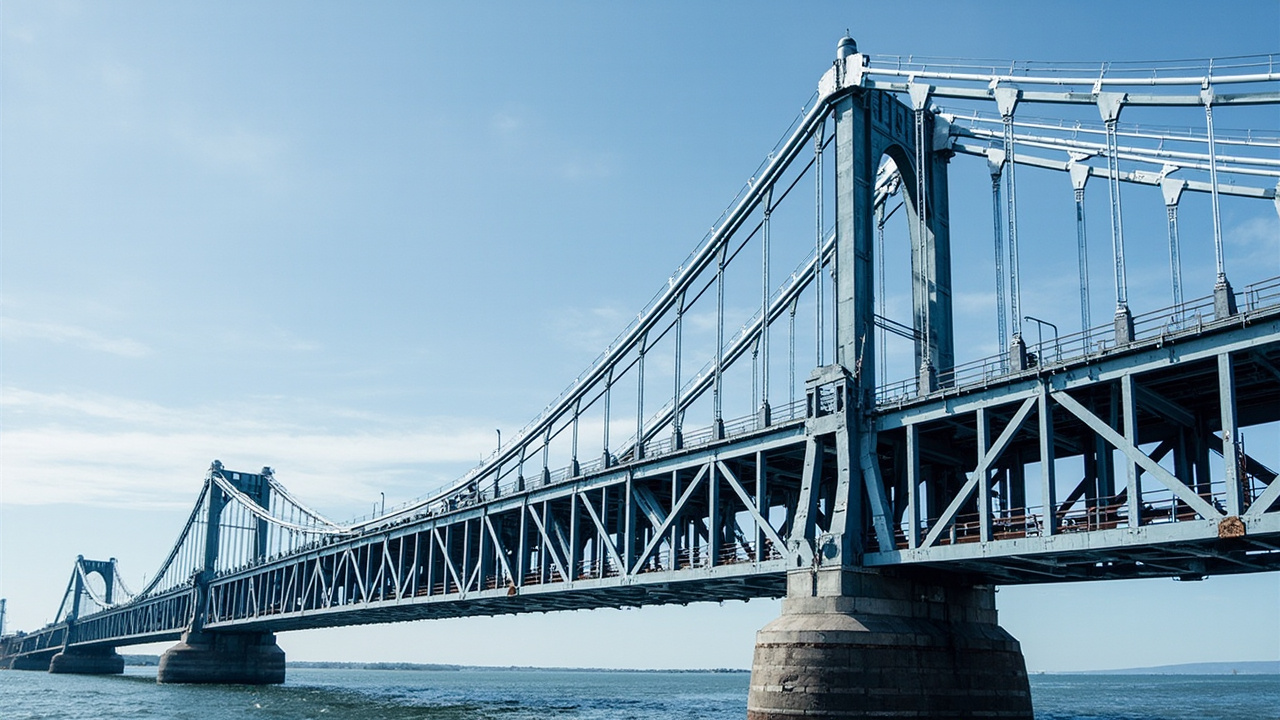
I. How Harsh Is the Corrosion Environment of Coastal Steel Structures
To understand heavy-duty anti-corrosion, first understand the environment. According to the corrosion classes of ISO 12944, open coastal atmospheres generally fall in the C4–C5 or even higher range, while the splash zone and tidal zone, due to the superposition of oxygen concentration, salt concentration, and wet-dry cycles, can have local corrosion rates several times that of ordinary atmospheres. Three dominant factors:
- Chloride ions: Cl⁻ in sea salt aerosols destroys the passive film and is the culprit of pitting and crevice corrosion in steel structures.
- Wet-dry alternation: The splash zone repeatedly wets and dries, accelerating coating aging and substrate corrosion.
- UV and temperature: The topcoat is degraded by UV over the long term; its gloss and color retention directly determine the maintenance cycle.
This means that simply "applying a thicker coat" cannot solve the problem; it must rely on system配套 and interlayer synergy.
II. The Standard Framework of Heavy-Duty Anti-Corrosion配套
The mainstream heavy-duty anti-corrosion配套 for bridges and coastal steel structures usually presents a "three-layer or multi-layer" structure:
1. Epoxy zinc-rich primer: Zinc powder provides cathodic protection and is the first barrier for long-term anti-corrosion, especially suitable for blast-cleaned steel structures.
2. Epoxy micaceous iron oxide intermediate coat: Mica iron oxide flakes extend the penetration path of corrosive media, increase film thickness, and improve interlayer adhesion.
3. Aliphatic polyurethane topcoat: Weather-resistant, with gloss and color retention, resisting UV and salt spray, determining the appearance life.
This "primer–intermediate–topcoat" framework is widely adopted in ISO 12944 and JT/T related bridge standards. For a more systematic approach to system design, see Heavy-Duty Anti-Corrosion Coating System Design, Selection and Engineering Application: From Corrosion Mechanism to 25-Year Protection Life.
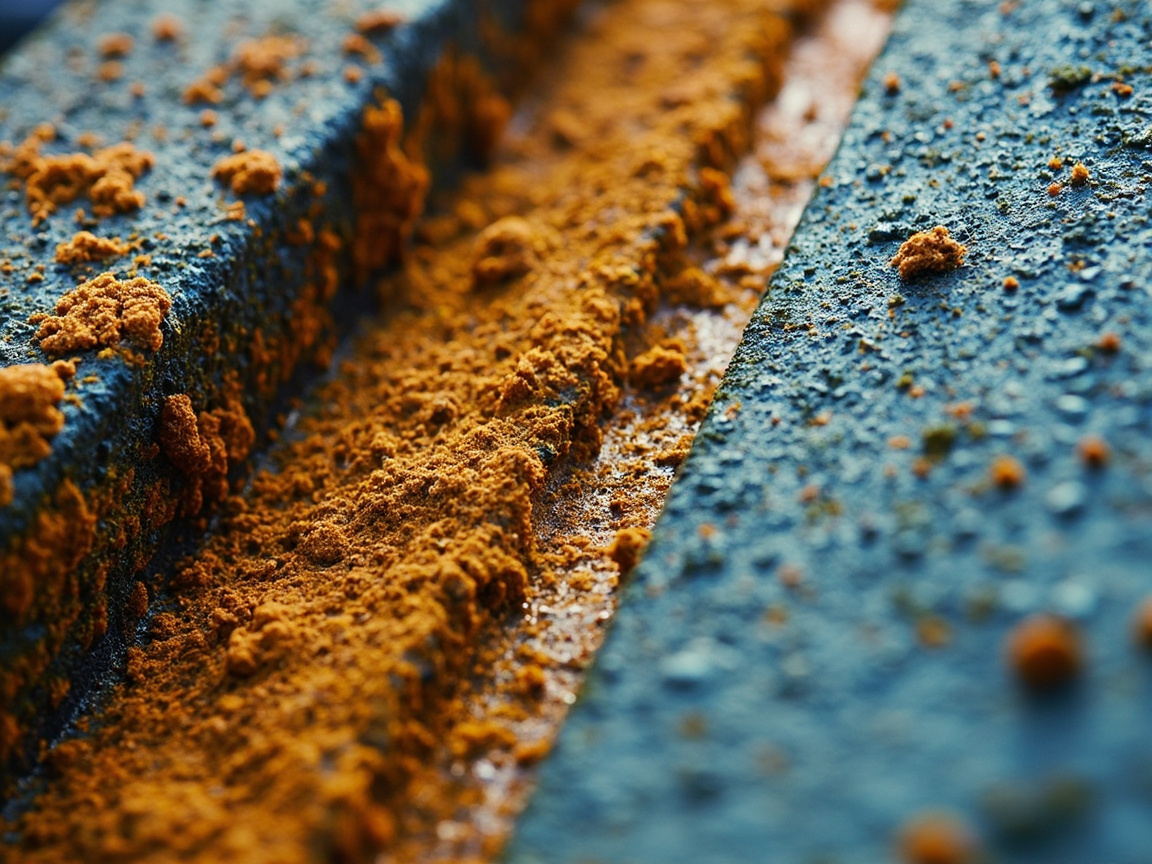
III. Substrate Preparation: The "70% Foundation" of Heavy-Duty Anti-Corrosion
The success or failure of a heavy-duty anti-corrosion system is 70% dependent on the substrate. No matter how good the paint is, if blast cleaning fails to meet standards, all previous efforts are wasted:
- Cleanliness: For main load-bearing bridge members, blast cleaning to Sa 2.5 is recommended, and important parts can reach Sa 3; local repair should be at least St 3 with a compatible stabilizing primer.
- Roughness: Appropriate roughness improves mechanical interlocking; too rough harbors dirt, too smooth lacks adhesion.
- Flash-rust control: After blast cleaning, workshop primer or the first coat should be applied within a limited time, especially racing against time in humid environments.
- Welds and dead corners: Welds, free edges, and areas around holes are corrosion starting points and require enhanced grinding and pre-coating.
For general selection logic for steel structures, tanks, and pipelines, refer to Complete Guide to Industrial Anti-Corrosion Paint: How to Select the Right配套 System for Steel Structures, Tanks, and Pipelines?.
IV. Interlayer配套 and Application Window
Heavy-duty anti-corrosion is not just stacking three coats of paint; interlayer matching is key:
- Recoat interval: Epoxy types have maximum/minimum recoat windows; exceeding the window requires abrading or treatment, otherwise interlayer delamination occurs.
- Film thickness control: Total dry film thickness must meet the design value and be uniform; too thin is insufficient for anti-corrosion, too thick easily cracks.
- Environmental limits: Humidity, dew point, and temperature must all be satisfied simultaneously; outdoor bridge construction often requires shelters and heating.
- Repair process: Damage from transport and lifting must be handled in a closed loop of "expose bare steel–repair primer–repair intermediate–repair topcoat".
V. Maintenance and Full-Life Management
Heavy-duty anti-corrosion is a closed loop of "design–construction–maintenance", not a one-off deal:
- Regular inspection: Focus on splash zone, welds, edges/corners, coating chalking, and blistering points.
- Local repair prior to full repaint: Timely repair of small-area damage avoids large-area loss of substrate protection.
- Maintenance cycle planning: Schedule recoating before the topcoat's weather resistance is exhausted, greatly extending total system life.
- Records and sample retention: Retain samples of each batch of coating and record each process for accountability and repainting matching.
The penetration of water-based solutions in heavy-duty anti-corrosion is also accelerating; Waterborne Micaceous Iron Oxide Coating: Water-Based Long-Term Protection for Heavy-Duty Anti-Corrosion Steel Structures provides a feasible path for water-based intermediate coats, suitable for bridge and tunnel projects with VOC and construction environmental requirements.
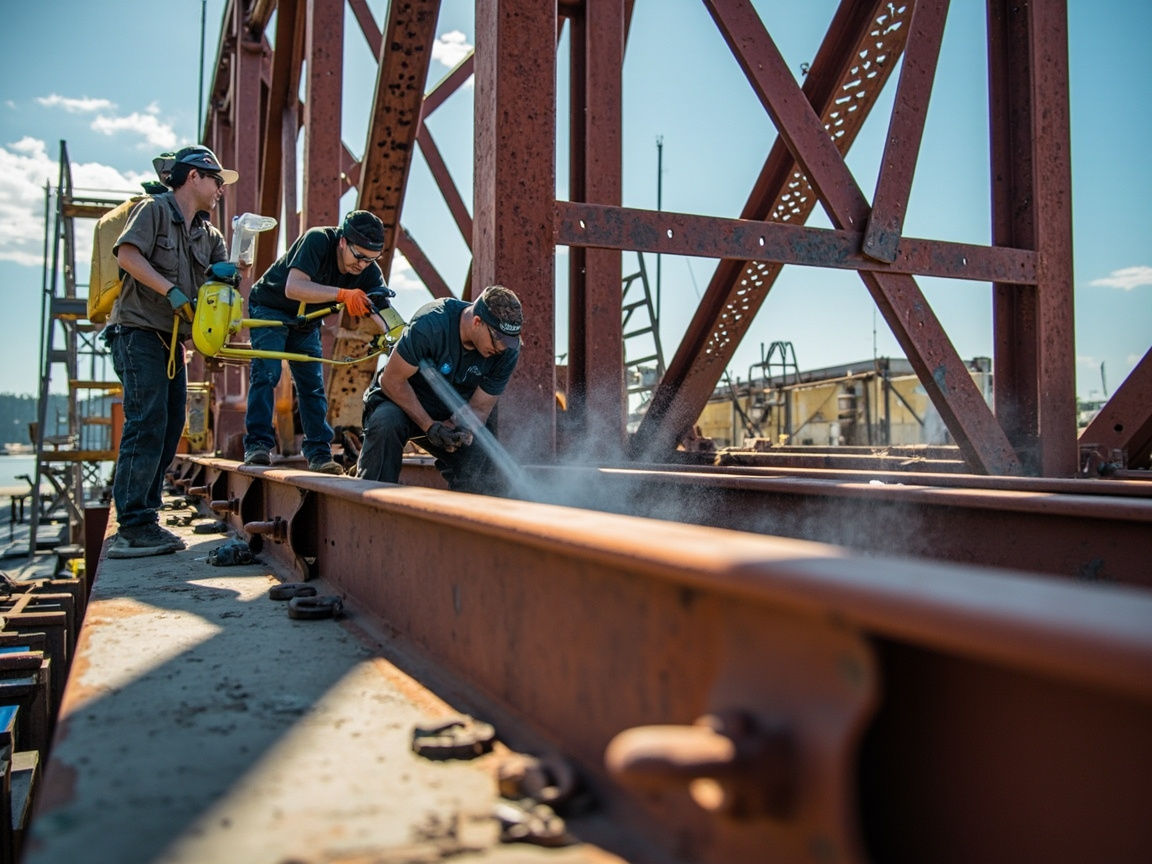
VI. Common Failures and Avoidance
- Interlayer delamination: Mostly due to exceeding recoat window, surface contamination, or incompatible配套; avoided by process discipline.
- Edge/corner rust first: Free edges not rounded and thin film thickness require pre-coating and reinforcement.
- Blistering and pitting: Insufficient substrate preparation or moist construction; strictly control dew point and cleanliness.
- Premature topcoat aging: Misuse of aromatic polyurethane or varieties with insufficient weather resistance; select materials per outdoor weathering requirements.
VII. Kexin New Materials' Approach to Bridge Steel Structure Protection
Kexin New Materials (Guangdong) Co., Ltd. delivers with a "配套 mindset" in heavy-duty anti-corrosion, rather than selling products alone: for bridges and coastal steel structures, it provides a closed配套 of epoxy zinc-rich primer – epoxy micaceous iron oxide intermediate coat – aliphatic polyurethane topcoat, and gives film thickness and application window recommendations by corrosion class (C4–C5, splash zone reinforced). For overseas sea-crossing projects, Kexin outputs English technical documents and配套 tables compliant with international general corrosion class standards under the kexinMaterials brand, facilitating direct implementation by design institutes and general contractors per local codes.
VIII. Frequently Asked Questions (FAQ)
Why must bridge steel structures use heavy-duty anti-corrosion配套?
Coastal and sea-crossing environments have high chloride ions and frequent wet-dry alternation; a single coat cannot block corrosive media long-term, requiring multi-layer primer–intermediate–topcoat synergy, matched to long design life and low maintenance needs.
What is the role of epoxy zinc-rich primer?
Zinc powder provides cathodic protection at coating damage sites, delaying substrate rusting; it is the first barrier for long-term anti-corrosion, especially suitable for blast-cleaned steel substrates.
Why is the splash zone the hardest to protect?
The splash zone has wet-dry alternation and high oxygen and salt concentrations; corrosion rate is significantly higher than ordinary atmosphere, requiring synchronized reinforcement in配套 thickness, topcoat weather resistance, and maintenance frequency.
What environmental parameters should be most controlled in heavy-duty anti-corrosion construction?
Focus on ambient temperature, relative humidity, and dew point difference: substrate temperature must be above dew point by a certain margin, construction is not advisable when humidity exceeds the limit, and outdoor bridges often need shelters and heating.
Can water-based systems be used for bridge heavy-duty anti-corrosion?
Intermediate coats and other stages already have feasible solutions such as water-based epoxy micaceous iron oxide, suitable for projects with high VOC and construction environmental requirements; critical parts should still be selected based on condition verification.
How to extend the total life of existing bridge coatings?
Through regular inspection, early local repair of damage, planned recoating before topcoat weather resistance is exhausted, and incorporating each batch of coating and process into records to avoid the high cost of full repaint.
Further Reading
- Heavy-Duty Anti-Corrosion Coating System Design, Selection and Engineering Application: From Corrosion Mechanism to 25-Year Protection Life
- Complete Guide to Industrial Anti-Corrosion Paint: How to Select the Right配套 System for Steel Structures, Tanks, and Pipelines?
- Waterborne Micaceous Iron Oxide Coating: Water-Based Long-Term Protection for Heavy-Duty Anti-Corrosion Steel Structures