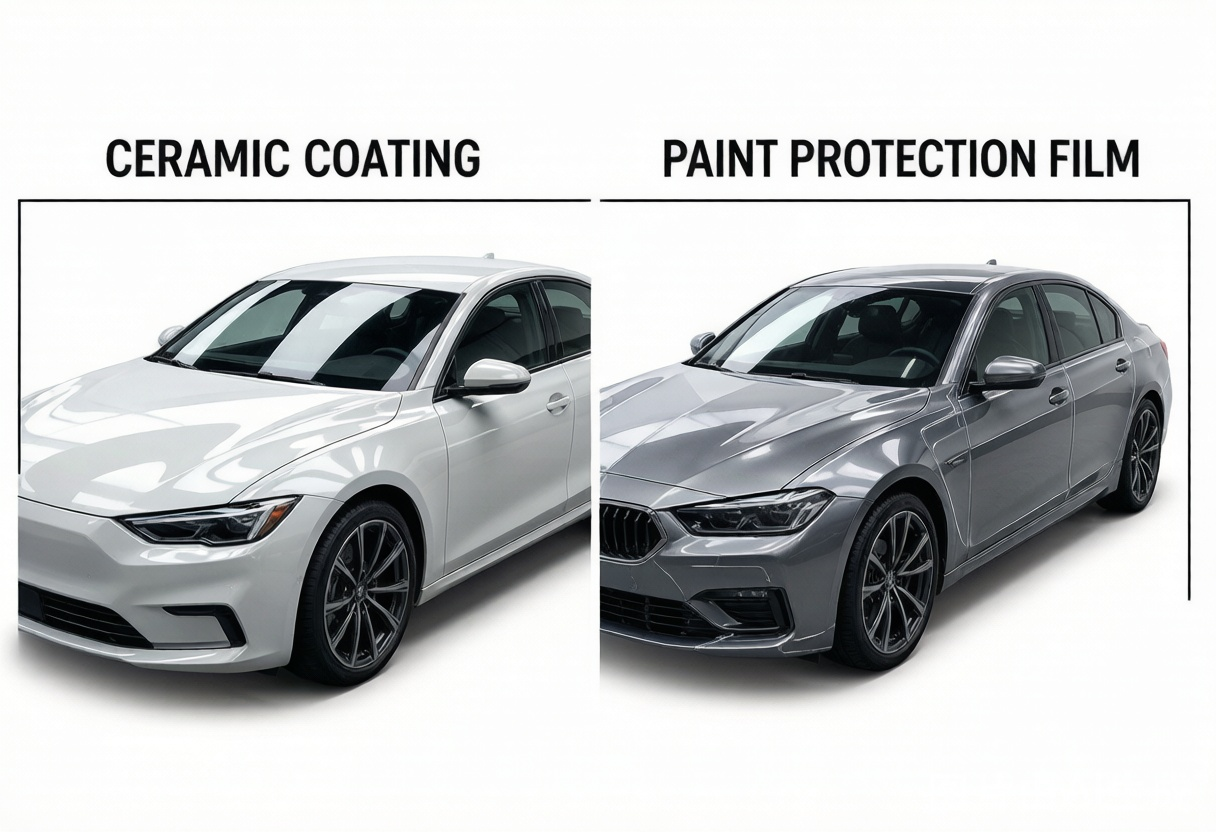
To protect the paint, "ceramic coating" and "PPF (paint protection film)" are often confused. In fact, one is hard and the other is soft, and their protection logics are completely different.
I. Differences in Principle
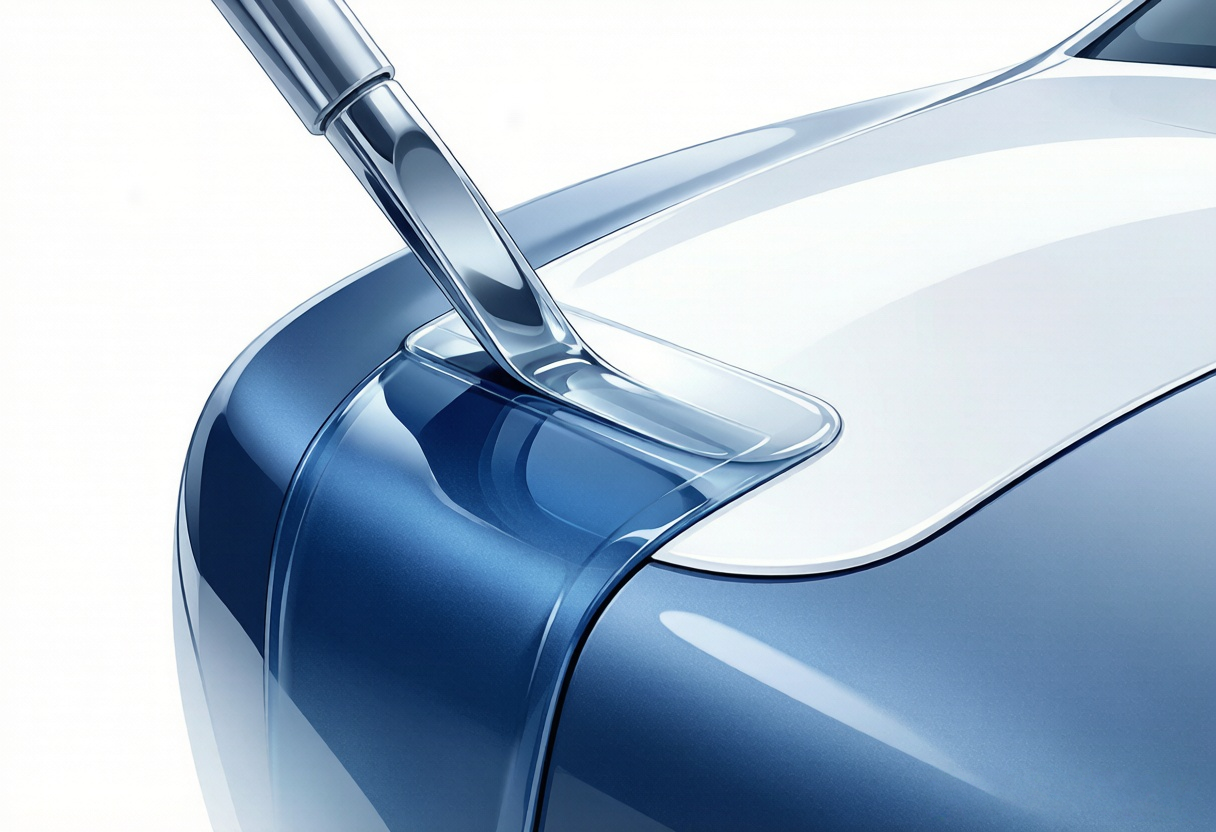
Ceramic coating forms a hard inorganic layer on the paint surface, enhancing hardness, hydrophobicity, and UV resistance; Paint Protection Film (PPF) is an applied transparent polyurethane film that physically absorbs impacts and scratches through its own thickness.
II. Comparison
| Dimension | Ceramic Coating | PPF (Paint Protection Film) |
|---|---|---|
| Protection Type | Chemical / Hardness | Physical / Scratch-resistant |
| Scratch Resistance | Weak (still scratches) | Strong (absorbs scratches) |
| Lifespan | 1–3 years | 5–10 years |
| Price | Lower | Higher |
III. How to Select
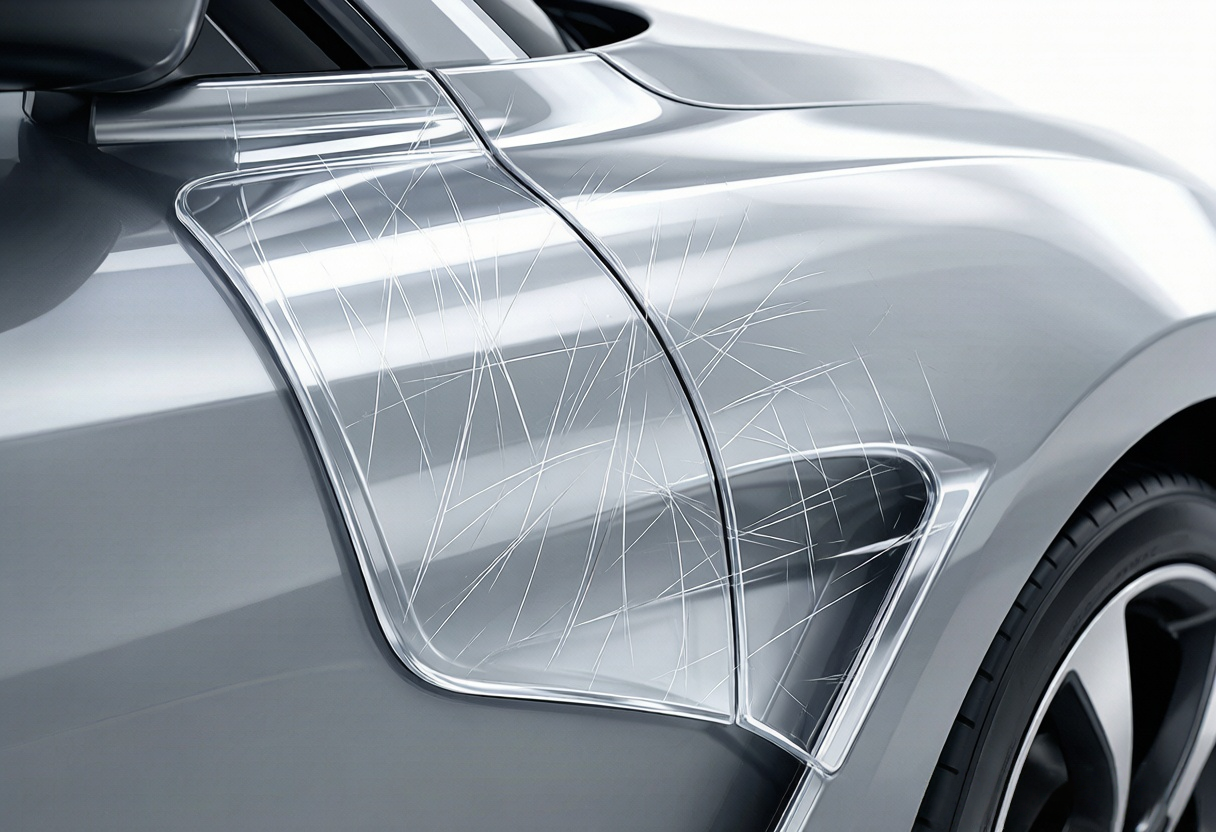
For a glossy hydrophobic finish and cost-effectiveness, choose ceramic coating; for hard protection against stone chips/key scratches and the like, choose paint protection film (PPF). With a sufficient budget, you can layer ceramic coating on top of PPF for a combined experience.
Summary
Ceramic coating is a chemically cured layer that enhances hardness, hydrophobicity, and oxidation resistance but offers weak scratch protection; PPF (paint protection film) is a physical film with strong scratch resistance and long service life but higher cost. Choose PPF for scratch protection, ceramic coating for cost-effective gloss, and they can be applied together.
Frequently Asked Questions (FAQ)
{ "@context": "https://schema.org", "@type": "FAQPage", "mainEntity": [ {"@type":"Question","name":"What is the difference in protection logic between ceramic coating and paint protection film (PPF)?","acceptedAnswer":{"@type":"Answer","text":"Ceramic coating is a chemically hardened layer that enhances paint hardness, hydrophobicity, and UV resistance; PPF is an applied polyurethane film that physically absorbs scratches and impacts through its thickness. The two offer different types of protection."}}, {"@type":"Question","name":"Which is more scratch-resistant?","acceptedAnswer":{"@type":"Answer","text":"PPF is far more scratch-resistant, able to absorb stone chips and key scratches; ceramic coating mainly resists minor oxidation and adds hardness, but swirl marks will still appear."}}, {"@type":"Question","name":"How many years does PPF last?","acceptedAnswer":{"@type":"Answer","text":"Quality PPF typically lasts 5–10 years; choosing a model with a self-healing top coat allows minor scratches to be heat-repaired; inferior films easily yellow and are hard to remove."}}, {"@type":"Question","name":"Can ceramic coating and PPF be done together?","acceptedAnswer":{"@type":"Answer","text":"Yes. A common approach is to use PPF as a base for hard protection, then apply ceramic coating on top of the PPF or on bare paint to enhance hydrophobicity and gloss, stacking the benefits."}}, {"@type":"Question","name":"Which to choose on a limited budget?","acceptedAnswer":{"@type":"Answer","text":"For gloss and hydrophobicity with low-frequency investment, choose ceramic coating; if you often drive on rough roads, fear stone chips and key scratches, and want long-term hard protection, choose PPF—though pricier, it is more worry-free."}} ] }