In the cosmetics industry, packaging is never just a container—it is the primary carrier of brand premium. The rotational damping of a lipstick tube, the matte touch of a face cream bottle cap, the gradient from transparent to misty purple on a glass serum bottle—the vast majority of this "premium feel" is imparted by the coating process. Cosmetic packaging coating is one of the most demanding segments within plastic and glass coating: consumers hold it in their hands and examine it repeatedly, fingers with hand cream rub it daily, and it is used for years in the high-humidity environment of a bathroom—any loss of gloss, fading, or tackiness directly equates to a collapse of brand image. What is even more special is that the packaging coexists with the contents long-term; the chemical resistance of the coating must face increasingly aggressive formulations—high-concentration alcohol perfumes, acid serums, sunscreens, each a coating killer.
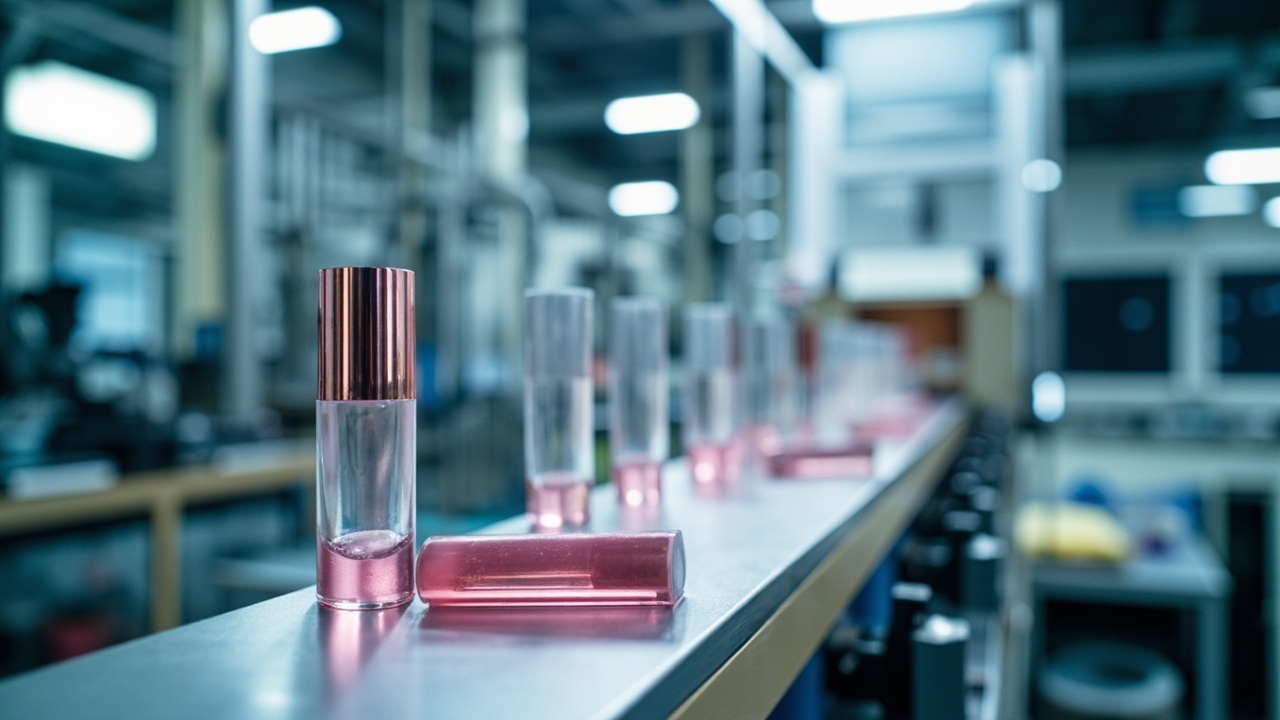
This article is aimed at cosmetic packaging material factories, contract coating factories, and brand packaging development engineers. It systematically breaks down the substrate characteristics, process routes, effect realization, compatibility verification, and compliance requirements of cosmetic packaging coating, all from an engineering perspective centered on "mass-producible, acceptable, and traceable," and can be directly used for project initiation and supplier evaluation after reading.
I. Substrate Map: What Do the Objects of Cosmetic Packaging Coating Look Like
The substrates for cosmetic packaging coating are far more complex than general industrial products; a single production line may process five types of materials simultaneously.
1.1 Glass: The Main Battlefield of Perfume and Serum Bottles
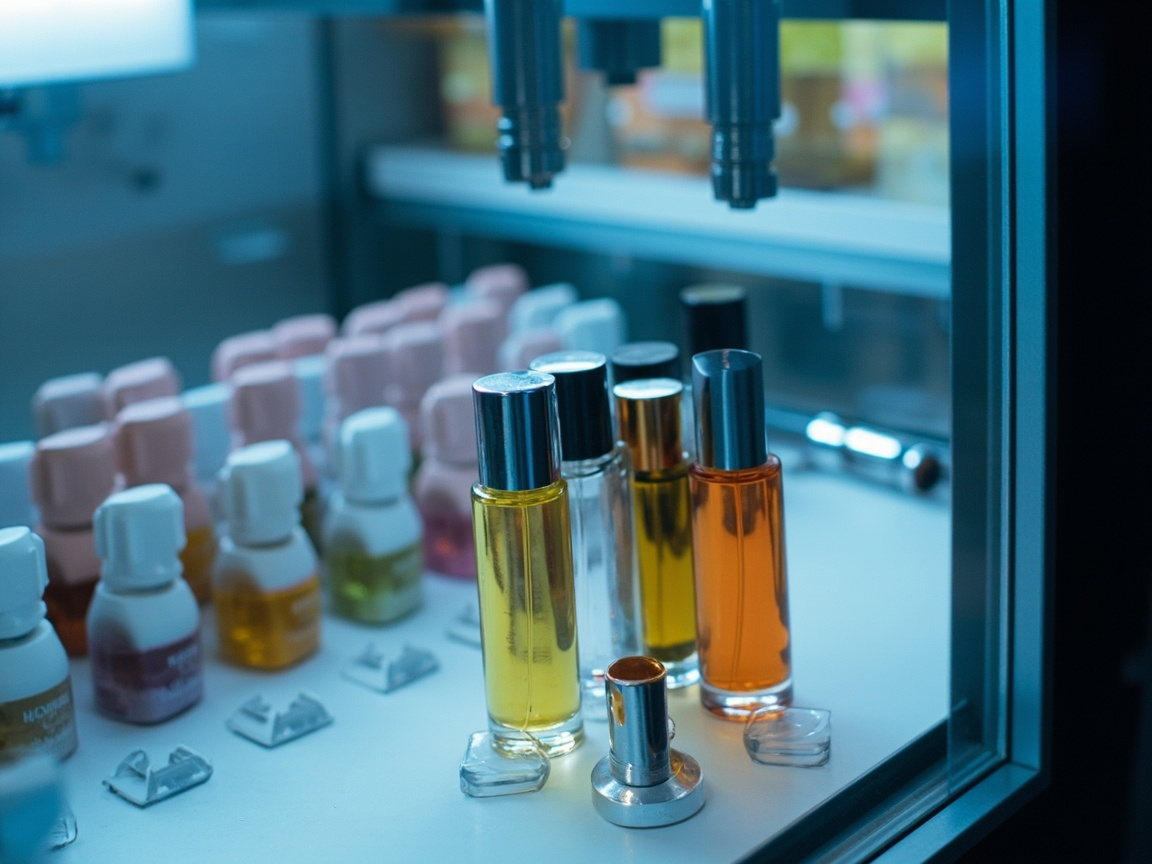
Glass is the soul material of high-end cosmetic packaging. Coating forms include full-bottle spraying (solid color/transparent color/gradient), frosting (matte-effect coating replacing chemical frosting), and inner spraying (coloring the inner wall of the bottle, the color appears more translucent through the glass). Glass has high surface energy and good basic adhesion when clean, but its coating difficulty lies in: the surface is smooth with no anchoring structure, and the coating's resistance to boiling water and thermal shock (bottle washing on filling lines, consumer bathroom environment) easily becomes a weak point—usually requiring silane coupling agent for adhesion promotion, either added internally to the coating or applied as a pre-treatment spray, to build a chemical bond bridge between the coating and glass. Glass bottles after coating often undergo additional hot stamping and screen printing processes, so the coating must be compatible with downstream decorative processes.
1.2 Plastic Family: ABS, PP, PETG, AS Each Have Their Temper
Bottle caps and lipstick tube shells are mainly ABS (easy to coat, can be electroplated), PP is used for tube shoulder caps and low-cost bottle caps (low surface energy, must be flame/plasma treated or use CPO primer), PETG with high transparency is used for mid-range bottle bodies (poor solvent resistance, must use PETG-safe coating, otherwise stress whitening and cracking), AS/SAN is used for transparent caps (also solvent sensitive). The common prerequisite for plastic part coating is that surface energy must meet the standard: PP after treatment needs dyne value ≥38, ABS natively meets it. Transparent plastic parts also have an optical requirement for coating—the uniformity of transparent pigmented paint is directly amplified by "light transmission inspection," and a film thickness fluctuation of ±2 microns may be visually detected as color difference.
1.3 Metal and Anodized Aluminum Parts
Lipstick tubes and powder cases often use aluminum parts that are anodized or electroplated, then coated with transparent pigmented paint or matte paint to achieve a "metal base color + colored dyeing" jewelry feel. For aluminum coating, note that the sealing state of the oxide film affects adhesion; electroplated parts (water plating/vacuum plating) with topcoat require verification of interlayer adhesion and salt spray resistance. Vacuum aluminum plating (UV primer + vacuum aluminum plating + UV topcoat "sandwich" structure) is the mainstream route for plastic parts to obtain mirror metallic feel; any interface mismatch among the three layers will cause large-area peeling, and systematic verification cannot be omitted.
II. Process Route Overview: Division of Labor Among Spraying, Dip Coating, and UV Curing
2.1 Mainstream Process Matrix
| Process Route | Typical Object | Curing Method | Single-Piece Cycle | Core Advantage |
|---|---|---|---|---|
| Air spraying + thermal curing | Glass bottle solid color/gradient | 120—160℃ (glass)/60—80℃ (plastic) | Medium | Rich effects, free gradient |
| Air spraying + UV curing | Plastic bottle caps, lipstick tubes | UV second-level curing | Fast | Fast cycle, high hardness |
| Electrostatic spraying | Large-batch bottle caps | UV or thermal | Fast | High transfer efficiency, uniform film thickness |
| Dip coating/flow coating | Simple-shaped small parts | Thermal curing | Fast | Simple equipment, low cost |
| Inner spraying process | Glass bottle inner wall coloring | Low-temperature baking | Medium | Translucent color, outer wall retains glass texture |
| UV primer + vacuum plating + UV topcoat | Mirror metallic effect parts | UV×2 + plating | Slow (three processes) | Mirror metallic feel, no electroplating |
The main theme of cosmetic packaging coating is UV-ization: small plastic parts like bottle caps and lipstick tubes have annual demand in the hundreds of millions; the cycle and space advantages brought by second-level curing of UV coating are irreplaceable, and UV paint film has high hardness (≥H) and friction resistance, naturally matching the "repeatedly handled" usage scenario. Thermal curing routes are retained for glass bottles (can withstand high temperature, better adhesion and boiling water resistance after baking) and special effects (some skin-feel, thick-film gradient) fields.
2.2 Typical Process of Glass Bottle Spraying Line
Taking a transparent gradient perfume bottle as an example: bottle washing (pure water + ultrasonic) → drying → flame treatment or plasma cleaning (improve surface activity) → spray coupling agent base layer or directly spray color with internal additive → gradient spraying (robot or cam profiling, controlling gun distance and masking angle to achieve shade transition) → leveling → baking (130—160℃×20—30 min) → cooling inspection → downstream screen printing/hot stamping. The consistency of gradient effect is the soul of this line: spraying parameters (paint output gradient curve, workpiece rotation speed, gun travel speed) must be digitally locked; the era of manual gradient spraying is rapidly being replaced by servo gradient spraying machines, with inter-batch gradient position tolerance controllable within ±1.5 mm.
2.3 Typical Process of Plastic Part UV Coating Line
Taking ABS bottle cap as an example: static elimination and dust removal → spray UV pigmented paint or UV transparent color → infrared leveling flash dry (UV paint also needs brief leveling, otherwise orange peel) → UV curing (mercury lamp or UVLED, energy 600—1000mJ/cm² per formula) → unloading. PP parts add a flame treatment station at the front end (flame cone outer flame sweeps surface for 0.3—0.6 sec, dyne pen acceptance ≥38). Two make-or-break details of UV line: fixture self-rotation ensures uniform curved surface irradiation; lamp energy measured weekly—under-cured film caused by lamp attenuation will see hardness and alcohol resistance drop off a cliff, while appearance shows nothing.

III. Texture Effect Realization: The Process Code of Premium Feel
The coating value of cosmetic packaging concentrates on the two words "texture." The realization paths and acceptance key points of mainstream effects are as follows.
3.1 Matte and Velvet Feel
Matte is the number one texture trend in cosmetic packaging in recent years. Realization path: matting powder (silica) blended into varnish or pigmented paint, gloss controlled in 5—25GU range. Three engineering difficulties: under low gloss (<10GU) matting powder dosage is large, film easily absorbs dirt—hand cream, foundation smeared on it penetrates micro-pores and is hard to wipe off, must select stain-resistant matting system and add "lipstick/foundation/hand cream 24h contamination wipe" test; matte surface wear resistance is naturally weaker than high gloss, friction between packages during transport vibration will "polish bright," need vibration friction simulation test; inter-batch gloss consistency, matting powder dispersion state drift of 1—2GU is visually distinguishable, coating batch inspection gloss meter data must be written into the approval sheet.
3.2 Soft-Touch (Soft Feel) Paint
Soft-touch paint uses special polyurethane system to create baby-skin-like touch, a signature process for high-end face cream caps and cushion cases. The contradiction between soft touch and resistance is extremely hard to balance: the softer the film, the better the hand feel, but scratch resistance, stain resistance, and cosmetic oil resistance are worse. Mass-production acceptance suggests all five tests: RCA abrasion, nail scratch, lipstick contamination 24h, alcohol-containing toner wipe, 40℃×95% hot-humid storage (soft-touch paint hydrolysis tackiness is a severe area, polyester-type soft-touch has high risk under hot-humid, polyether/polycarbonate-type is more stable). Once soft-touch paint becomes tacky it is a disastrous complaint; hot-humid verification would rather be strict than loose.
3.3 Gradient and Iridescent
Gradient spraying described earlier, supplement two advanced effects: dual-color gradient (two guns with two transparent colors opposing gradient, mid-section overlap color hue control relies on spraying timing precision to 0.1 sec level); iridescent/aurora effect (interference pearlescent pigment topcoated on dark or mirror base, color shifts with viewing angle, pigment directional arrangement requires fine atomization, thin wet film multi-pass). Such effects are easy to prototype but hard to mass-produce; before quoting, must confirm "mass-production process window" rather than only looking at the sample.
3.4 Frosting and Matte
Chemical frosting (hydrofluoric acid etching) has high environmental pressure; coating frosting has become the mainstream alternative: frosting paint containing matting and feel-adjusting components sprayed on glass bottles, achieving uniform fine mist surface. Acceptance concerns: frosting uniformity (light box transmission inspection no cloud spots), anti-fingerprint visibility (good frosting paint does not show fingerprints), boiling water resistance (filling line 80℃ hot fill or bottle washing no whitening or peeling).
3.5 Inner Spray Coloring
Inner spraying is the "magic process" of glass bottles: coating on inner wall, color presented through glass, outer wall retains glass's native cool touch and gloss, color translucency unmatched by outer spraying. Process key points: inner spray gun extends into bottle and rotates to spray, bottle mouth masking must be clean (residual paint at mouth affects filling seal); inner spray coating may contact content volatile atmosphere, compatibility and migration test must be executed at "indirect contact" grade; curing uses low-temperature long-time (80—120℃), avoiding solvent retention inside bottle.
IV. Content Compatibility: The Unique Life-and-Death Gate of Cosmetic Coating
This is the core proposition distinguishing cosmetic packaging coating from all other decorative coating: the coating must coexist long-term with the contents.
4.1 How to Do Compatibility Testing
Standard practice is "full packaging + real formula" accelerated aging: fill mass-produced formula into coated packaging, store at 40℃/75%RH and 45℃ for 1—3 months (simulating 1—3 years shelf life), periodically check coating appearance (loss of gloss, discoloration, bubbling, peeling) and formula state (color transfer, odor, component adsorption). High-risk combinations prioritized: high-alcohol perfume (ethanol content above 70%, strong solvent to most pigmented paints) × bottle mouth spray area; acid serum (AHA/salicylic acid, pH<4) × pump head sprayed part; sunscreen products (avobenzone, octocrylene and other UV filters are swelling masters for plastic and coating) × tube shoulder cap; makeup remover oil (ester oil strong penetration) × soft-touch cap. In brand side's sampling process, compatibility test is the longest scheduled segment; packaging factories should promote "coating pre-screening library" construction—use standard aggressive formulas (75% ethanol, simulated sebum, standard sunscreen formula) to pre-screen coating systems, shortening single-project verification cycle.
4.2 Migration and Chemical Compliance
Although the coating does not directly contact the formula (except inner spray and bottle mouth area), the cosmetic regulatory chain is extending to packaging: EU Cosmetic Regulation EC 1223/2009 requires finished product safety assessment to cover packaging migration risk; REACH's SVHC list, packaging heavy metal directive 94/62/EC (total lead cadmium mercury hexavalent chromium <100ppm), California Proposition 65 directly constrain coatings and inks; brand customers (especially international) generally require packaging coating to provide declarations and test reports of no phthalates, bisphenol A, specific azo dyes. At coating selection stage, the target market compliance list should be given to the coating factory, requiring complete accompanying technical documents—the cost of supplementing compliance documents late in project is often entire batch redo. Source coating factories represented by Kexin New Materials (Guangdong) Co., Ltd. can provide UV coating and water-based coating compliance document packages (REACH/heavy metal/phthalate declarations) and compatibility pre-screening support for cosmetic packaging, this "compliance upfront" supporting capability weighs increasingly heavy in international brand supply chain audits.
V. Mass-Production Quality Control: "Microscope-Level" Standard Among Appearance Parts
5.1 Industry Reality of Appearance Standard
The appearance acceptance strictness of cosmetic packaging is famous in the industry: A surface (consumer front face) dust spot diameter >0.2 mm is rejected, color difference ΔE≤0.5 (pearl/gradient separately discussed), orange peel managed by visual grade panel. Production line configuration to achieve this standard: ten-thousand to hundred-thousand class spray room cleanliness, full set dust-free clothing, fixture cleaning every shift, incoming part static dust removal doubled. Even so, the industry average first-pass yield of cosmetic coating is only 85%—93%, dust spots always the number one killer. Rational approach is to discuss "zoned standard" with brand—A surface strict, B surface (bottom/inner) relaxed, spend cost where consumers see.
5.2 Routine Inspection List
| Inspection Item | Method/Standard | Typical Requirement |
|---|---|---|
| Adhesion | GB/T 9286 cross-cut + 3M tape | Class 0 (cosmetic generally higher than industrial) |
| Hardness | Pencil hardness | UV part ≥H, thermoset part ≥F |
| Alcohol resistance | 75% ethanol reciprocating wipe | 100 times no base reveal no gloss loss |
| Artificial sebum resistance | Simulated sebum liquid cotton patch | 24h no softening discoloration |
| Cosmetic resistance | Lipstick/foundation/sunscreen/remover oil spot | 24h wipe clean no mark |
| Boiling water resistance | 80℃×30min (glass part) | No whitening peeling |
| Thermal shock | -10℃↔50℃×5 cycles | No crack no bubble |
| RCA abrasion | ASTM F2357 | 175g×100—300 times |
| Vibration friction | Simulated transport mutual rub | Matte not polished bright, no scratch |
| Gloss/color difference | Gloss meter/spectro colorimeter | Batch inspect per approval sheet |
| Heavy metal | 94/62/EC | Four items total <100ppm |
5.3 Matching Verification with Downstream Processes
Cosmetic packaging coating almost always has downstream: hot stamping (aluminum foil adhesion on paint and stamping temperature resistance), screen printing (ink and paint interlayer adhesion), laser engraving (edge clarity of laser revealing base), assembly (ultrasonic welding area film not cracking). Any coating change must re-run downstream matching, this is the iron rule of cosmetic packaging project change management. Hot stamping mismatch is the most common pit: paint surface slip agent migrates to surface causing aluminum foil poor adhesion, batch gold dropping—select low-migration additive system coating and lock in approval sheet, can avoid from source.
VI. Environmental and Production Line Compliance: Real Test of Cosmetic Contract Manufacturing Clusters
Cosmetic packaging coating clusters (mainly Guangdong, Jiangsu, Zhejiang) are in an environmental upgrade cycle. On VOC treatment end, UV coating itself has high solid content (above 90%), low emission, is policy-friendly route; solvent-based pigmented paint still largely exists in glass bottle spraying, water-based glass baking paint substitution is accelerating—water-based system with silane adhesion technology, boiling water resistance already aligned with solvent-based, new lines suggested to directly design with water-based + UV dual main line. On hazardous waste end, paint sludge, gun washing solvent, UV paint waste (contains active monomer, clear hazardous attribute) classified storage transport qualification must be complete. On occupational health end, UV coating active monomer is irritating to skin, protection (nitrile gloves, barrier cream, local exhaust) and training at spraying and touch-up stations are mandatory audit items. Kexin Materials system's supporting practice on water-based glass baking paint and UV plastic coating shows that the "UV main, water-based supplement, solvent-based exit" three-step route is the mainstream evolution path of cosmetic packaging coating in the next five years.
VII. Cost Structure and Cost Reduction Directions
Taking an ABS matte bottle cap (UV system) as example, single-piece coating cost composition: UV coating 25%—35%, energy (UV lamp + clean AC) 15%—20%, labor and fixture 25%—30%, defect allocation 15%—25% (cosmetic's high appearance standard makes defect allocation significantly higher than general industrial), environmental and auxiliary 10%. Three verified effective cost reduction directions: fixture revolution—multi-cavity fixture design (single fixture load +50% proportionally dilutes cycle cost), and fixture masking precision directly reduces bottle mouth paint removal labor; electrostatic spraying retrofit—small part transfer efficiency from air spray 25%—35% to above 50%, coating cost drops 30% immediately, but need solve plastic part conductivity (conductive fixture or pre-spray conductive base); first-pass yield engineering—treat dust spot governance as project (cleanliness grading retrofit + ion wind full coverage + fixture clean-per-shift system), yield each +2%, comprehensive cost about -3%. The negative example of cost reduction is cutting coating grade: cosmetic part complaint chain too short (consumer → brand → packaging factory joint liability), coating resistance downgrade saved money never enough to compensate.
VIII. Selection Decision Framework: Separate Checklists for Brand and Packaging Factory
Four Questions for Brand Packaging Development Engineer: Does this effect have mass-production process window (require packaging factory to provide gloss/color difference/gradient position mass-production tolerance commitment, not only confirm sample); does compatibility test plan cover my formula specificity (high alcohol/acid/sunscreen point out); are compliance documents complete (REACH/heavy metal/phthalate/target market special requirements); how is change management agreed (coating change, downstream material change must notify and re-verify).
Four Questions for Packaging Factory Coating Manager: Can coating supplier provide "pigmented paint + varnish + downstream matching" system-level approval (hot stamping/screen printing matching data delivered with system); who guarantees sampling and mass-production consistency (require supplier to provide mass-production parameter window file, sample paint and mass-production paint same formula number); compatibility pre-screen capability (has standard aggressive formula pre-screen database, can help me quickly answer brand); batch stability control (gloss, fineness, hue factory batch inspection report and sample retention system). Walking through these eight questions, most pits of cosmetic coating project are filled at initiation stage.
IX. Category Special Chapter: Coating Deep Water Zones of Five Star Packaging Materials
9.1 Lipstick Tube: "Precision Manufacturing" on Small Parts
The lipstick tube is assembled from multiple small parts such as the middle ring, base, and outer shell, with the coating objects mainly being aluminum and ABS parts. The deep end of the process lies in the trade-off between assembly tolerance and film thickness: the rotational feel (damping) of the lipstick tube is determined by the part fit clearance, and the coating film thickness directly eats into the tolerance—a single-side film thickness deviation exceeding 5 microns may cause rough rotation or abnormal rattling from looseness. Therefore, the film thickness management for lipstick tube coating is refined to "zoning": the mating surface is masked and not sprayed or controlled within 10 microns, while the appearance surface is 20—40 microns according to effect requirements. Metallic pigmented paint + UV clear coat is the mainstream system; magnetic lipstick tubes also need to ensure the coating does not interfere with the magnetic mating surface. The unique acceptance item for lipstick tubes is "open-close life": after coating, the entire tube is opened and closed 3000—5000 times, with the mating surface coating film not worn through or flaking (paint chips falling into the paste is a fatal complaint).
9.2 Cushion Compact and Powder Case: A Two-sided Test of Skin-feel and Mirror Finish
The cushion compact is the largest application scenario for skin-feel paint, and also a major hotspot for skin-feel complaints—the case body contacts foundation liquid and hand oils daily. In addition to the five skin-feel verification items mentioned earlier, the cushion compact has two specialized requirements: coating film at the hinge area resists bending (no cracking at the hinge root after tens of thousands of open-close cycles), and the inner ring and puff contact area resist foundation staining. The other side of the powder case is the mirror inner cover: vacuum aluminum plating + UV clear coat mirror process, or direct high-gloss black "quasi-mirror", with distinctness-of-image requirements that leave no micro-dust hidden; such parts are usually scheduled for production in the time slot with the highest line cleanliness (first batch after night shift).
9.3 Perfume Bottle and Cap: The Pinnacle Showdown of Heavy-material Texture
High-end perfume caps popularize the "heavy-material" route: Surlyn (ionomer, crystal texture), ABS electroplating, zinc alloy electroplating solid color. Surlyn itself is transparent like crystal; coating is mostly internal color spraying (color shows through from inside, outer surface retains crystal touch)—internal color paint adhesion and alcohol resistance requirements are high, and no sagging is allowed (defects inside transparent parts are fully exposed). Zinc alloy perfume caps follow the "electroplating + dyed topcoat" jewelry process, where the uniformity of the dye topcoat determines the quality of the color. The gradient and frosting of perfume bottles have been detailed earlier; one additional detail: perfume is a "buy by the bottle" category, and the batch-to-batch color difference management of bottle coating must be tightened according to the "side-by-side on shelf" scenario—when consumers see two identical products with obvious color difference at the counter, the brand's claim letter arrives soon.
9.4 Tube: Coating Opportunities Beyond Curved-screen Printing
Cosmetic tubes (PE/PBL composite tubes) traditionally use screen printing + hot stamping as decoration; the entry points for coating are the overall tube base color (spray base color paint before screen printing to achieve metallic or pearlescent base unattainable by screen printing) and local texture (tube shoulder matte paint). The specialized difficulty of tube coating: the tube blank is thin-walled and soft, the coating film must be highly flexible (no cracking when the tube body is squeezed and bent), and resistant to long-term erosion from content migration from the tube mouth. PE tube surface energy is low; after plasma or corona treatment, dyne ≥40 is required before painting.
9.5 Dropper Bottle and Pump Head: Small Parts, Big Considerations
Among the dropper head (silicone + glass tube + ABS screw cap) of the essence dropper bottle, the screw cap coating must resist the volatile atmosphere of acid-type essences; the pump head (mainly PP) coating must use CPO primer or flame treatment, and the coating film must not wear through during the pump head press life test (5000 times)—the press surface is a high-frequency friction surface, and UV matte's wear resistance here outperforms thermosetting matte. These small parts have low unit price but strong defect amplification effect: one pump head flaking paint chips may block the pump core and cause the entire bottle to fail; the quality control grade cannot be downgraded with a "accessory" mindset.
Ten. Detailed Explanation of Vacuum Aluminum Plating Process: Industrial Magic for Plastic Mirror Feel
Vacuum plating is the core process for cosmetic packaging materials to achieve mirror metallic effects, worthy of separate elaboration. The complete system is a three-layer sandwich: UV primer (fills micro-defects on plastic surface, provides adhesion base for plating, flatness determines final mirror quality) → vacuum evaporated aluminum layer (aluminum wire evaporates and deposits in vacuum chamber, thickness only tens of nanometers, itself extremely fragile) → UV topcoat (protects aluminum layer + imparts hue, transparent color dyeing produces gold/gunmetal/rose gold, etc.).
Failure modes and prevention at three interfaces: mismatch at primer—plastic interface manifests as overall large-area peeling, prevented by primer selection matched to substrate and pre-treatment; aluminum layer—primer interface is extremely sensitive to primer curing degree—when primer is under-cured, residual active groups erode the aluminum layer causing "rainbow streaks" or blackening, prevented by sufficient UV energy for primer and storage time limit before plating (generally into plating within 24 hours); topcoat—aluminum layer interface mismatch manifests as topcoat peeling off together with aluminum layer, prevented by mild topcoat solvent and prompt coating after plating. Unique acceptance items for vacuum-plated parts: salt water resistance (simulates electrochemical corrosion of aluminum layer by sweat, observe interface penetration black edge after cross-cut and 24h salt water immersion) and weather resistance (darkening from aluminum layer oxidation). Vacuum plating line investment is large (coating machine at millions of yuan level); small and medium packaging material factories mostly adopt "self-do spraying + outsource coating" mode, where the responsibility interface of the three-layer system must be clearly written in the contract—responsibility determination for plating failure is a high-frequency dispute area in the industry, protect yourself with a "system approval + interface sample retention" system.
Eleven. New Coating Propositions under the Sustainable Packaging Wave
The sustainable transformation of the beauty industry is rewriting the rules of packaging material coating, and three new propositions have arrived.
Coating adaptation for PCR recycled material. The PCR (post-consumer recycled plastic) ratio promised by brands is increasing year by year; the coating characteristics of PCR-ABS and PCR-PP differ from virgin material: large batch-to-batch hue fluctuation (base color hiding design must leave redundancy), many surface impurity points (high requirement for primer filling ability), high volatile content (baking process must first do outgassing verification to prevent bubbles). The coating side should build the "PCR material coating verification package" as standard capability building—this is the ticket to receive international brand orders in the next five years.
Constraints on coating from recyclability design. The packaging recycling system proposes "separable or compatible" requirements for coatings: in some European recycling rating systems, heavy coatings (exceeding a certain proportion of packaging weight) or coatings containing specific metallic pigments will lower the packaging recycling score. Response directions are light-coating (achieve effect with thinner film), mono-material (plastic part coating resin compatible with same family as substrate) and removable coating technology (alkali-wash separable coating already pioneered in beverage bottle label field). Brand packaging score sheets have begun to score coating processes; study early for initiative.
Durability reversal of refill economy. Under the refill mode, the outer packaging shifts from "disposable exquisite" to "long-term service": a shell designed for three-year use must raise the coating wear, cosmetic, and detergent resistance acceptance standards according to durable goods logic; "delicate" effects like skin-feel should be used with caution, and "durable texture" routes like highly cross-linked UV systems and anodized aluminum are re-evaluated. The coating quotation logic also changes—slightly more expensive per piece but double the life is actually cost-effective in the refill system.
Twelve. Case Review: Problem Closure of Three Real Projects
Case One: A brand's essence bottle cap matte paint became sticky in batches three months after launch and was recalled. Review found the approval test only did normal-temperature cosmetic spot test, not humid-heat superposition—under consumer bathroom scenario (40℃/95%RH + skincare oil), the polyester-type matte system hydrolyzed and became sticky. Rectification: switch to polyether-type matte system, approval standard added "40℃/95%RH×500h + sebum fluid" composite aging. Lesson: cosmetic part resistance verification must restore the real-use micro-environment; laboratory single-factor testing misses judgment.
Case Two: Glass perfume bottle gradient color complained by brand after three mass-production batches for "gradient position drift". Investigation found manual spraying team change caused technique differences. Rectification: gradient process changed to servo spraying machine, program lock + limit sample control, position tolerance tightened from ±5mm to ±1.5mm. Lesson: "craft process" relying on human is a natural risk point for batch consistency; high-value SKUs prioritize automation.
Case Three: ABS powder case hot stamping gold fell off in batches; coating factory and hot stamping factory blamed each other. Third-party analysis found paint surface slip agent enrichment formed a weak boundary layer. Rectification: coating switched to low-migration additive formula, and established "hot stamping match pre-verification" flow—each batch of coating arriving tested with standard hot stamping parameters and sampled. Lesson: cross-process interface problems must be managed with "pre-verification + sample retention" system; the cost of testing after problems is ten times prevention.
Thirteen. From Sampling to Mass Production: Beauty Coating Project Management Timeline
A typical beauty packaging material coating project (taking brand new bottle cap as example) healthy pace: Week 1—2, effect sampling (coating factory + packaging factory joint, produce 3—5 texture direction samples); Week 3—4, after brand selects direction do engineering sampling (mass-production process window verification, confirm gloss/color difference/film thickness tolerance committable range); Week 5—8, approval test (full resistance + compatibility acceleration test launched, compatibility at least 4 weeks); Week 9—10, small-batch trial production (yield rate and takt verification, post-process hot stamping/screen printing match confirmation); Week 11—12, mass-production ramp-up and first shipment. The most easily compressed and disastrous is the compatibility test cycle—under brand marketing department launch date pressure, projects with 4-week acceleration test cut to 1 week have multiplied probability of later stickiness and corrosion complaints. Packaging factory self-protection strategy: clearly state test cycle risk in writing, keep brand confirmation record when compressed.
Thirteen A. Color and Texture Trends: Understanding the Popular Grammar of Beauty Packaging
The color trend of beauty packaging changes at a speed close to the apparel industry; the coating side must be able to "translate" trends into processes. Five main lines in recent years and their process meanings:
"Dermocosmetic white" and clinical feel: the efficacy skincare wave popularized minimalist white + light gray "lab aesthetics"; process key points are high hiding of white and batch-to-batch hue stability (white is the most ΔE-sensitive color, blue-white/yellow-white drift is immediately visible), and matte white yellowing resistance (titanium white + resin system UV yellowing resistance must be separately verified).
Glass-texture "clear cream": low-saturation cream colors (oat, apricot, misty pink) with semi-transparent texture; process uses transparent color paint thin-sprayed on frosted or raw glass, balance of light transmittance and color concentration locked by film thickness window, a test of spraying parameter precision.
"Light-luxury" of metallic colors: big gold and silver recede, champagne gold, gunmetal, rose gold delicate metallic feel dominate. Fine sparkle silver paste (10-micron particle size) replaces coarse sparkle, higher requirement for directional arrangement uniformity; metallic + matte topcoat "satin metal" is the difficulty king—matting powder interferes with metallic pigment orientation, high blooming risk, formula and spraying must be jointly debugged.
High saturation of dopamine and Y2K: makeup line fluorescent pink, electric blue need high tinting strength pigment + high-transparent topcoat; the old problem of poor weather resistance of fluorescent pigment is hedged by topcoat UV absorption and "short-life-cycle SKU" business logic—such flash color projects must clarify weather resistance commitment boundary with brand.
Sustainable visual: PCR material natural color exposed, speckle texture, "imperfect" aesthetics rise; coating's role shifts from "full hiding" to "semi-hiding tinting + local protection", light-coating is both environmental requirement and aesthetic direction. Coating factories with strong trend translation ability can, when brand brings PANTONE color card, immediately give "can it be done, how much, how many days" answer—this itself is order conversion rate.
Thirteen B. Implementation Details of Water-based Glass Baking Paint: Engineering Practice of Eco-friendly Main Line
Glass bottle coating water-basedization is the main battlefield of beauty packaging material eco-friendly transformation; implementation details are more complex than promotion. On formula side, water-based acrylic/polyurethane hybrid system + internal silane coupling agent can achieve 80℃×30min boiling water cross-cut grade 0, but alcohol resistance (perfume scenario) still lags solvent-based; water-based substitution for high-alcohol product lines needs separate verification. Process side has four modification points: stricter bottle moisture management after washing (the misconception that water-based paint is more tolerant of substrate residual water—residual water affects wetting uniformity); flash-dry section needs dehumidification enhancement (south plum rain season water-based glass line flash-dry time dynamically extended 30%—50%); re-set baking curve (water-based system needs "low-temp pre-bake dewatering + high-temp crosslinking" two-stage, direct high-temp furnace causes bubbles); paint supply system anti-corrosion modification (stainless steel) and anti-freeze management (winter transport storage 5℃ red line). Yield ramp-up experience: water-based glass line first month direct yield usually 5—8 percentage points lower than solvent-based, mainly loss from sagging and cratering, recovering in second and third months as parameter library accumulates. Environmental assessment benefit is immediate: VOC emission reduced 60%—75%, many local parks have real subsidy and emission quota reward for water-based modification; when calculating retrofit payback, do not miss policy items.
Fourteen. Quick Term Reference
- Dyne value: popular expression of surface energy, acceptance indicator for plastic coating pre-treatment (dyne pen test).
- CPO: chlorinated polyolefin, adhesion bridge primer for low-surface-energy plastics like PP.
- Internal spray: transparent bottle inner wall color spraying, color presented through substrate process.
- Frosting: glass matte effect, coating frosting is eco-friendly alternative to chemical etching.
- Compatibility test: accelerated aging verification of packaging and content coexistence, unique gate for beauty coating.
- Vacuum aluminum plating: mirror process of evaporating and depositing nano-scale aluminum layer in vacuum chamber.
- Aluminized foil: hot stamping material, metal foil thermally transferred to paint surface.
- PCR material: post-consumer recycled plastic, core material for sustainable packaging.
- Weak boundary layer: low-strength thin layer formed by additive migration on coating surface, culprit of hot stamping/screen printing mismatch.
- Distinctness of Image DOI: reflected image clarity, quantitative indicator for mirror and high-gloss parts.
- A surface/B surface: consumer front view / non-front view, basis for appearance standard zoning management.
- Approval document: technical contract locking material, parameters, inspection and change rules between supplier and buyer.
- Surlyn: ionomer resin, "crystal" material for high-end perfume caps, mostly internal spray coloring.
- Injection-stretch-blow: PETG bottle mainstream molding process, residual stress level affects coating cracking risk.
- Plasma treatment: low-temperature plasma activation of plastic surface to raise dyne value, pre-treatment method.
- Limit sample: physical standard for acceptable boundary of appearance defect, needs periodic update to prevent aging drift.
- Accelerated aging: method using raised temperature/humidity to compress time simulating shelf life, 40℃ approx. triple-speed of normal temperature.
- Concession acceptance: quality management action of releasing slightly over-standard batch after written confirmation by both sides; beauty industry needs brand written sign-off.
FAQ
1. Why does the matte paint on cosmetic bottle caps become glossy and sticky after a few months of use?
Glossy is the matte micro-structure worn flat by friction; selecting wear-resistant matting system and not pressing gloss too low (15—25GU is much more durable than 5GU) significantly improves; sticky is coating film hydrolysis or swelling by cosmetic oil, high incidence in polyester-type skin-feel/matte system hydrolysis in humid-heat environment—switch to polyether or polycarbonate resin system and tighten 40℃/95%RH humid-heat verification to root cause. Both problems should be intercepted by accelerated test at approval stage, not wait for consumers to experience.
2. Glass bottle coating fails boiling water test, coating turns white and peels, what to do?
The key to glass coating boiling water resistance is interface chemical bond: confirm whether coating contains silane coupling agent (internal type) or line has coupling agent primer station; after washing, glass surface cleanliness (water film continuity) and pre-spray surface temperature (preheat 40—60℃ helps wetting) are equally critical. With all three in place, 80℃×30min boiling water cross-cut grade 0 is normal level for glass baking paint.
3. PETG bottle body shows cracks or whitening after painting, why?
PETG has poor solvent resistance; ketone/ester solvents in ordinary coatings cause stress cracking (appearance as fine cracks or foggy whitening). Must use PETG-safe coating (alcohol/specific ester mild solvent system or water-based), and bottle blank injection-stretch-blow residual stress must be controlled. Before new coating on PETG, 50℃×24h post-coat storage verification is indispensable insurance.
4. How to control batch-to-batch consistency of gradient spraying?
Three levels: equipment level uses servo gradient spraying machine instead of manual, output curve, workpiece speed, stroke digitized and saved; standard level makes gradient position limit sample (upper/ standard / lower three pieces), inspect by sample position tolerance (common ±1.5—2mm); coating level controls transparent color paint tinting strength batch difference (ΔE batch check), tinting strength drift makes same spraying program spray different depth. Lock all three, gradient becomes "process" from "craft".
5. High-alcohol perfume, bottle mouth spray area always corroded, what to do?
Bottle mouth area is the compatibility dead point of perfume packaging: filling residue and volatile atmosphere long-term erosion. Countermeasure combo: bottle mouth area changed to internal spray or not sprayed (design avoidance); bottle mouth area use higher alcohol-resistant UV coating or glass natural + local electroplating decoration; improve spray masking precision to keep coating away from seal contact surface. In approval test, use real perfume for bottle mouth area 3-month inverted storage verification, more reliable than any standard reagent.
6. Why measure "beyond surface dry" curing degree after UV coating cures?
UV paint looks dry on surface does not mean fully cured: lamp decay, conveyor speed-up, film thickness over limit all cause deep under-cure, manifest as insufficient hardness, alcohol wipe color loss, later stickiness. Mass-production control trio: weekly UV energy meter measurement (energy density not below formula window lower limit); per-shift pencil hardness and alcohol resistance spot check; acetone wipe method quick screen crosslink degree. UV line quality accidents almost all start from "lamp aging unattended".
7. Hot stamping always falls, screen printing adhesion poor, coating problem or post-process problem?
Mostly interface problem, both ends check: coating side, slip/leveling agent migrates to surface forming weak boundary layer, hot stamping aluminized foil can't stick—switch to low-migration additive system, or add surface treatment before hot stamping (flame/plasma activation); post-process side, whether hot stamping temp/pressure/time and aluminized foil model match that paint surface, whether screen printing ink selected is compatible with paint surface resin system. Correct approach is to write "post-process match verification" into coating approval flow, test stamp with mass-production hot stamping parameters at sample stage.
8. Can beauty packaging material coating be fully water-based?
By object: glass bottle baking paint water-basedization is mature (silane adhesion + 150℃ bake, boiling water qualified); plastic parts mainstream is UV not water-based (UV itself low VOC, and takt and hardness advantage obvious); skin-feel and other special texture water-based versions progressing fast but window still narrow. Pragmatic roadmap is "plastic UV + glass water-based + special effect gradual substitution", new line designed by this has most comfortable environmental assessment margin.
9. Small-batch multi-SKU custom packaging, how to coat economically?
Three strategies: color modularization—build standard color library with brand, charge development fee for non-standard color to guide convergence; process layering—mass goods on auto line, sampling and ultra-small batch on manual spray station (high cost but avoid occupying line color change); color-change engineering—paint supply system with small-capacity quick-change design (line residual paint is cost black hole for small batch), UV transparent color series share clear base only change color paste. Small-batch business profit point is response speed and development fee, not per-piece margin, pricing logic must keep up.
10. How to judge whether a coating supplier is suitable for beauty packaging material?
Look at four pieces of evidence: Is there a test report database for resistance to cosmetics (lipstick/sunscreen/makeup remover oil)—this is a direct manifestation of industry-specific capability; Are hot stamping and silk screen matching data delivered along with the coating; Are compliance documents (REACH/heavy metals/phthalates) complete per batch and updated annually; Can sampling response speed be achieved within 72 hours. Cosmetic packaging materials are a combination of "fast fashion + strict standards"; suppliers must be both fast and stable, and lacking either will show up in the project.11. Transparent parts (AS/PETG bottles) coated with transparent colors always have "flow marks" and uneven thickness, how to solve?
Transparent color on transparent substrate is the combination that most exposes process defects: any film thickness fluctuation is amplified by light transmission into shade differences. Countermeasures are in three layers: coating layer—select high-transparency resin + slow-evaporating solvent gradient (extend leveling window); process layer—change to "thin spray, multiple passes" (single wet film 8—12 microns, 2—3 passes overlaid), with sufficient flash-off between passes; equipment layer—use rotary bell or precision atomizing gun instead of ordinary air gun, with finer and more uniform atomization particle size. For transparent color project quotation, calculate man-hours based on multi-pass process; quoting with single-pass logic for solid color will surely lose money.
11A. After winter or long-distance transportation, the coated packaging materials show paint surface hazing or fine cracks, what is the problem?
Two high-frequency mechanisms: temperature difference condensation—packaging materials from cold chain transportation enter warm warehouse and surface condenses, some water-sensitive systems haze shortly on paint surface, usually reversible after rewarming and drying, irreversible ones need to check whether film crosslinking degree is under-cured; cold brittle cracking—when coating glass transition temperature is high, film becomes brittle at low temperature, micro-cracks under transportation vibration + stacking pressure stress, common in high-crosslink UV thick film. Prevention: for northern winter orders, add -20℃×24h freezing followed by drop and vibration test at approval; leave buffer in packaging design; temperature and humidity record card inside transport box as evidence, to have basis when defining responsibility.
11B. Brand requires "material recyclable" certification, will the coating become an obstacle?
Possibly. Some recycling rating systems deduct points for coating weight ratio and pigment type (carbon black affects near-infrared sorting recognition). Response: prioritize light coating scheme (reduce film thickness); change deep black to sortable black (non-carbon black system); confirm with brand the specific coating clauses of target certification system (RecyClass, APR, etc.) before deciding scheme, do not blindly change. Coating recyclability compatibility is changing from a bonus item to a threshold item; packaging material factories that planned ahead have already tasted the sweetness in international order bidding.
12. Can cosmetic packaging material coating line be mixed with other products (electronic parts, toys)?
Yes but set boundaries: cosmetic parts' appearance standard (A-surface 0.2 mm dust point rejection) is usually stricter than electronic toy parts; when mixed, arrange cosmetic parts in best cleanliness period (first batch after equipment cleaning); in color management, cosmetic color numbers are many and batches small, color change residue of paint supply system will contaminate next order, quick-change pipeline + color change flush SOP must be strictly executed; compatibility and compliance system (heavy metals, phthalates) managed per strictest product line to avoid cross-contamination risk. Mixed-line economy is real, but "standard follows higher not lower" is the premise, otherwise the saved capacity cost will be doubled into cosmetic customer complaints.
15. Supply Chain Perspective: The "Golden Triangle" Collaboration Model of Cosmetic Coating
The stable operation of cosmetic packaging material coating projects relies on the triangular collaboration of brand, packaging material factory, and coating factory, each edge has best practices.
Brand—Packaging Material Factory Edge: Core is standardization in writing. Appearance standard (zoned limit sample + electronic standard photo), color difference standard (standard color board + measurement geometry + batch concession rule), test standard (compatibility test body version and judgment basis) three sets of documents frozen before order. Most prone to dispute is "gap between sample and bulk goods"—hand-sprayed fine sample at sampling, mass production line cannot reach; correct practice is to use "mass production line sampling" instead of "lab sampling" for final sign-off sample.
Packaging Material Factory—Coating Factory Edge: Core is system approval and fast response. Earlier detailed approval document elements, supplement response mechanism: golden window for defect analysis of cosmetic projects is 48 hours (brand accountability pace is fast), coating factory's technical service radius and on-line capability must be written in cooperation framework; peak season (Double 11, 618 stocking period) coating supply elasticity and safety stock agreement, avoid supply cut at order surge. Suppliers like Kexin New Materials positioned as source factory, their value is not only in formula, but in "sampling—approval—mass production—defect response" full-cycle technical accompaniment capability.
Brand—Coating Factory Edge: This edge is traditionally disconnected, but leading brands are establishing "coating directly designated" model—brand directly certifies coating system, packaging material factory purchases per designation. Opportunity for coating factory (bind brand annual frame), double-edged sword for packaging material factory (lose material pricing power but also exempt material responsibility). Regardless of model, tripartite joint project kick-off and failure analysis meeting mechanism is the key action to weld the triangle solid.
15A. Inspection Station Construction: Hardware and System for Cosmetic Coating Quality Control
Cosmetic coating inspection station construction has its industry-specific configuration; equip per this list when building new line. Hardware layer: standard light box (D65/TL84/UV three light sources, customer inspection mostly uses D65, UV source for fluorescent brightener contamination), spectrophotometer color difference meter (select d/8 integrating sphere type, small aperture mask for curved small parts), gloss meter (20°/60° dual angle, high-gloss parts use 20° for higher resolution), eddy current/ultrasonic film thickness gauge, RCA abrasion machine, pencil hardness tester, adhesion cross-cut kit and 3M 600/610 tape (tape model written into standard, different models have huge peel force difference). System layer: first-piece three inspection (self-check/mutual-check/special-check) and last-piece comparison; limit sample half-year update system (samples age yellow, expired sample is invisible source of standard drift); sample retention system—retain coated part and coating sample per batch until six months after shelf life, customer complaint traceability relies on it; inspector color vision annual check and color difference visual comparison training (besides instrument data, cosmetic industry largely relies on visual consistency). A well-built inspection station costs about 200k—300k yuan, relative to cosmetic order complaint risk, this is one of the highest ROI investments in the whole line.
16. Action List for Three Types of Readers
To Packaging Material Factory Coating Supervisor: Three things to do this week—include UV lamp energy measurement in weekly check (source of most tackiness accidents); add one round of humid-heat + sebum composite aging screening for matte and skin-feel products (stock risk check); establish post-process matching sample retention system (hot stamping silk screen dispute self-protection).
To Brand Packaging Development: At project initiation, write three test cycles dead in project plan—compatibility 4 weeks, composite aging 500 hours, post-process matching 1 week, any compression needs risk sign-off; sample sign-off changed to mass production line sampling; set commercial hedge for "delicate effects" (ultra-low matte, skin-feel, fluorescent color) (short life cycle SKU or durability disclaimer clause).
To Coating Peers: Cosmetic packaging material is one of the plastic coating tracks with highest technical requirement and fastest iteration; building cosmetic resistance test database, post-process matching data package and compliance document system opens customer door better than price cut. This market rewards "informed fast"—both understands strictness of cosmetic use scenario and can keep up with cosmetic launch pace.
Conclusion: Make "Premium Feel" a Replicable Engineering
Cosmetic packaging coating is a craft translating perceptual aesthetics into rational engineering. Brand's "warm", "clear", "light luxury" ultimately land on GU value on gloss meter, ΔE on color difference meter, reciprocating times of alcohol resistance test and accelerated hours in compatibility box. The knowledge framework unfolded in this article can be condensed into four sentences: Know substrate to set pretreatment, UV water-based dual main line to set process, compatibility compliance decides life and death, interface matching decides post-process. The biggest trap of this industry is "sample thinking"—between stunning texture sample in lab and consistent qualified goods of tens of thousands on mass line, lies full distance of environment control, parameter window, batch management and system construction; and the biggest opportunity is also here—who can make premium feel a stable replicable engineering capability, who can continuously catch high-value orders in cosmetic launch fast pace. May this guide become your checklist at project initiation meeting, and also question manual on supplier negotiation table. Next hit package's premium feel starts from a seriously managed coating line—from bottle washing water quality to UV lamp energy, from matting powder dispersion to hot stamping sample retention, every institutionalized detail is invisible foundation of brand premium.
Further Reading
- Plastic Coating Formulation Design: In-depth Analysis of Coating Resin Selection and Adhesion Mechanism for Five Plastic Substrates PP/ABS/PC/PA/PBT
- Waterborne UV Curable Coating: Photocuring Kinetics of Polyurethane Acrylate (PUA) Dispersion, Oxygen Inhibition Solutions and Furniture/Floor/Packaging Printing Applications
- Fake Plating Surpasses Real Plating: Complete Solution for Mirror Electroplating Silver Effect by Spray Paint
{"@context": "https://schema.org", "@type": "FAQPage", "mainEntity": [{"@type": "Question", "name": "Why does the matte paint on cosmetic bottle caps become glossy and sticky after a few months of use?", "acceptedAnswer": {"@type": "Answer", "text": "The glossiness is caused by the matte microstructure being worn flat by friction. Selecting a wear-resistant matting system and not lowering the gloss too much (15–25 GU is far more durable than 5 GU) can significantly improve this. The stickiness is due to film hydrolysis or swelling by cosmetic oils, which is common in polyester-based soft-touch/matte systems under hot and humid conditions. Switching to a polyether or polycarbonate resin system and tightening the 40°C/95% RH humid-heat validation will fundamentally solve it. Both issues should be intercepted with accelerated testing at the approval stage, rather than waiting for consumers to encounter them in use."}}, {"@type": "Question", "name": "After spray coating glass bottles, the boiling water resistance fails and the coating turns white and peels. What should I do?", "acceptedAnswer": {"@type": "Answer", "text": "The key to boiling water resistance of glass coating is interfacial chemical bonding: confirm whether the coating contains silane coupling agent (internal additive) or whether the production line has a coupling agent primer station; after bottle washing, the cleanliness of the glass surface (water film continuity) and the surface temperature before spraying (preheating to 40–60°C helps wetting) are equally critical. With all three in place, 80°C × 30 min boiling water cross-cut grade 0 is the normal standard for glass baking paint."}}, {"@type": "Question", "name": "Why do cracks or whitening appear on PETG bottles after painting?", "acceptedAnswer": {"@type": "Answer", "text": "PETG has poor solvent resistance; ketones and esters in ordinary coatings can cause stress cracking (appearing as fine cracks or foggy whitening). You must use PETG-safe coatings (alcohol/specific ester mild solvent systems or water-based), and the residual stress from the bottle preform injection-stretch-blow process must be controlled. Before applying new coatings on PETG, a 50°C × 24 h post-coating storage validation is an indispensable safeguard."}}, {"@type": "Question", "name": "How to control batch-to-batch consistency of gradient spraying?", "acceptedAnswer": {"@type": "Answer", "text": "Three levels: At the equipment level, use servo gradient spraying machines instead of manual work, with paint output curves, workpiece rotation speed, and stroke digitally stored as programs; at the standard level, make gradient position limit samples (upper limit/standard/lower limit, three pieces), and inspect according to the sample card position tolerance (commonly ±1.5–2 mm); at the coating level, control the tinting strength batch difference of transparent pigmented paint (ΔE batch inspection), as tinting strength drift will cause the same spraying program to produce different shades. Lock all three levels, and gradient becomes a 'craft' rather than a 'technique'."}}, {"@type": "Question", "name": "How to deal with the spray area at the mouth of bottles for high-alcohol perfumes being constantly corroded?", "acceptedAnswer": {"@type": "Answer", "text": "The bottle mouth area is the compatibility Achilles' heel of perfume packaging: long-term erosion from filling residue and volatile atmosphere. Countermeasure combination: change the bottle mouth area to internal spray or no spray (design avoidance); change the bottle mouth area to UV coating with higher alcohol resistance or glass base color + local electroplating decoration; improve spray masking precision to keep the coating away from the sealing contact surface. In the approval test, use real perfume for a 3-month inverted storage validation at the bottle mouth area, which is more reliable than any standard reagent."}}, {"@type": "Question", "name": "Why measure 'cure degree beyond surface dry' after UV coating curing?", "acceptedAnswer": {"@type": "Answer", "text": "UV paint looking dry on the surface does not mean it is fully cured: lamp decay, increased conveyor speed, and film thickness exceeding the upper limit can all cause deep under-curing, manifesting as insufficient hardness, color loss in alcohol rubbing, and later stickiness. Production control trio: weekly actual measurement with UV energy meter (energy density not lower than the lower limit of the formula window); daily pencil hardness and alcohol resistance spot check per shift; acetone rubbing method for quick crosslinking screening. UV line quality incidents almost always start from 'no one cares about lamp aging'."}}, {"@type": "Question", "name": "Hot stamping always falls off and screen printing adhesion is poor—is it a coating problem or a downstream problem?", "acceptedAnswer": {"@type": "Answer", "text": "Mostly it is an interface problem; both ends need checking: on the coating side, slip agents/leveling agents migrate to the surface forming a weak boundary layer, so the hot stamping foil cannot stick—switch to a low-migration additive system, or add surface treatment before hot stamping (flame/plasma activation); on the downstream side, whether the hot stamping temperature, pressure, time, and foil model match this paint surface, and whether the screen printing ink selected is compatible with the paint surface resin system. The correct approach is to include 'downstream matching validation' in the coating approval process, and use mass-production hot stamping parameters for trial stamping at the sample stage."}}, {"@type": "Question", "name": "Can cosmetic packaging coating be fully water-based?", "acceptedAnswer": {"@type": "Answer", "text": "It depends on the object: water-based glass bottle baking paint is already mature (silane adhesion promotion + 150°C baking, meeting boiling water resistance); plastic parts are mainly UV-based rather than water-based (UV itself is low-VOC, and has obvious advantages in cycle time and hardness); water-based versions of special textures like soft-touch are rapidly improving but the window is still narrow. A pragmatic roadmap is 'UV for plastic parts + water-based for glass parts + gradual replacement of special effects'. New production lines designed accordingly will have the most comfortable environmental assessment margin."}}, {"@type": "Question", "name": "How to make coating economical for small-batch multi-SKU custom packaging?", "acceptedAnswer": {"@type": "Answer", "text": "Three strategies: color modularization—build a standard color library with the brand, charge development fees for non-standard colors to guide consolidation; process layering—use automatic lines for mass production, use manual spray stations for sampling and ultra-small batches (higher cost but avoids occupying line for color change); color change engineering—use small-capacity quick-change design for the paint supply system (residual paint in pipelines is a cost black hole for small batches), and share clear coat base for UV transparent color systems by only changing color paste. The profit point of small-batch business is response speed and development fees, not per-piece gross margin; the pricing logic must keep up."}}, {"@type": "Question", "name": "How to judge whether a coating supplier is suitable for cosmetic packaging?", "acceptedAnswer": {"@type": "Answer", "text": "Look at four pieces of evidence: whether they have a test report library for cosmetic resistance (lipstick/sunscreen/makeup remover oil)—this is a direct reflection of industry-specific capability; whether they deliver hot stamping and screen printing matching data with the coating; whether compliance documents (REACH/heavy metals/phthalates) are complete per batch and updated annually; whether sampling response speed can be within 72 hours. Cosmetic packaging is a combination of 'fast fashion + strict standards'; suppliers must be both fast and stable, and lacking either will show up in the project."}}, {"@type": "Question", "name": "Transparent parts (AS/PETG bottles) with transparent color coating always have 'flow marks' and uneven thickness. How to solve?", "acceptedAnswer": {"@type": "Answer", "text": "Transparent color on transparent substrate is the combination that most exposes process defects: any film thickness fluctuation is amplified by light transmission into shade differences. Countermeasures in three layers: coating layer—select high-transparency resin + slow-evaporating solvent gradient (extend leveling window); process layer—change to 'thin spray multiple passes' (single wet film 8–12 microns, 2–3 passes overlay), with sufficient flash-off between passes; equipment layer—use rotary bell or precision atomizing gun instead of ordinary air gun, with finer and more uniform atomization particle size. For transparent color projects, the quotation must account for man-hours based on multi-pass process; quoting on the single-pass logic of solid color will surely lose money. 11A. After winter or long-distance transport, the coated packaging shows foggy whitening or fine cracks on the paint surface. What is the problem? Two common mechanisms: temperature difference condensation—packaging from cold chain transport enters a warm warehouse and the surface condenses, some water-sensitive systems fog briefly, usually reversible after warming and drying; irreversible ones should check whether the film crosslinking degree is under-cured; cold brittle cracking—when the coating glass transition temperature is high, the film becomes brittle at low temperature, and micro-cracks under transport vibration + stacking stress, common in high-crosslink UV thick films. Prevention: for northern winter orders, add -20°C × 24 h freezing followed by drop and vibration tests at approval; leave buffer in packaging design; use temperature/humidity record cards in transport boxes as evidence for responsibility definition. 11B. The brand requires 'material recyclable' certification; will the coating become an obstacle? Possibly. Some recycling rating systems deduct points for coating weight ratio and pigment type (carbon black affects near-infrared sorting recognition). Response: prioritize light coating solutions (reduce film thickness); change deep black to sortable black (non-carbon black system); confirm the specific coating clauses of the target certification system (RecyClass, APR, etc.) with the brand before deciding, do not change blindly. Coating recyclability compatibility is changing from a bonus to a threshold; packaging manufacturers who planned ahead have already benefited in international order bidding."}}, {"@type": "Question", "name": "Can cosmetic packaging coating lines be mixed with other products (electronic parts, toys)?", "acceptedAnswer": {"@type": "Answer", "text": "Yes, but boundaries must be set: the appearance standard for cosmetic parts (A-surface 0.2 mm dust point rejection) is usually stricter than electronic toy parts; when mixing lines, schedule cosmetic parts in the best cleanliness period (first batch after equipment cleaning); in color management, cosmetic color numbers are many and batches small, and the color change residue of the paint supply system will contaminate the next order, so quick-change pipelines + color change flushing SOP must be strictly executed; compatibility and compliance systems (heavy metals, phthalates) should be managed at the strictest product line to avoid cross-contamination risk. The economy of mixed lines is real, but 'standard follows the higher not the lower' is the premise; otherwise, the saved capacity cost will be multiplied into cosmetic customer complaints. ## 15. Supply Chain Perspective: The 'Golden Triangle' Collaboration Model for Cosmetic Coating Cosmetic packaging coating project stable operation relies on the triangular collaboration of brand, packaging factory, and coating factory, with best practices on each edge. Brand–Packaging Factory edge: the core is the documentation of standards. Appearance standard (zoned limit sample + electronic standard photo), color difference standard (standard color board + measurement geometry + batch concession rule), test standard (compatibility test formula version and judgment baseline) three sets of documents frozen before order. The most dispute-prone is 'the gap between sample and mass production'—the perfect sample made by manual spray at sampling cannot be reached by mass production line; the correct approach is to use 'mass production line sampling' instead of 'lab sampling' for final sign-off. Packaging Factory–Coating Factory edge: the core is system approval and fast response. The approval document elements have been detailed above; supplement the response mechanism: the golden window for defect analysis in cosmetic projects is 48 hours (brand accountability pace is fast), the coating factory's technical service radius and on-line capability should be stated in the cooperation framework; peak season (Double 11, 618 stocking) coating supply elasticity and safety stock agreement to avoid shortage during surges. Suppliers like Kexin New Materials positioned as source factories provide value not only in formulas but also in the full-cycle technical accompaniment capability of 'sampling—approval—mass production—defect response'. Brand–Coating Factory edge: this edge is traditionally disconnected, but leading brands are establishing a 'direct coating specification' model—the brand directly certifies the coating system, and the packaging factory purchases as specified. It is an opportunity for coating factories (binding brand annual framework), and a double-edged sword for packaging factories (losing material pricing power but also exempt from material responsibility). Regardless of the model, the tripartite joint project kick-off meeting and failure analysis meeting mechanism are the key actions to weld the triangle tight. ## 15A. Inspection Station Construction: Hardware and System for Cosmetic Coating Quality Control Cosmetic coating inspection station construction has its industry-specific configuration; equip the checklist when building new lines. Hardware layer: standard light box (D65/TL84/UV three light sources; customer inspection mostly uses D65, UV source for fluorescent brightener contamination), spectrophotometer colorimeter (select d/8 integrating sphere type, with small aperture mask for curved small parts), gloss meter (20°/60° dual angle, high-gloss parts use 20° for higher resolution), eddy current/ultrasonic film thickness gauge, RCA abrasion tester, pencil hardness tester, adhesion cross-cut kit and 3M 600/610 tape (tape model written into standard, different models have huge peel force differences). System layer: first-piece three-inspection (self-check/mutual-check/special-check) and last-piece comparison; limit sample half-year update system (samples age and yellow, expired samples are hidden sources of standard drift); sample retention system—retain coated parts and coating samples for each batch until six months after shelf life, entirely for complaint traceability; inspector color vision annual check and color difference visual comparison training (beyond instrument data, the cosmetic industry heavily relies on visual consistency). A well-built inspection station costs about 200k–300k RMB; relative to the complaint risk of cosmetic orders, it is one of the highest-ROI investments on the entire line. ## 16. Action Lists for Three Types of Readers For packaging factory coating supervisors: three things to do this week—include UV lamp energy measurement in weekly check (source of most stickiness incidents); run a round of humid-heat + sebum composite aging screening for matte and soft-touch products (stock risk check); establish downstream matching sample retention system (self-protection for hot stamping/screen printing disputes). For brand packaging development: at project initiation, lock three test cycles in the plan—compatibility 4 weeks, composite aging 500 hours, downstream matching 1 week; any compression requires risk sign-off; change sample sign-off to mass production line sampling; set commercial hedges for 'delicate effects' (ultra-low matte, soft-touch, fluorescent colors) such as short-lifecycle SKU or durability disclaimer. For coating peers: cosmetic packaging is one of the plastic coating tracks with the highest technical requirements and fastest iteration; building a cosmetic resistance test database, downstream matching data package, and compliance document system opens doors better than price cuts. This market rewards 'informed speed'—understanding the harshness of cosmetic use scenarios and keeping up with the fast pace of cosmetic launches. ## Conclusion: Make 'Premium Feel' a Replicable Engineering Cosmetic packaging coating is a craft that translates perceptual aesthetics into rational engineering. The 'warm', 'clear', 'light luxury' in the brand's mouth ultimately land on GU values on the gloss meter, ΔE on the colorimeter, reciprocating counts of alcohol resistance tests, and accelerated hours in the compatibility box. The knowledge framework laid out in this article can be condensed into four sentences: know the substrate to define pretreatment, UV and water-based dual main lines to define process, compatibility and compliance decide life and death, interface matching decides downstream. The biggest trap in this industry is 'sample thinking'—between the stunning texture sample in the lab and the consistent qualified mass-produced pieces on the line lies the full distance of environmental control, parameter windows, batch management, and system construction; and the biggest opportunity is also here—whoever can make premium feel a stably replicable engineering capability can continuously catch high-value orders in the fast pace of cosmetic launches. May this guide become your checklist at project initiation meetings and a question manual at supplier negotiation tables. The premium feel of the next hit packaging starts from a seriously managed coating line—from wash bottle water quality to UV lamp energy, from matting powder dispersion to hot stamping sample retention, every institutionalized detail is the invisible foundation of brand premium. ## Further Reading - [Plastic Coating Formulation Design: In-depth Analysis of Coating Resin Selection and Adhesion Mechanisms for Five Plastic Substrates PP/ABS/PC/PA/PBT](https://www.psste.com/plastic-coating-formulation-design-pp-abs-pc-pa-pbt-cpo-acrylic-pu-adhesion-mechanism-swelling-anchoring-chemical-bonding/) - [Water-based UV Curable Coating: Photocuring Kinetics of Polyurethane Acrylate (PUA) Dispersions, Oxygen Inhibition Solutions and Applications in Furniture/Floor/Packaging Printing](https://www.psste.com/waterborne-uv-curable-coating-pua-dispersion-photocuring-kinetics-oxygen-inhibition-furniture-floor-packaging/) - [Fake Plating Better Than Real Plating: Complete Solution for Mirror Electroplating Silver Effect with Spray Paint](https://www.psste.com/chrome-silver-paint-electroplating-effect/)"}}]}