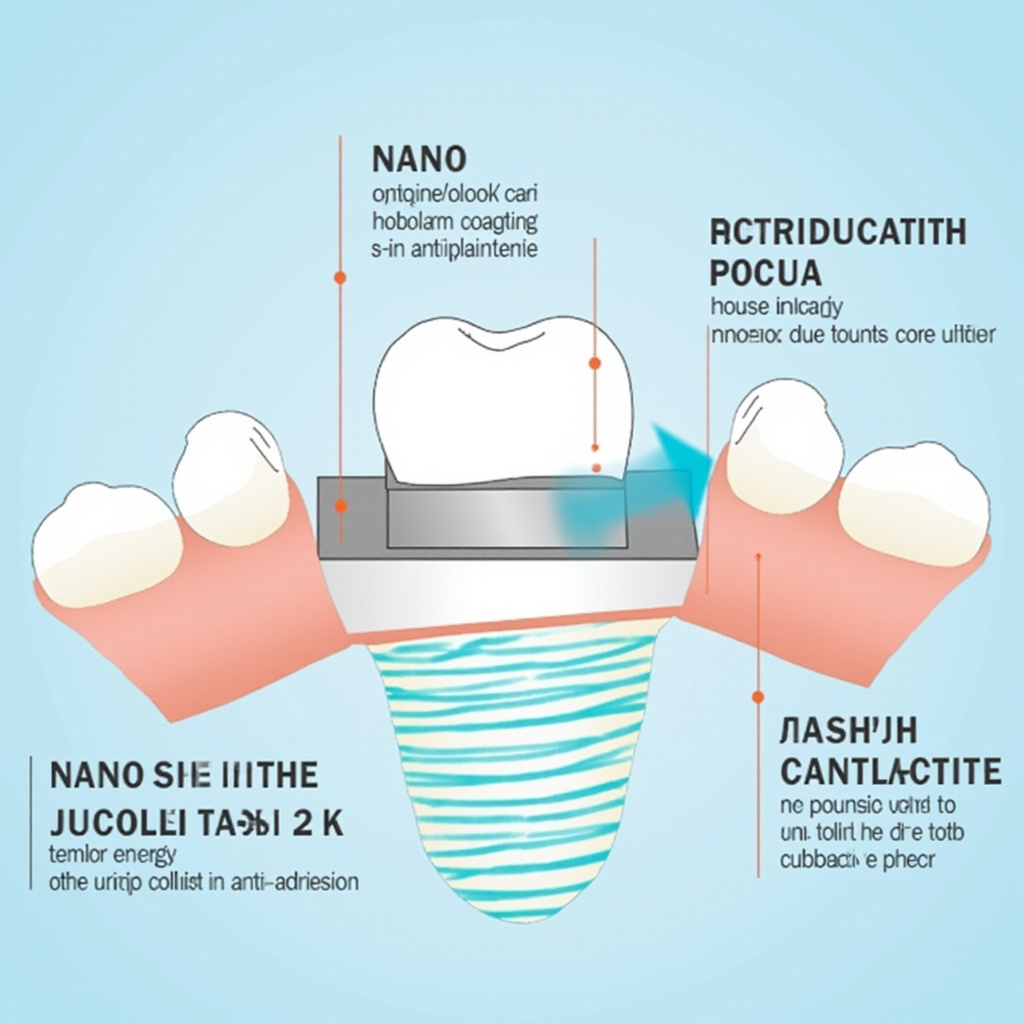
Dental instrument nanocoatings construct multifunctional surfaces via nano Ag/TiO2/CuO (antibacterial—inhibiting S. mutans / P. gingivalis) + nano SiO2/PTFE (ultra-slippery low surface energy—water contact angle >110°—blocking the reversible attachment stage of biofilm formation) + nano HA (hydroxyapatite—identical to inorganic components of dental bone—promoting osseointegration). 2025 Advanced Engineering Letters: HA/nano Ag composite coating (micro-arc oxidation MAO 200V)—1 g/L Ag—bone-to-implant contact (BIC) 65.2%—optimal balance of antibacterial activity and osseointegration. 2026 BMC Oral Health (Vol. 26): CNT + 1% HA coating—rabbit mandibular model significantly increased bone-implant contact and new bone area. Peri-implantitis (bone resorption around implants caused by bacterial biofilm infection—incidence 10–20% per 10 years) is the most important clinical application of nano antibacterial coatings. Compliant with ISO 7405:2018 (dental instrument biocompatibility), YY 0300 (dental implants), ISO 13485. Global dental instrument market ~USD 6.8 billion in 2025 (CAGR 6.5%), with implants growing fastest (CAGR 9.2%).