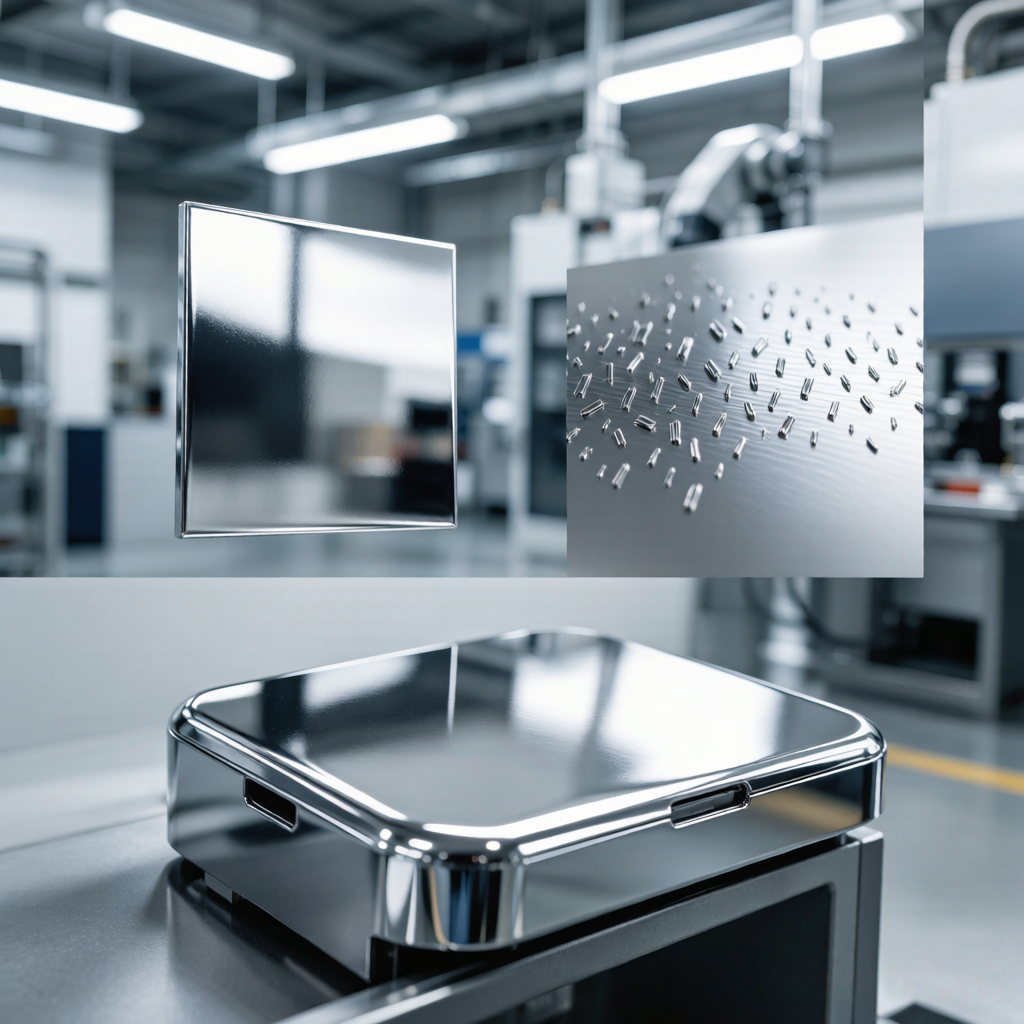
In the field of modern industrial coating, electroplating silver mirror paint, as a high-performance decorative coating, is widely used in industries such as electronic products, automotive parts, and furniture decoration. Its core selling point lies in achieving a mirror effect close to real electroplating without the need for electroplating equipment, thereby reducing equipment investment costs for enterprises while meeting environmental regulatory requirements.
What is Electroplating Silver Mirror Paint
Electroplating silver mirror paint is a special coating with extremely high metallic texture and mirror reflection effect. Through special formulation design, the coating presents a silver-white metallic luster similar to real electroplating after drying, with glossiness reaching above 95 GU (GU is a gloss unit; the higher the value, the better the reflective effect).
Such coatings typically use aluminum silver paste or silver-plated powder as metallic pigments, combined with a high-performance resin system, and through scientific dispersion processes, the flake-shaped metallic pigments are oriented and arranged to achieve the mirror effect.
Key Factors Affecting Glossiness
1. Selection and Dosage of Metallic Pigments
The quality of metallic pigments directly determines the gloss effect of the final coating. High-quality electroplating silver paste should have the following characteristics:
- Narrow particle size distribution: Ensures uniform size of flake-shaped metallic pigments, avoiding light scattering caused by large particles
- Moderate aspect ratio: Generally controlled between 50:1 and 80:1; too thin or too thick will affect the reflection effect
- Surface treatment: Specially treated silver paste can improve its dispersion and stability in the resin
2. Selection of Resin System
Resin is the film-forming substance of the coating and has an important influence on glossiness:
- High-transparency resin: Select a resin system with high light transmittance to reduce light absorption loss
- Low-viscosity system: The lower the viscosity, the easier the metallic pigments are to orient and arrange
- Fast drying speed: Rapid curing helps fix the position of metallic pigments
3. Construction Process Control
The construction method is also critical to the final effect:
- Spraying pressure: It is recommended to use a pressure of 2.0-3.0 kg/cm² to ensure uniform atomization
- Spraying distance: Maintain a distance of 15-20 cm; too close will cause sagging, too far will affect adhesion
- Film thickness control: Dry film thickness controlled at 15-25 μm; too thick will affect the metallic effect
Advantages of Waterless Electroplating Alternative
Compared with traditional water electroplating processes, electroplating silver mirror paint has significant advantages:
| Comparison Dimension | Water Electroplating | Electroplating Silver Mirror Paint |
|---|---|---|
| Equipment Investment | Requires professional electroplating production line | Only spraying equipment needed |
| Environmental Friendliness | Generates heavy metal wastewater | No wastewater discharge |
| Efficiency | Long cycle, batch production | On-site construction possible, instant delivery |
| Substrate Adaptability | Conductive substrate limitation | Both plastic and metal applicable |
Typical Application Scenarios
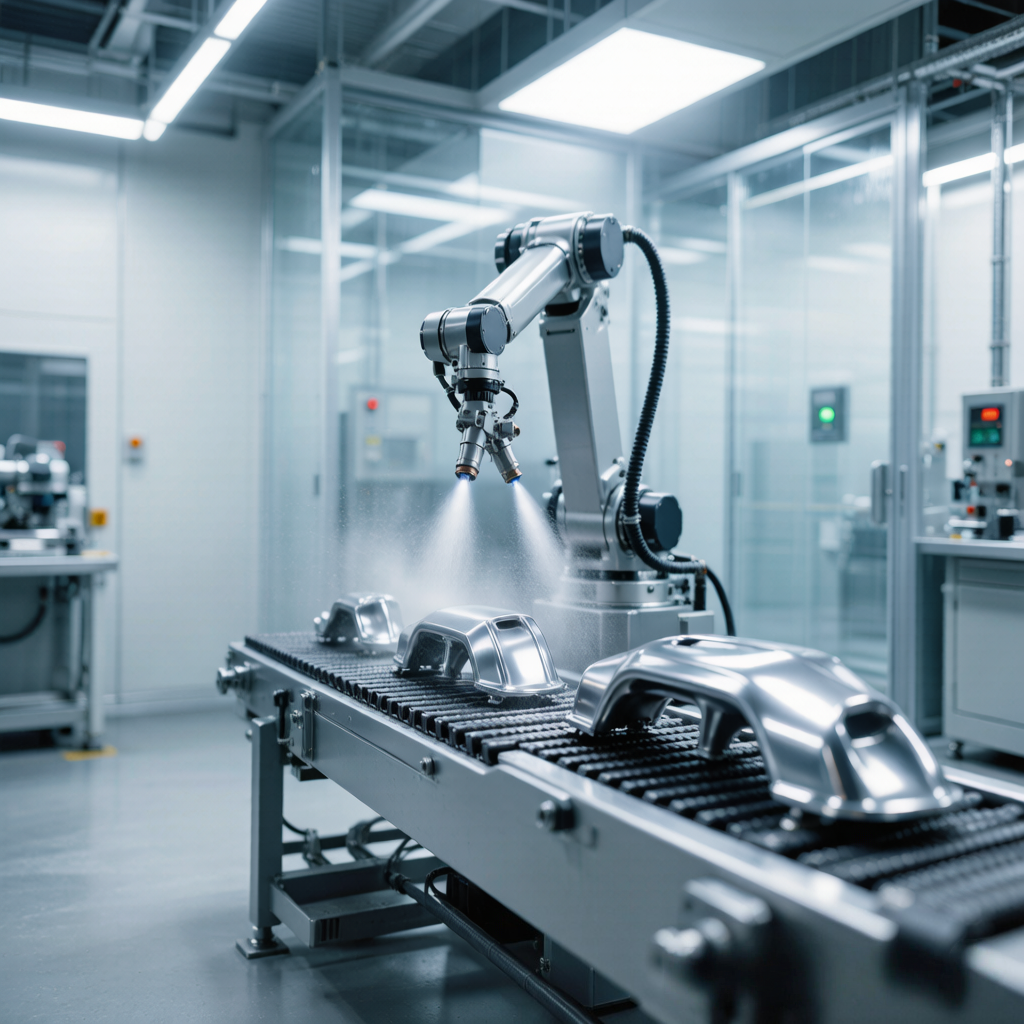
3C Electronic Product Housings
The metallic-texture housings of mobile phones, tablets, laptops, and other electronic products are increasingly using electroplating silver mirror paint to replace traditional water electroplating processes, which not only meets appearance requirements but also complies with environmental trends.
Automotive Interior Parts
Automotive interior parts such as dashboards, door panel trim strips, and air conditioning vents have high requirements for aesthetics and weather resistance, and electroplating silver mirror paint can provide stable metallic texture.
Furniture Decoration
For high-end furniture hardware accessories, handles, trim strips, and other parts, electroplating silver mirror paint can achieve visual effects comparable to traditional electroplating.
Construction Precautions
- Substrate treatment: Ensure the coated surface is clean, dry, and free of oil stains; degreasing treatment if necessary
- Pre-baking: For plastic substrates such as ABS and PC, pre-baking at 50-60℃ before spraying is recommended
- Drying conditions: Air dry at room temperature for 24 hours, or bake at 80℃ for 30 minutes
- Clear coat protection: It is recommended to spray a layer of transparent varnish on the surface of the mirror paint to improve scratch resistance and weather resistance
Conclusion
Electroplating silver mirror paint technology provides an efficient and environmentally friendly alternative to traditional electroplating processes. As environmental requirements become increasingly stringent and market demand for high-quality decorative effects grows, this technology will be widely applied in more fields.
—
Further Reading:
- [Waterless Electroplating Alternative: Spray Electroplating Paint](/)
- [Comparison Between Chrome-like Coating and Real Electroplating](/)
- [Improving Yellowing Resistance of Electroplating Paint](/)
- [Metallic Coating: Selection of Silver Powder and Aluminum Paste](/)
- Complete Guide to Electroless Metal Coating Process: How Electroplating Alternative Paint Reproduces Mirror Chrome with Spraying
- Panorama of Alloy Paint and Metallic Effect Paint Industry: From Angle-Dependent Color Shift to Functional Decoration — Technological Evolution and 2026 Market Landscape