Introduction: Ice—the "winter killer" of wind turbines and aircraft
Ice on wind turbine blades — alters blade aerodynamic shape → power generation efficiency drops >20% → unbalanced load → accelerated wear of bearings and gearbox → ice chunks thrown off threaten surroundings. Ice on aircraft wings — alters airfoil lift → stall critical angle of attack occurs earlier → is the cause of multiple fatal aviation accidents in history. Anti-icing coatings work through (1) delaying ice crystal nucleation (superhydrophobic), (2) reducing ice adhesion strength (SLIPS/ice shear <20kPa), or (3) actively heating to melt the ice layer (electrothermal) — among the three major strategies, each has applicable scenarios and limitations.
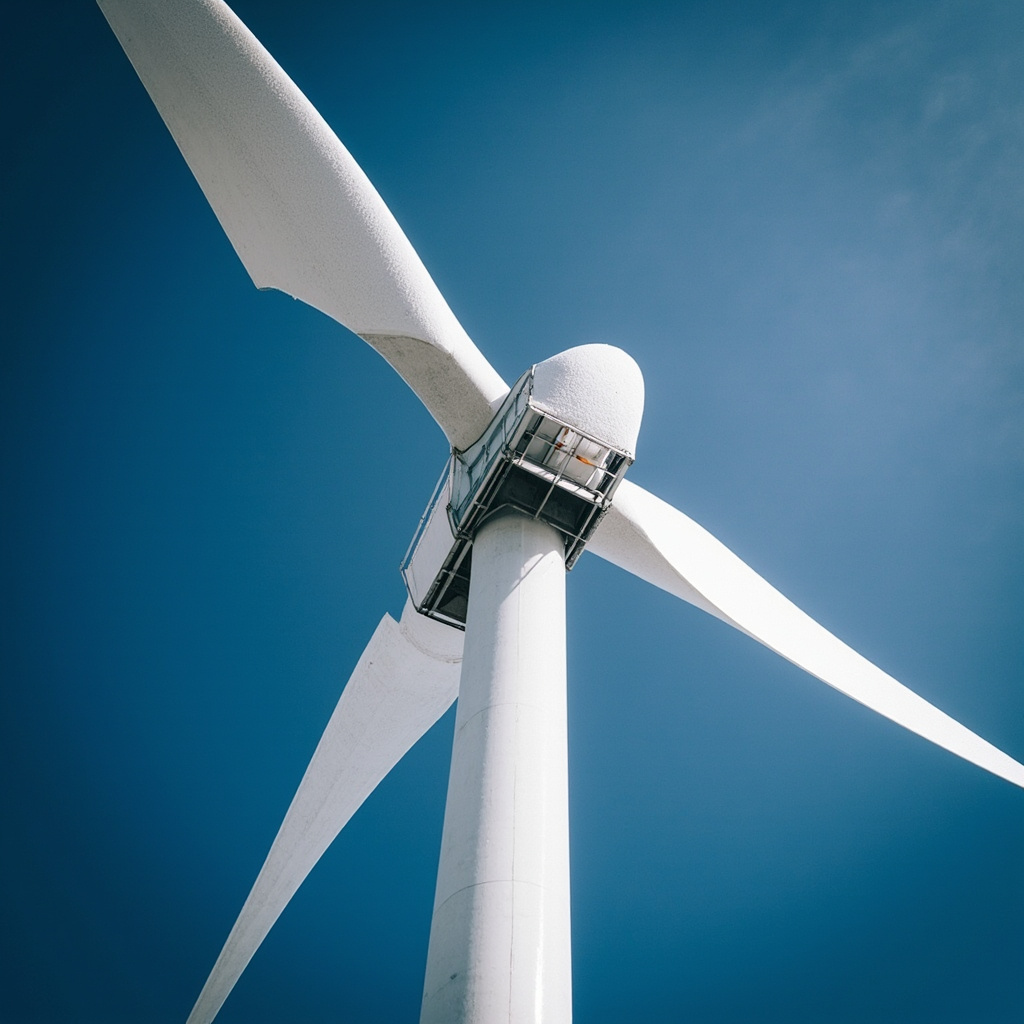
I. Comparison of Three Anti-Icing Strategies
| Strategy | Mechanism | Ice Shear (kPa) | Energy Consumption | Durability | Applicability |
|---|---|---|---|---|---|
| Superhydrophobic Surface | Micro-nano hierarchical roughness + low surface energy / delays ice nucleation | 50-150 | Zero (passive) | Low (fragile micro-nano structure) | Light icing / short-term protection |
| SLIPS | Lubricant infused in porous layer / ice slides on liquid surface | <20 | Zero (passive) | Medium (lubricant depletion) | Moderate icing (recommended) |
| Electrothermal Coating | Graphene/CNT conductive network / resistive heating | 0 (ice melts) | High (>1kW/m²) | High (conductive network) | Heavy icing / aircraft / wind power |
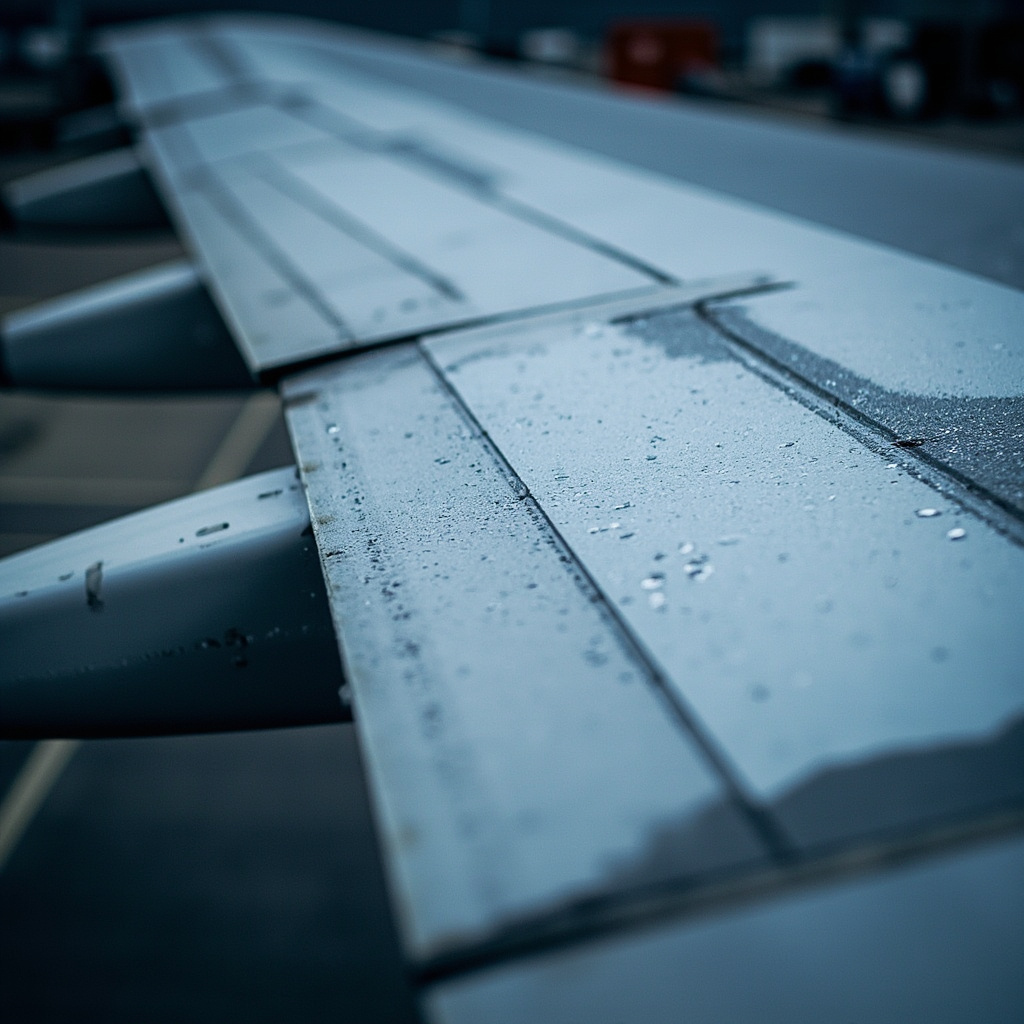
II. Ice Wind Tunnel Test (IWT)
| Parameter | ISO 12494 Condition | Significance |
|---|---|---|
| Wind speed (m/s) | 5-25 | Simulate supercooled droplet impingement under different wind speeds |
| Temperature (°C) | -2~-20 | Effect of different freezing temperatures on ice shape |
| Droplet diameter (μm) | 10-50 | Particle size simulation of cloud droplets/freezing rain/wet snow |
| Liquid water content (g/m³) | 0.2-2.0 | Water content of different clouds/fog/rain |
Technical deepening: systematic optimization methods for process parameters (DOE experimental design)
The optimization of coating production processes should not rely on the "trial-and-error method" but should adopt the scientific method of DOE experimental design. Taking the dispersion process as an example—factors affecting quality (linear velocity/time/filling rate/temperature), 4 factors each at 3 levels—full factorial requires 81 experiments—DOE uses orthogonal experiment L9 (9 times) or response surface methodology (27 times) to greatly reduce the number of experiments—while obtaining the main effects and interactions of each factor. For example, it is found that "the interaction of linear velocity × time is significant"—high linear velocity + short time and low linear velocity + long time can achieve the same dispersion effect—but the former saves energy by >20%.
In DOE analysis, interpretation of the P-value — P95% confidence). The final output of DOE is a set of prediction models (polynomial regression equations) — input line speed/time/temperature → predict fineness/viscosity/gloss — providing formulation engineers with a "digital formulation optimization" tool.
Industry practice: from "master craftsman's feel" to "parameter standardization"
The common challenge in the coatings industry — when experienced veteran workers retire, their "feel" (mixing resistance / fineness gauge scraping / visual inspection of wet film gloss) is taken away — new employees cannot replicate it. Transform the "feel" into quantifiable standard parameters (1) mixing resistance → viscometer reading; (2) fineness gauge scraping → fineness gauge reading (μm); (3) wet film gloss → gloss meter (GU value). The "standard parameter card" for each process is posted next to the equipment — new employees operate according to the "card" rather than "by feel". "Parameter standardization" is a key step for coating factories to move from "workshop" to "factory".
FAQ
Q1: Why do superhydrophobic surfaces fail under "freezing rain" conditions?Freezing rain (supercooled water droplets / diameter >100 μm / high kinetic energy) — when impacting a superhydrophobic surface — penetrates the "air cushion" (Cassie-Baxter state) of the micro/nano rough structure → water enters the micro/nano structure → freezes → ice forms inside the micro/nano structure → superhydrophobicity is lost — ice is firmly anchored on the surface. The anti-icing performance of superhydrophobic surfaces under freezing rain (Largest Drop Size) is far inferior to that under rime (Small Drop).
Q2: How to solve the lubricant consumption problem of SLIPS?The lubricant (e.g., perfluoropolyether PFPE/silicone oil) in the porous layer of SLIPS is partially carried away by ice during (1) ice sheet shear detachment and (2) lost by rainwater washing. The lubricant requires a reservoir design—embedding microcapsules/microtubes in the coating to automatically release and replenish when the surface lubricant is consumed—to extend the service life of SLIPS. Reservoir technology is key to the practical application of SLIPS but currently has high cost and complex process.
Q3: Is the energy consumption of electrothermal anti-icing coating acceptable on wind turbine blades?Wind turbine blade anti-icing — electrothermal coating (0.5-2kW/m² / 10%-20% of blade area) — total annual anti-icing energy consumption is about 1%-3% of the turbine's annual power generation, but the power generation recovery brought by anti-icing (+15% in severe icing regions — because ice-caused generation loss >15%) far exceeds the energy consumption — net benefit is positive. Aircraft wing anti-icing — electrothermal energy comes from engine generators — impact on fuel efficiency <0.5% — aircraft anti-icing safety is the top priority.
Q4: Why is the "durability" of anti-icing coatings the worst among all coatings?(1)Superhydrophobic—micro/nano structures wear under rain erosion (raindrops >100 m/s repeatedly impacting the coating surface)—service life only a few months to one or two years; (2)SLIPS—lubricant depletion—service life 1-3 years; (3)Electrothermal—conductive network fatigues under repeated thermal cycles (powered heating/powered-off cooling)—service life 3-5 years. Anti-icing coatings currently cannot "apply once and last 50 years" like ordinary anti-corrosion coatings, and require periodic maintenance or replacement.
Q5: Which is more economical for wind turbine blade anti-icing, "heating" or "ice-phobic"?Heating——high initial cost (electric heating coating + control system / 100k-300k RMB per unit) + continuous power consumption——but anti-icing effect is certain. Ice-phobic——low initial cost (ice-phobic coating / 10k-50k RMB per unit) + zero energy consumption——but anti-icing effect is uncertain (depends on weather). The current trend in wind power anti-icing is a "ice-phobic coating (daily/passive) + electric heating coating (extreme icing weather/active)" dual solution——light icing relies on ice-phobic, severe icing turns on electric heating.
Q6: Aircraft anti-icing — why can't we rely solely on coatings? Aircraft anti-icing is a avionics-certification-level safety function. The anti-icing performance of coatings must be 100% reliable under the most severe thunderstorm + freezing rain conditions — current superhydrophobic/SLIPS coatings cannot meet FAA/EASA certification requirements for reliability under extreme freezing rain. The primary method for aircraft anti-icing is wing leading-edge hot air bleed (from engine compressor); coatings are an auxiliary means (reducing de-icing fluid usage / ground icing protection).
Q7: "Passive anti-icing" coatings for transmission lines and wind turbines vs mechanical de-icing?Mechanical de-icing (pneumatic boots/vibrators/manual knocking)——reliable but high maintenance workload + mechanical damage to equipment. Ice-phobic coatings (SLIPS/ice shear <20kPa)——ice sheds off on its own under its own weight or slight vibration, zero maintenance + zero damage——is the ideal long-term technology——but currently the insufficient durability of SLIPS (1-3 years) limits its application in unattended scenarios (high-mountain transmission lines).
Q8: Why is there no unified international standard for the "testing" of anti-icing coatings?Icing conditions (ice shape/density/adhesion) are extremely dependent on droplet size + wind speed + temperature + liquid water content. Different ice wind tunnel laboratories (Goodrich IWT/AMIL/Cox, etc.) have different test conditions—different ice types (rime/glaze/clear ice) vary greatly in their interaction with coatings. The unified ISO 12494 defines the classification of atmospheric ice—but specific test methods for anti-icing coating performance have not yet formed a unified international standard.
Q9: What are the special requirements for anti-icing coatings on spacecraft (rockets/satellites)? Space launch — the rocket body undergoes low-temperature fuel filling on the launch pad before launch, causing ice to form on the outer surface of the rocket body — at the moment of launch, falling ice may strike the rocket body — NASA has research on the application of anti-icing coatings (superhydrophobic) on the SLS (Space Launch System). Spacecraft in orbit have no atmospheric ice — anti-icing is only needed during ground launch preparation.
Q10: Future Trends — Adaptive/Intelligent Anti-Icing Coatings?(1) Photothermal coatings — coatings heat up and melt ice under sunlight exposure — passive solar anti-icing; (2) Phase change materials (PCM) embedded in coatings — absorb/release latent heat near 0°C — passively delay ice formation; (3) Biomimetic coatings (polar bear fur/penguin feathers) — nature's "anti-icing design" inspires a new generation of anti-icing coatings.
FAQ: In-Depth Technical Q&A Supplement
Q11: How do the differences in domestic and international standards for this technology affect product exports?Domestic standards (GB) differ from ISO/ASTM standards in test methods and acceptance criteria. For example, salt spray testing—GB/T 1771 (equivalent to ISO 7253) has test conditions basically consistent with ASTM B117—but the rating systems (ISO 4628 vs ASTM D610/D714) differ—when providing test reports for exported products, the corresponding international standards must be indicated simultaneously, otherwise overseas customers cannot make a comparative assessment. It is recommended to list both GB and ISO/ASTM dual-standard indicators in the TDS (Technical Data Sheet) of exported products—to enhance the trust of international customers.
Q12: How to verify the long-term service performance of this technology in actual engineering?Laboratory accelerated testing (salt spray/QUV/cyclic corrosion) provides comparative data—but cannot fully replace actual outdoor exposure testing. Recommendations—(1) Set up outdoor exposure racks at both the factory location and typical customer locations (e.g., coastal C5-M/industrial C4)—conduct annual inspections of coating appearance/adhesion/film thickness changes—establish a company-owned outdoor service database; (2) Collaborate with universities/research institutes—combine enterprise data with academic research—enhance data credibility.
Q13: What should SMEs pay attention to when purchasing related raw materials/equipment?(1) The batch stability of suppliers is more important than unit price—it is recommended to require suppliers to provide COA data for >10 batches—and evaluate batch variation (CpK); (2) For equipment procurement, visit peers who have used the equipment for >2 years to understand the long-term reliability and after-sales service quality of the equipment—rather than relying only on the demonstration data from the equipment supplier; (3) For key raw materials (resin/curing agent)—maintain at least 2 qualified suppliers to guard against single-supply risk.
Q14: What is the current state and trend of digital transformation in this field?The digital transformation of the coatings industry is evolving from “point-based applications” (automation of individual equipment/processes) to ”system integration” (full-chain ERP+MES+PMS). Currently, for small and medium-sized coatings factories, the digitalization with the ”highest ROI investment” is automatic batching systems + digitalization of quality control data — with a payback period of 1-3 years — which is the prioritized recommended direction. Future trend — AI + sensors enabling real-time optimization of process parameters — further reducing quality fluctuations between batches.
Q15: How can a newly entered coating engineer quickly master this technology?(1)Combine theory and practiceDo not only read literature without touching actual production—nor rely solely on experience without studying theory;(2)Establish a “failure case archive”Every customer complaint/production anomaly/coating failure—record the root cause and resolution process—this is the most effective learning material;(3)Learn from suppliersTechnical personnel from resin/additive/pigment suppliers are carriers of "tacit knowledge" in this field—communicate more with them about solutions to specific problems.
Engineering Application and Implementation Recommendations
Pre-construction preparation and risk assessment
Before formal construction, the three prerequisite tasks must be completed: (1) Substrate condition confirmation — inspect the substrate moisture content (concrete <4% / steel no visible water film), surface preparation grade (abrasive blast Sa2.5 / hand tool St3) and salt contamination (chlorides dew point +3°C) — construction may proceed only when all three are satisfied — any out-of-limit item will cause irreversible defects during coating curing; (3) Coating batch verification — verify the coating batch number, production date and COA test report — confirm the coating is within shelf life and key indicators (viscosity / fineness / curing time) meet requirements.
Key control points during the construction process
During construction, it is necessary to continuously monitor and record the following parameters: (1) Wet film thickness (WFT) of each coat (wet film thickness gauge / at least 5 points per 10m²) — the conversion relationship between WFT and target dry film thickness (DFT) is DFT = WFT × volume solids (%) — if WFT deviation is found, immediately adjust spraying parameters; (2) Drying/curing time of each coat — epoxy system requires surface dry (2-4h/23°C) → hard dry (6-12h) → full cure (7 days) — the application of the next coat must be within the optimal recoat window of the previous coat (usually 4-24h after surface dry) — recoating too early → interlayer solvent penetration and lifting/ recoating too late → decreased interlayer adhesion; (3) Continuous recording of construction environmental conditions — record temperature/humidity/dew point every 2h — archived as part of the completion document.
Quality Acceptance and Completion Documentation
The final acceptance of the coating system shall be based on the acceptance criteria specified in the contract (e.g., ISO 12944 / SSPC-PA 2 / GB 50205) — key acceptance items include: (1) Dry film thickness (DFT / ≥5 points per 10m² / any single point ≥80% of nominal value / average within 100–120% of nominal value); (2) Pinhole detection (wet sponge method for DFT 500μm / zero pinholes); (3) Adhesion (pull-off method ISO 4624 / ≥ design value / failure mode preferably cohesive); (4) Visual inspection (no sagging / no orange peel / no particles / uniform gloss). All acceptance test data shall be compiled into as-built documentation including test reports + construction records + paint batch numbers + environmental records — serving as the data baseline for the 25-year warranty period of the coating system — with an archival period of ≥5 years.
Related Reading
Summary
Three major anti-icing coating strategies: superhydrophobic (passive/zero energy consumption/short service life), SLIPS (ultra-low ice shear <20 kPa/lubricant depletion), and electrothermal (active/high energy consumption/high reliability). Wind turbine blade anti-icing: a combined icephobic + electrothermal dual approach is the future; aircraft anti-icing: coating-assisted/bleed air heating as the mainstay. Kexin New Materials provides customers with anti-icing coating formulations and icing wind tunnel testing technical support.