Introduction: Automotive Painting Lines — Precision = Quality + Cost
Automotive OEM paint shops are the most complex coating systems in the world—a vehicle body goes through 6–8 pretreatment stages + electrocoating + 4–6 robots—with per-vehicle coating consumption of 3–5 kg—and curing energy consumption >100 kWh. A paint shop with an annual output of 300,000 vehicles has an annual coating cost of 200–500 million yuan. A 5% improvement in transfer efficiency = 20% coating savings = tens of millions of yuan saved annually; compact processes reduced from 4C3B to 3C1B = two curing steps eliminated = tens of millions of yuan in energy savings annually.
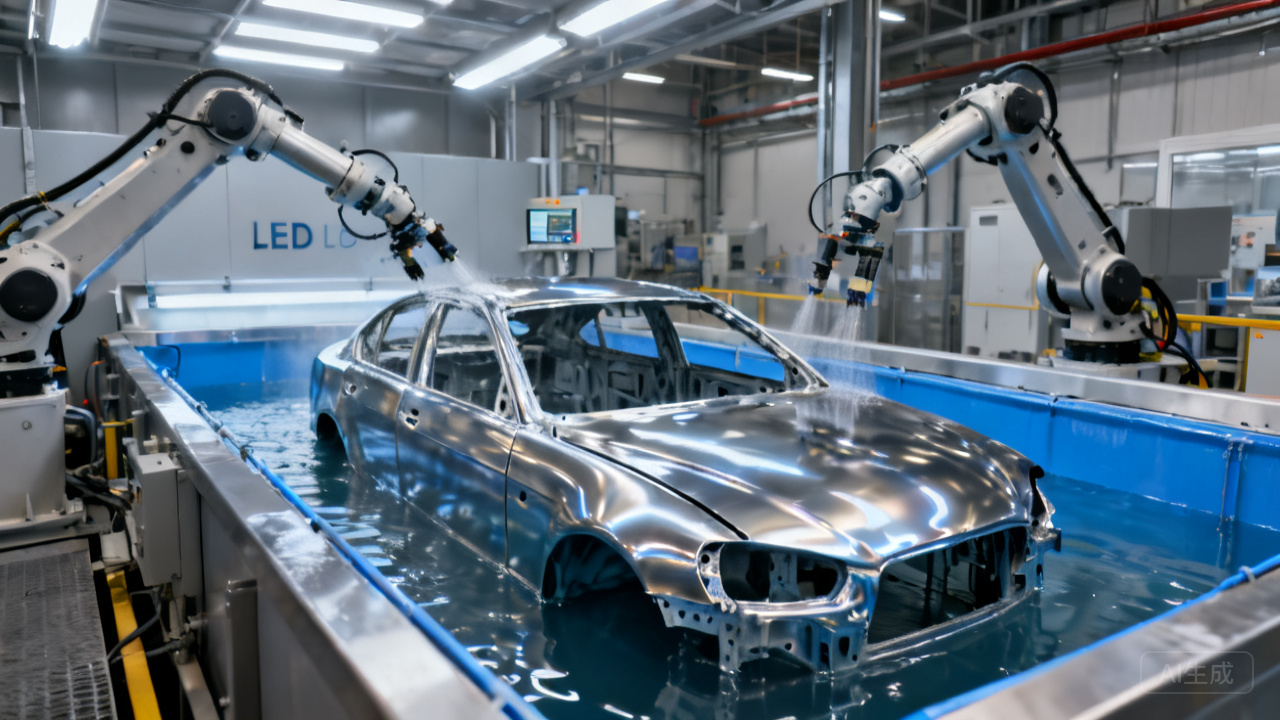
Automotive OEM paint shop process parameter optimization focuses on four major sections: pre-treatment (phosphating vs silane), electrocoat KTL (bath parameters/film thickness), robotic painting (bell atomizer transfer efficiency 70-85%), and baking (PMT 130-150°C) — by replacing the traditional 4C3B with a compact 3C1B process — per-vehicle VOC is reduced from >8kg to <3kg.
I. Panorama of Four-Stage Process Parameters
| Section | Key Parameters | Optimal Range | Optimization Direction |
|---|---|---|---|
| Pretreatment | Phosphating grain size / film weight | Grain <10μm — uniform | Nickel-free phosphating / silane (P-free, Ni-free) |
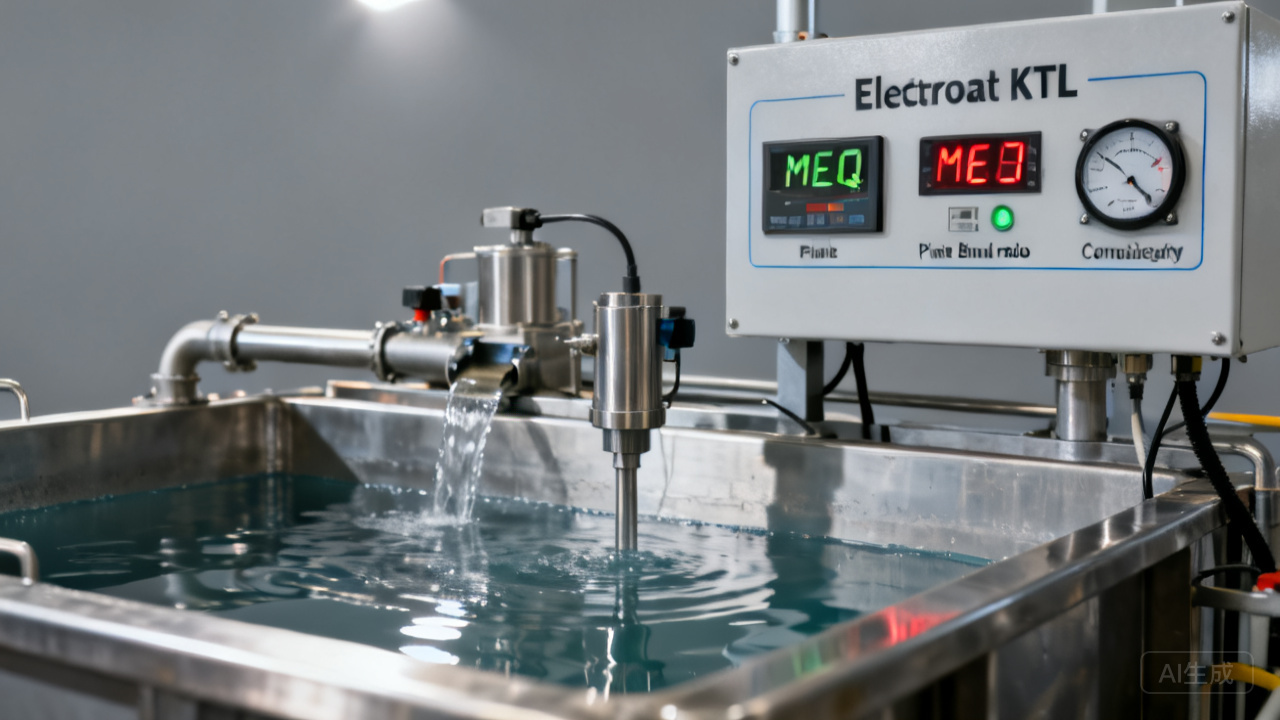
| Electrophoresis KTL | Bath temperature / voltage / film thickness | 28-32°C / 200-350V / 18-25μm | Low-temperature baking (140°C instead of 160°C) |
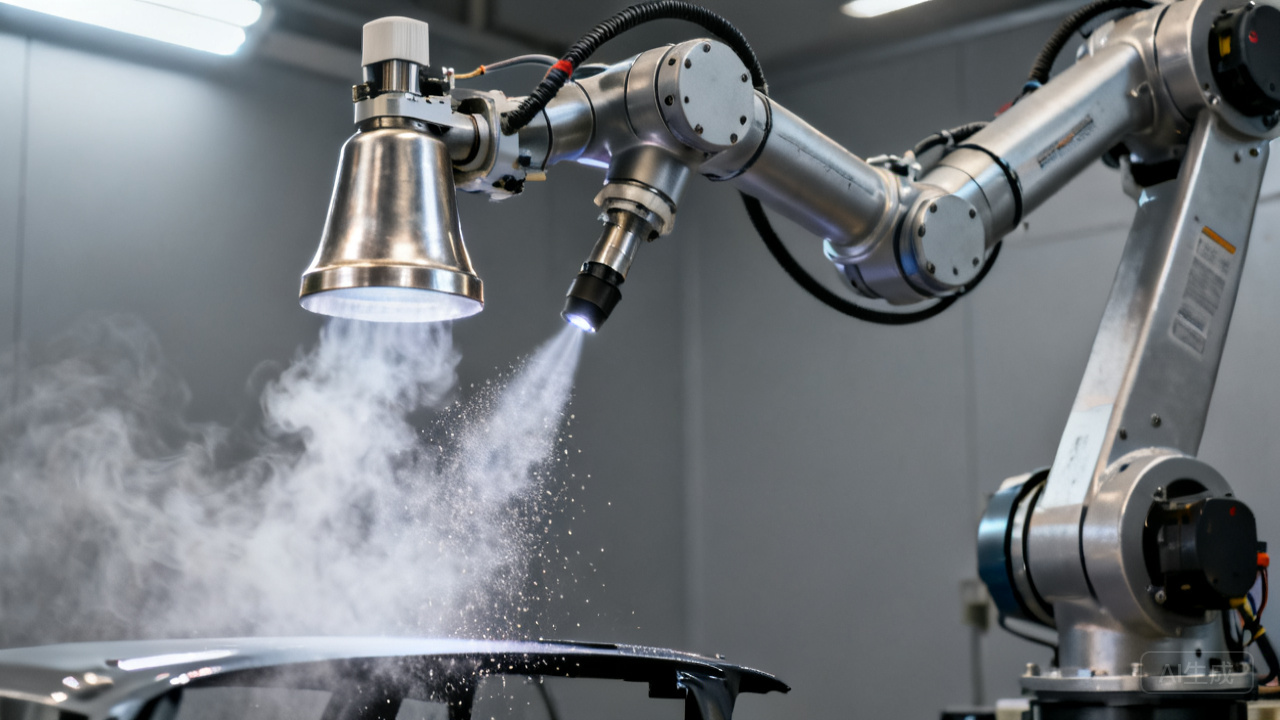
| Bell spraying | Rotation speed / atomization particle size | 30000-50000rpm — transfer efficiency 70-85% | Quick color change (Pig flushing) |
| Baking | PMT / heating rate | 130-150°C / 20-30min — <15°C/min | 3C1B compact — 30% energy saving |
FAQ
Q1: Why is the transfer efficiency of rotary bell painting 70-85% while that of air spraying is <40%?High rotation speed (30000-50000rpm) + electrostatic force (60-90kV) dual atomization—coating particles are precisely directed to the car body by the electric field—overspray and drift are greatly reduced. Shaping air controls the atomization range—precise guidance. Material deposition rate increased by 30-50% → coating consumption reduced by 30-50% → one rotary bell = annual savings >500,000 RMB.
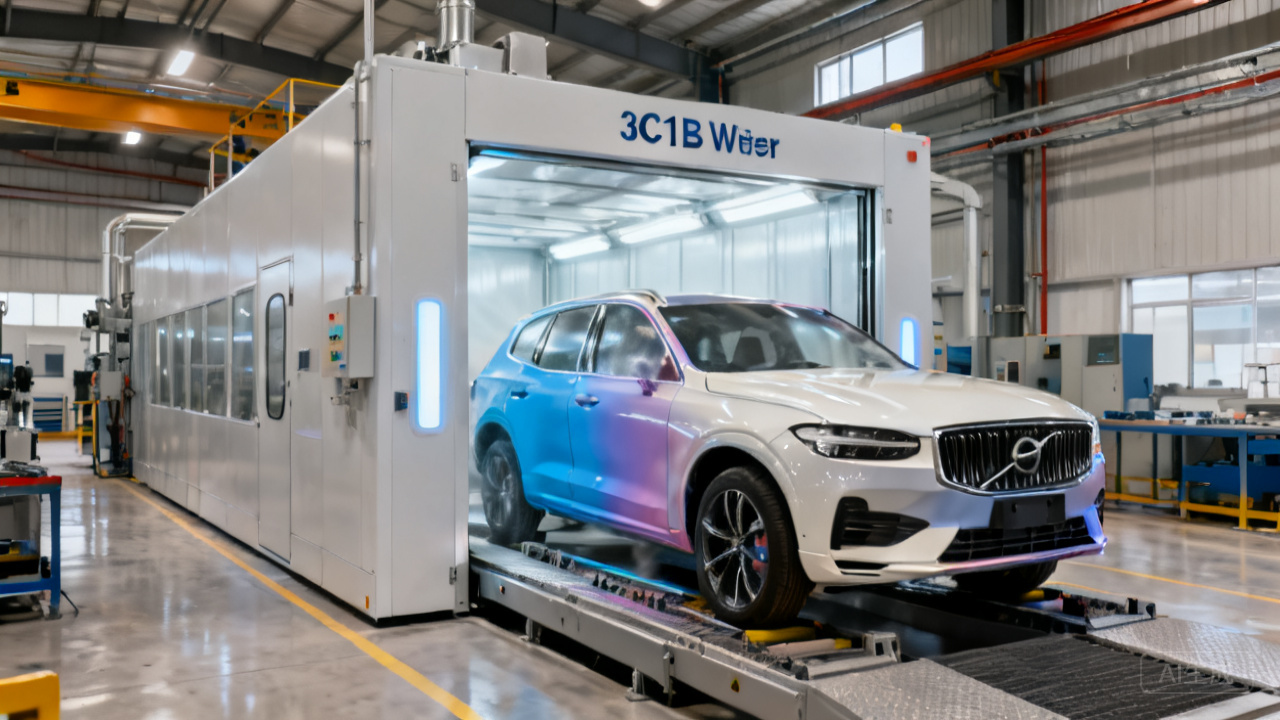
Q2: What are the technical difficulties of the 3C1B compact process?Three-layer wet-on-wet—mid-coat solvent penetrates topcoat→blurred interlayer interface; three layers baked together→bottom-layer solvent trapped→blistering. Solution: fully waterborne system (waterborne mid-coat + waterborne basecoat + waterborne clearcoat)—solvent = water—immiscible and non-interfering. Currently, Chinese OEMs are transitioning from 3C2B to 3C1B—energy saving 30%+ and saving a baking oven investment of over 100 million yuan.
Related Reading
Summary
Automotive OEM four-stage optimization: rotary bell (transfer efficiency 70–85%/annual coating savings >100 million RMB), 3C1B compact process (30% energy saving/reduced oven capital investment), silane replacing phosphating (reduced Ni-containing wastewater). Kexin New Materials provides automotive coating material selection and process consulting — optimizing fuel consumption, energy use and VOC.