Introduction: Before a bucket of coating can "go global", it must first pass the "five checkpoints" of chemical regulations.
The differences in chemical regulations faced when exporting coatings to different countries and regions are significant—EU REACH (Registration/Evaluation/Authorization/Restriction), US TSCA (Premanufacture Notice for New Chemical Substances), China's "Measures for the Environmental Management of New Chemical Substances" (MEE Order 12)—each set of regulations has its own independent registration/notification/authorization/restriction four-tier barriers. Exporting without understanding the blind spots in the chemical regulations of the destination may lead to products being detained, returned, or even subject to huge fines at customs. Coatings export compliance is a "required course" for the internationalization of coatings enterprises.
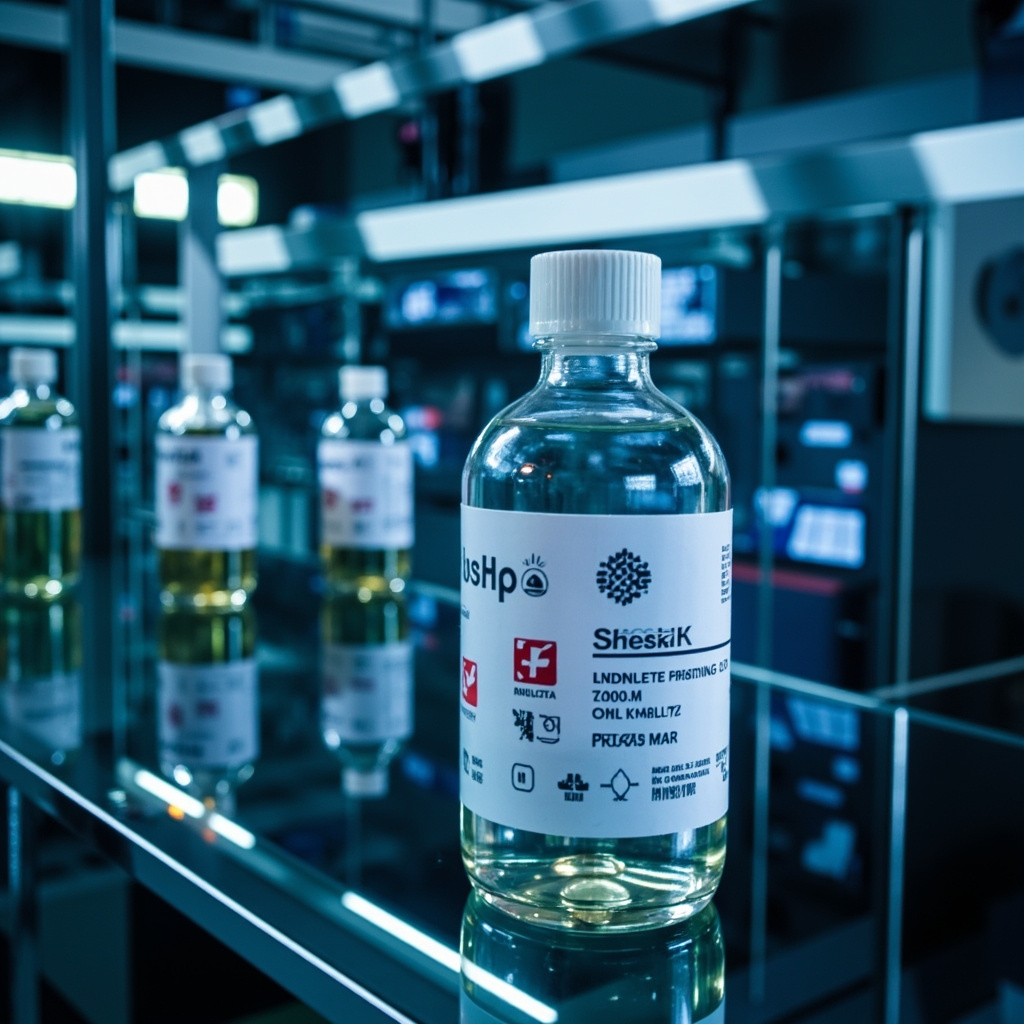
I. Comparison of Chemical Regulations across the Three Core Markets
| Regulation | Region | Registration Trigger Volume (tons/year) | Key Requirements | Penalty for Non-compliance |
|---|---|---|---|---|
| EU REACH | EU/EEA | >1 ton (per single chemical substance) | Registration + SDS + SVHC notification (>0.1%) | Up to €1 million or 5% of turnover |
| US TSCA | United States | New chemical substance (not listed in TSCA inventory) | PMN Premanufacture Notice / SNUR Significant New Use Rule | Up to $75,000/day/violation |
| China MEE Order 12 | China (domestic sales) | >1 ton (new chemical substance) | Regular / simplified / record-filing registration | Up to 1 million yuan + business suspension |
II. Overview of Technical Parameter Comparison
| Technical Indicator | Standard Requirement | Premium Level | Test Method |
|---|---|---|---|
| Adhesion | ≥3MPa | ≥5MPa | ISO 4624 Pull-off Method |
| Salt Spray Resistance | ≥500h | ≥1000h | ASTM B117 |
| Weathering Resistance (QUV) | ≥1000h gloss retention >50% | ≥3000h gloss retention >80% | ISO 16474-3 |
| VOC Content | Compliant with GB standard | 50% below limit | GB/T 23985 |
| Application Window | 5-35°C | -10~40°C (wide temperature range) | TDS Recommended Conditions |


Technical deepening: systematic optimization methods for process parameters (DOE experimental design)
Coating production process optimization should not rely on the "trial-and-error method" but should adopt the scientific method of DOE experimental design. Taking the dispersion process as an example—factors affecting quality (linear velocity/time/filling rate/temperature), 4 factors each at 3 levels—full factorial requires 81 experiments—DOE uses orthogonal experiment L9 (9 times) or response surface methodology (27 times) to greatly reduce the number of experiments—while obtaining the main effects and interactions of each factor. For example, it is found that "the interaction of linear velocity × time is significant": high linear velocity + short time and low linear velocity + long time can achieve the same dispersion effect—but the former saves energy by >20%.
In DOE analysis, interpretation of the P-value — P95% confidence). DOE ultimately outputs a set of prediction models (polynomial regression equations) — input line speed/time/temperature → predict fineness/viscosity/gloss — providing formulation engineers with a "digital formulation optimization" tool.
Industry practice: from "master craftsman's feel" to "parameter standardization"
The common challenge in the coatings industry — when experienced veteran workers retire, their "feel" (mixing resistance / fineness gauge scraping / visual inspection of wet film gloss) is taken away — new employees cannot replicate it. Transform the "feel" into quantifiable standard parameters (1) mixing resistance → viscometer reading; (2) fineness gauge scraping → fineness gauge reading (μm); (3) wet film gloss → gloss meter (GU value). The "standard parameter card" for each process is posted next to the equipment — new employees operate according to the "card" rather than "by feel". "Parameter standardization" is a key step for coating factories to move from "workshop" to "factory".
FAQ
Q1: What is the role of the "Only Representative" (OR) for coating exports to the EU? Non-EU coating manufacturers cannot register directly with ECHA (European Chemicals Agency) — they must appoint a natural or legal person established within the EU as the OR. The OR assumes the registration obligations and responsibilities. The choice of OR is crucial — the OR's compliance expertise and reputation directly affect the success rate of registration and the maintenance costs.
Q2: What is the significant impact of SVHC (Substances of Very High Concern) notification on coating exports?REACH requires—when SVHC in a product >0.1% (w/w), it must be notified to ECHA within 45 days after the product is placed on the market. SVHCs in coatings are commonly found in—certain pigments (e.g., lead chromate), curing agents (e.g., residual TDI/HDI monomers), solvents, and plasticizers. The SVHC list currently exceeds 240 substances and is continuously updated—the notification obligation is ongoing rather than one-time.
Q3: What is the difference between TSCA's "New Chemical" and "Existing Chemical"?The TSCA inventory lists all chemical substances already existing in the U.S. market. If a certain raw material of a coating (such as a newly developed resin) is not listed on the TSCA inventory, it is a "new chemical substance" and a PMN (Premanufacture Notice) must be submitted 90 days before import. The EPA reviews the substance's health and environmental impacts—and it may only be imported after 90 days. The PMN review fee + testing fee—approximately $100,000 to $1,000,000 per new substance.
Q4: Why can't the SDS (Safety Data Sheet) for exported coatings be directly translated from the domestic MSDS?EU REACH requires the SDS format to follow EU 2020/878 (new version SDS format) which includes 16 mandatory sections and additional Exposure Scenarios (ES). The domestic GB/T 16483 MSDS format differs from the EU SDS format—a simple translation may cause the SDS to be rejected during ECHA (RAC) review—affecting the customer's compliance confidence.
Q5: The fragmentation of chemical regulations among Asia-Pacific countries?There is no unified regulation in Asia-Pacific — Japan (CSCL/Chemical Substances Control Law), South Korea (K-REACH/similar to EU REACH but stricter), China (MEE Order 12), Taiwan (TCSCA), and Southeast Asian countries (respective domestic laws) — exporting to each country requires separate compliance — which is the most headache-inducing fragmentation challenge for coating enterprises in their internationalization.
Q6: What documents should be included in the "compliance document package" for coating exports?(1) REACH registration number (if applicable); (2) SDS (compliant format in the destination country's language); (3) Product technical data sheet (TDS); (4) SVHC notification confirmation (if applicable); (5) Export license (if required by the destination country); (6) Certificate of origin (Form A/Form E); (7) Dangerous goods transport documents (ADR/IMDG/IATA DGR). If the document package is incomplete or cannot be provided when randomly inspected by the destination country's customs—the entire shipment may be detained or returned.
Q7: The leakage risk of "intellectual property" in coating formulations under compliance?REACH registration requires disclosure of chemical substance information and toxicological/ecotoxicological data submitted to ECHA. These data are not directly made public as "Confidential Business Information" (CBI)——but the use of the data requires a non-confidential version of the list of chemical substances and their contents in the formulation. Companies need to find a balance between compliance disclosure and trade secret protection——OR selection and compliance strategy are the core considerations.
Q8: Are the "CE Mark" and "UKCA/UK REACH" applicable to export coatings?Coatings are not among the product categories covered by new CE Mark regulations (machinery/electronics/medical devices) — but coatings exported to the EU still need to meet the chemical substance registration obligations under REACH (not a CE Mark obligation). After Brexit, the UK established an independent "UK REACH" system — exports to the UK require separate registration — EU REACH registration cannot be used directly as a substitute.
Q9: Impact of the "Carbon Border Adjustment Mechanism" (CBAM) on coating exports?CBAM does not currently cover coating products (it currently covers five categories: steel, cement, aluminum, fertilizers, and electricity). However, discussions are underway to expand CBAM's product coverage—high-carbon-footprint raw materials in coatings (e.g., epoxy resin derived from petroleum with high carbon footprint) may be included in future expansions. Coating exporters to the EU should proactively establish product carbon footprint data (PEF/ISO 14067) in preparation for the future.
Q10: What is the lowest-cost path for small and medium-sized coating enterprises to achieve export compliance?(1)Use raw materials already registered under REACH/TSCA to ensure that raw material suppliers have fulfilled their respective registration obligations; (2)The registration obligation for the finished coating product can be fulfilled through an OR agent or by cooperating with distributors within the EU (distributors, as importers, bear part of the compliance obligations); (3)Start with a single EU importer (rather than launching in multiple countries simultaneously)—expand gradually after gaining experience. The initial investment for SME export compliance is approximately 50,000–200,000 RMB (OR fees + registration fees + SDS preparation), which is a one-time "entry barrier" rather than an ongoing operating cost.
Related Reading
Summary
Three major regulations for coating exports: EU REACH (>1 t/year registration + SVHC notification), US TSCA (PMN for new chemical substances), and China MEE Order 12. OR (Only Representative) is a mandatory appointee for REACH registration by non-EU manufacturers. The SVHC list is continuously updated (>240 substances) — the notification obligation is ongoing. Fragmented regulations across Asia-Pacific pose the greatest challenge to internationalization. Kexin New Materials provides export compliance consulting and full technical support for export documentation packages to clients.