Introduction: Fillers—the largest yet most underestimated component in coatings
In one ton of architectural coating, fillers (calcium carbonate/talc/kaolin, etc.) account for 20–40%—the solid component with the largest volume fraction in the formulation. Proper selection of fillers can optimize PVC to near CPVC—finding the best balance among cost, hiding power, and durability. Fillers are not “lazy man’s diluents” but “strategic tools for smart formulators”.
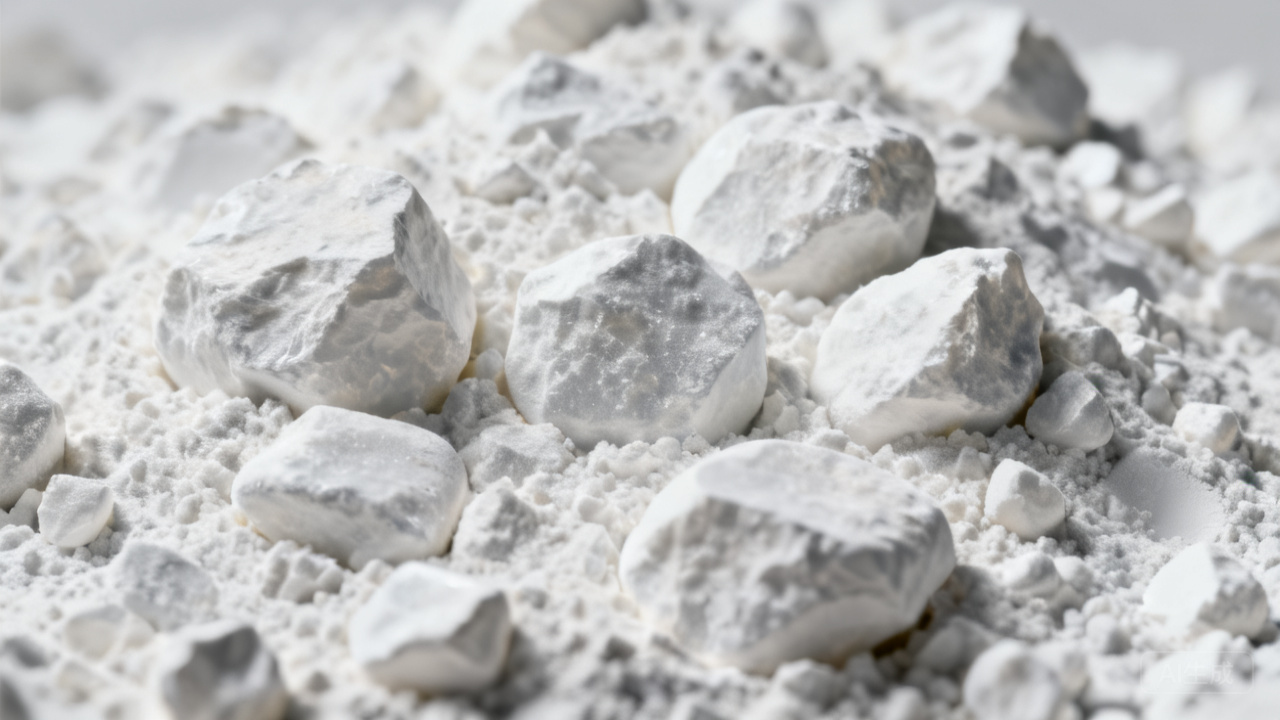
Fillers for coatings are fine inorganic powder materials—through physical filling and surface chemical modification—key components that perform four functions in coatings: increasing solid content, adjusting rheology, improving mechanics, and reducing formulation cost. Common fillers include calcium carbonate (ground calcium carbonate GCC/precipitated calcium carbonate PCC), talc, barium sulfate (barite/precipitated BaSO4), silica, and kaolin.
I. Comparison of Characteristics of the Five Major Fillers
| Filler | Mohs Hardness | Refractive Index | Oil Absorption (g/100g) | Main Function | Price (RMB/kg) |
|---|---|---|---|---|---|
| Ground Calcium Carbonate (GCC) | 3 | 1.59 | 15-25 | Filling/cost reduction/increasing solids content | 0.5-2 |
| Talc Powder | 1 (softest) | 1.57 | 30-50 | Improving rheology/anti-settling/sandable | 2-5 |
| Precipitated BaSO4 | 3-3.5 | 1.64 | 10-20 | Increasing hardness/scratch resistance/high-gloss primer | 5-15 |
| Fumed SiO2 | 7 | 1.46 | 200-400 | Thixotropic thickening/anti-settling/matting | 30-200 |
| Calcined Kaolin | 4-5 | 1.56 | 50-70 | Improving hiding power/partially replacing TiO2 | 3-10 |
FAQ
Q1: PVC and CPVC — Why Are They the First Principles of Coating Formulation?
PVC = V_pigment / (V_pigment + V_binder) × 100%. When PVC is below CPVC, the resin is sufficient to fill the interparticle voids — the coating is dense — high gloss — good resistance. When PVC exceeds CPVC — air voids are generated in the coating — the coating becomes porous — gloss drops sharply — resistance decreases — but hiding power improves. CPVC is the watershed where coating formulation shifts from high quality to low cost — exterior wall coatings are usually designed with PVC slightly below CPVC — interior wall coatings can be at PVC > CPVC (emphasizing hiding power and cost). The particle size distribution and oil absorption of fillers determine the position of CPVC — mastering PVC/CPVC = mastering the performance and cost of the coating.
Q2: The layered structure of talc—why can it improve rheology and sandability?
Talc is a 2:1 layered silicate—the layers are held together only by van der Waals forces—and thus slide very easily. In coatings, the flakes align along the flow direction under shear force—improving brush application smoothness. At rest, the randomly arranged flakes form a card-house structure—providing thixotropy to prevent settling and sagging. During sanding, the extremely low hardness of talc (Mohs 1) makes the coating easily shaved flat by sandpaper—without slipping—and without leaving scratches. Talc’s triple functions of lubrication + thixotropy + sandability all rely on its unique layered crystal structure.
Q3: Fumed SiO2—can just 2% addition turn a coating into a gel?
Fumed SiO2 primary particle size 7-40nm—specific surface area >200m2/g—surface densely covered with Si-OH (silanol groups). Si-OH between adjacent particles forms hydrogen bonds—building a 3D hydrogen bond network—trapping large amounts of liquid within the network—the system exhibits high viscosity. Applying shear force breaks hydrogen bonds—viscosity drops sharply; shear stops—hydrogen bonds reform—viscosity recovers—this is thixotropy. Just 2% fumed SiO2 can turn a low-viscosity varnish into a non-flowing gel—because of its extremely small particle size and huge specific surface area—2% by weight = a 3D network covering all liquid volume.
Q4: Filler surface modification—unmodified is an impurity—modified becomes a reinforcement?
Unmodified filler surface is hydrophilic—particles agglomerate in lipophilic resin—becoming stress concentration points and water permeation channels. Surface modification (silane coupling agent/titanate/stearic acid) converts the hydrophilic surface to lipophilic—particles are uniformly wetted and dispersed by the resin—forming strong interfacial bonding. Before and after modification—the filler changes from a burden in the formulation to a reinforcement—the modification cost (8-15 RMB/kg) is one of the most cost-effective expenses in coating formulations.
Related Reading
Summary
Fillers for coatings are far from being mere cheap extenders—through proper grade selection, particle size distribution, and surface modification—they play an irreplaceable role in four major aspects: rheology control, mechanical reinforcement, cost optimization, and functionality imparting. Precise control of PVC/CPVC is the first principle of formulation design. Kexin New Materials provides customers with full technical support for filler selection, modification, and formulation optimization—ensuring every gram of filler in your coating delivers its maximum value.