Introduction: The "Data Silos" in Coatings Plants — The Primary Pain Point of Digital Transformation
Traditional management of coating factories ERP (Enterprise Resource Planning—manages "money") / MES (Manufacturing Execution—manages "production") / WMS (Warehouse Management—manages "goods") / LIMS (Laboratory Information Management—manages "quality")—four systems operating independently—information "silos"
——(1) ERP receives an order—manually entered into MES—delay >1h—information lag; (2) Batch quality control data from MES—manually entered into LIMS—error rate >5%—credibility of COA reports declines; (3) Raw material inventory in WMS—expires—ERP—unaware—purchases new materials—old materials expire and are scrapped "systems not interconnected—data not shared—decisions not intelligent". The first priority of digital transformation "integration of the four systems" establishes a unified "data middle platform" for automatic data flow and real-time sharing
——eliminate "information silos". This is the "foundation" of digitalization for coating factories.
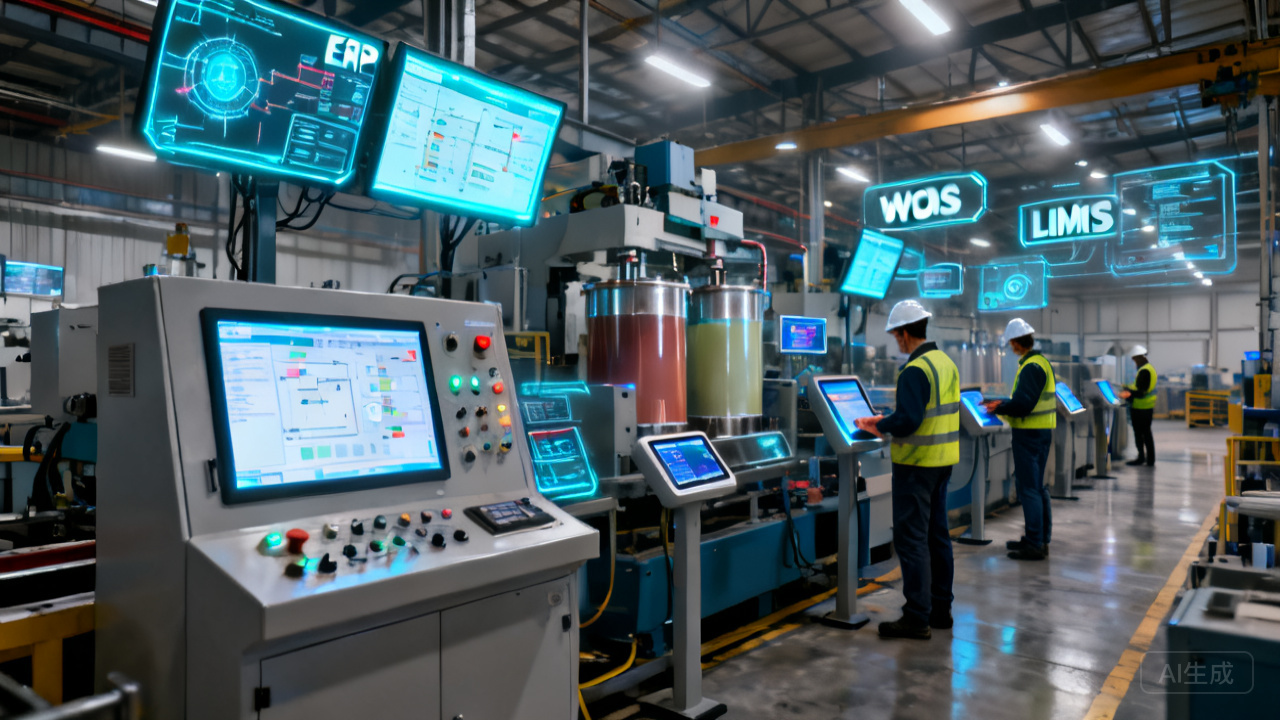
I. Four-System Integration Architecture
| System | Core Function | Input | Output | Integration Protocol |
|---|---|---|---|---|
| ERP | Orders/Procurement/Inventory/Finance "manage money" | Customer orders "what to produce/how much/when to deliver" | Production work order → MES | OPC-UA/REST API |
| MES | Production/Quality Control/Traceability "manage production" | ERP work order + PMS formula "production—how to produce" | Quality control data → LIMS | OPC-UA/MQTT |
| WMS | Raw materials/Finished goods/Locations "manage goods" | ERP purchase order + MES material requisition | Inventory status → ERP/MES | API/Barcode/RFID |
| LIMS | Samples/Testing/COA "manage quality" | MES quality control requirements | COA → ERP (with shipment) | API/CSV |
FAQ
Q1: How does AI formula optimization reduce trial batches by >50%?
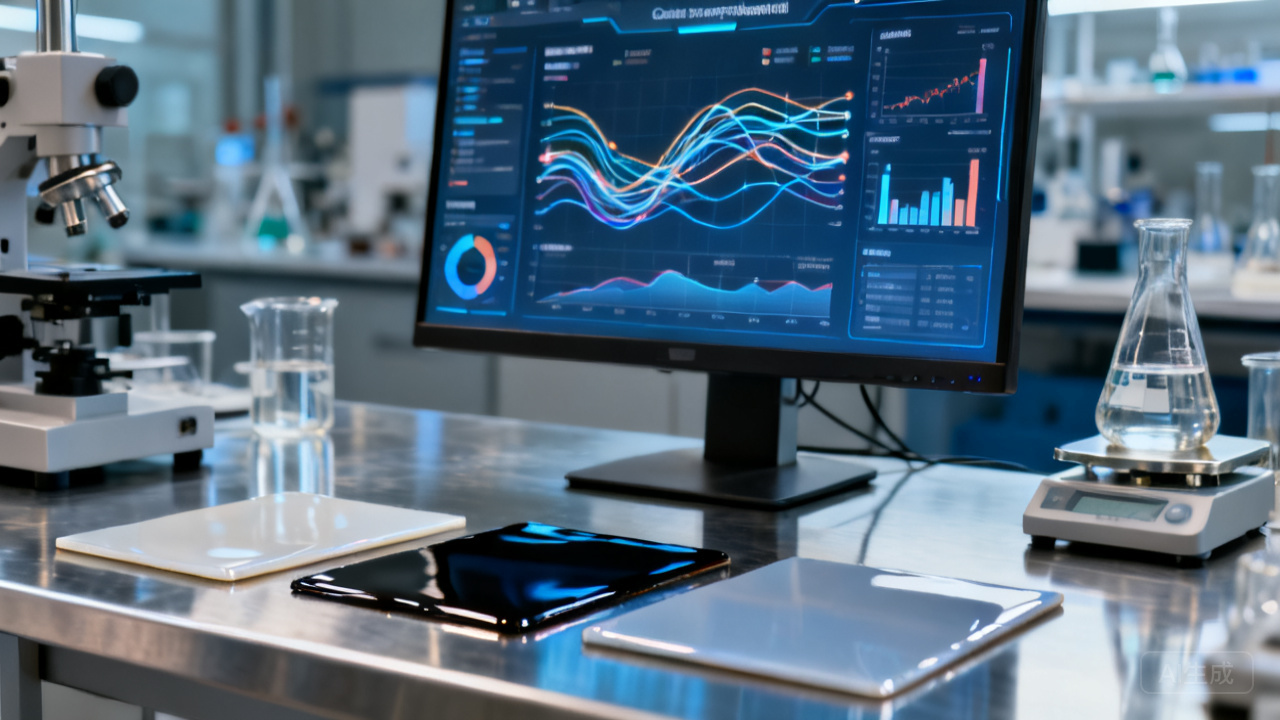
Traditional formula development——Engineer——based on experience + literature "guesses" initial formula——>3-5 trial batches——each time——>1 day (weighing/dispersing/coating/detection/analysis)——>1 formula——>1-2 weeks development cycle. AI——(1) Training data——enterprise >10000 batches of——formula→performance data; (2) ML model (XGBoost/Random Forest) "learns" the "nonlinear mapping" between each component in the formula (resin/curing agent/pigment/filler/additive/solvent) and the final performance (viscosity/fineness/adhesion/hardness/salt spray resistance)
; (3) Given target performance——AI outputs "optimal formula" (Top-3 recommendations)——engineer selects one——first trial batch——hit rate >70% (no adjustment needed——ΔE<1.0/Δperformance5 to >2-3——development cycle shortened by >50%.
Q2: How does the "virtual process simulation" of Digital Twin reduce production line commissioning time by >50%?
Trial production of new formulas on the physical production line for "trial production" debugging of process parameters (dispersion speed/time/temperature——bead mill——filling speed)——>2-3 times——each time——>half a day——>1.5 days/formula
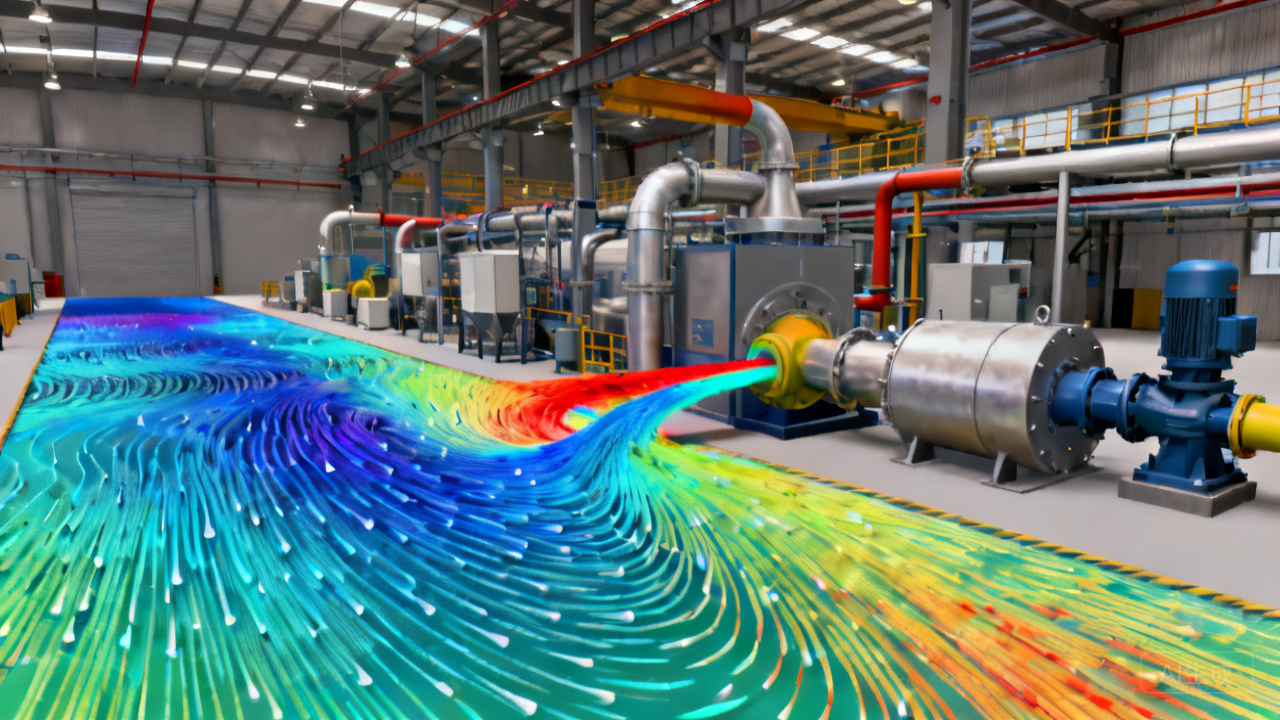
. Digital twin——establishes CFD (Computational Fluid Dynamics) simulation models for dispersers/bead mills/ovens
——inputs the new formula's rheological data (viscosity-shear curve) + thermophysical properties (specific heat/thermal conductivity/density)
——"runs" the dispersion/grinding/filling process in a virtual environment——predicts the impact of process parameters (speed/temperature/time) on coating quality (fineness/viscosity/dispersion uniformity)
——outputs the "optimal process window" the first trial production on the physical production line——parameters are already precise——only requires >1 fine-tuning (>half a day)——total commissioning time reduced by >50%.
Related Reading
Summary
The digital middle platform of the coating digital four-system (ERP/MES/WMS/LIMS) eliminates information silos. AI formula optimization (ML—reducing trial formulations by >50%) and digital twin (CFD simulation—reducing production line commissioning by >50%) are the two major "high-value scenarios" of digitalization. Kexin New Materials is committed to the digital transformation of coating factories—providing customers with digital consulting and implementation support.