Introduction: The "Journey" of a Bucket of Coating — From Global Raw Materials to Local Customers
A bucket of seemingly simple paint, its raw material supply chain spans multiple continents globally epoxy resin (bisphenol A / from China and South Korea), titanium dioxide (rutile TiO₂ / from Australian mineral sand + Chinese / US chlorination process), HDI curing agent (from Germany / Japan), organic pigment (phthalocyanine blue / from India and China), organic bentonite (from US and Greece), fumed silica (from Germany and Japan) >70% of paint raw materials rely on global trade. Any disruption in the supply chain—such as the 2021 Suez Canal blockage (global >12% of trade volume / blocked for 6 days / epoxy resin prices surged >50% and lasted >3 months)—would have a multiplier impact on paint factories' production and costs. Supply chain management has been upgraded from traditional "procurement price-cutting" to strategic-level risk management + resilience design, which is a profound lesson the paint industry learned after a series of "black swan" events from 2020 to 2025.
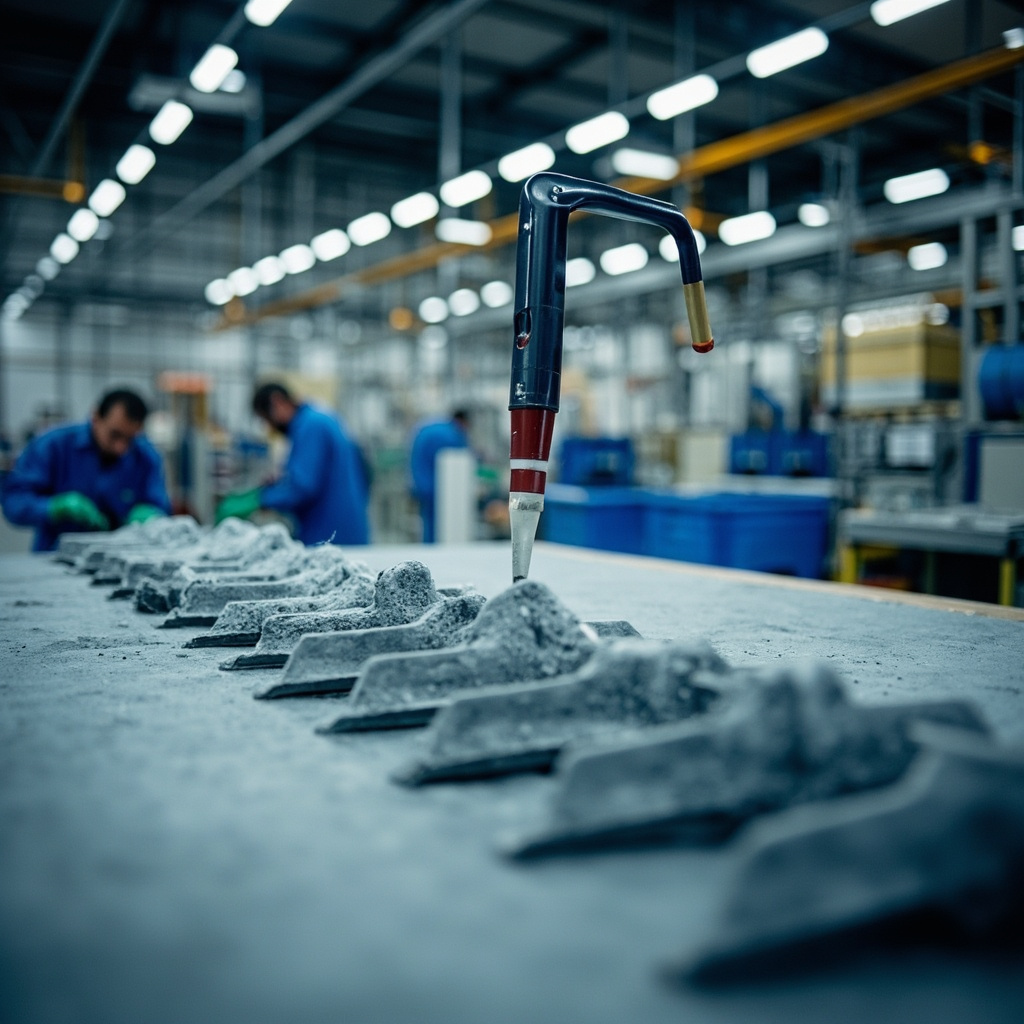
I. Global Supply Chain Map of the Four Major Raw Materials for Coatings
| Raw Material Category | Major Global Production Regions | China Dependency | Key Logistics Nodes | Price Volatility |
|---|---|---|---|---|
| Epoxy Resin (Bisphenol A/ECH) | China (>50%)/Korea/Taiwan/USA | Mainly self-sufficient (>80%) | Asia → Europe/North America sea freight | Medium-high (±30%/year) |
| Titanium Dioxide (TiO₂) | China (>40%)/USA/Germany/Japan | Self-sufficiency >90% (chloride process imported technology) | Australian ore sand → Chinese ports | Medium (±15%/year) |
| HDI Curing Agent | Germany (Covestro/BASF)/Japan (Asahi Kasei) | >60% import dependent | Europe/Japan → China sea freight | High (±50%/year/highly concentrated supply) |
| Organic Pigments (Phthalocyanine Blue/DPP Red) | India/China (>70%) | Self-sufficiency >90% | India → Global | Low-medium (±20%/year) |

II. Supplier Evaluation: ISO Three Systems + ESG + KPI
| Evaluation Dimension | Key Metrics | Evaluation Method | Weight (%) |
|---|---|---|---|
| Quality (Q/ISO 9001) | Batch Consistency (CpK>1.33)/COA Accuracy/Return Rate <1% | Incoming Inspection + SPC Statistics + Annual Audit | 35 |
| Delivery (D) | On-time Delivery Rate >95%/Minimum Order Quantity (MOQ)/Lead Time | ERP Delivery Records + Monthly KPI Assessment | 25 |
| Cost (C) | Price Competitiveness/Payment Terms/Exchange Rate Risk Sharing | Annual Negotiation + Market Benchmarking | 20 |
| ESG (Environmental/Social/Governance) | ISO 14001/ISO 45001/Carbon Footprint/REACH Compliance | Environmental Audit + SAQ Self-assessment Questionnaire + On-site EHS Audit | 15 |
| Innovation (T) | New Product Development Speed/Technical Support Responsiveness | JDA (Joint Development Agreement)/Annual Innovation Assessment | 5 |
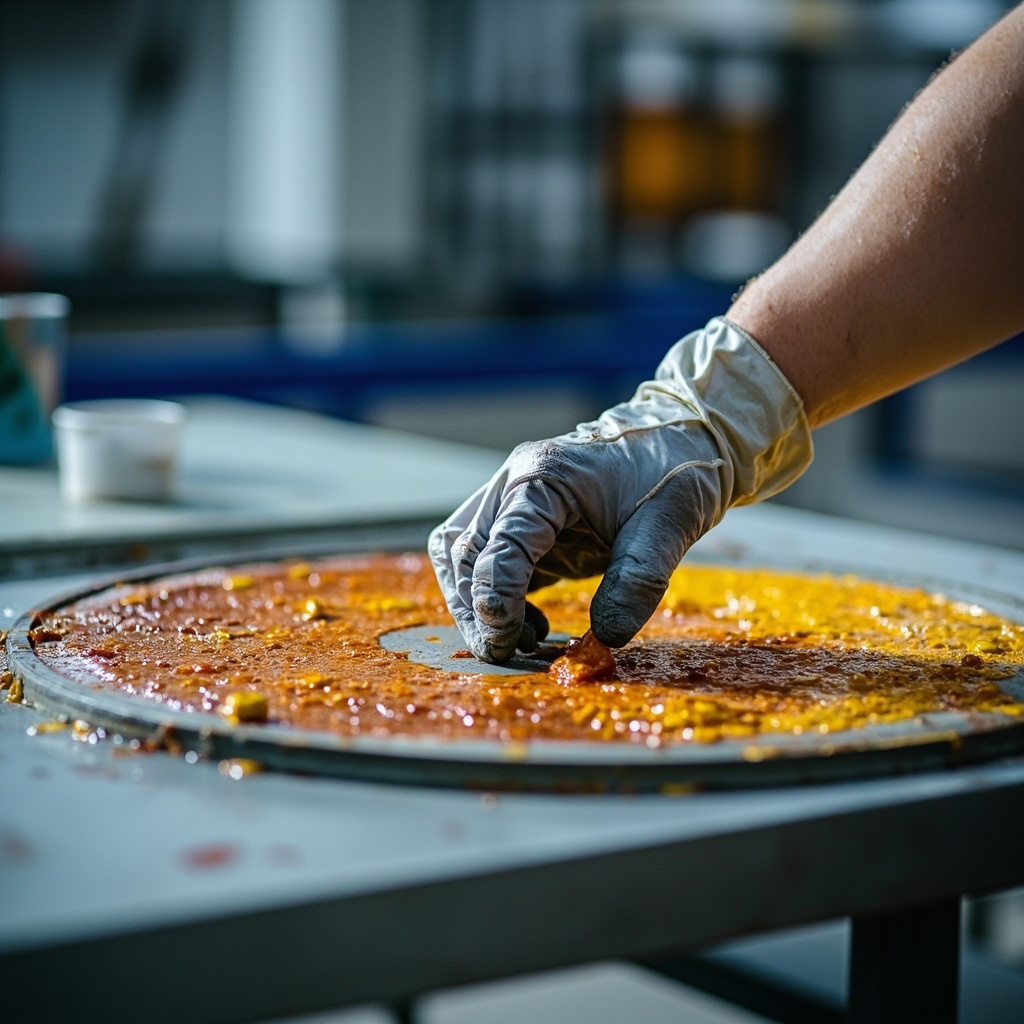
Technical deepening: systematic optimization methods for process parameters (DOE experimental design)
The optimization of coating production processes should not rely on the "trial-and-error method" but should adopt the scientific method of DOE Experimental Design. Taking the dispersion process as an example—factors affecting quality (linear velocity/time/filling rate/temperature), 4 factors each at 3 levels—a full factorial requires 81 experiments—DOE uses orthogonal experiments L9 (9 times) or response surface methodology (27 times) to greatly reduce the number of experiments—while simultaneously obtaining the main effects and interactions of each factor. For example, it is found that "the interaction of linear velocity × time is significant": high linear velocity + short time and low linear velocity + long time can achieve the same dispersion effect—but the former saves over 20% energy.
In DOE analysis, interpretation of the P-value — P95% confidence). DOE ultimately outputs a set of prediction models (polynomial regression equations) — input line speed/time/temperature → predict fineness/viscosity/gloss — providing formulation engineers with a "digital formulation optimization" tool.
Industry practice: from "master craftsman's feel" to "parameter standardization"
The common challenge in the coatings industry — when experienced veteran workers retire, their "feel" (mixing resistance / fineness gauge scraping / visual inspection of wet-film gloss) is taken away — new employees cannot replicate it. Transform the "feel" into quantifiable standard parameters (1) mixing resistance → viscometer reading; (2) fineness gauge scraping → fineness gauge reading (μm); (3) wet-film gloss → gloss meter (GU value). The "standard parameter card" for each process is posted next to the equipment — new employees operate according to the "card" rather than "by feel". "Parameter standardization" is a key step for coating factories to move from "workshop" to "factory".
FAQ
Q1: What is the cost and security trade-off of Dual/Multi Sourcing strategy?Single supplier — best price (volume discounts / >5-10% discount) — but supply disruption risk is concentrated (one supplier shutting down = entire line stops). Dual sourcing — two suppliers each around 50% + slightly higher price (>3-5% premium) — supply disruption risk is diversified. Strategic materials (e.g., HDI curing agent / exclusive specialty resin) must adopt dual or multi sourcing; the price increases slightly but the value of supply security cannot be measured by price.
Q2: Quantitative Model for Safety Stock — How to Calculate the Optimal Inventory Level?Safety Stock = Z × σ × √(LT) — Z = service level coefficient (95% → Z = 1.65), σ = standard deviation of demand (kg/month), LT = replenishment lead time (months). Excessively high safety stock = capital occupation + risk of raw material expiration; too low = risk of stockout and production halt. The optimal Z is between 1.65 and 1.96 (95–97.5% service level) — stockout probability 2.5–5% — which is the common balance point in the coatings industry.
Q3: What was the specific impact of the 2021 Suez Canal blockage incident on the coatings supply chain?March 23-29, 2021 (6 days) — Ever Given ran agroundOver 12% of global trade volume was blocked — Container shipping from Asia to Europe delayed by more than 10 daysDisruption of European epoxy resin supply + chaotic ship schedules + soaring freight rates (>5×) had effects lasting over 3 months — some coatings factories had epoxy resin inventory of less than 1 week — forced to reduce or halt production. Afterwards — most factories raised the safety stock of epoxy resin/HDI curing agents from less than 2 weeks to over 4 weeks — maintaining a "strategic buffer".
Q4: Financial instruments for raw material price risk management — futures/forward contracts/options? Titanium dioxide and epoxy resin do not have direct futures markets (not standardized at the commodity level). Alternative strategies — (1) Sign long-term fixed pricing agreements (12-24 month fixed price/annual negotiation) with suppliers to lock in medium- to long-term costs; (2) Link to bulk commodities (e.g., benzene (raw material) → epoxy resin price) — use benzene futures for cross hedging, lower precision but partial offset; (3) Strategic reserve — overbuy inventory (>3 months) when prices are low — consume reserves when prices are high — autonomously adjust procurement costs.
Q5: Why is the supplier's "ESG rating" increasingly important for coating export enterprises?European customers (such as PPG/AkzoNobel/BASF) have made ESG audits of suppliers a "market entry barrier"(1) Carbon footprint data (PEF/ISO 14067) — must include the product's "cradle-to-gate" carbon emissions; (2) Notification of SVHC (REACH substances of very high concern) >0.1%; (3) Social responsibility (SA8000/no child labor/no forced labor). Failing the ESG rating = loss of core European customers — ESG has shifted from "icing on the cake" to a "survival necessity".
Q6: Practice of "Vendor Managed Inventory" (VMI/Vendor Managed Inventory) in the coatings industry?VMI——the supplier keeps its own inventory (consignment) inside the coatings factory——the coatings factory settles based on actual consumption——the supplier is responsible for replenishment and expiry handling. Benefits of VMI——the coatings factory has zero inventory capital occupation + the supplier gains stable customer relationships. VMI is suitable for high-volume/stable/standardized raw materials (such as titanium dioxide/standard solvents/general-purpose resins)——specialty/small-volume/customized raw materials are not applicable.
Q7: Development of alternative raw materials (Second Source) — when to initiate?When the supply disruption risk of a sole source (e.g., a certain HDI trimer) is assessed as "High" (single supplier / tight capacity / geopolitical risk), alternative raw material development should be initiated (>6-12 month development cycle / including formulation validation + customer approval) — complete the alternative before the supply disruption occurs — rather than hastily searching after disruption (rushed substitution often leads to quality incidents). The lead time and investment in alternative raw material development — are the most direct reflection of supply chain management level.
Q8: The "data silos" problem of ERP systems in coating supply chain management?Many coating factories' ERP only manages purchase orders and inventory quantities, but supplier evaluation, price forecasting, quality SPC data, and ESG information exist in other standalone systems (Excel/emails/paper records)—information fragmentation—making it impossible to comprehensively consider them in supply chain decision-making. The digitalization of supply chain management—integrating all supply chain-related data and processes into a unified platform (such as SAP Ariba/Oracle SCM)—to achieve a "one-platform/full-data/visualized supply chain command center" is the advanced stage of digitalization for coating factories.
Q9: The "temperature control" issue in raw material transportation — which raw materials are most sensitive?(1)Water-based coating resin emulsionfreeze-thaw sensitive(<0°C freezing→demulsification→scrap)——requires insulated truck for winter transportation; (2)Isocyanate (HDI/TDI)moisture sensitive(reacts with water→CO₂ pressure rises→drum bulging)→must be transported sealed with nitrogen purge; (3)Organic peroxide (MEKP)heat sensitive(>30°C decomposition→explosion)——must be transported under refrigeration. Temperature-controlled transportation cost is 1.5-3 times that of normal-temperature transportation——but relative to raw material scrap and safety accidents——it is a completely necessary investment.
Q10: The impact of the China-US trade war on the "de-globalization" of the coatings industry supply chain?Tariffs (>25%) have eroded the price competitiveness of coatings raw materials (e.g., titanium dioxide/epoxy resin) exported from China to the US—some coatings companies have shifted to setting up plants in Southeast Asia (Vietnam/Thailand) and Mexico to bypass tariff barriers—leading to the supply chain's "regionalization" (from global → regional), which has profound structural implications for the efficiency and resilience of the global supply chain. The future coatings supply chain will feature a "global + regional" dual-track parallel approach: global procurement of critical strategic materials + regional procurement of general materials.
Related Reading
Summary
The three pillars of coatings supply chain management—supplier evaluation (ISO three-system + ESG + KPI), price risk management (long-term agreements + cross hedging + strategic reserves), and supply chain resilience (dual sourcing / safety stock / substitution). The consecutive supply chain shocks from 2021 to 2025 reshaped the supply chain philosophy of the coatings industry. Kexin New Materials is committed to building a dual supply chain system of globalization and regionalization, providing customers with stable and reliable coatings product supply.