Introduction: The Invisible "Corrosion Engineers" — Microorganisms
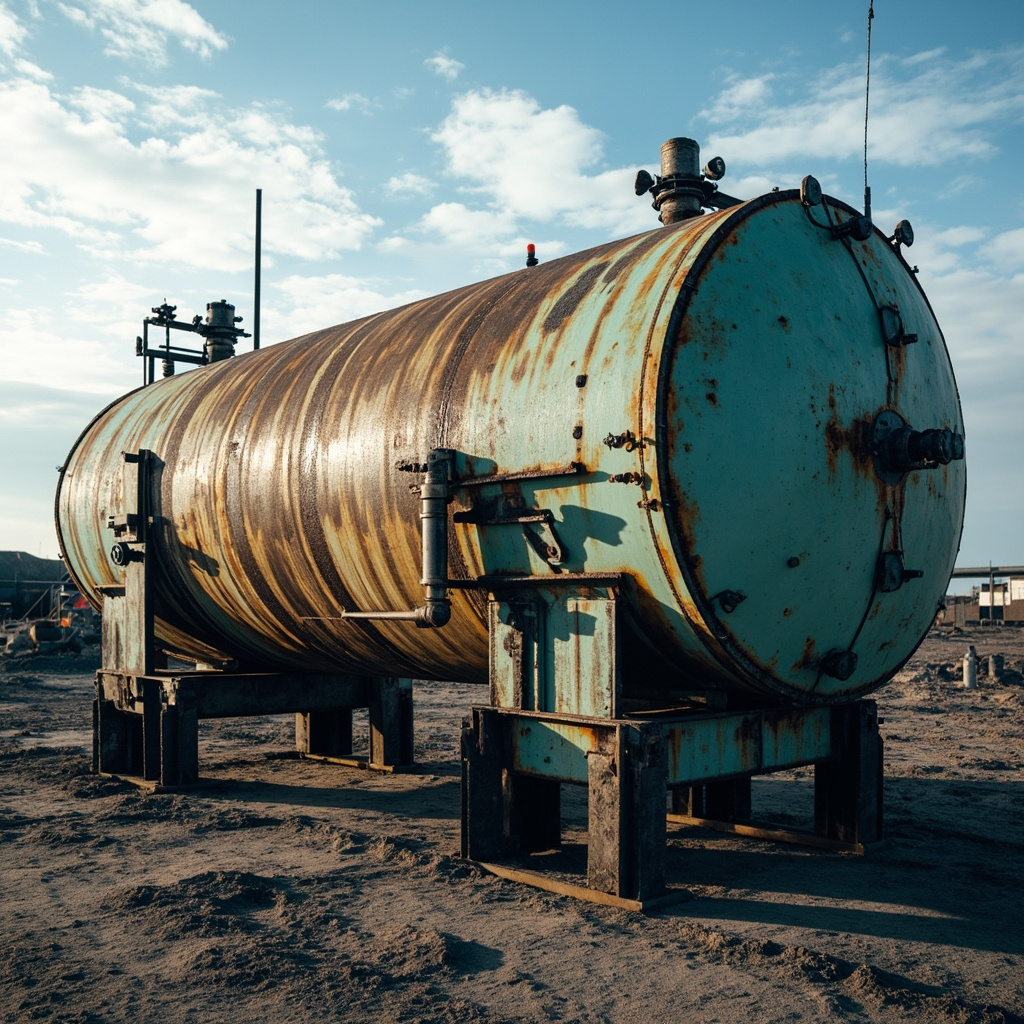
The inner walls of buried pipelines, tank bottoms, and cooling water pipes the "biofilm" (Biofilm) formed by microorganisms (bacteria/fungi/algae) at the coating/steel interface is the most hidden and most destructive accelerating factor of under-coating corrosion. Sulfate-reducing bacteria (SRB) — reduce SO₄²⁻ in seawater/soil to H₂S (hydrogen sulfide) — strong corrosion + high toxicity H₂S reacts with Fe → FeS (ferrous sulfide/black) + H₂↑ — generates hydrogen pressure under the coating + conductivity of FeS under the coating accelerates the cathodic reaction — corrosion rate can reach 0.5-2mm/year (bare steel/anaerobic environment) — 5-20 times that of ordinary seawater corrosion (0.1-0.2mm/year). MIC accounts for 20-30% of global corrosion losses (>500 billion USD/year) and is the "most overlooked strategic issue" in coating anti-corrosion.
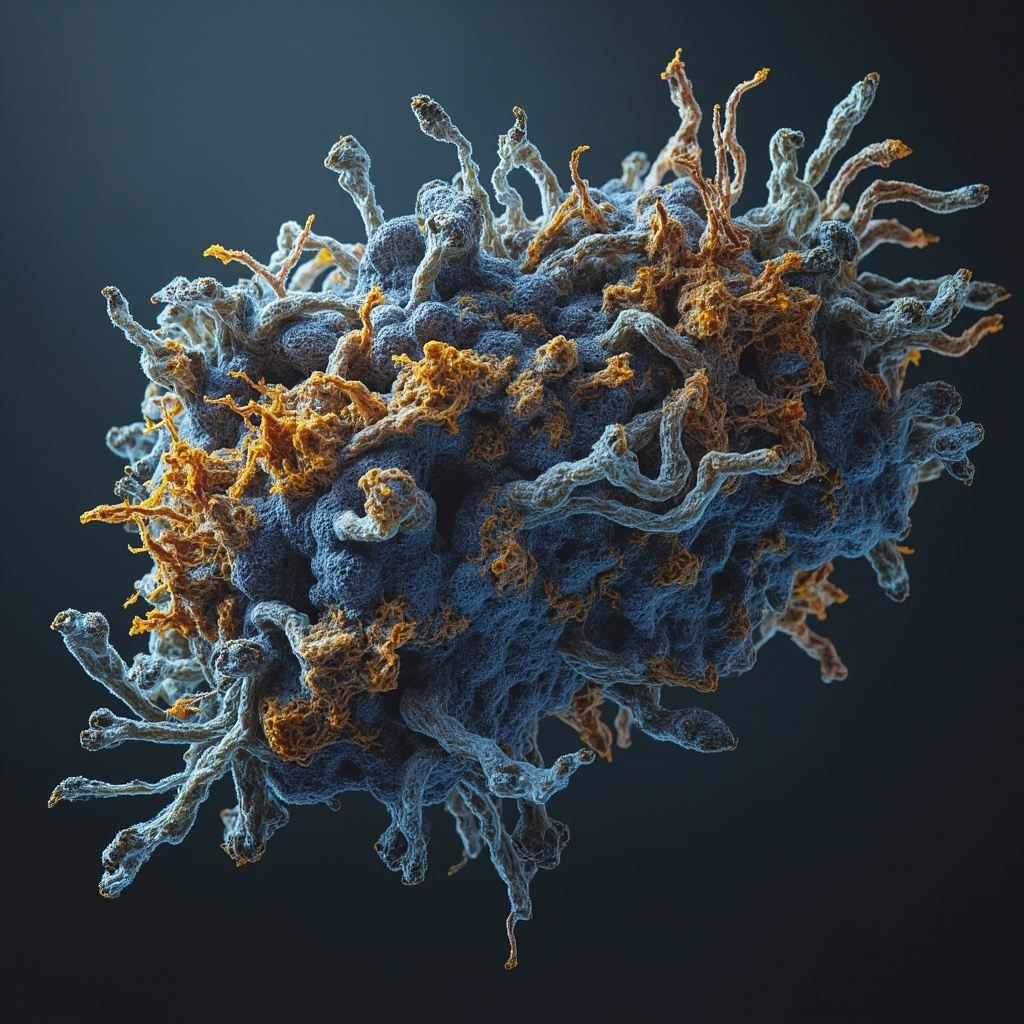
I. Comparison of Corrosion Mechanisms between SRB and IOB
| Bacteria | Environment | Corrosion Products | Corrosion Mechanism | Typical Scenarios |
|---|---|---|---|---|
| SRB (Sulfate-Reducing Bacteria) | Anaerobic (under coating / sludge / stagnant water) | FeS (black) + H₂S gas + H₂↑ | Cathodic depolarization — H₂ consumed by SRB (promotes cathodic reaction) + FeS conductive — forms Fe/FeS galvanic cell | Buried pipelines / tank bottom plates / seawater immersion zone |
| IOB (Iron-Oxidizing Bacteria) | Aerobic (coating surface / waterline) | Fe(OH)₃ (brown) + tubercles + oxygen concentration cell | Fe²⁺ → Fe³⁺ oxidation — forms Fe(OH)₃ tubercles — area under tubercle is oxygen-depleted — forms oxygen concentration cell — accelerates localized corrosion | Cooling water pipes / ship ballast tanks |
FAQ
Q1: SRB's "cathodic depolarization" theory—how do microorganisms "steal" hydrogen atoms to accelerate corrosion?Corrosion of steel in anaerobic environments—Fe→Fe²⁺+2e⁻(anode)+2H⁺+2e⁻→2H(adsorbed on steel surface/cathode)—accumulation of atomic hydrogen H causes the cathodic reaction to be hindered (cathodic polarization)—corrosion should have slowed down or stopped. But SRB's hydrogenase "eats" the H (H→H₂↑/releases H₂ gas)+SO₄²⁻→S²⁻(sulfide) relieves the cathodic "hydrogen blockage" the cathodic reaction re-accelerates—corrosion continues and accelerates—this is why SRB's "cathodic depolarization" is the most core microbiologically influenced corrosion (MIC) mechanism.
Q2: How does 16S rRNA gene sequencing "identify the suspect" SRB species under the coating?16S rRNA is the bacteria's "molecular ID". Different bacteria have specific 16S rRNA gene sequences. Extract DNA from corrosion products under the coating → PCR amplification → high-throughput sequencing (NGS/Next Generation Sequencing) → compare with 16S rRNA database — identify the SRB species (e.g., Desulfovibrio or Desulfotomaculum) and the relative abundance (>50% of bacteria being SRB = MIC confirmed). 16S rRNA identification is the "gold standard" for MIC diagnosis.
Q3: The issues of "sustained release" and "drug resistance" of antimicrobial coatings (Ag⁺/Cu²⁺/quaternary ammonium salts) in the coating?Ag⁺ is continuously released from the coating, with its concentration decaying from >100 ppb (initial high concentration—rapid sterilization) to <10 ppb (concentration too low—bacteria develop "tolerance", Ag⁺ is no longer sufficient to kill bacteria) over several months to years—but long-term exposure of bacteria to such "sub-lethal" concentrations—may induce Ag⁺-resistance genes (sil operon)—this is a long-term potential problem of antimicrobial coatings—similar to antibiotic resistance.
Q4: The "contact killing" mechanism of Quaternary Ammonium Salts (QAS)?QAS is a cationic surfactant(1)The cation (N⁺) of QAS electrostatically attracts to the negatively charged phospholipids of the bacterial cell membrane—the hydrophobic long chain of QAS inserts into the phospholipid bilayer of the cell membrane, disrupting membrane integrity, causing leakage of cellular contents—bacterial death—this is "physical destruction" of bacteria, making it extremely difficult for bacteria to develop resistance (unlike Ag⁺ which targets DNA—a single gene mutation can confer tolerance). QAS is one of the least resistance-inducing antimicrobial agents—but the hydrophilicity of QAS causes it to release too rapidly in water (depleted in >a few weeks)—requiring microencapsulation for sustained release.
Q5: Why can MIC's "concealment" on the tank bottom plate (Soil Side) not be detected?The outer wall (soil side) of the tank bottom plate cannot be accessed for inspection (beneath the bottom plate > no visual access)——SRB corrosion under the coating is completely hidden until the bottom plate perforates and leaks (> leaked chemicals/oil products——environmental disaster)——conventional ultrasonic thickness testing (UT) of the tank bottom plate can only detect >20% wall thickness loss——difficult to find local pitting of <10% Low-frequency guided wave testing (LRUT/Long Range Ultrasonic Testing) can cover >100m——it is an advanced technology for MIC detection on tank bottom plates.
Q6: The coating's "MIC-resistant design" — physical barrier + chemical biocidal dual defense? Relying solely on the coating's highly cross-linked barrier — SRB form biofilms on the coating — (1) degradable coating's plasticizers/emulsifiers serve as carbon sources — the coating beneath the biofilm is slowly "eaten away" and eventually penetrated; (2) H₂S produced by SRB — H₂S permeates the coating — forms FeS at the coating/steel interface — coating delamination. Physical barrier + chemical biocidal antimicrobial agents (Ag⁺/Cu²⁺/QAS) form a "death zone" on the coating surface — bacteria contacting the antimicrobial coating surface —> die within 1-2 h — unable to form biofilms — preventing MIC at the root cause.
Q7: How does photocatalytic TiO₂ exert its antibacterial effect in dark (under-coating) environments?TiO₂'s photocatalysis requires UV light—under the coating (no light) TiO₂ cannot generate ·OH radicals—its antibacterial effect is zero. Applications of TiO₂ in coatings—(1) as an antibacterial agent on the coating surface—on surfaces under light (sunlight/UV)—suitable for outdoor coatings; (2) under the coating—TiO₂ is not applicable and light-independent Ag⁺/Cu²⁺/QAS must be used.
Q8: The "fatal hazard" of H₂S generated by SRB under coatings to operators—H₂S poisoning in confined spaces?SRB in confined spaces of storage tanks/pipelines generates H₂S gas(1)>100ppm—human sense of smell is paralyzed within minutes "cannot smell" ≠ "safe"; (2)>500ppm immediate coma + respiratory paralysis death within minutes; (3)>1000ppm "electric shock-like" death instant death—is the gas with the highest fatality rate in confined space operations. H₂S detection before entering storage tanks/pipelines—50ppm must wear supplied-air respirator H₂S "safety" "detection" must never be judged by smell—must use H₂S gas detector (calibrated regularly).
Q9: Pipeline "Pigging" + biocide combination — physical + chemical dual defense against MIC?Regular pipeline "pigging" (using Pig/scraper) (1) Physical — removes biofilm + corrosion products + deposits from the inner pipe wall, destroying the SRB's "habitat"; (2) Immediately after pigging, inject biocide (glutaraldehyde/quaternary ammonium salt/oxidizing — sodium hypochlorite) to kill the exposed "residual SRB" after pigging — preventing SRB from rapidly "rebuilding the biofilm" after pigging (SRB, in nutrient-rich conditions — corrosion products provide Fe²⁺ — after pigging — >24h can re-form biofilm雏形).
Q10: Future "bacteriophage" (Bacteriophage/bacterial virus) against MIC? Bacteriophages are viruses that specifically infect and kill certain types of bacteria. For SRB—you can choose "SRB-specific bacteriophages" (1) Ultra-high selectivity—only kills SRB—does not kill non-SRB bacteria (beneficial bacteria/non-corrosive)—"precision medication"; (2) No drug resistance (bacteriophages and bacteria co-evolve, "resistance" emerges slowly); (3) Zero chemicals—zero environmental residue—the most environmentally friendly anti-MIC strategy. Application of bacteriophages in coatings—embed bacteriophages in the coating— when SRB contacts the coating—the bacteriophages "awaken" and infect SRB—SRB dies—releasing more bacteriophages—forming a "self-replicating + self-diffusing" antimicrobial barrier, which is the most cutting-edge "biological warfare" strategy for MIC protection. Currently at the laboratory research stage.
Related Reading
Summary
MIC (Microbiologically Influenced Corrosion)—SRB (anaerobic/cathodic depolarization/H₂S) and IOB (aerobic/iron-oxidizing/oxygen concentration cell)—accounts for 20–30% of global corrosion losses. Antimicrobial coatings (Ag⁺/Cu²⁺/QAS/photocatalytic TiO₂)—dual defense of physical barrier and chemical killing—prevent biofilm formation at the source. 16S rRNA identification is the "gold standard" for MIC diagnosis. Kexin New Materials provides clients with anti-MIC coating solutions and technical support for microbiologically influenced corrosion assessment.